
⚡ Surge Protection Cost Guide 2026
Protect your home’s electronics and appliances from power surges
💰 Surge Protection Cost Overview
Whole House
Point-of-Use
Complete System
Average Install
Whole-House Surge Protector (SPD) Installed at Main Electrical Panel
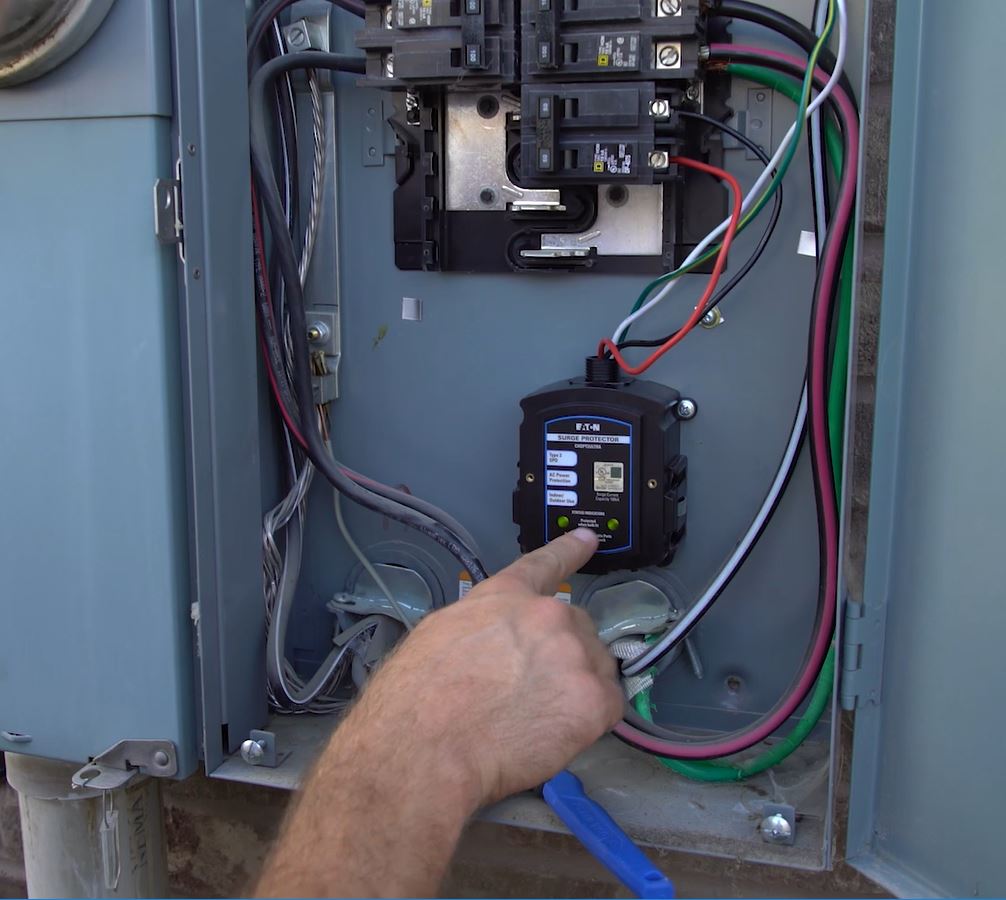
Types of Surge Protection Systems
Understanding your protection options and investment levels
Surge Protection Options Compared
| Protection Type | Cost Range | What It Protects | Installation | Effectiveness |
|---|---|---|---|---|
| Type 1 – Service Entrance | $500 – $1,200 | Entire home from external surges | Meter/main panel | 95% reduction |
| Type 2 – Whole House | $300 – $700 | All circuits in home | Main panel | 90% reduction |
| Type 3 – Point-of-Use | $20 – $100 each | Individual devices | Plug-in | Final protection |
| Layered System | $600 – $1,500 | Complete protection | Multiple points | 99% effective |
| Power Strips | $15 – $50 | Multiple devices | DIY plug-in | Basic only |
| UPS Systems | $100 – $500 | Surge + battery backup | Plug-in | Best for computers |
| Hardwired Outlets | $50 – $150 each | Specific locations | Replace outlet | Permanent solution |
| Data Line Protection | $100 – $300 | Cable/phone/ethernet | In-line install | Often overlooked |
The $30,000 Lightning Strike Reality
Average claim: $4,352 for surge damage. Without protection: TVs, computers, HVAC systems, appliances all at risk. One strike can destroy: Every electronic device in your home. Insurance reality: Many policies have electronics limits. Surge protection costs less than replacing one major appliance – it’s not if, but when you’ll need it.
What Causes Power Surges
Understanding surge sources helps prioritize protection
Common Surge Sources & Risks
| Surge Source | Frequency | Damage Potential | Protection Needed | Warning Signs |
|---|---|---|---|---|
| Lightning Strikes | Rare but severe | Catastrophic – $10k+ | Type 1 + Type 2 | Storm activity |
| Utility Switching | Daily occurrences | Cumulative damage | Whole house | Lights flicker |
| Large Appliances | Multiple daily | Degrades electronics | Point-of-use | AC/heat cycling |
| Power Restoration | After outages | Major spike risk | Whole house | After blackout |
| Downed Lines | Weather events | Extreme voltage | Service entrance | Storms, accidents |
| Solar Panels | Daily switching | Inverter surges | DC + AC protection | System cycling |
| EV Charging | High current draw | Circuit stress | Dedicated protection | Charging cycles |
Equipment at Risk
| Device Category | Replacement Cost | Surge Sensitivity | Life Reduction |
|---|---|---|---|
| HVAC Systems | $3,000 – $8,000 | Circuit boards vulnerable | 50% without protection |
| Smart Home Devices | $2,000 – $5,000 total | Extremely sensitive | Fail completely |
| Home Theater | $1,500 – $10,000 | TVs, receivers at risk | Instant failure |
| Kitchen Appliances | $5,000 – $15,000 | Control boards fail | Gradual degradation |
| Computers/Office | $1,000 – $3,000 | Data loss risk | Component failure |
| Washer/Dryer | $1,500 – $3,000 | Electronic controls | Board replacement |
Installation Process & Requirements
Professional installation ensures proper protection
Whole House Surge Protector Installation
Pre-Installation
Time: 30 minutes
Assessment includes:
• Panel capacity check
• Available breaker spaces
• Grounding verification
• Service size evaluation
• Existing protection audit
• Quote preparation
Panel Installation
Time: 1-2 hours
Process:
• Power shutdown
• Breaker installation
• SPD mounting
• Wire connections
• Grounding verification
• LED indicator check
Testing & Verification
Time: 30 minutes
Confirmation:
• Protection active
• Indicator lights working
• Documentation provided
• Warranty registration
• Usage instructions
• Maintenance schedule
Protection Specifications Explained
Understanding ratings helps choose right protection
Key Surge Protector Ratings
Joule Rating
What it means: Energy absorption capacity
Minimum recommended:
• Whole house: 40,000+ joules
• Point-of-use: 2,000+ joules
• Higher = better protection
• Degrades over time
Clamping Voltage
What it means: Activation threshold
Ideal levels:
• 400V or lower best
• 330V = excellent
• 500V = adequate
• Lower = faster response
Response Time
Critical factor: Speed matters
Standards:
• < 1 nanosecond ideal
• 5 nanoseconds acceptable
• Faster = less damage
• Check specifications
MCOV Rating
Maximum Continuous Operating Voltage
Requirements:
• 115% of nominal voltage
• Prevents false trips
• Ensures longevity
• Match to service voltage
kA Rating
Surge current capacity
Recommendations:
• Type 1: 50kA minimum
• Type 2: 20kA minimum
• Higher in lightning zones
• Per phase rating
UL Listing
Safety certification
Look for:
• UL 1449 4th Edition
• Type designation
• Safety tested
• Insurance accepted
Layered Protection Strategy
Maximum protection requires multiple defense levels
Building Complete Surge Protection
| Protection Layer | Location | Cost | What It Stops | Coverage |
|---|---|---|---|---|
| Layer 1: Service Entrance | Meter/main disconnect | $500 – $1,200 | External surges, lightning | Whole property |
| Layer 2: Panel Protection | Main electrical panel | $300 – $700 | Remaining surges, internal | All circuits |
| Layer 3: Point-of-Use | Individual outlets | $20 – $100 each | Final protection level | Sensitive devices |
| Sub-Panel Protection | Garage, workshop panels | $200 – $400 each | Localized surges | Specific areas |
| Data Line Protection | Entry points | $100 – $300 | Cable/internet surges | Connected devices |
Real Estate Investment Perspective
Surge protection as property value protection
Primary Residence
Investment: $600 – $1,200
Protects: $20k+ in electronics
Benefits:
• Insurance discounts possible
• Prevents costly claims
• Peace of mind value
• Selling point feature
Rental Property
Investment: $400 – $700
ROI factors:
• Protects landlord appliances
• Reduces maintenance calls
• Liability protection
• Happy tenants = longer stays
• Basic protection sufficient
Fix & Flip
Investment: $300 – $500
Strategy:
• Minimal but visible
• Inspection selling point
• Protects staging electronics
• Shows attention to detail
• Buyer confidence builder
Maintenance & Replacement
Surge protectors wear out – monitoring is essential
Surge Protector Lifecycle
Typical Lifespan
Expected service:
• Whole house: 5-10 years
• Point-of-use: 3-5 years
• After major surge: Replace
• High-lightning areas: Shorter
• Quality units last longer
• Check indicators monthly
Replacement Signs
Time to replace when:
• Indicator lights off/red
• After lightning strike
• Frequent breaker trips
• Age exceeds 5 years
• Visible damage/burns
• No surge events = still age
Replacement Costs
Budget planning:
• SPD unit: $150 – $400
• Installation: $150 – $300
• Total: $300 – $700
• Less than initial install
• Plan for 5-year cycles
• Keep spare on hand
Critical Maintenance Facts
Surge protectors are sacrificial devices – they absorb surges until they can’t. No indicator light = No protection, even if power flows normally. After major surges, protection capacity diminishes. Insurance may deny claims if failed surge protector wasn’t replaced. Test monthly, document tests, replace proactively.
Smart Selection Strategies
Choosing the right protection for your situation
Whole House First
Start with panel protection – catches 90% of surges. Best bang for buck. Then add point-of-use for expensive electronics. Layer protection based on equipment value.
Size It Right
Match protection to service size. 200A service needs 200A rated SPD. Undersized protection fails prematurely. Oversized wastes money. Get professional assessment.
Location Matters
Lightning-prone areas need Type 1 protection. Urban areas focus on grid surges. Coastal regions need corrosion-resistant units. Match protection to local risks.
Brand Quality
Stick with established manufacturers: Eaton, Siemens, Square D, Leviton. Warranty matters – look for 5+ years. Connected equipment coverage valuable. Avoid no-name units.
Insurance Coordination
Check policy for surge coverage gaps. Document all protection installed. Some insurers require surge protection. May qualify for premium discounts. Keep all receipts.
Future Planning
Install empty breaker space for SPD during panel upgrades. Pre-wire for electric vehicle protection. Consider solar/battery system needs. Plan for smart home growth.
Frequently Asked Questions
Expert answers to common surge protection questions
⚡ Ready to Protect Your Home’s Electronics?
Find qualified electricians for surge protection installation

Knowledge Quiz: Surge Protection Cost Guide
Open Quiz
5 quick questions - see how much you learned!
1) What’s the typical cost range for Type 2 whole-house surge protection?
Answer: B
Your table lists Type 2 – Whole House: $300 – $700 (main panel protection).
2) Which surge protection layer is the “final protection” for sensitive devices like TVs and computers?
Answer: A
Your comparison table calls Type 3 point-of-use the “final protection” layer.
3) Which rating tells you the maximum surge current capacity (often shown as kA) of the device?
Answer: D
You list kA Rating as the surge current capacity (higher is better, especially in lightning zones).
4) What’s the recommended minimum joule rating for a point-of-use surge protector?
Answer: C
Your specs section recommends 2,000+ joules for point-of-use protection.
5) What’s the typical expected lifespan for a whole-house surge protector?
Answer: B
Your lifecycle section lists Whole house: 5–10 years (replace sooner after major surge events).
⚡ More Electrical System Guides
Explore our complete electrical work library
View All Electrical Guides (20) ▼
⚡ Main Electrical Systems
🔌 Outlets & Switches
💡 Lighting Systems
🏠 Specialty & Smart Systems
Last updated: Jan 2026
Sources: National Electrical Manufacturers Association (NEMA), Insurance Information Institute, UL Standards, Builds and Buys Research Team



