
🏊 Pool Wiring Cost Guide 2026
Safe electrical installation for pools, spas, and outdoor water features
💰 Pool Electrical Cost Overview
Basic Pool
In-Ground Pool
Pool + Spa
Luxury Setup
Pool Electrical Wiring, Bonding, and GFCI Safety Example
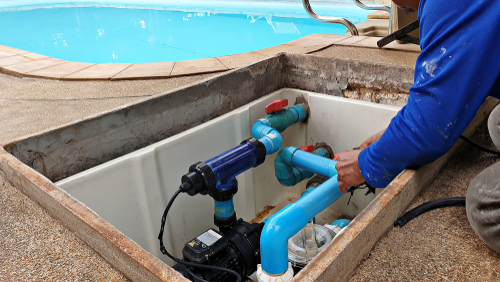
Pool Electrical Installation Types
Complete breakdown of pool electrical requirements and costs
Pool Electrical System Components
| Component | Cost Range | Purpose | Code Requirement | Installation Time |
|---|---|---|---|---|
| Sub-Panel Installation | $800 – $1,500 | Dedicated pool circuits | Often required | 4-6 hours |
| GFCI Protection | $200 – $300/breaker | Shock prevention | Mandatory all circuits | 1 hour each |
| Pump Motor Wiring | $500 – $800 | Circulation system | 240V typical | 2-3 hours |
| Pool Light Wiring | $300 – $500/light | Underwater illumination | 12V transformer | 2 hours each |
| Heater Connection | $600 – $1,000 | Water heating | 240V/gas combo | 3-4 hours |
| Bonding System | $500 – $1,000 | Equipotential bonding | NEC 680 required | 4-6 hours |
| Timer/Control Panel | $400 – $800 | Automation basics | Convenience | 2-3 hours |
| Salt System Wiring | $400 – $700 | Chlorine generation | Special requirements | 2-3 hours |
Critical Safety Requirements – Water + Electricity = Deadly
GFCI protection mandatory on ALL pool circuits within 20 feet of water. Bonding grid essential – connects all metal parts to prevent voltage gradients. No DIY allowed – most jurisdictions require licensed electrician for pool work. Inspection required – electrical inspector must verify before pool filling. One mistake can be fatal.
Complete Pool Electrical Packages
Total costs for different pool configurations
Pool Type Electrical Requirements
| Pool Type | Basic Electrical | Standard Package | Premium Package | Equipment Included |
|---|---|---|---|---|
| Above Ground Pool | $1,500 – $2,000 | $2,000 – $3,000 | $3,000 – $4,000 | Pump, filter, basic light |
| Small In-Ground | $2,500 – $3,500 | $3,500 – $4,500 | $4,500 – $6,000 | Pump, lights, heater |
| Large In-Ground | $3,500 – $4,500 | $4,500 – $6,000 | $6,000 – $8,000 | Variable pump, LED lights |
| Pool + Spa Combo | $4,000 – $5,500 | $5,500 – $7,000 | $7,000 – $10,000 | Dual systems, blower |
| Lap Pool | $3,000 – $4,000 | $4,000 – $5,500 | $5,500 – $7,000 | High-flow pump, minimal features |
| Infinity Pool | $5,000 – $6,500 | $6,500 – $8,000 | $8,000 – $12,000 | Multiple pumps, complex controls |
Additional Feature Wiring Costs
| Feature | Wiring Cost | Equipment Cost | Benefits |
|---|---|---|---|
| Landscape Lighting | $500 – $1,000 | $1,000 – $3,000 | Safety, ambiance |
| Automatic Cover | $600 – $1,000 | $8,000 – $15,000 | Safety, heat retention |
| Water Features | $400 – $800 each | $500 – $2,000 each | Aesthetics, sound |
| Automation System | $800 – $1,500 | $1,500 – $3,000 | Remote control, scheduling |
| UV/Ozone System | $400 – $700 | $1,500 – $3,000 | Reduced chemicals |
| Heat Pump | $800 – $1,200 | $3,000 – $5,000 | Efficient heating |
Safety Requirements & Code Compliance
Critical electrical safety standards for pool installations
NEC Code Requirements for Pools
GFCI Protection
Mandatory on:
• All 15A & 20A outlets
• Within 20 feet of pool
• All underwater lights
• Pump motors (with exceptions)
• Pool cover motors
Test monthly!
Bonding Requirements
Must bond:
• Pool shell reinforcement
• All metal within 5 feet
• Pump motor
• Metal fixtures
• Ladder/handrails
• #8 solid copper minimum
Distance Requirements
Clearances:
• Outlets: 6-20 feet from water
• Overhead lines: 22.5 feet min
• Underground: 5 feet from pool
• Panel: 5 feet minimum
• Disconnect: 5 feet, in sight
Lighting Rules
Requirements:
• 12V for underwater lights
• GFCI protected transformer
• Junction boxes 4″ above water
• Deck boxes 8″ minimum
• No lights over pool unless 12′
Grounding System
Essential elements:
• Equipment grounding conductor
• Ground rods if required
• Panel bonding
• Separate from bonding
• Continuous path to earth
Inspection Points
Inspector checks:
• Bonding grid complete
• GFCI functionality
• Proper wire sizing
• Distance compliance
• Equipment grounding
• Must pass before water!
Installation Process & Timeline
Step-by-step pool electrical installation
Typical Pool Electrical Installation Schedule
Day 1: Planning & Layout
Duration: 4-6 hours
Activities:
• Site assessment
• Equipment location marking
• Trenching layout
• Load calculations
• Permit application prep
• Material ordering
Day 2-3: Rough-In
Duration: 1-2 days
Work includes:
• Trenching for conduit
• Sub-panel installation
• Conduit runs
• Bonding grid install
• Wire pulling
• Box placement
Day 4: Equipment Wiring
Duration: 6-8 hours
Connections:
• Pump motor hookup
• Heater wiring
• Light transformer
• Timer installation
• Control system
• GFCI breakers
Day 5: Testing & Inspection
Duration: 4-6 hours
Verification:
• Continuity testing
• GFCI function tests
• Bonding verification
• Voltage checks
• Municipal inspection
• Documentation
Coordination Critical
Pool electrical must be installed at specific construction stages. Before concrete: Bonding grid, light niches, conduit sleeves must be in place. After plumbing: Equipment connections made. Before water: All electrical must pass inspection. Missing these windows means expensive repairs or dangerous workarounds.
Cost Factors & Variables
What impacts your pool electrical installation price
Major Cost Drivers
Distance from House
Impact: $50-100 per 10 feet
Factors:
• Trenching costs
• Larger wire needed
• More conduit
• Labor time
• Voltage drop considerations
• Sub-panel often required
Electrical Service Size
Upgrades needed:
• 100A service: Often inadequate
• 200A service: Usually sufficient
• Panel upgrade: +$1,500-3,000
• Available space critical
• Load calculations required
Site Conditions
Cost impacts:
• Rock excavation: +$500-2,000
• Concrete cutting: +$300-800
• Landscaping repair: +$500-1,500
• Steep slopes: +20-30%
• Access restrictions: +labor
Pool Features
Add-on costs:
• Each water feature: +$400-800
• LED light shows: +$1,000-2,000
• Spa addition: +$1,500-2,500
• Automation: +$1,500-3,000
• Multiple pumps: +$500 each
Local Requirements
Varies by area:
• Permit fees: $200-800
• Inspection requirements
• Code variations
• Licensed electrician mandate
• Bonding specifications
Quality Levels
Price differences:
• Basic: Code minimum
• Standard: Quality components
• Premium: Best equipment
• Automation ready: Future-proof
• 30-50% price range
Real Estate Investment Impact
How pools affect property value and marketability
Primary Residence
Pool adds: 5-8% home value
Electrical investment: $3,000-5,000
Key factors:
• Climate dependent ROI
• Neighborhood expectations
• Quality installation critical
• Maintenance costs ongoing
Rental Property
Premium rent: $200-500/month
Considerations:
• Higher insurance costs
• Liability concerns
• Maintenance intensive
• Vacation rentals benefit most
• Safety features essential
Fix & Flip
Market dependent: Varies widely
Best markets:
• Warm climates only
• Family neighborhoods
• $500K+ home values
• Existing pool: Update electrical
• New pool: Usually skip
Maintenance & Ongoing Costs
Long-term electrical considerations for pool owners
Annual Electrical Maintenance
| Maintenance Item | Frequency | Cost | DIY Possible? | Importance |
|---|---|---|---|---|
| GFCI Testing | Monthly | Free (DIY) | Yes – Press test button | Critical safety |
| Light Inspection | Annually | $100-200 | Visual only | Prevent leaks |
| Bonding Check | Every 3 years | $200-300 | No – Professional | Safety critical |
| Panel Inspection | Annually | $150-250 | No – Licensed only | Prevent failures |
| Timer Adjustment | Seasonally | Free (DIY) | Yes – Simple | Energy savings |
| Connection Tightening | Every 2 years | $200-300 | No – Dangerous | Prevent arcing |
Energy Costs & Savings
Typical Energy Use
Monthly costs:
• Single-speed pump: $80-150
• Variable-speed: $30-50
• Heater (gas): $200-400
• Heat pump: $50-100
• Lights (LED): $5-10
• Total: $250-500/month
Efficiency Upgrades
Payback periods:
• Variable pump: 1-2 years
• LED lights: 2-3 years
• Automation: 3-5 years
• Solar heating: 4-7 years
• Cover system: 2-3 years
Smart Scheduling
Optimization tips:
• Off-peak pump runs
• Reduced winter hours
• Temperature setbacks
• Automated covers
• Save 30-40% on electric
Smart Cost-Saving Strategies
Professional tips to reduce pool electrical costs
Plan During Construction
Install conduit and bonding grid when pool shell is built. Adding electrical after pool completion costs 2-3x more. Pre-wire for future features.
Right-Size Equipment
Oversized pumps waste energy. Variable-speed pumps save 70% on electricity. Pay more upfront, save thousands over pump life.
LED Conversion
Replace incandescent pool lights with LED. Use 85% less energy, last 10x longer. Color-changing options add ambiance without multiple fixtures.
Bundle All Electrical
Do pool, landscape lighting, and outdoor outlets together. Saves mobilization costs, gets better pricing, one permit fee, coordinated design.
Automation Investment
Smart controls optimize run times, monitor chemistry, control heating. Prevents equipment damage, reduces chemical use, saves energy.
Quality Over Price
Cheapest bid often means corners cut on safety. Verify licensing, insurance, references. Poor work fails inspection, requires costly repairs.
Frequently Asked Questions
Expert answers to common pool electrical questions
🏊 Ready to Wire Your Pool Safely?
Connect with licensed pool electrical specialists in your area

Knowledge Quiz: Pool Wiring Cost Guide
Open Quiz
5 quick questions - see how much you learned!
1) What’s the typical cost range for an in-ground pool electrical installation (standard)?
Answer: B
Your overview lists In-Ground Pool: $3,000 – $5,000 for standard installation.
2) Which pool electrical component is required by NEC 680 to prevent voltage gradients and tie metal parts together?
Answer: C
Your guide states the bonding system is required under NEC 680 to prevent dangerous voltage differences.
3) What protection is mandatory on ALL pool circuits within 20 feet of water?
Answer: A
Your safety section says GFCI protection is mandatory on all pool circuits within 20 feet of water.
4) What’s the typical wiring requirement for underwater pool lights in your guide?
Answer: D
Your lighting rules specify 12V for underwater lights with a GFCI-protected transformer.
5) When must pool electrical pass inspection according to your schedule and warnings?
Answer: B
You state the inspector must verify the system and it must pass before water goes into the pool.
⚡ More Electrical System Guides
Explore our complete electrical work library
View All Electrical Guides (20) ▼
⚡ Main Electrical Systems
🔌 Outlets & Switches
💡 Lighting Systems
🏠 Specialty & Smart Systems
Last updated: Jan 2026
Sources: National Electrical Code Article 680, Association of Pool & Spa Professionals, International Association of Electrical Inspectors, Builds and Buys Research Team



