
🌍 Geothermal System Cost Guide 2026
The ultimate energy-efficient HVAC solution – complete pricing breakdown
💰 Geothermal Installation Cost Overview
Horizontal Loop
Vertical Loop
Pond/Lake
Average Total
Geothermal HVAC Example (Ground-Source Heat Pump + Loop Field + Flow Center + Thermostat)
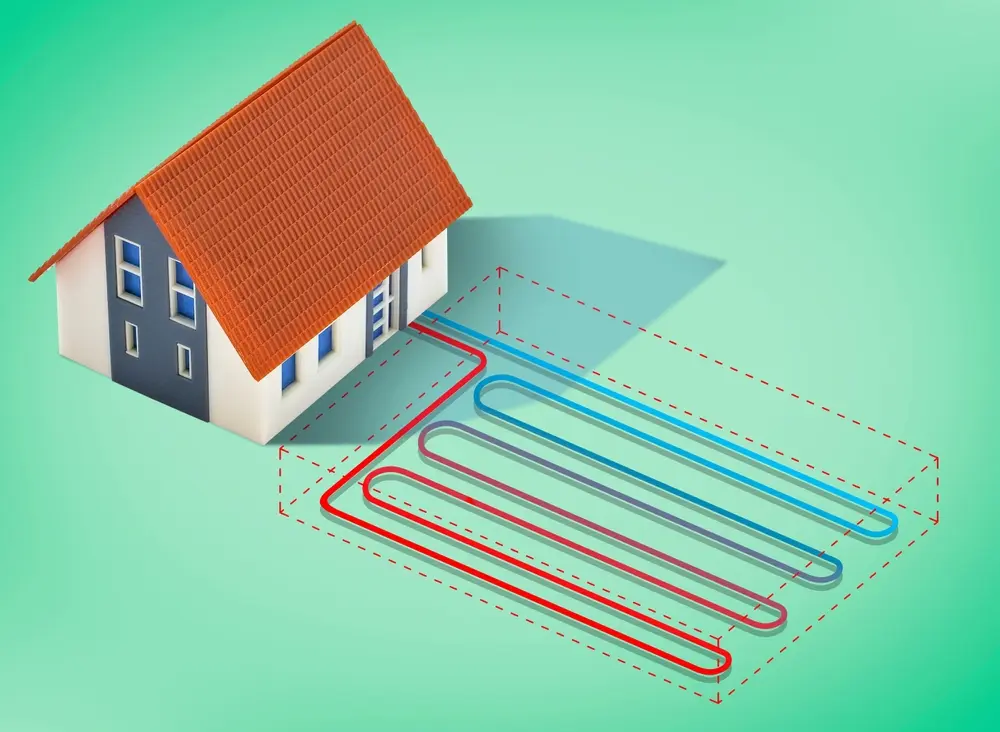
Geothermal System Types & Costs
Understanding ground-source heat pump options
Complete Geothermal System Pricing
| System Type | Loop Field Cost | Equipment Cost | Total Installed | Best For |
|---|---|---|---|---|
| Horizontal Loop | $7,000 – $12,000 | $8,000 – $13,000 | $15,000 – $25,000 | Large lots (1+ acre) |
| Vertical Loop | $12,000 – $22,000 | $8,000 – $13,000 | $20,000 – $35,000 | Limited space |
| Pond/Lake Loop | $3,000 – $7,000 | $8,000 – $13,000 | $11,000 – $20,000 | Water access |
| Open Loop (Well) | $5,000 – $10,000 | $8,000 – $13,000 | $13,000 – $23,000 | Good water source |
| Direct Exchange | $10,000 – $18,000 | $10,000 – $15,000 | $20,000 – $33,000 | Smaller footprint |
| Hybrid System | $8,000 – $15,000 | $12,000 – $18,000 | $20,000 – $33,000 | Extreme climates |
Critical Site Requirements
Horizontal loops need: 1-3 acres of clear land, trenches 4-6 feet deep, 400-600 feet of pipe per ton. Vertical loops need: 150-300 feet deep wells, 20 feet spacing between wells, specialized drilling equipment. All systems require: Soil conductivity testing, proper permits, experienced installers.
Complete Installation Breakdown
Every component in your geothermal investment
Component & Labor Costs
| Component | Cost Range | Details | Lifespan |
|---|---|---|---|
| Heat Pump Unit | $3,500 – $7,500 | Indoor equipment, variable speed | 20-25 years |
| Ground Loop Piping | $800 – $1,500/ton | HDPE pipe, 50-year warranty | 50+ years |
| Excavation/Drilling | $5,000 – $20,000 | Biggest variable cost | Permanent |
| Antifreeze Solution | $500 – $1,500 | Food-grade propylene glycol | 10-15 years |
| Flow Center/Pumps | $1,200 – $2,500 | Variable speed best | 15-20 years |
| Ductwork Modifications | $1,000 – $3,000 | Often need larger ducts | 30+ years |
| Controls/Thermostat | $500 – $1,200 | Geothermal-specific | 10-15 years |
| Labor | $5,000 – $10,000 | Specialized installation | N/A |
Operating Cost Comparison
| System Type | Annual Heating | Annual Cooling | Total Annual | vs Conventional |
|---|---|---|---|---|
| Geothermal | $300 – $500 | $200 – $300 | $500 – $800 | Save 50-70% |
| Air Source Heat Pump | $600 – $900 | $300 – $500 | $900 – $1,400 | Save 30-40% |
| Gas Furnace + AC | $800 – $1,200 | $400 – $700 | $1,200 – $1,900 | Baseline |
| Electric Heat + AC | $1,500 – $2,500 | $400 – $700 | $1,900 – $3,200 | Most expensive |
*Based on 2,500 sq ft home, average climate, $0.12/kWh electricity
Loop System Design & Costs
The heart of your geothermal system
Loop Field Options Detailed
Horizontal Loops
Cost: $3,000-5,000 per ton
Depth: 4-6 feet trenches
Land needed: 400-600 ft per ton
Installation: Trenching/excavator
Pros: Lowest drilling cost
Cons: Large land disturbance
Best for: New construction, acreage
Vertical Loops
Cost: $5,000-8,000 per ton
Depth: 150-400 feet wells
Spacing: 20 feet apart
Installation: Well drilling rig
Pros: Small footprint
Cons: Higher drilling cost
Best for: Limited space, retrofit
Pond/Lake Loops
Cost: $1,500-3,000 per ton
Depth: 8+ feet minimum
Size needed: 1/2 acre minimum
Installation: Coils sunk in water
Pros: Lowest cost option
Cons: Requires water body
Best for: Properties with ponds
Open Loop (Well)
Cost: $2,000-4,000 per ton
Water need: 1.5-3 GPM/ton
Quality: Must test water
Discharge: Return well/pond
Pros: Very efficient
Cons: Water quality issues
Permits: Often complex
Direct Exchange (DX)
Cost: $4,000-6,000 per ton
Unique: Refrigerant in ground
Loops: Copper not plastic
Efficiency: Highest COP
Pros: Smaller loops needed
Cons: Soil limitations
Maintenance: More complex
Hybrid Systems
Cost: $4,000-7,000 per ton
Combines: Ground + air source
Use: Peak load assistance
Benefit: Smaller ground loop
Efficiency: 80% of full geo
Cost savings: 20-30% install
Best for: Extreme climates
Financial Analysis & Payback
Understanding your geothermal investment return
Cost-Benefit Analysis
Federal Tax Credit
Current rate: 30% through 2032
Coverage: Equipment + installation
No cap: Unlimited credit amount
Example: $25,000 system
• Tax credit: $7,500
• Net cost: $17,500
Qualification: Energy Star rated
10-Year Analysis
Initial cost: $25,000
Less tax credit: -$7,500
Net investment: $17,500
Annual savings: $1,200
10-year savings: $12,000
True cost: $5,500
Then: Pure savings
Payback Period
With incentives: 7-10 years
Without: 10-15 years
Factors affecting:
• Current system efficiency
• Local energy costs
• Climate extremes
• System usage patterns
Home Value Impact
Increase: $20-25K average
ROI: 80-100% of cost
Buyer appeal:
• Low utility bills
• Environmental benefit
• Modern technology
• Reduced maintenance
Utility Savings
Heating: 50-70% savings
Cooling: 30-50% savings
Water heating: Free in summer
Typical savings:
• Small home: $800-1,200/yr
• Average: $1,200-1,800/yr
• Large: $1,800-3,000/yr
Additional Benefits
Maintenance: 50% less
Lifespan: 25 vs 15 years
Comfort: Better humidity
Quiet: No outdoor unit
Space: All equipment inside
Safety: No combustion
Real Estate Investment Analysis
Geothermal strategies for maximum property value
Luxury Properties
Perfect match: High-end homes
Investment: $30,000-50,000
Value add: $40,000-60,000
Appeal factors:
• Silent operation
• Environmental prestige
• Lowest operating costs
• No outdoor equipment
Rental Properties
Strategy: Include utilities
Higher rent: $200-300/month
Advantages:
• Predictable costs
• Premium tenants
• Tax benefits
• Minimal maintenance
ROI: 15-20% annually
New Construction
Best opportunity: During build
Cost premium: Only 20-30%
Marketing power:
• “Zero energy ready”
• Green certification
• Future-proof
Buyer premium: 5-10%
Common Geothermal Mistakes
Avoid these expensive installation errors
Critical Installation Issues
Undersized Loop Field
Mistake: Cutting loop length to save
Result: System runs constantly
Consequence: High bills, early failure
Fix cost: $10,000-20,000
Prevention: Proper conductivity test
• Never skip thermal testing
Poor Antifreeze Mix
Mistake: Wrong concentration
Problems: Freezing or inefficiency
Proper mix: 20-25% typically
Testing: Annual checks needed
• Too much = poor heat transfer
• Too little = freeze damage
Inexperienced Installer
Red flag: No geo certification
Issues: Poor loop design
Requirements:
• IGSHPA certification
• 50+ installations
• Local references
Savings risk: Total system failure
Ductwork Neglected
Mistake: Using old ducts
Issue: Geo needs larger ducts
Why: Lower air temperatures
Result: Poor comfort, noise
Solution: Upsize by 20-30%
• Budget $2,000-5,000
No Load Calculation
Mistake: Guessing size
Proper method: Manual J + soil test
Cost: $500-1,500
Saves: Right-sized system
• Prevents $5,000+ mistakes
• Required for warranty
Ignoring Water Quality
Open loop risk: Mineral buildup
Testing needed: Before install
Problems: Scaling, corrosion
Maintenance: Annual cleaning
Better option: Closed loop
• Avoids water issues entirely
Maximizing Your Investment
Smart strategies for geothermal success
Get Multiple Designs
Three contractors minimum. Compare loop field designs. Verify calculations independently. Best design, not lowest price. Poor design can’t be fixed cheaply.
Timing Installation
Best during new construction – save 30%. Combine with other digging (septic, utilities). Spring/fall ideal for drilling. Winter design, summer install.
Financing Options
PACE financing available. Energy-efficiency loans. Some utilities offer 0% financing. Factor tax credit into loan amount. 20-year payback acceptable.
Equipment Selection
Variable speed worth premium. Water-to-water for radiant. Desuperheater for hot water. Two-stage minimum. COP 4.0+ for heating.
Monitoring Systems
Web-based monitoring essential. Track performance/efficiency. Catch problems early. Verify promised savings. Worth $500-1,000 extra.
Maintenance Plan
Annual service contract $200-300. Includes antifreeze testing. Loop pressure checks. Much less than conventional. DIY filter changes only.
Frequently Asked Questions
Expert answers to geothermal system questions
🌍 Ready for Geothermal Energy?
Take advantage of 30% tax credits and lifetime savings

Knowledge Quiz: Geothermal System Cost Guide
Open Quiz
5 quick questions - see how much you learned!
1) Which geothermal loop type is usually best for small lots with limited yard space?
Answer: C
Vertical loops use deep boreholes and need a much smaller footprint than horizontal trenches.
2) What’s the biggest cost variable in most geothermal installations?
Answer: B
Drilling/trenching conditions (soil/rock/access) can swing total project cost by thousands.
3) Why is a thermal conductivity (soil) test / load calculation so important?
Answer: A
Undersized loop fields are one of the most expensive geothermal mistakes to fix later.
4) What is the typical lifespan difference between the ground loop and the indoor heat pump unit?
Answer: D
Closed-loop piping is designed to last decades (often 50+ years), while indoor equipment is typically ~20–25 years.
5) Which incentive is commonly available in the U.S. for geothermal systems (as noted in your guide)?
Answer: B
Your guide references a 30% federal tax credit (with details dependent on current law and eligibility).
🌡️ More HVAC & Climate Control Guides
Explore our complete HVAC system library
View All HVAC Guides (20) ▼
❄️ Cooling Systems
🔥 Heating Systems
💨 Ductwork & Ventilation
Last updated: Jan 2026
Sources: International Ground Source Heat Pump Association (IGSHPA), Department of Energy, EPA Energy Star, Geothermal Exchange Organization, Builds and Buys Research Team



