
🌬️ Ductwork Installation Cost Guide 2026
Complete pricing for new ductwork installation and replacement
💰 Ductwork Installation Cost Overview
Per Linear Foot
Small Home
Average Home
Large Home
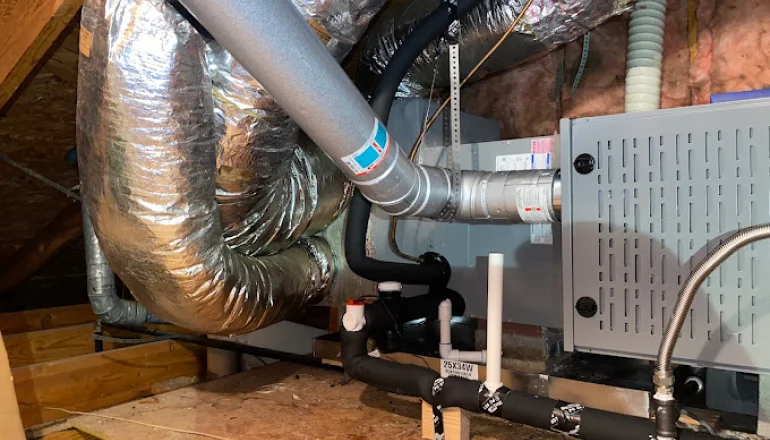
Professional Ductwork Installation Example
Ductwork Types & Installation Costs
Compare all duct materials and system options
Complete Ductwork Installation by Type
| Duct Type | Material Cost/ft | Labor Cost/ft | Total Cost/ft | Best Use |
|---|---|---|---|---|
| Sheet Metal (Galvanized) | $8 – $12 | $27 – $38 | $35 – $50 | Main trunk lines |
| Flexible Ductwork | $5 – $8 | $20 – $30 | $25 – $38 | Branch runs |
| Fiberglass Duct Board | $7 – $10 | $25 – $35 | $32 – $45 | Quiet zones |
| Aluminum Flexible | $6 – $9 | $20 – $30 | $26 – $39 | Dryer/exhaust |
| High-Velocity Mini | $10 – $15 | $40 – $60 | $50 – $75 | Retrofits |
| Spiral Metal | $10 – $14 | $30 – $40 | $40 – $54 | Exposed ducts |
| Fabric Ductwork | $12 – $18 | $25 – $35 | $37 – $53 | Commercial |
Critical Ductwork Requirements
Proper sizing essential: Undersized ducts reduce efficiency by 40%, cause noise, shorten equipment life. Insulation required: R-6 minimum in conditioned space, R-8 in attics/crawlspaces. Sealing critical: Average home loses 20-30% through leaks. Mastic sealant required, not duct tape. Building codes require Manual D calculations for sizing.
Complete System Components & Costs
Every element needed for proper ductwork installation
Essential Ductwork Components
| Component | Cost Range | Quantity Needed | Purpose |
|---|---|---|---|
| Supply Plenum | $200 – $500 | 1 per system | Connects to furnace/AC |
| Return Plenum | $200 – $500 | 1 per system | Air return to system |
| Supply Registers | $15 – $50 each | 1 per room | Air delivery |
| Return Grilles | $20 – $80 each | 1-2 per floor | Air collection |
| Dampers | $30 – $150 each | 1 per branch | Airflow control |
| Transitions | $25 – $75 each | As needed | Size changes |
| Hangers/Supports | $5 – $15 each | Every 4-6 feet | Duct support |
| Insulation Wrap | $1.50 – $3/sq ft | All exposed ducts | Energy efficiency |
Installation Labor Breakdown
| Task | Time Required | Labor Cost | Difficulty |
|---|---|---|---|
| Design & Layout | 2-4 hours | $200 – $400 | Technical |
| Demolition (if needed) | 4-8 hours | $400 – $800 | Labor intensive |
| Install Main Trunk | 8-12 hours | $800 – $1,200 | Critical |
| Run Branch Lines | 12-20 hours | $1,200 – $2,000 | Time consuming |
| Install Registers | 4-6 hours | $400 – $600 | Precision work |
| Sealing & Insulation | 6-10 hours | $600 – $1,000 | Detail oriented |
| Testing & Balancing | 2-4 hours | $200 – $400 | Technical |
Ductwork Design & Sizing
Critical factors for efficient air distribution
Proper Duct Sizing by Home Size
Small Home (1,000-1,500 sq ft)
Main trunk: 16″ x 8″ – 20″ x 8″
Branch runs: 6″ – 8″ round
Total CFM: 800-1,200
• 2-3 ton AC typical
• 100-150 linear feet
• Simple trunk design
• Cost: $2,000-4,000
Medium Home (1,500-2,500 sq ft)
Main trunk: 20″ x 8″ – 24″ x 10″
Branch runs: 6″ – 10″ round
Total CFM: 1,200-2,000
• 3-4 ton AC typical
• 150-250 linear feet
• Extended plenum
• Cost: $3,000-7,000
Large Home (2,500-4,000 sq ft)
Main trunk: 24″ x 10″ – 30″ x 12″
Branch runs: 8″ – 12″ round
Total CFM: 2,000-3,200
• 4-5 ton AC typical
• 250-400 linear feet
• Multiple zones
• Cost: $5,000-12,000
Multi-Story Considerations
Vertical runs: +$50-75/ft
Fire dampers: $200-300 each
Zone systems: +$1,500-3,000
• Separate zones per floor
• Return on each level
• Balancing critical
• Add 20-30% to cost
Installation Methods & Challenges
Different approaches for various home types
Installation Scenarios & Costs
| Scenario | Difficulty | Cost Impact | Time Frame | Key Challenges |
|---|---|---|---|---|
| New Construction | Easiest | Base price | 2-3 days | Coordination with trades |
| Unfinished Basement | Easy | +10-20% | 3-4 days | Ceiling height limits |
| Finished Basement | Moderate | +40-60% | 4-6 days | Drywall repair needed |
| Attic Installation | Moderate | +20-30% | 3-5 days | Insulation critical |
| Crawlspace | Difficult | +30-50% | 4-6 days | Access, moisture issues |
| Slab Foundation | Very Difficult | +80-120% | 5-7 days | Ceiling-mount only |
| Historic Home | Complex | +100-150% | 7-10 days | Preservation requirements |
Common Installation Obstacles
Structural conflicts: Beams, plumbing, electrical in the way add $500-2,000 in routing costs. Asbestos: Old duct wrap removal adds $2,000-5,000. Access issues: Tight spaces increase labor 50%. Code updates: May require whole system upgrade if touching over 40% of existing.
Real Estate Investment Analysis
Ductwork strategies for property investors
Primary Residence
Best approach: Quality installation
Investment: $5,000-8,000
Focus on:
• Proper sealing/insulation
• Zone systems for comfort
• Quiet operation
• Energy efficiency
• 15% home value increase
Rental Property
Best approach: Durable basics
Investment: $3,000-5,000
Strategy:
• Metal main trunks
• Simple layout
• Easy maintenance
• Tenant-proof dampers
• Document all work
Fix & Flip
Best approach: Clean & sealed
Investment: $1,000-2,500
Key points:
• Professional cleaning
• Seal all joints
• New registers/grilles
• “New ductwork” if 40%+
• Fresh insulation wrap
Ductwork Problems & Solutions
Common issues that waste energy and money
Top Ductwork Issues
Leaky Ducts
Problem: 20-30% air loss typical
Symptoms: High bills, dusty home
Solution: Mastic seal all joints
Cost to fix: $500-1,500
• Saves $200-400/year
• Improves comfort
Undersized Ducts
Problem: Poor airflow, noise
Symptoms: Weak flow, whistling
Solution: Resize main trunk
Cost to fix: $2,000-4,000
• Reduces equipment stress
• Quieter operation
Poor Insulation
Problem: Energy waste, condensation
Symptoms: Sweating ducts, high bills
Solution: Add R-8 insulation
Cost to fix: $1,000-2,500
• Prevents mold
• 10-15% energy savings
Bad Design
Problem: Uneven temperatures
Symptoms: Hot/cold rooms
Solution: Redesign layout
Cost to fix: $3,000-6,000
• Proper room-by-room calc
• May need zoning
Dirty Ducts
Problem: Poor air quality
Symptoms: Dust, allergies
Solution: Professional cleaning
Cost to fix: $300-500
• Every 3-5 years
• After construction
Blocked Returns
Problem: System strain
Symptoms: Doors slam, poor flow
Solution: Add return air paths
Cost to fix: $500-1,500
• Door undercuts
• Transfer grilles
Smart Money-Saving Strategies
Professional tips to reduce ductwork costs
Test Before Replace
Duct testing ($200-300) reveals if sealing alone will fix problems. Often saves $3,000+ vs full replacement.
Combine with HVAC
Installing ducts with new HVAC saves $1,000-2,000. One crew, one permit, guaranteed compatibility.
Optimize Layout
Shorter runs save money. Central equipment location can cut ductwork needs by 30%. Plan before building.
DIY Prep Work
Remove old insulation, clear access paths, demo old ducts yourself. Saves $500-1,000 in labor costs.
Zone Strategically
Add zoning to existing ducts ($2,000) instead of separate systems. Controls different areas independently.
Seal Don’t Replace
Aeroseal technology ($1,500-2,500) seals ducts from inside. Fixes 90% of leaks without replacement.
Frequently Asked Questions
Expert answers to common ductwork questions
🏠 Ready to Install or Upgrade Your Ductwork?
Find qualified HVAC contractors for professional installation

Knowledge Quiz: Ductwork Installation Cost Guide
Open Quiz
5 quick questions - see how much you learned!
1) What is the typical installed cost per linear foot for ductwork?
Answer: B
The “Ductwork Installation Cost Overview” lists pricing at $35–$55 per linear foot for materials + labor, which is the standard installed range.
2) CRITICAL: What can undersized ducts do to HVAC efficiency?
Answer: C
The “Critical Ductwork Requirements” section warns that undersized ducts can reduce efficiency by 40%, increase noise, and shorten equipment life.
3) Which sealing method does the guide require instead of duct tape?
Answer: A
The guide states sealing is critical because homes lose 20–30% through leaks, and it specifies mastic sealant is required — not duct tape.
4) What duct insulation level does the guide list as required in attics or crawlspaces?
Answer: D
The “Critical Ductwork Requirements” section states insulation must be R-6 minimum in conditioned space and R-8 in attics/crawlspaces to prevent energy loss and condensation.
5) CRITICAL: Which sizing method is required by building codes for duct sizing?
Answer: B
The guide explicitly states that building codes require Manual D calculations for duct sizing to ensure proper airflow, comfort, and equipment performance.
🌡️ More HVAC & Climate Control Guides
Explore our complete HVAC system library
View All HVAC Guides (20) ▼
❄️ Cooling Systems
🔥 Heating Systems
💨 Ductwork & Ventilation
Last updated: Jan 2026
Sources: Sheet Metal and Air Conditioning Contractors National Association (SMACNA), Air Conditioning Contractors of America (ACCA), ASHRAE Duct Design Standards, Builds and Buys Research Team



