
🚪 Transition Strips Cost Guide 2026
Professional finishes for seamless flooring transitions
💰 Transition Strip Cost Overview
Basic T-Molding
Wood Reducer
Metal Transitions
Average Room
Transition Strips Examples (T-Molding, Reducer, Threshold, Stair Nose)
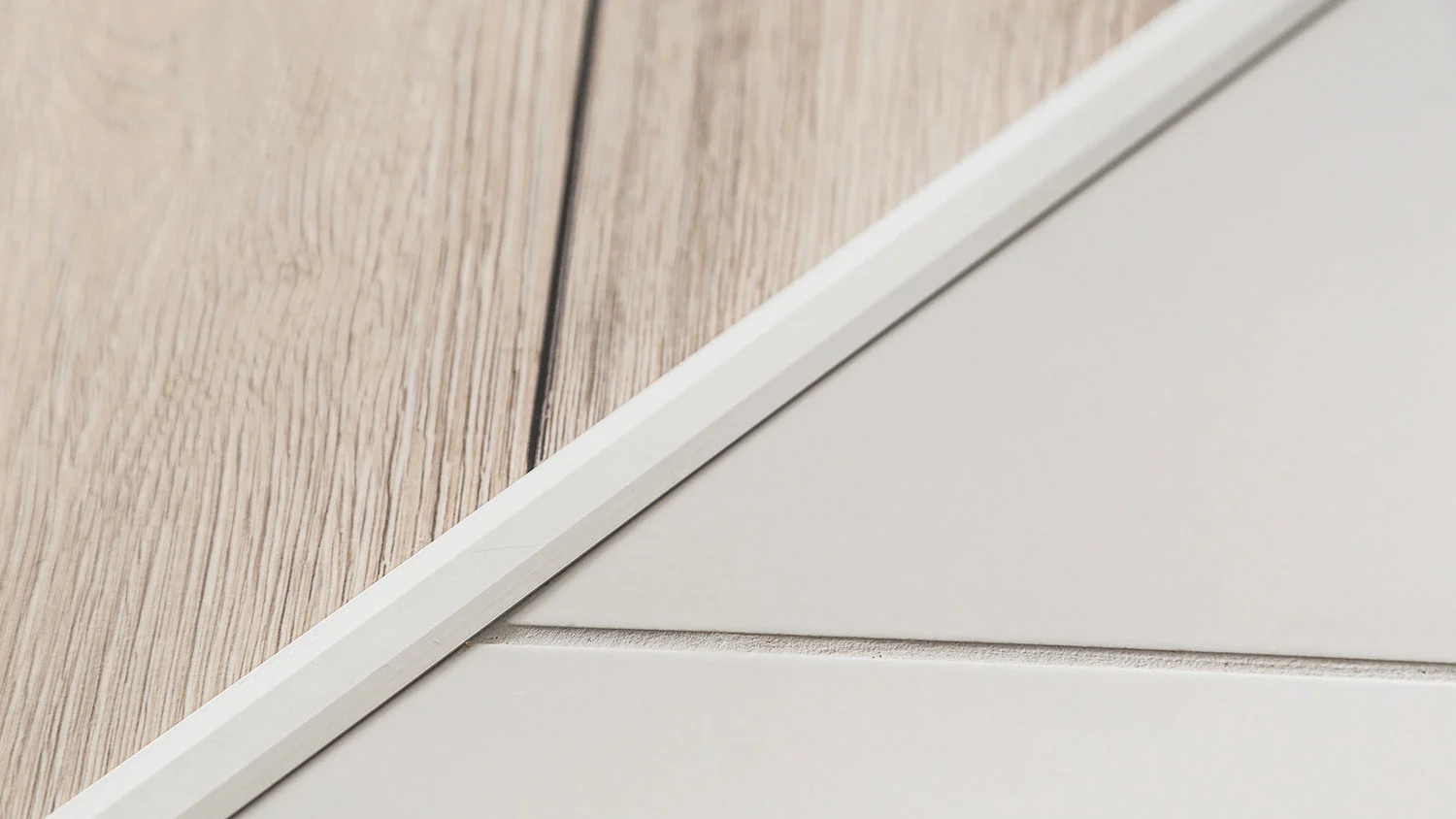
Transition Strip Types & Complete Costs
Professional solutions for every flooring connection
Complete Transition Strip Options
| Transition Type | Material Cost | Installed Cost | Best Applications | Width Coverage |
|---|---|---|---|---|
| T-Molding | $3 – $5/ft | $5 – $8/ft | Same height floors | 1.75″ – 2.25″ |
| Reducer Strip | $5 – $8/ft | $8 – $12/ft | Uneven floor heights | 2″ – 2.5″ |
| Threshold/Saddle | $8 – $15/ft | $12 – $20/ft | Doorways | 2″ – 6″ |
| Stair Nose | $10 – $20/ft | $15 – $30/ft | Stair edges | 3″ – 4.5″ |
| End Cap/Square Nose | $5 – $10/ft | $8 – $15/ft | Floor terminations | 2″ – 3″ |
| Quarter Round | $1 – $3/ft | $3 – $5/ft | Wall transitions | 0.75″ |
| Carpet Bar | $4 – $8/ft | $6 – $12/ft | Carpet to hard floor | 1.5″ – 2″ |
| Baby Threshold | $6 – $10/ft | $10 – $15/ft | Minimal height change | 1″ – 1.5″ |
Critical Transition Requirements
Expansion gaps: All floating floors need 1/4″ to 1/2″ expansion space at transitions. Height differences: Over 1/2″ requires reducer strips for safety. Building codes: No transitions over 1/4″ without beveled edge. Improper transitions cause trips, warranty voids, and floor buckling.
Material Options & Quality Levels
Understanding transition strip materials and pricing
Transition Strip Materials Comparison
| Material | Cost Range/ft | Durability | Best For |
|---|---|---|---|
| Solid Wood | $8 – $20 | Excellent (refinishable) | Hardwood floors |
| Laminate | $3 – $8 | Good | Laminate floors |
| Vinyl | $2 – $6 | Fair | LVP/vinyl floors |
| Aluminum | $10 – $25 | Excellent | Commercial/modern |
| Brass | $15 – $35 | Excellent | High-end homes |
| Rubber | $5 – $12 | Good | Safety/accessibility |
| Marble/Stone | $20 – $50 | Excellent | Luxury installations |
| MDF/Composite | $2 – $5 | Fair | Budget projects |
Installation Methods & Labor
| Installation Type | Labor Cost/ft | Time/10 ft | Skill Level |
|---|---|---|---|
| Glue Down | $2 – $4 | 30 minutes | DIY friendly |
| Track System | $3 – $5 | 45 minutes | Intermediate |
| Screw Down | $3 – $5 | 45 minutes | Intermediate |
| Floating/Snap-In | $2 – $3 | 20 minutes | Easy DIY |
| Custom Cut | $5 – $10 | 60+ minutes | Professional |
Common Transition Scenarios
Solutions for every flooring connection challenge
Typical Transition Applications
Wood to Tile
Challenge: Height difference
Solution: Wood reducer
Cost: $10-15/ft installed
• Match wood finish
• Allow expansion gap
• Seal tile edge
Room to Room
Challenge: Same floor, doorway
Solution: T-molding
Cost: $6-10/ft installed
• Center in doorway
• Match floor color
• Covers expansion gap
Carpet to Hard Floor
Challenge: Secure carpet edge
Solution: Carpet bar/Z-bar
Cost: $8-12/ft installed
• Tuck carpet edge
• Metal or wood options
• Prevents fraying
Top of Stairs
Challenge: Safety critical
Solution: Stair nosing
Cost: $20-30/ft installed
• Non-slip surface
• Code compliant
• Overlaps tread
Sliding Door Track
Challenge: Weather seal
Solution: Threshold
Cost: $15-25/ft installed
• Waterproof seal
• ADA compliant options
• Adjustable height
Wall Base
Challenge: Hide expansion gap
Solution: Quarter round/shoe
Cost: $3-5/ft installed
• Flexible install
• Paint or stain
• Various sizes
Measuring & Planning Guide
Calculate exactly what you need
Transition Planning Worksheet
Doorway Transitions
Standard door: 32-36″
Double door: 60-72″
Cased opening: 48-96″
• Measure jamb to jamb
• Add 1/2″ for fitting
• Count all doorways
Room Perimeters
Quarter round needs:
• Measure each wall
• Subtract door widths
• Add 10% waste factor
• Don’t forget closets
• Inside corners need extra
Stairway Needs
Per step: Tread width + 2″
• Landing transitions
• Top step critical
• Match existing trim
• Safety regulations apply
• Non-slip required
Cost Calculator
Total = (Length × Price) + Labor
• Doorways: ___ ft × $10
• Perimeter: ___ ft × $4
• Stairs: ___ ft × $25
• Special: ___ ft × $15
• Labor: 30% of materials
Installation Tips & Techniques
Professional methods for perfect transitions
Professional Installation Guidelines
Cutting Techniques
Tools needed:
• Miter saw for angles
• Use sharp blade
• Support both ends
• Cut face-down (wood)
• Hacksaw for metal
• File edges smooth
Perfect Fit Tips
Measuring twice:
• Account for walls out of square
• Test fit before cutting
• Leave 1/8″ at walls
• Scribe to irregularities
• Number pieces
• Keep orientation notes
Secure Attachment
By flooring type:
• Concrete: Adhesive + screws
• Wood subfloor: Screws only
• Track systems: Click in place
• Pre-drill to prevent splits
• Countersink screws
• Use color-matched putty
Finishing Touches
Professional details:
• Caulk small gaps
• Touch-up scratches
• Clean adhesive immediately
• Vacuum tracks clean
• Test for movement
• Document warranty
Common Mistakes
Avoid these errors:
• Cutting too short
• Ignoring expansion gaps
• Wrong screw length
• Visible fasteners
• Mismatched colors
• Loose installation
Quality Check
Final inspection:
• No lips or edges
• Smooth transitions
• Secure attachment
• Even gaps both sides
• Proper slope if needed
• ADA compliance
Real Estate Investment Perspective
Transition strips impact on property value
Quality Matters
Cheap strips: Detract value
Quality strips: Add polish
Investment: $200-500/home
• Buyers notice details
• Shows maintenance care
• Prevents damage claims
Rental Properties
Durability focus: Metal best
Safety priority: No trip hazards
Budget: $5-10/ft average
• Reduces liability
• Easy replacement
• Tenant satisfaction
Fix & Flip Strategy
Match flooring quality
Never skip transitions
Budget: 5% of flooring cost
• Complete look essential
• Inspector will check
• Easy upgrade impact
Special Situations & Solutions
Handling challenging transition scenarios
Complex Transition Challenges
Curved Transitions
Solution: Flexible strips
Cost: +50-100% premium
• Rubber or vinyl best
• Heat to shape
• Multiple small pieces
• Custom fabrication available
Multi-Height Floors
3+ different levels
Solution: Custom ramps
• ADA compliance issues
• Professional design needed
• $30-50/ft typical
• Safety critical
Wet Area Transitions
Bathroom/kitchen entries
Solution: Water-resistant
• Aluminum or vinyl
• Sealed installation
• Slope away from wet
• Non-slip surface
Historic Homes
Matching old trim
Solution: Custom milling
• $25-100/ft possible
• Match wood species
• Replicate profiles
• Salvage when possible
ADA Compliance
Maximum: 1/4″ vertical
Beveled: 1/2″ max 1:2 slope
• Ramps over 1/2″
• 36″ clear passages
• Contrast colors help
• Smooth transitions
Heated Floors
Special requirements
Solution: Thermal breaks
• Allow more expansion
• Insulated transitions
• Avoid metal conduct
• Flexible materials best
Money-Saving Tips
Get professional results for less
Buy With Flooring
Purchase transitions when buying flooring for package discounts of 15-25%. Color matching is guaranteed and you’ll have everything at once.
Shop Wholesale
Flooring wholesalers sell transitions at 40-50% below retail. Minimum orders usually $100-200. Great for multiple rooms.
Simple DIY Types
T-moldings and carpet bars are easy DIY, saving $3-5/ft labor. Avoid stair nosings and complex cuts – hire pros for safety.
Paint Grade Option
Use MDF transitions and paint to match for 60% savings over hardwood. Great for painted trim homes. Prime well first.
Accurate Measuring
Over-ordering wastes money. Measure twice, order once. Most stores don’t accept returns on cut transitions. Save cutoffs for repairs.
Bundle Installation
Flooring installers add transitions for 50% less than separate trip. Trim carpenters installing baseboards can do transitions too.
Frequently Asked Questions
Expert answers about transition strips
🚪 Ready to Complete Your Flooring Project?
Find the right professionals and calculate your costs

Knowledge Quiz: Transition Strips Cost Guide
Open Quiz
5 quick questions - see how much you learned!
1) What is the typical installed cost range for basic T-molding transition strips?
Answer: B
Your guide shows T-molding installed at $5–$8 per linear foot.
2) Which transition type is designed specifically for floors with different heights?
Answer: C
Reducers are used to bridge height differences and reduce trip hazards.
3) What expansion gap do most floating floors require at transitions?
Answer: A
Your guide states floating floors need 1/4″–1/2″ expansion space at transitions.
4) Which transition is the safety-critical choice for the top edge of stairs?
Answer: D
Stair nosing is built for stair-edge protection and code-compliant safety.
5) What is the best way to ensure perfect color match for transition strips?
Answer: B
Your pro tip: order transitions when purchasing flooring for guaranteed matching (often cheaper too).
🏠 More Flooring Guides
Explore our complete flooring installation library
View All Flooring Guides (20+) ▼
🌳 Hardwood & Wood Flooring
🏛️ Tile & Stone Flooring
🛡️ Resilient & Synthetic Flooring
🔧 Floor Preparation & Repair
Last updated: Jan 2026
Sources: National Wood Flooring Association, Flooring Contractors Association, International Certified Flooring Installers Association, ADA Accessibility Guidelines, Building Code Requirements, Transition Strip Manufacturers Alliance, Builds and Buys Research Team



