
Carson City Real Estate Investment Guide For 2026
A comprehensive resource for investors targeting Nevada’s capital city, where stable government employment, Lake Tahoe proximity, Reno metro spillover, and one of the least volatile real estate markets in the American West combine for consistent, reliable returns
Quick answers: Top 5 most searched Carson City investment questions ▼
Who lives here: The Carson City tenant and resident profile ▼
In This Guide
Click on any section to navigate directly to that content
1. Carson City Market Overview
Market Fundamentals
Carson City is Nevada’s capital and its most economically stable real estate market. A consolidated city-county of 60,000 people sitting between Reno to the north and Lake Tahoe to the west, Carson City occupies an enviable geographic and economic position. State government employment anchors the local economy through all economic cycles, while Lake Tahoe proximity, Reno metro spillover growth, and Nevada’s zero income tax create persistent demand from retirees, remote workers, and California transplants.
Key economic indicators defining Carson City’s investment case:
- Population: 60,000+ in the consolidated city-county
- Major Employers: Nevada State Government (largest employer), Carson City municipal government, Carson Tahoe Health, Western Nevada College, Prison system (Northern Nevada Correctional Center), US Federal agencies
- Median Household Income: $65,000; stable and government-supported
- Economic Stability: Government employment insulates the market from private sector cycles; least volatile major Nevada market
- Location Premium: 30 minutes to Lake Tahoe ski resorts; 30 minutes to Reno; 45 minutes to Sacramento Bay Area spillover
- Vacancy Rate: Under 4% consistently; government tenants stay longer than average
Carson City’s investment case is fundamentally different from every other Nevada market in this series. It is not a tech story like Reno, not a tourism story like Las Vegas, and not a logistics story like North Las Vegas. It is a stability story: a market where the primary employment driver cannot leave, cannot go bankrupt, and does not follow boom-bust cycles. For investors seeking reliable, lower-volatility returns as part of a diversified portfolio, Carson City occupies a unique position.
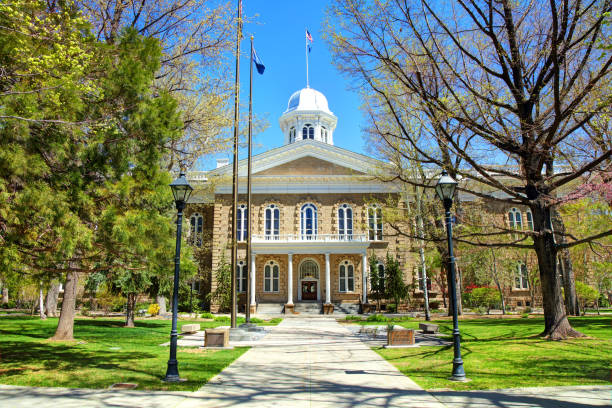
Carson City’s combination of Nevada capital status, Lake Tahoe proximity, and government employment stability creates one of the most consistent real estate markets in the American West
2026 Economic Outlook
- Nevada Legislature 2025 session generating temporary housing demand from legislators, lobbyists, and staff
- Carson Tahoe Health expansion adding healthcare employment in the city
- Western Nevada College enrollment growth creating student and faculty housing demand
- Remote worker and retiree inflow continuing as California tax savings awareness grows
- Dayton and Lyon County growth creating spillover demand into south Carson City
- US 395 corridor development attracting additional commercial and residential investment
Investment Climate
Carson City is Nevada’s conservative investment market in the best sense of that word. It delivers reliable, consistent returns without the dramatic swings of Las Vegas tourism dependence or the single-employer concentration risk of Sparks’s Tesla thesis. The stability premium is real: investors consistently report lower vacancy, longer average tenancies, and fewer management headaches in Carson City than in equivalent yield markets in larger Nevada cities.
- Government employment stability creating a tenant pool where the largest employer is the State of Nevada, which cannot relocate, cannot go bankrupt, and does not lay off employees during recessions
- Lake Tahoe lifestyle premium driving retiree and remote worker demand that creates a second independent demand driver beyond government employment
- Reno metro growth spillover pushing households from increasingly expensive Reno southward into Carson City as the most affordable quality alternative in the Northern Nevada corridor
- Four-season climate considerations identical to Reno: heating system maintenance and snow preparation are required operational elements
- Legislature biennial premium creating a unique short-term demand spike every two years when the Nevada Legislature is in session, generating demand for furnished short-term housing
Historical Performance
| Period | Market Driver | Avg Annual Appreciation | Key Event |
|---|---|---|---|
| 2009-2013 | Post-recession recovery | 2-5% | Carson City declined less than Reno or Las Vegas during recession due to government stability |
| 2014-2018 | Reno tech growth spillover, California migration begins | 6-9% | Reno price increases began pushing households south into Carson City |
| 2019-2022 | Remote work, pandemic migration, Reno spillover acceleration | 12-20% | Pandemic remote work created new demand from Sacramento and Bay Area workers choosing Carson City |
| 2023-2024 | Rate normalization, stabilization | 3-5% | Market cooled less severely than Reno; government employment cushioned demand |
| 2025-2026 | Rate stabilization, continued migration, legislature session | 5-8% (projected) | Legislature session generating short-term housing demand; Dayton growth pushing households north |
Carson City has delivered average annual appreciation of 6 to 7 percent over the past decade, slightly below Reno’s 9 to 11 percent but with significantly lower volatility. The 2008 crisis produced a much smaller peak-to-trough decline in Carson City than in Reno or Las Vegas, precisely because government employment stayed stable. For investors who prioritize consistency over maximum upside, Carson City’s track record is genuinely compelling.
Demographic Trends Driving Demand
- State Government Employment Permanence – The Nevada state government employs thousands of workers in Carson City in positions that are not subject to private sector layoffs; these employees rent and buy homes in Carson City with multi-year and multi-decade time horizons
- Reno Price Spillover – As Reno median prices have crossed $450,000, households earning $60,000 to $80,000 who cannot afford Reno are turning to Carson City as the affordable alternative 30 minutes south
- Retiree Inflow from California – Nevada’s zero income tax on retirement income combined with Carson City’s proximity to Lake Tahoe recreation makes it a top destination for California retirees seeking a quality lifestyle at lower cost
- Remote Worker Relocation – Sacramento and Bay Area remote workers seeking Nevada tax savings with Lake Tahoe weekend access choose Carson City specifically; it is closer to Sacramento than Reno and offers the same Nevada tax benefits
- Legislature Biennial Demand – Every two years the Nevada Legislature creates a unique temporary housing demand from legislators, staff, lobbyists, and associated professionals who need furnished short-term housing for the 4 to 5 month legislative session
- Healthcare Sector Growth – Carson Tahoe Health system expansion adding hundreds of well-compensated healthcare professional jobs annually
📚 New to real estate investing? Master the fundamentals with our professional course Learn more →
2. Neighborhood Hotspots
Carson City Investment Neighborhood Map
Interactive map of Carson City investment neighborhoods. Green stars show top hotspots, blue circles mark established markets, and orange circles highlight emerging areas.
Core Investment Neighborhoods
Detailed Submarket Analysis: All Carson City Neighborhoods
| Neighborhood | Price Range (SFH) | Cap Rate | Growth Drivers | Best Strategy |
|---|---|---|---|---|
| Empire Ranch | $400K-$580K | 5.0-6.0% | Newer construction, government professionals, top schools | Appreciation play, quality tenants, buy-and-hold |
| Silver Oak / South Carson | $380K-$540K | 5.0-6.0% | Healthcare proximity, top schools, family demographics | Balanced returns, family rentals, healthcare tenants |
| Lompa Ranch / West Carson | $350K-$500K | 5.5-6.5% | Government complex proximity, state employees, downtown access | Government housing focus, stable tenants, balanced returns |
| Downtown Historic District | $280K-$450K | 5.5-7.0% | Historic character, Capitol proximity, legislature demand, value-add | Value-add, BRRRR, legislature STR, urban play |
| North Carson / US 395 | $310K-$430K | 6.0-7.5% | Affordability, workforce housing, US 395 access | Maximum Carson City cash flow, workforce housing |
| East Carson / Winnie Lane | $310K-$430K | 5.5-7.0% | East corridor employment, workforce housing, consistent demand | Cash flow focus, workforce housing, affordable entry |
| Lakeview Corridor | $400K-$600K | 4.5-5.5% | Mountain views, Sierra proximity, retiree and remote worker appeal | Premium appreciation, lifestyle tenants, long-term hold |
| South Carson / Dayton Gateway | $370K-$510K | 5.0-6.0% | Dayton growth spillover, new development, southern growth corridor | Emerging appreciation, new construction, Dayton commuters |
Expert Insight: “Carson City is what I call a ‘sleep well’ investment. My clients who hold properties there rarely call me with problems. Government tenants pay on time, stay for 3 to 5 years, and treat properties like they own them because many of them intend to eventually buy in the city. The vacancy rates I see in Empire Ranch and Silver Oak are 2 to 3 percent annually, lower than anything I manage in Reno or Las Vegas. You sacrifice some appreciation potential compared to South Reno, but the total cost of ownership, including vacancy, maintenance, and management time, often makes Carson City the more profitable hold over a 10-year period.” – Patricia Sullivan, Northern Nevada Property Management
3. Property Types
| Investment Goal | Best Property Type | Best Neighborhoods | Minimum Capital |
|---|---|---|---|
| Lowest Management Intensity | SFH with government professional tenants | Empire Ranch, Silver Oak, Lompa Ranch | $105,000+ |
| Maximum Cash Flow | Workforce SFH | North Carson, East Carson | $85,000+ |
| Unique Legislature STR Premium | Historic home near Capitol | Downtown, West Carson | $90,000+ |
| Best Retiree Tenant Stability | Single-story SFH or condo | Lakeview, Empire Ranch single-story, South Carson | $100,000+ |
Our Complete Renovation & Remodeling Cost Guide covers 400+ pages of project-by-project breakdowns with real contractor pricing ranges.
4. Cost Analysis
Acquisition Cost Breakdown (Carson City)
| Expense Item | Typical Cost | Example ($420,000 Property) | Notes |
|---|---|---|---|
| Down Payment | 25% (investment) | $105,000 | Standard investment property requirement |
| Closing Costs | 2-3% of price | $8,400-$12,600 | Nevada transfer tax modest; Carson City recording fees standard |
| General Inspection | $375-$600 | $475 | Four-season climate: heating system inspection critical; older downtown homes need more thorough inspection |
| Radon Test | $150-$300 | $200 | Carson City shares Northern Nevada’s elevated radon geology; test all properties |
| Historic Property Review (if applicable) | $500-$1,500 | $750 (if historic) | Downtown historic district properties may require additional review for renovation compliance with historic preservation guidelines |
| Initial Repairs | 0-8% of price | $0-$33,600 | Older downtown properties may need significant systems updates; newer Empire Ranch properties typically minimal |
| Reserves (6 months) | 6 months expenses | $11,000-$14,000 | Government tenant stability means lower vacancy risk; reserves still prudent |
| TOTAL MINIMUM ENTRY | ~28-32% of value | $125,025-$166,625 | Comparable to Reno entry; significantly less than equivalent quality California markets |
Sample Cash Flow Analysis: Empire Ranch Single-Family Home
| Item | Monthly | Annual | Notes |
|---|---|---|---|
| Gross Rent | $2,050 | $24,600 | 3BR, Empire Ranch, market rate, government professional area |
| Less Vacancy (3%) | -$62 | -$738 | Government tenants stay 3 to 5 years; one of the lowest vacancy rates in Nevada |
| Property Taxes | -$245 | -$2,940 | ~0.70% of $420K assessed; Carson City rate competitive with Washoe County |
| Insurance | -$110 | -$1,320 | Four-season coverage; wildfire risk low in Empire Ranch; verify for foothills properties |
| HOA Fees (if applicable) | -$60 | -$720 | Empire Ranch HOA modest; many Carson City properties have no HOA |
| Property Management (9%) | -$185 | -$2,214 | Carson City PM market smaller than Reno; fewer options but quality managers available |
| Maintenance + CapEx (8%) | -$164 | -$1,968 | Four-season climate; government tenants maintain properties well; lower actual costs than budget suggests |
| Net Operating Income | $1,224 | $14,700 | Before mortgage; strong for a government-stabilized suburban market |
| Mortgage ($450K purchase, 25% down, 6.75%, 30yr) | -$1,095 | -$13,140 | Principal and interest on $337,500 loan |
| CASH FLOW | +$129 | +$1,560 | Positive cash flow with government-grade tenant stability; rare combination |
| Cap Rate | 3.27% (NOI / Purchase Price) | Strong for government-stabilized suburban market with 3% vacancy | |
| Total Return (7% appreciation) | ~35% | Including appreciation, equity, principal paydown on 25% down |
This example illustrates Carson City’s distinctive investment profile: positive cash flow with 3 percent vacancy in a market where the primary employment driver is the state government. Note the 3 percent vacancy assumption, which is materially lower than the 4 to 5 percent used in Sparks and Reno models. Government employee tenants genuinely stay longer and create fewer vacancy events, which is a significant financial advantage that the cash flow model only partially captures. The lower total return compared to Reno (35% vs. 40%) is offset by dramatically lower management stress and operational risk.
Legislature STR Premium Analysis: Downtown Property
For investors pursuing the legislature short-term rental strategy, here is how the numbers work over a two-year cycle:
| Period | Rental Strategy | Monthly Rate | Months | Revenue |
|---|---|---|---|---|
| Legislature Session (Year 1) | Furnished STR to lobbyist or legislator | $3,500-$5,000 | 4-5 months | $14,000-$25,000 |
| Off-Session (Remaining Year 1) | Long-term rental to government employee | $1,700-$1,900 | 7-8 months | $11,900-$15,200 |
| Off-Session (Full Year 2) | Long-term rental to government employee | $1,700-$1,900 | 12 months | $20,400-$22,800 |
| Two-Year Total Revenue | Combined strategy | Average $2,100-$2,650/month | 23-24 months | $46,300-$63,000 |
The legislature strategy adds $6,000 to $15,000 in additional revenue per two-year cycle compared to a standard long-term rental approach, representing a 13 to 30 percent income premium on a $380,000 to $420,000 downtown property. The strategy requires managing the tenant transition around each legislative session, ensuring a long-term tenant agrees in advance to a mid-term termination for the session period, and maintaining the property in furnished condition. For investors comfortable with this management layer, the financial payoff is significant.
Expert Insight: “The thing investors miss about Carson City is the vacancy math. I use 3 percent vacancy in my Empire Ranch models while I use 5 percent for Reno and 5 to 7 percent for North Las Vegas. That sounds like a small difference, but on a $2,000 per month rent over 10 years, the difference between 3 percent and 5 percent vacancy is about $4,800 in additional revenue. Then factor in that government tenants cause less wear and tear, require fewer maintenance calls, and typically leave properties in better condition than average, and the total cost of ownership difference between Empire Ranch and a comparable Sparks property is actually quite meaningful even though the cap rate is lower on paper.” – Patricia Sullivan, Northern Nevada Property Management
5. Legal Framework
✅ Carson City Operates Under Nevada’s Highly Landlord-Favorable Law
As a consolidated city-county, Carson City operates under Nevada Revised Statutes Chapter 118A, the same investor-favorable framework governing all of Nevada. No rent control, no just cause eviction requirement at lease end, and a 3 to 5 week eviction process for non-payment apply fully. Carson City requires a business license for rental properties and has its own code enforcement, but adds no material regulatory burden beyond what Nevada’s statewide law provides. The legislature STR strategy requires additional permit consideration, addressed below.
Nevada State Law: Key Provisions
- No Rent Control: Nevada prohibits local rent control ordinances statewide. Carson City landlords may raise rents to full market rate with 45 days written notice, with no limit on frequency or amount of increase.
- No Just Cause Eviction: At lease end, Carson City landlords can choose not to renew for any legal reason. No justification required to the tenant or government entity.
- 5-Day Pay or Quit: Non-payment evictions begin with a 5-day notice. Uncontested cases complete in 3 to 5 weeks. Note: with government employee tenants, evictions are extremely rare in practice.
- Security Deposits: Maximum 3 months rent. Must be returned with itemized deductions within 30 days of move-out.
- Heating Habitability: Functional heating is legally required in Carson City rental properties. Carson City winters are cold; a January heating failure creates immediate habitability obligations.
- Lease Terms: Annual leases expire at term end without cause required. Month-to-month requires 30 days notice from either party.
Carson City Specific Requirements
- Business License: Carson City is a consolidated city-county requiring a single business license for rental operations within its boundaries. Modest annual fee; must be obtained before tenant occupancy.
- Short-Term Rental Permits: Carson City has an STR ordinance requiring a permit for any rental under 30 days. The biennial legislature creates a legitimate demand for 30+ day furnished rentals, which are treated as standard long-term rentals rather than STRs. Understand the 30-day threshold carefully when planning legislature housing strategy.
- Historic Preservation: Properties in the Downtown Historic District may be subject to Nevada State Historic Preservation Office (SHPO) guidelines for exterior modifications and renovations. Review preservation requirements before purchasing for major renovation.
- Radon Disclosure: Nevada requires radon disclosure. Carson City has elevated radon in many areas consistent with Northern Nevada geology. Test before purchase; mitigate before tenant occupancy.
- Code Enforcement: Carson City code enforcement monitors property maintenance standards. Respond promptly to notices; the government tenant neighborhood character means neighbors actively report violations.
Carson City Key Resources
- Carson City Business License: carson.org
- Carson City Building and Safety: 775-887-2310
- Nevada State Historic Preservation: shpo.nv.gov
- Nevada NRS Chapter 118A: leg.state.nv.us
| Issue | Carson City / Nevada Rule | Investor Impact |
|---|---|---|
| Rent Control | Prohibited statewide; unlimited increases with 45 days notice | Raise to market rate annually; Carson City’s 4 to 5% annual rent growth fully capturable |
| Eviction Speed | 3 to 5 weeks for non-payment | Rarely needed with government tenants; process is available and fast when required |
| Legislature STR Threshold | STR permit required for rentals under 30 days; 30+ day furnished rentals are standard long-term | Legislature strategy works best with 30+ day minimum stays; avoids STR permit complexity |
| Historic Preservation | SHPO guidelines apply to designated historic properties | Review before major exterior renovation on downtown historic properties; adds cost and time |
| Heating Habitability | Functional heating legally required; winter emergency obligation | Service heating annually in October; same winter preparation requirement as Reno and Sparks |
| State Income Tax | None on rental income | Full rental income retained; California investors save 9.3% to 13.3% per year on Carson City rental earnings |
6. Step-by-Step Carson City Investment Playbook
Choose Your Carson City Strategy
Carson City’s market supports four distinct investor approaches depending on your priorities:
Government Stability Buy-and-Hold
Buy in Empire Ranch, Silver Oak, or Lompa Ranch. Target state government and healthcare professionals as tenants. Accept moderate cap rates in exchange for the lowest vacancy rates, longest average tenancies, and least management intensity available in any Nevada market. Best for investors who want reliable, low-drama ownership.
Legislature STR Play
Buy a furnished-ready historic home or well-located property within 10 minutes of the Capitol. Rent long-term to government employees outside session, convert to furnished STR during the 4 to 5 month legislative session every two years. Unique to Carson City; no other Nevada market offers this specific income enhancement.
Workforce Cash Flow
Buy in North Carson or East Carson. Target retail, service, and trades workforce tenants. Higher yields of 6 to 7.5 percent at lower entry points. Carson City workforce housing is less management-intensive than comparable Las Vegas or Reno markets because government employment broadly stabilizes community character throughout the city.
Historic Value-Add
Buy an older downtown or Old Southwest home. Renovate to preserve historic character while modernizing systems and finishes. Target the legislature STR and long-term professional markets. Requires understanding of historic preservation guidelines but offers renovation premiums unavailable in newer suburban properties.
Build Your Carson City Team
- Carson City Specialist Agent: The Carson City real estate market is smaller than Reno or Las Vegas; local expertise matters significantly. Your agent should know the Empire Ranch submarket, understand historic district renovation considerations, and be aware of which neighborhoods have government employee concentration. Ask specifically: “Have you sold investment properties in Carson City in the last two years?”
- Nevada LLC Attorney: Form before purchase. Carson City and Reno-Sparks properties can be held in the same Nevada LLC. If you are building a diversified Northern Nevada portfolio, one LLC structure can cover all jurisdictions.
- Carson City Property Manager: The PM market in Carson City is smaller than Reno’s. Ask specifically whether they manage properties in Empire Ranch and South Carson, not just the city generally. Also ask about their legislature STR management experience if that strategy is part of your plan.
- Historic Preservation Consultant (if applicable): For downtown historic district properties, engage a consultant or architect familiar with Nevada SHPO requirements before any renovation plans. Historic guidelines affect what changes you can make to exterior elements.
- Heating and HVAC Contractor: Same requirement as Reno and Sparks: pre-establish the relationship before winter. Carson City winters are cold and a January heating failure is a habitability emergency.
Legislature STR Tip: The Nevada Legislature session schedule is published years in advance and is entirely predictable: sessions begin in February of odd-numbered years and run for 120 days. Plan your furnished rental marketing to begin 3 to 4 months before session start. The pool of potential legislature tenants is finite (120 legislators, hundreds of lobbyists, and associated staff), so early marketing through the Nevada Lobbyists Association and Legislative Counsel Bureau housing resources is essential to securing the premium rates before the best tenants have already made arrangements.
Carson City Specific Due Diligence
Physical Due Diligence
- Radon test; Carson City shares Northern Nevada elevated radon geology
- Heating system age and condition; furnace and pipe insulation inspection before winter
- Roof condition for snow load; Carson City receives significant winter snowfall
- For downtown historic homes: foundation condition, lead paint, knob-and-tube wiring, and any unpermitted modifications from previous owners
- Water heater age; Carson City water has high mineral content that accelerates water heater deterioration
- Wildfire risk assessment for Lakeview corridor and western foothills properties; verify insurance availability
- Drainage and grading for spring snowmelt management
Regulatory and Special Due Diligence
- Confirm Carson City business license requirement and any existing violations on the property
- For downtown historic properties: verify whether property is on the National Register or local historic register; confirm what modifications require SHPO review
- Verify STR permit eligibility if any short-term rental plans; confirm the 30-day minimum strategy for legislature periods avoids STR permit requirements
- Check school attendance boundaries; government employee families care deeply about school district quality in Carson City
- Review any CC&Rs for neighborhoods with HOA governance; verify rental policy
- Confirm no outstanding code enforcement violations or open building permits
Managing Effectively in Carson City
- Winter preparation is mandatory: Service heating systems every October. Winterize pipes. Ensure gutters are clear before snowfall. Carson City receives significant snow; the winter maintenance requirement is the same as Reno and Sparks and must not be treated as optional.
- Raise rents annually: Carson City’s no-rent-control environment and 4 to 5 percent annual rent growth means you should review and raise to market at every lease renewal. Government tenants are not unusually sensitive to market-rate increases when the market is genuinely moving; they are used to employer-based salary adjustments and understand cost of living increases.
- Legislature calendar management: If pursuing the legislature strategy, mark odd-year February session start on your calendar years in advance. Begin marketing legislature housing in October of the preceding year. Transition your long-term tenant out of the property with 60 to 90 days notice aligned with the session calendar. Re-establish long-term occupancy within 30 to 60 days after session ends.
- Maintain government employee appeal: Government professional tenants choose properties based on school quality, neighborhood character, and property condition. Keep your properties in excellent condition. Properties that look well-maintained from the street attract and retain the government employee demographic that makes Empire Ranch and Silver Oak so stable.
- Water heater maintenance: Carson City water has elevated mineral content. Install water softeners on properties where this is a concern and plan for more frequent water heater replacement (every 8 to 10 years vs. 12 to 15 years in lower-mineral markets) in your CapEx reserves.
7. Financing Options for Carson City
| Loan Type | Down Payment | Rate Premium | Best For | Carson City Note |
|---|---|---|---|---|
| Conventional Investment | 25% | +0.5-0.75% | W-2 income investors; most common choice | All Carson City properties below conforming limit; no jumbo required |
| DSCR Loan | 25-30% | +1-2% | LLC borrowing; no income documentation | Carson City rents support 1.0x DSCR in most submarkets; government tenant stability makes DSCR lenders favorable on Carson City properties |
| Portfolio Loan | 20-25% | +0.75-1.5% | Multi-property Northern Nevada investors | Carson City, Reno, and Sparks properties can often be combined in portfolio loan structures with Northern Nevada lenders |
| House Hacking (FHA) | 3.5% | Standard + MIP | Owner-occupying one unit; first investment | Good entry for new investors; buy a duplex in the downtown or west Carson area, occupy one unit while renting the other |
| Renovation Loan (203k or similar) | Varies | Varies | Historic downtown property renovation | For historic downtown properties needing significant renovation; combines acquisition and renovation financing; verify compatibility with SHPO requirements |
| Hard Money (Bridge) | 15-25% | 8-12% rate | Historic value-add acquisitions | Northern Nevada hard money lenders cover Carson City; useful for downtown historic renovation before seasoned refinance |
Carson City Financing Note: Carson City’s government employment stability makes it an unusually favorable market for DSCR loans in particular. DSCR lenders assess vacancy risk as a core underwriting factor; markets with demonstrably low vacancy rates from stable employment bases qualify more readily. Some DSCR lenders specifically note Carson City government housing as a favorable profile. Additionally, Northern Nevada lenders who understand the Carson City market’s stability characteristics often offer slightly more competitive portfolio loan terms for Carson City properties than they would for comparable Reno or Sparks properties due to lower perceived vacancy risk.
8. Frequently Asked Questions

Knowledge Quiz: Carson City Real Estate Investment
Open Quiz
5 quick questions on what you just learned about Carson City investing
1) What does the guide identify as Carson City’s most unique investment characteristic compared to every other Nevada city covered in this series?
Answer: A
The guide frames Carson City as “Nevada’s stability story” and contrasts it explicitly with every other market: not tech like Reno, not tourism like Las Vegas, not logistics like North Las Vegas. The state government as the dominant employer creates an employment base that is structurally different from any private sector anchor because it cannot relocate to a lower-cost city, cannot go bankrupt, and continued paying wages during COVID, the 2008 recession, and every other economic disruption.
2) What is the Nevada Legislature biennial premium strategy and what additional revenue does it typically generate over a two-year cycle?
Answer: C
The guide’s cost analysis section specifically models the biennial legislature strategy, showing total two-year revenue of $46,300 to $63,000 combining session-period furnished rental at $3,500 to $5,500 per month and off-session long-term rental at $1,700 to $1,900 per month. This represents a 13 to 30 percent income premium over standard long-term rental on a $380,000 to $420,000 downtown property. The Nevada Legislature sessions begin in February of odd-numbered years and run for 120 days.
3) Why does the guide use a 3 percent vacancy assumption for Empire Ranch properties versus 4 to 5 percent for Reno and Sparks?
Answer: D
The expert quote specifically notes that government tenants in Empire Ranch and Silver Oak stay for 3 to 5 years on average because many intend to eventually buy in the city. The property manager quotes 2 to 3 percent actual vacancy for well-managed Empire Ranch properties, compared to 4 to 5 percent for Reno and 5 to 7 percent for workforce housing. Over 10 years at $2,000 per month rent, the difference between 3 percent and 5 percent vacancy is approximately $4,800 in additional revenue.
4) What important distinction does the guide draw about renovating downtown historic Carson City properties?
Answer: B
The guide’s FAQ specifically explains the two-level historic system: National Register listing enables federal tax credits for eligible renovation costs (20 percent) but does not restrict private renovation. The local Historic District requires a Certificate of Appropriateness (COA) for exterior changes visible from public rights of way, while interior work is fully unrestricted. This means investors can modernize kitchens, bathrooms, heating systems, and all interior elements without restriction, while window replacements and exterior paint require historically compatible choices.
5) How does the guide recommend Carson City fit into a diversified Northern Nevada investment portfolio?
Answer: C
The guide’s FAQ on portfolio diversification specifically outlines how Carson City government employment hedges Reno tech economy risk (when tech contracts, government stays stable), how Empire Ranch’s 2 to 3 percent vacancy anchors a blended portfolio average downward from higher-yield markets at 5 to 7 percent, and how the management intensity of Empire Ranch offsets the higher management demands of Sparks workforce or North Las Vegas industrial corridor properties. The suggested combination of one Carson City property, one Sparks property, and one Reno property creates genuine diversification within a single Northern Nevada regional market.
Work With a Local Expert in Carson City
We are building a verified network of real estate professionals across every market we cover.

About Our Expert Network
We are finalizing partnerships with verified real estate professionals across every market featured on Builds and Buys. Each expert is selected for hands-on investment experience, local market knowledge, and commitment to helping investors make sound decisions.
- Deep knowledge of Carson City’s government employment market and submarket characteristics
- Experience with the legislature STR strategy and historic district renovation requirements
- Understanding of how Carson City fits within a broader Northern Nevada investment portfolio
- Access to off-market and pre-market Carson City opportunities
- Full transaction support from search through closing
Services Covered
- Property sourcing and acquisition
- Government housing strategy
- Legislature STR planning
- Historic property renovation guidance
- Investment analysis and underwriting
- Buyer representation
- Legal and title referrals
- Financing and lender connections
- Property management referrals
- Insurance and inspection referrals
- LLC setup coordination
- Exit strategy planning
Get Connected or Join Our Network
Looking for a Carson City investment expert? We will connect you with the right professional for your strategy.
Contact us at support@buildsandbuys.com
Find Specialized Carson City Real Estate Professionals
Ready to Invest in Carson City?
Carson City is Nevada’s most underappreciated investment market for investors who prioritize stability, low management intensity, and consistent returns over maximum appreciation upside. State government employment, Lake Tahoe proximity, the unique legislature biennial income opportunity, and Nevada’s landlord-favorable law combine to create a market that genuinely delivers on the promise of reliable, low-drama ownership. Investors who add Carson City to a diversified Northern Nevada portfolio consistently find that it anchors their total returns through every economic cycle with a reliability no other Nevada market can match.
Continue Your Research
Nevada State Guide
See how Carson City compares to Reno, Las Vegas, Henderson, and other Nevada markets.
Reno Guide
Compare Carson City’s stability-focused returns to Reno’s higher-growth tech economy.
144-Lesson Course
University-level real estate education covering financing, law, strategy, and management.
For further guidance, explore our State-by-State Investor guides, browse our expert articles, or follow our Step-by-Step Investment Guide.



