
Buffalo Wyoming Real Estate Investment Guide For 2026
A comprehensive resource for investors targeting one of Wyoming’s fastest-growing lifestyle destinations, where Bighorn Mountain access, authentic western heritage, affordable entry prices, and accelerating out-of-state migration combine to create a compelling appreciation-plus-cash-flow opportunity in 2026
Quick answers: Top 5 most searched Buffalo investment questions ▼
Migration data: Where people are moving from to Buffalo ▼
In This Guide
Click on any section to navigate directly to that content
1. Buffalo Market Overview
Market Fundamentals
Buffalo, Wyoming is at an inflection point. The Johnson County seat of approximately 4,600 residents has been a well-kept secret among hunters, anglers, and working ranchers for generations. That is changing rapidly. The same forces that drove Sheridan’s dramatic appreciation over the past five years, namely remote work migration, lifestyle-driven relocation from high-cost states, and the growing premium on authentic western outdoor access, are now reaching Buffalo with full force.
Key economic indicators defining Buffalo’s investment case:
- Population: 4,600 city, 8,500 Johnson County
- Bighorn National Forest: Direct access from city limits; 1.1 million acres of world-class outdoor recreation
- Johnson County Healthcare: Growing healthcare campus anchoring stable professional employment
- Ranching Economy: Johnson County’s cattle ranching heritage provides genuine economic depth
- I-90 and I-25 Intersection: Major interstate access 5 miles east; logistics and commuter advantages
- No State Income Tax: Full Wyoming advantage; especially meaningful for high-income remote workers
What distinguishes Buffalo from other small Wyoming towns is the quality of what surrounds it. Bighorn National Forest to the west provides genuine wilderness access. Clear Creek, a quality trout stream, runs directly through town. The rolling Bighorn foothills create a landscape that photographers, hunters, and outdoor enthusiasts consistently rank among Wyoming’s finest.
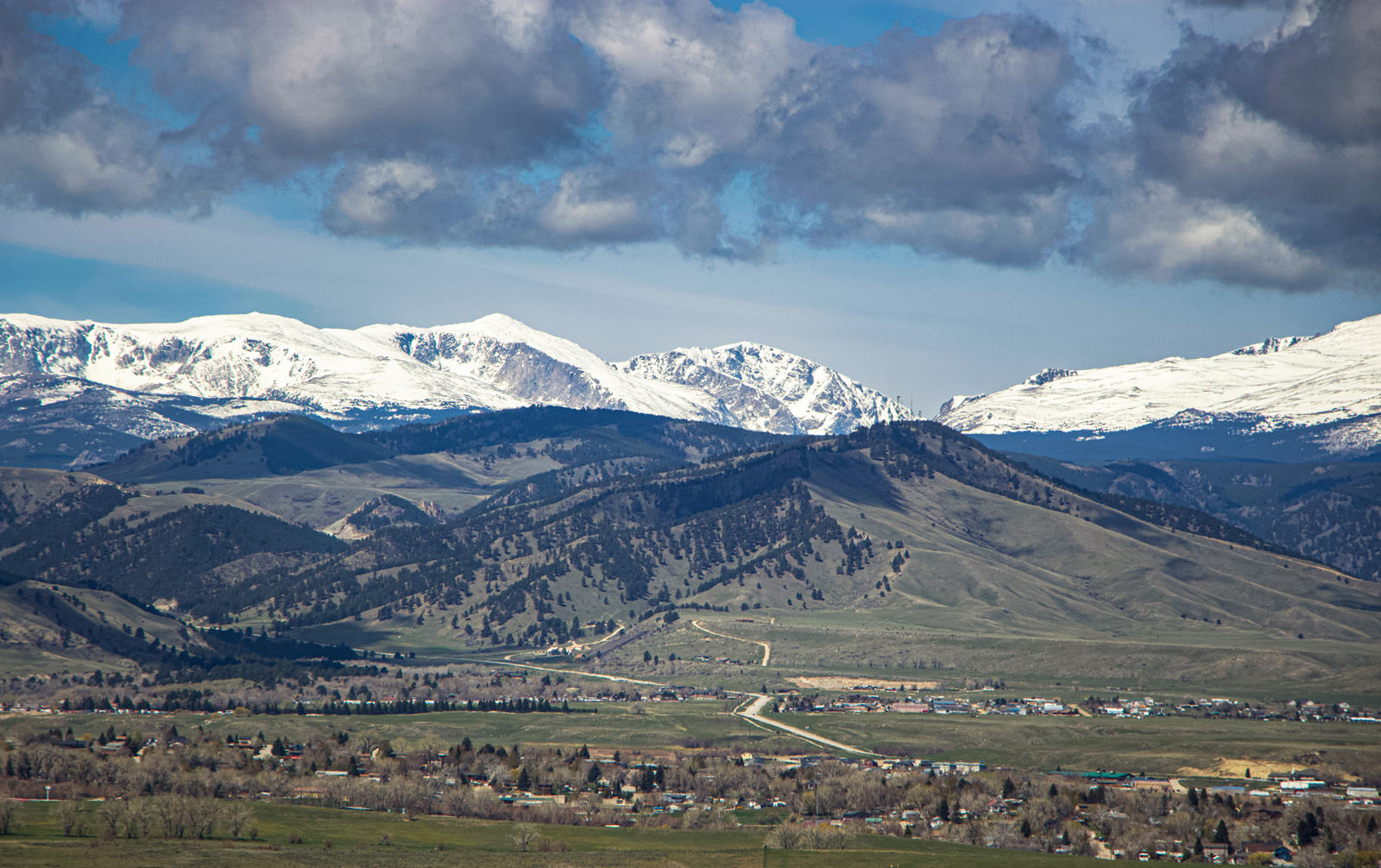
Buffalo sits at the foot of the Bighorn Mountains with direct access to 1.1 million acres of national forest, Clear Creek trout fishing, and Cloud Peak Wilderness
2026 Economic Outlook
- Remote worker in-migration accelerating as word spreads from Sheridan community
- Johnson County Healthcare expansion adding medical employment
- Hunting tourism growing as Johnson County elk herds attract national attention
- Clear Creek trail system development improving walkability and lifestyle appeal
- I-90 corridor commercial development creating service employment growth
Why Buffalo is Wyoming’s Best Emerging Market
The investment thesis for Buffalo in 2026 rests on a simple observation: the same story that drove Sheridan from $350,000 median prices to $485,000 in four years is beginning to play out in Buffalo at a four-year lag. The catalysts are identical. The lifestyle product is comparable. The price gap is still meaningful. Investors who recognized Sheridan in 2019 generated 35 to 40% appreciation in three years. The equivalent window for Buffalo is now.
- The Sheridan discount. Buffalo and Sheridan are 35 miles apart in essentially identical landscape. Sheridan has a slightly larger downtown and marginally better services. Buffalo averages $100,000 to $150,000 less per property. As Sheridan buyers get priced out, Buffalo is the natural next step.
- Authentic character that money cannot replicate. Buffalo has not been overdeveloped, over-touristed, or gentrified into a lifestyle simulacrum. It is a working town with a genuine ranching heritage, real cowboys, and a downtown that serves residents rather than tourists. This authenticity is increasingly rare and increasingly valued.
- The hunting premium. Johnson County elk hunting is nationally recognized. Guided elk hunts in the Bighorns command $5,000 to $15,000 per season. This creates a substantial upper-income tourism market that supports Buffalo’s vacation rental economy and real estate demand in ways that most small Wyoming towns cannot claim.
- Limited supply pressure. Buffalo is hemmed in by national forest to the west and ranch land to the east. There is limited room for development, and what does develop is absorbed by in-migration faster than it is being built. Supply constraints support prices in a way that flat-terrain markets cannot match.
Historical Performance
| Period | Market Driver | Avg Annual Appreciation | Key Event |
|---|---|---|---|
| 2010-2018 | Stable ranching and energy economy, limited in-migration | 2-4% | Quiet appreciation; Buffalo largely undiscovered by out-of-state buyers |
| 2019-2021 | Sheridan overflow, early lifestyle migration | 6-9% | Colorado and California buyers discovering Buffalo as Sheridan-adjacent affordable alternative |
| 2022-2023 | Remote work acceleration, outdoor lifestyle premium | 12-18% | Median price jumped from $265,000 to $360,000 in 18 months; inventory near zero |
| 2024-2025 | Rate normalization, sustained in-migration | 6-10% | Prices held and continued rising even as national market cooled; demand outstripping supply |
| 2026 | Continued lifestyle migration, Sheridan gap compression | 8-12% (projected) | Buffalo entering national outdoor lifestyle media narrative; discovery accelerating |
Buffalo’s 2022 to 2023 price surge was the most dramatic in Wyoming outside Jackson. A $265,000 median rising to $385,000 in roughly three years represents 45% total appreciation, significantly outperforming every Wyoming market except Jackson. Investors who recognized the signal early captured extraordinary gains. The question for 2026 is whether the appreciation runway remains meaningful. The answer is yes, because the Sheridan-Buffalo price gap has not yet fully closed and the migration drivers have not abated.
Demand Drivers in Detail
- Lifestyle Migration from High-Cost States – Colorado, California, and Montana residents priced out of their preferred destinations are discovering Buffalo. The common profile is a remote worker or early retiree with household income of $80,000 to $150,000 choosing Wyoming for affordability, no income tax, and outdoor access.
- Elk Hunting Tourism – Johnson County’s Bighorn foothills produce exceptional elk hunting that draws high-net-worth sportsmen from across the country. Guided hunts command $5,000 to $15,000. Hunters who come once and discover Buffalo’s character increasingly buy property. This is a sustained, growing demand driver unlike many tourism markets.
- Clear Creek Recreation Corridor – The town’s ongoing investment in the Clear Creek trail system and waterfront greenway is improving Buffalo’s lifestyle infrastructure in ways that directly support residential desirability and, ultimately, property values.
- Johnson County Healthcare – The county hospital and associated clinics provide stable healthcare employment that anchors the professional tenant pool regardless of energy or ranching sector fluctuations.
- Ranching Heritage Economy – Johnson County’s cattle ranching economy provides genuine economic depth. Ranch managers, veterinarians, equipment operators, and agricultural service professionals all need quality housing in Buffalo as the county seat.
- Sheridan Overflow – As Sheridan becomes increasingly expensive and competitive, buyers who want the northern Wyoming lifestyle but find Sheridan unaffordable consistently land in Buffalo. This is a structural, sustained demand driver that will operate as long as the two cities’ price gap remains meaningful.
📚 New to real estate investing? Master the fundamentals with our professional course Learn more →
2. Neighborhood Hotspots
Buffalo Investment Neighborhood Map
Interactive map of Buffalo’s investment neighborhoods and surrounding Johnson County opportunities. Green stars mark top hotspots, blue circles show established markets, and orange circles highlight emerging areas.
Core Investment Neighborhoods
Detailed Submarket Analysis: Buffalo Neighborhoods
| Neighborhood | Price Range (SFH) | Cap Rate | Growth Drivers | Best Strategy |
|---|---|---|---|---|
| Historic Downtown / Clear Creek | $350K to $550K | 5.5 to 7% | Lifestyle migration, Clear Creek access, authentic character | Appreciation-led hold, value-add historic restoration |
| Established Residential East | $325K to $500K | 5.5 to 6.5% | Remote worker demand, mature neighborhoods, downtown walkability | Buy-and-hold, remote worker targeting, 7-plus year hold |
| North Side / Healthcare | $340K to $480K | 5.5 to 6.5% | Healthcare employment, medical professional tenants, campus expansion | Quality buy-and-hold, healthcare tenant focus |
| West Side New Development | $380K to $530K | 5 to 6% | Mountain views, newer construction, family demand | Remote investor preferred, family rentals, lower maintenance |
| South Buffalo / Hwy 87 | $300K to $400K | 6 to 7% | Highway access, affordability, workforce rental demand | Most affordable Buffalo entry, workforce rentals |
| Bighorn Foothills (Rural) | $500K to $3M+ | 4 to 8% (seasonal) | Hunting premium, scenic setting, vacation rental growth | Hunting lodge, vacation rental, long-term appreciation play |
Expert Insight: “Buffalo is where Sheridan was in 2018. I have been saying this for two years and the data keeps proving it right. Every month I see buyers who were outbid in Sheridan showing up in Buffalo with cash and enthusiasm. The downtown craftsman homes on the streets near Clear Creek are the ones moving first and moving fastest. Anyone who bought there in 2021 or 2022 has already made serious money. The window is not closed but it is narrowing every quarter.” – Lisa Thornton, Johnson County Real Estate Group
3. Property Types
| Investment Goal | Best Property Type | Best Location | Minimum Capital |
|---|---|---|---|
| Maximum Appreciation | Historic downtown SFH or Clear Creek frontage | Downtown core, Clear Creek corridor | $90,000 to $140,000 |
| Best Cash Flow | South Buffalo workforce housing | South Buffalo / Hwy 87 | $78,000 to $105,000 |
| Best Total Return | Value-add historic renovation | Downtown or East residential | $100,000 to $150,000 |
| Highest Gross Income | Hunting lodge / vacation rental | Bighorn foothills, rural Johnson County | $125,000 to $500,000+ |
Don’t guess the costs. Our Complete Renovation & Remodeling Cost Guide covers 400+ pages of project-by-project breakdowns with real contractor pricing ranges.
4. Cost Analysis
Acquisition Cost Breakdown (Buffalo)
| Expense Item | Typical Cost | Example ($385,000 Property) | Notes |
|---|---|---|---|
| Down Payment | 25% (investment) | $96,250 | Standard for investment; some Buffalo properties qualify for conventional at 20% |
| Closing Costs | 2 to 3% | $7,700 to $11,550 | Wyoming’s lean closing cost structure; title and lender fees modest |
| General Inspection | $400 to $550 | $475 | Older homes need thorough inspection; focus on foundation, roof, and heating |
| Radon Test | $150 to $250 | $200 | Wyoming has elevated radon; always test before purchase |
| Initial Repairs | 0 to 8% | $0 to $30,800 | Older Buffalo homes may need HVAC, roof, or deferred maintenance |
| Reserves (6 months) | 6 months expenses | $10,000 to $14,000 | Small market; maintain meaningful reserves for vacancy and repairs |
| TOTAL MINIMUM ENTRY | ~30 to 35% | $114,625 to $153,275 | Higher than small Wyoming markets but still well below comparable lifestyle markets nationally |
Sample Cash Flow Analysis: Downtown Buffalo 3-Bedroom SFH (Remote Worker Tenant)
| Item | Monthly | Annual | Notes |
|---|---|---|---|
| Gross Rent | $1,850 | $22,200 | 3BR historic downtown, updated, remote worker targeted |
| Less Vacancy (7%) | -$130 | -$1,554 | Conservative for Buffalo’s growing demand |
| Property Taxes | -$193 | -$2,310 | ~0.6% of $385,000; Wyoming’s low effective rate |
| Insurance | -$130 | -$1,560 | Landlord policy; wind and hail coverage essential |
| Property Management (10%) | -$185 | -$2,220 | Local Buffalo manager; some investors self-manage |
| Maintenance + CapEx (7%) | -$130 | -$1,554 | Post-update home; roof and HVAC reserves maintained |
| Net Operating Income | $1,082 | $13,002 | Before mortgage; cap rate of 3.38% on $385K price |
| Mortgage ($288,750 at 7%, 30yr) | -$1,921 | -$23,052 | 25% down conventional investment loan |
| MONTHLY CASH FLOW | -$839 | -$10,050 | Negative at current rates; appreciation and equity are the return drivers |
| Annual Appreciation (10%) | +$3,208 | +$38,500 | At 10% on $385,000; conservative given recent trajectory |
| Annual Principal Paydown | +$470 | +$5,640 | Year 1 principal reduction |
| TOTAL RETURN YEAR 1 | ~$34,090 | Appreciation + principal paydown – cash flow deficit = strong total return on $96K down | |
| Cash-on-Cash Return on $96K Down | ~35% | Total return including appreciation on equity invested; exceptional at 10% market appreciation |
Buffalo’s investment case is clearly appreciation-led rather than cash flow-led. The monthly cash flow is negative under conventional financing at current rates, accepting this is the entry price for participating in one of Wyoming’s strongest appreciation markets. The total return picture is compelling when appreciation is modeled honestly: at 10% annual appreciation on a $385,000 property with $96,250 down, the leveraged return on equity invested approaches 35% in year one. This is why Sheridan investors still generate strong returns despite similar cash flow profiles.
Expert Insight: “I tell every out-of-state buyer the same thing: Buffalo is not a cash flow market, it is an appreciation market with a cash flow component. If you need the property to pay for itself from day one, look at Douglas or Riverton. If you can carry a modest monthly deficit for two to three years while Wyoming does what Wyoming has always done, Buffalo will reward you handsomely. The buyers I have seen arrive from Colorado in 2021 and 2022 are already sitting on $80,000 to $120,000 in equity gains. That is not a cash flow story. That is a wealth-building story.” – Mark Andersen, Big Horn Basin Realty
5. Legal Framework
Wyoming: Full Landlord-Friendly Advantage
Buffalo and Johnson County operate under Wyoming’s straightforward landlord-tenant framework with no local overlays. No rent control, no just cause eviction requirements, no rental registration, and no source of income protections. The legal environment is simple, consistent, and investor-friendly across every price point and property type in the Buffalo market.
Wyoming Landlord-Tenant Essentials
- No Rent Control: Wyoming prohibits rent control statewide. Buffalo landlords set rents freely with proper notice. As appreciation drives values up, rents can be adjusted to market at lease renewal without bureaucratic approval.
- Eviction (Non-Payment): 3-day notice to pay or quit. File unlawful detainer after 3 days. Johnson County courts are efficient. Full process typically resolves in 3 to 6 weeks.
- Eviction (Lease Violation): 3-day notice to cure. No just cause requirement for non-renewal of month-to-month tenancies; 30-day notice is sufficient.
- Security Deposits: Maximum 1.5 months rent for unfurnished units. Return within 30 days with itemized deductions.
- Month-to-Month Termination: 30 days written notice from either party. No cause required.
Buffalo-Specific Considerations
- No Rental Registration: The City of Buffalo does not require landlord registration or rental operating licenses. Zero compliance overhead.
- Historic Renovation: Properties in Buffalo’s historic downtown district may be subject to historic preservation guidelines for exterior modifications. Check with the City of Buffalo planning department before altering exterior features on pre-1945 downtown properties.
- Short-Term Rentals: No specific STR ordinance in Buffalo as of 2026. Wyoming lodging tax (4%) applies to all stays under 30 days. Register with Wyoming Department of Revenue before operating any STR.
- Hunting Lease Regulations: Hunting leases on rural properties are subject to Wyoming Game and Fish regulations. Ensure any hunting lodge or guided hunt operation is compliant with outfitter licensing requirements if guiding is involved.
- Property Taxes: Johnson County effective rate approximately 0.6% of assessed value; among Wyoming’s lowest.
Useful Buffalo Resources
- City of Buffalo: buffalowy.us
- Johnson County Assessor: johnsoncountywy.gov
- Wyoming G&F (Hunting Leases): wgfd.wyo.gov
- Wyoming DOR (STR Tax): revenue.wyo.gov
| Regulation | Wyoming / Buffalo Rule | Investor Impact |
|---|---|---|
| Eviction Speed | 3-day notice, 3 to 6 weeks total | Among the fastest eviction timelines nationally |
| Rent Increases | Any amount; 30-day notice | Investors can pass appreciation through to rents freely |
| Historic Preservation | Exterior guidelines may apply downtown | Verify before exterior alterations on pre-1945 downtown properties |
| Short-Term Rentals | No local ordinance; Wyoming lodging tax applies | Permitted with tax compliance; hunting lodge STRs viable |
| Rental Registration | Not required in Buffalo | Zero compliance cost; no inspections or licensing |
6. Step-by-Step Buffalo Investment Playbook
Choose Your Buffalo Strategy
Buffalo rewards investors who are clear about what they are buying: an appreciation story with a modest cash flow component, not a pure yield play. Choose your entry point based on capital available and risk tolerance:
Historic Downtown Appreciation Play
Buy a craftsman or Victorian-era home in the downtown core or on the established streets near Clear Creek. Target remote workers or retirees as tenants. Accept modest negative cash flow as the cost of holding an appreciating asset in Wyoming’s fastest-emerging lifestyle market. Hold 7 to 10 years.
Value-Add Historic Renovation
Buy a dated historic home that needs $60,000 to $120,000 in work. Renovate honoring original character while modernizing systems and finishes. Rent to a quality remote worker or retiree at a premium. Capture both forced equity and ongoing appreciation. The best total return strategy in Buffalo.
Hunting Lodge / Vacation Rental
Acquire rural acreage property in the Bighorn foothills with hunting access. Develop as a guided hunting lodge or premium vacation rental. September through November hunting season generates $25,000 to $60,000 gross income in 6 to 8 weeks. Year-round vacation rental supplements off-season. High-capital, high-return niche.
South Buffalo Cash Flow Entry
Start with an affordable South Buffalo property at $300,000 to $400,000 to enter the market with better cash flow characteristics than the premium downtown. Build equity and market knowledge. Trade up to the historic core as values rise and you accumulate appreciation equity. Best first Buffalo investment for capital-conscious investors.
Build Your Buffalo Team
- Local Real Estate Agent: Buffalo’s agent community is small but growing rapidly with in-migration. Seek an agent who has worked with out-of-state investor buyers specifically and understands Johnson County’s unique property characteristics including ranch land, water rights, and hunting access valuations.
- Property Manager: Essential for remote investors. Buffalo property management is a developing industry as the market grows. Interview managers about their experience with quality remote worker tenants and their approach to maximizing rental rates in a rising market.
- Historic Renovation Contractor: For value-add strategies, find a contractor with specific experience renovating historic Wyoming homes. Character preservation is commercially important in Buffalo’s market; a contractor who replaces original woodwork with modern alternatives will diminish value rather than create it.
- Wyoming Real Estate Attorney: For any rural property involving hunting access, water rights, or agricultural easements, a Wyoming attorney familiar with Johnson County is essential.
- Wyoming Game and Fish Consultant: For hunting lodge operations, work with a licensed Wyoming hunting outfitter or consultant to ensure compliance with outfitter licensing, guide regulations, and access permits on public land adjacent to your property.
Buffalo-Specific Due Diligence
Physical Due Diligence
- Radon test: Standard Wyoming precaution; test every property
- Heating: Wyoming winters are severe; inspect heating system condition carefully
- Roof: Wind and hail damage are prevalent; check for hail denting on metal components
- Foundation: Older downtown homes may have stone or rubble foundations; inspect for settling
- Historic features: In value-add renovations, document original features (woodwork, hardware, windows) before any work begins
- Internet connectivity: Verify fiber or high-speed broadband availability for remote worker targeting; this is a deal requirement, not a preference
Market and Legal Due Diligence
- Verify historic overlay district status before any exterior modification plans
- Confirm fiber internet availability at the specific property address
- For rural properties: verify hunting access rights and any public land adjacency
- Check Clear Creek flood zone status for any creek-adjacent properties
- Verify Johnson County water rights for any rural or agricultural properties
- Review title for any ranch easements, grazing permits, or access agreements
- Research comparable rental rates through local property managers; Buffalo’s rental market is rising rapidly
Marketing and Managing Buffalo Properties
- Target the migration narrative: Buffalo rental listings that specifically speak to remote workers from Colorado and California, emphasizing Bighorn access, authentic western character, and Wyoming’s no-income-tax advantage, command 15 to 25% above standard local market rates.
- Invest in fiber internet: If your property does not have fiber broadband, install it before marketing to remote workers. This is not optional; it is the single most important amenity for the tenant demographic driving Buffalo’s rental market growth.
- Photograph outdoor access: Listings that showcase proximity to Clear Creek, Bighorn National Forest trailheads, and mountain views command dramatically more applications from the quality tenant demographic. Marketing a Buffalo property without outdoor context is leaving money on the table.
- Be patient on pricing: Buffalo’s small market means vacancies are more visible than in Casper or Cheyenne. Price correctly from the start rather than testing a premium that causes extended vacancy. Your property manager’s current comparable inventory is the best pricing guide.
- Build the hunting lodge patiently: If pursuing the hunting lodge strategy, recognize that building a reputation in the guided hunting market takes 2 to 3 seasons. Allocate capital for the marketing and relationship-building phase, not just the physical renovation.
7. Financing Options for Buffalo
| Loan Type | Down Payment | Rate Premium | Best For | Buffalo Note |
|---|---|---|---|---|
| Conventional Investment | 25% | +0.5 to 0.75% | W-2 income, strong credit | Most Buffalo residential properties within conforming limits; straightforward access |
| DSCR Loan | 25 to 30% | +1.5 to 2.5% | Self-employed, portfolio builders | Buffalo cap rates of 5.5 to 7% may not fully support DSCR at 1.0x; verify with lender before going under contract |
| Portfolio Loan | 20 to 25% | +0.75 to 1.5% | Multiple properties, local relationship banking | Johnson County banks understand local market; relationship lending valuable in small market |
| Renovation / Construction Loan | 20 to 25% | +1 to 2% | Value-add renovation projects | HELOC on existing equity or cash-out refi typically more efficient for Buffalo renovation financing |
| Farm / Ranch Loan (USDA) | 0 to 30% | Standard farm credit rates | Agricultural or rural property acquisitions | Farm Service Agency and USDA rural loans applicable for Johnson County ranch and agricultural properties |
| Hard Money (Bridge) | 15 to 25% | 9 to 12% rate | Value-add acquisitions, competitive offers | Wyoming and Montana hard money lenders serve Buffalo; useful for competitive offer situations |
Buffalo Financing Reality: Buffalo’s cap rates of 5.5 to 7% mean DSCR loans are marginal at best at current interest rates. Most Buffalo investors use conventional or portfolio loans and accept the negative cash flow as the cost of participating in an appreciation market. Investors who require positive cash flow from day one should look at South Buffalo properties, the workforce housing corridor, or consider the smaller Wyoming markets like Douglas, Riverton, or Worland instead. Buffalo is for investors who understand the appreciation thesis and have the reserves and income to carry a modest monthly deficit while the market does the work.
8. Frequently Asked Questions

Knowledge Quiz: Buffalo, Wyoming Real Estate Investment
Open Quiz
5 quick questions on what you just learned about investing in Buffalo
1) What is the Sheridan-Buffalo price gap thesis and why does it matter for investors?
Answer: B
Sheridan averages $485,000 to $550,000; Buffalo averages $350,000 to $420,000. Both sit at the base of the Bighorn Mountains with essentially identical lifestyle appeal. As Sheridan prices rise, buyers who want the northern Wyoming lifestyle but cannot afford Sheridan systematically discover Buffalo. Historical examples from similar geographic pairs show these gaps compress by 60 to 70% over 8 to 10 years.
2) What makes fiber internet a non-negotiable due diligence item for Buffalo rental properties targeting remote workers?
Answer: C
The remote worker migration driving Buffalo’s appreciation is only possible because workers need reliable broadband to do their jobs from anywhere. High-income remote workers will not rent a property without confirmed high-speed internet regardless of how attractive everything else is. Verified fiber enables 10 to 20% rent premiums over comparable properties with slower connections. Always confirm the specific property address’s internet options before purchasing.
3) What annual gross income potential does the guide describe for properties operated as hunting lodges during Johnson County’s elk season?
Answer: A
Johnson County elk hunting generates significant income for properly positioned rural properties. Archery (September) and rifle (October through November) seasons collectively create 6 to 8 weeks of peak demand. Quality guided elk hunts command $5,000 to $15,000 per hunter per hunt. A well-operated hunting lodge hosting 4 to 8 hunters across the combined season can generate $25,000 to $60,000 annually from hunting alone, supplemented by summer and fall vacation rental income.
4) What historic preservation consideration is unique to Buffalo’s downtown investment properties?
Answer: D
Buffalo’s historic downtown district has design guidelines for exterior modifications on pre-1945 properties. The key investor opportunity is the Federal Historic Tax Credit, which provides a 20% tax credit on qualified rehabilitation expenditures for income-producing historic properties that meet preservation standards. On a $120,000 renovation, this represents $24,000 in direct tax credits. Check with the City of Buffalo planning department before any exterior modification, and consult a CPA before beginning renovation planning.
5) What does the guide identify as Buffalo’s primary investment risk and how should investors prepare for it?
Answer: C
Buffalo’s negative cash flow at current rates means the investment depends on appreciation to generate the total return that justifies ownership. If appreciation slows to 3 to 4% nationally and Buffalo follows, the picture weakens. Investors should stress-test their underwriting at 5% appreciation, maintain 6-month expense reserves as a minimum, and hold for a 7-plus year horizon that gives the Sheridan-Buffalo gap compression time to play out fully.
Work With a Local Expert in Buffalo
We are building a verified network of real estate professionals across every market we cover.

About Our Expert Network
We are finalizing partnerships with verified real estate professionals across every market featured on Builds and Buys. Each expert in our network is selected for their hands-on investment experience, local market knowledge, and commitment to helping buyers and investors make sound decisions.
- Proven experience with investment and income-producing properties
- Deep knowledge of local pricing, rental yields, and neighborhood dynamics
- Guidance on financing, legal structure, and due diligence
- Access to off-market and pre-market opportunities
- Full transaction support from search through closing
- Ongoing portfolio and property management referrals
Services Covered
- Property sourcing and acquisition
- Investment analysis and underwriting
- Buyer representation
- Market comparables and valuations
- Short-term and long-term rental strategy
- Value-add and renovation guidance
- Legal and title referrals
- Financing and lender connections
- Property management referrals
- Insurance and inspection referrals
- 1031 exchange coordination
- Exit strategy planning
Get Connected or Join Our Network
Looking for a local expert in Buffalo? Reach out and we will connect you with the right professional for your market and strategy.
Are you a real estate professional with experience working with investors in Johnson County? We are always expanding our expert network.
Contact us at support@buildsandbuys.com
Find Specialized Wyoming Real Estate Professionals
Ready to Invest in Buffalo?
Buffalo is Wyoming’s best-positioned emerging market for investors who understand the difference between a cash flow play and an appreciation play. The Sheridan-Buffalo price gap is a structural opportunity that rewards investors who arrive before it fully closes. The hunting lodge premium is a unique income category unavailable anywhere else in Wyoming. The remote worker migration is accelerating. And the authentic western character of Buffalo is precisely what makes it resistant to the overdevelopment and gentrification that erodes the lifestyle appeal in markets that get fully discovered. Buy before the full discovery. Hold for the wealth it creates.
Continue Your Research
For further guidance, explore our State-by-State Investor guides, browse our expert articles, or follow our Step-by-Step Investment Guide.



