
Sheridan Real Estate Investment Guide For 2026
A comprehensive resource for investors looking to capitalize on a Bighorn Mountain gateway city, where lifestyle migration, three season tourism, and a genuinely diversified small city economy combine in 2026
Quick answers: Top 5 most searched Sheridan investment questions ▼
Migration data: Where people are moving from to Sheridan ▼
In This Guide
Click on any section to navigate directly to that content
1. Sheridan Market Overview
Market Fundamentals
Sheridan sits at the base of the Bighorn Mountains in north central Wyoming, roughly halfway between Yellowstone National Park and Mount Rushmore, and offers a genuinely different investment profile than either the cash flow markets or the pure appreciation plays covered elsewhere in this guide series. Sheridan’s economy does not depend on a single industry. Healthcare, education, government, real estate, and a growing manufacturing base give the city resilience that purely tourism or energy dependent Wyoming towns lack.
Key economic indicators that define Sheridan’s investment case:
- Population: 20,267 city proper (2026), growing at 1.26% annually
- Major Employers: Sheridan Memorial Hospital, Sheridan County School District, the Sheridan VA Health Care System, Sheridan College, Emit Technologies, Ptolemy Data Systems
- Median Household Income: $62,867
- Unemployment Rate: 2.9%, among the lowest in Wyoming
- No State Income Tax: Combined with relatively low costs, a consistent draw for retirees and remote workers
- Effective Property Tax Rate: Approximately 0.68% in the city of Sheridan, still far below the 1.02% national median
Unlike Cheyenne, Sheridan’s investment case is not primarily about cash flow. Home prices have been bid up by lifestyle and retiree migration faster than local rents have followed, which means investors here are buying into appreciation and a genuinely diversified local economy rather than day one yield.
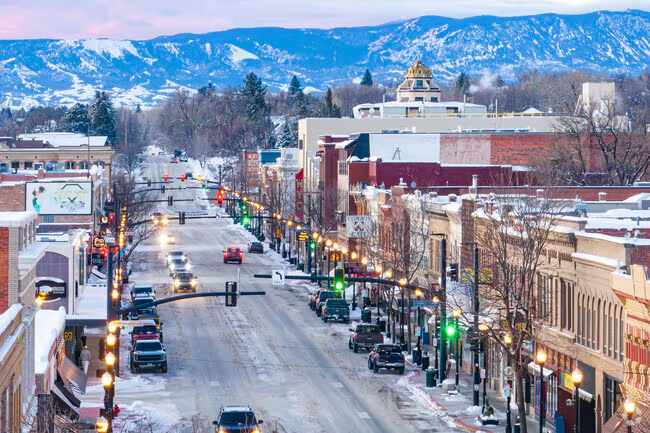
Sheridan’s historic Main Street sits minutes from the Bighorn Mountains, a combination few Wyoming cities can offer
2026 Economic Outlook
- Continued retiree and remote worker migration from Montana, Colorado, and the West Coast
- Sheridan County’s population up over 15% since 2010, among the stronger growth rates in the state
- New subdivisions including Hidden Bridge Ranch, Riverstone Park, and Fox Hollow at Jeffries Draw expanding West Sheridan’s housing supply
- 11 months of housing inventory recently reported countywide, the most buyer friendly conditions Sheridan has seen since before the pandemic
- Growing manufacturing and healthcare IT employers diversifying the job base beyond government and tourism
Investment Climate
Sheridan’s investment environment rewards patience and an appreciation first mindset. Successful Sheridan investors tend to share a few characteristics:
- Comfort with modest negative carry, treating it as the cost of holding an appreciating, lifestyle driven asset
- Willingness to operate in a thin market, where deal volume is low and patience in sourcing matters more than speed
- Interest in the tourism economy, since Story and the Big Horn foothills offer a genuine, multi season short term rental niche unlike anywhere else in this guide series
- Wildfire risk awareness, given Sheridan County’s significant wildfire exposure, particularly in foothill and forest adjacent properties
- A long term hold horizon, since the appreciation thesis plays out over years, not quarters
Wyoming’s overall housing market is expected to stabilize through 2026 with modest statewide price growth, and Sheridan specifically has moved from the seller’s market conditions of 2021 and 2022 toward a far more balanced environment, with roughly 11 months of inventory recently reported across Sheridan County. That gives today’s buyers genuine negotiating room that simply did not exist a few years ago.
Historical Performance
| Period | Market Driver | Avg Annual Appreciation | Key Event |
|---|---|---|---|
| 2015 to 2019 | Steady, slow growth typical of a small Wyoming city | 2 to 4% | Sheridan College and hospital expansion supporting steady demand |
| 2020 to 2022 | Pandemic era lifestyle migration, remote work, low rates | 10 to 18% | Out of state buyers discovered Sheridan’s mountain access at Wyoming prices |
| 2023 to 2024 | Rate shock, inventory build, buyer pullback | 0 to 4% | Days on market roughly doubled as the market normalized |
| 2025 to 2026 | Rebalancing, continued lifestyle migration | 3 to 6% (projected) | Buyer friendly inventory levels with steady underlying demand |
Sheridan’s pandemic era run up was real and significant, driven by buyers discovering genuine mountain access at prices well below comparable towns in Colorado or Montana. The market has since cooled to a more typical pace, with month to month price reports showing real volatility given how few homes change hands here in any given month, but the multi year trend remains upward.
Demographic Trends Driving Demand
- Retiree and Lifestyle Migration – Buyers from Montana, Colorado, and the West Coast relocating specifically for Bighorn Mountain access
- Sheridan College – A steady source of student and staff rental demand near the North Main corridor
- Sheridan Memorial Hospital and the VA Health Care System – Anchoring a healthcare workforce that has grown into one of the city’s largest employment sectors
- Billings, Montana Proximity – Just two hours north via I-90, making Sheridan a lower tax, lower cost alternative for regional relocations
- Golf and Equestrian Lifestyle Buyers – The Powder Horn and Big Horn Equestrian Center drawing second home and retirement buyers
- Limited Buildable Land – The Bighorn foothills constrain westward growth, concentrating new supply in specific corridors
📚 New to real estate investing? Master the fundamentals with our professional course Learn more →
2. Neighborhood Hotspots
Sheridan Investment Neighborhood Map
Interactive map of Sheridan’s investment neighborhoods. Green stars show top hotspots, blue circles mark established markets, and orange circles highlight emerging areas.
Core Investment Neighborhoods
Detailed Submarket Analysis: All Sheridan Neighborhoods
| Neighborhood | Price Range (SFH) | Cap Rate | Growth Drivers | Best Strategy |
|---|---|---|---|---|
| Near Sheridan College / North Main | $220K-$320K | 4.5-6.0% | Best cash flow, student and staff demand | Cash flow buy and hold |
| South Sheridan / Coffeen Avenue | $230K-$340K | 5.0-6.5% | Affordability, school proximity, value add | Value add, best yields in town |
| Ranchester & Dayton | $280K-$420K | 4.5-5.5% | Fastest growth, family demand, affordability | Family buy and hold |
| Historic Downtown Sheridan | $280K-$450K | 3.5-5.0% | Walkability, Western heritage, event tourism | Value add, seasonal STR upside |
| Story | $350K-$700K | 4.0-7.0% | Three season tourism, Piney Creek fishing | Short term rental |
| Kendrick Park / Near Downtown | $300K-$480K | 3.5-5.0% | Walkability, historic character | Stable long term hold |
| Hidden Bridge Ranch | $380K-$550K | 3.5-4.5% | West side new construction, golf course | Family buy and hold, appreciation |
| West Sheridan New Growth | $400K-$580K | 3.5-4.5% | Newest construction, mountain views | Appreciation, low maintenance hold |
| Teal Spring | $320K-$460K | 4.0-5.0% | Newer subdivision, scenic setting | Balanced returns |
| Powder Horn Golf Community | $450K-$750K | 3.0-4.0% | Golf lifestyle, retiree and second home demand | Appreciation, low maintenance hold |
| Knode Ranch / Foothill Acreage | $500K-$900K+ | 2.5-3.5% | Acreage, mountain views, luxury niche | Long term appreciation |
| Big Horn | $450K-$1.2M+ | 2.5-3.5% | Premium positioning, polo and golf lifestyle | Second home appreciation play |
Expert Insight: “Out of state buyers come to Sheridan expecting Wyoming cash flow numbers and are surprised when the math looks more like a small mountain town than a ranching county. That is the honest picture. You are not buying Sheridan for a six percent cap rate, you are buying it because a retiree leaving Denver will pay real money for a Powder Horn home with mountain views, and that demand has been remarkably consistent for over a decade.” – Dan Whitcombe, Broker, Bighorn Realty Advisors
3. Property Types
| Investment Goal | Best Property Type | Best Neighborhoods | Minimum Capital |
|---|---|---|---|
| Best Cash Flow in Sheridan | Smaller single family home | Near Sheridan College, South Sheridan | $55,000+ |
| Maximum Appreciation | Golf community or foothill acreage | Big Horn, Powder Horn, Knode Ranch | $130,000+ |
| Seasonal Tourism Income | Mountain cabin short term rental | Story, Big Horn foothills | $90,000+ |
| Balanced Returns | Value add historic home or new construction | Historic Downtown, West Sheridan | $80,000+ |
Don’t guess the costs. Our Complete Renovation & Remodeling Cost Guide covers 400+ pages of project by project breakdowns with real contractor pricing ranges.
4. Cost Analysis
Acquisition Cost Breakdown (Sheridan)
| Expense Item | Typical Cost | Example ($365,000 Property) | Notes |
|---|---|---|---|
| Down Payment | 25% (investment) | $91,250 | Standard for investment properties in Sheridan |
| Closing Costs | 2-3% of price | $7,300-$10,950 | Title, escrow, lender fees, recording |
| General Inspection | $400-$600 | $500 | Standard whole home inspection |
| Wildfire Risk Assessment | $150-$350 | $250 | Sheridan County carries major wildfire risk; critical for foothill and Story area properties |
| Well and Septic Inspection | $400-$700 | $550 | Common requirement for Story, Big Horn, and foothill acreage purchases |
| Initial Repairs | 0-8% of price | $0-$29,200 | Older Historic Downtown homes often need more |
| Reserves (6 months) | 6 months expenses | $8,500-$11,500 | Emergency fund for vacancy and repairs |
| TOTAL MINIMUM ENTRY | ~28-32% of value | $103,000-$117,000 | Lower than coastal markets, higher than Cheyenne given Sheridan’s elevated price point |
Sample Cash Flow Analysis: Near Sheridan College Single Family Home
| Item | Monthly | Annual | Notes |
|---|---|---|---|
| Gross Rent | $1,450 | $17,400 | 2BR starter home near Sheridan College |
| Less Vacancy (5%) | -$73 | -$870 | Conservative estimate |
| Property Taxes | -$139 | -$1,666 | 0.68% effective rate on $245,000 value |
| Insurance | -$100 | -$1,200 | Landlord policy, wildfire exposure rider |
| Property Management (10%) | -$145 | -$1,740 | Optional for hands on local owners |
| Maintenance + CapEx (8%) | -$116 | -$1,392 | Allowance for winter and freeze thaw wear |
| Net Operating Income | $878 | $10,532 | Before mortgage |
| Mortgage ($245,000 price, 25% down, 6.75%, 30yr) | -$1,193 | -$14,316 | Principal and interest only, $183,750 loan |
| CASH FLOW | -$315 | -$3,781 | Modestly negative, even on Sheridan’s best available cash flow neighborhood |
| Cap Rate | 4.30% | NOI / Purchase Price | |
| Total Return (5.5% appreciation) | ~10-13% | Including appreciation and principal paydown, partly offset by negative carry |
This is Sheridan’s honest starting point, and it is worth stating plainly: even the city’s best available cash flow neighborhood runs modestly negative at standard 25% down financing. Investors who put 50% or more down can reach breakeven on this exact property, and those willing to operate a Story or Big Horn short term rental can do considerably better, but Sheridan should be approached as an appreciation and lifestyle market first.
Expert Insight: “I tell every out of state client the same thing about Sheridan. If you need this property to pay for itself from month one, this is the wrong market, go look at Cheyenne or Casper. If you can carry a few hundred dollars a month and you believe in the Bighorn Mountain story the way retirees from Denver and Billings clearly do, Sheridan has quietly outperformed a lot of flashier Mountain West markets over a full decade.” – Renee Castellano, CPA, Castellano Tax and Advisory
5. Legal Framework
⚠️ Sheridan Compliance Notice
Sheridan adds no city level landlord tenant ordinances on top of Wyoming’s statewide framework, the same light touch environment found throughout this guide series. The one Sheridan specific issue to take seriously is wildfire risk. Sheridan County carries significant wildfire exposure, particularly in foothill, forest adjacent, and Story area properties, and that should shape both your insurance shopping and your due diligence, not just your underwriting.
Wyoming Statewide Regulations
Sheridan landlords operate entirely under Wyoming Statutes Title 1, Chapter 21 (Forcible Entry and Detainer) and Title 34, Chapter 2 (Landlord and Tenant), identical to the rest of this guide series:
- Eviction for Nonpayment: 3 day notice to pay rent or vacate under Wyo. Stat. § 1-21-1002. If unpaid, the landlord may file a forcible entry and detainer action.
- Eviction for Lease Violation: 3 day notice to cure or vacate, with no requirement to offer a second chance.
- Month to Month Termination: 30 days written notice from either party, with no cause required.
- Security Deposits: No statutory cap. Must be held in a separate account and returned within 30 days of move out, with an itemized statement of deductions.
- No Rent Control: Landlords may set and increase rent freely, subject only to lease terms and notice requirements.
- No Source of Income Protection: Sheridan landlords are not required to accept housing vouchers.
- No Anti Retaliation Statute: Wyoming does not prohibit a landlord from responding to a tenant’s code violation report.
- Landlord Entry: At least 24 hours notice required for non emergency entry such as repairs or showings.
Compliance Best Practices
Sheridan’s regulatory simplicity is real, but two local realities deserve specific attention:
- Wildfire Insurance Shopping: Sheridan County carries significant wildfire risk across nearly all properties. Confirm coverage and defensible space requirements before closing, particularly for Story, Big Horn, and foothill acreage purchases.
- Always Use a Written Lease: Wyoming does not require one, but a written lease remains the single best protection for both parties.
- Document Move In Condition: Photograph the property and have the tenant sign a condition report at move in and move out.
- Follow the Court Process: Self help eviction is illegal in Wyoming regardless of how clear the lease violation is.
- Verify Short Term Rental Permitting: Confirm current Sheridan County requirements before purchasing a Story or Big Horn property for short term rental use.
- Track the 14 Day Deposit Notice: Landlords must notify tenants in writing within 14 days of receiving a deposit, including where it is held.
Useful Sheridan Resources
- Sheridan County Assessor: sheridancountywy.gov
- Wyoming Legal Services (free civil legal aid): wyomingdpa.org
- Sheridan County Circuit Court (small claims, evictions): courts.state.wy.us
- Sheridan County Travel and Tourism (STR context): sheridanwyoming.org
| Regulation | Wyoming / Sheridan Standard | National Comparison | Investor Impact |
|---|---|---|---|
| Eviction for Nonpayment | 3 day notice, court process roughly 2 to 4 weeks total | National average 4 to 8 weeks or longer | Among the fastest, lowest cost eviction processes in the country |
| Rent Control | None at the state or city level | Increasingly common in coastal and resort markets | Full freedom to set market rent and increase it as needed |
| Wildfire Risk | Major risk countywide per First Street Foundation data | Varies widely; most major metros carry far less exposure | Requires proactive insurance shopping, especially in foothill areas |
| Security Deposit Cap | No statutory maximum | Many states cap at 1 to 2 months rent | Greater flexibility to protect against damage and unpaid rent |
| Property Tax Effective Rate | 0.68% in Sheridan | 1.02% national median | Roughly 33% lower carrying cost than a typical U.S. market |
6. Step by Step Sheridan Investment Playbook
Define Your Sheridan Strategy
Sheridan is an appreciation and lifestyle market first. Before buying, be clear on which of these strategies you are executing:
College Adjacent Cash Flow
Buy a smaller starter home near Sheridan College or in South Sheridan. The best available cash flow in town, though still modestly negative at standard financing on most listings.
Three Season Mountain STR
Buy a cabin or mountain home in Story or the Big Horn foothills. The strongest income strategy in this guide for investors comfortable with active, seasonal management across hiking, fishing, and winter recreation periods.
Golf and Foothill Appreciation
Buy in Powder Horn, Big Horn, or Knode Ranch acreage for the strongest equity growth in Sheridan, accepting negative cash flow in exchange for retiree and second home demand that has held remarkably steady.
Historic Downtown Value Add
Buy a dated home near Main Street, renovate, and capture both improved rent and a seasonal short term rental kicker during WYO Rodeo and the regular downtown events calendar.
Build Your Sheridan Team
Sheridan’s small, thin market makes local relationships especially valuable. Core team members:
- Sheridan Investor Focused Agent: Should understand the distinct economics of Big Horn, Story, and in town neighborhoods, which behave like different markets entirely.
- Wyoming Real Estate Attorney: For entity setup and lease review.
- Local Property Manager: If pursuing Story or Big Horn short term rentals, confirm specific experience with seasonal turnover and wildfire adjacent property management.
- Wyoming Licensed Home Inspector: With experience evaluating wildfire defensible space, well and septic systems, and winter related wear common across Sheridan County.
- Insurance Agent Specializing in Wildfire Exposed Property: Critical for any Story, Big Horn, or foothill acreage purchase.
Expert Tip: Ask any prospective Story or Big Horn property manager directly, “What is your peak season occupancy rate and how do you handle a shoulder season slowdown?” A manager who can answer with specific historical numbers understands this market. One who only quotes a flat annual average likely has not managed enough mountain properties here to give you a reliable answer.
Sheridan Specific Due Diligence
Standard due diligence items plus these Sheridan critical checks:
Physical Due Diligence
- Wildfire defensible space and vegetation clearance, especially in Story and foothill properties
- Well and septic inspection for any property outside city utilities
- Roof and foundation condition given heavy winter snow loads
- Furnace and heating system condition ahead of long, cold winters
- Access road condition and winter maintenance responsibility for foothill and mountain properties
- Water rights documentation for any acreage or Story area property
Regulatory Due Diligence
- Confirm whether the property sits in Sheridan city limits or unincorporated Sheridan County, which affects permitting
- Verify current short term rental permitting requirements for Story and Big Horn area properties
- Pull permit history for any additions or renovations, common across older Historic Downtown homes
- Review HOA rules for Powder Horn, Hidden Bridge Ranch, and other planned communities regarding rental restrictions
- Confirm insurability and any wildfire mitigation requirements before waiving an inspection contingency
- Check zoning for any acreage property if livestock or equestrian use is part of the plan
Competing in Sheridan’s Market
Sheridan has shifted meaningfully toward buyers since the pandemic era peak, with real negotiating room available:
- Buyer friendly inventory: Roughly 11 months of supply has recently been reported countywide, well above the 5 to 6 months considered balanced.
- Seasonal timing: August through December tends to favor buyers, consistent with broader Wyoming patterns.
- Split market dynamics: Sheridan’s inventory skews toward higher price points; well priced, move in ready homes under $400,000 can still move quickly while million dollar plus listings sit longer.
- Off market sourcing: Build relationships with Big Horn and Story specialists, since those markets see fewer listings and more word of mouth transactions.
- WYO Rodeo timing: Mid July (July 8 to 11, 2026) brings a temporary visitor wave, a useful data point for understanding seasonal short term rental demand before you buy.
Property Management in Sheridan
Sheridan’s light regulatory framework makes self management genuinely viable for in town long term rentals, while Story and Big Horn short term properties benefit from specialized seasonal management.
Seasonal Mountain Rental Protocol
For Story and Big Horn area short term rentals, build these practices into your operating plan:
- Budget for genuine seasonality, with summer and fall commanding premium rates and winter requiring active marketing for ski and snowmobile travelers
- Confirm defensible space and wildfire mitigation steps are documented and current each season
- Build a winter access and snow removal plan into your operating budget, since road conditions affect guest experience directly
- Maintain relationships with local cleaning and maintenance contractors given the area’s limited service provider pool
- Track local event calendars including WYO Rodeo, polo season, and ski season at Antelope Butte for dynamic pricing opportunities
Typical Sheridan Management Fees
- Single family long term management: 8-10% of monthly rent
- Leasing fee: 50-75% of one month’s rent
- Lease renewal fee: $100-$250 per renewal
- Story and Big Horn short term rental management: Often 20-28% given seasonal turnover and remote location logistics
7. Financing Options for Sheridan
| Loan Type | Down Payment | Rate Premium | Best For | Sheridan Note |
|---|---|---|---|---|
| Conventional Investment | 25% | +0.5-0.75% | Most single family purchases | Standard rates currently run 6.4-6.9% before the investor premium |
| DSCR Loan | 25-30% | +1.5-2.5% | Investors who want no income verification | Often a difficult fit outside Story and Big Horn short term rentals, since standard long term rents rarely clear 1.0x coverage |
| Local Portfolio Loan | 20-25% | +0.5-1.5% | Multiple properties, self employed borrowers | Regional Wyoming and Montana banks offer these for local buyers |
| FHA House Hacking | 3.5% | Standard + MIP | Owner occupying a property near Sheridan College | Strong entry point for first time Sheridan buyers given the relatively low price point near campus |
| Vacation / Second Home Loan | 10-20% | +0.25-0.5% | Story and Big Horn cabin purchases used part time by the owner | Often cheaper than investment property financing if personal use requirements are met |
| Hard Money (Bridge) | 15-25% | 8-12% rate | Value add renovation, competitive offers | Useful for Historic Downtown renovation projects needing a fast close |
Sheridan Financing Reality: Most Sheridan long term rentals do not generate enough income to qualify for DSCR financing at current rates, similar to the dynamic in coastal appreciation markets. Investors who want yield based, no income verification financing should focus on Story or Big Horn properties operated as short term rentals, where blended seasonal income can realistically clear standard DSCR coverage requirements.
8. Frequently Asked Questions

Knowledge Quiz: Sheridan Real Estate Investment
Open Quiz
5 quick questions on what you just learned about Sheridan investing
1) What does this guide identify as the primary driver of Sheridan’s investment case?
Answer: C
Sheridan’s investment case is built on appreciation and lifestyle migration rather than cash flow. Retirees and remote workers drawn to genuine mountain access have pushed purchase prices up faster than local rents, the opposite dynamic from Cheyenne’s government and military anchored cash flow story.
2) According to the guide’s sample cash flow analysis, what is true of even Sheridan’s best available cash flow neighborhood at standard 25% down financing?
Answer: A
The Near Sheridan College example shows a 4.30% cap rate and roughly negative $315 a month in cash flow at standard 25% down, 6.75% financing, the honest starting point this guide uses to set expectations for the whole market.
3) What makes the Story and Big Horn short term rental opportunity different from the single event week strategy described elsewhere in this guide series?
Answer: D
Story and the Big Horn foothills support a genuine multi season tourism economy, from summer hiking and fly fishing through fall foliage and winter recreation at Antelope Butte, a meaningfully different and more durable income pattern than a single ten day event.
4) What Sheridan specific risk factor does the guide highlight as deserving real underwriting attention?
Answer: B
Sheridan County carries major wildfire risk according to First Street Foundation data, with exposure concentrated most heavily in foothill, forest adjacent, and Story area properties, making wildfire specific insurance and defensible space review genuine due diligence priorities.
5) Which Sheridan area does the guide identify as offering the strongest and most consistent appreciation, driven by retiree and second home demand?
Answer: C
Big Horn, home to the Powder Horn Golf Club and the Big Horn Equestrian Center, is identified as Sheridan’s strongest appreciation and second home market, with steady retiree demand from Montana and Colorado supporting consistent equity growth.
Work With a Local Expert in Sheridan
We are building a verified network of real estate professionals across every market we cover.

About Our Expert Network
We are finalizing partnerships with verified real estate professionals across every market featured on Builds and Buys. Each expert in our network is selected for their hands on investment experience, local market knowledge, and commitment to helping buyers and investors make sound decisions.
Our local specialists offer:
- Proven experience with investment and income producing properties
- Deep knowledge of local pricing, rental yields, and neighborhood dynamics
- Guidance on financing, legal structure, and due diligence
- Access to off market and pre market opportunities
- Full transaction support from search through closing
- Ongoing portfolio and property management referrals
Services Covered
- Property sourcing and acquisition
- Investment analysis and underwriting
- Buyer representation
- Market comparables and valuations
- Short term and long term rental strategy
- Value add and renovation guidance
- Legal and title referrals
- Financing and lender connections
- Property management referrals
- Insurance and inspection referrals
- 1031 exchange coordination
- Exit strategy planning
Get Connected or Join Our Network
Looking for a local expert to help with your investment? Reach out and we will connect you with the right professional for your market and strategy.
Are you a real estate professional with a track record working with investors? We are always expanding our network of verified local experts.
Contact us at support@buildsandbuys.com
Find Specialized Sheridan Real Estate Professionals
Ready to Invest in Sheridan?
Sheridan asks investors to be honest about what kind of market they are buying into. It is not Cheyenne’s cash flow story, and it is not Jackson’s pure luxury appreciation play either. It is something in between: a genuinely diversified small city economy, a landlord favorable legal framework, and a real Bighorn Mountain lifestyle thesis that has consistently attracted retirees and remote workers willing to pay for it. Investors who plan around modest negative carry, or who build a strategy around Story and Big Horn’s three season tourism economy, will find a market that has quietly rewarded patient capital for over a decade.
Continue Your Research
Wyoming State Guide
See how Sheridan compares to Cheyenne, Jackson, Casper, and other Wyoming markets.
Step-by-Step Invest
Complete framework for building a real estate investment strategy from scratch.
144-Lesson Course
University level real estate education covering financing, law, strategy, and management.
For further guidance, explore our State-by-State Investor guides, browse our expert articles, or follow our Step-by-Step Investment Guide.



