
Twin Falls Real Estate Investment Guide For 2026
A comprehensive resource for investors looking to capitalize on south-central Idaho’s fastest-growing regional hub, anchored by food processing, healthcare, and a booming outdoor recreation economy
Quick answers: Top 5 most searched Twin Falls investment questions ▼
Migration data: Where people are moving from to Twin Falls ▼
In This Guide
Click on any section to navigate directly to that content
1. Twin Falls Market Overview
Market Fundamentals
Twin Falls is Idaho’s regional commercial capital for the Magic Valley, a broad agricultural basin stretching across south-central Idaho along the Snake River Plain. With a city population of 52,000 and a metro of 115,000, Twin Falls punches well above its size as an investment market, offering a diversified economy, a genuinely landlord-friendly legal environment, and median home prices that still allow positive cash flow — something increasingly rare across Idaho.
- Population: 52,000 city, 115,000+ Twin Falls County metro
- Major Employers: St. Luke’s Magic Valley Medical Center (2,500+), Chobani (1,000+), Clif Bar, Twin Falls School District, College of Southern Idaho, Amalgamated Sugar
- Median Household Income: $58,000 to $64,000
- Job Growth: 2.4% annually, above national average
- No State Income Tax: Major draw for California and Oregon relocators
- Vacancy Rate: Under 4% citywide
Twin Falls serves as the commercial hub for roughly 200,000 people across the Magic Valley region, giving it a retail and service employment base far larger than its own population would suggest.
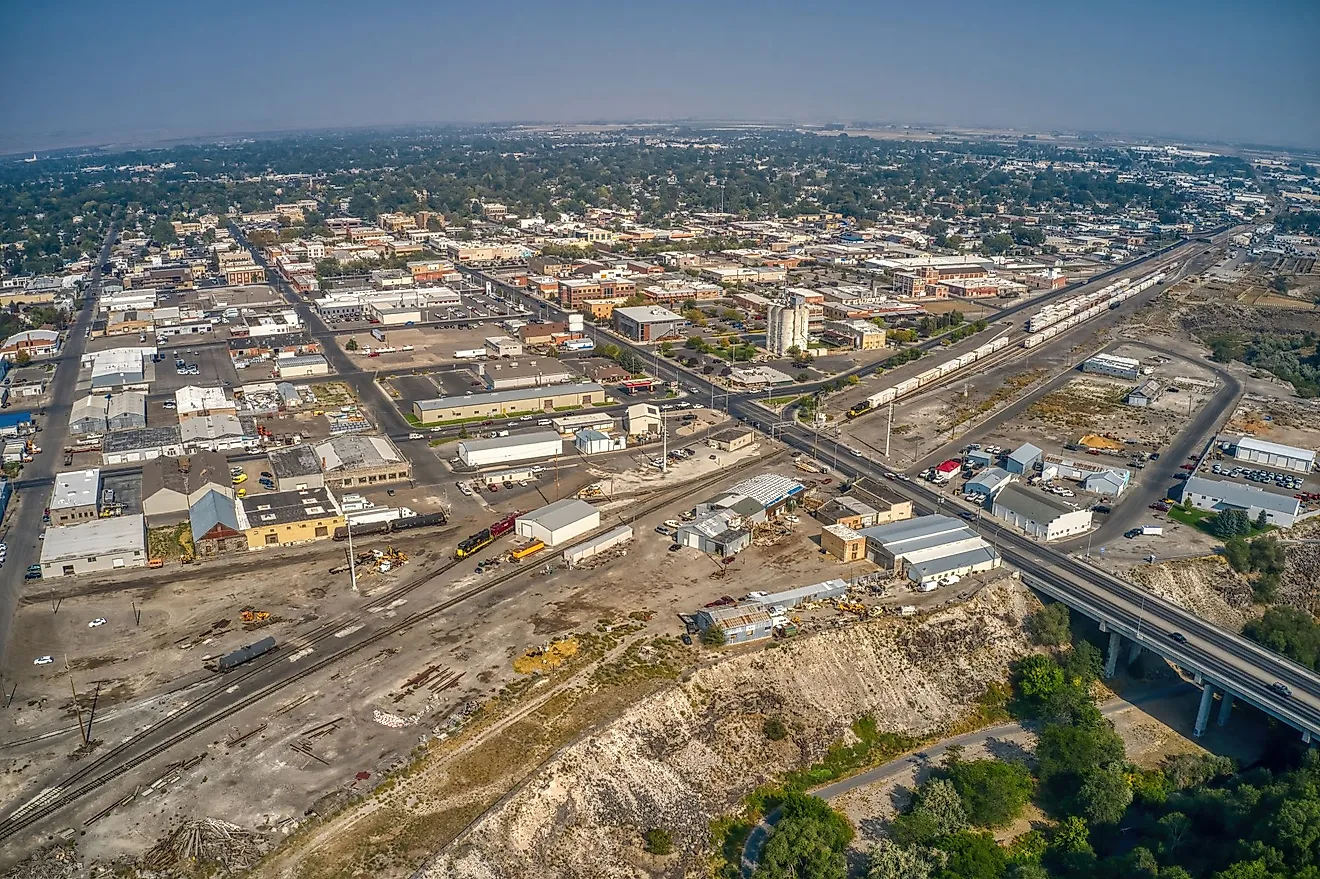
The Snake River Canyon and Perrine Bridge define Twin Falls as Idaho’s outdoor recreation capital for south-central Idaho
2026 Economic Outlook
- Chobani capacity expansion adding production and logistics jobs
- St. Luke’s continued regional healthcare expansion
- College of Southern Idaho enrollment growth supporting student housing
- Snake River Canyon recreation driving short-term tourism
- Regional retail expansion as Magic Valley population grows
Historical Performance
| Period | Market Driver | Avg Annual Appreciation | Key Event |
|---|---|---|---|
| 2010-2015 | Chobani arrival, post-recession stability | 3-5% | Chobani opens 1M sq ft facility, 1,000+ jobs created |
| 2016-2019 | Idaho in-migration begins, healthcare expansion | 5-8% | St. Luke’s expansion; Clif Bar facility opens |
| 2020-2022 | Idaho pandemic migration wave, Boise spillover | 15-22% | Twin Falls benefited from Idaho’s national profile; inventory hit historic lows |
| 2023-2024 | Rate normalization, market stabilization | 4-7% | Prices stabilized; employment continued growing; cap rates remained attractive |
| 2025-2026 | Regional hub consolidation, continued in-migration | 7-10% (projected) | New commercial development and population growth supporting demand |
Demographic Trends Driving Demand
- Food Processing Workforce – Chobani, Clif Bar, Amalgamated Sugar, and dozens of smaller processors employ thousands across all income levels, creating diverse rental demand
- Healthcare Sector Growth – St. Luke’s Magic Valley Medical Center continues expanding, drawing professionals who prefer renting before committing to purchase
- College of Southern Idaho – 8,000+ students creating affordable rental demand near campus in northwest Twin Falls
- California and West Coast Migration – Professionals choosing Twin Falls for affordability and Idaho lifestyle, many renting initially while evaluating the market
- Hispanic and Latino Community – The fastest-growing demographic in Magic Valley, comprising 25%+ of Twin Falls and representing strong demand for workforce housing
- Agricultural Workforce – Seasonal and permanent agricultural workers requiring affordable rentals throughout the county
📚 New to real estate investing? Master the fundamentals with our professional course Learn more →
2. Neighborhood Hotspots
Twin Falls Investment Neighborhood Map
Interactive map of Twin Falls investment neighborhoods. Green stars show top hotspots, blue circles mark established markets, and orange circles highlight emerging areas.
Core Investment Neighborhoods
Detailed Submarket Analysis: All Twin Falls Neighborhoods
| Neighborhood | Price Range (SFH) | Cap Rate | Growth Drivers | Best Strategy |
|---|---|---|---|---|
| Northeast TF | $360K-$550K | 5.5-6.5% | Top schools, new construction, retail access | Buy-and-hold, family rentals, low maintenance |
| Canyon Rim | $450K-$750K | 5.0-6.0% | Irreplaceable views, premium demand, limited supply | Executive rentals, appreciation, premium hold |
| Rock Creek Corridor | $300K-$450K | 6.0-7.0% | Park access, mid-market demand, healthcare workers | Value-add SFH, balanced returns, BRRRR |
| CSI Campus Area | $240K-$360K | 7.0-8.5% | Student demand, CSI enrollment, affordable rents | Student housing, small multi-family, highest yield |
| Downtown / Historic | $220K-$380K | 6.5-8.0% | Revitalization, lowest entry, CSI proximity | Value-add, BRRRR, historic renovation |
| Southeast TF | $320K-$480K | 5.5-6.5% | Established families, school access, shopping | Family buy-and-hold, stable tenants |
| Northwest TF / Older Stock | $200K-$320K | 7.0-9.0% | Workforce housing demand, lowest prices, CSI | Workforce housing, highest cap rates, renovation |
| Jerome (Metro Adjacent) | $230K-$360K | 7.0-9.0% | Twin Falls commuters, ag workers, affordability | Best yields in metro, cash flow focus |
Expert Insight: “The most overlooked opportunity in Twin Falls right now is the CSI campus corridor in northwest Twin Falls. Properties within a 10-minute walk of the college are trading at $230,000 to $310,000 with cap rates of 7.5 to 9%. That is genuinely rare in Idaho in 2026. Eight thousand students creates a tenant base that never goes away. The institutional money hasn’t arrived to compress those returns yet. Window won’t stay open forever.” – David Caldwell, Magic Valley Investment Properties
3. Property Types
Single-Family Homes
The most common Twin Falls investment vehicle. Diverse stock ranges from 1920s craftsman homes near downtown to new construction in the northeast. Idaho’s legal environment makes single-family management straightforward, and demand is strong across all price points.
Small Multi-Family (2 to 4 Units)
Duplexes, triplexes, and fourplexes represent the best cash flow opportunity in Twin Falls. Older stock near CSI and downtown frequently achieves 7 to 9% cap rates. Residential financing applies up to 4 units, keeping borrowing costs manageable.
Value-Add / BRRRR Properties
Dated 1940s to 1970s homes in northwest Twin Falls and downtown offer compelling value-add returns. Kitchen and bathroom renovations can increase rents 25 to 40% and ARV meaningfully. Idaho’s low labor costs make renovation economics better than coastal markets.
Student Housing (CSI)
College of Southern Idaho’s 8,000+ students create stable year-round demand for affordable 1 and 2 bedroom units. Campus proximity properties command a consistent occupancy premium. Annual lease cycles align well with landlord cash flow needs.
Workforce Housing
Twin Falls’ large food processing, agricultural, and healthcare workforce creates persistent demand for $900 to $1,400/month rentals. Workforce housing investors consistently achieve the city’s highest cap rates with low vacancy. The tenant pool is stable and employment-driven.
New Construction
Northeast Twin Falls continues adding new construction in the $380,000 to $550,000 range. Lower maintenance, modern systems, and strong family tenant appeal. Developers are active, providing investor-grade new builds with warranties and minimal initial capex requirements.
| Investment Goal | Best Property Type | Best Neighborhoods | Minimum Capital |
|---|---|---|---|
| Maximum Cash Flow | Small multi-family or workforce SFH | CSI area, Downtown, Northwest TF, Jerome | $65,000+ |
| Best Appreciation | Canyon Rim SFH or Northeast new construction | Canyon Rim, Northeast TF | $115,000+ |
| Balanced Returns | Value-add SFH in mid-market corridors | Rock Creek, Southeast TF | $85,000+ |
| Lowest Maintenance | New construction SFH | Northeast Twin Falls | $95,000+ |
Don’t guess the costs. Our Complete Renovation & Remodeling Cost Guide covers 400+ pages of project-by-project breakdowns with real contractor pricing ranges.
4. Cost Analysis
Acquisition Cost Breakdown (Twin Falls)
| Expense Item | Typical Cost | Example ($350,000 Property) | Notes |
|---|---|---|---|
| Down Payment | 25% (investment) | $87,500 | Standard for investment properties; house-hack FHA allows 3.5% |
| Closing Costs | 2-3% of price | $7,000-$10,500 | Title, escrow, lender fees, recording. Idaho costs are lean. |
| General Inspection | $350-$500 | $400 | Include radon test; Twin Falls sits on volcanic plateau with elevated radon risk |
| Radon Test | $100-$175 | $125 | Critical in Twin Falls. Mitigation costs $800 to $2,500 if needed. |
| Initial Repairs | 0-8% of price | $0-$28,000 | Older TF homes often need HVAC, roof, and plumbing updates |
| Reserves (6 months) | 6 months expenses | $8,000-$12,000 | Emergency fund for vacancy and repairs |
| TOTAL MINIMUM ENTRY | ~28-32% of value | $103,025-$138,525 | Significantly more accessible than Boise or Coeur d’Alene |
Sample Cash Flow Analysis: Rock Creek Corridor Single-Family Home
| Item | Monthly | Annual | Notes |
|---|---|---|---|
| Gross Rent | $1,750 | $21,000 | 3BR, Rock Creek, well-maintained 1980s home |
| Less Vacancy (5%) | -$87 | -$1,050 | Conservative; Twin Falls vacancy is typically 3 to 4% |
| Property Taxes | -$225 | -$2,700 | ~0.75% of $360K assessed value (investor rate) |
| Insurance | -$100 | -$1,200 | Landlord policy; Idaho insurance rates are competitive |
| Property Management (9%) | -$158 | -$1,890 | Local Twin Falls PM companies run 8 to 10% |
| Maintenance + CapEx (8%) | -$140 | -$1,680 | Lower than older coastal markets; arid climate is kind to roofs |
| Net Operating Income | $1,040 | $12,480 | Before mortgage |
| Mortgage ($360K purchase, 25% down, 7.0%, 30yr) | -$1,797 | -$21,564 | $270K loan at 7.0% |
| CASH FLOW | -$757 | -$9,084 | Slightly negative at 7% rates; improves significantly with rate reduction or 30% down |
| Cap Rate | 3.47% | NOI / Purchase Price | |
| Cash-on-Cash (if rate drops to 6.0%) | +1.8% | At 6% rate this property cash flows positively | |
| Total Return (9% appreciation) | ~22% | Including equity, appreciation, principal paydown on $87,500 invested |
Key insight: The same analysis on a CSI-area duplex at $320,000 with combined rent of $2,600/month shows positive cash flow of approximately $350/month even at 7% rates. Multi-family is where Twin Falls cash flow investors should concentrate for genuine positive carry in the current rate environment.
Expert Insight: “Twin Falls is one of the last Idaho markets where a 25% down conventional loan on a multi-family property can still produce positive monthly cash flow. Cap rates of 6 to 8% near CSI mean the math actually works. I tell investors who are frustrated with Boise returns: Twin Falls is where Boise was in 2015. The employment base is real, the population is growing, and the properties still make sense on paper.” – Rachel Mendoza, Southern Idaho Investment Group
5. Legal Framework
✅ Idaho Is Among the Most Landlord-Friendly States in the U.S.
Unlike Washington, Oregon, or California, Idaho has no statewide rent control, no just cause eviction requirement, and one of the fastest eviction processes in the nation. Twin Falls adds no local ordinances on top of state law. This regulatory environment dramatically reduces operational risk and is a primary reason why experienced investors are looking at Idaho’s secondary markets after being burned by west coast regulations.
Idaho Landlord-Tenant Law Essentials
- No Rent Control: Idaho law (IC 55-307) prohibits local governments from enacting rent control. No cap on rent increases statewide or in Twin Falls.
- No Just Cause Eviction: Landlords can choose not to renew a lease for any lawful reason. Month-to-month tenants require 30 days notice.
- Fast Eviction Process: Non-payment evictions begin with a 3-day pay-or-vacate notice. Full eviction typically 21 to 30 days.
- Security Deposits: No statutory cap. Must be returned within 21 days of move-out with itemized deductions.
- Late Fees: No statutory cap. Define clearly in lease.
- Lease Termination: Month-to-month: 30 days notice by either party. Fixed term: no notice required at expiration unless lease specifies.
Twin Falls Local Considerations
- No Additional Local Ordinances: Twin Falls City has not enacted additional landlord-tenant regulations beyond state law.
- Business License: Rental property owners operating as a business entity must obtain a city business license.
- STR Registration: Short-term rental operators in Twin Falls must register with the city and comply with zoning requirements.
- Zoning Compliance: Multi-family use in single-family zones is prohibited. Verify zoning before purchasing a duplex or converting a property.
- HOA Restrictions: Some Twin Falls developments have HOA rental restrictions. Review CC&Rs carefully.
- Lead Paint Disclosure: Federal requirement for properties built before 1978. Twin Falls has many pre-1978 homes, particularly in northwest and downtown areas.
Useful Twin Falls Resources
- Idaho Attorney General Landlord-Tenant Guidelines: ag.idaho.gov
- Idaho Association of Realtors: idahorealtors.com
- Twin Falls City Zoning: tfid.org/planning
- Twin Falls County Assessor: twinfallscounty.org
| Regulation | Idaho / Twin Falls | Seattle for Comparison | Investor Impact |
|---|---|---|---|
| Rent Control | Prohibited statewide | 180-day notice for increases above CPI | Total flexibility to adjust rents to market |
| Eviction | 3-day notice, 21-30 days total | Just cause required, 45-90 days typical | Fastest eviction process in the region |
| Tenant Screening | Landlord discretion (fair housing limits) | First-in-time rule; source of income protected | Can select best qualified tenant from applicant pool |
| Security Deposits | No cap; return in 21 days | Capped; complex move-in fee rules | Can collect meaningful deposit for protection |
| Non-Renewal | 30 days notice; no cause needed | Just cause required always | Can end tenancy at lease end for any lawful reason |
| Local Regulations | None beyond state law | Extensive local ordinances | Simple, predictable compliance environment |
6. Step-by-Step Twin Falls Investment Playbook
Define Your Twin Falls Strategy
Unlike Boise, Twin Falls allows multiple viable strategies. Choose the one matching your capital, risk tolerance, and involvement level:
Cash Flow Strategy
Target CSI area, Downtown, and Northwest TF for properties with cap rates of 6.5 to 9%. Accept older properties in exchange for genuine positive cash flow. Best for investors with reliable contractor access for maintenance.
Value-Add / BRRRR Strategy
Acquire dated homes in northwest Twin Falls and downtown for $220,000 to $320,000. Renovate to force appreciation and improve rents. Refinance out equity. Idaho’s low labor costs improve renovation ROI.
Appreciation Play
Canyon Rim and Northeast Twin Falls offer the strongest appreciation corridors. Accept lower initial yields in exchange for premium properties that appreciate faster. Best for 7 to 10 year horizons.
Multi-Family Buy-and-Hold
Duplexes and triplexes in the CSI and downtown area offer Twin Falls’ best cash-on-cash returns with residential financing. Genuine positive carry is achievable even at current rates on well-selected multi-family assets.
Build Your Twin Falls Team
Twin Falls is a smaller market. Team quality varies more than in larger cities. Vet carefully:
- Twin Falls Investor-Focused Agent: Must understand cap rates and cash flow analysis, not just retail market. Ask specifically about their investment transaction history.
- Local Property Manager: Twin Falls PM companies are smaller. Ask about tenant screening process, maintenance vendor relationships, and average time to fill vacancy.
- General Contractor: Idaho labor is more affordable than coastal states. Vet contractors carefully for licensing, insurance, and portfolio of completed Twin Falls projects.
- Real Estate CPA: Idaho has specific depreciation and tax considerations. A Boise or Twin Falls-based CPA familiar with investment property is preferable to a national generalist.
- Title and Escrow: Twin Falls title companies are efficient and costs are lower than coastal markets.
Expert Tip: In a market Twin Falls’ size, the property management company relationship is even more important than in larger cities. There are fewer options and quality varies significantly. Ask each PM company: “Walk me through the last three evictions you handled and how long each took.” Their answer tells you everything about their competence in Idaho’s legal system.
Twin Falls-Specific Due Diligence
Physical Due Diligence
- Radon test mandatory for all Twin Falls properties. The volcanic basalt plateau elevates radon risk. Mitigation is cheap but must be budgeted.
- HVAC condition critical. Magic Valley has hot summers (95F+) and cold winters. Air conditioning and furnace age matter.
- Irrigation system condition if property has lawn. Water rights and irrigation shares are part of Twin Falls property ownership in some areas.
- Wind and dust damage on older roofs. Southern Idaho windstorms are frequent and can accelerate shingle wear.
- Foundation and crawlspace inspection for moisture, particularly in older northwest properties.
Financial and Regulatory Due Diligence
- Verify current zoning supports intended use, particularly for multi-family or STR
- Review HOA CC&Rs for any rental restrictions if property is in a planned community
- Confirm water and sewer connection; some rural Twin Falls properties are on well and septic
- Review utility costs; request 12 months of utility history for older homes
- Lead paint disclosure for all pre-1978 properties
- Confirm parking availability for CSI-area properties
Competing and Operating in Twin Falls
Twin Falls is a smaller, less competitive market than Boise. You have more time to evaluate deals, but the best properties still move in days. Winning strategies:
- Move quickly on CSI-area multi-family: The best duplexes and triplexes near CSI are acquired by local investors who know the market. If the numbers work, act within 24 hours.
- Target long-term owner-occupants: Many of Twin Falls’ best value-add properties are owned by families who have held for 20 to 40 years. Direct mail to these owners before they list publicly is an effective off-market sourcing strategy.
- Consider Jerome as a feeder market: The same economic drivers serving Twin Falls extend to Jerome 8 miles north. Properties in Jerome are 20 to 30% cheaper with comparable employment demand.
- Establish property management relationships before you buy: In a small market, the best PM companies have waitlists. Secure management capacity first.
- Focus on radon compliance at purchase: Negotiate radon mitigation costs into purchase price if testing reveals elevated levels. It is a legitimate negotiating point in Twin Falls.
7. Financing Options for Twin Falls
| Loan Type | Down Payment | Rate Premium | Best For | Twin Falls Note |
|---|---|---|---|---|
| Conventional Investment | 25% | +0.5-0.75% | Strong W-2 income, good credit | Most TF properties under $806,500 conforming limit; no jumbo needed |
| DSCR Loan | 25-30% | +1.5-2.5% | No income verification required | Twin Falls’ higher cap rates mean DSCR loans more viable here than Boise. Multi-family near CSI often qualifies at 1.0x or above. |
| House Hacking (FHA) | 3.5% | Standard + MIP | Owner-occupying one unit of 2-4 unit property | Excellent entry strategy. Duplex near CSI with FHA means minimal cash to close and rental income offsets mortgage. |
| Portfolio Loan | 20-25% | +0.75-1.5% | Multiple properties, self-employed investors | Magic Valley Bank, Banner Bank, and regional credit unions active in Twin Falls market. |
| Hard Money (Bridge) | 15-25% | 8-13% rate | BRRRR acquisitions, value-add purchases | At TF price points, hard money is easier to service during renovation than in Boise. |
| Seller Financing | Negotiable | Below market possible | Long-term owners, estate sales | More available in TF than larger markets. Long-term owners with no mortgage often open to creative terms. |
| USDA Rural Loan | 0% (owner-occupied) | Standard | Owner-occupants in eligible areas | Jerome and Filer often eligible. Check USDA eligibility map before ruling this out. |
Twin Falls Financing Advantage: Because most Twin Falls properties price well below the $806,500 conforming loan limit, investors here never face the jumbo loan premium that pushes rates higher in Boise and Coeur d’Alene. This 0.25 to 0.50% rate advantage combined with higher cap rates means Twin Falls underwriting is genuinely more favorable than Idaho’s larger markets. DSCR loans that don’t qualify in Boise regularly qualify in Twin Falls on multi-family and CSI-area properties.
8. Frequently Asked Questions

Knowledge Quiz: Twin Falls Real Estate Investment
Open Quiz
5 quick questions on what you just learned about Twin Falls investing
1) What is the approximate typical cap rate range for residential properties near College of Southern Idaho?
Answer: B
The CSI campus area in northwest Twin Falls offers cap rates of 7 to 8.5%, among the highest in Idaho for a market with a legitimate enrollment base. 8,000+ CSI students create stable demand at entry prices of $240,000 to $360,000 that are rarely available in larger Idaho cities.
2) What is the most critical due diligence inspection specifically recommended for all Twin Falls properties?
Answer: C
Radon testing is mandatory for all Twin Falls properties. Twin Falls sits on a volcanic basalt plateau that elevates radon risk above the national average. Mitigation systems cost $800 to $2,500 if needed and must be factored into purchase decisions.
3) How does Idaho’s eviction timeline compare to west coast states?
Answer: A
Idaho’s 3-day pay-or-vacate notice combined with a straightforward unlawful detainer process produces eviction timelines of 21 to 30 days for non-payment cases. This compares to 45 to 90 days in Washington and 60 to 180+ days in Oregon and California. Idaho also has no just cause requirement and no rent control.
4) What financing advantage do Twin Falls investors have over Boise investors when it comes to DSCR loans?
Answer: D
DSCR loans require rental income to cover debt service at 1.0x or above. Boise’s cap rates of 3.5 to 5% make DSCR qualification nearly impossible at current interest rates. Twin Falls’ cap rates of 5.5 to 8.5%, particularly on multi-family and CSI-area properties, allow properties to achieve the 1.0x DSCR threshold.
5) What are the two largest single employers in Twin Falls driving rental demand?
Answer: B
St. Luke’s Magic Valley Medical Center (2,500+ employees) and Chobani (1,000+ employees) are Twin Falls’ two largest single employers. Their combined workforce creates stable multi-income-level rental demand across all property types and price points.
Work With a Local Expert in Twin Falls
We are building a verified network of real estate professionals across every market we cover.

About Our Expert Network
We are finalizing partnerships with verified real estate professionals across every market featured on Builds and Buys. Each expert in our network is selected for their hands-on investment experience, local market knowledge, and commitment to helping buyers and investors make sound decisions.
- Proven experience with investment and income-producing properties
- Deep knowledge of local pricing, rental yields, and neighborhood dynamics
- Guidance on financing, legal structure, and due diligence
- Access to off-market and pre-market opportunities
- Full transaction support from search through closing
- Ongoing portfolio and property management referrals
Services Covered
- Property sourcing and acquisition
- Investment analysis and underwriting
- Buyer representation
- Market comparables and valuations
- Short-term and long-term rental strategy
- Value-add and renovation guidance
- Legal and title referrals
- Financing and lender connections
- Property management referrals
- Insurance and inspection referrals
- 1031 exchange coordination
- Exit strategy planning
Get Connected or Join Our Network
Looking for a local expert to help with your Twin Falls investment? Reach out and we will connect you with the right professional for your market and strategy.
Are you a real estate professional with a track record working with investors in Twin Falls or the Magic Valley? We are always expanding our network of verified local experts.
Contact us at support@buildsandbuys.com
Find Specialized Twin Falls Real Estate Professionals
Ready to Invest in Twin Falls?
Twin Falls is where Idaho investing still makes sense on a spreadsheet. Genuine cash flow is available near CSI, in downtown, and across the northwest corridors at entry prices that have not yet been compressed by institutional capital. The employment base, headlined by Chobani and St. Luke’s, is real and growing. Idaho’s landlord-friendly legal environment removes the regulatory risk that has burned investors in coastal markets. For investors who want to build a cash-flowing Idaho portfolio without accepting the negative carry that defines Boise and Coeur d’Alene in 2026, Twin Falls is the answer.
Continue Your Research
Idaho State Guide
See how Twin Falls compares to Boise, Coeur d’Alene, Pocatello, and other Idaho markets.
Step-by-Step Invest
Complete framework for building a real estate investment strategy from scratch.
144-Lesson Course
University-level real estate education covering financing, law, strategy, and management.
For further guidance, explore our State-by-State Investor guides, browse our expert articles, or follow our Step-by-Step Investment Guide.



