
The Woodlands Real Estate Investment Guide For 2026
A comprehensive resource for investors looking to capitalize on a near-buildout, forest-preserved master-planned township anchored by a major corporate employment corridor north of Houston in 2026
Quick answers: Top 5 most searched The Woodlands investment questions ▼
Migration data: Where renters and buyers are coming from in The Woodlands ▼
In This Guide
Click on any section to navigate directly to that content
1. The Woodlands Market Overview
Market Fundamentals
The Woodlands is the premium ceiling of the Houston metro portion of this Texas series, and one of only a handful of markets in the entire series where prices are still genuinely rising rather than correcting. Founded in 1974 by George P. Mitchell as one of the nation’s first true master-planned communities, The Woodlands has spent five decades building out across 28,000 forested acres roughly 30 miles north of downtown Houston. That five-decade build-out is now nearing its natural end: with approximately 33,000 completed single-family homes and thousands of acres of Piney Woods forest deliberately preserved rather than developed, remaining buildable land is genuinely scarce.
Key economic indicators that define The Woodlands’ investment case:
- Median Sale Price: approximately $615,000-$650,000, up meaningfully year over year across multiple data sources
- Population: over 118,000 residents and more than 2,100 businesses within the township
- ExxonMobil Corporate Campus: 385 acres, 20 stories, over 10,000 employees, immediately adjacent in Spring, TX
- School Quality: average GreatSchools rating of 9 out of 10 across public schools
- Village Structure: nine distinct residential villages, each with its own price tier, schools, and character
- No State Income Tax: standard Texas advantage supporting both investor and tenant economics
Unlike most other Houston-area cities in this series, The Woodlands is showing genuine price acceleration in 2026, with sources reporting year-over-year gains ranging from roughly 6% to 18% depending on the specific month and data source. Local agents describe this as a “healthy rebalancing” rather than a bubble, driven by rising but still historically modest inventory levels against continued strong demand, particularly in the scarce luxury tier above $800,000.
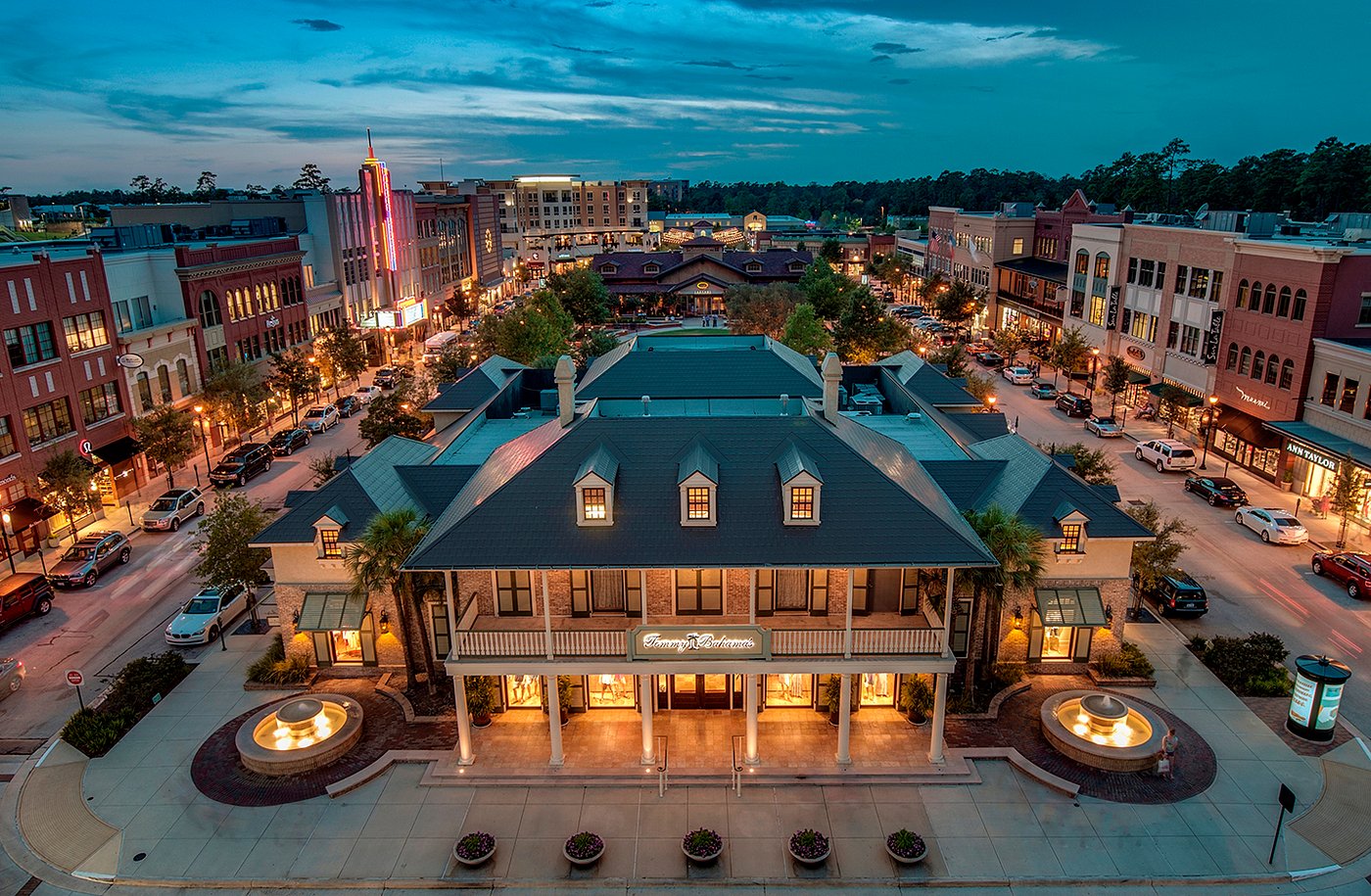
The Woodlands preserves thousands of acres of Piney Woods forest by design, a deliberate scarcity that now underpins the market’s premium pricing
2026 Economic Outlook
- Creekside Park, the community’s newest and last major actively developing village, continuing to add inventory through new sections like Spindle Tree and May Valley
- Springwoods Village and CityPlace, immediately adjacent, continuing to add corporate office and residential inventory tied to the ExxonMobil campus
- Hughes Landing’s mixed-use lakefront development continuing to expand dining, retail, and luxury residential offerings
- Rising homeowners insurance costs across the broader Houston region increasingly factored into buyer due diligence
- Mortgage rates forecast to hover in the low-to-mid 6% range through much of 2026
Investment Climate
The Woodlands rewards investors who value scarcity, corporate employment stability, and top-tier schools over maximum current yield. Successful investors here tend to share a few characteristics:
- Village-specific underwriting given the genuine price and character variation across the township’s nine villages
- Corporate tenant targeting toward ExxonMobil, Chevron Phillips, Huntsman, and comparable relocating professional households
- Wildfire risk awareness given the community’s deliberately dense Piney Woods forest setting
- Larger capital reserves given the market’s high absolute entry price relative to typical rents
- Patience with a longer, appreciation-weighted hold horizon given the market’s genuinely low current cap rates
Texas’s landlord-friendly statewide framework and no state income tax apply fully in The Woodlands. The core investment thesis is straightforward: The Woodlands offers a genuinely scarce, near-buildout master-planned township with a diversified, high-income corporate employment base and top-tier schools, at the cost of the second-lowest cap rates in this Texas series after Boerne.
Historical Performance
| Period | Market Driver | Avg Annual Change | Key Event |
|---|---|---|---|
| 1974-2000 | Founding and early village development | N/A | Grogan’s Mill, Panther Creek, and Cochran’s Crossing established |
| 2010s | ExxonMobil campus construction, corporate relocation surge | 6-9% | Creekside Park village opens (2007), continues rapid buildout |
| 2020-2022 | Pandemic-era migration, national relocation boom | 12-18% | Inventory falls to historic lows; bidding wars common |
| 2023-2025 | National rate shock, gradual inventory recovery | 3-8% | Active listings begin recovering from pandemic-era lows |
| 2026 | Continued scarcity-driven appreciation, inventory normalization | 6-18% (highly source and month dependent) | Active listings surge 77% year over year even as median price continues climbing |
The Woodlands’ honest recent history shows genuine, sustained appreciation even as inventory has meaningfully recovered from pandemic-era lows, a combination that is unusual within this Texas series and reflects the market’s underlying scarcity. Local agents describe March 2026 conditions specifically: active listings surged 77% year over year to 585 homes, yet the median sale price still climbed 18% to $630,000 over the same period, evidence that rising selection has not yet been enough to meaningfully cool pricing given how land-constrained the underlying supply remains.
Demographic Trends Driving Demand
- ExxonMobil and Adjacent Corporate Employment – A 10,000-plus employee corporate campus immediately adjacent, alongside Chevron Phillips, Huntsman, and Occidental Petroleum offices within the township itself
- Top-Tier School Access – An average GreatSchools rating of 9 out of 10, a primary driver of family-oriented demand
- Near-Buildout Scarcity – Roughly 33,000 completed homes across a fixed 28,000-acre footprint, with very little remaining developable land outside Creekside Park
- Corporate Relocation Housing – A genuine furnished corporate housing market serving employees transitioning into permanent Woodlands residences
- Town Center Lifestyle Demand – Market Street, Hughes Landing, and the Cynthia Woods Mitchell Pavilion drawing 20 million annual visitors and supporting genuine walkable, mixed-use residential demand
- Out-of-State Corporate Transfers – Genuine relocation interest from St. Louis, Los Angeles, and Washington metros per Redfin migration data
📚 New to real estate investing? Master the fundamentals with our professional course Learn more →
2. Village Hotspots
The Woodlands Investment Village Map
Interactive map of The Woodlands’ investment villages. Green stars show top hotspots, blue circles mark established markets, and orange circles highlight emerging areas.
Core Investment Villages
Detailed Village Analysis: All The Woodlands Neighborhoods
| Village | Price Range (SFH) | Cap Rate | Growth Drivers | Best Strategy |
|---|---|---|---|---|
| Grogan’s Mill | $300K-$550K | 4.5-5.5% | Most affordable entry, ExxonMobil commute | Value buy-and-hold |
| Cochran’s Crossing | $320K-$580K | 4.5-5.5% | Established infrastructure, deep resale inventory | Family buy-and-hold |
| Panther Creek | $400K-$750K | 3.5-4.5% | Town Center proximity, mature trees | Lifestyle rental, appreciation hold |
| Alden Bridge | $400K-$700K | 4.0-5.0% | Strong schools, established amenities | Balanced buy-and-hold |
| Sterling Ridge | $450K-$800K | 3.5-4.5% | Golf proximity, resort-style parks | Premium buy-and-hold |
| Indian Springs | $350K-$550K | 4.0-5.0% | Mid-tier pricing, community feel | Balanced buy-and-hold |
| College Park | $300K-$500K | 4.5-5.5% | Below-median pricing, education corridor | Cash-flow-leaning buy-and-hold |
| Creekside Park | $400K-$800K | 3.5-4.5% | Newest construction, nature preserve access | New-construction appreciation hold |
| Carlton Woods | $1M-$5M+ | 2.0-3.0% | Private gated golf enclave, ultra-luxury tier | Luxury long-term hold |
Expert Insight: “The village you choose in The Woodlands functions almost like choosing a different suburb entirely, even though they’re all inside one township. Grogan’s Mill and Cochran’s Crossing are where you go for accessible entry and ExxonMobil commute convenience. Panther Creek and Creekside Park are where you pay a real premium for either mature Town Center walkability or brand-new construction against the nature preserve. Know which trade you’re making before you fall in love with a listing photo.” – Houston Properties Team, The Woodlands neighborhood guide
3. Property Types
| Investment Goal | Best Property Type | Best Villages | Minimum Capital |
|---|---|---|---|
| Maximum Cash Flow | Value-tier family rental | College Park | $70,000+ |
| Corporate Tenant Stability | ExxonMobil-commuter SFH | Grogan’s Mill, Cochran’s Crossing | $75,000+ |
| Maximum Appreciation | New construction growth | Creekside Park | $100,000+ |
| Ultra-Luxury Tenant Pool | Gated golf estate | Carlton Woods | $250,000+ |
Don’t guess the costs. Our Complete Renovation & Remodeling Cost Guide covers 400+ pages of project-by-project breakdowns with real contractor pricing ranges.
4. Cost Analysis
Acquisition Cost Breakdown (The Woodlands)
| Expense Item | Typical Cost | Example ($630,000 Property) | Notes |
|---|---|---|---|
| Down Payment | 25% (investment) | $157,500 | Standard for investment properties statewide |
| Closing Costs | 2-3% of price | $12,600-$18,900 | Title, escrow, lender fees, recording |
| Wildfire Risk Assessment | $0-$200 (informational) | $100 | Recommended given the community’s Piney Woods forest setting and roughly 60% area wildfire exposure |
| General Inspection | $450-$700 | $575 | More critical for Grogan’s Mill and Panther Creek’s older 1970s-1990s inventory |
| Initial Repairs | 0-8% of price | $0-$50,400 | Highly variable by village and property age |
| Reserves (6 months) | 6 months expenses | $15,000-$20,000 | Elevated given current 27-59 day average days-on-market environment |
| TOTAL MINIMUM ENTRY | ~28-38% of value | $185,275-$246,675 | The highest absolute capital requirement of any Houston-area city in this series |
Sample Cash Flow Analysis: Grogan’s Mill ExxonMobil-Commuter Rental
| Item | Monthly | Annual | Notes |
|---|---|---|---|
| Gross Rent | $2,400 | $28,800 | 3BR home, Grogan’s Mill, ExxonMobil commute convenience |
| Less Vacancy (5%) | -$120 | -$1,440 | Reflects the market’s genuinely stable, corporate-anchored tenant base |
| Property Taxes | -$850 | -$10,200 | ~2.6% effective rate on $390K assessed value, typical for Montgomery County |
| Insurance | -$210 | -$2,520 | Standard landlord policy; rising Houston-region rates increasingly factored into buyer budgets |
| Property Management (9%) | -$205 | -$2,460 | Houston-area managers commonly extend service coverage into The Woodlands |
| Maintenance + CapEx | -$168 | -$2,016 | 7% of rent for a 1970s-1980s vintage Grogan’s Mill home |
| Net Operating Income | $847 | $10,164 | Before mortgage |
| Mortgage ($390K, 25% down, 6.75%, 30yr) | -$1,899 | -$22,788 | Principal and interest only |
| CASH FLOW | -$1,052 | -$12,624 | Negative with standard financing; reflects the market’s genuinely appreciation-weighted return profile |
| Cap Rate | 2.6% | NOI / Purchase Price at this financed scenario | |
| Total Return Estimate (7% appreciation) | ~14-18% | Including appreciation, principal paydown, and tax benefits, reflecting the market’s genuinely still-rising price trajectory |
This example illustrates The Woodlands’ core tradeoff: meaningfully negative leveraged monthly cash flow at standard 25% down financing, offset by the market’s genuinely still-appreciating price trajectory, low vacancy risk, and a stable, high-income corporate tenant base. Investors purchasing with a larger down payment, or targeting College Park’s lower entry prices with comparable rents, can push closer to positive leveraged cash flow while retaining broad access to The Woodlands’ amenity ecosystem.
Expert Insight: “The Woodlands is genuinely one of the few markets in this state where I’d tell an investor not to over-optimize for day-one cash flow. This is a township that’s nearly out of land to build on, has a corporate employer base that just isn’t going anywhere, and has posted real, sustained appreciation even in a year when most of Texas was cooling off. You’re not buying yield here, you’re buying scarcity in a market that’s proven it over five decades.” – Houston Properties Team, The Woodlands market analysis
5. Legal Framework
⚠️ Critical The Woodlands Compliance Notice
Texas’s statewide landlord-friendly framework applies fully in The Woodlands, and the township itself, governed by The Woodlands Township rather than a traditional incorporated city, adds relatively light additional tenant regulation. The real compliance and disclosure priority here is wildfire risk given the community’s deliberately dense Piney Woods forest setting, alongside standard village-specific HOA and school-zone verification. This guide provides an overview only. Always consult a Texas-licensed real estate attorney before acquiring rental properties, and verify current wildfire risk, HOA rules, and village-specific tax status independently for any specific parcel.
Texas and The Woodlands-Specific Regulations
The Woodlands operates under Texas’s statewide landlord-tenant framework (Texas Property Code Chapter 92), governed locally by The Woodlands Township, a special-purpose governmental entity rather than a traditional incorporated city:
- No Rent Control: Texas prohibits municipal rent control outright.
- Township Governance Structure: The Woodlands is governed by an elected Township Board rather than a traditional city council, with services funded through a combination of property tax and sales tax revenue, notably including significant non-resident sales tax contributions from Town Center visitors.
- Multi-County Position: The Woodlands spans primarily Montgomery County with a smaller portion in Harris County, each with distinct appraisal districts.
- Security Deposit Return: Must be returned within 30 days of move-out under Texas Property Code Section 92.103.
- Wildfire Risk Disclosure: Not a standard statewide disclosure category, but a genuinely material risk factor given the community’s dense forest preservation design, worth confirming with insurers directly.
- HOA and Covenant Structure: Nearly every property in The Woodlands sits within a village-level HOA or covenant structure with architectural review requirements, particularly strict in guard-gated communities like Carlton Woods.
Compliance Best Practices
Successfully operating The Woodlands rental properties requires attention to village-specific rules and wildfire exposure:
- Wildfire Risk Assessment: Obtain a specific wildfire risk quote from your insurer given the community’s forest setting, rather than assuming a standard Gulf Coast flood-only policy suffices.
- Village-Specific HOA Review: Pull and review the specific village’s covenant restrictions, particularly for Carlton Woods and other guard-gated communities with strict architectural review.
- Montgomery/Harris County Tax Verification: Confirm the exact county tax jurisdiction and current assessed value for the specific parcel.
- School Zone Confirmation: Verify exact Conroe ISD school assignment for the specific address given genuine premium variation by campus.
- Lease Compliance Review: Use current Texas Association of Realtors lease templates with appropriate HOA and hurricane preparedness addenda given the region’s broader Gulf Coast storm exposure.
- Local Property Management: Confirm specific experience with The Woodlands’ corporate relocation tenant base and village-specific HOA compliance requirements.
Useful The Woodlands Resources
- The Woodlands Township: thewoodlandstownship-tx.gov
- Montgomery Central Appraisal District: mcad-tx.org
- Conroe Independent School District: conroeisd.net
- Texas Property Code Chapter 92: statutes.capitol.texas.gov
| Regulation | The Woodlands Requirement | Texas Statewide | Investor Impact |
|---|---|---|---|
| Eviction | No local add-on; standard state process | 3-day notice to vacate, then eviction filing | Among the fastest eviction timelines nationally |
| Wildfire Risk | Roughly 60% of properties carry some wildfire exposure given the forested setting | Not a standard statewide disclosure category | Genuinely material risk factor; confirm insurer terms directly |
| HOA Governance | Village-level HOA/covenant structure; strict architectural review in guard-gated communities | HOA authority governed by Texas Property Code Chapter 209 | Verify per village before purchase |
| Property Tax Jurisdiction | Primarily Montgomery County, small portion Harris County | No statewide flat rate; varies by locality | Confirm exact jurisdiction for the specific parcel |
| Rent Increases | No local cap | No statewide cap or rent control | Full pricing flexibility, supported by the market’s genuine appreciation trajectory |
6. Step-by-Step The Woodlands Investment Playbook
Define Your The Woodlands Strategy
The Woodlands rewards investors who accept its appreciation-first, scarcity-driven character. Choose from these proven strategies:
ExxonMobil-Commuter Value Play
Buy in Grogan’s Mill or Cochran’s Crossing to target the corporate commuter renter base at the township’s most accessible entry price.
Best-Available Cash Flow
Buy in College Park for the township’s strongest realistic cap rate while retaining broader Woodlands amenity and school access.
Maximum Appreciation Play
Buy in Creekside Park for the township’s strongest new-construction growth rate, backed by direct nature preserve access and continued village buildout.
Town Center Lifestyle Hold
Buy in Panther Creek to capture genuine walkability premiums near Market Street and Hughes Landing, targeting professional and empty-nester tenants.
Build Your The Woodlands Team
Given the township’s village-based structure and unique wildfire exposure, local expertise is essential. Non-negotiable team members:
- The Woodlands-Specialist Real Estate Agent: Should be fluent in village-specific pricing, HOA structures, and current inventory conditions across all nine villages.
- Insurance Agent with Wildfire Expertise: Essential given the community’s dense forest setting; confirm coverage terms explicitly rather than assuming a standard policy suffices.
- Montgomery/Harris County Appraisal District Familiarity: Either through your agent or directly, confirm tax jurisdiction and assessed value before every offer.
- Texas Real Estate CPA: For entity structuring and depreciation strategy, particularly given the market’s high absolute property values.
- Local Property Manager: Confirm specific experience with corporate relocation tenants and village-specific HOA compliance.
Expert Tip: Ask any prospective agent directly: “How does this village’s price trajectory compare to the township average over the last 12 months?” An agent who can break this down by village, rather than quoting only the citywide median, understands The Woodlands’ real internal structure.
The Woodlands-Specific Due Diligence
Standard due diligence items plus these The Woodlands-critical checks:
Physical Due Diligence
- Confirm wildfire risk exposure given the community’s forest setting, particularly for heavily wooded lots
- Foundation inspection given Houston-area clay soils and high water table
- Roof and HVAC condition given Gulf Coast humidity and extended cooling season
- Verify standard flood zone status, moderate but non-trivial at roughly 11% citywide
Regulatory and Financial Due Diligence
- Confirm exact Montgomery or Harris county tax jurisdiction and current assessed value
- Pull and review the specific village’s HOA covenant restrictions
- Verify exact Conroe ISD school assignment for the specific address
- Pull village-specific comparable sales rather than relying on the citywide median
Competing in The Woodlands’ Market
The Woodlands remains genuinely competitive even amid rising inventory. Strategies that work:
- Move quickly on well-priced listings: Well-priced homes still go under contract in roughly four weeks even as overall days on market has extended.
- Prepare for the luxury tier’s genuine scarcity: Properties above $800,000 carry only about 3.5 months of supply, meaning strong, well-presented luxury listings still command real competition.
- Negotiate on the broader market’s normalization: Homes are now selling around 3% below list price on average, giving buyers genuine room outside the scarce luxury tier.
- Price insurance into your offer strategy: Rising Houston-region insurance costs should be quoted and factored in before finalizing an offer, not discovered after closing.
- Consider Creekside Park for new-construction access: As the only village still actively developing, it offers the clearest path to new-construction inventory within the township.
Property Management in The Woodlands
The Woodlands’ corporate, family-oriented, and often long-tenured tenant base rewards attentive, relationship-focused management. Key management focuses:
Corporate Relocation Tenant Protocol
Properties targeting ExxonMobil-adjacent and comparable corporate tenants benefit from a few specific practices:
- Build relationships with corporate relocation coordinators and furnished housing providers serving the ExxonMobil campus and comparable employers
- Anticipate longer average tenancies given the market’s corporate, family-oriented profile
- Confirm village-specific HOA rules and communicate them clearly to tenants at move-in, particularly for guard-gated communities
- Budget for genuine wildfire and hurricane season preparedness given the community’s forest setting and broader Gulf Coast exposure
Typical The Woodlands Management Fees
- Single-family management: 9-11% of monthly rent, reflecting the market’s higher-value tenant base
- Luxury-tier management: Often 12-15% given elevated service expectations in communities like Carlton Woods
- Leasing fee: 50-100% of one month’s rent
- Lease renewal fee: $200-$400 per renewal
7. Financing Options for The Woodlands
| Loan Type | Down Payment | Rate Premium | Best For | The Woodlands Note |
|---|---|---|---|---|
| Jumbo Loan | 20-25% | +0.75-1.5% | Purchases above conforming loan limits | Standard for most Panther Creek, Sterling Ridge, and Carlton Woods purchases |
| Conventional Investment | 25% | +0.5-0.75% | Strong W-2 income, good credit | Fits below-conforming-limit purchases in Grogan’s Mill and College Park |
| DSCR Loan | 25-30% | +1.5-2.5% | Investors who want no income verification | The market’s low cap rates mean DSCR coverage is genuinely tighter here than in most cities in this series |
| Portfolio Loan | 20-25% | +0.75-1.5% | Multiple properties, self-employed, or high-net-worth buyers | Houston-area private banks and community banks are commonly familiar with The Woodlands’ luxury lending needs |
The Woodlands Financing Reality: Given The Woodlands’ high absolute property values, jumbo financing is the norm rather than the exception for many of the township’s most desirable villages. DSCR financing is genuinely harder to qualify for here at standard leverage given the market’s low cap rates; most successful The Woodlands investors either bring larger down payments or accept modest negative leveraged cash flow in exchange for the market’s demonstrated, genuinely still-rising appreciation trajectory.
8. Frequently Asked Questions

Knowledge Quiz: The Woodlands Real Estate Investment
Open Quiz
5 quick questions on what you just learned about The Woodlands investing
1) What does the guide identify as the core reason The Woodlands is still appreciating while much of Texas cools?
Answer: B
The Woodlands is nearing the end of a deliberate five-decade build-out across a fixed 28,000-acre footprint, with roughly 33,000 completed homes and very little remaining developable land outside Creekside Park, a genuine structural scarcity supporting continued price growth.
2) Is the ExxonMobil corporate campus technically located inside The Woodlands township?
Answer: C
ExxonMobil’s 385-acre, 10,000-plus employee corporate campus sits in nearby Spring, Texas, immediately adjacent to The Woodlands rather than within its own township boundaries, anchoring the broader Springwoods Village and CityPlace development.
3) What genuinely distinctive risk does the guide flag for The Woodlands given its forested setting?
Answer: A
Because The Woodlands was deliberately built within a dense Piney Woods forest and preserves thousands of acres of tree canopy by design, independent modeling shows roughly 60% of properties carrying some wildfire risk over the next 30 years, a distinctive profile compared to the flood-focused disclosures typical elsewhere in the Houston metro.
4) Which village does the guide identify as offering the strongest available cap rate within The Woodlands?
Answer: D
College Park, the township’s newer northern village, offers The Woodlands’ most accessible entry pricing and strongest realistic cap rate (4.5-5.5%) while retaining access to the broader township’s amenities and school system.
5) How does the guide compare The Woodlands’ scarcity to Boerne’s scarcity elsewhere in this series?
Answer: C
The guide distinguishes the two: Boerne’s Hill Country topography and development guidelines create a genuinely permanent geographic constraint, while The Woodlands’ scarcity stems from reaching the natural end of a deliberately planned five-decade build-out, with Creekside Park as essentially the final remaining chapter.
Work With a Local Expert in The Woodlands
We are building a verified network of real estate professionals across every market we cover.

About Our Expert Network
We are finalizing partnerships with verified real estate professionals across every market featured on Builds and Buys. Each expert in our network is selected for their hands-on investment experience, local market knowledge, and commitment to helping buyers and investors make sound decisions.
Our local specialists offer:
- Proven experience with investment and income-producing properties
- Deep knowledge of local pricing, rental yields, and neighborhood dynamics
- Guidance on financing, legal structure, and due diligence
- Access to off-market and pre-market opportunities
- Full transaction support from search through closing
- Ongoing portfolio and property management referrals
Services Covered
- Property sourcing and acquisition
- Investment analysis and underwriting
- Buyer representation
- Market comparables and valuations
- Short-term and long-term rental strategy
- Value-add and renovation guidance
- Legal and title referrals
- Financing and lender connections
- Property management referrals
- Insurance and inspection referrals
- 1031 exchange coordination
- Exit strategy planning
Get Connected or Join Our Network
Looking for a local expert to help with your investment? Reach out and we will connect you with the right professional for your market and strategy.
Are you a real estate professional with a track record working with investors? We are always expanding our network of verified local experts.
Contact us at support@buildsandbuys.com
Find Specialized The Woodlands Real Estate Professionals
Ready to Invest in The Woodlands?
The Woodlands offers a genuinely rare combination in today’s Houston metro: real, near-buildout land scarcity, a diversified corporate employment base anchored by ExxonMobil and comparable companies, top-tier schools, and prices that are still meaningfully appreciating even as much of the state normalizes. Investors who choose the right village for their strategy, budget appropriately for the market’s genuine wildfire exposure, and accept a longer, appreciation-weighted hold horizon will find one of the most resilient long-term investment cases in this entire Texas series.
Continue Your Research
Texas State Guide
See how The Woodlands compares to Houston, Katy, and other Gulf Coast markets.
Step-by-Step Invest
Complete framework for building a real estate investment strategy from scratch.
144-Lesson Course
University-level real estate education covering financing, law, strategy, and management.
For further guidance, explore our State-by-State Investor guides, browse our expert articles, or follow our Step-by-Step Investment Guide.



