
South Padre Island Real Estate Investment Guide For 2026
A comprehensive resource for investors looking to capitalize on Texas’s premier tropical barrier island vacation rental market in 2026
Quick answers: Top 5 most searched South Padre Island investment questions ▼
Market data: Who’s buying and why on South Padre Island ▼
In This Guide
Click on any section to navigate directly to that content
1. South Padre Island Market Overview
Market Fundamentals
South Padre Island is Texas’s premier tropical barrier island destination, a 34-mile ribbon of Gulf-front land at the southern tip of Texas that draws over a million visitors a year to a permanent population of roughly 2,800 residents. That ratio alone tells you what kind of market this is: real estate here is built almost entirely around the visitor economy rather than local employment, and investors need to think like operators of a hospitality business as much as landlords.
Key characteristics that define South Padre’s investment case:
- Permanent Population: ~2,800 residents, Cameron County
- Annual Visitors: 1,000,000+, spanning spring break, summer families, and winter Texan snowbird seasons
- Active STR Licenses: ~2,408, nearly one-third of all island housing
- Land Constraint: Fixed 34-mile barrier island footprint with no meaningful room for sprawl
- No State Income Tax: Standard Texas advantage applying equally here
- Market Liquidity: Thin, often just 13-26 closed sales per month across the entire island
Unlike most cities in this series, South Padre’s economy is not diversified across multiple employment sectors. It is a tourism monoculture, which is precisely what makes it work as an investment market: demand is driven by beach access and vacation infrastructure, not by any single employer that could relocate or downsize.
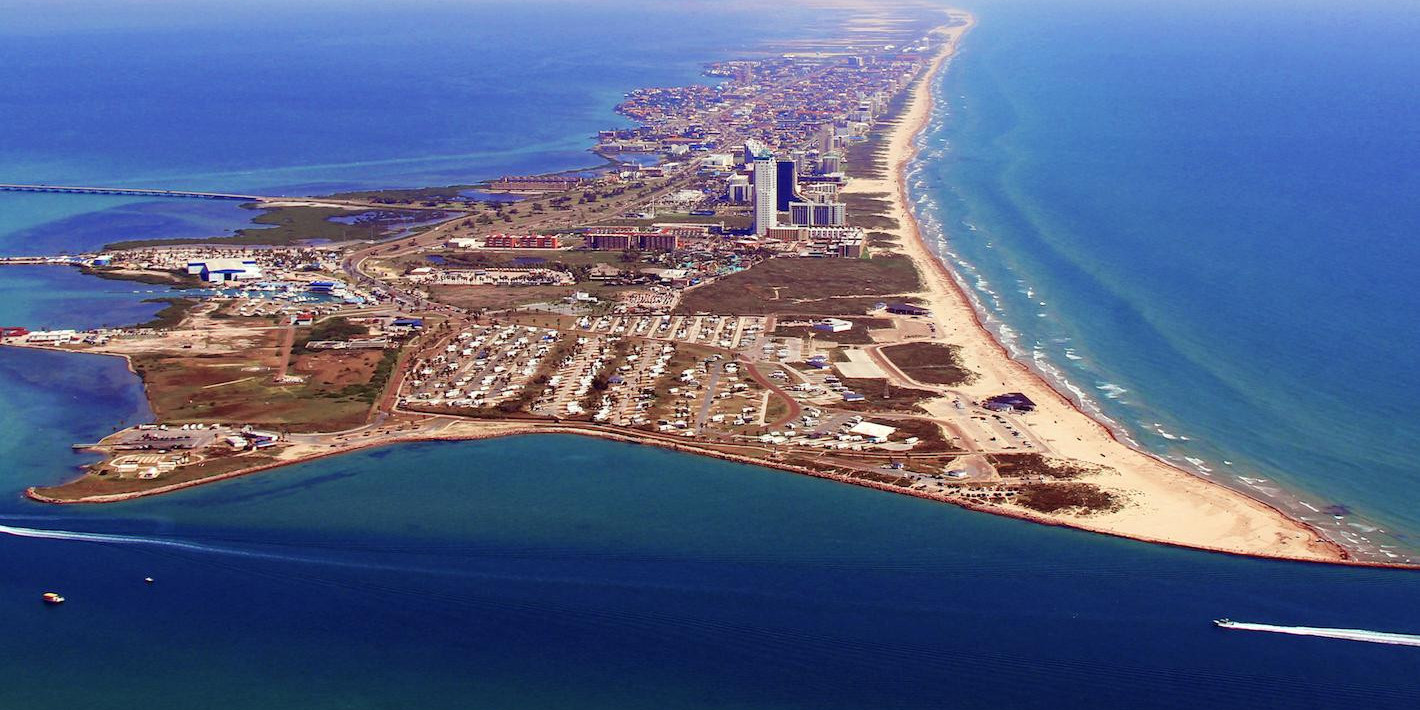
South Padre Island’s Gulf-front condo corridor anchors the island’s tourism-driven investment market
2026 Market Outlook
- Elevated months of supply (15-25 months) persisting, favoring buyers
- Insurance cost inflation continuing to shape affordability more than price alone
- STR demand remaining structurally strong across all three seasonal windows
- Non-warrantable condo financing remaining the single biggest transaction friction point
- Port Isabel, the mainland gateway town, absorbing overflow demand from cost-sensitive buyers
Investment Climate
South Padre Island’s investment environment is defined by a genuine structural tension: durable, land-constrained tourism demand offset by thin transaction volume, elevated insurance costs, and financing friction on much of the condo stock. Successful South Padre investors tend to share a few characteristics:
- Trend-based underwriting that looks at 12-24 month price and inventory trends rather than any single month’s median
- STR-operator mindset treating the property as a small hospitality business with seasonal revenue swings, not a passive rental
- Insurance-first budgeting confirming the full triple stack cost before making an offer, not after
- HOA due diligence discipline since many buildings carry rental restrictions, special assessment risk, or non-warrantable financing status
- Patience with thin liquidity accepting that both buying and eventually selling can take longer than in a typical suburban market
The island’s finite land mass is the structural bull case: there is no meaningful undeveloped land left for large new competing supply, and that scarcity has historically supported values even through periods of soft demand. The bear case is equally real: rising coastal insurance costs and a genuinely thin resale market can extend hold periods and complicate exit timing for investors who need liquidity on a fixed schedule.
Recent Price Trend Data
| Source / Period | Reported Median | YoY Change | Context |
|---|---|---|---|
| Zillow typical home value | $454,336 | +4.5% | Smoothed value index across all home types |
| Movoto, April/June 2026 | $477,500-$479,500 | Roughly flat | 163 sales in April, days on market up to 162 vs 79 prior year |
| Redfin, November 2025 | $548,000 | +28.8% | Only 22 homes sold that month, small sample driving volatility |
| Padre Island local market report, May 2026 | $395,000 | -6.7% | 26 closed sales, months of inventory 15.2 |
The takeaway is not that any one of these numbers is wrong. Each reflects a real, correctly-calculated median for its specific window and data source. It is that South Padre’s monthly sales volume is small enough that the median itself is genuinely unstable month to month. Investors underwriting a deal here should pull price-per-square-foot trends over 12-24 months and treat any single headline “median home price” figure as directional at best.
Demand Drivers
- Spring Break Economy – South Padre is one of Texas’s flagship spring break destinations, generating a concentrated multi-week revenue spike each March that STR operators build entire annual budgets around
- Winter Texan Season – Snowbirds from the Midwest and Canada fill the island each winter, creating a second, longer, steadier demand window than spring break alone
- Summer Family Tourism – Beach vacation demand from Texas and regional drive-market families fills the third seasonal window
- Fixed Land Supply – The 34-mile barrier island footprint physically cannot expand, structurally limiting new competing inventory over time
- Port Isabel Overflow – The mainland gateway town across the causeway absorbs price-sensitive buyers who want proximity without full island-level insurance and HOA costs
- Rio Grande Valley Growth – Regional population growth in the broader Brownsville-Harlingen-McAllen metro area supports weekend and day-trip visitor volume beyond overnight tourism
📚 New to real estate investing? Master the fundamentals with our professional course Learn more →
2. Neighborhood Hotspots
South Padre Island Investment Area Map
Interactive map of South Padre Island’s investment corridors. Green stars show top hotspots, blue circles mark established markets, and orange circles highlight emerging areas including the mainland gateway.
Core Investment Areas
Detailed Submarket Analysis: All South Padre Island Areas
| Area | Price Range | STR Yield | Growth Drivers | Best Strategy |
|---|---|---|---|---|
| Gulf Blvd Central Corridor | $350K-$900K+ | 5.0-7.5% | Deepest visitor traffic, established STR infrastructure | Full-service STR, beachfront selection |
| Isla Blanca / South End | $300K-$700K | 5.5-7.5% | County park anchor, fishing and jetty tourism | STR, year-round traffic capture |
| North End Beach (Access 4-6) | $375K-$850K | 5.0-7.0% | Family and Winter Texan demand, lower density | STR with longer average stays |
| Middle Island Resort Corridor | $300K-$650K | 5.0-6.5% | Walkability to dining and entertainment | Mid-tier STR, steady occupancy |
| Laguna Madre Bay-Side Canals | $425K-$950K | 3.5-5.0% | Boat dock access, quieter residential demand | Longer-stay rental, boating/fishing niche |
| North Padre Blvd Residential | $300K-$600K | 4.5-6.0% | Emerging value, quieter residential feel | Value entry, moderate STR |
| Port Isabel (Mainland) | $180K-$350K | 5.5-8.0% | Lowest entry cost, materially lower insurance carry | Long-term or mid-term rental |
Expert Insight: “The mistake we see out-of-state buyers make constantly is treating South Padre like a normal residential market and anchoring on a single Zillow number. This is a hospitality asset class wearing a real estate wrapper. You need occupancy data, ADR trends by season, and a real insurance quote in hand before you know what a property is actually worth to you as an operator, not just what a comp sheet says it sold for.” – Rio Grande Valley Coastal Property Group
3. Property Types
| Investment Goal | Best Property Type | Best Areas | Minimum Capital |
|---|---|---|---|
| Maximum STR Revenue | High-rise Gulf-front condo | Gulf Blvd Central Corridor | $100,000+ (25-35% down, non-warrantable) |
| Lowest Entry Cost | Mainland single-family | Port Isabel | $45,000+ (25% down) |
| Quieter Longer-Stay Demand | Bay-side canal home | Laguna Madre corridor | $110,000+ |
| Balanced Entry + Yield | Mid-rise condo | Middle Island Resort Corridor | $65,000+ |
Don’t guess the costs. Our Complete Renovation & Remodeling Cost Guide covers 400+ pages of project-by-project breakdowns with real contractor pricing ranges.
4. Cost Analysis
Acquisition Cost Breakdown (Gulf-Front Condo Example, $475,000)
| Expense Item | Typical Cost | Example ($475,000 Property) | Notes |
|---|---|---|---|
| Down Payment | 25-35% (non-warrantable condo) | $118,750-$166,250 | Higher end if building is non-warrantable |
| Closing Costs | 2-4% of price | $9,500-$19,000 | Title, escrow, lender fees, recording |
| Condo Questionnaire / Warrantability Review | $300-$700 | $450 | Confirms financing eligibility before closing |
| General + Wind Mitigation Inspection | $500-$900 | $700 | Wind mitigation report can reduce TWIA premium |
| Furnishing (STR-ready) | $15,000-$40,000 | $25,000 | Full furniture, linens, kitchen, decor for STR listing |
| Reserves (6 months) | 6 months carrying costs | $12,000-$18,000 | Covers off-season vacancy and hurricane season disruption |
| TOTAL MINIMUM ENTRY | ~33-45% of value | $156,500-$213,700 | Includes STR furnishing, higher than a standard residential purchase |
Sample Cash Flow Analysis: Gulf-Front 2BR Condo, Active STR
| Item | Monthly (avg) | Annual | Notes |
|---|---|---|---|
| Gross STR Revenue | $3,167 | $38,000 | 2BR Gulf-front, seasonal average, ~60% occupancy |
| HOA Fees | -$750 | -$9,000 | Includes master windstorm policy contribution |
| Flood Insurance | -$275 | -$3,300 | Separate NFIP or private flood policy |
| Property Taxes | -$650 | -$7,800 | Cameron County + city rate on assessed value |
| STR Property Management (28%) | -$887 | -$10,640 | Full-service including cleaning coordination and guest support |
| Maintenance + CapEx Reserve | -$317 | -$3,800 | 10% of gross revenue for coastal wear and tear |
| Net Operating Income | $288 | $3,460 | Before mortgage |
| Mortgage ($475K, 30% down, DSCR loan, 7.5%, 30yr) | -$2,326 | -$27,912 | Principal and interest only, DSCR loan pricing |
| CASH FLOW | -$2,038 | -$24,452 | Negative at this occupancy/rate combination; improves with higher occupancy or larger down payment |
| Cap Rate (unlevered) | ~5.0% | NOI before management fee reduction / purchase price |
This example illustrates why occupancy assumptions matter more here than in almost any other market in this series. Pushing occupancy from 60% to 70% through better STR management, or reducing the DSCR rate premium with a larger down payment, can be the difference between meaningfully negative and roughly breakeven cash flow on the exact same unit.
Expert Insight: “Every South Padre buyer needs a real insurance quote before they write an offer, not after. We have seen deals fall apart at the closing table because a buyer assumed a $6,000 annual insurance number from a mainland comparison and the actual TWIA-plus-flood quote for a beachfront unit came back at $16,000. That gap changes the entire cash flow model.” – Cameron County Coastal Insurance Advisors
5. Legal Framework
⚠️ Critical South Padre Island Compliance Notice
Texas landlord-tenant law is genuinely landlord-friendly compared to most coastal markets, but South Padre layers city-level STR licensing requirements and building-specific HOA rental restrictions on top of state law. This guide provides an overview only. Always confirm current STR licensing requirements with the City of South Padre Island directly, and review each condo building’s HOA rental restrictions and financing warrantability status with a real estate attorney before purchase.
Texas & South Padre-Specific Regulations
Texas overall is one of the more landlord-favorable states in the country, and South Padre Island operates within that framework with some coastal and tourism-specific additions:
- No Statewide STR Registration: Texas does not require a statewide short-term rental license, but the City of South Padre Island requires its own local STR operator registration and collects hotel occupancy tax on stays under 30 days.
- HOA Rental Restrictions: Many condo buildings impose their own minimum stay requirements, STR caps, or outright rental prohibitions in certain unit blocks. These vary building to building and must be confirmed before purchase, not assumed from a neighboring building’s rules.
- TWIA Windstorm Requirement: Cameron County sits within the 14 coastal Tier 1 counties where the Texas Windstorm Insurance Association writes wind and hail coverage due to standard market capacity constraints.
- Landlord-Favorable Eviction Process: Texas Property Code allows a notice to vacate as short as 3 days for non-payment (unless the lease specifies otherwise), followed by a comparatively fast eviction suit in Justice Court.
- No Statewide Rent Control: Texas law prohibits municipal rent control ordinances, meaning South Padre landlords face no rent increase notice period requirements comparable to markets like Seattle or Portland.
- Security Deposit Rules: Texas requires return within 30 days of move-out, with no statewide cap on deposit amount.
Compliance Best Practices
Successfully operating a South Padre Island STR requires attention to city, county, and HOA-level rules simultaneously:
- Confirm HOA Rental Rules First: Before making an offer, obtain the building’s governing documents and confirm STR is permitted, whether there’s a minimum stay length, and whether any rental caps or waiting lists exist.
- Register with the City: Complete South Padre Island’s STR operator registration and hotel occupancy tax collection setup before listing on any platform.
- Confirm Warrantability Before Contract: Have your lender run a condo questionnaire on the specific building before waiving your financing contingency, since non-warrantable status changes your available loan products entirely.
- Verify the Full Insurance Stack Early: Get quotes for windstorm (TWIA or private wind carrier), flood, and the walls-in or homeowners policy before closing, not after.
- Hurricane Season Operating Plan: Have a documented evacuation and property-securing protocol for your STR management company, since Gulf Coast hurricane risk is a real operational consideration June through November.
- Local Management Company: Given the island’s remote, tourism-dependent nature, a locally-based property manager with hurricane-season experience is close to essential for out-of-state owners.
Useful South Padre Island Resources
- City of South Padre Island: myspi.org
- Texas Windstorm Insurance Association: twia.org
- Cameron County Appraisal District: cameroncad.org
- South Padre Island Chamber of Commerce: sopadre.com
| Regulation | South Padre Island / City Requirement | Texas State | Investor Impact |
|---|---|---|---|
| STR Licensing | City STR operator registration + occupancy tax required | No statewide STR registration | Must register locally regardless of HOA approval |
| Eviction | Standard Texas process applies | 3-day notice to vacate (non-payment), Justice Court filing | Comparatively fast and landlord-friendly vs national average |
| Rent Control | None | Prohibited statewide | Full pricing flexibility for rate adjustments |
| Windstorm Insurance | TWIA availability given Tier 1 coastal county status | Standard market capacity-constrained statewide program | Meaningful, non-optional annual carrying cost |
| HOA Rental Rules | Building-specific, varies widely | Governed by condo declaration, not state statute | Must be confirmed per-building before purchase |
6. Step-by-Step South Padre Island Investment Playbook
Define Your South Padre Strategy
South Padre is a hospitality-driven market first and a real estate market second. Before buying, be clear on which of these strategies you are executing:
Full-Service Gulf-Front STR
Buy the highest-visibility, highest-occupancy unit you can afford in the central corridor. Requires professional STR management and active seasonal pricing strategy across three demand windows.
Value / Mainland Entry
Buy in Port Isabel for a materially lower purchase price and insurance cost, running long-term or mid-term rental rather than full STR. Trades Gulf-front premium for a much simpler carrying cost structure.
Bay-Side Niche Play
Buy a canal-front home targeting boating and fishing tenants with longer average stays than the Gulf-front spring-break crowd. Quieter operating profile with a distinct, less price-competitive tenant pool.
Patient Second-Home / Winter Texan
Buy primarily for personal seasonal use, offsetting carrying costs with STR income during the months you’re not occupying it. Common among Midwest and Canadian buyers who winter on the island.
Build Your South Padre Team
Given the island’s remote, seasonal, tourism-dependent nature, your team matters as much as the property itself. Non-negotiable team members:
- Local South Padre Island Agent: Must know building-specific HOA rental rules and financing warrantability history, not just general market pricing.
- Coastal Insurance Broker: Independent broker who can shop TWIA-adjacent private wind markets, flood, and walls-in coverage together as a package.
- Lender Experienced with Non-Warrantable Condos: Portfolio or DSCR-focused lender who has closed loans in the specific building you’re targeting, ideally.
- Local STR Property Manager: Based on or very near the island, with a documented hurricane season operating protocol and multi-platform listing experience.
- Real Estate Attorney Familiar with Coastal Texas HOAs: To review condo declarations for rental restrictions and any pending special assessments before you close.
Expert Tip: Ask any prospective property manager directly: “What was your average occupancy across spring break, summer, and Winter Texan season last year, broken out separately?” A manager who can answer with real segmented numbers understands this market. One who gives a single blended annual occupancy figure likely doesn’t.
South Padre-Specific Due Diligence
Standard due diligence items plus these South Padre-critical checks:
Physical Due Diligence
- Wind mitigation inspection for potential TWIA premium credits
- Balcony and railing structural inspection (salt air corrosion is common)
- HVAC and appliance age given accelerated coastal wear
- Elevation certificate for flood zone and insurance rating
- Roof and building envelope condition on condo buildings
- Seawall or bulkhead condition for bay-side canal properties
Regulatory & Financial Due Diligence
- Confirm STR permission and any minimum stay/rental cap in the HOA declaration
- Pull condo questionnaire to confirm warrantable vs non-warrantable financing status
- Review HOA reserve fund balance and any pending or planned special assessments
- Confirm current city STR registration status if buying an existing STR unit
- Verify existing insurance policy details and claims history on the specific unit
- Check litigation history on the condo association if applicable
Navigating a Thin, Seasonal Market
South Padre’s low transaction volume changes how you should approach both buying and selling:
- Longer negotiation windows: With 15-25 months of supply typical, sellers have less pricing power than in a balanced market. Patient, well-prepared buyers can often negotiate meaningfully off list price.
- Seasonal listing timing: Inventory and buyer activity both shift seasonally; shopping in the off-season shoulder months can surface less competition on desirable units.
- Off-market STR operator networks: Many of the best-performing units change hands through existing STR management company relationships before ever hitting the open market.
- Insurance quote timing: Lock in your insurance quote early in the process, since TWIA and private wind carrier pricing can shift with hurricane season proximity and broader coastal market conditions.
- Realistic exit timeline: Given thin monthly sales volume, build in a longer expected marketing period than you would for a typical suburban resale when planning your eventual exit.
Property Management in South Padre
Given the remote, seasonal, tourism-driven nature of this market, professional STR management is close to mandatory for out-of-state or absentee owners. Key management focuses:
Seasonal Pricing Strategy
Successful South Padre STR management means pricing three distinct seasons separately, not applying one blended rate:
- Spring break (March): Highest ADR, shortest booking window, highest demand concentration
- Summer (June-August): Strong family demand, longer average stays
- Winter Texan season (November-March, excluding spring break): Steadier, longer-stay bookings, often monthly rates
Typical South Padre STR Management Fees
- Full-service STR management: 25-35% of gross revenue
- Cleaning fees: Typically passed through to guests, coordinated by manager
- Hurricane season prep/storm protocol: Often included in management fee, confirm scope
- Long-term rental management (Port Isabel/bay-side): 8-10% of monthly rent
7. Financing Options for South Padre Island
| Loan Type | Down Payment | Rate Premium | Best For | South Padre Note |
|---|---|---|---|---|
| Conventional Investment (Warrantable Condo) | 20-25% | +0.5-0.75% | Buildings that pass Fannie Mae/Freddie Mac warrantability review | Confirm warrantability status before waiving financing contingency |
| Portfolio Loan (Non-Warrantable Condo) | 25-35% | +1-2% | Buildings that fail standard warrantability tests | Very common on the island given investor-heavy ownership ratios |
| DSCR Loan | 25-30% | +1.5-2.5% | Investors who want STR income underwritten instead of personal income | Popular here since many buyers are out-of-state and self-employed/retired |
| Cash Purchase | 100% | N/A | Non-warrantable buildings with limited lender options | Common strategy for the most restrictive HOA buildings |
| Conventional (Port Isabel Mainland SFH) | 20-25% | +0.5% | Standard single-family purchases off-island | Simpler underwriting than island condo properties |
| HELOC / Cash-Out Refi | N/A | Varies | Existing homeowners funding a second island purchase | Often cheaper than a purpose-built investment loan |
South Padre Financing Reality: Financing is the single biggest transaction friction point on this island, more than price or even insurance. A meaningful share of Gulf-front condo buildings carry non-warrantable status due to high investor-to-owner-occupant ratios, and buyers who assume standard conventional financing will apply often discover the true financing picture only after they’re already under contract. Confirm warrantability status with your lender before you remove your financing contingency, not after.
8. Frequently Asked Questions

Knowledge Quiz: South Padre Island Real Estate Investment
Open Quiz
5 quick questions on what you just learned about South Padre Island investing
1) Why do reported median home prices for South Padre Island vary so much between sources?
Answer: B
With monthly sales sometimes as low as 13-26 transactions across the entire island, a handful of luxury closings or a cluster of smaller condo sales can swing the reported median tens of thousands of dollars. The guide recommends tracking price-per-square-foot and inventory trends over 12-24 months rather than any single month’s figure.
2) What three types of coverage make up the “triple stack” of insurance the guide describes for South Padre Island?
Answer: C
South Padre Island properties typically require three separate policies: windstorm coverage through TWIA or a private wind carrier, a separate flood policy, and homeowners or walls-in coverage. Combined, these commonly run $8,000-$20,000+ annually.
3) What does it mean when a condo building is “non-warrantable,” and why does it matter on South Padre Island?
Answer: A
Non-warrantable status is genuinely common on South Padre Island given how STR-dominant the ownership base is in many buildings. Buyers typically need 25-35%+ down payments through portfolio or DSCR lenders, or cash, rather than standard conventional financing.
4) What does the guide identify as the clearest lower-cost alternative to buying directly on South Padre Island?
Answer: D
Port Isabel offers meaningfully lower purchase prices ($180,000-$350,000 for single-family homes) and materially lower insurance costs than island properties, trading Gulf-front STR premium for a simpler, lower-cost carrying structure focused on long-term or mid-term rental.
5) How many STR licenses are active on South Padre Island, and what share of housing does that represent?
Answer: B
Roughly 2,408 active STR licenses represent nearly a third of all housing units on the island, making South Padre one of the most STR-normalized markets in Texas. The city requires local operator registration and hotel occupancy tax collection regardless of HOA-level rules.
Work With a Local Expert on South Padre Island
We are building a verified network of real estate professionals across every market we cover.

About Our Expert Network
We are finalizing partnerships with verified real estate professionals across every market featured on Builds and Buys. Each expert in our network is selected for their hands-on investment experience, local market knowledge, and commitment to helping buyers and investors make sound decisions.
Our local specialists offer:
- Proven experience with investment and income-producing properties
- Deep knowledge of local pricing, rental yields, and neighborhood dynamics
- Guidance on financing, legal structure, and due diligence
- Access to off-market and pre-market opportunities
- Full transaction support from search through closing
- Ongoing portfolio and property management referrals
Services Covered
- Property sourcing and acquisition
- Investment analysis and underwriting
- Buyer representation
- Market comparables and valuations
- Short-term and long-term rental strategy
- Value-add and renovation guidance
- Legal and title referrals
- Financing and lender connections
- Property management referrals
- Insurance and inspection referrals
- 1031 exchange coordination
- Exit strategy planning
Get Connected or Join Our Network
Looking for a local expert to help with your investment? Reach out and we will connect you with the right professional for your market and strategy.
Are you a real estate professional with a track record working with investors? We are always expanding our network of verified local experts.
Contact us at support@buildsandbuys.com
Find Specialized South Padre Island Real Estate Professionals
Ready to Invest in South Padre Island?
South Padre Island is not a market for investors who want simplicity. Thin transaction volume, a genuine triple insurance stack, and non-warrantable condo financing all demand real preparation before you write an offer. But for investors who approach it as the hospitality asset class it actually is, who underwrite off trend data rather than a single headline price, and who build a team that understands seasonal STR operations, South Padre Island offers a durable case built on something no competitor can replicate: a fixed 34-mile barrier island that will never see meaningful new competing supply.
Continue Your Research
Texas State Guide
See how South Padre Island compares to Galveston, Houston Metro, and other Texas markets.
Step-by-Step Invest
Complete framework for building a real estate investment strategy from scratch.
144-Lesson Course
University-level real estate education covering financing, law, strategy, and management.
For further guidance, explore our State-by-State Investor guides, browse our expert articles, or follow our Step-by-Step Investment Guide.



