
South Los Angeles Real Estate Investment Guide For 2026
A comprehensive resource for investors looking to capitalize on one of Los Angeles County’s most transformative real estate markets, driven by major infrastructure investment, transit expansion, and a generational shift in neighborhood values in 2026
Quick answers: Top 5 most searched South LA investment questions ▼
Migration data: Where people are moving from to South Los Angeles ▼
In This Guide
Click on any section to navigate directly to that content
1. South Los Angeles Market Overview
Market Fundamentals
South Los Angeles is experiencing the most significant real estate transformation of any major LA submarket in a generation. Once defined primarily by its challenges, South LA is now defined by an extraordinary convergence of catalysts: a $5 billion sports and entertainment district anchored by SoFi Stadium and the Intuit Dome, a new Metro K Line connecting the area directly to LAX and the broader transit network, sustained gentrification pressure from the nation’s most expensive adjacent real estate markets, and 2028 Olympic infrastructure investment reshaping corridors across the entire region.
Key economic indicators defining South LA’s investment case:
- Population: ~800,000 South LA proper, part of the 10M+ LA Metro
- Major Anchors: SoFi Stadium (NFL/events), Intuit Dome (NBA Clippers), Hollywood Park, USC, MLK Community Hospital, SpaceX (Hawthorne), Northrop Grumman
- Median Household Income: $50,000-$75,000 (rising steadily in transitional corridors)
- Price Discount to Adjacent Markets: 40-60% below Culver City, Playa Vista, and Mid-City
- Vacancy Rate: Under 4% across most South LA submarkets
- Transit: Crenshaw/LAX K Line now fully operational, connecting South LA to LAX, Green Line, and Expo Line network
South LA’s economy is anchored by healthcare, education, entertainment, aerospace, and logistics, with a diversified workforce tenant base that provides stable rental demand across income levels. The area’s proximity to LAX creates a unique economic geography that benefits from one of the world’s busiest airports and the employment ecosystem surrounding it.
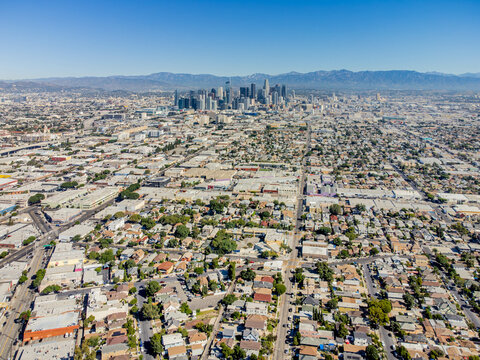
South LA’s transformation is driven by world-class sports infrastructure, a new Metro line, and sustained spillover from the nation’s most expensive adjacent real estate markets
2026 Catalysts to Watch
- 2028 LA Olympics venue preparation driving infrastructure investment across the South Bay and South LA corridor
- Hollywood Park Phase 2 development adding hotels, retail, and residential density around SoFi Stadium
- Intuit Dome (Clippers arena) entertainment ecosystem developing in Inglewood
- West Adams corridor continuing rapid transformation with new restaurants and retail
- Crenshaw Line ridership growing and stimulating station-area development
Investment Climate
South LA’s investment environment is unlike any other submarket in the LA Metro. It combines meaningful cash flow potential (rare in LA), strong near-term appreciation driven by identifiable catalysts, and the highest value-add upside available anywhere in the metropolitan area. The trade-offs are real: regulatory complexity from extensive RSO coverage, higher management intensity than premium submarkets, and the need for genuine local market knowledge to distinguish the areas undergoing genuine transformation from those still years away from it.
- Catalyst-driven appreciation with identifiable infrastructure timelines rather than pure macro speculation
- Value-add orientation where renovation skill translates directly to outsized returns
- Cash flow accessibility providing monthly return characteristics unavailable in premium LA markets
- Block-by-block due diligence requirements that reward local expertise and punish passive investing
- Long enough hold periods to allow catalyst-driven appreciation to fully materialize
Investors who have operated in South LA for a decade or more consistently describe it as the most rewarding market they have worked in, with the strongest combination of cash flow, appreciation, and value-add potential in the LA Metro. The key is matching investment strategy to specific submarket realities rather than treating South LA as a monolithic market.
Historical Performance
| Period | Market Driver | Avg Annual Appreciation | Key Event |
|---|---|---|---|
| 2010-2014 | Post-recession recovery, early gentrification signals in West Adams | 4-6% | First wave of creative professionals arriving in West Adams and Leimert Park |
| 2015-2019 | Spillover from Culver City, Expo Line effect, SoFi Stadium announcement | 8-14% | SoFi Stadium construction begins (2016); investor demand for Inglewood accelerates |
| 2020-2022 | Pandemic demand for space, SoFi Stadium opens, Crenshaw Line nears completion | 15-22% | Inglewood and West Adams see some of LA’s strongest appreciation during pandemic boom |
| 2023-2024 | Rate shock, Intuit Dome opens, Crenshaw Line fully operational | 4-7% | Market normalizes but South LA holds value better than many LA submarkets |
| 2025-2026 | Rate stabilization, Olympic investment, continued entertainment district development | 8-12% (projected) | 2028 Olympics preparation driving infrastructure investment across the corridor |
South LA’s appreciation trajectory has meaningfully outperformed the broader LA Metro in catalyst-rich submarkets like Inglewood and West Adams, where 10-year cumulative appreciation in select pockets has exceeded 200%. The larger lesson is that infrastructure-driven markets tend to outperform during their catalytic phases, and South LA is still in the middle of that phase rather than at its end.
Demographic Trends Driving Demand
- SoFi Stadium and Hollywood Park – The $5 billion entertainment district draws visitors, workers, and residents seeking proximity to world-class venues. Hotel, restaurant, and retail employment in Inglewood has grown substantially since opening
- Intuit Dome and NBA Clippers – The arena’s opening in 2024 adds a second major anchor to Inglewood, extending the entertainment district’s economic footprint and year-round draw
- Crenshaw/LAX Metro K Line – Direct transit from Inglewood to LAX and connections to the Green and Expo lines dramatically improve access for transit-dependent residents and reduce car dependency for residents throughout the corridor
- West Adams Gentrification – Victorian-era housing stock, relative affordability, and walkable Crenshaw and Adams corridors have attracted creative professionals and entrepreneurs at a pace that mirrors Silverlake a decade earlier
- University of Southern California – USC’s expansion plans and 45,000+ student/staff enrollment create structural rental demand in Exposition Park, University Park, and Jefferson Park
- 2028 Olympics – Several Olympic venues are planned in the South Bay and South LA corridor, with infrastructure investment in transportation, streetscaping, and public space accelerating ahead of the games
- SpaceX and Aerospace – SpaceX’s Hawthorne headquarters and manufacturing campus, along with Northrop and Boeing operations, create high-income employment just south of the South LA boundary
📚 New to real estate investing? Master the fundamentals with our professional course Learn more →
2. Neighborhood Hotspots
South Los Angeles Investment Neighborhood Map
Interactive map of South Los Angeles investment neighborhoods. Green stars show top hotspots, blue circles mark established markets, and orange circles highlight emerging areas.
Core Investment Neighborhoods
Detailed Submarket Analysis: South Los Angeles Neighborhoods
| Neighborhood | Price Range (SFH) | Cap Rate | Growth Drivers | Best Strategy |
|---|---|---|---|---|
| West Adams | $700K-$1.1M | 4.0-5.5% | Gentrification, Victorian housing stock, Expo Line, restaurant row | Value-add Victorian, ADU development, long-term hold |
| Baldwin Hills / View Park | $800K-$1.5M | 3.5-4.5% | Established affluent community, hill views, architectural distinction | Appreciation play, premium rental, long-term hold |
| Inglewood / Hollywood Park | $650K-$1.0M | 4.5-6.0% | SoFi Stadium, Intuit Dome, Crenshaw Line, 2028 Olympics | Furnished/corporate rentals, multi-family, infrastructure-driven hold |
| Leimert Park | $650K-$950K | 4.5-5.5% | Crenshaw Line station, arts district, cultural anchor, improving retail | Transit-adjacent appreciation, value-add SFH |
| Exposition Park / USC | $650K-$950K | 4.5-6.0% | USC expansion, Olympic venues, institutional anchors, student demand | Student/faculty housing, multi-family, Olympics-driven appreciation |
| Hyde Park | $600K-$800K | 5.0-6.5% | Mid-South LA stability, Crenshaw corridor, improving amenities | Cash flow focus, SFH/duplex buy-and-hold |
| Jefferson Park | $600K-$850K | 4.8-6.0% | USC spillover, Expo Line, transitional demographics | Value-add SFH, duplex, transitional hold |
| Hawthorne | $700K-$950K | 4.5-5.8% | SpaceX HQ, aerospace employment, Green Line, South Bay access | Aerospace worker rentals, SFH hold, ADU development |
| Gardena | $600K-$850K | 5.0-6.0% | Diverse stable community, workforce housing, consistent demand | Cash flow, stable buy-and-hold |
| Compton | $480K-$680K | 6.0-7.5% | Metro access, CSUDH proximity, improving commercial corridor | Highest available yield in region, value-add, long patient hold |
| Watts | $500K-$650K | 6.0-8.0% | Jordan Downs redevelopment, Watts Towers, very low entry | Patient capital only, maximum upside/risk, 10+ year hold |
Expert Insight: “West Adams is the most undervalued neighborhood in Los Angeles right now on a fundamentals basis. When you look at housing stock quality, transit access, walkability, and proximity to major employment, West Adams compares favorably to Silver Lake or Echo Park from 2012 to 2015. The price gap has already closed substantially, but there is still a 35-40% discount that reflects residual perception rather than current reality. The investors who have been buying there for the past three years have already seen 30-40% appreciation. There is still runway.” – Jasmine Washington, Principal, South LA Capital Advisors
3. Property Types
| Investment Goal | Best Property Type | Best Neighborhoods | Minimum Capital |
|---|---|---|---|
| Maximum Appreciation | Value-add Victorian or catalyst-adjacent SFH | West Adams, Inglewood near SoFi, Baldwin Hills | $170,000+ |
| Best Cash Flow in the Region | Small multi-family or SFH with ADU | Compton, Hawthorne, South Gate, Carson | $120,000+ |
| Balanced Returns | Value-add SFH with ADU in transitional corridor | Leimert Park, Jefferson Park, Hyde Park | $150,000+ |
| Infrastructure-Driven Play | SFH or multi-family near transit stations | Inglewood (K Line), Leimert Park (K Line), Exposition Park (E Line) | $163,000+ |
Don’t guess the costs. Our Complete Renovation & Remodeling Cost Guide covers 400+ pages of project-by-project breakdowns with real contractor pricing ranges.
4. Cost Analysis
Acquisition Cost Breakdown (South Los Angeles)
| Expense Item | Typical Cost | Example ($750,000 Property) | Notes |
|---|---|---|---|
| Down Payment | 25% (investment) | $187,500 | Standard for investment properties in California |
| Closing Costs | 2-3% of price | $15,000-$22,500 | Title, escrow, lender fees, recording |
| General Inspection | $400-$700 | $500 | South LA homes often have deferred maintenance; budget for findings |
| Sewer / Lateral Inspection | $200-$400 | $300 | Critical for pre-1970 South LA homes; lateral replacements can run $8K-$20K |
| Seismic and Retrofit Compliance | $1,500-$6,000 | $3,500 | LA City requires water heater strapping, smoke/CO detectors, seismic gas shutoff at sale; soft-story apartment owners face mandatory retrofit requirements |
| Initial Repairs and Renovation | 0-20% of price | $0-$150,000 | Highly variable; South LA value-add strategy often involves significant renovation investment at purchase |
| Reserves (6 months) | 6 months expenses | $12,000-$18,000 | Emergency fund; South LA’s older housing stock warrants larger reserves |
| TOTAL MINIMUM ENTRY | ~28-33% of value | $218,800-$382,300 | More accessible than San Fernando Valley or Westside LA markets |
Sample Cash Flow Analysis: West Adams Single-Family + ADU
| Item | Monthly | Annual | Notes |
|---|---|---|---|
| Main House Rent | $2,900 | $34,800 | 3BR, West Adams, renovated Victorian |
| ADU Rent (garage conversion) | $1,500 | $18,000 | 1BR ADU, $160K build cost |
| Gross Income | $4,400 | $52,800 | |
| Less Vacancy (5%) | -$220 | -$2,640 | Conservative estimate for strong South LA demand |
| Property Taxes | -$882 | -$10,584 | ~1.1% of $962,000 assessed value (purchase + ADU) |
| Insurance | -$195 | -$2,340 | Landlord policy with umbrella coverage |
| Property Management (10%) | -$440 | -$5,280 | Strongly recommended given California regulatory complexity |
| Maintenance + CapEx | -$352 | -$4,224 | 8% of rent; older Victorian-era homes require consistent maintenance investment |
| Net Operating Income | $2,311 | $27,732 | Before mortgage |
| Mortgage ($962,000 total, 25% down, 6.75%, 30yr) | -$4,678 | -$56,136 | P&I on $721,500 loan |
| CASH FLOW | -$2,367 | -$28,404 | Negative but better than premium LA markets at higher price points |
| Cap Rate | 2.88% | NOI / Total Cost ($962,000) | |
| Total Return (9.5% appreciation) | ~27% | Including appreciation, equity build, and principal paydown vs capital invested |
For the same capital, South LA delivers a meaningfully lower price of entry than the San Fernando Valley or Westside while retaining comparable or stronger appreciation fundamentals in the best catalyst-adjacent pockets. The ADU strategy is especially powerful in South LA because the base purchase price is lower, so the ADU cost represents a higher percentage uplift to both income and total value. Properties in Hawthorne and Gardena, where entry prices are similar but rents are comparable to West Adams, can achieve cash-flow positive results with the ADU strategy.
Expert Insight: “The most important thing for South LA investors to understand is the two-tier market. Properties in the catalyst corridors, specifically anything within a half-mile of a Crenshaw Line station or the Hollywood Park district, are now priced to reflect the transformation and require a pure appreciation thesis. Everything else in South LA, the mid-corridor properties in Hyde Park, Jefferson Park, Hawthorne, still offers the old South LA value equation: below-market entry, above-average cash flow, and meaningful long-term upside. Investors who mix up these two tiers often overpay for the story properties and ignore the better return opportunities sitting right next to them.” – Robert Chen, CRE Investor, Pacific Capital Group
5. Legal Framework
⚠️ Critical California and LA City Compliance Notice
South LA investors operate under some of the most complex landlord-tenant regulations in the United States. California’s AB 1482 statewide rent control and the LA City Rent Stabilization Ordinance both apply across most of South LA’s housing stock, and the area’s high concentration of pre-1978 multi-family buildings means RSO coverage is the rule rather than the exception. Investors in multi-family South LA properties without thorough pre-acquisition legal due diligence frequently discover that existing rent levels are far below market and the path to market rents is significantly constrained. Always consult a California-licensed real estate attorney specializing in Los Angeles landlord-tenant law before any South LA acquisition.
California and LA City Regulations
South LA’s regulatory environment adds several layers specific to the area:
- LA RSO (Rent Stabilization Ordinance): The most critical regulation for South LA multi-family investors. Applies to all LA City residential buildings built before October 1978. South LA’s housing stock is predominantly pre-1978, meaning the vast majority of multi-family buildings are RSO-covered. Annual increases capped at 3-8% depending on utility payment structure. Units must be registered with LAHD.
- AB 1482 (Tenant Protection Act): Statewide rent cap of 5% plus CPI for covered units. For South LA SFH and newer condos, exemption is available with proper notice at tenancy commencement. RSO-covered properties follow RSO rules, not AB 1482.
- Soft-Story Retrofit Ordinance: LA City’s mandatory seismic retrofit program requires most wood-frame soft-story apartment buildings (typically 1960s-1980s construction) to complete structural retrofits. South LA has significant soft-story apartment inventory. Buyers should verify retrofit compliance status before purchasing any multi-family building in this era.
- Just Cause Eviction: Both AB 1482 and RSO require documented cause for evictions of covered tenants. For RSO properties, owner move-in evictions require relocation assistance payments based on tenant tenure and rent level.
- AB 12 Security Deposit Cap: One month’s rent maximum effective July 1, 2024. Critical for South LA where tenant financial profiles may require additional protection considerations.
- LA City STR Ordinance: Short-term rentals (under 30 days) restricted to primary residence in LA City. However, 30+ day furnished rentals targeting Inglewood entertainment district workers are not subject to this restriction.
Compliance Best Practices
Operating South LA rental properties successfully requires systematic compliance approaches:
- Pre-Acquisition RSO Audit: Before closing on any pre-1978 South LA multi-family property, obtain the full tenancy history, current rent levels, RSO registration records, and any open violations from LAHD. Understanding the gap between current and market rents is essential to accurate underwriting.
- Soft-Story Retrofit Verification: For any 1960s-1980s multi-family acquisition, obtain the building’s retrofit status from LADBS. Non-compliant buildings face mandatory retrofit timelines and significant engineering costs.
- RSO Annual Registration: Register all covered units with LAHD before the first tenancy and renew annually. Failure to register prevents rent increases from being collected.
- Below-Market Tenant Strategy: For RSO properties acquired with long-term below-market tenants, model a conservative path to market rents through allowable annual increases, and plan holding periods accordingly. Do not underwrite assuming rapid rent normalization.
- Tenant Buyout Documentation: California law permits voluntary tenant buyout agreements as a path to vacant possession. All buyout negotiations and agreements must follow specific legal requirements and be documented with LA Housing Department filing.
- AB 1482 Exemption Notices: For SFH and eligible condo acquisitions, serve the required written exemption notice at or before the start of each tenancy to preserve exemption status.
Key South LA Resources
- LA Housing Department: housing.lacity.org
- RSO Information and Registration: housing.lacity.org/rso
- Soft-Story Retrofit Status: ladbsservices2.lacity.org
- California Apartment Association: caanet.org
- Tenant Buyout Registry: housing.lacity.org/buyout
| Regulation | California Statewide (AB 1482) | LA City (RSO) | South LA Investor Impact |
|---|---|---|---|
| Rent Increases | 5% + CPI, max 10% | 3-8% (pre-1978 buildings) | Most South LA multi-family is RSO-covered; path to market rents from below-market starting points is very slow |
| Eviction Requirements | Just cause for covered tenants | Just cause plus relocation assistance for no-fault evictions | Removing long-term RSO tenants is difficult and expensive; buyout is often the practical path |
| Seismic Compliance | No statewide mandate | Mandatory soft-story retrofit for non-compliant buildings | South LA has significant soft-story inventory; verify compliance before any multi-family purchase |
| Security Deposit | 1 month cap (AB 12, July 2024) | Same | Limits protection in a market where tenant financial profiles can vary widely |
| Tenant Buyouts | No statewide framework | Permitted with specific legal requirements and LAHD filing | Key tool for RSO property repositioning; requires California attorney guidance |
| SFH and New Construction | Exempt from AB 1482 with proper notice | Exempt from RSO if built after 1978 | South LA SFH investors should prioritize properties built after 1978 or confirm AB 1482 exemption applicability |
6. Step-by-Step South Los Angeles Investment Playbook
Define Your South LA Strategy
South LA is not a single market. The investment thesis in West Adams is fundamentally different from Compton or Hawthorne. Clarity on which strategy you are executing prevents expensive mismatches between expectations and outcomes:
Catalyst-Driven Appreciation
Buy near identifiable infrastructure anchors (Crenshaw Line stations, SoFi/Intuit corridor) and hold through the appreciation cycle. Accept negative to neutral cash flow as cost of holding a rapidly appreciating asset.
Value-Add / BRRRR
Buy dated properties in transitional corridors. Renovate to increase rents and ARV. Refinance out equity, repeat. South LA offers the best BRRRR metrics in the LA Metro given lower entry prices and strong renovation upside.
Cash Flow Multi-Family
Acquire small multi-family in stable South LA submarkets. Best available cash flow in the LA Metro. Pre-1978 RSO properties require careful underwriting of rent roll but offer long-term stability and consistent returns.
Patient Emerging Capital
Buy in Compton, Watts, or South Gate where entry prices are lowest in the LA Metro. Accept higher management intensity and longer hold periods in exchange for the best available yield and maximum long-term appreciation upside.
Build Your South LA Team
South LA requires more specialized team expertise than almost any other LA submarket. Non-negotiable team members:
- South LA-Specialist Investment Agent: Must have specific multi-family experience in South LA, understand RSO underwriting, and have relationships with off-market inventory. Agents without RSO expertise will miss critical purchase risks.
- California Landlord-Tenant Attorney with RSO Experience: RSO and AB 1482 interaction is complex. Tenant buyout negotiations require specific California legal guidance. Eviction procedures in RSO-covered properties have additional requirements. This attorney is not optional.
- South LA-Experienced Property Manager: South LA management requires genuine local knowledge. Interview managers on their RSO compliance procedures, their experience with the tenant buyout process, and their response protocols for the area’s specific challenges.
- Structural Engineer for Multi-Family: If purchasing any multi-family 1960s-1980s construction, a structural engineer reviewing the soft-story retrofit status and any seismic risk is essential before closing.
- Value-Add Contractor Network: South LA value-add success depends heavily on contractor relationships. Develop these before searching for properties, not after buying.
Expert Tip: The best South LA investment agents have direct relationships with property owners who are not actively listing. A significant portion of the best multi-family transactions in South LA happen off-market because sellers are unwilling to go through a formal listing process with occupied RSO properties. If your agent does not have a proactive direct outreach process for off-market South LA inventory, find one who does.
South LA-Specific Due Diligence
Physical Due Diligence
- Soft-story retrofit compliance verification (LADBS records) for all 1960s-1980s multi-family
- Foundation condition for older South LA homes, particularly in clay-soil areas
- Electrical panel inspection (many South LA homes have 60-amp service or Federal Pacific panels requiring replacement)
- Sewer lateral inspection for pre-1970 construction
- HVAC inspection (age and condition of systems critical for habitability compliance)
- Lead paint disclosure requirements for pre-1978 properties (most South LA housing stock)
- Environmental hazards review for any property adjacent to industrial zones, particularly in Hawthorne, South Gate, or Compton
Regulatory Due Diligence
- Full RSO audit: registration status, permitted rent level history, any pending rent increases, and outstanding LAHD violations
- Review all existing leases for term, current rent, tenancy start date, and any side agreements
- Calculate the market rent gap for each unit and the years required to reach market through allowable RSO increases
- Verify soft-story retrofit compliance status for multi-family
- Check LADBS for any open code violations or habitability citations
- Confirm ADU eligibility if ADU development is part of the plan
- Verify that any seller representations about exemptions or non-RSO status are supported by actual LA City records
Finding and Acquiring South LA Properties
- Off-market focus: The best South LA multi-family deals rarely hit the MLS. Owners of RSO-covered buildings with long-term below-market tenants often prefer direct, quiet sales. Relationship-based outreach through investor networks, direct mail, and community connections is essential.
- RSO tenant-occupied properties as opportunity: Buildings with long-term tenants paying 40-60% below market rent often sell at discounts of 20-35% to equivalent vacant properties. For investors who understand the slow path to market rents through RSO allowable increases or voluntary buyouts, these discounted acquisitions can deliver strong returns over 7-10 year holds.
- Block-level research: South LA quality and investment risk varies dramatically block by block. Driving or walking specific target blocks at different times of day is non-negotiable before making offers in unfamiliar pockets.
- Contingency planning for discoveries: South LA’s older housing stock frequently surfaces issues during due diligence. Maintain flexible financing that can accommodate reasonable inspection-triggered renegotiations rather than hard deadline pressure.
- Soft-story as discount opportunity: Properties requiring seismic retrofits often sell at significant discounts. Investors who budget retrofit costs accurately (typically $50,000-$150,000 per building depending on size and scope) can acquire at discounts that exceed the retrofit cost, creating immediate equity.
Property Management in South Los Angeles
South LA management requires local expertise, California RSO fluency, and a proactive approach to compliance and relationship-building with tenants. Key management priorities:
RSO Rent Roll Management
For RSO-covered properties, annual rent management requires systematic precision:
- Track permitted rent level history for every unit, not just current rent
- Apply allowable annual increases as soon as legally permissible each year; failing to increase when eligible creates a permanent gap that cannot be retroactively recovered under RSO
- Serve all rent increase notices with proper documentation of service
- Maintain LAHD registration renewals on schedule; lapsed registration prevents rent increases from being legally collected
- Document all maintenance requests, response times, and resolutions to build the habitability record that supports your rent increase rights
Typical South LA Management Fees
- Single-family management: 8-11% of monthly rent
- Multi-family (RSO-covered) management: 7-10% of monthly rent; some managers add an RSO compliance premium
- Leasing fee: 50-100% of one month’s rent
- Eviction coordination: $300-$700 flat plus attorney fees
- Tenant buyout coordination: Negotiated; typically $500-$2,000 management fee plus attorney fees for the formal agreement
7. Financing Options for South Los Angeles
| Loan Type | Down Payment | Rate Premium | Best For | South LA Note |
|---|---|---|---|---|
| Conventional Investment | 25% | +0.5-0.75% | Strong W-2 income, good credit | South LA SFH prices mostly fall within conforming limits; conventional financing more accessible than premium LA markets |
| DSCR Loan | 25-30% | +1.5-2.5% | Investors preferring no income verification | South LA’s better cap rates make DSCR qualification more viable than premium LA markets; some properties approach 1.0x DSCR |
| FHA House Hack | 3.5% | Standard + MIP | Owner-occupying one unit of 2-4 unit property | South LA’s lower prices and multi-family density make this an excellent entry-point strategy; some Hyde Park and Jefferson Park duplexes approach cash flow neutrality with house hack |
| Portfolio Loan | 20-30% | +1-2% | Multiple properties, self-employed | Community banks and CDFIs active in South LA; some have preferential terms for investors committing to specific improvement and community reinvestment standards |
| Hard Money / Bridge | 15-25% | 8-12% rate | BRRRR acquisitions, value-add projects | South LA BRRRR strategy works well with hard money for acquisition, renovation, then refinance to conventional. Value-add upside justifies bridge cost in the right pockets |
| ADU / Construction Loan | 20-25% of total | +1-2% | ADU development post-purchase | HELOC on existing South LA equity or cash-out refi is often cost-efficient for established owners; construction loan for ground-up ADU on purchase |
| CDFI / Community Lending | 10-20% | Below market in some programs | Mission-aligned investors, affordable housing preservation | Several CDFIs and community lenders operate specifically in South LA with favorable terms for investors who commit to affordable housing standards or community reinvestment |
South LA Financing Advantage: Unlike the San Fernando Valley or Westside markets where nearly every purchase requires jumbo financing, South LA’s lower median prices mean a significant portion of the market remains accessible through conventional conforming loans. This widens the pool of qualified buyers and investors, supports liquidity, and makes entry-level positions accessible to investors who would be entirely priced out of other LA submarkets. Some Hawthorne, Gardena, and Compton multi-family properties approach DSCR qualification at 1.0x coverage, a near-impossibility in premium LA markets, opening the DSCR financing option to investors who prefer not to document income.
8. Frequently Asked Questions

Knowledge Quiz: South Los Angeles Real Estate Investment
Open Quiz
5 quick questions on what you just learned about South LA investing
1) The guide identifies five major simultaneous catalysts driving South LA’s transformation. Which of the following is NOT one of the five named catalysts?
Answer: C
The five catalysts the guide identifies are: SoFi Stadium and Hollywood Park, Intuit Dome (Clippers arena), the Crenshaw/LAX K Line, sustained gentrification pressure from Culver City and Playa Vista, and the 2028 LA Olympics. There is no new university campus in Inglewood, though USC in Exposition Park and Cal State Dominguez Hills in Carson are existing institutional anchors in the broader South LA region.
2) What does the guide say is the most critical due diligence step specific to South LA multi-family properties from the 1960s-1980s era?
Answer: A
LA City’s Mandatory Soft-Story Retrofit Ordinance requires seismic strengthening of wood-frame buildings with soft first stories built before 1978. South LA has significant 1960s-1980s multi-family inventory subject to this ordinance. Non-compliant buildings face city penalties and potential unsafe building designation. The guide notes that while non-compliance creates a discount opportunity, investors must accurately budget retrofit costs before purchasing such buildings.
3) According to the guide, which South LA neighborhood does the expert describe as the most undervalued in Los Angeles on a fundamentals basis, comparing it to Silverlake from 2012-2015?
Answer: D
The guide’s expert insight quote from South LA Capital Advisors identifies West Adams as the most undervalued neighborhood in Los Angeles on a fundamentals basis. The comparison to Silverlake from 2012-2015 reflects the Victorian and craftsman housing stock, walkable restaurant corridor, transit access, and creative professional demographic shift that the neighborhood is experiencing, at a price point that still reflects a 35-40% discount relative to comparable neighborhoods with similar attributes.
4) What does the guide say is the correct way to underwrite an RSO-covered South LA multi-family property with long-term below-market tenants?
Answer: B
The guide is explicit: never underwrite an RSO multi-family acquisition using market rents unless you have a clear, legally verified path to achieving them. The RSO gap between current and market rents in South LA can be 20-50%, and reaching market through allowable annual increases alone can take 7-12 years. Underwriting on current rents and then correctly pricing the discount for the gap is the only defensible approach to RSO-covered acquisitions.
5) Why does the guide say South LA offers better DSCR loan qualification prospects than premium LA markets like the Westside or Studio City?
Answer: C
DSCR loans require that a property’s rental income covers its debt service at 1.0x or above. Premium LA markets with cap rates of 2.5-3.5% cannot achieve this at current interest rates, making DSCR loans effectively unavailable for most Westside or Studio City purchases. South LA’s cap rates of 5-7% in some submarkets (Hawthorne, Gardena, Compton) bring some properties close to or at DSCR qualification, opening this financing option to investors who prefer to qualify based on property income rather than personal income documentation.
Work With a Local Expert in South Los Angeles
We are building a verified network of real estate professionals across every market we cover.

About Our Expert Network
We are finalizing partnerships with verified real estate professionals across every market featured on Builds and Buys. Each expert in our network is selected for their hands-on investment experience, local market knowledge, and commitment to helping buyers and investors make sound decisions.
Our local specialists offer:
- Proven experience with investment and income-producing properties
- Deep knowledge of local pricing, rental yields, and neighborhood dynamics
- Guidance on financing, legal structure, and due diligence
- Access to off-market and pre-market opportunities
- Full transaction support from search through closing
- Ongoing portfolio and property management referrals
Services Covered
- Property sourcing and acquisition
- Investment analysis and underwriting
- Buyer representation
- Market comparables and valuations
- Short-term and long-term rental strategy
- Value-add and renovation guidance
- Legal and title referrals
- Financing and lender connections
- Property management referrals
- Insurance and inspection referrals
- 1031 exchange coordination
- Exit strategy planning
Get Connected or Join Our Network
Looking for a local expert to help with your South LA investment? Reach out and we will connect you with the right professional for your market and strategy.
Are you a real estate professional with a track record working with investors in South Los Angeles? We are always expanding our network of verified local experts.
Contact us at support@buildsandbuys.com
Find Specialized South Los Angeles Real Estate Professionals
Ready to Invest in South Los Angeles?
South Los Angeles is not for every investor. It demands genuine local knowledge, regulatory fluency with California’s RSO and AB 1482 systems, higher management intensity than premium LA markets, and the patience to hold through transformation cycles. But for investors who can deliver on those requirements, South LA offers something increasingly rare in the Los Angeles market: meaningful current income combined with genuine near-term appreciation catalysts at entry prices that remain accessible relative to the city’s broader housing market. SoFi Stadium changed Inglewood. The Crenshaw Line is changing Leimert Park. West Adams is already changed. The transformation is real, it is ongoing, and there is still time to participate in it meaningfully.
Continue Your Research
Los Angeles Metro Guide
See how South LA compares to Long Beach, the Westside, and other LA submarkets across the metro.
California State Guide
Compare South LA against Sacramento, San Diego, the Bay Area, and other California markets statewide.
144-Lesson Course
University-level real estate education covering financing, law, strategy, and management from fundamentals to advanced.
For further guidance, explore our State-by-State Investor guides, browse our expert articles, or follow our Step-by-Step Investment Guide.



