
San Fernando Valley Real Estate Investment Guide For 2026
A comprehensive resource for investors looking to capitalize on one of Los Angeles County’s largest, most diverse, and most accessible suburban property markets in 2026
Quick answers: Top 5 most searched San Fernando Valley investment questions ▼
Migration data: Where people are moving from to the San Fernando Valley ▼
In This Guide
Click on any section to navigate directly to that content
1. San Fernando Valley Market Overview
Market Fundamentals
The San Fernando Valley is one of California’s most underrated real estate investment destinations, offering a rare combination of LA Metro economic access, more accessible price points than the Westside, and consistent long-term appreciation driven by geographic supply constraints and deep employment diversity. Spanning roughly 260 square miles north of the Santa Monica Mountains, the Valley houses approximately 1.8 million residents across communities that range from entertainment industry enclaves in Studio City to emerging workforce corridors in Van Nuys and Pacoima.
Key economic indicators defining the Valley’s investment case:
- Population: ~1.8M Valley proper, part of the 10M+ LA Metro
- Major Employers: Warner Bros (Burbank), CBS Studios, NBC Universal, Northrop Grumman, Kaiser Permanente, Cedars-Sinai West Valley, CSUN, LA Unified School District
- Median Household Income: $75,000-$95,000 (varies significantly by submarket)
- Job Growth: 2.1% annually, driven by entertainment, healthcare, and aerospace
- Vacancy Rate: Under 3.5% across most Valley submarkets
- Price Advantage: 35-50% more square footage per dollar than comparable Westside properties
The Valley’s economy is anchored by entertainment and media production but diversified across aerospace and defense, healthcare systems, higher education, retail, and logistics. This economic breadth creates resilient rental demand across multiple income levels and tenant demographics, from studio executives in Sherman Oaks to healthcare workers in Northridge to logistics employees in Van Nuys.
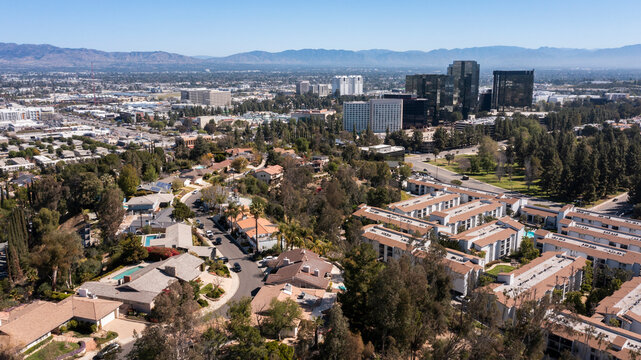
The San Fernando Valley offers LA Metro access with suburban scale and significantly more attractive price-to-rent ratios than Westside markets
2026 Economic Outlook
- Hollywood strikes resolved, studio production resuming at full pace
- Warner Bros and Universal expanding Valley campus footprints
- Orange Line BRT upgrades and East San Fernando Valley transit corridor expanding access
- Northrop Grumman and aerospace sector adding high-income engineering workforce
- Healthcare system expansion across Kaiser, Providence, and Cedars-Sinai West Valley
Investment Climate
The San Fernando Valley’s investment environment reflects California’s broader tension: strong long-term appreciation supported by supply constraints and employment depth, offset by complex state and city regulations, high entry costs, and negative short-term cash flow in west Valley premium submarkets. Successful Valley investors typically share these characteristics:
- Submarket selectivity understanding that Studio City and Van Nuys require fundamentally different investment theses
- ADU awareness leveraging California’s streamlined ADU laws to add income and value to existing parcels
- Regulatory literacy navigating California AB 1482 and LA RSO rent control simultaneously
- Long hold orientation with 7-15+ year periods common among top-performing Valley investors
- Total return focus accepting current income compression in premium submarkets for long-term equity growth
The Valley’s mountain boundaries to the north, east, and south, combined with existing urban density, create meaningful supply constraints that have historically cushioned price declines during national downturns. During the 2008 financial crisis, Valley prices declined less sharply than inland markets and recovered faster, supported by the entertainment and healthcare employment base that remained relatively stable through the recession.
Historical Performance
| Period | Market Driver | Avg Annual Appreciation | Key Event |
|---|---|---|---|
| 2010-2014 | Post-recession recovery, entertainment rebound | 5-7% | Studio production resumes, Valley inventory tightens |
| 2015-2019 | LA housing shortage, streaming expansion, Westside spillover | 9-13% | Netflix, Amazon, Apple TV+ studios expand in Valley-adjacent areas |
| 2020-2022 | Pandemic suburbanization premium, remote work space demand | 14-18% | Valley benefits strongly as buyers seek space over density |
| 2023-2024 | Rate shock, Hollywood strikes slowing demand | 2-4% | Inventory rises modestly; buyer pool contracts but doesn’t collapse |
| 2025-2026 | Rate stabilization, entertainment recovery, transit expansion | 7-10% (projected) | East Valley transit corridor creating new demand zones |
The Valley’s 20-year appreciation track record averages 7-9% annually, broadly in line with core LA Metro performance. A $450,000 Valley property purchased in 2005 would typically be worth $1.1-$1.4 million today after riding through multiple market cycles. The long-term compounding effect, combined with rental income and tax benefits, defines the Valley investment thesis for patient capital.
Demographic Trends Driving Demand
- Entertainment Industry Workers – Studio employees at Warner Bros, CBS, NBC Universal, and dozens of smaller production companies choose the Valley for its proximity to work and relative affordability
- Healthcare System Growth – Kaiser Permanente, Providence Holy Cross, Cedars-Sinai West Valley, and Valley Presbyterian collectively employ tens of thousands, creating stable mid-to-upper rental demand
- Westside Pricing Pressure – Families priced out of Santa Monica, Brentwood, and West Hollywood increasingly find the Valley offers 30-50% more square footage per dollar
- CSUN and Higher Education – California State University Northridge (43,000+ students) anchors a strong student and faculty rental corridor in Northridge and surrounding areas
- Aerospace and Defense – Northrop Grumman and supporting contractors in Woodland Hills and Chatsworth bring high-income engineers who typically rent before buying
- Geographic Constraints – Santa Monica Mountains to the south, San Gabriel Mountains to the east, Simi Hills to the west limit outward expansion, creating structural supply pressure that supports long-term values
📚 New to real estate investing? Master the fundamentals with our professional course Learn more →
2. Neighborhood Hotspots
San Fernando Valley Investment Neighborhood Map
Interactive map of San Fernando Valley investment neighborhoods. Green stars show top hotspots, blue circles mark established markets, and orange circles highlight emerging areas.
Core Investment Neighborhoods
Detailed Submarket Analysis: All San Fernando Valley Neighborhoods
| Neighborhood | Price Range (SFH) | Cap Rate | Growth Drivers | Best Strategy |
|---|---|---|---|---|
| Studio City | $1.1M-$1.8M | 2.5-3.5% | Entertainment proximity, top schools, Ventura Blvd, limited supply | Appreciation, ADU development, luxury rental |
| Encino | $1.2M-$2.5M+ | 2.5-3.5% | Luxury market, celebrity appeal, scarce premium inventory | Pure appreciation, luxury tenant, long-term hold |
| Sherman Oaks | $850K-$1.4M | 3.5-4.5% | Family demand, schools, Ventura corridor, diverse price points | Balanced returns, ADU development, SFH buy-and-hold |
| Tarzana | $750K-$1.1M | 3.8-4.8% | Medical corridor, family demand, Ventura access, stable employment | SFH buy-and-hold, medical professional rentals |
| Woodland Hills / Warner Center | $800K-$1.3M | 3.5-5.0% | Corporate employment, healthcare hub, Calabasas adjacency | Corporate tenants, balanced returns, condo investment |
| Granada Hills / Porter Ranch | $800K-$1.3M | 3.8-5.0% | Top schools, family stability, newer construction, large lots | Family rentals, long-term SFH hold |
| Northridge / CSUN | $650K-$850K | 4.5-5.5% | CSUN, student housing, faculty demand, relative affordability | Student rentals, duplex/triplex, ADU for income |
| Reseda | $650K-$900K | 4.5-5.5% | Affordability, diverse community, solid rental demand, transit | Cash flow focus, value-add SFH, BRRRR |
| Chatsworth / West Hills | $750K-$1.1M | 4.0-5.0% | Aerospace workers, large lots, suburban appeal, west Valley access | SFH buy-and-hold, family rentals, stable market |
| North Hollywood / NoHo Arts | $650K-$1.0M | 4.0-5.5% | Red Line Metro, arts district, gentrification, value-add opportunity | Value-add, BRRRR, emerging play, hold 5-10 years |
| Van Nuys | $550K-$750K | 5.0-6.5% | Most affordable Valley entry, transit corridor, workforce demand | Best Valley cash flow, duplex/triplex, ADU for yield boost |
| Panorama City / Pacoima | $500K-$700K | 5.5-7.0% | Kaiser hospital, lowest Valley entry, workforce housing demand | Highest Valley yields, value-add heavy, long patient hold |
Expert Insight: “The most overlooked opportunity in the San Fernando Valley right now is the North Hollywood-to-Van Nuys corridor along the Chandler bike path and new transit improvements. Properties within walking distance of the NoHo Arts District Metro station are still trading at 30-40% below equivalent access in East Hollywood or Silver Lake. The transit equity story here is still early, and investors who understand the Metro expansion timeline are accumulating quietly. The window to buy before full price normalization probably closes within the next 3-4 years.” – Maria Contreras, CCIM, Valley Investment Partners
3. Property Types
| Investment Goal | Best Property Type | Best Neighborhoods | Minimum Capital |
|---|---|---|---|
| Maximum Appreciation | SFH in supply-constrained premium areas | Studio City, Encino, Sherman Oaks | $280,000+ |
| Best Cash Flow in the Valley | Small multi-family or SFH with ADU | Van Nuys, Panorama City, Northridge | $140,000+ |
| Balanced Returns | Value-add SFH with ADU development | North Hollywood, Sherman Oaks, Reseda | $180,000+ |
| Lowest Management Burden | New townhome or modern condo | North Hollywood, Sherman Oaks, Woodland Hills | $160,000+ |
Don’t guess the costs. Our Complete Renovation & Remodeling Cost Guide covers 400+ pages of project-by-project breakdowns with real contractor pricing ranges.
4. Cost Analysis
Acquisition Cost Breakdown (San Fernando Valley)
| Expense Item | Typical Cost | Example ($950,000 Property) | Notes |
|---|---|---|---|
| Down Payment | 25% (investment) | $237,500 | Standard for investment properties in California |
| Closing Costs | 2-3% of price | $19,000-$28,500 | Title, escrow, lender fees, recording |
| General Inspection | $400-$700 | $550 | Include roof, HVAC, electrical, foundation checks for older Valley homes |
| Sewer Inspection | $200-$400 | $300 | Recommended for pre-1980 Valley homes. Lateral replacements can run $8K-$18K. |
| Retrofit Compliance | $1,500-$5,000 | $3,000 | LA City requires seismic, water heater strapping, and smoke/CO detector compliance at sale |
| Initial Repairs | 0-8% of price | $0-$76,000 | Highly variable. Valley homes from 1950s-1970s often need HVAC, electrical, or kitchen updates. |
| Reserves (6 months) | 6 months expenses | $15,000-$20,000 | Emergency fund for vacancy and repairs |
| TOTAL MINIMUM ENTRY | ~28-32% of value | $275,850-$389,850 | Significant capital required for typical Valley purchase |
Sample Cash Flow Analysis: Sherman Oaks Single-Family + ADU
| Item | Monthly | Annual | Notes |
|---|---|---|---|
| Main House Rent | $3,300 | $39,600 | 3BR, Sherman Oaks, renovated |
| ADU Rent (garage conversion) | $1,700 | $20,400 | 1BR ADU, $165K build cost |
| Gross Income | $5,000 | $60,000 | |
| Less Vacancy (5%) | -$250 | -$3,000 | Conservative estimate for strong Valley markets |
| Property Taxes | -$1,038 | -$12,456 | ~1.1% of $1,135,000 assessed value (purchase + ADU) |
| Insurance | -$225 | -$2,700 | Landlord policy with umbrella coverage |
| Property Management (10%) | -$500 | -$6,000 | Recommended given California regulatory complexity |
| Maintenance + CapEx | -$400 | -$4,800 | 8% of rent for older Valley home |
| Net Operating Income | $2,587 | $31,044 | Before mortgage |
| Mortgage ($1,115,000 total, 25% down, 6.75%, 30yr) | -$5,419 | -$65,028 | Principal and interest on $836,250 loan |
| CASH FLOW | -$2,832 | -$33,984 | Negative but dramatically better than SFH alone |
| Cap Rate | 2.78% | NOI / Total Cost ($1,115,000) | |
| Total Return (8.5% appreciation) | ~22% | Including equity growth, appreciation, and principal paydown vs cash invested |
This example illustrates why the ADU strategy dominates sophisticated Valley investing: adding the ADU nearly doubles gross rental income, reduces the monthly negative carry by roughly $1,500-$2,000 compared to SFH alone, and creates $300,000-$450,000 in immediate equity through the value-add. Without the ADU, the same Sherman Oaks property would show $1,600-$1,800/month deeper negative cash flow on a standard SFH lease.
Expert Insight: “Valley investors who understand the total return model consistently outperform those chasing cap rate. A Sherman Oaks property with a 3.5% cap rate will typically deliver 18-25% annual total return when you include appreciation, principal paydown, and depreciation tax benefits, even with negative monthly cash flow. Compare that to a Midwest property showing 7% cap rate but 2-3% appreciation. Over 10 years the Valley math wins handily, provided the investor can sustain the negative carry and avoids forced selling.” – David Park, Real Estate Advisor, West Valley Investments
5. Legal Framework
⚠️ Critical California and LA City Compliance Notice
San Fernando Valley investors operate under two overlapping regulatory systems: California statewide landlord-tenant law (including AB 1482) and Los Angeles City-specific ordinances (including the Rent Stabilization Ordinance). Both systems are complex, frequently updated, and actively enforced. This guide provides an overview only. Always consult a California-licensed real estate attorney before acquiring rental properties, and use a property management company with documented LA-specific regulatory expertise.
California and LA City Regulations
Valley landlords must navigate both state and city layers:
- AB 1482 (Tenant Protection Act of 2019): Statewide rent caps for covered units at 5% plus local CPI, with a maximum of 10% per year. Applies to multi-family properties more than 15 years old. Does NOT apply to most SFH and condos where owners provide written notice of exemption before tenancy begins.
- LA Rent Stabilization Ordinance (RSO): Applies to LA City properties built before 1978 (including most Valley multi-family stock). Stricter than AB 1482: typical annual increases capped at 3-8% depending on utility payment structure. Owner must register all RSO units with LA Housing Department annually.
- Just Cause Eviction (AB 1482): Covered tenants may only be evicted for specific documented reasons including non-payment, breach of lease, nuisance, criminal activity, owner/family move-in (with relocation assistance), or intent to demolish (with relocation assistance).
- AB 12 (Security Deposits): As of July 1, 2024, security deposits are capped at one month’s rent regardless of property type. This is a major change from prior law allowing two months for unfurnished units.
- LA City Relocation Assistance: Required for owner move-in evictions and no-fault terminations. Amount varies but typically equals 1-3 months’ rent depending on tenant profile and tenure.
- SCEP (Systematic Code Enforcement): All LA City multi-family rental properties subject to periodic habitability inspections. Units must meet minimum standards or be cited for compliance.
- LA Short-Term Rental Ordinance: STRs in LA City limited to primary residence. Non-hosted STRs limited to 120 days per year. Properties with any RSO units are ineligible for STR permits.
Compliance Best Practices
Operating Valley rental properties successfully requires systematic compliance:
- RSO Registration: Register all pre-1978 LA City units with the LA Housing Department before first tenancy. Annual renewal required. Failure to register limits ability to collect rent increases.
- AB 1482 Exemption Notices: For SFH and exempt condos, serve the required written exemption notice before or at the commencement of each tenancy. Without this notice, the property may lose its AB 1482 exemption status.
- Lease Documentation: Use California Association of Realtors residential lease forms, updated annually. Include all required California disclosures (Megan’s Law, lead paint, mold, pest, natural hazard).
- Rent Increase Procedures: For AB 1482-covered units, calculate the permissible increase correctly using the regional CPI. Give proper 30-day notice for increases under 10% or 90-day notice for any increase over 10%.
- Eviction Documentation: Begin documenting lease violations from day one. Maintain records of all communications, payments, maintenance requests, and incidents. California eviction proceedings are documentation-intensive.
- Deposit Accounting: Return security deposits within 21 days of tenant departure with an itemized statement. Under AB 12, deposits cannot exceed one month’s rent.
- Professional Management: For any out-of-state investor or anyone owning multiple Valley units, professional management with documented California compliance expertise is essential.
Key California and LA Resources
- LA Housing Department: housing.lacity.org
- RSO Information: housing.lacity.org/rso
- California Dept of Consumer Affairs: dca.ca.gov
- California Apartment Association: caanet.org
- LA City Habitability Standards: ladbs.org
| Regulation | California Statewide (AB 1482) | LA City (RSO) | Investor Impact |
|---|---|---|---|
| Rent Increases | 5% + CPI, max 10% | 3-8% (pre-1978 buildings) | RSO is stricter and applies to most older Valley multi-family |
| Eviction Requirements | Just cause required for covered tenants | Just cause plus relocation assistance for certain no-fault evictions | Difficult to remove long-term tenants without documented cause or relocation payment |
| Security Deposit | 1 month cap (AB 12, effective July 2024) | Same | Significantly limits financial protection against tenant damage |
| SFH and New Construction | Exempt from AB 1482 with proper notice | Exempt from RSO if built after 1978 | Critical: serve AB 1482 exemption notice at start of every new tenancy for eligible properties |
| Short-Term Rentals | No statewide restriction | Primary residence only, 120-day cap, RSO properties ineligible | Airbnb model effectively unavailable for investment properties in LA City |
| Habitability Inspections | Implied warranty of habitability | SCEP periodic inspections required for multi-family | Multi-family units must maintain active LA Housing compliance |
6. Step-by-Step San Fernando Valley Investment Playbook
Define Your Valley Strategy
The Valley spans a wide enough price and return range that your strategy should be defined before you search for properties. The four viable investment approaches in 2026:
Pure Appreciation Play
Buy in supply-constrained premium west Valley locations. Accept negative cash flow as the cost of holding a strongly appreciating asset. Requires strong income, substantial reserves, and 7+ year time horizon.
ADU Development Strategy
Buy an ADU-eligible SFH in a mid-Valley neighborhood. Develop the ADU over 12-18 months. Significantly improve income, reduce negative carry, and increase property value and eventual sale price.
Value-Add / BRRRR
Buy dated 1950s-1970s properties in transitional Valley corridors. Renovate to increase rents, refinance out equity, and repeat. Works best in North Hollywood and Van Nuys where entry prices allow renovation to dramatically improve ARV and yield.
Cash Flow Multi-Family Buy-and-Hold
Acquire duplexes or triplexes in north and east Valley submarkets. Best available cash flow characteristics in the LA Metro. Pre-1978 inventory subject to RSO controls but also commands strong long-term rental stability.
Build Your Valley Team
California’s regulatory complexity makes your team more important than the property in many ways. Non-negotiable team members for Valley investing:
- Valley-Specialist Investment Agent: Must understand AB 1482 exemption strategies, RSO unit valuation, and ADU development potential. A residential sales agent without investment experience is a liability in this market.
- California Landlord-Tenant Attorney: For entity setup, lease compliance review, and eviction procedure guidance. California’s landlord-tenant laws change frequently and penalties for non-compliance are significant.
- California-Licensed Property Manager: Verify they are members of the California Apartment Association and can demonstrate specific AB 1482 and RSO compliance expertise for their existing portfolio.
- ADU-Experienced General Contractor: If pursuing ADU strategy, your contractor needs direct experience with LA City Department of Building and Safety (LADBS) permitting, pre-approved plan sets, and school fee exemption procedures.
- California Real Estate CPA: For depreciation strategy, Section 121/1031 planning, and California-specific tax considerations including the Prop 19 reassessment rules that affect inherited properties.
Expert Tip: When interviewing property management companies, ask specifically: “How do you calculate permissible annual rent increases for both AB 1482 and RSO-covered units?” and “Walk me through your process for serving the AB 1482 exemption notice at new tenancy commencement.” Companies that are unclear on either question lack the California compliance depth your investment requires.
Valley-Specific Due Diligence
Standard due diligence items plus these Valley-critical checks:
Physical Due Diligence
- HVAC inspection (Valley summer heat makes A/C a necessity, not a luxury; aging systems are a major liability)
- Seismic review for pre-1980 construction, particularly soft-story apartments or unreinforced masonry
- Sewer lateral inspection for pre-1980 homes
- Pool and spa systems inspection if applicable (common in Valley SFH)
- Roof condition (Valley sun degrades flat roofs quickly)
- Wildfire risk and fire hardening status for hillside or canyon properties
- Foundation drainage and soil condition (especially for older Valley flatland homes)
Regulatory Due Diligence
- Verify whether property is subject to RSO (check build date and rental history)
- Pull permits for all improvements (unpermitted additions are common and affect refinancing and resale)
- Confirm ADU eligibility if that is part of the plan (check zoning, lot size, setbacks)
- Review LADBS records for any open code violations or enforcement actions
- Verify AB 1482 exemption notice history with prior owner if applicable
- Check HOA rental caps and board approval requirements if purchasing a condo
- Confirm STR status is clear before purchasing any property you might want to use for furnished rentals
Competing in the Valley Market
The Valley moves fast in desirable submarkets. Strategies that give you an edge:
- Pre-inspections: For properties under $1M in Sherman Oaks and NoHo, conducting your inspection before submitting allows clean non-contingent offers. Cost $450-$700 without guarantee of purchase but wins in competition.
- ADU opportunity identification: Properties where sellers and other buyers have not yet identified ADU potential are frequently mispriced. Build a checklist of ADU eligibility factors and systematically scan listings for opportunities that others miss.
- Tenant-occupied properties: Properties with long-term below-market RSO tenants often sell at significant discounts. Investors who understand California’s legal tenant buyout framework can negotiate voluntary departures and reposition at market rents.
- Off-market outreach: Build relationships with Valley-focused agents who specialize in investment properties. Direct mail to long-term owners in target zip codes remains effective in the Valley’s fragmented seller base.
- Escalation clauses: Set your ceiling based on your return analysis, not emotion. The Valley’s appreciation history creates emotional bidding that frequently breaks investors’ underwriting.
Property Management in the Valley
California’s regulatory environment makes professional management a risk management necessity rather than a convenience. Key management priorities for Valley investors:
Rent Increase Compliance Protocol
Annual rent increase management requires specific procedures under California law:
- Determine which regulatory regime applies (AB 1482 vs RSO vs exempt) for each unit before the anniversary of each tenancy
- Calculate the permissible increase using the correct CPI index for your area
- Serve the increase notice at least 30 days in advance for increases under 10%; 90 days in advance for any increase at or above 10%
- Document all notices with proof of service (personal delivery or certified mail with tracking)
- Track cumulative increases against the permitted cap if adjustments have been deferred
Typical Valley Management Fees
- Single-family management: 8-11% of monthly rent
- Multi-family management: 6-9% of monthly rent
- Leasing fee: 50-100% of one month’s rent
- Lease renewal fee: $150-$350 per renewal
- ADU additional unit management: Often adds 1-2% for complexity
- Eviction coordination fee: $300-$800 flat (not including attorney fees)
7. Financing Options for the San Fernando Valley
| Loan Type | Down Payment | Rate Premium | Best For | Valley Note |
|---|---|---|---|---|
| Conventional Investment | 25% | +0.5-0.75% | Strong W-2 income, good credit | Most Valley properties exceed conforming limit ($806,500); jumbo typically needed |
| Jumbo Investment | 25-30% | +0.75-1.25% | $800K-$2M properties | Standard for most mid-to-premium Valley SFH purchases |
| Portfolio Loan | 20-30% | +1-2% | Multiple properties, self-employed | Local California banks like First Republic successors, East West Bank, and Pacific Premier offer these |
| DSCR Loan | 25-30% | +1.5-2.5% | Investors wanting no income verification | Note: low Valley cap rates mean most properties won’t qualify at 1.0x DSCR without ADU income included |
| House Hacking (FHA) | 3.5% | Standard + MIP | Owner-occupying one unit of 2-4 unit property | Best entry point for new Valley investors with limited capital; works well with Van Nuys and Northridge duplexes |
| ADU/Construction Loan | 20-25% of total | +1-2% | Building ADU post-purchase | HELOC on existing Valley equity is often the most cost-efficient ADU financing for established owners |
| Hard Money (Bridge) | 15-25% | 8-12% rate | BRRRR acquisitions, competitive offers | Several LA and Valley-area hard money lenders active; useful for NoHo and Van Nuys value-add plays |
Valley Financing Reality: Most premium Valley investment properties (Studio City, Encino, Sherman Oaks) will not qualify for DSCR loans because rental income does not cover the debt service at current cap rates and interest rates. The Valley investor profile most likely to succeed is someone with strong W-2 or business income, typically from entertainment, tech, aerospace, or healthcare, who can sustain negative carry while building equity in an appreciating asset. Dual-income households where one partner has a high-income career are among the most active Valley investment buyers for this exact reason.
8. Frequently Asked Questions

Knowledge Quiz: San Fernando Valley Real Estate Investment
Open Quiz
5 quick questions on what you just learned about San Fernando Valley investing
1) What does California’s AB 1482 Tenant Protection Act do, and which Valley properties are typically exempt?
Answer: B
AB 1482 (Tenant Protection Act of 2019) caps annual rent increases at 5% plus the local CPI, with a maximum of 10%, for covered residential units. Single-family homes and condos are typically exempt when owners provide the required written notice at or before tenancy commencement. Owners who fail to serve this notice risk losing the exemption and being treated as covered under the Act.
2) According to the guide, what is the primary financial advantage of the ADU development strategy in Sherman Oaks?
Answer: C
The guide’s Sherman Oaks cash flow example shows that a $165,000 garage conversion ADU adds $1,700/month in rental income, improves monthly cash flow by roughly $1,500-$1,700 versus SFH alone, and creates $235,000-$385,000 in immediate equity through the value-add. The ADU strategy is the Valley’s most popular approach for improving returns on appreciating but cash-flow-negative properties.
3) Which San Fernando Valley neighborhood does the guide identify as offering the strongest value-add investment opportunity due to Metro access and an established arts community?
Answer: D
North Hollywood and the NoHo Arts District offer Red Line Metro access to Hollywood and Downtown LA, an established arts and restaurant scene, and entry prices 30-40% below East Hollywood or Silver Lake despite equivalent transit connectivity. The guide identifies this perception-to-fundamentals gap as the Valley’s best current value-add opportunity for patient investors with a 5-7 year minimum hold.
4) What does California’s AB 12 (effective July 2024) change about security deposits for Valley rental properties?
Answer: A
AB 12 limits security deposits to one month’s rent for all California residential rentals effective July 1, 2024. Previously, landlords could collect up to two months for unfurnished units and three months for furnished. This change makes upfront tenant screening more critical than ever, since the deposit protection against damages and unpaid rent has been significantly reduced.
5) What does the guide identify as the most critical physical due diligence item for Valley investment properties, given the regional climate?
Answer: C
The guide specifically calls out HVAC inspection as critical for Valley properties because summer temperatures frequently exceed 100°F in many Valley submarkets. A non-functioning or failing HVAC system is not just an inconvenience but a habitability issue that can trigger emergency repair obligations under California law. Aging systems in 1950s-1970s Valley homes represent one of the most common and expensive surprise repair costs for new investors.
Work With a Local Expert in the San Fernando Valley
We are building a verified network of real estate professionals across every market we cover.

About Our Expert Network
We are finalizing partnerships with verified real estate professionals across every market featured on Builds and Buys. Each expert in our network is selected for their hands-on investment experience, local market knowledge, and commitment to helping buyers and investors make sound decisions.
Our local specialists offer:
- Proven experience with investment and income-producing properties
- Deep knowledge of local pricing, rental yields, and neighborhood dynamics
- Guidance on financing, legal structure, and due diligence
- Access to off-market and pre-market opportunities
- Full transaction support from search through closing
- Ongoing portfolio and property management referrals
Services Covered
- Property sourcing and acquisition
- Investment analysis and underwriting
- Buyer representation
- Market comparables and valuations
- Short-term and long-term rental strategy
- Value-add and renovation guidance
- Legal and title referrals
- Financing and lender connections
- Property management referrals
- Insurance and inspection referrals
- 1031 exchange coordination
- Exit strategy planning
Get Connected or Join Our Network
Looking for a local expert to help with your Valley investment? Reach out and we will connect you with the right professional for your market and strategy.
Are you a real estate professional with a track record working with investors in the San Fernando Valley? We are always expanding our network of verified local experts.
Contact us at support@buildsandbuys.com
Find Specialized San Fernando Valley Real Estate Professionals
Ready to Invest in the San Fernando Valley?
The San Fernando Valley rewards investors who understand its nuances. Mountain geography constraining supply, deep employment diversity across entertainment, healthcare, and aerospace, relative affordability against Westside LA markets, and California’s streamlined ADU framework create a structural investment case that is difficult to find elsewhere in a market of this size and liquidity. The regulatory complexity is real, the upfront capital requirements are significant, and most well-located properties will run negative cash flow on conventional financing. But for investors who build the right team, define a clear strategy before searching, and commit to a long-term hold, the Valley consistently delivers compelling total returns backed by assets in one of the world’s most persistently supply-constrained real estate markets.
Continue Your Research
Los Angeles Metro Guide
See how the Valley compares to West LA, Long Beach, and other Los Angeles submarkets.
California State Guide
Compare the Valley against Sacramento, San Diego, the Bay Area, and Central Valley markets.
144-Lesson Course
University-level real estate education covering financing, law, strategy, and management.
For further guidance, explore our State-by-State Investor guides, browse our expert articles, or follow our Step-by-Step Investment Guide.



