
San Bernardino Real Estate Investment Guide For 2026
A comprehensive resource for investors looking to capitalize on one of California’s most affordable and logistics-driven inland property markets in 2026
Quick answers: Top 5 most searched San Bernardino investment questions ▼
Migration data: Where people are moving from to San Bernardino ▼
In This Guide
Click on any section to navigate directly to that content
1. San Bernardino Market Overview
Market Fundamentals
San Bernardino stands as one of California’s most compelling cash-flow real estate markets, anchored by a structural logistics employment boom, a large and growing renter population, and entry prices that remain a fraction of coastal California equivalents. Located at the eastern edge of the Los Angeles basin where the San Bernardino Mountains meet the Inland Empire flatlands, the city serves as a gateway to both mountain recreation and the region’s massive warehouse and distribution economy.
Key economic indicators that define San Bernardino’s investment case:
- Population: 222,000+ city proper, 4.6M+ Inland Empire metro area
- Major Employers: Amazon, San Bernardino County, Cal State San Bernardino, Loma Linda University Health, San Bernardino City Unified School District, UPS, FedEx, Burlington Northern Santa Fe Railway
- Median Household Income: $47,000 (workforce-oriented, drives rental demand)
- Job Growth: 3.1% annually, driven by logistics and healthcare expansion
- Renter Majority: Approximately 55% of households rent, one of the highest in inland California
- Vacancy Rate: Approximately 5% citywide, tightening in quality-renovated stock
San Bernardino’s economy has undergone a significant structural transformation over the past decade. The collapse of traditional industries following the city’s 2012 bankruptcy was replaced by one of the country’s most concentrated logistics employment buildups, as proximity to the Ports of Los Angeles and Long Beach, combined with affordable land and freeway access, made San Bernardino County the epicenter of Southern California’s warehouse economy.
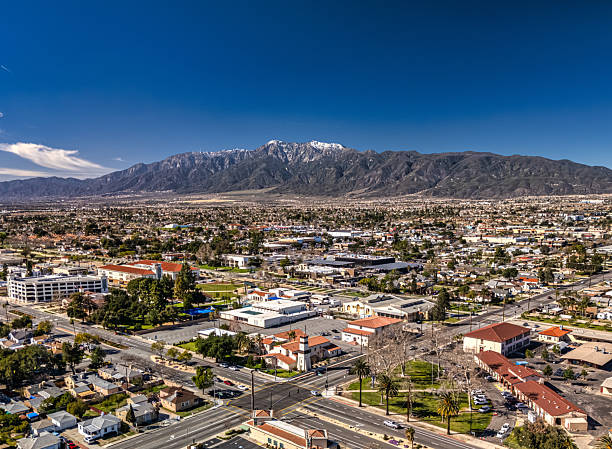
San Bernardino sits at the convergence of Southern California’s logistics economy and mountain recreation corridor
2026 Economic Outlook
- San Bernardino International Airport cargo expansion adding logistics employment
- Continued e-commerce fulfillment center construction across the Inland Empire
- Cal State San Bernardino enrollment growth driving student housing demand
- Loma Linda University Health system expansion creating healthcare jobs
- Downtown San Bernardino revitalization initiatives attracting retail and residential development
- High-speed rail planning (Brightline West corridor) increasing long-term transit value
Investment Climate
San Bernardino’s investment environment is defined by an opportunity that is unusual in California: genuinely achievable cash flow. While coastal markets routinely produce negative cash flow of $2,000-$4,000 per month even with large down payments, San Bernardino investors with the right property and financing can approach break-even or modest positive cash flow. This fundamentally changes the risk profile of the investment. Key characteristics of successful San Bernardino investors:
- Cash flow discipline running detailed underwriting with California-specific expense ratios before making offers
- Regulatory knowledge understanding AB 1482 rent cap mechanics and just cause eviction requirements from day one
- Workforce housing focus targeting the massive logistics and healthcare worker demographic with quality, well-maintained rentals
- Property management infrastructure given tenant protection laws that make self-management risky for out-of-area investors
- Long hold orientation combining modest appreciation with cash flow for total return that outperforms many higher-priced California alternatives
The city’s post-bankruptcy recovery, while uneven, has produced a leaner municipal structure and a clear economic focus on employment-driven development. Property crime remains a concern in certain neighborhoods and requires careful submarket selection, but well-chosen assets in Highland, Loma Linda-adjacent corridors, and the University District deliver stable tenancies at yields unavailable anywhere in coastal California.
Historical Performance
| Period | Market Driver | Avg Annual Appreciation | Key Event |
|---|---|---|---|
| 2012-2016 | Post-bankruptcy recovery, early logistics growth | 4-7% | City files bankruptcy; Amazon opens first IE fulfillment center |
| 2017-2019 | Logistics boom, LA spillover migration | 8-12% | Warehouse construction surge; rents rise faster than prices |
| 2020-2022 | Pandemic e-commerce demand, remote work migration | 15-22% | IE home prices surge as LA-area residents relocate inland |
| 2023-2024 | Rate shock, normalization | 2-4% | Inventory rose modestly; rental demand remained strong |
| 2025-2026 | Rate stabilization, airport expansion, logistics deepening | 4-7% (projected) | SBIA cargo expansion; downtown revitalization momentum |
San Bernardino’s 10-year appreciation track record of 6-8% annually is lower than coastal California markets but is paired with actual cash flow potential, creating a total return profile that is competitive when properly underwritten. A $250,000 San Bernardino property purchased in 2014 would be valued at approximately $450,000-$500,000 today, while generating positive or near-positive cash flow throughout the hold period. That combination is exceptionally rare in California.
Demographic Trends Driving Demand
- Logistics Workforce Expansion – Amazon, UPS, FedEx, and third-party logistics providers employ tens of thousands of workers in the Inland Empire who need affordable housing near their workplaces
- Healthcare Sector Growth – Loma Linda University Health, one of the country’s largest faith-based health systems, provides stable, well-paying employment for thousands of residents
- Cal State San Bernardino – 20,000+ students and a growing faculty and staff population create consistent demand for rental housing in the University District and adjacent neighborhoods
- LA Basin Spillover – Families and individuals priced out of LA and Orange County continue migrating inland, renting while building savings or waiting for market entry
- Young Population – San Bernardino’s median age of 29 creates a disproportionately renter-age population, supporting steady occupancy across affordable rental stock
- Mountain Gateway – Proximity to Big Bear Lake and Lake Arrowhead makes San Bernardino attractive to outdoor enthusiasts seeking affordable base housing with weekend recreation access
📚 New to real estate investing? Master the fundamentals with our professional course Learn more →
2. Neighborhood Hotspots
San Bernardino Investment Neighborhood Map
Interactive map of San Bernardino’s investment neighborhoods. Green stars show top hotspots, blue circles mark established markets, and orange circles highlight emerging areas.
Core Investment Neighborhoods
Detailed Submarket Analysis: All San Bernardino Neighborhoods
| Neighborhood | Price Range (SFH) | Cap Rate | Growth Drivers | Best Strategy |
|---|---|---|---|---|
| Highland / East Highlands | $430K-$650K | 4.8-6.0% | Healthcare employment, schools, stable demographics | Buy-and-hold SFH, long-term professional tenants |
| University District (CSUSB) | $380K-$540K | 5.5-7.0% | Student enrollment, faculty demand, annual lease resets | Student rentals, room-by-room, small multifamily |
| Arrowhead Farms / Loma Linda Adjacent | $440K-$620K | 4.8-6.0% | Healthcare workers, medical students, premium rents | SFH buy-and-hold, professional tenants |
| Verdemont / North SB | $420K-$590K | 4.5-5.8% | Newer stock, mountain views, family demand | Family SFH, lower-maintenance newer construction |
| Muscoy | $320K-$450K | 6.0-8.0% | Workforce housing, logistics employees, high yield | Cash flow focus, duplexes, BRRRR, value-add |
| Downtown San Bernardino | $280K-$450K | 6.0-8.0% | Revitalization, transit, government employment, value-add | High risk/high reward, experienced investors only |
| Rialto (Adjacent) | $400K-$580K | 5.0-6.5% | Logistics employment, Amazon proximity, workforce demand | Workforce SFH, logistics employee housing |
| Colton (Adjacent) | $360K-$520K | 5.5-7.0% | Railway employment, healthcare, affordable family housing | Family SFH, duplex buy-and-hold, cash flow |
| Del Rosa / Waterman | $350K-$480K | 5.8-7.2% | Highland spillover, mountain corridor, improving demographics | Value-add, emerging play, hold 5-7 years |
| Airport Corridor | $300K-$430K | 6.5-8.5% | SBIA expansion, cargo employment, early-stage opportunity | High yield, patient capital, long-term growth play |
Expert Insight: “The most misunderstood opportunity in San Bernardino is the University District. Investors focus on the crime statistics of the broader city and miss the fact that the CSUSB corridor functions as a completely different rental market. Well-maintained 4-bedroom houses rented by the room to Cal State students routinely generate $2,800-$3,200 per month on properties purchased at $380,000-$450,000. That is a gross yield of 7-8%, which is genuinely exceptional for California. The trick is managing the tenant profile carefully and choosing properties within walking distance of campus.” – Marcus Thompson, Principal, Inland Empire Rental Group
3. Property Types
| Investment Goal | Best Property Type | Best Neighborhoods | Minimum Capital |
|---|---|---|---|
| Maximum Cash Flow | Duplex or student rental (by room) | Muscoy, University District, Colton | $90,000+ |
| Best Appreciation | SFH in quality submarket | Highland, Verdemont, Arrowhead Farms | $110,000+ |
| Balanced Returns | Value-add SFH with ADU development | University District, Del Rosa, Highland | $150,000+ |
| Lowest Management | Newer SFH in Highland or Verdemont | Highland, Verdemont, Fontana | $120,000+ |
Don’t guess the costs. Our Complete Renovation & Remodeling Cost Guide covers 400+ pages of project-by-project breakdowns with real contractor pricing ranges.
4. Cost Analysis
Acquisition Cost Breakdown (San Bernardino)
| Expense Item | Typical Cost | Example ($420,000 Property) | Notes |
|---|---|---|---|
| Down Payment | 25% (investment) | $105,000 | Standard for investment properties in California |
| Closing Costs | 2-3% of price | $8,400-$12,600 | Title, escrow, lender fees, recording. California transfer tax applies. |
| General Inspection | $350-$600 | $475 | Check roofing, HVAC, plumbing – older IE homes often have deferred maintenance |
| Sewer Inspection | $200-$350 | $275 | Important for pre-1980 construction common in San Bernardino |
| Initial Repairs / Deferred Maintenance | 0-8% of price | $0-$33,600 | Older housing stock common; budget conservatively for first purchase |
| Reserves (6 months) | 6 months expenses | $10,000-$14,000 | Essential given California’s lengthy eviction timelines if needed |
| TOTAL MINIMUM ENTRY | ~30-35% of value | $124,150-$165,950 | More accessible than coastal CA but California-level carrying costs still apply |
Sample Cash Flow Analysis: San Bernardino Duplex, Muscoy / Central SB
| Item | Monthly | Annual | Notes |
|---|---|---|---|
| Unit A Rent (3BR) | $1,600 | $19,200 | 3-bedroom unit, workforce tenant, Muscoy area |
| Unit B Rent (2BR) | $1,400 | $16,800 | 2-bedroom unit, logistics worker tenant |
| Gross Income | $3,000 | $36,000 | |
| Less Vacancy (7%) | -$210 | -$2,520 | Conservative; demand is strong for quality workforce units |
| Property Taxes | -$388 | -$4,654 | ~1.1% of $423K assessed value (purchase price + local bonds) |
| Insurance | -$160 | -$1,920 | Landlord policy for duplex; umbrella coverage recommended |
| Property Management (10%) | -$279 | -$3,348 | Strongly recommended given California AB 1482 compliance requirements |
| Maintenance + CapEx (9%) | -$251 | -$3,012 | Older SB housing stock; budget more for 1960s-1970s builds |
| Net Operating Income | $1,712 | $20,546 | Before mortgage |
| Mortgage ($423K purchase, 25% down, 6.75%, 30yr) | -$2,052 | -$24,624 | $317,250 loan balance at 6.75% |
| CASH FLOW | -$340 | -$4,080 | Near break-even. Exceptional for California. Positive with slight rent increases or lower-rate financing. |
| Cap Rate | 4.86% | NOI / Total Cost. Among California’s strongest residential cap rates. | |
| Total Return (5.5% appreciation) | ~16-19% | Including equity buildup, appreciation, and near-zero cash carry |
This duplex example illustrates why San Bernardino is compelling for California investors: the negative carry of $340 per month is dramatically less than what investors accept in LA (-$2,500/month) or the Bay Area (-$3,500+/month), while still generating real total returns through appreciation and equity. A 5% AB 1482-compliant rent increase in year two brings this property to positive cash flow, and the duplex structure means two income streams reduce single-tenant risk.
Expert Insight: “People think of San Bernardino purely as a distressed market play, but the underwriting tells a different story. When you run the numbers on a duplex in Muscoy or a 4-bedroom near CSUSB rented by the room, you are looking at cap rates of 5-7% and cash flow that approaches break-even or better. Compare that to a condo in Santa Monica at a 2.5% cap rate losing $4,000 per month in carry. For investors who need their real estate to pay for itself, the Inland Empire is one of the only places in California where that is achievable today.” – Diana Reyes, CCIM, Inland Capital Advisors
5. Legal Framework
⚠️ Critical California Landlord Compliance Notice
California has among the most tenant-protective landlord-tenant laws in the United States, and these laws apply fully in San Bernardino. AB 1482, AB 1110, and ongoing legislative changes create a complex compliance environment. San Bernardino city does not add significant local rent control on top of state law, which makes it more straightforward than LA or Oakland, but statewide tenant protections are extensive. Always consult a California-licensed real estate attorney before acquiring rental properties, and use a property management company with documented California AB 1482 compliance expertise.
California Statewide Regulations Affecting San Bernardino
California’s tenant protection framework applies throughout San Bernardino:
- AB 1482 (Tenant Protection Act): Applies to most residential units in California built before 2010. Caps annual rent increases at 5% plus local CPI, with a hard ceiling of 10% regardless of CPI. Single-family homes owned by individual landlords are generally exempt if proper notice is provided. New construction (15 years or newer) is also typically exempt.
- AB 1482 Just Cause Eviction: For covered units, landlords must have specific legal cause to terminate tenancy. Grounds include non-payment, nuisance, material lease violation, criminal activity, owner move-in, or demolition for substantial remodel. Cannot terminate tenancy simply because the lease term ends.
- 3-Day Notice Requirements: Non-payment of rent requires a 3-day notice to pay or quit before filing an unlawful detainer action.
- Security Deposit Limits (AB 12, effective 2024): California now limits security deposits to 1 month’s rent for most unfurnished units (down from 2 months). This significantly reduces upfront protection from problem tenants.
- AB 1110: Requires 90-day notice for rent increases exceeding 10% within a 12-month period for tenants with 12+ months of tenancy.
- Proposition 13: Property taxes capped at 1% of assessed value (at purchase), with annual increases limited to 2% or inflation. San Bernardino County adds local bond measures, bringing the effective rate to approximately 1.1-1.2%.
- SB 9 / ADU Laws: California’s statewide ADU reforms allow most single-family lots to add an accessory dwelling unit, improving investment yields significantly on eligible properties.
San Bernardino Local Considerations
San Bernardino city does not have a local rent control ordinance beyond state AB 1482, making it relatively more straightforward than Los Angeles or Oakland. Local considerations include:
- Rental Registration: San Bernardino requires rental properties to be registered with the city. Contact the Development and Housing Department for current requirements and fees.
- Code Enforcement: San Bernardino code enforcement is active. Properties must meet habitability standards. Inspections can be triggered by tenant complaints.
- Short-Term Rentals: San Bernardino allows short-term rentals with a permit but enforces primary-residence requirements similar to other California cities. Pure investment STRs face the same restrictions as statewide.
- Post-Bankruptcy Administration: San Bernardino emerged from bankruptcy in 2017. City services and responsiveness have improved but investors should verify specific permit and service response times for their submarket.
Useful Resources
- California Department of Consumer Affairs: dca.ca.gov
- California Courts Self-Help (Eviction): courts.ca.gov
- San Bernardino Development Services: sbcity.org
- California Apartment Association: caanet.org
| Regulation | San Bernardino / California Requirement | Exemptions | Investor Impact |
|---|---|---|---|
| Rent Increases | AB 1482: 5% + CPI, max 10% | SFH (individual owner, with notice), new construction 15 yrs+ | Annual increases must be tracked carefully; CPI data required |
| Eviction (Just Cause) | Must have enumerated cause for covered units | Exempt SFHs, new construction, owner-occupied 2-4 unit buildings | Limits ability to remove tenants; strong documentation essential |
| Security Deposit | 1 month maximum (AB 12, 2024) | Pet deposits may apply separately | Significantly reduced financial protection at tenant placement |
| Notice for Increase | 30 days (under 10%), 90 days (over 10%) | None; applies statewide | Larger increases require long lead time; plan 3+ months ahead |
| Eviction Timeline | 3-day notice, then unlawful detainer, 30-90 day process | Non-payment fastest; just cause disputes take longer | Reserves required to weather extended eviction timelines |
| Habitability | California Civil Code 1941 – landlord warranty of habitability | None | Maintenance obligations are non-negotiable; tenant can withhold rent for unaddressed issues |
6. Step-by-Step San Bernardino Investment Playbook
Define Your San Bernardino Strategy
San Bernardino is not a one-strategy market. The right approach depends on your capital, risk tolerance, and time commitment. Choose before buying:
Workforce Cash Flow
Buy a duplex or renovated SFH in Muscoy, Colton, or central San Bernardino. Target logistics and healthcare worker tenants. Approach break-even or modest positive cash flow from day one.
Student Rental Strategy
Buy a 4-bedroom home within 1 mile of CSUSB and rent by the room. Highest gross yields in the market. Requires active management and strong lease documentation. Annual resets allow rent growth.
Value-Add / BRRRR
Buy dated properties in transitional neighborhoods, renovate to raise rents and ARV, refinance to extract capital, and repeat. Works well in Del Rosa, Mount Vernon, and the downtown adjacent corridors.
Stable Appreciation Hold
Buy quality SFH in Highland or Verdemont, rent to healthcare professionals or families, and hold for 7-15 years. Lower yields but much easier management and higher-quality tenants.
Build Your San Bernardino Team
California’s landlord regulatory environment makes your team as important as the property. Non-negotiable team members for San Bernardino investing:
- Inland Empire Investor-Specialist Agent: Must understand Muscoy duplex underwriting, student rental yields near CSUSB, and the logistics employment geography. General agents underestimate management challenges in certain submarkets.
- California-Licensed Real Estate Attorney: For LLC entity setup, lease compliance review against AB 1482, and annual regulatory updates. Non-optional in California.
- San Bernardino Property Manager: Verify membership in California Apartment Association and demonstrate specific AB 1482 rent calculation and eviction notice procedures. Ask: “Walk me through your AB 1482 rent increase calculation process.” Vague answers are disqualifying.
- Inland Empire General Contractor: Labor costs are lower than coastal California but still substantial. Get three bids for any renovation over $15,000. Verify contractor license with California CSLB.
- California Real Estate CPA: Depreciation strategy, Proposition 13 implications, AB 12 security deposit accounting, and 1031 exchange planning are all California-specific. A CPA without California rental property experience will miss meaningful deductions.
Expert Tip: When interviewing property managers, ask specifically: “What is your process for documenting compliance with AB 1482 annual rent increase limits?” and “How do you handle just cause eviction documentation for non-payment?” Companies that cite only general California law without specific procedural answers lack the operational depth San Bernardino properties require.
San Bernardino-Specific Due Diligence
Standard California due diligence plus these Inland Empire-critical checks:
Physical Due Diligence
- HVAC inspection critical – IE summers reach 110°F and air conditioning failures cause immediate habitability issues
- Roof inspection for flat or low-slope roofing common in older SB construction
- Sewer scope for pre-1980 homes – clay pipe failure common in older neighborhoods
- Foundation inspection – expansive soils in parts of the Inland Empire cause differential settling
- Electrical panel upgrade status – many older SB homes have 60-100 amp service inadequate for modern tenants
- Swamp cooler vs central air assessment – evaporative coolers are inadequate for extreme heat events
Regulatory Due Diligence
- Confirm AB 1482 exempt status if buying SFH – verify proper exemption notice has been or can be served
- Pull permits for all improvements – unpermitted additions are common in SB’s older housing stock
- Check San Bernardino city rental registration status and any outstanding violations
- Verify current tenant lease terms, rent amounts, and AB 1482 coverage status for occupied properties
- Confirm ADU eligibility for the specific parcel if ADU strategy is planned
- Review HOA documents thoroughly if purchasing in a gated community or planned development
Property Management in San Bernardino
California’s tenant protection framework makes professional management more a legal risk management necessity than a convenience. Key management priorities for San Bernardino:
AB 1482 Rent Management Protocol
Annual rent increases for AB 1482-covered units require precise calculation:
- Determine the applicable local CPI for San Bernardino County (typically released by the Bureau of Labor Statistics annually)
- Calculate allowable increase: 5% + CPI (capped at 10% maximum)
- Issue proper notice: 30 days for increases under 10%, 90 days for increases over 10%
- Document all calculations with dated records maintained in each tenant file
- For exempt properties, ensure AB 1482 exemption notice was properly served at or before lease commencement
Typical San Bernardino Management Fees
- Single-family management: 8-12% of monthly rent
- Multifamily management: 7-10% of monthly rent
- Leasing fee: 50-100% of one month’s rent
- Lease renewal fee: $150-$300 per renewal
- Student rental premium: Often +1-2% for higher turnover management complexity
- Eviction coordination: $500-$1,500 flat fee (before attorney costs)
7. Financing Options for San Bernardino
| Loan Type | Down Payment | Rate Premium | Best For | San Bernardino Note |
|---|---|---|---|---|
| Conventional Investment | 25% | +0.5-0.75% | Strong W-2 income, good credit | Most SB properties are below conforming limit; no jumbo required |
| FHA (House Hack) | 3.5% | Standard + MIP | Owner-occupying one unit of 2-4 unit property | Excellent entry point; SB duplex prices below FHA loan limits in San Bernardino County |
| DSCR Loan | 25-30% | +1.5-2.5% | Self-employed investors, no income verification | SB’s higher cap rates mean some properties actually qualify at 1.0x DSCR, unlike coastal CA |
| Portfolio Loan | 20-30% | +1-2% | Multiple properties, LLC ownership, self-employed | Inland Empire community banks and credit unions offer these products |
| Hard Money (Bridge) | 15-25% | 9-13% rate | BRRRR acquisitions, value-add fixer purchases | Several IE-focused hard money lenders active; plan 12-month max bridge period |
| ADU Construction Loan | 20-25% | +1-2% | Building ADU after property purchase | HELOC on existing equity often the most efficient financing for SB ADU builds |
| California HCD / Local Programs | Variable | Below market | Affordable housing rehabilitation, community development | San Bernardino County has periodic programs for housing rehabilitation; check with county housing department |
San Bernardino Financing Advantage: Unlike LA or the Bay Area, San Bernardino’s lower price points mean many properties qualify for conventional conforming loans without the jumbo premium. A $420,000 duplex with 25% down produces a $315,000 loan that falls comfortably within conforming limits. This access to standard conforming rate products is a meaningful financial advantage over coastal markets where virtually every investment property requires a jumbo loan at a higher rate premium. Additionally, San Bernardino’s improving cap rates mean some properties actually qualify for DSCR lending at 1.0x coverage, which is essentially impossible in LA or the Bay Area today.
8. Frequently Asked Questions

Knowledge Quiz: San Bernardino Real Estate Investment
Open Quiz
5 quick questions on what you just learned about San Bernardino investing
1) What is California AB 1482 and which San Bernardino properties does it most directly affect?
Answer: B
AB 1482 (Tenant Protection Act) caps annual rent increases at 5% plus local CPI with a hard ceiling of 10%. It applies to most residential units built before 2010 in California, including those in San Bernardino. Single-family homes owned by individual landlords with proper exemption notice and new construction 15 years old or less are generally exempt.
2) Which San Bernardino neighborhood does the guide identify as offering the best pure cash flow returns?
Answer: C
Muscoy and central San Bernardino offer cap rates of 6-8%, the highest in the market. Duplexes in this area can generate $2,800-$3,200/month in gross rent at purchase prices of $340,000-$460,000, approaching or achieving break-even cash flow with conventional financing. This is exceptional by California standards.
3) Why does the guide say DSCR loans are more viable in San Bernardino than in coastal California?
Answer: D
DSCR loans require rental income to cover at least 1.0x debt service. LA and Bay Area cap rates of 2.5-3.5% make this mathematically impossible at current interest rates. San Bernardino’s cap rates of 5-7% mean some properties generate enough NOI to qualify for DSCR lending, which is almost uniquely rare in California.
4) What makes the University District near CSUSB particularly compelling for room-by-room student rentals?
Answer: A
The student rental model near CSUSB allows 4-bedroom homes to generate $700-$950/room, producing $2,800-$3,800/month total from properties purchased at $380,000-$480,000. This translates to gross yields of 7-10%, which is exceptional for California. Annual lease cycles also allow rent resets, a significant advantage under AB 1482 exempt structures.
5) Which physical inspection does the guide specifically flag as critical for pre-1980 San Bernardino homes due to the Inland Empire climate?
Answer: B
The guide flags HVAC inspection as critical for Inland Empire properties because summer temperatures routinely exceed 110°F. An air conditioning failure in a rental unit creates an immediate habitability violation under California Civil Code 1941 and can trigger tenant rent withholding rights. Many older San Bernardino homes also still have swamp coolers, which are inadequate during extreme heat events.
Work With a Local Expert in San Bernardino
We are building a verified network of real estate professionals across every market we cover.

About Our Expert Network
We are finalizing partnerships with verified real estate professionals across every market featured on Builds and Buys. Each expert in our network is selected for their hands-on investment experience, local market knowledge, and commitment to helping buyers and investors make sound decisions.
Our local specialists offer:
- Proven experience with investment and income-producing properties
- Deep knowledge of local pricing, rental yields, and neighborhood dynamics
- Guidance on financing, legal structure, and due diligence
- Access to off-market and pre-market opportunities
- Full transaction support from search through closing
- Ongoing portfolio and property management referrals
Services Covered
- Property sourcing and acquisition
- Investment analysis and underwriting
- Buyer representation
- Market comparables and valuations
- Short-term and long-term rental strategy
- Value-add and renovation guidance
- Legal and title referrals
- Financing and lender connections
- Property management referrals
- Insurance and inspection referrals
- 1031 exchange coordination
- Exit strategy planning
Get Connected or Join Our Network
Looking for a local expert to help with your investment? Reach out and we will connect you with the right professional for your market and strategy.
Are you a real estate professional with a track record working with investors? We are always expanding our network of verified local experts.
Contact us at support@buildsandbuys.com
Find Specialized San Bernardino Real Estate Professionals
Ready to Invest in San Bernardino?
San Bernardino is not the easiest California market to navigate, but it is one of the few where the numbers actually work. While investors in LA and the Bay Area absorb negative cash flow of thousands of dollars per month hoping for appreciation, San Bernardino offers something increasingly rare in California: real property income relative to purchase price. The logistics employment boom, Cal State San Bernardino’s student demand, Loma Linda University Health’s healthcare workforce, and a large renter-majority population create durable fundamentals for patient, disciplined investors who understand the regulatory environment and choose submarkets carefully.
Continue Your Research
California State Guide
See how San Bernardino compares to Riverside, Rancho Cucamonga, Los Angeles, and other California markets.
Riverside Guide
Compare San Bernardino to its Inland Empire neighbor with UC Riverside and a diverse economic base.
144-Lesson Course
University-level real estate education covering financing, law, strategy, and management.
For further guidance, explore our State-by-State Investor guides, browse our expert articles, or follow our Step-by-Step Investment Guide.



