
Redding Real Estate Investment Guide For 2026
A comprehensive resource for investors targeting Northern California’s most affordable large city — a regional healthcare hub and outdoor recreation gateway with accessible entry prices and growing remote worker demand in 2026
Quick answers: Top 5 most searched Redding investment questions ▼
Migration data: Where people are moving from to Redding ▼
In This Guide
Click on any section to navigate directly to that content
1. Redding Market Overview
Market Fundamentals
Redding occupies a unique position in the California real estate landscape: it is the largest city in the state north of Sacramento on the Interstate 5 corridor, serving as the undisputed healthcare, retail, and services hub for a vast Northern California region that extends into southern Oregon. With a population of approximately 92,000, Redding is not a small town — it is a genuine regional city with the infrastructure, employment base, and amenities that regional hub status demands. Yet it remains one of the most affordable cities of its size and function anywhere in California, offering investors entry prices that are simply unavailable in any market to the south.
Key economic indicators:
- Population: 92,000+ city, 180,000+ Shasta County
- Top Employer: Mercy Medical Center (Dignity Health) — 2,500+ employees
- Second Hospital: Shasta Regional Medical Center — major regional care center
- Education: Shasta College (11,000+ students), Simpson University
- Regional Role: Primary retail, healthcare, and professional services hub for Northern California and southern Oregon
- Rental Vacancy Rate: 5–8% citywide; lower near medical campuses
Redding’s climate is defined by extreme summer heat — consistently among the hottest cities in the United States, with summer temperatures regularly exceeding 110°F. This heat is a critical property management consideration (A/C is not optional; it is a habitability requirement) and partly explains why Redding’s prices remain below what comparable employment and regional hub status would command in a more temperate location. The heat suppresses lifestyle migration somewhat, keeping prices accessible even as the remote worker trend has increased demand.
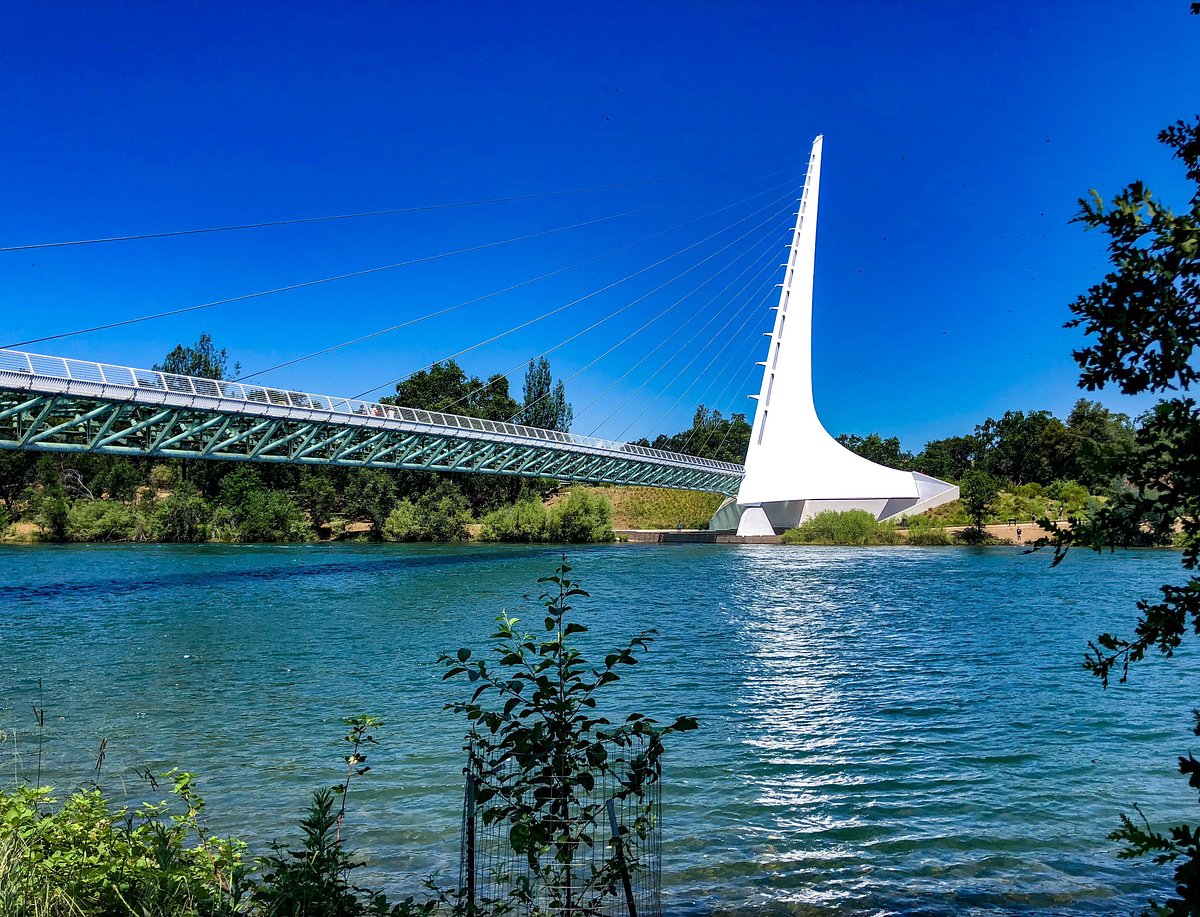
Redding’s healthcare hub status and outdoor recreation setting create durable rental demand at California’s most accessible Northern CA prices
2026 Economic Outlook
- Mercy Medical Center expansion continuing to add healthcare employment
- Remote worker migration ongoing — Redding’s outdoor recreation access increasingly recognized
- Shasta College enrollment holding steady, supporting south Redding rental demand
- I-5 corridor logistics growth adding distribution employment
- Tourism to Shasta Lake and Whiskeytown Lake supporting hospitality employment
- Post-Carr Fire west Redding rebuilding continuing to add construction employment
Redding’s Honest Investment Profile — Strengths and Limitations
✅ Genuine Investment Strengths
- California’s most affordable large-city entry prices on I-5 north corridor
- Mercy Medical anchors healthcare employment with recession-resistant stability
- No city rent control — California state law only
- Regional hub status ensures continued population base regardless of economic cycles
- Outdoor recreation (Shasta Lake, Sacramento River, Mount Shasta) supports lifestyle migration
- Very low competition from institutional investors vs. major California metros
- Travel nurse furnished rental opportunity near two hospital campuses
⚠️ Honest Limitations to Understand
- Extreme summer heat (110°F+) suppresses lifestyle migration from cooler regions
- No dominant 4-year university anchor (unlike Chico’s CSUC)
- Lower appreciation trajectory than most California markets — income focus, not growth
- Wildfire insurance availability challenges post-Carr Fire, especially west Redding
- Lower median incomes than most California cities limit rent upside
- Higher vacancy rates than tighter university markets like Chico
- Less liquidity than larger California markets — longer time-on-market for resale
Historical Performance
| Period | Market Driver | Avg Annual Appreciation | Key Event |
|---|---|---|---|
| 2010–2017 | Post-recession recovery, healthcare growth | 3–5% | Mercy Medical expansion; steady population growth |
| 2018 | Carr Fire impact | 4–7% | Carr Fire (July 2018) destroys ~1,000 west Redding homes; temporary housing crunch drives rents |
| 2019–2022 | Pandemic migration, post-fire recovery | 10–18% | Remote workers discover Redding; Bay Area refugees; historic low inventory |
| 2023–2024 | Rate normalization | 1–3% | Volume fell; prices held moderately; rental market remained relatively stable |
| 2025–2026 | Healthcare growth, remote worker stability | 3–5% (projected) | Mercy Medical expansion; continued remote worker settlement; west Redding rebuilding |
Redding’s long-term appreciation has averaged 4–5% annually. This is the market’s honest profile — it is not an appreciation story but an income story. A $200,000 property purchased in 2015 would be worth approximately $310,000–$340,000 today. The total return calculation needs to include cash flow contribution, principal paydown, and the compounding effect of lower entry capital requirements — metrics that compare more favorably when Redding’s accessibility is factored in.
📚 New to real estate investing? Master the fundamentals with our professional course Learn more →
2. Neighborhood Hotspots
Redding Investment Neighborhood Map
Interactive map of Redding’s investment neighborhoods. Green stars mark top hotspots, blue circles show established markets, and orange circles highlight emerging areas.
Core Investment Neighborhoods
Detailed Submarket Analysis: All Redding Neighborhoods
| Neighborhood | Price Range | Cap Rate | Growth Drivers | Best Strategy |
|---|---|---|---|---|
| South Redding / Shasta College | $280K–$420K | 5.2–6.5% | Shasta College, family demand, schools | Buy-and-hold, family rental, first investment |
| East Redding / Mercy Medical | $300K–$460K | 5.0–6.2% | Healthcare workers, hospital proximity | Professional rental, travel nurse furnished |
| North Redding / Cascade | $320K–$500K | 4.8–6.0% | Remote workers, Shasta Lake, newer construction | Remote worker rental, family appreciation |
| Downtown / Sundial Bridge | $260K–$390K | 5.5–7.0% | River trail, revitalization, government employment | Value-add, BRRRR, young professional |
| Shasta Regional / Central | $280K–$420K | 5.0–6.2% | Shasta Regional Medical, diverse professional | Professional rental, balanced buy-and-hold |
| West Redding / Carr Fire Zone | $240K–$370K | 5.5–7.5% | Post-fire recovery, affordable entry | Experienced investors only; insurance research critical |
| Buckeye / Southwest | $240K–$350K | 5.8–7.5% | Workforce housing, affordability, county government | Cash flow, workforce housing, Section 8 |
Expert Insight: “People discover Redding for one of two reasons: healthcare employment brings them here for work, or the outdoor recreation pulls them in as lifestyle migrants. In both cases, when they arrive, they need housing. The smart play is properties near Mercy Medical for the healthcare workers and north Redding for the lifestyle migrants. What I tell first-time Redding buyers is: don’t overthink it. At these prices, with real employment anchors, Redding is one of the last California cities where a conventional investor can buy at a rational price-to-rent ratio and build real equity over time.” — David Walters, Principal, Northern California Investment Group
3. Property Types
| Investment Goal | Best Property Type | Best Location | Minimum Capital |
|---|---|---|---|
| Best Cash Flow | Small multifamily or workforce SFH | Downtown, Buckeye, Southwest | $62,000+ |
| Best Income Premium | Travel nurse furnished monthly | East Redding near Mercy Medical | $78,000+ |
| Lowest Management | Remote worker premium SFH | North Redding, East Redding | $83,000+ |
| Balanced / First Investment | Standard 3BR SFH | South Redding, East Redding | $72,000+ |
| Value-Add Upside | BRRRR fixer SFH | Downtown, older South Redding | $80,000+ |
Don’t guess the costs. Our Complete Renovation & Remodeling Cost Guide covers 400+ pages of project-by-project breakdowns with real contractor pricing ranges.
4. Cost Analysis
Acquisition Cost Breakdown (Redding)
| Expense Item | Typical Cost | Example ($330,000 Property) | Notes |
|---|---|---|---|
| Down Payment | 25% (investment) | $82,500 | Standard investment; 20% possible with strong profile |
| Closing Costs | 2–3% of price | $6,600–$9,900 | Title, escrow, lender fees |
| Wildfire Insurance Confirmation | Get quote before offer | Budget $150–$250 | Non-negotiable: Confirm insurability and get written quote before submitting any offer in Shasta County |
| General Inspection | $350–$600 | $475 | HVAC critical: Redding’s 110°F+ summers make A/C systems the top inspection priority |
| Pest Inspection | $150–$300 | $220 | Required by most lenders; common in older Shasta County homes |
| Initial Make-Ready | $3,000–$15,000 | $4,000–$10,000 | Paint, flooring, A/C service, appliances; budget for HVAC update if unit is aged |
| Property Management Setup | First month + leasing fee | $1,500–$3,200 | Redding PM fees typically 8–10%; leasing fee 50–75% of one month |
| Reserves (6 months) | 6 months expenses | $8,000–$12,000 | HVAC replacement, roof, vacancy buffer |
| TOTAL MINIMUM ENTRY | ~30–37% of value | $103,445–$138,545 | Significantly lower than Chico and all coastal CA markets |
Sample Cash Flow Analysis: Two Redding Scenarios
Scenario A — South Redding Standard 3BR SFH ($310,000 purchase)
| Item | Monthly | Annual | Notes |
|---|---|---|---|
| Gross Rent | $1,675 | $20,100 | 3BR, South Redding, professionally managed |
| Less Vacancy (6%) | -$101 | -$1,206 | Moderate vacancy; higher than Chico or tight university markets |
| Property Taxes (1.15%) | -$297 | -$3,565 | CA Prop 13 base on $310K assessed value |
| Insurance | -$140 | -$1,680 | Shasta County post-Carr Fire rates; valley floor properties insurable at elevated but standard rates |
| Property Management (9%) | -$151 | -$1,809 | Competitive Redding PM rates |
| Maintenance + CapEx (8%) | -$134 | -$1,608 | Budget extra for HVAC: Redding heat cycles equipment hard; A/C units have shorter lifespans |
| Net Operating Income | $852 | $10,232 | Cap rate: 3.30% — honest pre-mortgage return |
| Mortgage ($232.5K, 6.75%, 30yr) | -$1,508 | -$18,096 | 25% down on $310K |
| CASH FLOW | -$656 | -$7,864 | Self-managed: -$505/month; still manageable at this entry price |
| Total Return (4.5% appreciation + equity) | ~16% | On $82,500 down; lower capital amplifies percentage return |
Scenario B — East Redding Travel Nurse Furnished Rental ($340,000 purchase)
| Item | Monthly | Annual | Notes |
|---|---|---|---|
| Furnished Monthly Rent (travel nurse) | $2,800 | $33,600 | 3BR furnished near Mercy Medical; 13-week healthcare assignment |
| Less Vacancy (12% — between assignments) | -$336 | -$4,032 | 2–3 weeks between assignments; realistic assumption |
| Property Taxes (1.15%) | -$326 | -$3,910 | CA Prop 13 base on $340K |
| Insurance | -$155 | -$1,860 | Furnished rental policy; slightly higher than standard |
| Management / Placement (12%) | -$336 | -$4,032 | Higher for furnished placement; includes cleaning between assignments |
| Maintenance + Furnishings CapEx (8%) | -$224 | -$2,688 | Furnishings replacement, professional cleaning |
| Net Operating Income | $1,423 | $17,078 | Cap rate: 5.02% — meaningful improvement over Scenario A |
| Mortgage ($255K, 6.75%, 30yr) | -$1,653 | -$19,836 | 25% down on $340K |
| CASH FLOW | -$230 | -$2,758 | Near neutral; better occupancy or 20% down pushes positive |
| Total Return (4.5% appreciation + equity) | ~19% | On $85,000 down; furnished premium significantly improves income profile |
Redding’s honest math: standard SFH rentals show more negative cash flow than other Central Valley markets because rents are lower relative to current financing costs, while prices have risen post-pandemic. The travel nurse furnished strategy near Mercy Medical provides the clearest path to near-neutral cash flow. The core investment argument is accessible entry capital, meaningful total returns through appreciation and equity, and a genuine employment anchor — not dramatic immediate cash flow.
Expert Insight: “Redding isn’t for investors who need their property to pencil perfectly on day one. It’s for investors who recognize that a $330,000 purchase in a legitimate regional hub with Mercy Medical as the employment anchor is a structurally sound long-term hold. The furnished rental market near the hospitals has gotten stronger every year as both Mercy and Shasta Regional expand. That’s the accelerant — get near the hospitals, furnish well, and you’re in the same cash flow territory as markets that cost twice as much to enter.” — Sarah Chen, Shasta County Real Estate Investments
5. Legal Framework
✅ No City Rent Control — Straightforward Regulatory Environment
Redding has no city-specific rent control or additional tenant protection ordinances beyond California state law. Only AB 1482 applies. Single-family homes with proper exemption notices in the lease have no rent increase limitations. Compared to Oakland, Los Angeles, or Sacramento, Redding’s landlord-tenant environment is clean and predictable. The primary legal complexity — wildfire insurance — is a property condition matter, not a tenant-landlord legal issue.
⚠️ Wildfire Insurance — Critical Due Diligence for All Shasta County Properties
The 2018 Carr Fire and the broader California insurance crisis have made property insurance a non-negotiable pre-offer step for any Shasta County investment. Key points: (1) Valley floor Redding city properties are generally insurable at elevated but manageable rates ($1,600–$2,800/year). (2) West Redding properties in or near the Carr Fire burn area require extra due diligence — some are FAIR Plan-only at significantly higher premiums. (3) Get a written insurance quote from an independent broker BEFORE submitting any offer. This is not optional — it is deal-breaker research that must happen first.
California State Regulations
- AB 1482 (Rent Cap + Just Cause): Applies to covered properties built before January 1, 2005. Caps increases at 5% + CPI, max 10%. Just cause eviction required after 12 months. Single-family homes with proper written exemption notices in the lease are fully exempt from rent caps — critical documentation for all Redding SFH investors.
- AB 12 Security Deposit Cap (July 2024): Maximum one month’s rent. Thorough tenant screening and co-signers for higher-risk applicants compensate for the reduced deposit protection.
- HVAC Habitability: Redding’s 110°F+ summer temperatures make functional air conditioning practically a habitability requirement. A broken A/C during a Redding summer is a lease break risk and a potential habitability violation. HVAC service contracts are strongly recommended.
- Source of Income: California law prohibits refusing Section 8 vouchers. Shasta County Housing Authority administers the local HCV program. Voucher rates in Redding’s affordable tier neighborhoods are competitive with market rents.
- Lead Paint Disclosure: Required for pre-1978 construction. Many Redding homes in central and south neighborhoods fall in this category.
Key Compliance Practices
- AB 1482 exemption notice: Include in every SFH lease. Without it, the rent cap applies by default. This is a one-time setup that protects your ability to price to market at every renewal.
- HVAC service agreement: Before placing tenants, sign a service agreement with a local HVAC contractor. In Redding’s heat, this is standard practice among experienced landlords — not an optional extra.
- Move-in documentation: Photograph every room at every move-in. With the deposit capped at one month’s rent, documentation is your primary protection against damage disputes.
- Insurance confirmation: Provide your insurance policy information to your lender before close. Post-Carr Fire, some lenders require insurance commitment letters earlier in the process than standard.
Key Redding Resources
- Shasta County Housing Authority: shastahousing.com
- Redding City Code Enforcement: cityofredding.com
- Shasta County Superior Court: shasta.courts.ca.gov
- California DRE: dre.ca.gov
6. Step-by-Step Redding Investment Playbook
Choose Your Redding Strategy
Standard Professional Rental
South or East Redding 3BR SFH targeting healthcare workers, county employees, and teachers. Accept moderate negative cash flow for stable, long-tenure tenants and predictable appreciation. Best first Redding investment.
Travel Nurse Furnished Monthly
Near Mercy Medical or Shasta Regional. Furnish to hospital corporate standard. List on Furnished Finder. Target near-neutral cash flow through healthcare placement premium. Best income optimization in Redding.
Remote Worker Premium
North Redding newer construction targeting Bay Area remote workers. Charge a lifestyle premium for quality homes with home office space and Shasta Lake proximity. Best tenant quality in the market — lower management, lower turnover.
Small Multifamily / Cash Flow
Downtown or South Redding duplex combining two income streams. Best cash flow profile in the market. Combine a professional long-term tenant in one unit with a travel nurse furnished rental in the other for diversified income.
Insurance Due Diligence — Before Everything Else
This step happens before you write an offer, not after acceptance. Post-Carr Fire Shasta County insurance is the single biggest deal-killer for properties that look great on paper but cannot be insured at reasonable cost.
- Use an independent broker (not a captive agent) with California surplus lines access
- Ask specifically about FAIR Plan exposure for the property address
- Get quotes from at least two carriers
- For west Redding or near-wildland interface properties, get this answer before viewing the property — not after falling in love with it
- Budget for post-Carr Fire premiums of $1,600–$2,800/year for standard Redding valley floor properties
- A property that is FAIR Plan-only is not automatically eliminated — but you need accurate premium estimates in your cash flow analysis before making any offer
Build Your Redding Team
- Redding Investment Agent: Should know current rental rates by neighborhood, have investor client references, and understand the post-Carr Fire insurance landscape as it affects property values and due diligence.
- Wildfire Insurance Broker: Independent broker with Shasta County experience and surplus lines access. This is the most unique team member you’ll need in Redding — more important here than in most California markets.
- HVAC Contractor: Establish this relationship before placing tenants. Redding’s extreme heat means HVAC issues are emergencies. Find a contractor who offers priority service agreements for landlords managing multiple properties.
- Property Manager: Redding has active PM community; 8–10% monthly fees. For travel nurse furnished rentals, find a PM with healthcare placement experience or work directly with staffing agencies and a cleaning service.
- California Real Estate Attorney: For AB 1482 exemption notices, lease templates, and eviction guidance. Standard California requirement; does not need to be Redding-based.
Furnished Finder Pro Tip: If pursuing the travel nurse strategy near Mercy Medical, create your Furnished Finder listing before you close on the property — or at a minimum, before the first tenant move-in. Healthcare staffing agencies have advance planning cycles; getting on their radar early fills assignment gaps faster. Include: HVAC capability, internet speed, distance to hospital in minutes.
Redding-Specific Physical Due Diligence
Critical Physical Checks
- HVAC system age and capacity — top priority; at 110°F+, central A/C works twice as hard as in temperate California cities; replace any unit over 12 years old before placing tenants; budget $7,000–$14,000
- Roof condition — Redding heat cycling and occasional winter rain requires solid waterproofing
- Insulation — poor insulation in Redding heat dramatically increases cooling bills; this is a competitive disadvantage in the rental market
- Pest inspection — termite pressure common in Shasta County
- Foundation — check for any settling from clay soil expansion/contraction
Market and Regulatory Checks
- Insurance confirmation (before offer — see Step 2)
- Confirm AB 1482 exemption eligibility — check build date
- Code violation check with Redding City Code Enforcement
- Research current rental rates on Zillow and local property management company websites for the specific neighborhood
- If pursuing travel nurse strategy — verify commute time to Mercy Medical or Shasta Regional from specific address (under 15 minutes is key)
- Confirm Section 8 payment standard if targeting affordable tier
7. Financing Options for Redding
| Loan Type | Down Payment | Rate Premium | Best For | Redding Note |
|---|---|---|---|---|
| Conventional Investment | 25% | +0.5–0.75% | W-2 income, good credit | All Redding properties fall within conventional limits; standard approval process for qualified buyers |
| DSCR Loan | 25–30% | +1.5–2.5% | Self-employed investors | Standard long-term rents typically don’t qualify DSCR; travel nurse furnished rents ($2,800/month) on lower-priced properties can approach qualification with 30%+ down |
| FHA Owner-Occupant | 3.5% | Standard + MIP | First investment via duplex house hack | Redding duplex via FHA; live in one unit, rent the other as standard or furnished rental — near-zero net housing cost for an owner-occupant |
| Portfolio Loan | 20–30% | +1–2% | Multiple properties | Northern California community banks familiar with Shasta County market; some have specific portfolio products for multi-property investors |
| Hard Money / Bridge | 15–25% | 9–13% rate | BRRRR acquisitions | Downtown BRRRR plays; lower absolute amounts make bridge costs manageable; renovation 3–5 months |
| HELOC from Primary Residence | N/A | Prime + 0.5–1% | Bay Area homeowners with equity | Bay Area or Sacramento homeowners with large equity can fund Redding investments entirely from HELOC, avoiding investment property rate premiums |
Lender Note on Wildfire Insurance: Post-Camp Fire and Carr Fire, some national lenders have become cautious about California wildfire zone properties. In Shasta County, confirm your lender’s comfort with the specific property address early in the process. FAIR Plan policies are generally accepted by most lenders but at higher cost to you. Portfolio lenders and local community banks are often more flexible on Shasta County properties than national wholesale lenders.
8. Frequently Asked Questions

Knowledge Quiz: Redding Real Estate Investment
Open Quiz
5 quick questions on what you just learned about Redding investing
1) What does the guide identify as the #1 due diligence step for any Redding or Shasta County property purchase?
Answer: C
Post-Carr Fire, wildfire insurance availability in Shasta County is the most critical pre-offer due diligence item. Some properties — particularly in west Redding — are FAIR Plan-only at significantly higher premiums. The guide states this must happen before submitting any offer, not after acceptance. Getting a written quote from at least two carriers through an independent broker before falling in love with a property is non-negotiable.
2) Why is HVAC maintenance so uniquely important for Redding rental properties compared to most California markets?
Answer: A
Redding consistently ranks among the hottest US cities with summer temps regularly hitting 110–115°F. This makes A/C essential for habitability (not just comfort), shortens equipment lifespan to 12–15 years vs. 18–20 in temperate climates, and means any A/C failure during a summer heat wave is both a legal habitability emergency and a tenant lease-break scenario. The guide recommends annual pre-season service (April) and an HVAC service contract as standard practice for Redding landlords.
3) The guide presents the travel nurse furnished rental strategy as the best income optimization in Redding. Why does it outperform standard long-term leasing?
Answer: B
The guide’s cash flow analysis shows a standard 3BR long-term rental in South Redding generating $1,675/month gross. A furnished monthly rental near Mercy Medical generates $2,800/month — a 67% income premium from essentially the same property type, simply furnished and positioned for healthcare travelers. This income difference changes the entire cash flow equation, pushing the property from -$656/month to -$230/month (near neutral). Healthcare demand is year-round, not seasonal.
4) What does the guide identify as the key filter that limits Redding’s appeal to remote workers compared to Chico?
Answer: D
The guide notes that Redding’s extreme summer heat is a genuine filter — remote workers who want to be outdoors during summer or who cannot tolerate 110°F+ temperatures typically choose Chico (cooler) instead. Redding’s remote worker attraction is strongest for outdoor enthusiasts who prioritize spring, fall, and winter recreation (fishing, boating, hiking) and can tolerate the summer heat. This is why Redding’s remote worker appeal, while real, is more specific and more limited than Chico’s.
5) The guide presents Redding as an “income-focused” rather than “appreciation-focused” investment. What does this mean for how investors should approach the market?
Answer: C
The guide explicitly presents Redding’s honest limitations: lower appreciation than most California markets (4–5% average), negative cash flow with standard long-term rentals, and higher vacancy than tighter university markets. The investment case is built on: accessible entry capital (lower capital requirement amplifies percentage returns), modest but consistent appreciation on a legitimate regional hub, and income optimization through travel nurse furnished rentals. Investors who need dramatic cash flow or Bay Area-level appreciation will be disappointed; investors building long-term California portfolios at California’s lowest accessible entry prices will be satisfied.
Work With a Local Expert in Redding
We are building a verified network of real estate professionals across every market we cover.

About Our Expert Network
We are finalizing partnerships with verified real estate professionals across every market featured on Builds and Buys. Each expert is selected for hands-on investment experience, local market knowledge, and commitment to helping investors make sound decisions.
- Investment property experience and Shasta County market knowledge
- Wildfire insurance due diligence expertise and broker connections
- Travel nurse furnished rental strategy guidance
- Access to off-market and pre-market opportunities
- Full transaction support from search through closing
- Ongoing portfolio and property management referrals
Services Covered
- Property sourcing and acquisition
- Travel nurse furnished rental setup
- Wildfire insurance broker referrals
- Investment analysis and underwriting
- Value-add and BRRRR strategy
- 1031 exchange coordination
- Legal and title referrals
- Financing and lender connections
- Property management referrals
- HVAC and inspector referrals
- Section 8 / HCV guidance
- Exit strategy planning
Get Connected or Join Our Network
Looking for a local Redding expert? Reach out and we will connect you with the right professional.
Contact us at support@buildsandbuys.com
Find Specialized Redding Real Estate Professionals
Ready to Invest in Redding?
Redding won’t dazzle you with dramatic appreciation or make you rich overnight on cash flow. What it offers is something more durable: California’s most accessible large-city entry prices in a market with a genuine healthcare employment anchor, outdoor recreation appeal that keeps attracting quality residents, and no city rent control to complicate your management. For investors who set accurate expectations — modest appreciation, near-neutral cash flow with the right strategy, total returns built from equity and patient holding — Redding is a legitimate Northern California investment at a price point that leaves room to build a real portfolio without betting the farm on a single property.
Continue Your Research
California State Guide
See how Redding compares to Chico, Sacramento, and other Northern California markets.
Step-by-Step Invest
Complete framework for building a real estate investment strategy from scratch.
144-Lesson Course
University-level real estate education covering financing, law, strategy, and management.
For further guidance, explore our State-by-State Investor guides, browse our expert articles, or follow our Step-by-Step Investment Guide.



