
💡 Patio Lighting Cost Guide 2026
Complete pricing for outdoor lighting, landscape illumination, and smart lighting systems
💰 Patio Lighting Cost Overview
Basic DIY
Professional Install
Premium System
Luxury Design
Patio & Landscape Lighting Example
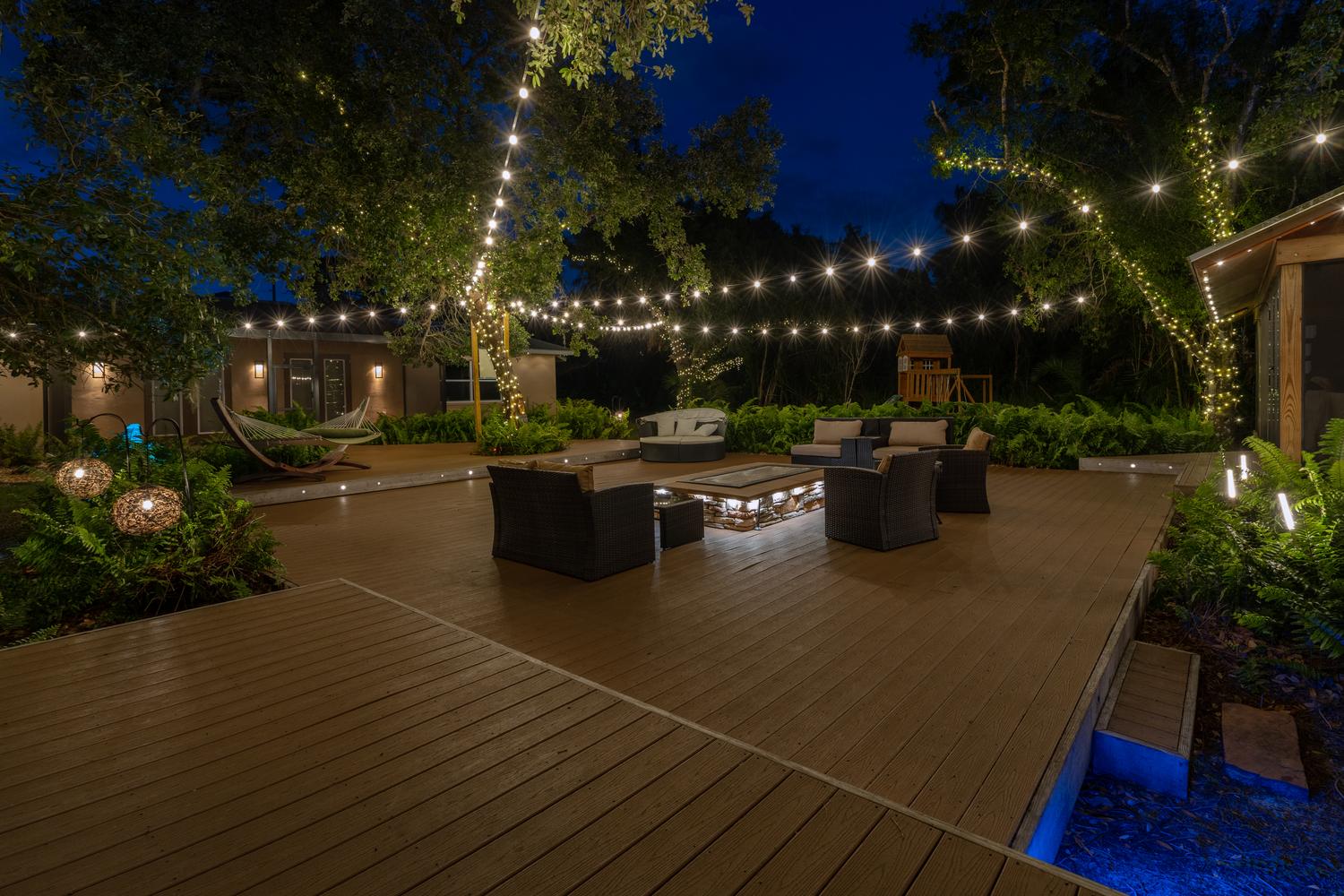
Patio & Landscape Lighting Types with Complete Costs
Every outdoor lighting option with fixture and installation pricing
Complete Outdoor Lighting Installation Costs
| Lighting Type | Cost Per Fixture | Installation Cost | Coverage Area | Best Use |
|---|---|---|---|---|
| String/Cafe Lights | $20 – $100/strand | $50 – $200 DIY | 25-50 ft spans | Ambiance, parties |
| Path Lights | $30 – $150 each | $100 – $200 each | 6-8 ft spacing | Walkway safety |
| Spot/Up Lights | $50 – $200 each | $100 – $250 each | 15-30 ft throw | Trees, architecture |
| Wall Sconces | $75 – $300 each | $150 – $300 each | 10-15 ft radius | Entry, walls |
| Deck/Step Lights | $40 – $100 each | $75 – $150 each | 3-4 ft spacing | Safety lighting |
| Flood Lights | $100 – $400 each | $200 – $400 each | 40-60 ft wide | Security, sports |
| Bollard Lights | $150 – $500 each | $200 – $350 each | 10-15 ft circle | Modern paths |
| Smart RGB Lights | $100 – $300 each | $150 – $300 each | Varies | Color effects |
Critical Electrical Safety & Code Requirements
Outdoor electrical work requires GFCI protection by code! Low-voltage (12V) systems safer for DIY but still need transformer installed by electrician. Line voltage (120V) MUST be installed by licensed electrician – $75-150/hour. Permits required for new circuits ($50-200). Underground wiring must be in conduit 18-24″ deep. All fixtures must be rated for wet locations. Junction boxes must be weatherproof. Improper installation risks fire, shock, insurance denial. Many areas require photocell or timer for light pollution. Never daisy-chain extension cords permanently.
Lighting Design & Complete Project Costs
Professional lighting layouts and total installation pricing
Total Project Cost by Lighting Scope
| Project Scope | Fixtures | Wiring/Labor | Controls | Total Project |
|---|---|---|---|---|
| Basic Patio (String + 4 lights) | $300 – $600 | $200 – $400 | $50 – $100 | $550 – $1,100 |
| Standard Package (10-15 lights) | $800 – $2,000 | $1,200 – $2,000 | $200 – $500 | $2,200 – $4,500 |
| Complete Yard (20-30 lights) | $2,000 – $4,500 | $2,500 – $4,000 | $500 – $1,000 | $5,000 – $9,500 |
| Premium Design (30-50 lights) | $4,000 – $8,000 | $4,000 – $7,000 | $1,000 – $2,000 | $9,000 – $17,000 |
| Smart System (20-30 + automation) | $3,000 – $6,000 | $3,000 – $5,000 | $2,000 – $4,000 | $8,000 – $15,000 |
| Estate Lighting (50+ lights) | $8,000 – $15,000 | $7,000 – $12,000 | $3,000 – $5,000 | $18,000 – $32,000 |
Lighting Control Systems & Features
| Control Feature | Cost Range | Details | Benefits |
|---|---|---|---|
| Basic Timer | $20 – $50 | Mechanical/digital | Set schedule |
| Photocell Sensor | $30 – $100 | Dusk-to-dawn auto | Hands-free |
| Motion Sensors | $50 – $150 each | Security activation | Energy savings |
| Dimmer Controls | $100 – $300 | Adjust brightness | Mood setting |
| Zone Controllers | $300 – $800 | Multiple circuits | Area control |
| Smart Hub System | $500 – $1,500 | App control | Full automation |
| Voice Integration | $200 – $500 | Alexa/Google | Hands-free |
| DMX Programming | $2,000 – $5,000 | Color shows | Entertainment |
Installation Methods & Electrical Requirements
What affects your outdoor lighting installation cost
Key Installation Considerations
Voltage Systems
Low Voltage (12V):
• Safer for DIY
• Energy efficient
• Transformer required
• Limited distance
Line Voltage (120V):
• Professional only
• Brighter output
• Longer runs possible
Power Sources
Hardwired:
• Most reliable
• Professional install
• Permits required
Plug-in:
• DIY friendly
• Limited placement
Solar:
• No wiring needed
• Weather dependent
LED vs Halogen
LED Advantages:
• 80% less energy
• 25,000+ hour life
• Cool operation
• Color options
Halogen:
• Lower upfront cost
• Better color rendering
• Shorter lifespan
Lighting Zones
Task Lighting:
• Cooking areas
• Steps/pathways
• Bright, focused
Ambient Lighting:
• General illumination
• Soft, diffused
Accent Lighting:
• Highlight features
• Create drama
Installation Challenges
Common Issues:
• Trenching for wire
• Tree root conflicts
• Existing hardscaping
• Voltage drop
Solutions:
• Conduit routing
• Thicker gauge wire
• Multiple transformers
Design Principles
Layer Lighting:
• High/medium/low
• Avoid flat lighting
• Create depth
Less is More:
• Strategic placement
• Avoid overlighting
• Dark sky friendly
Popular Lighting Designs & Effects
Professional lighting techniques and applications
Lighting Design Techniques
| Technique | Fixture Types | Cost Impact | Visual Effect |
|---|---|---|---|
| Moonlighting | Tree-mounted spots | +$150-300/fixture | Natural shadows, romantic |
| Uplighting | Ground spots | Standard pricing | Dramatic tree/wall effects |
| Silhouetting | Background wash | +20% for placement | Object outlines |
| Grazing | Close wall wash | Standard pricing | Texture emphasis |
| Cross Lighting | Multiple angles | 2x fixtures needed | Eliminates shadows |
| Path Lighting | Bollards/stakes | $100-300/fixture | Safety + beauty |
Real Estate Investment Returns
Outdoor lighting ROI for different property strategies
Primary Residence
ROI: 50-75%
Best Value: $3,000-8,000 range
Key Points:
• Extends outdoor hours
• Safety + beauty combo
• Curb appeal at night
• Smart controls worth it
Rental Property
Strategy: Safety focus
Budget: $1,000-3,000
Priorities:
• Motion sensors
• Entry lighting
• Dusk-to-dawn auto
• Low maintenance LED
Fix & Flip
Impact: First impressions
Budget: $1,500-4,000
Focus Areas:
• Front facade uplights
• Path to entry
• Backyard string lights
• Evening showings shine
DIY vs Professional Installation
When to DIY outdoor lighting and when to hire pros
Installation Method Comparison
DIY Feasible
Good DIY Projects:
• String lights
• Solar path lights
• Plug-in spotlights
• Low-voltage kits
Savings: 50-70%
Time: Weekend project
Professional Required
Must Hire For:
• New circuits/panels
• 120V installation
• Trenching/conduit
• Complex controls
• Permits needed
Cost: $75-150/hour
Common DIY Mistakes
Typical Problems:
• Voltage drop
• Overloaded circuits
• Poor connections
• No GFCI protection
• Bad light placement
Result: Redo needed
Tools Needed (DIY)
Basic Tools:
• Wire strippers
• Voltage tester
• Trenching spade
• Drill & bits
• Level
Cost: $100-300
Hybrid Approach
Best Value:
• Pro: Main electrical
• Pro: Transformer setup
• DIY: Fixture placement
• DIY: Path lighting
Saves: 30-40%
When to Call Pros
Red Flags:
• Flickering lights
• Tripped breakers
• Warm connections
• Water in fixtures
• Code violations
Safety first!
Money-Saving Strategies
Get professional lighting results for less
Start with String Lights
Instant ambiance $200-500. Commercial grade LED strings last years. Create overhead canopy effect. Add other lights later. Perfect party atmosphere cheap.
Buy Fixtures, Hire Wiring
Purchase fixtures online 40% less. Hire electrician for install only. Saves markup on products. Get exactly what you want. Pro installation ensures safety.
Phase Your Installation
Year 1: Safety lighting. Year 2: Accent lights. Year 3: Smart controls. Spreads cost over time. Learn what you really need.
Mix Solar Strategically
Use solar for accent only. Hardwire paths and entries. Quality solar improved greatly. No trenching some areas. Backup for power outages.
Shop End of Season
Fall clearance 40-60% off. Buy for next year install. Online deals year-round. Open box specials work. Same warranty applies.
LED Only Strategy
Higher upfront, saves 80% energy. Lasts 20x longer than halogen. Less heat, safer operation. Smaller transformers needed. ROI in 2-3 years.
Frequently Asked Questions
Expert answers about outdoor lighting installation
💡 Ready to Light Up Your Outdoor Space?
Find qualified landscape lighting contractors in your area

Knowledge Quiz: Patio Lighting Cost Guide
Open Quiz
5 quick questions - see how much you learned!
1) Which patio lighting approach is listed as the “Most popular” option in the overview?
Answer: C
Your overview lists Professional Install ($2,000–$5,000) as the most popular choice.
2) Which lighting type is specifically listed as best for “Walkway safety”?
Answer: B
The table lists Path Lights as best for walkway safety (typically spaced 6–8 ft apart).
3) What electrical protection is required by code for outdoor electrical work?
Answer: D
Your safety section states that GFCI protection is required by code for outdoor electrical work.
4) Which statement best describes low-voltage (12V) landscape lighting in the guide?
Answer: A
The guide says low voltage (12V) is safer for DIY and requires a transformer.
5) What ROI range does the guide give for outdoor lighting on a primary residence?
Answer: C
Your ROI section lists 50–75% for primary residences, especially when lighting improves safety and curb appeal.
🏡 More Patio & Walkway Guides
Explore our complete outdoor hardscaping library
View All Patio & Walkway Guides (20) ▼
🏡 Patio Materials
🚶 Walkways & Paths
Last updated: Jan 2026
Sources: Association of Outdoor Lighting Professionals, National Electrical Code 2026, Illuminating Engineering Society, Smart Home Technology Association, Professional Landscape Lighting Survey 2026, Energy Star Outdoor Lighting Guide, Builds and Buys Research Team



