
Paso Robles Real Estate Investment Guide For 2026
A comprehensive resource for investors targeting California’s premier inland wine country market — a growing destination for vacation rentals, lifestyle migration, and remote workers positioned midway between Los Angeles and San Francisco in 2026
Quick answers: Top 5 most searched Paso Robles investment questions ▼
Migration data: Where people are moving from to Paso Robles ▼
In This Guide
Click on any section to navigate directly to that content
1. Paso Robles Market Overview
Market Fundamentals
Paso Robles (El Paso de Robles) occupies a singular position in California real estate: it is the state’s most undervalued wine country market, sitting at the geographical and cultural midpoint between Los Angeles and San Francisco on US-101, offering a wine tourism destination that is growing faster than established markets like Napa and Sonoma at 40–60% lower entry prices. For investors who understand the wine country real estate thesis, Paso Robles represents the most compelling risk-adjusted opportunity in this category anywhere in California.
The market’s investment case rests on three concurrent demand drivers:
- Wine Tourism STR: 300+ wineries and 2+ million annual visitors create genuine short-term rental demand with weekend rates of $350–$550+ for well-positioned properties
- Lifestyle Migration: Remote workers from both LA (200 miles south) and the Bay Area (220 miles north) choosing Paso Robles for wine country living at a fraction of coastal California cost
- Wine Country Appreciation: As Paso Robles transitions from “emerging” to “established” wine destination, prices are compressing toward Napa and Santa Barbara comparables — a structural appreciation driver
Critically, Paso Robles has not adopted the restrictive STR regulations that have effectively shut down investment property vacation rentals in most major California cities. This creates a dual-income investment vehicle — STR income plus long-term appreciation — that is increasingly rare in California.
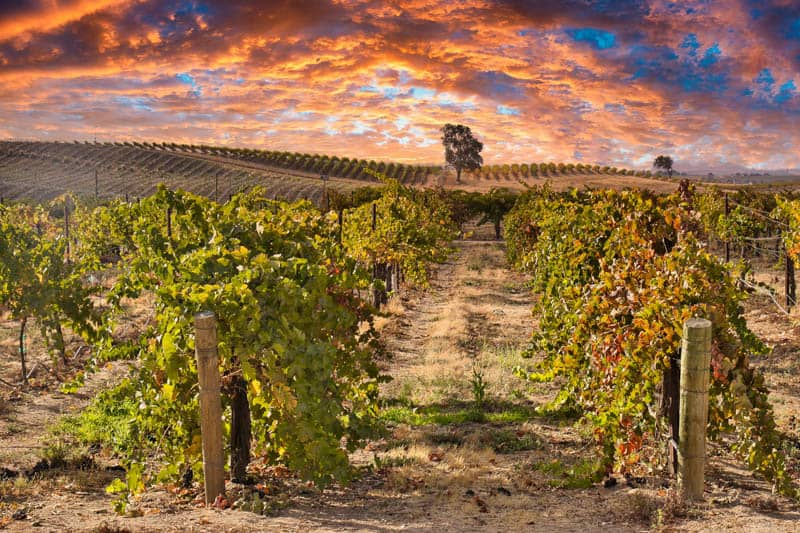
Paso Robles combines wine tourism STR income with lifestyle migration demand at prices far below Napa and Santa Barbara
2026 Economic Outlook
- Wine tourism continues growing — Paso Robles receiving increasing national press recognition
- New winery openings and hospitality development adding employment and visitor capacity
- Remote worker migration strengthening permanent resident base and long-term rental demand
- Infrastructure investment in downtown Paso Robles continuing — dining, retail, entertainment
- Agricultural sector (almonds, pistachios, vineyards) provides economic stability beneath tourism layer
- STR market maturing — experienced operators seeing improved occupancy through direct booking channels
The Wine Country Investment Thesis — Paso Robles vs. Napa
| Factor | Paso Robles | Napa Valley | Santa Barbara Wine Country |
|---|---|---|---|
| Median Home Price | $620,000 | $1,600,000+ | $1,200,000+ |
| Number of Wineries | 300+ | 400+ | 150+ |
| STR Regulation | Permit required; investment property STR allowed | Restrictive; unincorporated areas more permissive | Varies by jurisdiction; generally restrictive |
| Peak STR Rate (weekend) | $350–$550/night | $500–$900+/night | $450–$750/night |
| Annual Price Growth (5yr avg) | 6–8% | 4–6% | 5–7% |
| Tourism Growth Trajectory | Accelerating — emerging to established | Mature — stable growth | Growing but supply-constrained |
| Entry Capital (25% down) | ~$155,000 | ~$400,000+ | ~$300,000+ |
Historical Performance
| Period | Market Driver | Avg Annual Appreciation | Key Event |
|---|---|---|---|
| 2010–2015 | Post-recession recovery, wine region recognition | 4–6% | Wine Enthusiast names Paso Robles “Wine Region of the Year” 2013; national attention begins |
| 2016–2019 | Wine tourism growth, lifestyle migration | 6–9% | Downtown Paso Robles revitalization; STR market matures; Airbnb adoption accelerates |
| 2020–2022 | Pandemic outdoor/lifestyle demand explosion | 18–25% | LA and Bay Area flight to wine country lifestyle; STR bookings surge; inventory at historic lows |
| 2023–2024 | Rate normalization, STR market maturation | 2–5% | Volume fell; STR market segmented between quality operators and poor performers |
| 2025–2026 | Continued lifestyle migration, wine tourism recovery | 5–8% (projected) | Wine tourism rebounding; quality STR operators seeing improved occupancy; remote worker demand firm |
Honest Assessment: Who Should Invest in Paso Robles
✅ Ideal Investor Profile
- Long-term orientation (7–15+ year hold)
- Comfortable with STR active management or premium STR management company
- Can carry moderate negative cash flow on long-term rental while appreciation builds equity
- Believes in wine country appreciation as a structural trend
- Has $150,000–$200,000 in available investment capital
- Ideally has personal appreciation for the wine country lifestyle (visits the market)
⚠️ Not Ideal For
- Investors needing positive cash flow from day one
- Passive investors not willing to engage with STR operations or premium management
- Short-term flippers — this market rewards patient holders
- Investors with less than $130,000 available capital
- Those expecting dramatic short-term price appreciation on a compressed timeline
- Investors who will not visit the market — local knowledge matters here
📚 New to real estate investing? Master the fundamentals with our professional course Learn more →
2. Neighborhood Hotspots
Paso Robles Investment Map
Interactive map of Paso Robles investment areas. Green stars mark top hotspots, blue circles show established markets, and orange circles highlight emerging areas.
Core Investment Areas
Detailed Area Analysis: All Paso Robles Submarkets
| Area | Price Range | Best Strategy | Growth Drivers | Yield / Income |
|---|---|---|---|---|
| Westside Wine Trail | $650K–$1.5M+ | Premium STR, appreciation | Wine tourism, winery proximity, lifestyle | $55K–$90K/yr gross STR |
| Downtown Paso Robles | $550K–$850K | STR or long-term (dual) | Walkability, remote workers, wine bars | $35K–$55K STR or $2,400–$2,900/mo LTR |
| North Paso / Templeton Rd | $560K–$820K | Long-term rental, family | Good schools, family demand, remote workers | $2,300–$2,700/month LTR |
| Eastside Paso Robles | $480K–$680K | Long-term rental, first buy | Wine industry workers, affordability | $2,100–$2,500/month LTR |
| Templeton (adjacent) | $650K–$1.0M | Premium long-term, appreciation | Top schools, family quality, upscale character | $2,500–$3,200/month LTR |
| South Paso / Hunter Ranch | $520K–$750K | Military/family rental | Camp Roberts military, newer construction | $2,200–$2,600/month LTR |
| Rural Wine Country / Acreage | $750K–$2.5M+ | Premium STR, vineyard appreciation | Wine country recognition, lifestyle buyers | $70K–$130K/yr gross STR (premium properties) |
Expert Insight: “What people misunderstand about Paso Robles STR is that it’s not Airbnb arbitrage — it’s a hospitality business. The top 20% of operators earn 50% of the income because they understand the guest experience: the welcome wine, the winery recommendations, the impeccably designed spaces, the seamless check-in. Properties that feel generic earn generic income. Properties that feel like a curated wine country escape earn exceptional income. If you’re going to do STR in Paso Robles, commit to the hospitality experience or hire a management company that does.” — Rachel Morrison, STR Operations Director, Central Coast Vacation Rentals
3. Property Types
| Investment Goal | Best Property Type | Best Location | Minimum Capital |
|---|---|---|---|
| Maximum STR Income | Wine trail STR property | Westside wine trail, rural wine country | $170,000+ |
| Best Appreciation | Downtown or wine trail SFH | Downtown, westside, Templeton | $145,000+ |
| Best Long-Term Rental | Downtown or north Paso SFH | Downtown, north Paso, Templeton | $140,000+ |
| Lowest Entry / First Buy | Eastside long-term rental | Eastside Paso Robles | $125,000+ |
| Most Passive / Reliable | Military housing or Templeton family | South Paso, Templeton | $135,000+ |
Don’t guess the costs. Our Complete Renovation & Remodeling Cost Guide covers 400+ pages of project-by-project breakdowns with real contractor pricing ranges.
4. Cost Analysis
Acquisition Cost Breakdown (Paso Robles)
| Expense Item | Typical Cost | Example ($640,000 Property) | Notes |
|---|---|---|---|
| Down Payment | 25% (investment) | $160,000 | Standard investment property; 20% possible with strong credit |
| Closing Costs | 2–3% of price | $12,800–$19,200 | Title, escrow, lender fees; Central Coast rates |
| STR Furnishing (if STR strategy) | $25,000–$60,000 | $35,000–$55,000 | Critical investment: In Paso Robles STR market, professional design and quality furnishings directly drive occupancy and nightly rates. This is not optional for competitive performance. |
| STR Permit + Business License | $500–$1,500 annually | $800 initial | Required before operating; verify current fee schedule with City of Paso Robles |
| General Inspection | $400–$700 | $550 | Well inspection critical for rural/wine country properties; add $300–$500 for well evaluation |
| Insurance (STR policy) | $3,000–$6,000/year | $4,500/year | STR-specific policy (not standard landlord); higher than LTR; commercial activity coverage required |
| Reserves (6 months + STR seasonal) | $15,000–$25,000 | $20,000 | STR has seasonal income variation; winter reserves more important than standard rental |
| TOTAL MINIMUM ENTRY (STR) | ~37–45% of value | $233,650–$290,500 | Higher than standard SFH rental due to STR furnishing investment; long-term rental requires $175,000–$200,000 |
Sample Cash Flow Analysis: Two Paso Robles Scenarios
Scenario A — Westside Wine Trail STR Property ($720,000 purchase)
| Item | Monthly | Annual | Notes |
|---|---|---|---|
| Gross STR Income (63% occupancy) | $5,250 | $63,000 | 3BR wine country home; $400 avg nightly rate; 63% annual occupancy (peak summer, moderate winter) |
| STR Management (20%) | -$1,050 | -$12,600 | Full-service STR management including listing, guest communication, cleaning coordination |
| Cleaning Costs | -$400 | -$4,800 | Turnover cleaning at $150–$200 per stay; approx 24 stays/year |
| Property Taxes (1.1%) | -$660 | -$7,920 | CA Prop 13 base on $720K assessed value |
| STR Insurance | -$375 | -$4,500 | Commercial STR policy; required for proper coverage |
| Maintenance + Supplies (8%) | -$420 | -$5,040 | Furnishing replacement, hot tub maintenance, landscaping, guest supplies |
| TOT (Transient Occupancy Tax — ~10%) | -$525 | -$6,300 | Paso Robles collects TOT; typically passed through from guest but operator is responsible |
| Net Operating Income | $1,820 | $21,840 | Cap rate: 3.03% on $720K — low but STR is a higher-gross, higher-cost structure |
| Mortgage ($540K, 6.75%, 30yr) | -$3,501 | -$42,012 | 25% down on $720K; investment property rate |
| CASH FLOW | -$1,681 | -$20,172 | Significant negative carry; 75%+ occupancy or higher rates push toward neutral |
| Total Return (7% appreciation + equity) | ~17% | On $180K down + $45K furnishing = $225K total invested |
Scenario B — Eastside Long-Term Professional Rental ($540,000 purchase)
| Item | Monthly | Annual | Notes |
|---|---|---|---|
| Gross Rent | $2,350 | $28,200 | 3BR, Eastside Paso Robles, professionally managed |
| Less Vacancy (4%) | -$94 | -$1,128 | Low vacancy in Paso Robles market overall |
| Property Taxes (1.1%) | -$495 | -$5,940 | CA Prop 13 base on $540K |
| Insurance | -$165 | -$1,980 | Standard landlord policy; Central Coast SLO County rates |
| Property Management (10%) | -$235 | -$2,820 | Standard residential PM; competitive in Paso Robles |
| Maintenance + CapEx (7%) | -$165 | -$1,974 | Moderate climate; lower HVAC burden than Central Valley or Redding |
| Net Operating Income | $1,196 | $14,358 | Cap rate: 2.66% — honest LTR return on Paso Robles pricing |
| Mortgage ($405K, 6.75%, 30yr) | -$2,626 | -$31,512 | 25% down on $540K |
| CASH FLOW | -$1,430 | -$17,154 | Significant negative carry; Paso Robles is primarily an appreciation market for LTR |
| Total Return (6% appreciation + equity) | ~15% | On $135,000 down; appreciation carries the return |
Important context: Both scenarios show significant negative cash flow — Paso Robles is expensive relative to its rent levels for a long-term rental strategy. The STR scenario requires patient cash reserves and a commitment to quality hospitality operations. The LTR scenario is primarily an appreciation play. Investors who cannot absorb -$1,400 to -$1,700/month from other income sources should not enter the Paso Robles market with conventional financing. The total return case depends on appreciating wine country values delivering 6–9% annually over a 7–15 year hold.
Expert Insight: “The investors who succeed in Paso Robles STR treat it like a business launch, not a passive investment. They spend $40,000–$60,000 on professional design and quality furnishings, they optimize their Airbnb listing with professional photography and copywriting, and they respond to guest reviews within hours. Those properties earn $70,000–$100,000 per year. The investors who buy a property, put in IKEA furniture, and hope for the best earn $35,000–$45,000. The gap between those two outcomes is almost entirely operator skill and investment quality, not location.” — Marcus Delgado, Paso Robles STR Consulting Group
5. Legal Framework
✅ STR-Permissive Environment — A Competitive Advantage
Paso Robles has not adopted the STR restrictions that have effectively eliminated investment property vacation rentals in most major California cities. The city requires a permit and business license, collects Transient Occupancy Tax, and has noise and nuisance regulations — but does not restrict investment property STR to owner-occupants only, does not cap the number of nights, and does not have the complex enforcement regime that makes STR effectively non-viable elsewhere. This is a genuine competitive advantage that distinguishes Paso Robles from most California markets. However, California STR regulations are actively evolving — always verify current requirements with the City of Paso Robles directly before purchase.
STR Permit Requirements
- STR Business License: Required from the City of Paso Robles before commencing STR operations. Apply at Paso Robles City Hall or online. Annual renewal required.
- Transient Occupancy Tax (TOT): Paso Robles collects TOT on short-term rental income. Platforms like Airbnb and VRBO remit TOT directly in many cases — confirm with the city which portion you must file independently. Typically 10–12% of gross rental receipts.
- Good Neighbor Policy: Paso Robles STR regulations include noise and nuisance provisions. Quiet hours, parking limits, and maximum occupancy rules must be posted in the property and communicated to guests.
- County regulations for rural properties: If the property is outside city limits (county unincorporated areas), San Luis Obispo County STR regulations apply instead. These are distinct from city regulations and must be verified separately.
- Verify current status: Always confirm current STR permit requirements directly with the City of Paso Robles before purchase — STR policy in California cities is actively evolving.
California State Regulations
- AB 1482 (Rent Cap + Just Cause): Applies to covered long-term rental properties. Single-family homes with proper written exemption notices in the lease are exempt from rent caps. Critical for any Paso Robles property used as a long-term rental.
- AB 12 Security Deposit Cap: Maximum one month’s rent for most residential properties. Thorough tenant screening compensates for reduced deposit protection.
- No City Rent Control: Paso Robles has not adopted local rent control beyond AB 1482. Only statewide framework applies.
- STR Insurance Requirements: Standard homeowner’s or landlord policies typically exclude commercial STR activity. A specific STR or commercial hospitality policy is required. Platforms like Airbnb provide some host protection but it is not a substitute for dedicated STR insurance.
- HOA Restrictions: Many Paso Robles neighborhoods and planned communities have HOAs. HOA CC&Rs may restrict or prohibit STR. Verify HOA rules before purchase — this is a deal-breaker item for the STR strategy if the HOA prohibits it.
Key Resources
- City of Paso Robles: prcity.com
- SLO County STR (rural): slocounty.ca.gov
- California DRE: dre.ca.gov
- SLO County Superior Court: slocourt.org
6. Step-by-Step Paso Robles Investment Playbook
Choose Your Paso Robles Strategy
Premium Wine Trail STR
Buy on the westside wine trail. Invest heavily in furnishing and design. Partner with an experienced Paso Robles STR management company. Accept significant negative cash flow in exchange for the market’s highest income and appreciation combination. Requires $200,000+ total capital and strong income to carry the property.
Downtown Long-Term Appreciation
Buy downtown. Rent to remote workers and wine industry professionals. Accept -$800 to -$1,200/month negative carry in exchange for the best appreciation trajectory in the city at lower management intensity than STR. Best for patient investors with strong income who want wine country exposure without STR operations.
Eastside Affordable Entry
Buy on the eastside. Target wine industry workforce and young professional long-term tenants. Lower entry capital, lower appreciation upside, but a genuine foothold in the Paso Robles market. Suitable for investors with $125,000–$150,000 capital who want Paso Robles exposure at the lowest available entry point.
Rural Wine Country / Acreage
Buy a ranchette or small vineyard property outside city limits. Maximum STR income potential and highest appreciation trajectory as wine country recognition grows. Significant complexity — agricultural zoning, well and septic systems, county regulations rather than city STR rules. Experienced investors only with deep Paso Robles market knowledge.
Visit and Know the Market
Unlike markets where remote investment works well from day one, Paso Robles rewards investors who visit, taste, and understand the product. Your investment thesis depends on wine tourism demand — you should experience that demand as a visitor before deploying capital as an investor.
- Visit during peak season (May–September) and during harvest (September–October) to understand the market’s energy at its strongest
- Stay in competitive STR properties near where you’re considering buying — study the guest experience, the design, the pricing, and the occupancy calendar
- Attend Paso Robles wine events (Paso Robles Wine Festival, Harvest Wine Weekend) to understand the visitor demographic and what draws them
- Drive the westside wine trail on a Saturday and visit 3–4 wineries — understand the experience that drives STR demand
- Walk downtown Paso Robles on a Friday evening — assess the restaurant and wine bar scene that makes long-term living appealing to remote workers
Critical insight: The best Paso Robles STR operators are investors who love Paso Robles and channel that passion into exceptional guest experiences. The worst operators are those who bought from a spreadsheet and never visited. In a lifestyle market, authentic enthusiasm for the product translates directly into better listings, better guest communication, and better reviews — which translate into better occupancy and higher rates.
Build Your Paso Robles Team
- Paso Robles Wine Country Real Estate Agent: Must have specific STR investor experience — should know current STR performance data for comparable properties, understand westside vs. eastside market dynamics, and have relationships with STR operators to connect you with on-the-ground intelligence.
- Experienced Paso Robles STR Management Company: The most important hire if doing STR. Interview by asking: “What’s the average occupancy rate of your current Paso Robles STR portfolio?” and “Can you provide references from investors with similar properties to what I’m considering?” Companies that can’t answer with specific data don’t have the local expertise required.
- STR Interior Designer: Invest in professional design and styling for your STR. The difference between a $35,000/year property and a $70,000/year property in Paso Robles is frequently the quality of design and photography — not location alone.
- STR Insurance Specialist: A broker who specifically handles vacation rental and STR properties in California. Standard landlord policies exclude STR commercial activity — this gap in coverage is a serious liability exposure.
- California Real Estate Attorney: HOA review (if applicable), STR compliance review, AB 1482 exemption notices for any long-term rental periods, and lease template for hybrid strategies.
Paso Robles Due Diligence
For STR Properties
- HOA STR restriction check — non-negotiable; many HOAs prohibit STR; verify CC&Rs before making any offer
- City of Paso Robles STR permit eligibility confirmation
- Comparable STR income data from AirDNA or local PM companies for the specific location
- Hot tub and pool condition — these are premium amenities; repair or replacement costs $8,000–$25,000
- Private outdoor space assessment — essential for competitive STR performance; note privacy from neighbors
- Internet connectivity (fiber or strong cable) — non-negotiable for STR guests
- Parking capacity — Paso Robles guests often arrive as couples or small groups; 2+ parking spots is standard
For Rural / Wine Country Properties
- Well water testing and flow rate — critical for rural properties on private wells
- Septic system condition and capacity — rural properties on septic require inspection and pumping records
- Agricultural zoning verification — confirm what improvements and uses are permitted
- Water rights documentation — vineyard properties may have water entitlements that affect value
- Wildfire risk assessment — SLO County hill areas have varying fire risk; verify insurance availability
- Road access — some rural wine country properties have easement access; verify legal access documentation
- County STR permit process (different from city) — verify current county STR regulations
7. Financing Options for Paso Robles
| Loan Type | Down Payment | Rate Premium | Best For | Paso Robles Note |
|---|---|---|---|---|
| Conventional Investment | 25% | +0.5–0.75% | W-2 income, strong credit | Paso Robles properties typically fall within conventional limits; standard approval for qualified buyers |
| DSCR Loan (STR Income) | 25–30% | +1.5–2.5% | STR investors with strong occupancy data | Some DSCR lenders now qualify using STR income via AirDNA or actual income data. Paso Robles STR income can support DSCR qualification on lower-priced properties with 30%+ down |
| Jumbo Investment | 25–30% | +0.75–1.25% | Wine trail properties above $806,500 loan limit | Premium westside wine country properties may require jumbo financing; strong W-2 or portfolio income needed to qualify |
| Portfolio Loan | 20–30% | +1–2% | Multiple properties, self-employed, rural wine country | SLO County community banks and some Central Coast lenders offer portfolio products for investors; beneficial for rural wine country properties |
| HELOC from Primary Residence | N/A | Prime + 0.5–1% | LA/Bay Area homeowners with equity | LA or Bay Area homeowners with $300,000+ in home equity can fund a Paso Robles STR investment from existing HELOC — very effective cost-of-capital strategy |
| 1031 Exchange Into Paso Robles | Equity from sale | Standard rates | Investors exiting appreciated assets | 1031-exchanging from a large coastal California property into Paso Robles STR assets is a powerful strategy — STR income partially offsets negative carry while equity continues appreciating |
STR Income and Financing: Traditional lenders typically cannot count projected STR income for loan qualification. This is a meaningful challenge given Paso Robles’s high prices and the need to carry significant negative cash flow. Strategies that work: (1) DSCR loans using actual STR income documentation, (2) strong W-2 or business income covering the full negative carry, (3) HELOC from an appreciated primary residence, (4) 1031 exchange with reduced loan balance from equity. Do not stretch to buy in Paso Robles without a clear cash flow management plan.
8. Frequently Asked Questions

Knowledge Quiz: Paso Robles Real Estate Investment
Open Quiz
5 quick questions on what you just learned about Paso Robles investing
1) What makes Paso Robles a compelling alternative to Napa Valley for wine country real estate investment?
Answer: B
The guide’s comparison table shows Paso Robles median home prices at $620,000 vs. $1.6M+ in Napa Valley — a 60% discount. Yet STR nightly rates are within range ($350–$550 vs. $500–$900), wine tourism is growing faster in percentage terms, and Paso Robles’s STR regulations are more permissive than Napa’s. This combination of lower entry cost, similar income potential, and faster appreciation trajectory is the core investment thesis for Paso Robles over established wine destinations.
2) What is the single most important physical feature that drives premium nightly rates for Paso Robles STR properties?
Answer: D
The guide explicitly identifies private outdoor space with a hot tub as the single most impactful amenity for Paso Robles STR. Guests come to Paso Robles for a wine country outdoor lifestyle — the outdoor experience is the product. Properties with a private patio, garden, or outdoor entertaining area with a hot tub command 30–50% higher nightly rates than comparable properties without this feature. No other single amenity has as large an impact on rate and occupancy.
3) What is Transient Occupancy Tax (TOT) and how does it work for Paso Robles STR operators?
Answer: A
Paso Robles collects Transient Occupancy Tax (typically 10–12%) on short-term rental receipts. While Airbnb and VRBO remit TOT directly to the city for bookings made through their platforms in most cases, operators must register as TOT collectors with the city and verify which portion (if any) they must file independently — particularly for direct bookings. Failure to register and remit TOT can result in penalties. TOT registration is part of the STR business license application process.
4) Why does the guide warn investors that HOA review is a “non-negotiable” and “deal-breaker” step before purchasing a Paso Robles STR property?
Answer: C
Many Paso Robles neighborhoods and planned communities have HOAs whose CC&Rs (Covenants, Conditions and Restrictions) explicitly prohibit short-term rentals. An investor who purchases a property intending to operate as an STR, only to discover the HOA prohibits it, has no legal recourse — HOA restrictions are legally enforceable and override the investor’s intent. The guide calls HOA CC&R review a non-negotiable due diligence step that must occur before making any offer on a property intended for STR use.
5) What does the guide identify as the clearest differentiator between top-performing Paso Robles STR properties ($70,000–$100,000/year) and average performers ($35,000–$45,000/year)?
Answer: B
The STR expert quoted in the guide states this directly: properties treated as hospitality businesses — with professional design, quality furnishings, professional photography, curated local wine recommendations, and responsive management — earn $70,000–$100,000/year. Properties with generic IKEA furniture and passive management earn $35,000–$45,000. The gap is almost entirely operator skill and investment quality, not location. The guide emphasizes that investing $40,000–$60,000 in professional design and photography is not optional for competitive STR performance in Paso Robles.
Work With a Local Expert in Paso Robles
We are building a verified network of real estate professionals across every market we cover.

About Our Expert Network
We are finalizing partnerships with verified real estate professionals across every market featured on Builds and Buys. Paso Robles wine country specialists are selected for hands-on STR investor experience, deep local market knowledge, and commitment to helping investors navigate the unique wine country investment environment.
- STR income data and occupancy benchmarks for specific properties
- Wine trail and westside vs. eastside market expertise
- HOA CC&R review and STR permit guidance
- STR management company referrals with performance data
- Rural wine country and vineyard property experience
- 1031 exchange coordination into Paso Robles wine country
Services Covered
- STR property sourcing and acquisition
- STR income analysis and projections
- STR permit and compliance guidance
- Wine trail property expertise
- Rural vineyard property transactions
- Design and furnishing vendor referrals
- STR management company referrals
- STR insurance specialist connections
- Legal and title referrals
- Financing for wine country properties
- 1031 exchange coordination
- Exit strategy and resale planning
Get Connected or Join Our Network
Looking for a Paso Robles wine country expert? Reach out and we will connect you with the right professional.
Contact us at support@buildsandbuys.com
Find Specialized Paso Robles Real Estate Professionals
Ready to Invest in Paso Robles?
Paso Robles is not a beginner market or a cash flow market. It is a wine country appreciation and STR income story that rewards investors who commit fully — to the location, to the hospitality experience, to the long-term hold. The opportunity is genuine: California’s most undervalued wine country, positioned midway between the state’s two largest metro areas, with STR regulations that still allow investment property vacation rentals and appreciation drivers that show no signs of reversing as the region’s national recognition grows. For the right investor with the right time horizon and the right capital base, Paso Robles is one of California’s most compelling lifestyle-investment convergence stories.
Continue Your Research
California State Guide
See how Paso Robles compares to Santa Maria, San Luis Obispo, and other Central Coast markets.
Step-by-Step Invest
Complete framework for building a real estate investment strategy from scratch.
144-Lesson Course
University-level real estate education covering financing, law, strategy, and management.
For further guidance, explore our State-by-State Investor guides, browse our expert articles, or follow our Step-by-Step Investment Guide.



