
Livingston Montana Real Estate Investment Guide For 2026
A comprehensive resource for investors looking to capitalize on Montana’s premier fly fishing and arts town along the Yellowstone River, gateway access to Yellowstone National Park’s Gardiner entrance, and a creative class economy increasingly drawing Bozeman overflow demand in 2026
Quick answers: Top 5 most searched Livingston investment questions ▼
Migration data: Where people are moving from to Livingston ▼
In This Guide
Click on any section to navigate directly to that content
1. Livingston Market Overview
Market Fundamentals
Livingston sits along the Yellowstone River roughly 30 minutes east of Bozeman, founded as a Northern Pacific Railroad town and still anchored by its historic depot district. Today Livingston is known nationally for world class fly fishing, a genuinely thriving arts and gallery scene, and serving as the northern gateway to Paradise Valley and Yellowstone National Park’s Gardiner entrance an hour to the south.
Key economic indicators that define Livingston’s investment case:
- Population: 8,000 plus city, 17,000 plus Park County
- Major Employers: Livingston HealthCare, Park County government, Livingston Public Schools, fly fishing outfitters and guide services, tourism and hospitality, a growing creative and remote work professional base
- Median Household Income: $58,000, modest relative to Bozeman, though supplemented by significant outside wealth among second home and Paradise Valley buyers
- Job Growth: Steady, anchored by healthcare, tourism, and a small but meaningful creative economy
- Fly Fishing Economy: The Yellowstone River corridor through Livingston is considered some of the finest trout fishing water in the country, supporting a robust guide and outfitter industry
- Yellowstone Proximity: Gardiner entrance to Yellowstone National Park roughly 55 minutes south through scenic Paradise Valley
Livingston’s economy blends a working class railroad and agricultural heritage with a surprisingly significant creative class presence, having attracted writers, artists, and filmmakers for decades. This gives Livingston a more bohemian, less corporate character than Bozeman, while still benefiting from meaningful overflow demand as Bozeman’s prices continue rising.
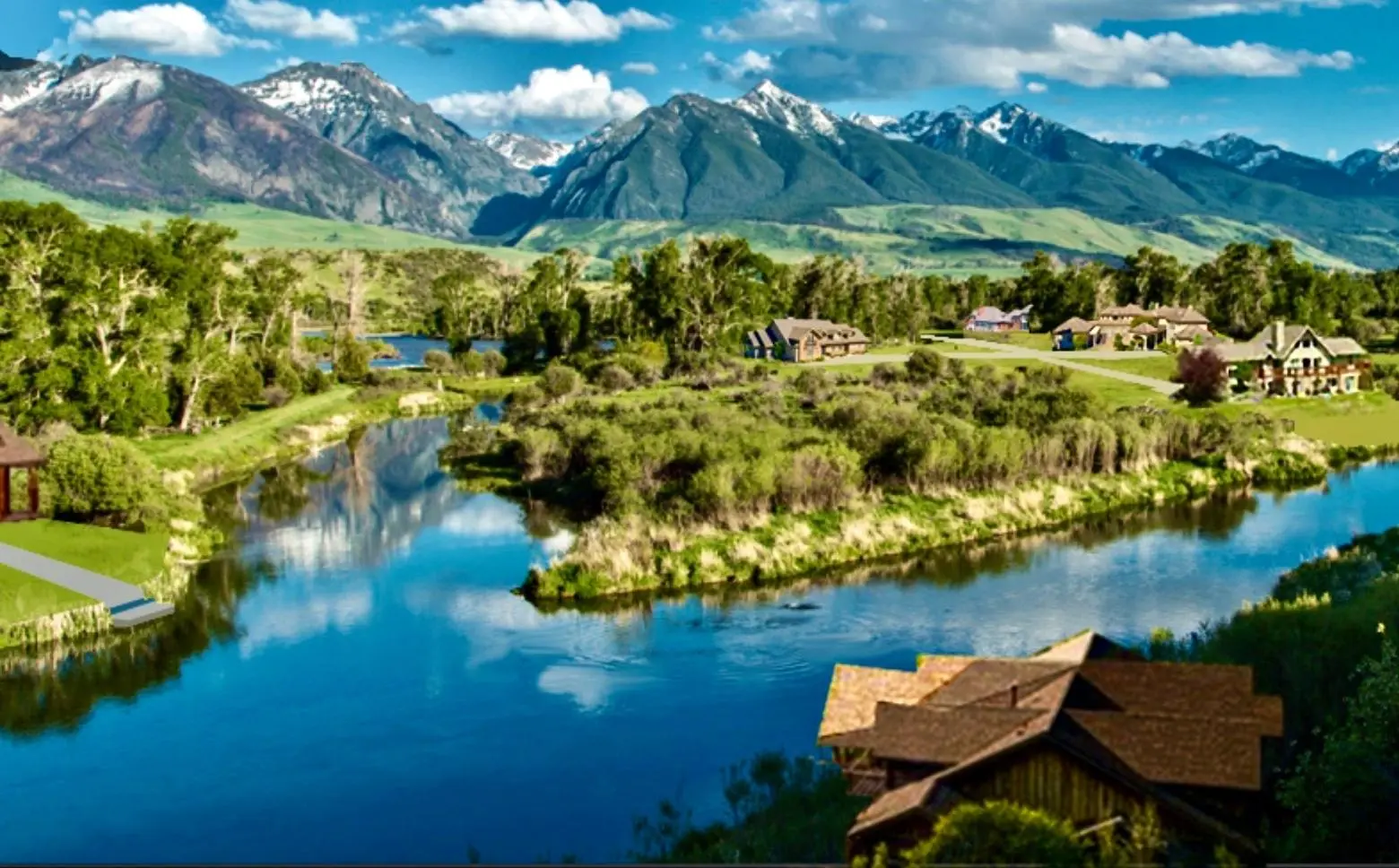
Livingston’s blend of railroad heritage, world class fly fishing, and a thriving arts scene creates a distinctive investment market along the Yellowstone River
2026 Economic Outlook
- Continued growth in fly fishing tourism and outfitter employment along the Yellowstone River corridor
- Livingston HealthCare continuing modest expansion as the area’s primary healthcare provider
- Growing overflow demand from buyers priced out of Bozeman’s escalating housing costs
- Sustained high net worth interest in Paradise Valley ranch and recreational properties
- Continued vitality in Livingston’s downtown arts and gallery district supporting tourism related retail
Investment Climate
Livingston offers a genuinely distinctive investment profile compared to both Bozeman’s tech driven growth and the Flathead Valley’s tourism economy. Successful Livingston investors tend to share these characteristics:
- Comfort with a smaller, less liquid market given Livingston’s modest population relative to Bozeman or Missoula
- Fly fishing and tourism fluency for investors targeting STR income tied to the angling season and Yellowstone visitation
- Value add appetite for Livingston’s significant historic housing stock built during the railroad era
- Bozeman overflow awareness recognizing Livingston’s growing appeal to buyers and renters priced out of Bozeman proper
- Patience with a smaller, more idiosyncratic market compared to the more standardized inventory found in larger Montana cities
Montana’s statewide landlord tenant framework applies equally in Livingston, with no rent control and a relatively efficient eviction process. Livingston’s local regulatory complexity centers primarily on STR registration and zoning, with somewhat different rules applying inside city limits versus unincorporated Park County, including Paradise Valley.
Historical Performance
| Period | Market Driver | Avg Annual Appreciation | Key Event |
|---|---|---|---|
| 2012-2016 | Post recession recovery, steady tourism growth | 3-5% | Livingston’s arts and gallery scene continues building national recognition |
| 2017-2019 | Early Bozeman overflow demand, growing fly fishing tourism | 5-8% | Livingston begins appearing on national lifestyle and relocation media coverage |
| 2020-2022 | Pandemic migration wave, remote work explosion | 18-26% | Significant celebrity and high net worth buyer interest in Paradise Valley properties |
| 2023-2024 | Rate shock, normalization | 2-4% | Moderate slowdown, somewhat less severe than Bozeman given Livingston’s lower base prices |
| 2025-2026 | Rate stabilization, continued Bozeman overflow | 5-7% (projected) | Renewed demand growth as Bozeman pricing continues pushing buyers toward Livingston |
Livingston’s appreciation has tracked a similar pattern to other Gallatin and Park County markets, with a dramatic pandemic era surge driven partly by celebrity and high net worth Paradise Valley purchases, followed by a more moderate normalization. Livingston’s appeal as a Bozeman alternative has only strengthened as Bozeman’s own prices have continued climbing.
Demographic Trends Driving Demand
- Fly Fishing Tourism – The Yellowstone River’s status as some of the finest trout fishing water in the country supports a robust guide, outfitter, and tourism related rental economy
- Bozeman Overflow Demand – Buyers and renters increasingly priced out of Bozeman turning to Livingston for a comparable Montana lifestyle at meaningfully lower cost
- Yellowstone National Park Gateway Effect – Proximity to the Gardiner entrance via Paradise Valley supports both tourism employment and scenic property demand
- Arts and Creative Economy – Livingston’s nationally recognized gallery and arts scene continues drawing creative professionals and remote workers
- High Net Worth Paradise Valley Interest – Continued celebrity and wealthy buyer interest in Paradise Valley ranch and recreational properties adds a distinctive premium tier to the broader market
- Historic Housing Stock – Livingston’s railroad era housing offers genuine character and value add potential at prices well below comparable historic stock in Bozeman
📚 New to real estate investing? Master the fundamentals with our professional course Learn more →
2. Neighborhood Hotspots
Livingston Investment Neighborhood Map
Interactive map of Livingston’s investment neighborhoods. Green stars show top hotspots, blue circles mark established markets, and orange circles highlight emerging areas.
Core Investment Neighborhoods
Detailed Submarket Analysis: Livingston
| Neighborhood | Price Range (SFH) | Cap Rate | Growth Drivers | Best Strategy |
|---|---|---|---|---|
| Historic Downtown Livingston | $380K to $580K | 5.0 to 6.5% | Value add stock, arts district, downtown walkability | Value add renovation, BRRRR |
| Yellowstone River Corridor | $500K to $900K | 4.5 to 7.0% | Fly fishing tourism, river access, scenic appeal | Seasonal STR, premium long term rental |
| South Side Livingston | $340K to $480K | 5.5 to 7.5% | Affordability, family rental demand | Cash flow focused buy and hold |
| Eastside Livingston | $400K to $580K | 5.0 to 6.0% | Established neighborhood, school and river proximity | SFH buy and hold |
| Westside Livingston | $380K to $550K | 5.0 to 6.5% | School proximity, established neighborhood | SFH buy and hold |
| Paradise Valley North | $700K to $2.5M+ | 2.5 to 4.5% | High net worth interest, scenic ranch and recreational appeal | Pure appreciation, premium STR or long term lease |
| Mission Field / Outer Livingston | $420K to $600K | 4.5 to 5.5% | Newer construction, growing inventory | Balanced returns, family rental |
| Clyde Park Adjacent | $280K to $420K | 5.0 to 6.5% | Lowest entry cost, agricultural character | Best cash flow in the broader Park County area |
Expert Insight: “Livingston is one of the few Montana towns where you genuinely have three different buyer pools competing for the same general market: working families who have been here for generations, creative professionals and remote workers drawn by the arts scene, and very high net worth buyers looking at Paradise Valley ranch properties. That mix makes pricing a little less predictable than Bozeman, but it also means there is real opportunity at multiple price points if you understand which buyer you are targeting.” – Park County based investment property advisor
3. Property Types
| Investment Goal | Best Property Type | Best Neighborhoods | Minimum Capital |
|---|---|---|---|
| Maximum Cash Flow | Small multi family or South Side SFH | South Side Livingston, Historic Downtown | $70,000+ |
| Maximum Appreciation | Paradise Valley ranch property | Paradise Valley North | $140,000+ |
| Balanced Returns | Value add SFH or duplex | Historic Downtown Livingston | $75,000+ |
| Seasonal STR Income | River corridor cabin or home | Yellowstone River Corridor | $100,000+ |
Don’t guess the costs. Our Complete Renovation & Remodeling Cost Guide covers 400+ pages of project by project breakdowns with real contractor pricing ranges.
4. Cost Analysis
Acquisition Cost Breakdown (Livingston)
| Expense Item | Typical Cost | Example ($480,000 Property) | Notes |
|---|---|---|---|
| Down Payment | 20 to 25% (investment) | $96,000 to $120,000 | Standard for investment properties; 20% possible with strong credit |
| Closing Costs | 2 to 3% of price | $9,600 to $14,400 | Title, escrow, lender fees, recording |
| General Inspection | $400 to $600 | $500 | Include well and septic inspection for Paradise Valley and rural fringe properties |
| Radon Test | $150 to $250 | $175 | Montana has elevated radon zones; mitigation systems run $900 to $1,600 |
| Initial Repairs / Touch Up | 0 to 10% of price | $0 to $48,000 | Highly variable; historic downtown stock often needs updates |
| Reserves (6 months) | 6 months expenses | $8,500 to $12,500 | Emergency fund for vacancy, snow load repairs, and winter heating system failures |
| TOTAL MINIMUM ENTRY | ~24 to 38% of value | $114,925 to $195,575 | More accessible than comparable Bozeman entry costs |
Sample Cash Flow Analysis: South Side Livingston Single Family Rental
| Item | Monthly | Annual | Notes |
|---|---|---|---|
| Rental Income (3BR whole house) | $1,700 | $20,400 | Strong demand from working families and healthcare employees |
| Less Vacancy (4%) | -$68 | -$816 | Low vacancy given limited housing stock relative to demand |
| Property Taxes | -$220 | -$2,640 | ~0.85% effective rate on $440K assessed value |
| Insurance | -$130 | -$1,560 | Standard landlord policy |
| Property Management (9%) | -$153 | -$1,836 | Recommended for out of state owners |
| Maintenance + CapEx | -$170 | -$2,040 | Budget 10% of rent for ongoing upkeep and reserves |
| Net Operating Income | $959 | $11,508 | Before mortgage |
| Mortgage ($440K purchase, 20% down, 7.0%, 30yr) | -$2,341 | -$28,092 | On $352,000 loan balance |
| CASH FLOW | -$1,382 | -$16,584 | Negative at full leverage; meaningfully improves with multi family or value add purchase |
| Cap Rate | 2.62% | NOI / Purchase Price | |
| Total Return (6% appreciation) | ~13% | Including equity, appreciation, principal paydown |
This single family example shows a modest negative carry at full leverage, similar to most Montana single family purchases at current rates. Livingston’s small multi family and historic downtown value add properties typically perform meaningfully better on a cash flow basis given their stronger cap rates, making them worth strong consideration for investors prioritizing day one income over premium location.
Expert Insight: “Livingston rewards investors who do their homework on which buyer pool they are targeting. A South Side single family home rents reliably to local families at modest but steady rates. A river corridor cabin can produce excellent income during fly fishing season but goes quiet in the winter. Knowing which game you are playing before you buy makes all the difference in how you underwrite the deal.” – Livingston based real estate investment advisor
5. Legal Framework
✅ Montana: A Relatively Landlord Friendly State With Local Park County Nuance
Montana’s statewide landlord tenant law is comparatively balanced and predictable, with no rent control and a reasonably efficient eviction process. Livingston’s main regulatory complexity centers on STR registration and zoning, which differs between city limits and unincorporated Park County, including Paradise Valley. Always consult a Montana licensed real estate attorney before acquiring rental property, particularly for any Paradise Valley or rural fringe purchase.
Montana State Landlord Tenant Law (Key Points)
- No Rent Control: Montana has no statewide or local rent control. Landlords may raise rents with proper notice and no political risk of future rent caps in Livingston specifically.
- Eviction Process: Non payment requires a 3 day pay or vacate notice. Material lease violations typically require a 14 day notice with a 3 day cure period for curable defaults. Uncontested evictions can complete in 3 to 6 weeks.
- Security Deposits: No statutory cap on the amount in Montana. Must be returned within 10 days if no deductions, or 30 days if deductions are itemized.
- Notice for Rent Increases: Generally requires the same notice period as termination of tenancy, typically a full rental period for month to month leases.
- Habitability Standards: Standard safe and habitable requirements; working heat is functionally essential given Montana winters.
- Entry Notice: Reasonable notice required for non emergency entry, generally interpreted as at least 24 hours.
City of Livingston and Park County Specifics
- STR Registration: The City of Livingston requires short term rental operators to register and comply with applicable zoning, with somewhat greater flexibility generally available in commercial and mixed use districts near downtown.
- Park County (Unincorporated): Areas outside city limits, including Paradise Valley and the Yellowstone River corridor north and south of town, generally fall under separate Park County zoning, which has historically been more permissive for STR use than the city.
- Floodplain Considerations: Given Livingston’s position along the Yellowstone River, properties near the river may fall within FEMA designated floodplain zones, affecting insurance requirements and certain construction or renovation rules.
- Historic District Guidelines: Certain downtown Livingston properties may fall under local historic preservation guidelines affecting exterior renovation work; verify before planning value add projects.
- Property Tax: Montana property taxes are assessed locally; Park County effective residential rates are moderate relative to national averages, though high net worth Paradise Valley purchases carry meaningfully higher absolute tax bills.
- Water Rights: Any Paradise Valley or rural Park County property purchase should include careful review of associated water rights documentation, an important and sometimes complex consideration in Montana rural real estate.
Useful Resources
- City of Livingston Planning Department: livingstonmontana.org
- Park County Planning and Zoning: parkcounty-mt.gov
- Montana Department of Revenue: mtrevenue.gov
- Montana Department of Natural Resources and Conservation (water rights): dnrc.mt.gov
| Regulation | City of Livingston | Unincorporated Park County | Investor Impact |
|---|---|---|---|
| Rent Control | None | None | Full flexibility to adjust rents to market across the entire county |
| Non Owner Occupied STR | Registration required, zoning dependent | Generally more permissive | Paradise Valley and river corridor properties outside city limits often better suited for pure STR strategy |
| Floodplain Restrictions | Applies to riverfront parcels | Applies to riverfront and Yellowstone adjacent parcels | Verify FEMA flood zone status before purchasing river corridor properties |
| Eviction Timeline | 3 to 6 weeks uncontested | 3 to 6 weeks uncontested | Faster than most coastal markets; reduces bad tenant financial exposure |
| Property Tax | Moderate | Moderate, higher absolute amounts for Paradise Valley estates | Budget for meaningfully higher tax bills on premium Paradise Valley acquisitions |
6. Step by Step Livingston Investment Playbook
Define Your Livingston Strategy
Livingston’s distinctive blend of working class, creative class, and high net worth buyer pools supports several clear strategies. Be clear on which of these you are executing:
Cash Flow Buy and Hold
Target single family homes or small multi family in South Side or historic downtown Livingston. Lease to working families and healthcare employees for steady, predictable cash flow.
Fly Fishing Season STR
Buy a cabin or home along the Yellowstone River Corridor. Capture strong seasonal income during the prime summer and fall fly fishing season, accepting more modest winter demand.
Historic Value Add / BRRRR
Buy dated railroad era homes in historic downtown Livingston. Renovate to capture both rent growth and strong creative class resale demand, at entry prices well below comparable Bozeman opportunities.
Paradise Valley Wealth Preservation
Purchase ranch or recreational property in Paradise Valley for long term appreciation and lifestyle value, supplemented by premium STR or long term lease income where zoning permits.
Build Your Livingston Team
Livingston’s smaller, more idiosyncratic market rewards investors who work with genuinely local specialists familiar with its distinctive buyer pools.
- Livingston Specialist Real Estate Agent: Should understand the difference between the working class South Side market, historic downtown value add opportunities, and the high net worth Paradise Valley segment.
- Montana Licensed Real Estate Attorney: For entity setup, lease compliance, water rights review for rural properties, and general purchase contract review.
- Livingston Area Property Manager: For out of state owners, a manager experienced with both standard long term rentals and seasonal fly fishing STR operations if pursuing that strategy.
- Local General Contractor: For value add work in historic downtown Livingston, contractors familiar with railroad era home systems and any local historic district guidelines are essential.
- Montana CPA: For depreciation strategy and entity structuring, particularly important for investors holding a mix of standard rental and Paradise Valley premium assets.
Expert Tip: If you are considering a Yellowstone River Corridor property for fly fishing season STR income, talk to a local outfitter or guide service about realistic seasonal occupancy patterns before finalizing your underwriting. The prime fishing season is more concentrated than many out of state buyers initially assume, and getting this timing right meaningfully affects your income projections.
Livingston Specific Due Diligence
Standard due diligence items plus these Livingston critical checks:
Physical Due Diligence
- Heating system inspection; furnace failure during Montana winters is a genuine emergency
- Roof and snow load assessment; verify roof can handle Park County’s seasonal snowfall
- Radon test given Montana’s elevated radon zones
- Floodplain status verification for any property near the Yellowstone River or its tributaries
- Well and septic inspection for properties outside Livingston city utility service, common in Paradise Valley and rural fringe areas
- Foundation and basement moisture check given freeze thaw cycles, particularly relevant for older historic downtown homes
Regulatory Due Diligence
- Confirm current zoning designation and any STR eligibility with City of Livingston or Park County
- Pull permits for any improvements, particularly unpermitted basement or addition conversions common in older historic downtown homes
- Check local historic district guidelines if purchasing in certain downtown Livingston blocks
- Review water rights documentation thoroughly for any Paradise Valley or rural property purchase
- Verify FEMA flood zone status and associated insurance requirements for river corridor properties
- Confirm current tenant lease terms and any active disputes if acquiring an occupied property
Competing in Livingston’s Market
Livingston’s market moves at a generally more measured pace than Bozeman, though Paradise Valley premium properties and well priced historic homes can move quickly. Strategies that work:
- Pre inspections: Conduct your inspection before submitting an offer in competitive situations, allowing clean non contingent offers that perform better when multiple offers do occur.
- Off market sourcing: Build relationships with Livingston focused agents who maintain seller networks, particularly for historic downtown value add opportunities that can move quickly once listed.
- Understand the buyer pool you are competing against: South Side and working class neighborhoods see mostly local and investor competition, while Paradise Valley and river corridor properties may draw national and international high net worth interest.
- Expand your search to outer Park County: Investors willing to consider Clyde Park or the lower Paradise Valley corridor access meaningfully better pricing and yield than core Livingston.
- Build local relationships: Livingston’s smaller, tighter knit real estate community rewards investors who show up consistently and build genuine local relationships with agents, contractors, and property managers.
7. Financing Options for Livingston
| Loan Type | Down Payment | Rate Premium | Best For | Livingston Note |
|---|---|---|---|---|
| Conventional Investment | 20 to 25% | +0.5 to 0.75% | Strong W-2 income, good credit | Livingston’s accessible pricing keeps most properties comfortably within conforming loan limits |
| Jumbo Investment | 25 to 35% | +0.75 to 1.5% | Paradise Valley premium properties | Often required for higher end Paradise Valley ranch and recreational property purchases |
| DSCR Loan | 20 to 25% | +1.0 to 2.0% | Self employed, multiple properties | Livingston’s solid cap rates make DSCR qualification achievable, especially for multi family and value add purchases |
| House Hacking (FHA) | 3.5% | Standard + MIP | Owner occupying one unit of a 2 to 4 unit property | Strong entry point for new investors given Livingston’s historic 2 to 4 unit inventory |
| Portfolio Loan | 20 to 30% | +0.5 to 1.5% | Multiple properties, self employed | Local Montana community banks active in financing Livingston and Park County rental properties |
Livingston Financing Reality: Most Livingston city limit properties fall comfortably within conforming loan limits, simplifying financing relative to Bozeman or Whitefish. Paradise Valley and other higher end recreational properties more frequently require jumbo financing given their premium pricing. DSCR loan qualification is generally achievable for Livingston’s solid cap rate properties, particularly small multi family and value add historic downtown purchases, giving investors building a portfolio meaningful flexibility beyond personal income documentation alone.
8. Frequently Asked Questions

Knowledge Quiz: Livingston Real Estate Investment
Open Quiz
5 quick questions on what you just learned about Livingston investing
1) What three distinctive buyer pools does the guide say compete in the Livingston market?
Answer: C
Livingston’s market features a genuinely distinctive mix of working class railroad heritage families, creative professionals drawn by the arts scene, and high net worth buyers interested in Paradise Valley ranch and recreational properties.
2) Which corridor does the guide identify as offering the strongest fly fishing tourism STR demand?
Answer: D
The Yellowstone River Corridor, given the river’s status among the finest trout fishing destinations in the country, offers Livingston’s strongest fly fishing tourism STR demand, particularly during the prime summer and fall angling season.
3) How does Livingston’s typical cap rate compare to Bozeman’s?
Answer: A
Livingston’s lower entry prices relative to achievable rents produce cap rates of 4.5 to 6.5%, generally better than Bozeman’s more compressed cap rate range, reflecting Livingston’s more accessible price point.
4) What is the typical eviction timeline in Montana for an uncontested non payment case?
Answer: A
Montana’s eviction process begins with a 3 day pay or vacate notice for non payment, followed by court filing, a hearing typically scheduled within one to three weeks, and prompt sheriff enforcement. Total uncontested timeline is typically 3 to 6 weeks, considerably faster than many coastal states.
5) Why should Paradise Valley generally be approached as a wealth preservation play rather than a high yield rental strategy?
Answer: B
Paradise Valley’s premium pricing, often $700,000 to well over $2,500,000, produces meaningfully lower rental yields in the 2.5 to 4.5% cap rate range, making it better suited as a long term appreciation and lifestyle play for most investors rather than a primary cash flow strategy.
Work With a Local Expert in Livingston
We are building a verified network of real estate professionals across every market we cover.

About Our Expert Network
We are finalizing partnerships with verified real estate professionals across every market featured on Builds and Buys. Each expert in our network is selected for their hands on investment experience, local market knowledge, and commitment to helping buyers and investors make sound decisions.
Our local specialists offer:
- Proven experience with investment and income producing properties
- Deep knowledge of local pricing, rental yields, and neighborhood dynamics
- Guidance on financing, legal structure, and due diligence
- Access to off market and pre market opportunities
- Full transaction support from search through closing
- Ongoing portfolio and property management referrals
Services Covered
- Property sourcing and acquisition
- Investment analysis and underwriting
- Buyer representation
- Market comparables and valuations
- Short term and long term rental strategy
- Value add and renovation guidance
- Legal and title referrals
- Financing and lender connections
- Property management referrals
- Insurance and inspection referrals
- 1031 exchange coordination
- Exit strategy planning
Get Connected or Join Our Network
Looking for a local expert to help with your investment? Reach out and we will connect you with the right professional for your market and strategy.
Are you a real estate professional with a track record working with investors? We are always expanding our network of verified local experts.
Contact us at support@buildsandbuys.com
Find Specialized Livingston Real Estate Professionals
Ready to Invest in Livingston?
Livingston offers Montana investors a genuinely distinctive opportunity: a working class railroad heritage town with world class fly fishing access, a thriving arts community, and growing exposure to Bozeman overflow demand, all at entry prices meaningfully below Bozeman despite the short commute distance. For investors who want real Montana character alongside solid cash flow potential and a credible appreciation story, Livingston represents one of the state’s most distinctive and increasingly compelling investment markets heading into 2026.
Continue Your Research
Montana State Guide
See how Livingston compares to Bozeman, Helena, Missoula, and other Montana markets.
Step by Step Invest
Complete framework for building a real estate investment strategy from scratch.
144-Lesson Course
University level real estate education covering financing, law, strategy, and management.
For further guidance, explore our State by State Investor guides, browse our expert articles, or follow our Step by Step Investment Guide.



