
📚 Built-in Shelving Cost Guide 2026
Add custom storage and architectural interest to your living room
💰 Built-in Shelving Cost Overview
Per Linear Foot
Basic Unit (8ft)
Full Wall (12ft)
Library Wall
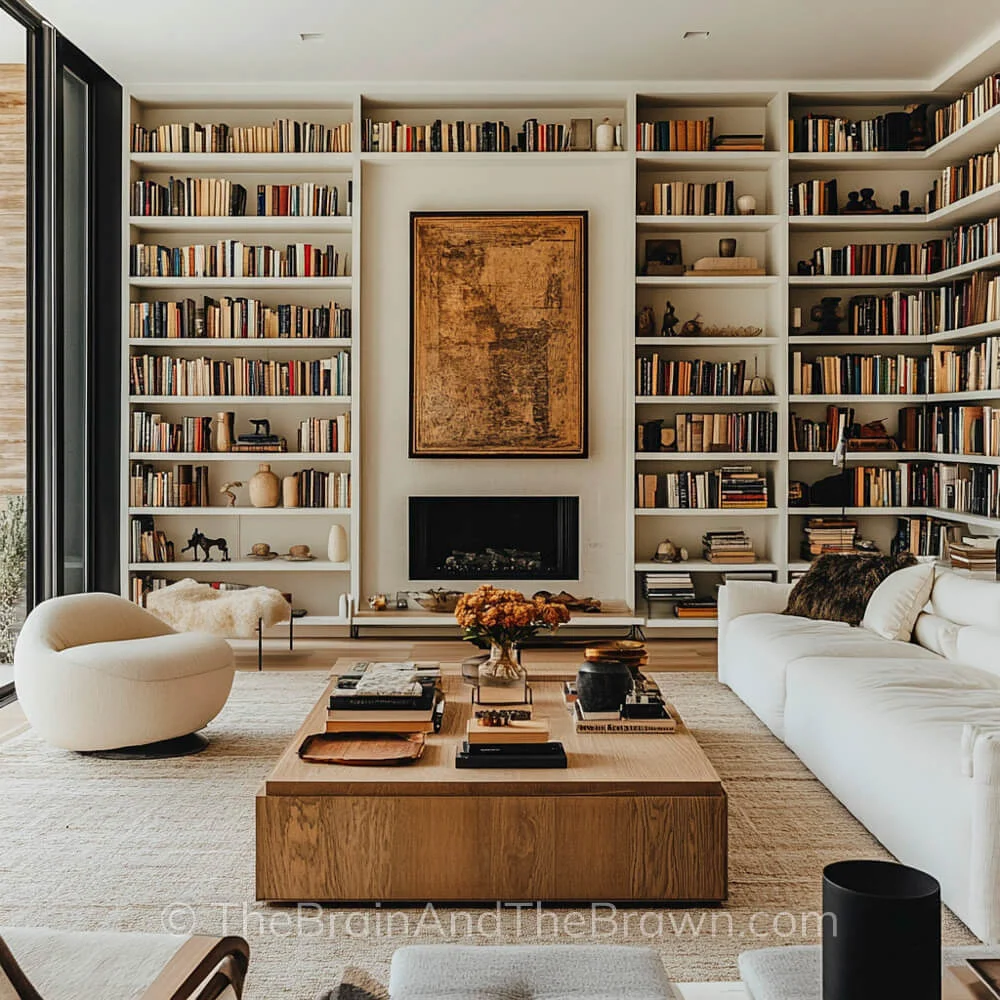
Built-in Shelving Example (Living Room)
Built-in Shelving Types & Pricing
Custom storage solutions for every style and budget
Built-in Shelving Styles & Costs
| Shelving Type | Materials | Labor | Total Cost/Linear Ft | Best For |
|---|---|---|---|---|
| Basic Open Shelves | $50 – $100 | $100 – $150 | $150 – $250 | Simple storage |
| Adjustable Shelving | $75 – $150 | $125 – $200 | $200 – $350 | Flexible use |
| With Base Cabinets | $150 – $250 | $150 – $250 | $300 – $500 | Hidden storage |
| Floor to Ceiling | $100 – $200 | $150 – $300 | $250 – $500 | Maximum storage |
| Around Windows | $125 – $225 | $175 – $275 | $300 – $500 | Window seats |
| Corner Units | $150 – $300 | $200 – $350 | $350 – $650 | Awkward spaces |
| Library Ladder System | $200 – $400 | $300 – $600 | $500 – $1,000 | Tall ceilings |
Critical Built-in Shelving Considerations
Weight capacity planning essential! Books weigh 15-30 lbs per linear foot – shelves must support 50+ lbs/ft safely. Wall attachment to studs mandatory – drywall anchors will fail. Standard shelf span: 32-36″ max without sagging. Thicker shelves (1.5″+) for heavy items. Adjustable shelves need quality hardware ($20-40 per standard). Consider future needs – fixed shelves limit flexibility. Electrical planning: add outlets/USB ($200-400 per location) during construction. Match existing trim exactly or contrast deliberately. Account for baseboard heating/AC vents. Level installation critical – even slight tilt obvious. Built-ins permanent – affects furniture placement forever!
Design Dimensions & Planning
Optimal measurements for function and aesthetics
Standard Shelving Dimensions
| Dimension | Standard Range | Recommended | Notes | Cost Impact |
|---|---|---|---|---|
| Shelf Depth | 8-16 inches | 12 inches | Books average 8-10″ | Deeper = more cost |
| Shelf Height | 10-16 inches | 12-13 inches | Accommodates most books | More shelves = more cost |
| Shelf Thickness | 3/4″ – 2″ | 1.25 – 1.5″ | Prevents sagging | Thicker = stronger |
| Bottom Shelf Height | 3-16 inches | 6-8 inches | Allows cleaning under | Standard |
| Top Clearance | 6-18 inches | 12 inches | Crown molding space | Affects total height |
| Unit Width | 24-48 inches | 32-36 inches | Single shelf span | Wider needs support |
Additional Features & Costs
| Feature | Cost Addition | Purpose | Popularity |
|---|---|---|---|
| LED Strip Lighting | $50 – $150/shelf | Display lighting | Very high |
| Glass Shelves | $100 – $300/shelf | Light, modern look | Contemporary homes |
| Cabinet Doors | $200 – $500/door | Hide clutter | Lower sections |
| Drawers | $300 – $600/drawer | Small item storage | Highly functional |
| Wine Rack Insert | $200 – $500 | Beverage storage | Entertainment areas |
| Desk Integration | $500 – $1,500 | Work space | Home offices |
| Crown Molding | $15 – $25/linear ft | Finished look | Traditional style |
Materials & Construction Methods
Choose the right materials for durability and style
Material Options & Characteristics
Solid Wood
Premium choice:
• Cost: $300 – $500/linear ft
• Oak, maple, cherry options
• Natural grain beauty
• Can refinish
• 50+ year lifespan
Best for: Traditional homes
Value: Highest
MDF/Painted
Most popular:
• Cost: $150 – $250/linear ft
• Smooth paint finish
• No grain telegraphing
• Consistent appearance
• Moisture sensitive
Best for: Modern aesthetic
Durability: 20-30 years
Plywood/Veneer
Good balance:
• Cost: $200 – $350/linear ft
• Real wood appearance
• Stable construction
• Paint or stain
• Less expansion
Quality: Furniture grade
Versatility: High
Laminate/Melamine
Budget option:
• Cost: $100 – $200/linear ft
• Pre-finished surface
• Easy cleaning
• Limited repair options
• Chip-prone edges
Best for: Utility areas
Lifespan: 15-20 years
Support Systems
Critical components:
• Standards & brackets: $20-50/set
• Floating shelf hardware: $30-80
• Dado joints: Strongest
• French cleats: Removable
• Hidden brackets: Clean look
Load: Plan for 50 lbs/ft
Safety: Over-engineer
Finish Options
Final appearance:
• Paint: $50-150 total
• Stain & seal: $100-250
• Lacquer: $200-400
• Two-tone popular
• Match existing trim
Sheen: Satin most common
Touch-ups: Plan for them
Installation Process & Timeline
What to expect during built-in shelving installation
Installation Timeline
| Phase | Duration | Activities | DIY Possible? |
|---|---|---|---|
| Design & Planning | 1-2 weeks | Measure, design, order materials | Yes |
| Wall Preparation | 1 day | Find studs, level, mark layout | Yes |
| Frame Construction | 1-2 days | Build support structure | Moderate skill |
| Shelf Installation | 1-2 days | Cut, fit, secure shelves | Yes with tools |
| Trim & Finishing | 1-2 days | Face frames, crown, base | Advanced skill |
| Paint/Stain | 2-3 days | Prime, paint, dry time | Yes |
| Total Project | 7-10 days | Including drying time | – |
Real Estate Investment Analysis
Built-in shelving ROI for different property strategies
Primary Residence
Excellent investment:
• 60-75% cost recovery
• Daily functionality
• Reduces furniture needs
Best type: Quality wood/MDF
Focus: Personal style
Rental Property
Limited appeal:
• Limits arrangement
• Maintenance issues
• Personal taste varies
Exception: Home offices
Alternative: Modular units
Fix & Flip
Strategic placement:
• Adds custom feel
• Great for staging
• 55-70% ROI
Focus: Living rooms, offices
Style: Neutral, modern
Design Styles & Configurations
Popular built-in shelving designs for every home
Built-in Shelving Styles
Traditional Library
Classic elegance:
• Dark wood stain
• Detailed millwork
• Crown molding
• Fluted columns
• Fixed shelves common
Cost: $400-600/linear ft
Appeal: Timeless
Modern Floating
Contemporary clean:
• Invisible brackets
• Thick shelves (2″+)
• Minimal supports
• LED integration
• Asymmetrical layouts
Cost: $200-400/linear ft
Trend: Very current
Fireplace Surround
Focal point framing:
• Symmetrical design
• TV accommodation
• Hidden storage below
• Display shelves above
• Integrated lighting
Cost: $3,000-8,000 total
Value: High impact
Home Office Wall
Productivity boost:
• File drawer integration
• Adjustable shelves
• Cable management
• Desk surface option
• Printer storage
Cost: $2,500-6,000
Demand: Very high
Display Shelving
Showcase design:
• Varied shelf heights
• Glass shelves option
• Accent lighting crucial
• Minimal visible support
• Back panel contrast
Cost: $300-500/linear ft
Use: Collections
Corner Solutions
Space maximizer:
• Angled shelves
• Rotating options
• Floor to ceiling
• Custom fit required
• Complex carpentry
Cost: $400-700/linear ft
Value: Uses dead space
Money-Saving Strategies
Get custom built-in look without the custom price
Smart Material Choices
MDF paints beautifully – looks like solid wood for 50% less. Buy lumber in standard dimensions to reduce waste. Plywood with edge banding mimics solid wood. Use pine for painted projects – knots add character. Shop cabinet supplier overstock.
DIY Components
Build basic boxes yourself, hire for finishing touches. Pre-made cabinet boxes save huge time. Paint/stain before installation easier. Simple straight cuts very DIY-friendly. Buy pre-made crown molding.
Design Simplification
Fixed shelves cheaper than adjustable. Open shelving eliminates door costs. Standard 12″ depth works for most items. Straight runs easier than angles. Skip fancy joinery – use brackets.
Hybrid Approach
Combine Ikea units with custom fronts. Use stock kitchen cabinets as bases. Add trim to basic shelving for built-in look. Floating shelves between built elements. Mix open and closed storage.
Strategic Splurges
Quality brackets prevent sagging. Soft-close hardware on doors worth it. Good primer crucial for painted MDF. LED strips add huge impact cheaply. Solid wood only where touched.
Alternative Options
Modular shelving systems look built-in. Wall-mounted track systems flexible. Ladder shelves for temporary solution. Industrial pipe shelving trendy and cheaper. Ready-to-assemble options improved greatly.
Frequently Asked Questions
Expert answers about built-in shelving
📚 Ready to Build Custom Shelving?
Connect with skilled carpenters and cabinetmakers

Knowledge Quiz: Built in Shelving Cost Guide
Open Quiz
5 quick questions - see how much you learned!
1) What is the typical average pricing range for built-in shelving per linear foot?
Answer: B
Your overview lists built-in shelving at $200 – $500 per linear foot for average pricing.
2) About how much do books weigh per linear foot (a key reason shelves must be engineered for strength)?
Answer: A
Your “Critical Considerations” notes books commonly weigh 15–30 lbs per linear foot, so shelves should be designed to safely support much more.
3) What is the recommended maximum shelf span (width) without sagging for typical built-ins?
Answer: C
Your guide lists a standard shelf span of 32–36 inches max without sagging (unless engineered thicker or supported).
4) Which built-in shelving style has the highest total cost per linear foot in your table?
Answer: D
The Library Ladder System is listed at $500 – $1,000 per linear foot, the highest range in your style table.
5) Which material is listed as the most popular choice for painted built-in shelving?
Answer: B
Your materials section calls MDF/Painted the most popular option due to its smooth, paint-ready finish and consistent look.
🏠 More Living Room Improvement Guides
Explore our complete living room renovation library
View All Living Room Guides (20) ▼
🏠 Flooring & Surfaces
💡 Lighting & Electrical
🪟 Windows & Doors
🔥 Fireplace & Focal Points
📚 Built-Ins & Storage
🏛️ Architectural Features
Last updated: Jan 2026
Sources: National Association of Home Builders, American Woodworking Guild, Cabinet Makers Association, Fine Woodworking Magazine, Architectural Woodwork Institute Standards, Professional Organizers Network, Builds and Buys Research Team



