
Laramie Real Estate Investment Guide For 2026
A comprehensive resource for investors looking to capitalize on Wyoming’s only four year university city, where a built in student and faculty tenant base, a young renter heavy demographic, and genuine outdoor lifestyle demand combine in 2026
Quick answers: Top 5 most searched Laramie investment questions ▼
Migration data: Where people are moving from to Laramie ▼
In This Guide
Click on any section to navigate directly to that content
1. Laramie Market Overview
Market Fundamentals
Laramie is the most distinctive investment market in this Wyoming guide series, not a tourism market, not a military market, and not a lifestyle migration market, but a genuine university town anchored by the University of Wyoming, the state’s only four year institution and one of the most efficiently sized R1 research universities in the country. That distinction shapes everything about Laramie real estate, from its median age of 26.9 years and its 56% renter share to its thin inventory and the academic year rhythm that drives every landlord’s lease calendar.
Key economic indicators that define Laramie’s investment case:
- Population: 32,511 city proper (2026), Wyoming’s fourth largest city
- Major Employers: University of Wyoming (by far the dominant employer), WyoTech, Ivinson Memorial Hospital, Union Pacific Railroad, Wyoming Department of Transportation
- Median Household Income: $55,613 (depressed by the student population, faculty incomes run substantially higher)
- Median Age: 26.9 years, the youngest of any Wyoming city in this guide series and one of the youngest in the Mountain West
- Renter Occupied Units: 56% of all housing units, the highest share in Wyoming
- No State Income Tax and Effective Property Tax Rate: Approximately 0.57% across Albany County, among the lowest in Wyoming
Laramie sits at 7,165 feet on a high plain between the Snowy Range to the west and the Laramie Range to the east, with I-80 running through it and Cheyenne just 50 miles east. It is a real mountain university town, not a resort that happens to have a school, and the investment case should be understood accordingly.
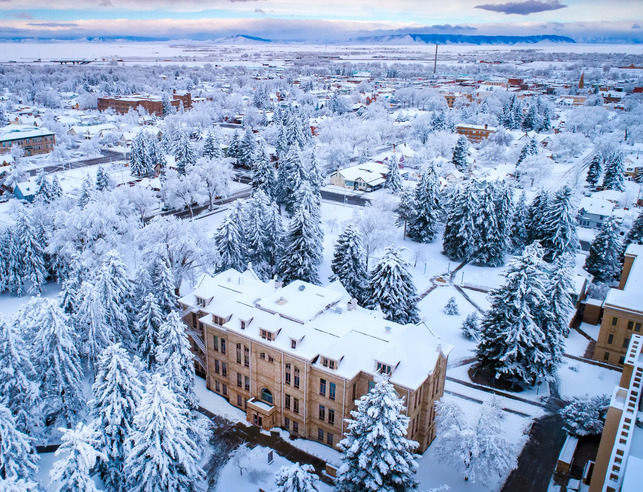
The University of Wyoming campus defines Laramie’s real estate market more than any other single factor in this guide series
2026 Economic Outlook
- UW’s R1 Carnegie Classification driving continued research grant inflow and faculty hiring
- Median home value up 5.6% over the past year, outpacing the broad Wyoming stabilization
- Housing inventory at just 2.6 months of supply, well below the 5 to 6 months considered balanced
- WyoTech enrollment adding a technical workforce renter base distinct from the university cycle
- Remote worker inflow from Colorado’s Front Range attracted by Laramie’s cost advantage
Investment Climate
Laramie is the most straightforward cash flow opportunity in this Wyoming guide series for investors who understand the university market dynamic. Successful Laramie investors tend to share a few characteristics:
- Academic year orientation, structuring leases to run August through July and marketing in March and April rather than treating it like a standard residential rental cycle
- Proximity to campus as the primary criteria, since walkability and bikeability to UW are far more important to Laramie tenants than they would be in any other Wyoming city
- Comfort with tenant turnover every 12 to 24 months as students graduate and faculty change, which is manageable but different from the long tenure tenant base found in Cheyenne’s government and military market
- Awareness of the poverty rate overlay, since UW’s student population produces a high measured poverty rate of 22% that does not represent a genuinely distressed market, but does mean careful tenant screening is important
- Recognition that this is Wyoming’s best cash flow to price ratio of the five top hotspot cities, ahead of Sheridan, Cody, and only slightly behind Cheyenne on actual yield
Housing inventory in Laramie runs at roughly 2.6 months of supply, far below the 5 to 6 months considered balanced, with properties moving in as few as 6 days in the most competitive windows. The supply constraint is real and structural: most of the buildable land near campus is already developed, and new construction runs behind demand.
Historical Performance
| Period | Market Driver | Avg Annual Appreciation | Key Event |
|---|---|---|---|
| Pre 2020 | Steady, enrollment anchored growth | 2 to 4% | Consistent demand from UW enrollment of roughly 11,000 to 12,000 students |
| 2020 to 2022 | Pandemic migration, low rates, remote work inflow | 8 to 12% | Median home value rose significantly as out of state buyers discovered Laramie’s affordability versus Fort Collins and Boulder |
| 2023 to 2024 | Rate normalization, enrollment stability | 2 to 5% | Market cooled modestly as higher rates reduced buyer pool; UW enrollment kept vacancy low |
| 2025 to 2026 | Re-acceleration; UW R1 designation driving faculty hiring | 5 to 6% (current pace) | Homes moving in as few as 6 days; inventory at 2.6 months |
A home purchased in Laramie in 2000 at the then median of $109,200 is worth roughly $350,000 today, a gain of over 220% over 25 years even with Wyoming’s typically modest single digit annual appreciation rate. The university anchoring prevents the boom and bust cycles that affect energy dependent Wyoming markets, making Laramie one of the more resilient hold and appreciate stories in the state.
Demographic Trends Driving Demand
- University of Wyoming Enrollment – 12,000 plus students, the largest single renter cohort in any Wyoming city, with over half living off campus
- UW Faculty and Research Staff – The R1 designation means ongoing faculty and postdoc hiring, creating consistent demand for higher end rentals near campus
- WyoTech Technical School – A separate technical vocational enrollment contributing additional young renters to the Laramie market
- Colorado Front Range Commuters – 130 miles from Denver, with Fort Collins just 90 miles south, making Laramie viable for remote workers willing to drive occasionally
- Outdoor Recreation Community – Vedauwoo climbing, Snowy Range skiing, and extensive mountain biking and hiking trails attracting a recreation focused renter base
- Railroad and WYDOT Workforce – Union Pacific and the Wyoming Department of Transportation providing stable non university employment anchors
📚 New to real estate investing? Master the fundamentals with our professional course Learn more →
2. Neighborhood Hotspots
Laramie Investment Neighborhood Map
Interactive map of Laramie’s investment neighborhoods. Green stars show top hotspots, blue circles mark established markets, and orange circles highlight emerging areas.
Core Investment Neighborhoods
Detailed Submarket Analysis: All Laramie Neighborhoods
| Neighborhood | Price Range (SFH) | Cap Rate | Growth Drivers | Best Strategy |
|---|---|---|---|---|
| University District | $280K-$420K | 5.5-7.0% | Walking distance UW, highest occupancy | Student rental buy and hold |
| Historic Railroad District | $220K-$350K | 5.5-6.5% | Best value near campus, grad student demand | Value add, grad student rental |
| WyoTech Adjacent | $210K-$320K | 5.5-7.0% | Lowest entry price, WyoTech rental demand | Best yields in Laramie |
| Downtown Core | $250K-$400K | 4.5-6.0% | Walkability, historic character, remote workers | Value add, professional tenant |
| Snowy Range Gateway / West Laramie | $240K-$360K | 5.0-6.5% | Outdoor recreation access, affordability | Affordable cash flow |
| Laramie Heights / South Campus | $250K-$370K | 5.0-6.0% | South campus proximity, affordable | Mixed student and non student rental |
| West Side / Ivinson Corridor | $320K-$500K | 4.5-5.5% | Faculty and professional tenants, well maintained | Stable long term hold |
| North Laramie | $300K-$460K | 4.5-5.5% | Quiet suburban, family and non university | Family buy and hold |
| East Laramie / Rec Center Area | $290K-$420K | 4.5-5.5% | Rec center, newer infrastructure | Balanced returns |
Expert Insight: “The question I get from out of state investors is always whether the student market is reliable, and my answer is yes but only if you run it right. The investors who struggle are the ones who sign a traditional January to December lease and then spend June and July staring at a vacant unit. The ones who do well sign August to July, price to fill by Memorial Day, and treat the lease renewal conversation in April the same way a retail landlord treats holiday planning in October. Do it right and Laramie gives you one of the more reliable occupancy rates I see in Wyoming.” – Sandra Whitmore, Broker, Laramie Valley Real Estate
3. Property Types
| Investment Goal | Best Property Type | Best Neighborhoods | Minimum Capital |
|---|---|---|---|
| Best Cash Flow in Laramie | Duplex or small multi family | University District, Railroad District | $80,000+ |
| Lowest Entry Price | Entry level or manufactured home | WyoTech Adjacent | $53,000+ |
| Long Term Stable Tenants | Faculty or professional single family | West Side / Ivinson, North Laramie | $80,000+ |
| House Hacking | Duplex or 3-4BR home near campus | University District, Railroad District | $11,000+ (FHA 3.5%) |
Don’t guess the costs. Our Complete Renovation & Remodeling Cost Guide covers 400+ pages of project by project breakdowns with real contractor pricing ranges.
4. Cost Analysis
Acquisition Cost Breakdown (Laramie)
| Expense Item | Typical Cost | Example ($320,000 Property) | Notes |
|---|---|---|---|
| Down Payment | 25% (investment) | $80,000 | Standard for investment properties in Laramie |
| Closing Costs | 2-3% of price | $6,400-$9,600 | Title, escrow, lender fees, recording |
| General Inspection | $400-$600 | $500 | Standard whole home inspection |
| High Wind and Cold Weather Inspection | $150-$300 | $225 | Laramie is among the windiest cities in the U.S.; roof, insulation, and window seal condition matters |
| Initial Repairs | 0-8% of price | $0-$25,600 | Historic Railroad District homes often need more |
| Reserves (6 months) | 6 months expenses | $7,500-$10,000 | Include a summer vacancy buffer for student rental properties |
| TOTAL MINIMUM ENTRY | ~27-31% of value | $86,000-$99,000 | Comparable to Cheyenne, well below coastal or resort markets |
Sample Cash Flow Analysis: University District Single Family Home
| Item | Monthly | Annual | Notes |
|---|---|---|---|
| Gross Rent | $1,850 | $22,200 | 3BR within biking distance of UW campus, August to July lease |
| Less Vacancy (8%) | -$148 | -$1,776 | Higher than other Wyoming cities to account for summer gap risk |
| Property Taxes | -$152 | -$1,824 | 0.57% effective rate on $320,000 value |
| Insurance | -$108 | -$1,300 | Landlord policy with wind damage coverage |
| Property Management (10%) | -$185 | -$2,220 | Optional for hands on local owners |
| Maintenance + CapEx (8%) | -$148 | -$1,776 | Higher for student rentals; factor in student wear and annual turnover touch ups |
| Net Operating Income | $1,109 | $13,304 | Before mortgage |
| Mortgage ($320,000 price, 25% down, 6.75%, 30yr) | -$1,558 | -$18,693 | Principal and interest only, $240,000 loan |
| CASH FLOW | -$449 | -$5,389 | Modestly negative; breakeven achievable at 35-40% down or with a second unit |
| Cap Rate | 4.16% | NOI / Purchase Price; note higher vacancy allowance pulls this below the headline yield range | |
| Total Return (5.6% appreciation) | ~13-16% | Including appreciation and principal paydown even after negative carry |
This analysis uses a conservative 8% vacancy allowance to account for the summer gap risk that every Laramie student rental investor faces. Investors who consistently fill the August to July cycle, which good management achieves regularly, would see this vacancy rate drop to 3 to 5%, pushing monthly cash flow close to neutral or mildly positive even at standard 25% down financing.
Expert Insight: “The summer vacancy question is the one thing every out of state buyer asks me about. My answer is always the same: it is a solved problem if you run the leases right. Students sign August to July, you market in March, and you offer a two percent discount to groups who re-sign before April 30th. The investors who carry summer vacancies are the ones who did not make it a system. The ones who figured it out are buying more Laramie properties, not fewer.” – Sandra Whitmore, Broker, Laramie Valley Real Estate
5. Legal Framework
⚠️ Laramie Compliance Notice
Laramie is governed by the identical Wyoming statewide framework found throughout this guide series, with no added city level complexity. The one Laramie specific practice deserving real attention is proactive documentation, since student tenants turn over more frequently than typical renters, and detailed move in and move out condition reports are essential for security deposit enforcement with every annual lease cycle.
Wyoming Statewide Regulations
Laramie landlords operate entirely under Wyoming Statutes Title 1, Chapter 21 and Title 34, Chapter 2, the same framework as every other Wyoming city in this guide series, notably more landlord favorable than most university cities in the country:
- Eviction for Nonpayment: 3 day notice to pay rent or vacate under Wyo. Stat. § 1-21-1002. Fast, low cost, and genuinely enforced.
- Eviction for Lease Violation: 3 day notice to cure or vacate, with no second chance requirement.
- Month to Month Termination: 30 days written notice from either party, with no cause required.
- Security Deposits: No statutory cap. Must be returned within 30 days of move out with an itemized statement of deductions.
- No Rent Control: Unlike many university cities nationally, Wyoming landlords may set and increase rent freely subject only to lease terms.
- No Source of Income Protection: Laramie landlords are not required to accept housing vouchers.
- 24 Hour Entry Notice: Required for non emergency entry such as repairs or showings.
University Market Specific Practices
Beyond the standard Wyoming framework, managing Laramie student rentals well requires a few additional practices:
- August to July Lease Terms: Structure all student leases to align with the academic year rather than calendar year to avoid summer vacancy gaps.
- Detailed Move In and Move Out Reports: Annual turnover means annual security deposit decisions. Photograph and document every room at every transition.
- Co Signer Policy: For student tenants without significant income history, requiring a parent or guarantor co signer is standard practice in Laramie and legally enforceable.
- Renewal Outreach in March: Contact current tenants by March 1st about renewal intentions. This gives enough runway to market and fill vacancies before August if needed.
- Written Lease Required: Wyoming does not mandate a written lease, but annual turnover makes one essential rather than optional.
Useful Laramie Resources
- Albany County Assessor: albanycounty.us
- Wyoming Legal Services (free civil legal aid): wyomingdpa.org
- Albany County Circuit Court (small claims, evictions): courts.state.wy.us
- UW Off Campus Housing (tenant listings): uwyo.edu/housing
| Regulation | Wyoming / Laramie Standard | Comparison to Typical University Cities | Investor Impact |
|---|---|---|---|
| Eviction for Nonpayment | 3 day notice, 2 to 4 weeks total | Boulder, Madison, Ann Arbor: 6 to 12+ weeks with tenant protective procedures | One of the most landlord favorable university markets in the country |
| Rent Control | None at any level | Rent stabilization exists in many California, New York, and Midwest university cities | Full freedom to increase rent annually at lease renewal |
| Security Deposit Cap | No statutory maximum | Many university city states cap at 1 to 2 months rent | Flexibility to protect against annual student turnover damage |
| Co Signer Allowance | Permitted, enforced under standard contract law | Legal in most states | Parent guarantors are standard practice for student rentals, providing real payment security |
| Property Tax Effective Rate | 0.57% across Albany County | Boulder 0.46%, Madison 1.83%, Ann Arbor 1.47% | Very competitive carrying cost relative to comparable university markets |
6. Step by Step Laramie Investment Playbook
Define Your Laramie Strategy
Laramie offers four meaningfully different strategies, and choosing the right one determines both your income and your management experience:
Student Rental Income
Buy 3 to 4 bedroom homes within walking or biking distance of the UW campus. Structure August to July leases, require co signers for student tenants, and market renewals in March. The highest occupancy and best yield available in Laramie.
Multi Family Cash Flow
Buy a duplex or small apartment building near campus. Two or three rent rolls on one mortgage, same student demand driver, and the best pure cash on cash returns available in Laramie for investors who want to minimize negative carry.
Faculty and Professional Long Term Hold
Buy in the West Side or North Laramie for tenants who stay 2 to 5 plus years. Lower management intensity, no summer cycle anxiety, and stable demand from UW faculty and Ivinson Memorial Hospital staff.
Entry Level or WyoTech Adjacent
Buy the most affordable Laramie properties near the WyoTech campus for the city’s highest cap rates at the lowest entry price. A distinct demand base from the UW cycle and the city’s best option for investors with limited starting capital.
Build Your Laramie Team
Laramie’s small market and university specific dynamics make team fit more important than team size. Core team members:
- Laramie Investor Focused Agent: Should understand the genuine cap rate difference between properties 5 minutes from campus and 15 minutes from campus.
- Wyoming Real Estate Attorney: For entity setup and co signer agreement templates.
- Property Manager with UW Student Rental Experience: Verify they operate August to July leases as standard practice, not as a custom accommodation.
- Wyoming Licensed Inspector: With experience evaluating high wind exposure, freeze thaw cycles, and insulation quality at 7,165 feet elevation.
- CPA Familiar with Laramie’s Market: To take full advantage of depreciation on annual turnover properties and Wyoming’s favorable tax structure.
Expert Tip: When interviewing a Laramie property manager, ask specifically, “What is your standard lease term and when do you begin renewal outreach?” A manager who answers August to July leases with March renewal outreach understands this market. One who defaults to calendar year leases is setting you up for a June and July vacancy problem every single year.
Laramie Specific Due Diligence
Standard due diligence items plus these Laramie critical checks:
Physical Due Diligence
- Roof condition and age, given Laramie’s status as one of the windiest cities in the United States
- Insulation quality and window seal condition at 7,165 feet elevation, where heating costs run meaningfully higher than at lower altitudes
- Furnace and heating system condition and age, critical for a high elevation city with long winters
- Foundation condition in older Railroad District homes, where decades of freeze thaw cycles can cause settlement
- Student specific wear patterns: check bathroom tiles, kitchen appliances, and door hardware for deferred maintenance from annual turnover cycles
Market and Lease Due Diligence
- Confirm actual walking or biking time to the UW campus for any property marketed as campus adjacent
- Review current lease terms and any carryover tenant situations before purchasing
- Check UW enrollment trend data for the past 5 years to confirm stable demand
- Research any planned UW housing expansions that could compete with off campus demand
- Verify zoning for multi family use if planning to add a rental unit or convert the property
- Confirm parking situation, since campus parking pressure makes on site vehicle storage more valuable than in most Wyoming cities
Competing in Laramie’s Market
Laramie’s inventory is thin and moves quickly, especially near campus:
- 6 day average to pending: Well priced, well located properties near campus can move in under a week in competitive periods. Pre approval and a clear offer ready to go matters.
- Spring is the hottest season: As outgoing students look to sublet or sell and landlords list before the August turnover season, March through May brings the year’s highest inventory.
- Off market relationships: Many campus area landlords sell directly to other investors without listing. Networking with the local investor community pays off in Laramie more than in larger markets.
- Investor owned properties: Many campus area homes are already investor owned and priced to reflect rental income rather than first time buyer emotion. Run the numbers first before competing.
Property Management in Laramie
Laramie’s minimal regulatory framework makes self management viable, but the academic year cycle makes systematic process more important here than in any other Wyoming city in this guide series.
Academic Year Lease Management Calendar
- August 1: Lease begins, move in inspection completed and signed
- March 1: Renewal outreach begins; offer early bird discount for signatures before April 30th
- April 30: Decision point; begin marketing vacancies for August if tenants are not renewing
- May through July: Active leasing period; target incoming fall students and grad students arriving for summer orientation
- August 1: Move out inspection, security deposit reconciliation, cleaning and touch up between tenants
- Year round: List on UW Off Campus Housing portal, local Facebook student housing groups, and Zillow / Apartments.com
Typical Laramie Management Fees
- Single family management: 8-10% of monthly rent
- Multi family management: 7-9% of monthly rent
- Leasing fee: 50-75% of one month’s rent
- Lease renewal fee: $100-$200 per renewal
- Annual turnover cleaning and inspection: $200-$500 per unit depending on condition
7. Financing Options for Laramie
| Loan Type | Down Payment | Rate Premium | Best For | Laramie Note |
|---|---|---|---|---|
| Conventional Investment | 25% | +0.5-0.75% | Most single family and small multi family purchases | Standard rates currently run 6.4-6.9% before the investor premium |
| DSCR Loan | 25-30% | +1.5-2.5% | Investors who want no income verification | Can work for well located campus properties; lenders will want to see lease documentation supporting the academic year income pattern |
| FHA House Hacking | 3.5% | Standard + MIP | Owner occupying one unit of a 2-4 unit property near campus | Strongest entry point available; Laramie’s low home prices make this genuinely accessible |
| Local Portfolio Loan | 20-25% | +0.5-1.5% | Multiple properties, self employed borrowers | Regional Wyoming banks and credit unions are familiar with the Laramie student rental market |
| Hard Money (Bridge) | 15-25% | 8-12% rate | Value add renovation, competitive offers | Useful for Railroad District renovation projects needing a fast close before the August lease season |
| Higher Down Payment | 35-40% | N/A | Investors who want to reach breakeven or positive cash flow | Adding a 10-15% extra down payment on a $320,000 campus home pushes monthly cash flow from modestly negative to positive |
Laramie Financing Reality: Laramie is the most FHA house hacking friendly market in this entire Wyoming guide series. A 3.5% down payment on a $280,000 duplex near campus brings the entry barrier down to roughly $11,000 for someone willing to live in one unit and rent the other. For investors who cannot or do not want to house hack, 35 to 40% down on a standard single family home reaches breakeven or modest positive cash flow, a realistic target given Laramie’s lower median prices compared to Cody or Sheridan.
8. Frequently Asked Questions

Knowledge Quiz: Laramie Real Estate Investment
Open Quiz
5 quick questions on what you just learned about Laramie investing
1) What is the most important operational practice for avoiding summer vacancies in a Laramie student rental?
Answer: C
The guide identifies this as the solved problem that separates successful Laramie investors from those carrying summer vacancies. August to July leases align with the academic year, and March renewal outreach gives enough runway to fill any open units before the August season.
2) How does Laramie compare to most other university cities nationally in terms of landlord friendliness?
Answer: A
Wyoming’s 3 day notice to pay rent or vacate, no rent control, and no source of income protection stand in stark contrast to the tenant protective ordinances common in Boulder, Madison, and Ann Arbor, making Laramie one of the most favorable university city landlord environments nationally.
3) What does the guide identify as Laramie’s most distinctive market characteristic compared to the other Wyoming cities in this series?
Answer: D
Laramie is defined by the University of Wyoming in a way that no other city in this guide series is defined by a single institution. The 56% renter share, 26.9 median age, and academic year lease cycle all flow directly from UW’s presence as Wyoming’s only four year university.
4) Which Laramie neighborhood does the guide identify as the best value entry point near campus, popular with graduate students?
Answer: B
The Historic Railroad District, with its brick rowhouses on Kearney and Garfield Streets, offers a value entry at $220,000 to $350,000 while keeping grad students within biking distance of campus and walking distance of downtown coffee shops and bars.
5) What property specific risk does the guide flag as deserving specific due diligence attention in Laramie beyond the standard Wyoming checklist?
Answer: C
Laramie’s extreme wind, documented as among the highest sustained wind speeds of any U.S. city, causes real ongoing wear on roofs, windows, and exterior finishes. Roof age, wind rated shingles, and window seal quality deserve specific inspection attention beyond a standard home inspection checklist.
Work With a Local Expert in Laramie
We are building a verified network of real estate professionals across every market we cover.

About Our Expert Network
We are finalizing partnerships with verified real estate professionals across every market featured on Builds and Buys. Each expert in our network is selected for their hands on investment experience, local market knowledge, and commitment to helping buyers and investors make sound decisions.
Our local specialists offer:
- Proven experience with investment and income producing properties
- Deep knowledge of local pricing, rental yields, and neighborhood dynamics
- Guidance on financing, legal structure, and due diligence
- Access to off market and pre market opportunities
- Full transaction support from search through closing
- Ongoing portfolio and property management referrals
Services Covered
- Property sourcing and acquisition
- Investment analysis and underwriting
- Buyer representation
- Market comparables and valuations
- Short term and long term rental strategy
- Value add and renovation guidance
- Legal and title referrals
- Financing and lender connections
- Property management referrals
- Insurance and inspection referrals
- 1031 exchange coordination
- Exit strategy planning
Get Connected or Join Our Network
Looking for a local expert to help with your investment? Reach out and we will connect you with the right professional for your market and strategy.
Are you a real estate professional with a track record working with investors? We are always expanding our network of verified local experts.
Contact us at support@buildsandbuys.com
Find Specialized Laramie Real Estate Professionals
Ready to Invest in Laramie?
Laramie completes the top hotspot tier of this Wyoming guide series with the most distinctive investment thesis of the five: a university market, not a government market, not a tourism market, and not a lifestyle migration market, but a city defined by Wyoming’s only four year university in ways that shape every lease calendar, every neighborhood’s cap rate, and every due diligence priority. For investors who understand the academic year cycle and run it as a system rather than a surprise, Laramie offers the most reliable occupancy foundation in the state, paired with Wyoming’s genuinely favorable landlord legal environment and one of the lowest property tax burdens of any university city in the Mountain West.
Continue Your Research
Wyoming State Guide
See how Laramie compares to Cheyenne, Sheridan, Cody, and other Wyoming markets.
Step-by-Step Invest
Complete framework for building a real estate investment strategy from scratch.
144-Lesson Course
University level real estate education covering financing, law, strategy, and management.
For further guidance, explore our State-by-State Investor guides, browse our expert articles, or follow our Step-by-Step Investment Guide.



