Grand Junction Real Estate Investment Guide For 2026
A comprehensive resource for investors targeting Colorado’s Western Slope capital, where remote worker migration, outdoor recreation tourism, Mesa State University enrollment, energy sector employment, and price points 35 to 45% below Denver create genuine cash flow opportunities unavailable anywhere on the Front Range
Quick answers: Top 5 most searched Grand Junction investment questions ▼
Migration data: Where people are moving from to Grand Junction ▼
In This Guide
Click on any section to navigate directly to that content
1. Grand Junction Market Overview
Market Fundamentals
Grand Junction is Colorado’s Western Slope capital and the economic engine for a vast region stretching from the Roaring Fork Valley to the Utah border. Sitting at the confluence of the Colorado and Gunnison rivers, Grand Junction has historically been defined by its energy sector economy and geographic isolation from the Front Range. Both of those characteristics are actively working in investors’ favor in 2026.
The energy sector provides a stable employment base. The geographic isolation, once a valuation drag, has become an asset as remote work eliminates the commute penalty and workers actively seek out affordability, outdoor access, and quality of life that Grand Junction delivers at a fraction of Denver’s cost. With 300 days of sunshine annually, world class mountain biking on the Lunch Loops and Kokopelli Trail, proximity to Colorado National Monument, Arches National Park, and the Colorado River, and a downtown that has invested significantly in restaurants, breweries, and arts infrastructure, Grand Junction is attracting a new class of resident and tenant.
- Population: 68,000+ city, 160,000+ Mesa County, 300,000+ regional trade area
- Major Employers: St. Mary’s Medical Center, Colorado Mesa University, Mesa County government, energy sector (Chevron, Encana, Williams), Grand Junction Regional Airport, agriculture
- Median Household Income: $56,000 (growing with remote worker influx)
- CMU Enrollment: 12,000+ and growing, creating consistent student rental demand
- Renter Percentage: 38% of households, solid demand base
- Airport: GJT offers direct service to Denver, Phoenix, Dallas, and Las Vegas, reducing isolation
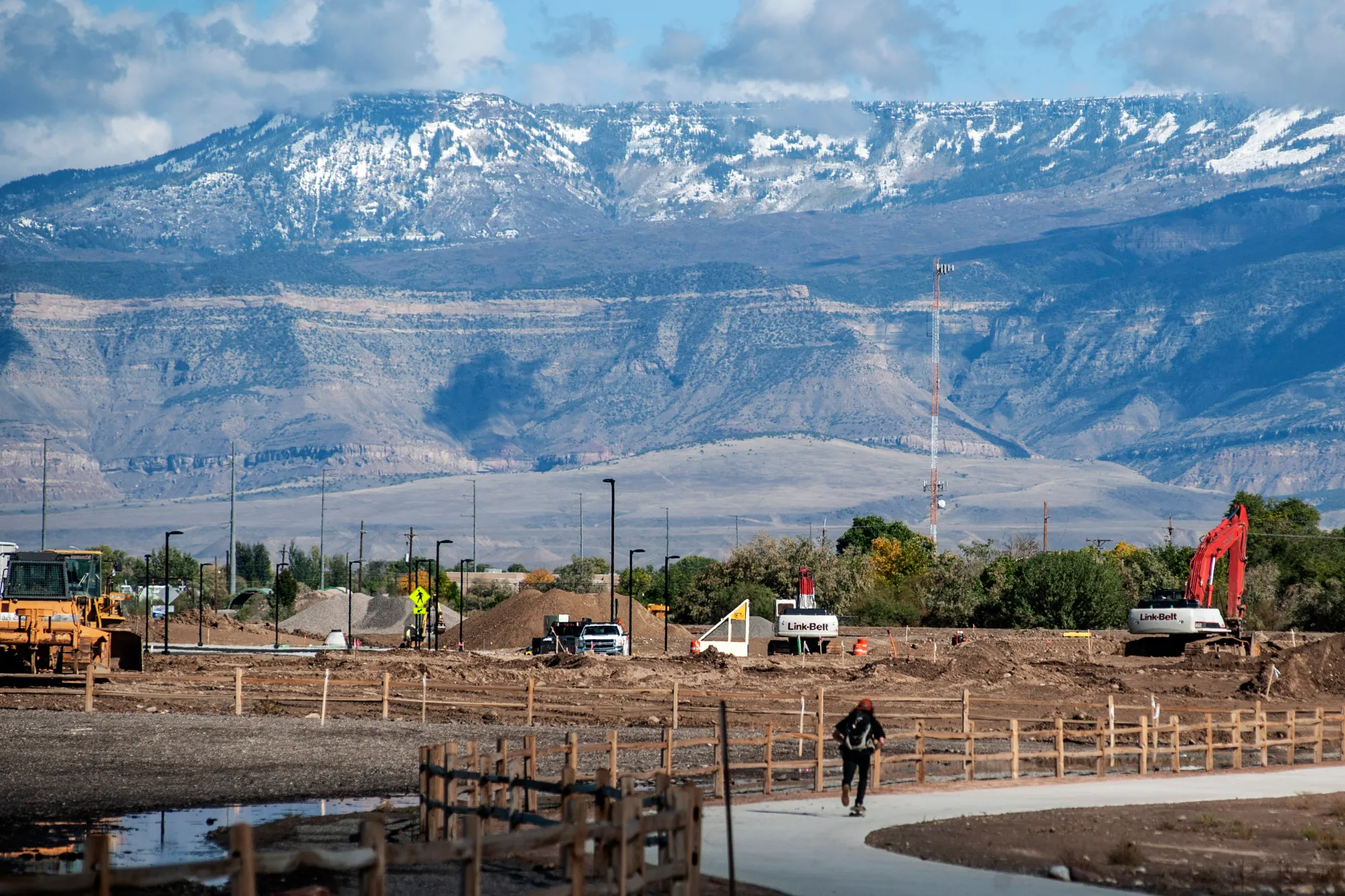
Grand Junction sits at the heart of Colorado’s Western Slope, combining energy employment with outdoor recreation and growing remote worker appeal
2026 Economic Outlook
- Remote worker migration continuing as Grand Junction’s lifestyle advantages become more broadly recognized
- CMU enrollment growth and new engineering and health sciences programs expanding student population
- Colorado National Monument designation discussions potentially boosting tourism significantly
- Grand Junction Regional Airport adding routes, reducing the isolation penalty
- Palisade wine country and agritourism driving hospitality employment and short term rental demand
The Grand Junction Investment Case: What Makes It Different
Structural Advantages
- Price point 35 to 45% below Denver for comparable property quality
- Mesa County landlord regulations follow Colorado state law only, no city overlays
- CMU creates year round student rental demand unlike purely seasonal markets
- Remote worker migration is ongoing and accelerating, not a one-time pandemic event
- Tourism and outdoor recreation diversify the economy beyond energy dependence
- No state income tax in Colorado, drawing high earners from California
- Strong short term rental demand from Colorado National Monument and mountain biking tourism
Risks to Underwrite Honestly
- Oil and gas sector creates economic exposure to commodity price cycles
- Smaller market with less liquidity than Front Range: longer days on market at exit
- Appreciation velocity historically below Denver and Boulder (4 to 7% annually in normal years)
- Limited luxury rental ceiling compared to resort markets
- Airport connectivity is improving but Grand Junction remains more isolated than Front Range cities
- Water scarcity issues (Western Slope drought patterns) are a long term risk factor
Historical Performance
| Period | Market Driver | Avg Annual Appreciation | Key Event |
|---|---|---|---|
| 2011-2015 | Oil boom, energy sector expansion | 4-7% | Energy employment drives housing demand citywide |
| 2015-2017 | Oil price crash, downturn | -2% to +2% | GJ prices drop 8 to 12%, CMU and healthcare provide floor |
| 2017-2020 | Recovery, diversification, CMU growth | 4-7% | Tourism and healthcare replace some energy employment |
| 2020-2022 | Remote work migration, pandemic demand surge | 18-25% | GJ among biggest beneficiaries of remote work shift in Colorado |
| 2022-2024 | Rate shock, normalization | 3-6% | Market stabilizes; affordability advantage vs Front Range widens |
| 2025-2026 | Continued remote work, CMU growth, tourism | 5-8% (projected) | Remote worker base maturing and buying, supporting price floor |
Grand Junction vs the Western Slope Comparison Set
| Market | Median Price | Cap Rate | Key Driver | Best For |
|---|---|---|---|---|
| Grand Junction | $365,000 | 5.5-7.5% | CMU, remote workers, energy, healthcare | Cash flow, student housing, BRRRR |
| Montrose | $340,000 | 5.5-8.0% | Black Canyon tourism, retirement, outdoor recreation | Cash flow, retirement housing, STR |
| Fruita | $360,000 | 5.5-7.0% | Mountain biking mecca, GJ bedroom community | Remote worker housing, STR, family rentals |
| Durango | $580,000 | 4.5-6.0% | Fort Lewis College, four-season tourism | Balanced, appreciation plus income |
| Glenwood Springs | $650,000 | 4.0-5.5% | Hot springs resort, I-70 corridor | STR, resort appreciation |
Grand Junction leads the Western Slope for raw market size, university enrollment, and economic diversity. Fruita and Montrose offer similar cap rates at slightly lower prices but smaller markets. Durango and Glenwood Springs offer higher appreciation but compressed yields. For a first Western Slope investment, Grand Junction’s size and liquidity make it the lowest risk entry point.
📚 New to real estate investing? Master the fundamentals with our professional course Learn more →
2. Neighborhood Hotspots
Grand Junction Investment Neighborhood Map
Interactive map of Grand Junction’s investment neighborhoods. Green stars show top hotspots, blue circles mark established markets, and orange circles highlight emerging areas with strong value add and remote worker demand.
Core Investment Neighborhoods
Detailed Submarket Analysis: Grand Junction Area
| Neighborhood | Price Range | Cap Rate | Growth Drivers | Best Strategy |
|---|---|---|---|---|
| CMU Campus Corridor | $310K-$430K | 6.0-8.0% | CMU enrollment, walkability, per bedroom income | Student rental per bedroom, small multi-family |
| Redlands | $420K-$620K | 5.0-6.5% | Monument views, newer construction, professional tenants | Long term professional rental, buy and hold |
| Downtown GJ | $290K-$480K | 5.5-7.0% | Downtown revitalization, remote workers, walkability | Young professional tenants, appreciation plus income |
| West Grand Junction | $330K-$480K | 5.5-7.0% | Family demand, outdoor recreation access, newer homes | Family buy and hold, stable long term tenancies |
| Orchard Mesa | $290K-$430K | 5.5-7.0% | Colorado River, established community, diverse stock | Balanced returns, diverse tenant mix |
| North GJ | $320K-$460K | 5.5-6.8% | I-70 access, energy commuters, newer suburbs | Energy worker housing, family rentals |
| East GJ / Clifton | $220K-$330K | 7.0-9.5% | Affordability, working class demand, distressed stock | BRRRR, value add, highest yield, active management |
| Fruita (adjacent) | $330K-$480K | 5.5-8.0% | Mountain biking, remote workers, STR demand | Remote worker housing, STR, lifestyle market |
| Palisade (adjacent) | $340K-$600K | 6-12% (STR) | Colorado wine country, agritourism, STR demand | Wine country STR, agritourism properties |
Expert Insight: “The biggest shift I have seen in the Grand Junction market over the last four years is the quality of the rental tenant changing. We are now regularly placing remote workers earning $90,000 to $130,000 annually into properties that previously would have gone to energy sector employees at half that income. These tenants are long term, they pay on time, they treat the property well, and they have no intention of leaving Grand Junction because there is nothing in Denver or Seattle that gives them what they have here for the money. That is a structural change, not a trend.” – Mesa County property manager and investor
3. Property Types
| Investment Goal | Best Property Type | Best Location | Minimum Capital |
|---|---|---|---|
| Maximum Cash Flow | CMU student rental per bedroom or BRRRR | CMU corridor, East GJ | $65,000-$110,000 |
| Lowest Management | Newer SFH with remote worker or professional tenant | Redlands, West GJ | $90,000-$155,000 |
| Lowest Capital Entry | FHA duplex house hack near CMU | Central GJ, CMU area | $13,000-$20,000 |
| Highest Income Ceiling | STR near National Monument or Palisade wine country | Fruita, Palisade, Monument area | $80,000-$165,000 |
Grand Junction renovation costs run 10 to 15% below Denver rates, improving your BRRRR economics. Our Complete Renovation & Remodeling Cost Guide covers 400+ pages of project-by-project breakdowns to help you budget accurately.
4. Cost Analysis
Acquisition Cost Breakdown (Grand Junction Single Family)
| Expense Item | Typical Cost | Example ($370,000 Property) | Notes |
|---|---|---|---|
| Down Payment | 20-25% (investment) | $74,000-$92,500 | 20% approaches cash flow neutral at GJ price points |
| Closing Costs | 2-3% of price | $7,400-$11,100 | Title, escrow, lender fees, Mesa County recording |
| General Inspection | $350-$500 | $400 | Include radon and HVAC inspection; Grand Junction has unique desert climate considerations |
| Radon Test | $150-$250 | $175 | Western Slope has elevated radon in some areas |
| Swamp Cooler / HVAC Check | $150-$300 | $200 | GJ’s desert climate means evaporative coolers are common and maintenance critical |
| Initial Repairs | 0-8% of price | $0-$29,600 | Older GJ stock (1960s to 1980s) may need roof, plumbing, or electrical updates |
| Reserves (6 months) | $8,000-$12,000 | $9,000 | Lower than Denver due to lower operating costs |
| TOTAL MINIMUM ENTRY | ~25-30% of value | $91,175-$142,575 | Lower capital requirement than any comparable Colorado Front Range investment |
Cash Flow Analysis: CMU Student Rental (4BR, Per Bedroom)
| Item | Monthly | Annual | Notes |
|---|---|---|---|
| Gross Rent (4 beds × $600) | $2,400 | $28,800 | Near CMU campus, 4BR leased per bedroom. $370,000 purchase |
| Less Vacancy (10%) | -$240 | -$2,880 | Lower than pure undergrad markets; CMU grad programs help |
| Property Taxes | -$260 | -$3,145 | ~0.85% of assessed value, Mesa County |
| Insurance | -$100 | -$1,200 | Lower than Denver; no hail risk like Front Range |
| Property Management (10%) | -$216 | -$2,592 | Per bedroom leasing adds complexity, 10% is appropriate |
| Maintenance + CapEx (11%) | -$238 | -$2,851 | Student rentals require higher maintenance budget |
| Net Operating Income | $1,346 | $16,132 | Cap rate: 4.36% on purchase price |
| Mortgage ($296,000, 20% down, 6.75%, 30yr) | -$1,920 | -$23,035 | Principal and interest |
| CASH FLOW (20% down) | -$574 | -$6,903 | Negative at 20% down, current rates |
| CASH FLOW (25% down) | +$93 | +$1,116 | Positive cash flow at 25% down ($92,500). Cash on cash: 1.2% |
Grand Junction is one of the few Colorado markets where positive cash flow is achievable at 25% down on an investment property at current rates. The same exercise in Denver requires 35 to 40% down to achieve equivalent results. This is the core capital efficiency advantage of Western Slope investing.
BRRRR Analysis: East Grand Junction Distressed Property
| Stage | Amount | Notes |
|---|---|---|
| Purchase Price | $240,000 | East GJ or Clifton distressed 3BR needing full renovation |
| Renovation Cost | $58,000 | Kitchen, baths, flooring, HVAC, exterior. GJ labor 10 to 15% below Denver |
| Total Cost Basis | $298,000 | All in |
| After Repair Value (ARV) | $370,000-$400,000 | Renovated 3BR in GJ; East GJ still shows comp discount vs West GJ |
| Equity Created | $72,000-$102,000 | Strong spread validates the strategy |
| Refinance (75% of ARV) | $277,500-$300,000 | Cash out refi at 75% LTV |
| Capital Recovered | $277,500-$300,000 | vs $298,000 invested: near full recovery |
| Post Refi Monthly Rent | $1,700-$1,950 | Renovated property commands above East GJ average |
| Post Refi Monthly Cash Flow | +$100 to +$280 | Positive at new lower mortgage balance with most capital recovered |
Expert Insight: “Grand Junction’s BRRRR economics work because we have a meaningful price gap between distressed east side properties and renovated properties in the same city. A full gut renovation on an East GJ property routinely produces a $70,000 to $100,000 equity spread at current values. The renovation itself costs less than Denver because local contractors are competitive and material delivery costs are reasonable via I-70. The refinance then recycles most of the capital. Repeat this two to three times and you have a legitimate portfolio built on a relatively modest initial capital base.” – Mesa County real estate investor
5. Legal Framework
✅ Mesa County Landlord Friendly Environment
Grand Junction and Mesa County operate under Colorado state landlord tenant law with no significant local overlay ordinances. Mesa County is one of Colorado’s most politically conservative counties and has maintained a consistently landlord friendly regulatory approach. There is no just cause eviction requirement, no first in time tenant selection rule, no mandatory source of income protection, and no rent control. This regulatory environment is a structural investment advantage versus Denver, Boulder, and increasingly Fort Collins.
Colorado State Law in Grand Junction
- Non-Payment Eviction: 10 day demand to pay or quit, then unlawful detainer. Typical Mesa County timeline: 25 to 40 days total to lockout. Fast by Colorado standards.
- Lease Violation Eviction: 3 day notice to cure or quit, then unlawful detainer. Timeline: 20 to 35 days.
- No Cause / End of Lease: 21 day written notice for month to month. No just cause required.
- Security Deposits: No statutory cap in Colorado. Must return within 60 days with itemized deductions. Market standard in GJ is one month’s rent.
- Rent Increases: 21 day notice for month to month. No rent control. No advance notice requirement beyond state law.
- Habitability: Standard Colorado habitability requirements apply. Grand Junction Building Department enforces minimum standards on complaint basis.
- STR Licensing: Grand Junction requires a short term rental permit for stays under 30 days. See STR section below for current requirements.
Grand Junction Specific Considerations
- STR Permitting: Grand Junction has implemented a short term rental licensing system. Properties must obtain an STR permit, pass a life safety inspection, carry liability insurance, and comply with maximum occupancy rules. Contact Grand Junction Community Development for current permit requirements.
- Student Rental Occupancy: Check city occupancy limits for unrelated occupants per dwelling before marketing per bedroom student rentals. Grand Junction’s code limits unrelated occupants similar to other Colorado cities.
- Manufactured / Mobile Homes: Mesa County has a significant manufactured housing stock in outlying areas. Different legal framework applies. Consult local attorney before purchasing.
- Agricultural Zone Properties: Palisade and some Mesa County properties carry agricultural zoning. Understand the allowable uses before purchasing for rental purposes.
- Water Rights: Mesa County is water rights territory. For agricultural or rural properties, confirm water rights status before purchase. This is a Western Slope specific issue not common on the Front Range.
Useful Grand Junction Resources
- Grand Junction Community Development: gjcity.org/commdev
- Mesa County Assessor: mesacounty.us/assessor
- Colorado Landlord Tenant Law: cobar.org/landlord-tenant
- Grand Junction Housing Authority: gjha.org
| Regulation | Grand Junction / Mesa County | Denver | Investor Impact |
|---|---|---|---|
| Just Cause Eviction | Not required | Required | GJ landlords can end tenancies at lease expiration without cause |
| Eviction Timeline | 25-40 days typical | 45-90 days typical | Mesa County courts process evictions efficiently |
| Rent Control | None (state preemption) | None (state preemption) | Colorado prohibits local rent control statewide |
| STR Regulation | Permit required, manageable rules | Primary residence restriction applies | GJ allows investment STR with permit, unlike Denver |
| Source of Income | Voluntary (no mandate) | Mandatory acceptance | GJ landlords can choose whether to accept housing vouchers |
6. Step-by-Step Grand Junction Investment Playbook
Define Your Grand Junction Strategy
CMU Student Rental
Buy a 3 to 5 bedroom home within easy walking distance of CMU. Lease per bedroom. Maximize income at the lowest entry price point in the city. Graduate programs reduce summer vacancy risk.
Remote Worker / Professional Rental
Redlands or West GJ newer construction targeting high income remote workers. Lowest management intensity. Best tenant quality in the market. Trades some yield for stability.
BRRRR East GJ
Distressed properties at 60 to 70 cents on renovated dollar. Renovate with local contractors at below Denver rates. Refinance and recycle. Best equity building strategy in the market.
Tourism STR (Fruita / Palisade / Monument)
Short term rental properties near Colorado National Monument, Fruita mountain biking, or Palisade wine country. Unique income ceiling not available in standard long term rental markets.
Build Your Grand Junction Team
- Mesa County Investment Specialist Agent: Find an agent who works with investors specifically. They should know CMU rental data, East GJ distressed inventory, and have current comp data for BRRRR after repair values. The GJ investor community is smaller than Denver, so relationships matter more.
- Grand Junction Property Manager: Critical for out of state investors. Look for a PM with documented CMU student rental experience if that is your strategy. Ask for their current vacancy rates and summer management approach.
- Local Contractor Network: Grand Junction has a solid local contractor market at below Denver rates. Build relationships before you need them, particularly for BRRRR investors. Material deliveries via I-70 are reliable.
- STR Management Company: If pursuing Fruita or Palisade STR, use a local STR management company with documented Mesa County performance data. AirDNA data for Grand Junction should be reviewed before acquisition.
- Colorado Real Estate Attorney: For lease review, entity setup, and any water rights questions on agricultural zone properties near Palisade.
- Local Lender or Mortgage Broker: Mesa County banks and credit unions understand the local market. For BRRRR deals, a local hard money lender familiar with Grand Junction ARV comps is valuable.
Grand Junction Specific Due Diligence
Physical Due Diligence
- Evaporative cooler (swamp cooler) condition and maintenance status: very common in GJ’s desert climate, failing units need replacement at $1,500 to $3,000
- Radon test for Western Slope elevated risk areas
- Foundation inspection: GJ soils can have expansive clay content, particularly in older neighborhoods
- Roof inspection: flat and low slope roofs common in GJ’s low rainfall climate; check for standing water damage
- Irrigation system if property has landscaping (water costs matter in desert climate)
- Water heater and plumbing age in older central and east GJ stock
Market and Legal Due Diligence
- Verify STR permit availability and current Mesa County STR regulations before any STR acquisition
- Check water rights status for any property with agricultural or irrigation history
- Review HOA rules on newer West GJ and Redlands properties for rental restrictions
- Pull Mesa County permit records for any unpermitted additions or conversions
- Confirm zoning allows intended use, particularly for Palisade agricultural zone properties
- Review flood zone maps for Colorado River corridor properties in Orchard Mesa
Competing in Grand Junction’s Market
Grand Junction is not a hyper-competitive multiple offer market like Denver. Days on market are longer and negotiation is more common. However, quality properties in the CMU corridor and Redlands do move quickly.
- Off market sourcing: Grand Junction’s smaller market rewards off market deal sourcing. Direct mail to long term homeowners in target neighborhoods and relationships with local agents yield deals not available to out of town buyers browsing Zillow.
- Inherited tenant properties: Sellers with tenant occupied properties often discount in GJ’s buyer pool. For investors, a property already rented to a paying tenant is often a positive. Verify lease terms and rental history carefully before assuming.
- Probate and distressed sourcing: East GJ and Clifton probate listings, foreclosure pipeline properties, and delinquent tax records produce the deepest BRRRR discounts. Building relationships with local probate attorneys is a long term sourcing advantage.
- Remote investor premium: Front Range and California investors increasingly target Grand Junction but often pay slight premiums for turn-key properties. Building local relationships and finding properties before they hit the MLS is the competitive advantage for serious investors.
7. Financing Options for Grand Junction
| Loan Type | Down Payment | Rate Premium | Best For | Grand Junction Note |
|---|---|---|---|---|
| FHA (House Hack) | 3.5% | Standard + MIP | Owner occupied duplex | Best low capital entry in GJ. Duplexes in the $350,000 to $480,000 range qualify within FHA limits. Down payment of $12,250 to $16,800. |
| Conventional (20-25%) | 20-25% | +0.5-0.75% | Standard investment SFH | Most common entry. At 25% down, CMU student rentals approach cash flow positive. Well within conforming loan limits for most GJ properties. |
| DSCR Loan | 20-25% | +1.5-2.5% | Self employed or no income verification | Grand Junction’s higher cap rates mean more properties qualify at 1.0x DSCR than in Denver. CMU student rentals often clear the threshold at 20 to 25% down. |
| Hard Money / Bridge | 15-25% | 8-12% rate | BRRRR acquisitions, distressed purchases | Active hard money lenders in Western Colorado and Front Range that fund GJ deals. Short hold period on BRRRR makes economics viable despite high rates. |
| Portfolio Loan | 20-30% | +1-2% | Multiple GJ properties, older construction | Local Mesa County banks and credit unions offer portfolio loans, particularly useful for older east side properties that may not pass conventional appraisal requirements |
| Cash Out Refinance | N/A | +0.25-0.75% | BRRRR equity recycling | Core BRRRR exit tool. At 75% LTV of ARV, GJ BRRRR deals typically recover 90 to 100% of invested capital for redeployment. |
Grand Junction Financing Advantage: Unlike Seattle or Denver where DSCR loans almost never qualify because cap rates are too low, Grand Junction’s 5.5% to 7.5% cap rates mean that many investment properties do qualify for DSCR financing at 1.0x coverage, particularly student rentals and East GJ post-renovation properties. This opens up no-income-verification financing options that are simply not available for the vast majority of Colorado Front Range investment properties, giving self-employed and portfolio investors access to leverage that is difficult to find elsewhere in the state.
8. Frequently Asked Questions

Knowledge Quiz: Grand Junction Real Estate Investment
Open Quiz
5 questions on what you just learned about investing in Grand Junction
1) What does the guide identify as the single most important due diligence item specific to Grand Junction’s desert climate?
Answer: B
Grand Junction’s desert climate means evaporative coolers (swamp coolers) are the dominant cooling system. A failing unit in GJ’s 95 to 100 degree summers is a tenant emergency requiring $1,500 to $3,000 to replace. Front Range investors often miss this because air conditioning is standard in Denver properties.
2) At what down payment percentage does the guide show CMU student rental cash flow turning positive at current interest rates?
Answer: C
The cash flow table shows a 4BR CMU student rental at $370,000 produces positive cash flow of $93 per month at 25% down ($92,500) and 6.75% interest rates. At 20% down, cash flow is still negative at -$574/month. This compares favorably to Denver or Fort Collins where 35 to 40% down would be needed for equivalent results.
3) What makes Palisade a unique investment opportunity within the Grand Junction metro area?
Answer: D
Palisade is Colorado’s premier wine region with 25+ wineries and a major Harvest Festival in September. STR properties with vineyard or orchard views can achieve $180 to $280 per night at peak and generate $40,000 to $65,000 annually at 65% occupancy. This STR angle is unique to the Grand Junction region and unavailable in Front Range markets.
4) What does the guide say is the primary reason Grand Junction’s geographic isolation is now an investment asset rather than a liability?
Answer: A
The guide explains that remote work has transformed the valuation of isolation. Workers who previously avoided Grand Junction due to the 245 mile commute to Denver now specifically choose it for 300 days of sunshine, world class mountain biking, Colorado National Monument access, and cost of living 30% below Denver. The isolation is now a feature for the remote worker demographic, not a liability.
5) What is the single most important Western Slope specific legal issue that the guide says Front Range investors often miss when buying in the Palisade or agricultural Mesa County area?
Answer: C
The guide specifically calls out water rights as a Western Slope specific issue that Front Range investors miss. For agricultural or rural Palisade properties, associated water rights can be bought and sold separately from the real property, can be extremely valuable, and Western Slope water law is complex. Always use a local attorney with water rights expertise for any property with agricultural irrigation history.
Work With a Local Expert in Grand Junction
We are building a verified network of real estate professionals across every market we cover.

About Our Expert Network
We are finalizing partnerships with verified real estate professionals across every market featured on Builds and Buys. Each expert is selected for their hands-on investment experience, local market knowledge, and commitment to helping investors make sound decisions.
Our Grand Junction specialists offer:
- Deep knowledge of CMU rental market, Redlands premium neighborhoods, and East GJ BRRRR inventory
- STR permit navigation for Fruita, Palisade, and Colorado National Monument adjacent properties
- Water rights expertise for agricultural zone properties near Palisade
- Access to off-market distressed inventory in East GJ and Clifton
- Full transaction support from search through closing
Services Covered
- Property sourcing and acquisition
- Investment analysis and underwriting
- Buyer representation
- STR permit and compliance
- Value-add and BRRRR guidance
- Palisade wine country STR
- Legal and title referrals
- Financing and lender connections
- Property management referrals
- Water rights review referrals
- 1031 exchange coordination
- Exit strategy planning
Get Connected or Join Our Network
Looking for a Grand Junction expert? Reach out and we will connect you with the right professional for your market and strategy.
Contact us at support@buildsandbuys.com
Find Specialized Grand Junction Real Estate Professionals
Ready to Invest in Grand Junction?
Grand Junction is Colorado’s most underappreciated investment market relative to its fundamentals. A diversified economy anchored by Colorado Mesa University, St. Mary’s Medical Center, energy, and a rapidly expanding remote worker base. Price points 35 to 45% below Denver. Cap rates of 5.5% to 7.5% that make positive cash flow achievable at 25% down. Mesa County’s landlord friendly regulatory environment. Fruita mountain biking and Palisade wine country creating STR demand profiles unavailable anywhere else on the Western Slope. The geographic isolation that once held Grand Junction back is now its greatest asset, drawing exactly the kind of high-income, long-term remote worker tenants that every Colorado landlord wants.
Continue Your Research
Colorado State Guide
See how Grand Junction compares to all 41 Colorado city investment guides.
Greeley Guide
Compare Grand Junction against Greeley, Colorado’s other leading cash flow market.
144-Lesson Course
University-level real estate education covering BRRRR, STR strategy, financing, and portfolio building.
For further guidance, explore our State-by-State Investor guides, browse our expert articles, or follow our Step-by-Step Investment Guide.