
Gardner Real Estate Investment Guide For 2026
A comprehensive resource for investors targeting Johnson County’s fastest growing logistics corridor, where warehouse employment and school district demand are reshaping a small Kansas town into a metro growth market
Quick answers: Top 5 most searched Gardner investment questions ▼
Migration data: Where people are moving from to Gardner ▼
In This Guide
Click on any section to navigate directly to that content
1. Gardner Market Overview
Market Fundamentals
Gardner occupies the southwest corner of Johnson County, positioned where Interstate 35 meets US Highway 56. For most of its history it was a quiet agricultural town on the Santa Fe Trail. That changed when BNSF Railway opened its intermodal facility and NorthPoint Development began building out Logistics Park Kansas City immediately to the southwest, transforming the area into one of the most significant inland freight hubs in North America.
Key economic indicators that define Gardner’s investment case:
- Population: Roughly 25,000 and growing 2 to 3 percent annually, one of the fastest rates in Kansas
- Major Employers: Logistics Park Kansas City tenants including major national distribution operators, BNSF Railway, USD 231 Gardner Edgerton schools, City of Gardner, regional healthcare
- Median Household Income: Approximately $85,000 to $90,000
- School District: USD 231 Gardner Edgerton, a primary relocation driver for incoming families
- Commute Access: 15 minutes to Olathe, 25 to Overland Park, 40 to downtown Kansas City
- Housing Stock: Predominantly single family, with very limited purpose built rental supply
Gardner also operates its own municipal electric utility, which is unusual for a Johnson County city and worth understanding when you underwrite utility responsibility in a lease.
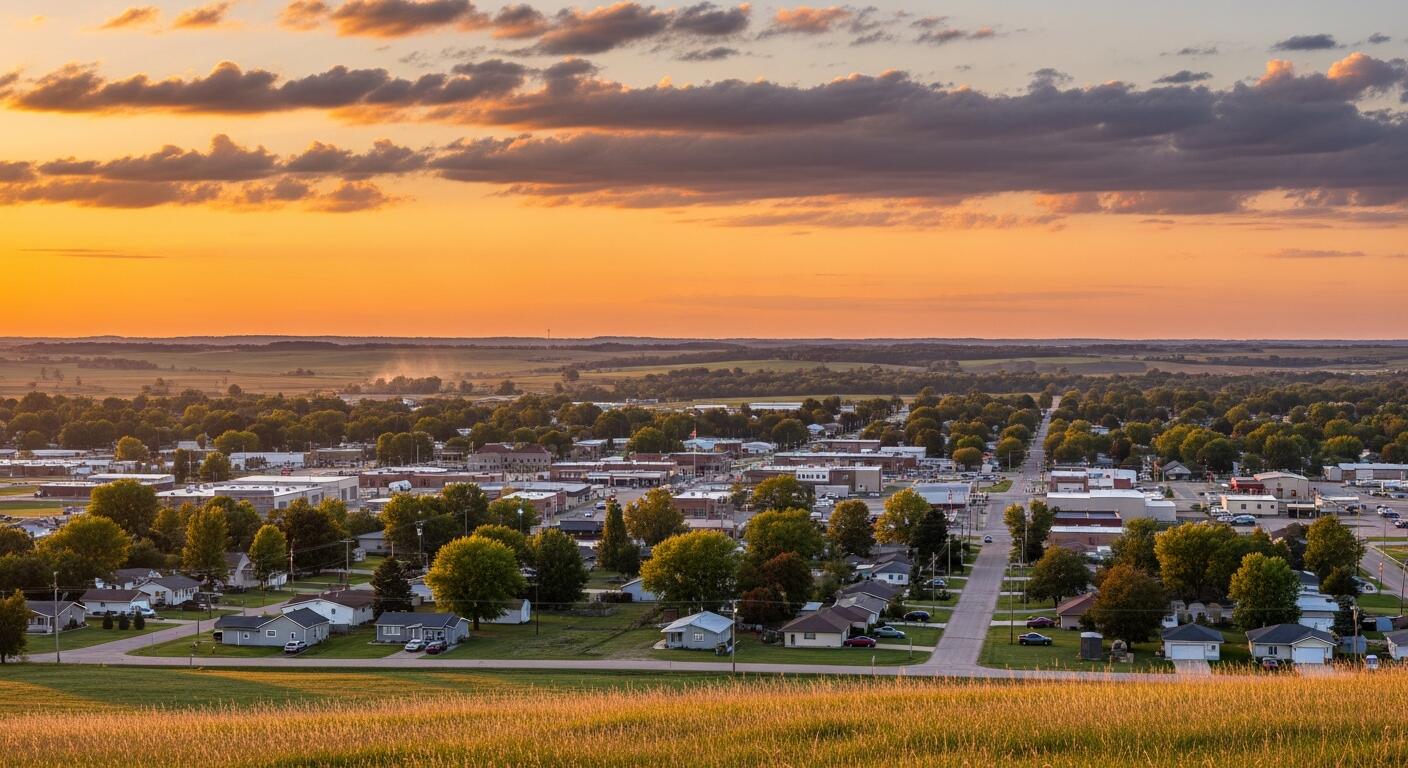
Gardner sits where a small Kansas town meets one of the country’s largest inland freight corridors
2026 Economic Outlook
- Continued warehouse and distribution buildout at Logistics Park Kansas City
- Panasonic’s large scale battery plant in nearby De Soto pulling workforce demand across southwest Johnson County
- USD 231 enrollment growth driving further residential development
- New single family subdivisions absorbing north and west of the existing city
- I-35 corridor commercial development following rooftop growth
Investment Climate
Gardner presents a specific tension that investors must understand before buying. It has genuine population growth, a strong school district, and an employment anchor of national significance. What it does not have is cheap carrying costs. Johnson County appraises close to market value, USD 231 carries substantial bond debt, and the combined mill levy places Gardner among the higher property tax burdens in the county. Add hail exposure that pushes landlord insurance well above national averages, and the operating expense load is heavier than the purchase price suggests.
Successful Gardner investors tend to share these characteristics:
- Total return orientation measuring appreciation, principal paydown, and tax benefits alongside cash flow rather than cash flow alone
- Accurate expense underwriting using actual Johnson County tax bills and real insurance quotes, not percentage rules of thumb
- Family rental focus targeting three and four bedroom homes in USD 231 attendance areas rather than small units
- Larger down payments of 30 to 40 percent, which is what it currently takes to reach positive monthly cash flow
- Freight awareness monitoring intermodal volumes and warehouse absorption the same way other investors monitor employer announcements
The reward for accepting those conditions is tenant quality and stability that most high yield Kansas markets cannot match. Gardner tenants are typically dual income households with children enrolled in local schools, which produces long tenancies, low turnover cost, and predictable rent collection.
Historical Performance
| Period | Market Driver | Avg Annual Appreciation | Key Event |
|---|---|---|---|
| 2010-2014 | Post recession recovery, intermodal construction | 2-4% | BNSF intermodal facility opens southwest of Gardner |
| 2015-2019 | Warehouse buildout, employment growth | 5-8% | Logistics Park expands rapidly, national tenants sign |
| 2020-2022 | Low rates, e-commerce freight surge, inventory shortage | 12-18% | Multiple offer conditions, new construction sells before completion |
| 2023-2024 | Rate shock, affordability ceiling | 3-6% | Days on market lengthen, builder incentives return |
| 2025-2026 | Rate stabilization, De Soto battery plant spillover | 4-7% (projected) | Regional manufacturing investment reinforcing southwest JoCo demand |
Gardner’s fifteen year track record shows appreciation that materially outpaces the Kansas statewide average, driven by the shift from agricultural town to metro growth suburb. That transition is not finished, which is the core argument for continued outperformance. It also means Gardner carries more cyclical risk than a diversified market, since a sustained downturn in national freight volumes would directly reduce local employment.
Demographic Trends Driving Demand
- Logistics Employment Base – Warehouse and distribution operations running multiple shifts create renter demand that persists regardless of housing market conditions
- Johnson County Affordability Migration – Families priced out of Olathe, Lenexa, and Overland Park moving southwest for comparable schools at lower cost
- USD 231 Enrollment Growth – School district expansion is both a symptom of and a driver for continued residential development
- De Soto Manufacturing Investment – Large scale battery manufacturing north of Gardner drawing skilled workforce into the southwest Johnson County housing pool
- Limited Rental Supply – Gardner has very little purpose built apartment inventory, so single family homes absorb nearly all rental demand
- I-35 Corridor Position – Direct interstate access supports both metro commuting and continued commercial development
📚 New to real estate investing? Master the fundamentals with our professional course Learn more →
2. Neighborhood Hotspots
Gardner Investment Neighborhood Map
Interactive map of Gardner’s investment areas and the surrounding southwest Johnson County corridor. Green stars show top hotspots, blue circles mark established markets, and orange circles highlight emerging areas.
Core Investment Areas
Detailed Submarket Analysis: Gardner and Southwest Johnson County
| Submarket | Price Range (SFH) | Cap Rate | Growth Drivers | Best Strategy |
|---|---|---|---|---|
| North Gardner / 167th | $330K-$450K | 4.2-4.8% | New construction, USD 231 schools, family relocation | Appreciation, low maintenance family rental |
| West Gardner / Waverly | $240K-$340K | 4.7-5.4% | Value pricing, same schools, Logistics Park proximity | Value-add, BRRRR, balanced returns |
| Downtown / Historic Gardner | $180K-$280K | 5.2-6.0% | Lowest entry, walkable core, older stock | Cash flow focus, duplex conversion, renovation |
| Southwest / Celebration Park | $340K-$470K | 4.0-4.6% | Sports complex, newest development, premium demand | Premium family rental, pure appreciation play |
| East Gardner / Old US-56 | $250K-$360K | 4.6-5.3% | Olathe commute, established neighborhoods | Balanced buy and hold, commuter rental |
| Edgerton / Logistics Park | $150K-$260K | 5.8-6.8% | Intermodal adjacency, warehouse employment | Best local cash flow, workforce housing |
| Gardner Lake | $220K-$450K | 3.8-5.0% | Water access, limited supply, recreation | Long-term hold, hybrid personal use |
| Spring Hill | $280K-$420K | 4.3-5.0% | Rapid growth, new construction, larger lots | Growth play, new construction hold |
| Wellsville | $120K-$220K | 6.5-7.8% | I-35 access, very low entry, commuter demand | Highest area yields, workforce housing |
| Baldwin City | $150K-$280K | 5.8-7.0% | Baker University, historic stock, Lawrence access | Student rental, historic value-add |
Expert Insight: “The mistake I see repeatedly in Gardner is investors underwriting with a national rule of thumb and getting blindsided by two line items. First, the mill levy. Gardner residents carry USD 231 bond debt, and the effective property tax rate lands meaningfully above what you would pay in Overland Park on the same purchase price. Second, insurance. We are in hail alley, carriers underwrite on replacement cost rather than what you paid, and a $2,400 annual premium is normal rather than exceptional. Run both of those as hard numbers before you make an offer, not as percentages afterward. The investors who do that in Gardner make money, because the underlying demand story is real and the tenant quality is genuinely better than anywhere else in Kansas at this price point.” – Mark Richardson, Principal, Kansas Investment Properties
3. Property Types
| Investment Goal | Best Property Type | Best Areas | Minimum Capital |
|---|---|---|---|
| Maximum Appreciation | Newer single-family in growth corridors | North Gardner, Southwest Gardner, Spring Hill | $110,000+ |
| Best Cash Flow | Duplex or workforce single-family | Edgerton, Wellsville, Downtown Gardner | $55,000+ |
| Balanced Returns | 1990s-2000s single-family with light renovation | West Gardner, East Gardner, Waverly corridor | $80,000+ |
| Lowest Management | Newer townhome or villa | North Gardner newer subdivisions | $85,000+ |
Don’t guess the costs. Our Complete Renovation & Remodeling Cost Guide covers 400+ pages of project-by-project breakdowns with real contractor pricing ranges.
4. Cost Analysis
Acquisition Cost Breakdown (Gardner)
| Expense Item | Typical Cost | Example ($245,000 Property) | Notes |
|---|---|---|---|
| Down Payment | 25% (investment) | $61,250 | Standard conventional investment property requirement |
| Closing Costs | 2-3% of price | $4,900-$7,350 | Kansas has no state real estate transfer tax, which lowers this line |
| General Inspection | $400-$650 | $500 | Prioritize foundation and roof given local soil and hail conditions |
| Radon Test | $125-$250 | $175 | Johnson County is a high radon area. Mitigation runs $900-$1,800. |
| Roof Inspection | $150-$350 | $250 | Critical. Hail damaged roofs are common and affect insurability. |
| Sewer or Septic Evaluation | $200-$500 | $300 | Properties outside city limits may be on septic. Verify before closing. |
| Initial Repairs | 0-15% of price | $0-$36,750 | Highly variable. Older core homes need the most work. |
| Reserves (6 months) | 6 months expenses | $8,000-$11,000 | Include a full insurance deductible. Hail deductibles are often 1-2% of value. |
| TOTAL MINIMUM ENTRY | ~31-35% of value | $75,600-$81,000 | Before any renovation budget |
Sample Cash Flow Analysis: West Gardner 3BR Single-Family
| Item | Monthly | Annual | Notes |
|---|---|---|---|
| Gross Rent | $1,950 | $23,400 | 3BR/2BA, updated, USD 231 attendance area |
| Less Vacancy (6%) | -$117 | -$1,404 | Conservative for a market with long family tenancies |
| Property Taxes | -$345 | -$4,142 | 11.5% assessment ratio at roughly 147 mills. Verify the actual parcel bill. |
| Insurance | -$175 | -$2,100 | Landlord policy. Hail exposure drives premiums well above national average. |
| Property Management (8%) | -$156 | -$1,872 | Typical Johnson County single-family rate |
| Maintenance + CapEx (10%) | -$195 | -$2,340 | Roof replacement reserve is the largest component here |
| Net Operating Income | $962 | $11,542 | Before mortgage |
| Mortgage ($245K, 25% down, 6.75%, 30yr) | -$1,192 | -$14,304 | Principal and interest only |
| CASH FLOW | -$230 | -$2,762 | Slightly negative with professional management at 25% down |
| Cap Rate | 4.71% | NOI divided by purchase price | |
| Gross Yield | 9.55% | Rent divided by price. This is the number listing sites quote. Ignore it. | |
| Total Return (5.5% appreciation) | ~18% | Appreciation plus principal paydown less negative carry, on cash invested |
This is the honest picture of Gardner at current rates. The property does not produce monthly income at 25 percent down with professional management, but it produces roughly $13,500 in appreciation and $1,900 in principal paydown in year one against a $2,762 negative carry, on approximately $70,000 of invested capital.
Two adjustments turn the monthly number positive. Self managing eliminates the $1,872 management expense and brings the property to roughly breakeven. Increasing the down payment to 35 percent reduces annual debt service by about $2,500 and produces genuine positive cash flow. A duplex in the same price range, where one tax bill and one insurance policy cover two rents, typically clears $250 to $400 per month positive at 25 percent down. Understanding which of those three levers you intend to pull is the entire Gardner underwriting decision.
Expert Insight: “Gardner rewards the investor who reads the tax bill. I have watched buyers underwrite a Gardner property using a 1.2 percent tax assumption because that is what a national calculator suggested, then find out at closing the real number was closer to 1.7 percent. On a $300,000 house that is $1,500 a year of pure error, which is the difference between a working deal and a bleeding one. Pull the actual parcel from the Johnson County Appraiser before you write an offer, and get a real insurance quote rather than an estimate, because the carrier is going to price your roof and not your purchase price. Do those two things and Gardner is one of the more dependable markets in Kansas.” – Sarah Whitfield, CRE Advisor, Johnson County Property Group
5. Legal Framework
⚠️ Kansas Compliance Notice
Kansas is a landlord friendly state, but that does not mean requirements are optional. The Kansas Residential Landlord and Tenant Act sets specific notice periods, deposit limits, and return deadlines, and failure to follow them will lose you an eviction case regardless of how clearly the tenant breached. Municipal requirements are set locally and change, so confirm current rental registration, inspection, and occupancy rules directly with the City of Gardner before you close. This guide is an overview, not legal advice. Consult a Kansas licensed real estate attorney.
Kansas Landlord-Tenant Framework
Gardner operates under the Kansas Residential Landlord and Tenant Act, found at KSA 58-2540 and following. The key provisions:
- Security Deposit Limits: Maximum of one month’s rent for an unfurnished unit and one and a half months for a furnished unit, plus up to an additional half month specifically for pets.
- Deposit Return: The landlord must determine deductions and return the balance within fourteen days of that determination, and in no case more than thirty days after termination of the tenancy.
- Nonpayment of Rent: A three day notice to pay or vacate. This is one of the shortest notice periods in the country.
- Lease Violations: Written notice specifying the breach, giving fourteen days to remedy, with termination in thirty days if not cured.
- Month to Month Termination: Thirty days written notice from either party.
- No Rent Control: Kansas statute prohibits municipalities from enacting rent control, so no Kansas city can cap your increases.
- No Just Cause Requirement: A landlord may decline to renew a lease at expiration without stating a reason, subject to fair housing law.
- Entry: The landlord must give reasonable notice and enter at reasonable times, except in emergency.
Gardner and Johnson County Practicalities
Beyond state law, these local items materially affect Gardner operations:
- Property Tax Structure: Kansas assesses residential property at 11.5 percent of appraised value, then applies the local mill levy. Gardner’s combined levy sits among the higher rates in Johnson County due to USD 231 bond obligations.
- Annual Valuation Notices: Johnson County mails appraisal notices each spring. You have a limited window to appeal, and appealing a rental valuation is often worthwhile.
- Municipal Electric Utility: Gardner operates its own electric service, so utility transfer procedures differ from surrounding cities. Address this explicitly in your lease.
- City Rental Requirements: Registration, inspection, and occupancy rules are set at the municipal level in Kansas and vary between Gardner, Edgerton, and unincorporated Johnson County. Verify current requirements with Gardner Community Development before closing.
- Short-Term Rentals: Kansas has no statewide STR framework, so any restriction comes from city zoning or an HOA. Confirm both before underwriting an STR.
- Septic vs City Sewer: Properties outside the city limits may be on septic, which carries county health department requirements at transfer.
- No Transfer Tax: Kansas imposes no state real estate transfer tax, reducing closing costs relative to most states.
Useful Kansas Resources
- Kansas Residential Landlord and Tenant Act: KSA 58-2540 et seq.
- Johnson County Appraiser: parcel values and appeal process
- Johnson County District Court: forcible detainer filings
- City of Gardner Community Development: zoning and permits
- Kansas Housing Resources Corporation: statewide housing programs
| Regulation | Kansas Requirement | Typical Tenant Protective State | Investor Impact |
|---|---|---|---|
| Nonpayment Notice | 3 days to pay or vacate | 14 to 30 days | Delinquency resolves quickly, limiting loss exposure |
| Eviction Timeline | Typically 3 to 6 weeks total | 2 to 6 months | Materially lower carrying cost on a problem tenancy |
| Just Cause to Terminate | Not required | Required in many jurisdictions | Full flexibility at lease expiration |
| Rent Control | Prohibited statewide by statute | Permitted or mandated locally | Rents reset freely to market |
| Security Deposit | 1 month unfurnished, plus 0.5 month for pets | Often capped at 1 month with no pet allowance | Pet deposit flexibility is a real advantage |
| Transfer Tax | None at the state level | 0.5% to 2% of price | Lower closing costs on both acquisition and exit |
6. Step-by-Step Gardner Investment Playbook
Define Your Gardner Strategy
Gardner supports four distinct approaches. Pick one before you look at a single listing, because each requires different capital and produces a different return profile.
Growth and Appreciation
Buy newer single-family in north or southwest Gardner. Accept breakeven to slightly negative monthly cash flow as the cost of holding a growth corridor asset with excellent tenant quality and minimal maintenance.
Value-Add Renovation
Buy dated 1990s and 2000s stock in west or east Gardner. Update kitchens, baths, flooring, and paint. Lift rent $200 to $350 per month and add value well above renovation cost.
Workforce Cash Flow
Buy modest homes or duplexes in Edgerton and Wellsville serving Logistics Park employees. Lower rents but far lower acquisition cost, producing genuine positive monthly income at 25 percent down.
House Hacking
Owner occupy a duplex or a home with a finished basement suite. Low down payment financing plus rental offset makes this the most capital efficient entry into Johnson County available.
Build Your Gardner Team
Gardner is a small market inside a large metro, which means the professionals who serve it well are often based in Olathe or Overland Park. Prioritize people who transact in southwest Johnson County specifically.
- Investor Focused Agent: Must know USD 231 attendance boundaries, which subdivisions carry HOA rental caps, and how to pull comparable rents rather than only comparable sales.
- Independent Insurance Agent: Not a captive agent. You want someone who can shop multiple carriers on hail exposure, because premium spread between carriers in this market is substantial.
- Johnson County Property Manager: Confirm they actually manage in Gardner and Edgerton, not just north Johnson County. Ask for current doors in the 66030 zip code.
- General Contractor with Foundation Experience: Expansive clay soils are common in eastern Kansas. Your contractor should be able to distinguish cosmetic settlement from structural movement.
- Kansas Real Estate Attorney: For entity formation, lease review under KSA 58-2540, and eviction filings when needed.
- Real Estate CPA: For depreciation planning, entity structuring, and coordinating Johnson County valuation appeals.
Expert Tip: Interview property managers by asking two Gardner specific questions. First, “How do you handle utility transfer given Gardner’s municipal electric service?” Second, “How many doors do you currently manage in Gardner or Edgerton?” A manager who cannot answer both concretely is going to learn on your property.
Gardner-Specific Due Diligence
Standard inspection items plus these Kansas and Johnson County critical checks:
Physical Due Diligence
- Roof age, material, and hail damage history. Get this before you get an insurance quote.
- Radon test. Johnson County sits in a high radon zone and mitigation is inexpensive but necessary.
- Foundation evaluation for expansive clay soil movement, especially in older homes
- Grading and drainage away from the foundation, a chronic issue in eastern Kansas
- HVAC age and condition. Kansas runs both extremes and systems work hard.
- Storm shelter or basement egress, which materially affects family rental appeal
- Septic system condition and county compliance if outside city limits
Financial and Regulatory Due Diligence
- Pull the actual parcel tax bill from the Johnson County Appraiser, do not estimate
- Obtain a binding insurance quote before removing contingencies, not an estimate
- Confirm USD 231 attendance boundary for the specific address
- Review HOA covenants for rental caps, minimum lease terms, and tenant approval clauses
- Verify current City of Gardner rental registration or inspection requirements
- Check permit history for basement finishes, additions, and any unpermitted second unit
- Confirm zoning if you intend a duplex conversion or short-term rental use
Competing in Gardner’s Market
Gardner has thin inventory and motivated owner occupant buyers competing for the same houses. Strategies that work:
- Move fast on west side inventory: Value-add homes in the $240,000 to $290,000 range are the most contested price band in the city. Have financing pre underwritten, not just pre approved.
- Buy the house owner occupants avoid: Dated finishes, poor listing photos, and occupied tenant situations all deter retail buyers and create investor opportunity.
- Look one town out: Edgerton and Wellsville have far less competition and identical employment exposure. The yield difference is substantial.
- Approach builders directly: When new construction absorption slows, builders in north Gardner will negotiate on standing inventory in ways they will not on presales.
- Target long-term owners: Direct mail to owners who have held Gardner property fifteen or more years, particularly in the downtown core where deferred maintenance has accumulated.
- Use the tax appeal as a value lever: A successful Johnson County valuation appeal can improve NOI by $400 to $900 annually, which is real value on a 5 percent cap.
Property Management in Gardner
Kansas gives landlords substantial legal latitude, which makes disciplined process the differentiator rather than regulatory compliance.
Tenant Screening Protocol
Gardner’s tenant pool splits into two distinct groups, and you should decide which you are targeting:
- Family renters in USD 231 attendance areas, typically dual income, long tenancies, low turnover
- Logistics and warehouse workers, often shift based, shorter tenancies, more turnover
- Screen for income at three times monthly rent, verified through pay stubs or employer contact
- Verify two years of rental history with direct landlord contact, not just references on an application
- Apply written criteria consistently to every applicant to satisfy federal fair housing obligations
- Take the full permitted deposit including the additional half month for pets, since Kansas allows it
Typical Johnson County Management Fees
- Single-family management: 8-10% of monthly rent
- Multi-family management: 6-9% of monthly rent
- Leasing fee: 50-100% of one month’s rent
- Lease renewal fee: $150-$350 per renewal
- Maintenance markup: Often 10%, negotiate this explicitly
7. Financing Options for Gardner
| Loan Type | Down Payment | Rate Premium | Best For | Gardner Note |
|---|---|---|---|---|
| Conventional Investment | 25% | +0.5-0.75% | Documented income, good credit | Gardner prices sit well under conforming limits, so jumbo is not a factor |
| House Hacking (FHA) | 3.5% | Standard + MIP | Owner occupying one unit of a 2-4 unit property | Best entry point in Johnson County, though duplex inventory is scarce |
| DSCR Loan | 20-25% | +1-2% | Investors avoiding income documentation | Tight in Gardner. Higher yield Edgerton and Wellsville properties qualify more easily. |
| Local Portfolio Loan | 20-30% | +0.75-1.5% | Multiple properties, self-employed borrowers | Kansas community banks and credit unions are genuinely competitive here |
| USDA Rural Development | 0% | Standard + fee | Owner occupants in eligible rural areas | Gardner itself is generally ineligible. Check Wellsville and Baldwin City. |
| HELOC / Cash-Out Refi | N/A | Varies | Investors with existing Kansas equity | Often the cheapest source of a Gardner down payment |
| Hard Money (Bridge) | 15-25% | 10-13% rate | BRRRR acquisitions, fast close situations | Several Kansas City metro lenders actively fund Johnson County flips |
Gardner Financing Reality: Because Gardner cap rates land in the mid 4 to low 5 percent range, most single-family properties will not clear a 1.0x debt service coverage ratio at current rates and 25 percent down. That pushes investors toward one of three paths: full documentation conventional financing with strong outside income, a larger down payment of 30 to 40 percent, or a shift to the higher yielding Edgerton and Wellsville corridor where DSCR products work. Local Kansas banks and credit unions are frequently the most flexible option and are worth approaching before national lenders.
8. Frequently Asked Questions

Knowledge Quiz: Gardner Real Estate Investment
Open Quiz
5 quick questions on what you just learned about Gardner investing
1) What is the primary employment anchor driving Gardner’s rental demand?
Answer: C
The BNSF intermodal terminal and the surrounding Logistics Park development sit immediately southwest of Gardner and form one of the largest inland freight hubs in North America. Multi shift warehouse and distribution employment creates a durable renter pool that did not exist in Gardner before the facility opened.
2) Why does the guide warn against underwriting Gardner on gross yield?
Answer: B
Gardner property taxes run roughly 1.6 to 1.8 percent of value because of USD 231 bond debt, and landlord insurance commonly costs $2,000 to $3,000 annually due to hail exposure. Those two expenses compress a 7 percent gross yield down to a cap rate in the mid 4 to low 5 percent range.
3) How long is the Kansas notice period for nonpayment of rent?
Answer: A
Kansas requires only a three day notice to pay or vacate for nonpayment of rent, one of the shortest periods in the country. Combined with no just cause requirement and a statutory prohibition on rent control, this makes Kansas among the most landlord friendly states. The most common reason landlords lose is a defective notice, so serve it exactly as the statute requires.
4) Which Gardner area does the guide identify as the best value-add corridor?
Answer: D
West Gardner offers 1990s and 2000s housing stock that is structurally sound but cosmetically dated, at $80,000 to $120,000 less than comparable north side homes with identical USD 231 school access and the shortest drive to Logistics Park employment. That combination produces the best risk adjusted returns in the city.
5) What insurance detail does the guide flag as most likely to surprise a Gardner investor?
Answer: C
Kansas carriers commonly apply a wind and hail deductible of 1 to 2 percent of dwelling coverage instead of a flat dollar amount. On a $300,000 dwelling limit that is a $3,000 to $6,000 out of pocket exposure per event. Carriers also underwrite on roof age and material rather than purchase price, so always obtain a binding quote during your inspection period.
Work With a Local Expert in Gardner
We are building a verified network of real estate professionals across every market we cover.

About Our Expert Network
We are finalizing partnerships with verified real estate professionals across every market featured on Builds and Buys. Each expert in our network is selected for their hands-on investment experience, local market knowledge, and commitment to helping buyers and investors make sound decisions.
Our local specialists offer:
- Proven experience with investment and income-producing properties
- Deep knowledge of local pricing, rental yields, and neighborhood dynamics
- Guidance on financing, legal structure, and due diligence
- Access to off-market and pre-market opportunities
- Full transaction support from search through closing
- Ongoing portfolio and property management referrals
Services Covered
- Property sourcing and acquisition
- Investment analysis and underwriting
- Buyer representation
- Market comparables and valuations
- Short-term and long-term rental strategy
- Value-add and renovation guidance
- Legal and title referrals
- Financing and lender connections
- Property management referrals
- Insurance and inspection referrals
- 1031 exchange coordination
- Exit strategy planning
Get Connected or Join Our Network
Looking for a local expert to help with your investment? Reach out and we will connect you with the right professional for your market and strategy.
Are you a real estate professional with a track record working with investors? We are always expanding our network of verified local experts.
Contact us at support@buildsandbuys.com
Find Specialized Gardner Real Estate Professionals
Ready to Invest in Gardner?
Gardner is not the highest yielding market in Kansas, and any guide that tells you otherwise is quoting gross yield instead of cap rate. What Gardner offers is something scarcer: a genuine growth corridor anchored by a nationally significant freight hub, inside a top tier school district, with tenant quality that most Kansas markets cannot match at any price. Underwrite the actual tax bill, get a binding insurance quote, decide whether you are buying for equity or income, and Gardner rewards patience as reliably as any market in the state.
Continue Your Research
Kansas State Guide
See how Gardner compares to Wichita, Topeka, Lawrence, and every other Kansas market.
Olathe Guide
Gardner’s larger neighbor to the northeast, with deeper inventory and stronger liquidity.
144-Lesson Course
University-level real estate education covering financing, law, strategy, and management.
For further guidance, explore our State-by-State Investor guides, browse our expert articles, or follow our Step-by-Step Investment Guide.



