
Garden City Idaho Real Estate Investment Guide For 2026
A comprehensive resource for investors targeting Boise Metro’s most supply-constrained urban market, where Boise River Greenbelt access, an emerging arts and restaurant district, and a genuinely limited land supply create the Treasure Valley’s strongest urban infill investment thesis
Quick answers: Top 5 most searched Garden City investment questions ▼
Market data: Who’s moving to Garden City and why ▼
1. Garden City Market Overview
Market Fundamentals
Garden City is an independent municipality in Ada County, completely encircled by the City of Boise on three sides and bounded by the Boise River on the north. At approximately 2 square miles for 12,500 residents, it is one of Idaho’s densest communities. Once primarily an industrial and commercial zone that housed businesses Boise didn’t want in its city limits, Garden City has spent the past decade transforming into one of the Treasure Valley’s most distinctive urban neighborhoods: a walkable, Greenbelt-adjacent district with a growing restaurant and brewery scene, an authentic arts community, and a young professional demographic that specifically chooses urban living over suburban alternatives.
Key fundamentals:
- Geography: ~2 square miles; completely encircled by Boise on three sides, Boise River on north; physically cannot expand
- Boise River Greenbelt: 17-mile paved trail along the Boise River; Garden City properties near Greenbelt command premium rents
- Emerging District: Growing restaurant row, craft breweries, food halls, and event venues along the river corridor
- Downtown Boise: 1 to 3 miles east; Greenbelt cycling or 10-minute drive to downtown employment core
- Ada County: Same county as Boise, Meridian, Eagle, and Star; full Ada County infrastructure and services
- Density: Condo, townhome, and small multifamily primary property types; SFH increasingly rare
- Separate Municipality: Independent city; not subject to Boise City’s additional regulations
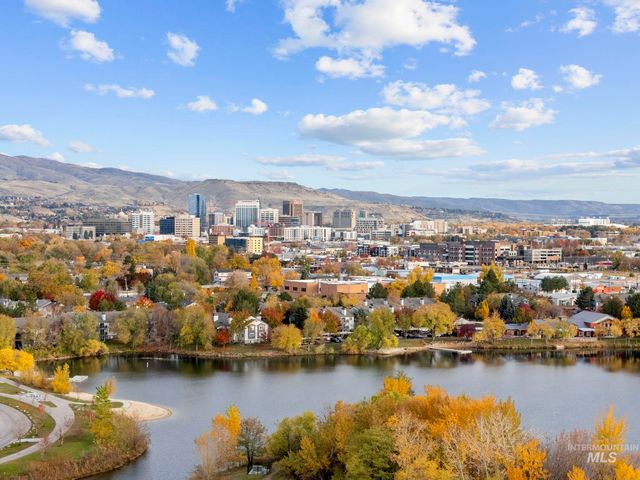
Garden City is a dense urban enclave between Boise and the Boise River, with Greenbelt access and an emerging restaurant district creating the Treasure Valley’s most distinctive urban neighborhood
Why the Supply Constraint Matters
- Garden City literally has no room to grow outward; Boise surrounds it on three sides
- New supply requires demolishing existing structures and rebuilding at higher density
- This is fundamentally different from suburban markets where new land is always available
- Supply constraint combined with growing demand = durable price appreciation ceiling above comparable markets
- Similar to how Brooklyn or Oakland maintain premiums relative to their surroundings
Garden City vs. Comparable Boise Metro Options
| Market | Character | Median Price | Primary Tenant | Appreciation Driver |
|---|---|---|---|---|
| Garden City | Urban arts district, Greenbelt, breweries | $410,000 | Young professionals, creative class | Supply constraint + gentrification |
| Boise (comparable neighborhoods) | Urban, downtown, established | $470K-$600K | Professionals, mixed demographic | Established premium, downtown employment |
| Star | Suburban family, Eagle-adjacent | $490,000 | Eagle overflow families, West Ada schools | Eagle gap-compression |
| Kuna | Suburban, affordable Boise fringe | $390,000 | Workforce families, price-conscious | Meridian gap-compression |
Garden City occupies a unique position: priced below comparable proximity Boise properties but with distinctly urban character that suburban alternatives cannot replicate. The 10 to 20% discount to similar-proximity Boise properties is the compression opportunity. As Garden City’s restaurant district and Greenbelt amenities mature, the justification for that discount erodes, and prices converge toward Boise levels. This is a long-term story but a structurally supported one.
Historical Performance and Gentrification Timeline
| Period | Driver | Appreciation | Key Development |
|---|---|---|---|
| 2010-2016 | Artists and small businesses; early adopters | 3-6% | First restaurants and breweries establish on Boise River; creative community takes hold |
| 2016-2020 | Boise growth spillover; young professional discovery | 8-13% | Restaurant row expands; Greenbelt improvements; young professional in-migration accelerates |
| 2020-2022 | Boise pandemic migration; urban premium demand | 22-35% | Garden City fully emerges as Boise’s premier urban alternative; prices surge with Boise Metro |
| 2023-2024 | Rate normalization; gentrification continues | 4-7% | Volume drops; prices hold due to supply constraint; restaurant district adds new anchors |
| 2025-2026 | Rate stabilization; continued urban demand, new mixed-use development | 8-12% (projected) | New mixed-use developments underway; Greenbelt improvements; continued Boise discount compression |
📚 New to real estate investing? Master the fundamentals with our professional 144-lesson course Learn more →
2. Investment Zones
Garden City Investment Zone Map
Interactive map of Garden City’s investment zones. Note the small geographic footprint; Garden City is densely developed in approximately 2 square miles between Boise and the Boise River.
Primary Investment Zones
Expert Insight: “People who haven’t driven through Garden City in the past three years genuinely don’t know what they’re looking at. The restaurant row on the river is legitimately good by any city’s standards. There are places there that people in Meridian drive to specifically. That’s a different dynamic than the Garden City of 2015. Once a neighborhood becomes a destination rather than a passthrough, the residential demand follows. The investors who bought Garden City condos in 2014 and 2015, when it was still primarily industrial, are sitting on properties that have roughly tripled in value. The same opportunity now is smaller but still real in the west transition zone, which still feels like 2015 Garden City in some blocks.” – David Park, Treasure Valley Urban Investment Group
3. Property Types
Urban Market Note: Garden City’s property type mix is fundamentally different from every other market in this Idaho guide series. Single-family detached homes on lots are increasingly rare. The primary investment vehicles are condos, townhomes, and small multifamily buildings. Investors transitioning from suburban Idaho markets should understand that HOA fees, condominium association dynamics, and the lack of traditional suburban space are built into the investment profile here.
2BR Condos (Primary Investment Vehicle)
Garden City’s most common investment vehicle. Modern or recently renovated 2BR condos in the $320,000 to $450,000 range targeting young professional couples and roommate pairs. HOA fees of $200 to $350/month are common and affect cash flow but include exterior maintenance. 2BR units at 1,000 to 1,400 square feet are the sweet spot for the Garden City tenant demographic.
Townhomes (Best Appreciation Upside)
2 to 3 bedroom townhomes offer more space and typically better appreciation than condos due to the implied land value component. Garden City townhomes in the $350,000 to $530,000 range attract slightly older young professional renters or couples who want more space but the urban Garden City lifestyle. Lower HOA than condos in some cases. The supply-constrained market limits new townhome construction.
Small Multifamily (Best Income)
Duplexes and triplexes in Garden City are rare but represent the best income investment in the market. A Garden City duplex at $600,000 to $750,000 with two 2BR units renting at $1,800 to $2,000 each generates $3,600 to $4,000/month gross. Better cash flow metrics than any single-unit Garden City investment. Rarely listed; requires off-market relationships or patience.
Greenbelt-Adjacent Premium Units
Properties within 1 to 2 blocks of a Greenbelt access point, whether condo or townhome, command 10 to 15% rent premiums from active lifestyle tenants who specifically want to step out and be on the trail. Garden City’s Greenbelt access is its most distinctive physical amenity. Marketing a property’s specific distance and time to the nearest Greenbelt entry is the single most impactful listing claim in Garden City.
SFH (Rare, Highest Appreciation)
Genuine single-family detached homes on lots in Garden City are increasingly rare as density increases. When available, they carry a significant scarcity premium and appreciate faster than condos or townhomes because the underlying land value benefits from Garden City’s supply constraint without the management layers of condominium ownership. Prices of $450,000 to $700,000+ for Garden City SFH.
Loft / Live-Work / Mixed-Use Upper Floor
Garden City’s industrial heritage has produced a stock of loft and live-work spaces that appeal to the creative professional demographic. These properties have authentic urban character that new construction cannot replicate. 600 to 1,200 square foot loft units attract designers, architects, photographers, and tech workers who specifically want the aesthetic. Rents of $1,400 to $2,100 depending on size and finish level.
Our Complete Renovation & Remodeling Cost Guide covers 400+ project types including condo renovations, loft conversions, and urban property upgrades.
4. Cost Analysis
Acquisition Cost Breakdown (Garden City)
| Item | Typical Cost | Example ($390,000 Townhome) | Notes |
|---|---|---|---|
| Down Payment | 25% | $97,500 | Lower absolute capital than Star or Hayden but still meaningful |
| Closing Costs | 2-3% | $7,800-$11,700 | Competitive Ada County title market; condo documentation may add modest cost |
| HOA Pre-paid Fees | $500-$1,500 | $900 | Typical HOA pre-paid reserves and working capital contribution at closing |
| Inspection | $300-$450 | $375 | Plus HOA reserve study review; request current HOA financials before closing |
| Initial Renovation (if needed) | 0-8% | $0-$31,200 | Many Garden City condos need kitchen or bath refresh to achieve premium rent |
| Carry Reserves (12 months) | 12 months carry | $8,400-$10,800 | Negative carry; 12-month reserve appropriate |
| TOTAL MINIMUM ENTRY | ~32-36% | $115,000-$152,000 | HOA fees add effective cost compared to SFH markets |
Sample Cash Flow: 2BR Greenbelt-Adjacent Townhome at $390,000
| Item | Monthly | Annual | Notes |
|---|---|---|---|
| Gross Rent | $2,050 | $24,600 | 2BR Greenbelt-adjacent townhome; young professional couple tenant |
| Less Vacancy (5%) | -$103 | -$1,230 | Garden City urban market; quality units lease within 1-2 weeks |
| Property Taxes | -$200 | -$2,400 | Ada County ~0.65% of $369K assessed value |
| HOA Fees | -$220 | -$2,640 | Covers exterior maintenance, landscaping, common areas; typical for Garden City townhomes |
| Insurance | -$85 | -$1,020 | Interior/landlord policy; HOA covers exterior in most Garden City communities |
| Property Management (10%) | -$195 | -$2,340 | Treasure Valley PM; competitive market for urban Boise properties |
| Maintenance + CapEx (4%) | -$78 | -$936 | HOA handles exterior; interior-only CapEx at 4%; lower than SFH markets |
| Net Operating Income | $1,169 | $14,034 | Before mortgage; 3.60% cap rate on $390K |
| Mortgage ($390K, 25% down, 6.75%, 30yr) | -$2,143 | -$25,716 | $292,500 loan at 6.75% |
| CASH FLOW | -$974 | -$11,682 | Negative carry; appreciation thesis required |
| Total Return (9% appreciation) | ~21% | $35.1K equity – $11.7K carry = $23.4K net on $97.5K invested |
The HOA fee of $220/month is the key variable that differentiates Garden City condo/townhome cash flow from SFH markets. On the positive side, HOA-covered exterior maintenance reduces the landlord’s effective CapEx obligation; the 4% maintenance budget above covers only interior items. The net carry of -$974/month is comparable to Star and slightly better than Hayden in absolute terms, with the supply-constraint appreciation story potentially more durable over longer holds due to the physical impossibility of competing supply being built on new land.
HOA Financial Health Check: Before purchasing any Garden City condo or townhome, request the HOA’s current reserve study, recent financial statements, and meeting minutes from the past 12 months. A poorly funded HOA reserve can result in special assessments of $5,000 to $25,000+ per unit for major repairs to shared systems (roofs, parking structures, plumbing). This is the most common Garden City investor surprise and is entirely preventable through pre-purchase HOA financial review. An HOA with less than 70% of recommended reserves should be treated as a significant risk factor.
5. Legal Framework
✅ Garden City: Idaho State Law, More Permissive Than Adjacent Boise
Garden City is an independent municipality operating under Idaho Code Title 55 statewide law with fewer additional local regulations than the adjacent City of Boise. Critically for STR investors, Garden City does not have Boise’s STR permit and registration requirements. For long-term rental investors, Garden City operates under Idaho’s landlord-friendly standard. No rent control, no just cause eviction, no rental registration required in Garden City.
Garden City vs. Boise City Regulations
| Regulation | Garden City | Boise City |
|---|---|---|
| STR Permit | None (2026) | Required |
| STR Registration | None | Required |
| Rent Control | None (state preemption) | None (state preemption) |
| Rental Registration | None | Some programs |
| Just Cause Eviction | Not required | Not required |
Always verify current regulations directly before investing; local regulations can change. This table reflects 2026 status.
Condo-Specific Legal Considerations
- HOA CC&R Review: Every Garden City condo and townhome has HOA governing documents. Review rental cap policies, tenant approval requirements, STR restrictions, pet policies, and parking regulations before any offer.
- Condominium Act Compliance: Idaho Condominium Property Act governs condo associations. Understand HOA board authority, special assessment procedures, and reserve fund requirements.
- Rental Caps: Some Garden City condo communities limit rental units to 20 to 30% of total units. Confirm rental slot availability before closing. This is the same critical step as Kuna, Star, and Rathdrum master-planned communities.
- Lender HOA Requirements: Fannie Mae and Freddie Mac have specific condo project approval requirements. Some Garden City condo communities may be non-warrantable (over 50% rental units, litigation, inadequate reserves). Confirm your specific property’s warrantability with your lender before committing.
6. Garden City Investment Playbook
Choose Your Garden City Strategy
Greenbelt Premium Hold
Buy a Greenbelt-adjacent townhome or condo. Pay the premium for river access positioning. Target active lifestyle young professionals at 10-15% above non-Greenbelt rents. Lowest turnover in Garden City from tenants who specifically chose Greenbelt access.
Arts District Gentrification Play
Buy in central Garden City’s arts and transitioning zones at lower prices. Target the gentrification curve rather than paying the Greenbelt premium. Better absolute appreciation upside; more patient hold required.
West Transition Long Hold
Buy at the frontier of Garden City’s gentrification wave in west Garden City. Lowest entry prices, most appreciation potential, longest required hold. Industrial-to-residential transition over 7-12 years generates the most return per dollar but requires patience.
Multifamily Income Optimization
Seek a Garden City duplex or triplex. Rare but the best income structure in the market. Two units generate better cash flow than any single-unit Garden City investment. Requires patience and off-market relationships to find.
Build Your Garden City Team
- Treasure Valley Urban Investment Agent: Garden City is a small market; agents who specifically understand urban condo and townhome investment dynamics differ from suburban SFH agents. Look for agents who have closed multiple Garden City or Boise urban residential investment transactions. They understand HOA dynamics, condominium warrantability, and the specific tenant demographic that drives Garden City rents.
- Urban-Focused Property Manager: Young professional urban tenants have different expectations than suburban family renters. A PM who primarily manages Meridian or Caldwell SFH may not understand or effectively market Garden City units. Find a PM who has Garden City or Boise downtown-adjacent experience and understands the Greenbelt-adjacent, arts district, and young professional marketing angles.
- HOA-Experienced Lender: Condo and townhome financing has HOA-specific considerations: warrantability, owner-occupancy ratios, reserve fund adequacy. Use a lender who specifically processes condo loans regularly in Ada County and understands the Fannie Mae/Freddie Mac condo project review process.
- Idaho CPA: Same tax optimization fundamentals. HOA fees are typically not directly deductible (they cover the HOA’s expenses, not your personal expenses), but the depreciation schedule, property tax deduction, and interest deduction apply fully. A CPA familiar with condo investment property taxation is valuable here.
Garden City-Specific Due Diligence
HOA Financial Checks
- Current reserve study (ideally within 3 years); confirm funding percentage
- 12 months of board meeting minutes: identifies upcoming special assessments, deferred maintenance, disputes
- Current HOA budget and actual financials: revenue vs. expenses
- Rental cap policy and current rental unit count vs. cap
- STR policy (if STR is part of your strategy)
- Pending litigation involving the HOA
Market and Property Checks
- Condominium warrantability check with your specific lender before making an offer
- Confirm actual Greenbelt distance; measure from unit door to nearest Greenbelt access point
- Noise check: Garden City’s restaurant district means some properties near the river corridor have weekend/evening ambient noise
- Industrial neighbor check: west Garden City still has operating industrial properties; verify noise, odor, and traffic from adjacent uses
- Pull rent comps from Zillow, RentCafe, and local PM market data for the specific Garden City zone
Market to Garden City’s Urban Tenant
- Lead With Lifestyle, Not Specs: “2BR/2BA 1,150 sqft” is a spec sheet. “Steps from the Boise River Greenbelt; walk to Garden City’s best restaurants; cycling to downtown Boise in 10 minutes” is the Garden City value proposition. Urban renters choose lifestyle first; they know the specs matter less when the location is right.
- Boise Millennial/Gen Z Channels: Post in Boise-specific subreddits, Facebook groups for Boise young professionals, and LinkedIn Boise metro groups. The Garden City urban renter demographic is highly active on digital channels and specifically reads local recommendations rather than just scanning Zillow.
- Quality Photography of the Neighborhood: Garden City’s restaurant row and Greenbelt are visual assets that sell units. Include photos of the nearest Greenbelt access point, the river view, and the adjacent dining options in your listing. Most rentals only show the interior; exterior neighborhood photography differentiates Garden City listings immediately.
- Bike Storage and Active Lifestyle Infrastructure: Secure indoor bike storage is the single most-requested amenity among Greenbelt-adjacent Garden City renters. If your building or unit offers it, feature it prominently. If it does not, a bike hook inside the unit costs $30 and converts skeptical cycling-commuter applicants into enthusiastic signers.
7. Financing Options for Garden City
| Loan Type | Down Payment | Rate | Best For | Garden City Note |
|---|---|---|---|---|
| Conventional Investment (Warrantable) | 25% | +0.5-0.75% | Approved Garden City condo communities | Best rate for warrantable condo projects. Many Garden City condos qualify; confirm project approval with your lender before committing. |
| Non-Warrantable Condo / Portfolio | 25-30% | +1.5-2.5% | High-rental-concentration buildings, smaller HOAs | Some Garden City condo communities with high investor concentration may be non-warrantable. Idaho Central Credit Union and local community banks can hold these in portfolio. Higher rate and slightly higher down payment. |
| DSCR Loan | 20-25% | +1.5-2.5% | Self-employed investors | DSCR challenging in Garden City given HOA fees reducing NOI. Test with multiple lenders. Some Garden City duplexes may approach DSCR qualification at 1.0x with combined unit income. |
| FHA (Owner-Occupant) | 3.5% | Standard + MIP | First-time owner-occupant investors | FHA on a Garden City condo: the project must be FHA-approved. Many condo communities are not on the FHA approved list; verify project approval before planning FHA strategy. |
Condo Warrantability and Lender Due Diligence: The single most important financing step for Garden City condo purchases is confirming condominium project warrantability with your lender before making an offer. A non-warrantable condo does not disqualify the investment, but it limits you to portfolio lenders (higher rate, less competition) and can significantly complicate the resale process years later. The Fannie Mae and Freddie Mac condo project approval checks (owner-occupancy ratio, litigation status, reserve funding, commercial unit percentage) typically take 3 to 7 business days. Run this check in parallel with your purchase agreement contingency period, not after it expires.
8. Frequently Asked Questions

Knowledge Quiz: Garden City Idaho Real Estate Investment
Open Quiz
5 quick questions on Garden City urban infill investing
1) What is Garden City’s most distinctive supply-side advantage compared to every other Boise Metro investment market?
Answer: C
Garden City’s physical encirclement by Boise and the Boise River is the fundamental basis for its supply constraint thesis. Unlike Star, Kuna, Caldwell, or any other Boise Metro fringe market that can always convert adjacent agricultural land into new subdivisions, Garden City has nowhere to grow. New units can only be added by demolishing existing lower-density uses and rebuilding at higher density, which is expensive urban construction that enters the market at price points supporting rather than undercutting existing values. The guide draws the analogy to Brooklyn, Oakland, and Denver’s RiNo as urban creative districts with fixed boundaries that have sustained long-arc appreciation.
2) What is the most important additional due diligence step for Garden City condo and townhome purchases that does not apply to SFH purchases in other Idaho markets?
Answer: A
The guide highlights HOA financial health review as the critical Garden City-specific due diligence step. An HOA with less than 70% of recommended reserves should be treated as a significant risk. The guide notes that underfunded HOAs are the most common Garden City investor surprise, and they are entirely preventable through pre-purchase review of the reserve study, financial statements, and board meeting minutes. The meeting minutes specifically often contain advance notice of upcoming special assessments, deferred maintenance decisions, and litigation risks that would not appear in the reserve study alone.
3) Why does being a separate municipality from Boise benefit Garden City investors specifically?
Answer: D
The guide identifies the STR regulatory advantage as Garden City’s most practically important benefit from being a separate municipality. The City of Boise requires STR permits and registration; Garden City (operating under Idaho state law without additional local requirements) does not. For investors who want to operate short-term rentals in the Boise Metro without Boise’s regulatory process, Garden City’s location adjacent to Boise with the same Greenbelt and amenity access at slightly lower prices, plus zero STR regulation, creates a specific opportunity. The guide warns investors to verify they are actually in Garden City limits, not adjacent Boise, before relying on this advantage.
4) What does the guide identify as the single most impactful listing feature for Garden City rentals targeting the active lifestyle tenant?
Answer: B
The guide’s marketing section identifies Greenbelt proximity as the single most consistent premium driver for Garden City rental properties. Properties within 1 to 2 blocks of Greenbelt access points command 10 to 15% higher rents than equivalent units without Greenbelt proximity, from tenants who specifically chose Garden City for the ability to step out and be on the trail. The guide recommends measuring and stating the exact distance and time from unit door to nearest access point in listings, noting that “walkable to Greenbelt” is too vague and that “3 minute walk to the Greenbelt entrance” is the specific claim that converts active lifestyle tenant browsers into applicants.
5) How does the guide describe the Garden City tenant’s average mobility and tenure compared to suburban Idaho markets?
Answer: C
The guide places Garden City’s tenant mobility honestly within the Idaho series context. Urban young professional renters (25-38 years old) are more mobile than school-year family renters (4-8 year Hayden stays) but less mobile than student renters (semester turns in Rexburg). An 18 to 30 month average tenancy in Garden City is consistent with urban professional markets nationally. The guide notes that Greenbelt-adjacent properties specifically attract the more loyal end of Garden City’s tenant spectrum, because Greenbelt access is hard to replicate elsewhere and tenants who chose that specifically are less likely to leave over minor inconveniences or minor rent increases than tenants who chose Garden City primarily for price.
Work With a Local Expert in Garden City
We are building a verified network of real estate professionals across every market we cover.

About Our Expert Network
Our Garden City specialists are selected for their urban Boise Metro investment experience and specific understanding of condo association dynamics, Greenbelt proximity premiums, and the young professional tenant market that drives Garden City rents and appreciation.
- Garden City condo and townhome transaction experience
- HOA financial health assessment and reserve study interpretation
- Condominium warrantability and financing guidance
- Greenbelt proximity analysis and lifestyle marketing expertise
- Property management referrals specializing in urban young professional tenants
Get Connected or Join Our Network
Contact us at support@buildsandbuys.com
Find Garden City Real Estate Professionals
Ready to Invest in Garden City?
Garden City is the Idaho series’ most anomalous market, and also one of its most durable investment cases. Every other market in this guide can theoretically have a new subdivision built adjacent to it. Garden City cannot. The Boise River holds the north boundary. Boise City surrounds the rest. There is no new land. This permanence gives Garden City’s appreciation story a structural quality that suburban growth markets lack. Add the Greenbelt as an amenity that is also not replicable, a restaurant and brewery district that is in the middle of its development arc, and a young professional tenant demographic that is upgrading its income and lifestyle expectations year over year, and the long-term case is strong. The near-term cash flow is negative, as it is in most Ada County markets. But for investors who want to own the only supply-constrained, urban, Greenbelt-adjacent infill play in the Treasure Valley, there is literally nowhere else to go. That is what makes Garden City a destination rather than an alternative.
Continue Your Research
Idaho State Guide
Compare Garden City to every Idaho market and understand how this urban infill play fits within the broader Idaho investment spectrum.
Boise Guide
Compare Garden City to comparable Boise neighborhoods to assess whether the current price gap justifies the investment thesis.
144-Lesson Course
Master urban infill investing, condo investment analysis, HOA due diligence, and supply-constrained market appreciation.
For further guidance, explore our State-by-State Investor guides, browse our expert articles, or follow our Step-by-Step Investment Guide.



