
Emmett Idaho Real Estate Investment Guide For 2026
A comprehensive resource for investors targeting the Gem County’s most affordable Boise commuter market, where agricultural heritage, Payette River recreation, and Idaho’s most investor-friendly laws converge to create an underappreciated opportunity
Quick answers: Top 5 most searched Emmett investment questions ▼
Migration data: Who’s moving to Emmett and why ▼
1. Emmett Market Overview
Market Fundamentals
Emmett is the seat of Gem County, located 30 miles north of Boise and 25 miles north of Nampa via the Highway 16 corridor. It is one of the least discovered Boise Metro adjacent markets in Idaho, not because it lacks fundamentals, but because it sits outside the main I-84 corridor that most investors follow when looking beyond Ada County. That relative obscurity is a feature for investors who find it before the broader market does. Emmett’s self-image as the “Gem of the Mountains” is earned: the Payette River runs nearby, Black Canyon Reservoir provides year-round fishing access, cherry orchards cover the surrounding hillsides, and the town has the agricultural character and community identity that lifestyle migrants from Boise’s suburbs specifically seek.
Key fundamentals:
- Population: 8,500+ city proper; 18,000+ Gem County; growing 3-4% annually
- Distance to Boise: 30 miles via Highway 16, approximately 40-55 minutes
- County: Gem County, separate from Ada and Canyon; lowest regulatory burden in the region
- Key Employers: Gem County government, Emmett School District, agriculture, small manufacturing, Boise Metro commuters
- Recreation: Payette River fishing and rafting, Black Canyon Reservoir, hunting, hiking
- Annual Event: Emmett Cherry Festival, one of Idaho’s oldest agricultural festivals, draws regional visitors each June
- Remote Work Draw: Highway 16 commute becomes manageable at 2-3 days per week for hybrid workers
Emmett’s investment case is not built on flashy growth numbers or transformative commercial development. It is built on the durable appeal of rural Idaho living within commutable distance of one of America’s fastest-growing regional economies. As Boise Metro median prices have pushed past $550,000 and even Canyon County fringe markets like Caldwell and Nampa have crossed $350,000, Emmett’s sub-$350,000 median price for genuine rural character becomes increasingly attractive to a specific and loyal tenant demographic.
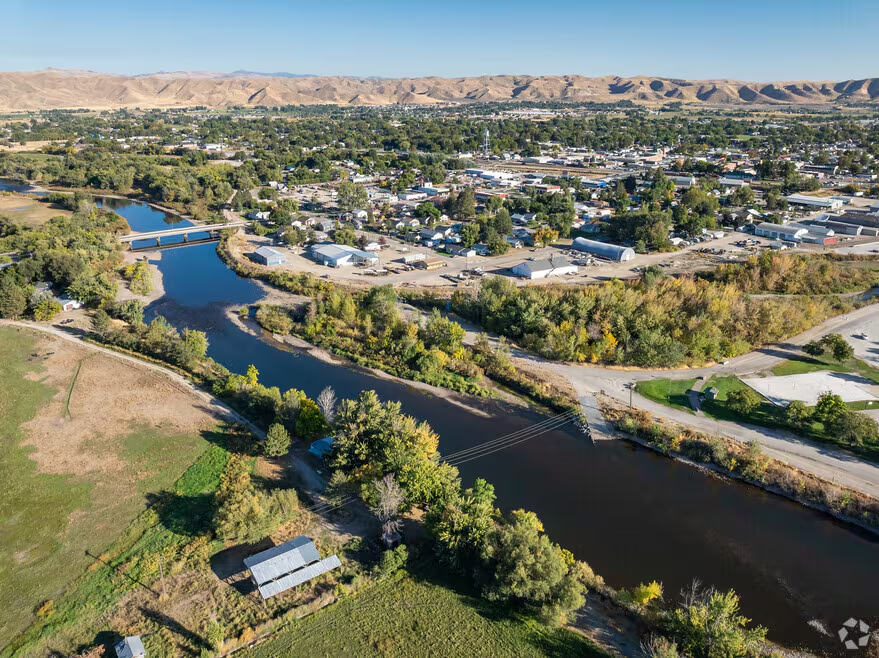
Emmett sits 30 miles north of Boise in Gem County, offering rural Idaho character at prices well below any Boise Metro community
Emmett’s Unique Advantages
- Less investor competition: Most Idaho investors focus on I-84 corridor; Emmett largely overlooked
- Lifestyle tenant loyalty: Residents who chose Emmett for its character rarely leave
- Payette River access: Year-round recreation differentiates from purely agricultural communities
- Agricultural land values: Gem County land prices provide appreciation floor
- Gem County zero regulations: Least bureaucratic county in the region
- Cherry Festival tourism: Annual event creates seasonal STR/mid-term demand
Emmett’s Position Among Boise Fringe Markets
| Market | Distance to Boise | Median Price | Character | Yield |
|---|---|---|---|---|
| Emmett | 30mi via Hwy 16 (45-55 min) | $345,000 | Rural agricultural, river access, orchards | 5.5-7% |
| Kuna | 20mi via I-84 (25-30 min) | $390,000 | Suburban, master-planned, family | 4.5-5.5% |
| Star | 17mi via I-84 (20-25 min) | $490,000 | Suburban, growth corridor, Eagle adjacent | 4-5% |
| Caldwell | 30mi via I-84 (30-35 min) | $355,000 | Urban/suburban, agricultural, Canyon County | 5.5-7% |
Emmett is priced comparably to Caldwell but offers a fundamentally different lifestyle proposition. Where Caldwell is an urban-suburban Canyon County community with industrial and agricultural employment, Emmett is a small rural Idaho town with genuine agricultural identity. The 45 to 55 minute commute is the trade-off that keeps Emmett affordable relative to closer suburban markets. For investors, that trade-off works in their favor: the tenants willing to accept it are precisely the loyal, lifestyle-committed renters who minimize vacancy and management intensity.
Historical Performance
| Period | Market Driver | Avg Annual Appreciation | Key Event |
|---|---|---|---|
| 2010-2016 | Agricultural stability, modest Boise overflow | 2-4% | Highway 16 improvements begin; Emmett slowly enters Boise commuter consciousness |
| 2016-2020 | Boise Metro price growth pushing buyers outward | 6-10% | Emmett discovered by Boise families seeking acreage; inventory collapses |
| 2020-2022 | Remote work explosion; pandemic migration | 18-25% | Remote workers embrace Emmett; prices double in two years for some property types |
| 2023-2024 | Rate normalization; volume pullback | 3-6% | Market holds; organic growth continues; very low inventory keeps prices stable |
| 2025-2026 | Rate stabilization; hybrid work normalizes commute | 6-9% (projected) | Highway 16 capacity improvements; growing remote worker draw; low inventory supporting prices |
Why Emmett Has Less Investor Competition
Most Idaho real estate investors search in recognized markets: Boise, Meridian, Nampa, Caldwell, Coeur d’Alene. Emmett rarely appears on these lists, for reasons that are real but not necessarily disqualifying:
- Highway 16, not I-84: Most investor tools and searches are indexed to I-84 corridor markets. Emmett’s north-of-Boise position on a state highway rather than an interstate keeps it off many investor radars.
- Small market: Fewer listings at any given time mean investors looking for scale do not target Emmett. For investors buying one to three properties, this is actually an advantage: less competition per available listing.
- Fewer professional services: Fewer PMs, fewer investor-focused agents, fewer contractors than Canyon County. This is a real operational challenge, not just a perception issue. Build your team before you need it.
- Perception of isolation: Investors unfamiliar with Emmett sometimes perceive it as too remote. The reality of a 45-minute commute on a two-lane highway is genuinely different from a 45-minute interstate commute, but for hybrid workers it is entirely manageable.
The investor who does the homework to understand Emmett’s lifestyle-tenant demographic, builds a reliable local PM relationship, and is patient about finding the right property in a thin inventory market will find less competition and better negotiating position than in any Canyon County equivalent market.
📚 New to real estate investing? Master the fundamentals with our professional 144-lesson course Learn more →
2. Neighborhood Hotspots
Emmett Investment Neighborhood Map
Interactive map of Emmett’s investment neighborhoods. Green stars mark top hotspots, blue circles show established markets, and orange circles highlight emerging areas.
Core Investment Neighborhoods
Detailed Submarket Analysis
| Neighborhood | Price Range | Cap Rate | Growth Drivers | Best Strategy |
|---|---|---|---|---|
| South / Highway 16 Corridor | $330K-$440K | 5-6.5% | Boise commute, new development, highway improvements | Commuter family buy-and-hold |
| Central / Historic Core | $295K-$390K | 5.5-7% | Walkability, character, river proximity, community | Lifestyle hold, value-add |
| NE / Newer Subdivisions | $345K-$460K | 5-6% | New construction, remote workers, quality tenant ceiling | Passive buy-and-hold |
| East / Payette River Adjacent | $325K-$430K | 5-6% | Recreation access, lifestyle loyalty, river views | Lowest turnover, lifestyle focus |
| North / Quiet Established | $310K-$410K | 5-6.5% | Community roots, family stability, quiet character | Stable passive hold |
| West / Older Value-Add | $270K-$345K | 5.5-7% | Most affordable entry, renovation upside | Value-add, BRRRR, lowest entry |
| Gem County Rural / Acreage | $360K-$650K | 4-5.5% | Land value, maximum space, agricultural lifestyle | Long-hold, land banking, lifestyle property |
Expert Insight: “The investor who takes time to understand Emmett’s tenant psychology has a significant advantage over the investor who treats it like any other Boise overflow market. Emmett tenants are not here because they couldn’t find anything else. They are here because they specifically chose it. That deliberate choice means they don’t leave at the first inconvenience. I have Emmett tenants who have been in properties for 4, 5, and 6 years. In the same time period, I’ve had Canyon County properties with three or four tenant cycles. The math on vacancy and turnover costs adds up to a significant advantage over a long hold.” – Rachel Torres, Gem County Real Estate Advisors
3. Property Types
3-4BR SFH (Core Market)
The dominant Emmett investment vehicle. The typical Emmett rental buyer is a family or couple seeking 3 to 4 bedrooms with a yard, ideally with outdoor storage for recreational equipment. Clean, maintained homes with functional layouts and decent condition lease quickly. A well-maintained 3BR at $1,550 to $1,700 per month attracts commuter and lifestyle tenants who stay for years.
4BR with Acreage (Lifestyle Premium)
Emmett’s distinctive lifestyle product: 4 bedroom homes on 0.5 to 2+ acres. These properties attract the most loyal Emmett tenant segment, families who specifically want the space to have horses, large gardens, workshop outbuildings, or simply the privacy that acreage provides. Higher prices but extraordinarily low turnover. Some of these tenants stay 5 to 10 years.
Value-Add SFH
Older homes in west and central Emmett from the 1970s through 1990s that need updating. Purchase prices in the $270,000 to $315,000 range with renovation budgets of $25,000 to $55,000 can produce properties that attract quality Emmett lifestyle tenants at above-market rents. Good BRRRR fundamentals given the spread between distressed and renovated values in a thin inventory market.
New Construction (South Emmett Growth)
Emmett’s newer subdivisions along the Highway 16 corridor include builder-new 3 to 4 bedroom homes targeting commuter families and remote workers. New construction commands premium rents from quality-conscious tenants. Low maintenance for the first 5 years. Available at prices meaningfully below comparable new construction in Kuna or Star.
Seasonal / Mid-Term Rentals
Cherry Festival in June draws regional visitors to Emmett; Payette River recreation generates summer visitor demand; Black Canyon Reservoir attracts anglers year-round. Furnished properties command $1,500 to $2,500 per month on 30+ day stays from seasonal agricultural contractors, river recreation enthusiasts, and festival visitors. No STR ordinance in Emmett as of 2026.
Agricultural Property / Land Banking
Gem County agricultural land prices provide a long-term hold opportunity for investors with a 10+ year horizon. Orchard land adjacent to Emmett has been transitioning to residential in some areas. The combination of agricultural use income (orchard leasing), potential residential development, and the steady appreciation of Gem County land values creates a patient investor’s play.
| Investor Profile | Best Property Type | Best Location | Minimum Capital |
|---|---|---|---|
| Passive / Out-of-State | New construction SFH | South Emmett, NE Emmett | $100,000+ |
| Minimum Management | 4BR with acreage, lifestyle property | East, north Emmett fringe | $105,000+ |
| Active / Value-Add | Older SFH BRRRR | West Emmett, older central stock | $80,000+ plus renovation |
| Patient / Long Hold | Agricultural land or rural property | Gem County fringe | Varies widely |
Get accurate cost estimates before you commit. Our Complete Renovation & Remodeling Cost Guide covers 400+ project types with real contractor pricing.
4. Cost Analysis
Acquisition Cost Breakdown (Emmett)
| Expense Item | Typical Cost | Example ($345,000 Property) | Notes |
|---|---|---|---|
| Down Payment | 25% | $86,250 | Standard investment; lower absolute capital than Kuna or Caldwell equivalents |
| Closing Costs | 2-3% | $6,900-$10,350 | Gem County title costs are moderate; fewer competing title companies means shop around |
| Inspection | $325-$475 | $400 | Older homes: check septic if not connected to city sewer; well if not on city water |
| Septic / Well Inspection | $200-$500 | $350 | Rural and fringe properties on septic/well; additional inspection non-negotiable |
| Initial Repairs | 0-8% | $0-$27,600 | Older stock needs more; new construction needs nothing |
| Reserves (9 months) | 9 months PITI | $14,000-$17,000 | Slightly higher reserve recommended given negative carry and thin local contractor market |
| TOTAL MINIMUM ENTRY | ~33-38% | $107,000-$142,000 | Comparable to Canyon County markets but different risk profile |
Sample Cash Flow Analysis: 3BR Central Emmett SFH
| Item | Monthly | Annual | Notes |
|---|---|---|---|
| Gross Rent | $1,625 | $19,500 | 3BR 1.5-bath, central Emmett, decent condition, Boise commuter tenant |
| Less Vacancy (5%) | -$81 | -$975 | Lower than metro; lifestyle tenants stay 3-5+ years on average |
| Property Taxes | -$168 | -$2,016 | Gem County ~0.65% of $311K assessed value |
| Insurance | -$95 | -$1,140 | Landlord policy; rural location may add slightly to premiums |
| Property Management (10%) | -$154 | -$1,853 | Emmett/Gem County PM; smaller market; may need Boise-area PM serving Emmett |
| Maintenance + CapEx (7%) | -$108 | -$1,295 | Mix of newer and older stock; 7% moderate estimate |
| Net Operating Income | $1,019 | $12,221 | Before mortgage; 3.54% cap rate on $345K |
| Mortgage ($345K, 25% down, 6.75%, 30yr) | -$1,678 | -$20,136 | $258,750 loan at 6.75% |
| CASH FLOW | -$659 | -$7,915 | Modestly negative; comparable to Kuna SFH but with lower volatility |
| Total Return (7% appreciation) | ~14% | Equity + appreciation, net of carry cost | |
| Vacancy Cost (actual vs. budget) | -$975 budget vs. ~$0 actual (long tenure) | Lifestyle tenants often stay 3-5 years; actual vacancy cost may be near zero for long stretches |
The -$659 monthly carry is comparable to Kuna’s SFH scenario, but with a key difference that is hard to capture in a table: Emmett lifestyle tenants stay materially longer than Boise Metro suburb tenants. A tenant who stays 4 years without a vacancy saves approximately $3,900 in vacancy-related costs (1 month vacancy x 4 renewals at 2 days each = 8 days actual vacancy x $54/day) and $4,000 to $6,000 in turnover preparation and leasing fees compared to a Canyon County property turning over every 18 months. That real operational savings narrows the effective carry gap between Emmett and higher-yield markets. For investors who value stability over yield optimization, this trade is often worth making.
Emmett’s Total Return Advantage: At 7% annual appreciation on a $345,000 property with 25% down ($86,250 invested), equity growth alone is approximately $24,150 in year one. Against a $7,915 annual carry cost, the net annual return exceeds 18% on invested capital. The carry cost is real but modest relative to the appreciation-driven equity build in a market where lifestyle tenants’ loyalty further reduces the operational friction that erodes returns in higher-turnover markets.
5. Legal Framework
✅ Gem County: Zero Additional Regulations Beyond Idaho’s Already Minimal State Law
Gem County and the City of Emmett operate under Idaho Code Title 55 with absolutely no additional local landlord regulations. No rent control, no just cause eviction, no source of income protections, no rental registration, no inspection programs. Emmett is arguably the most regulation-free rental market in the state, operating purely under Idaho’s already landlord-friendly statewide framework. For out-of-state investors coming from California, Oregon, or Washington, the contrast is dramatic.
Idaho Key Provisions in Emmett
- No Rent Control: Statewide preemption; Gem County cannot enact rent limits. Rents adjust freely at renewal.
- No Just Cause: 30-day notice terminates month-to-month. No reason required at lease expiration.
- 3-Day Pay or Quit: Non-payment triggers a 3-day notice. Gem County District Court handles unlawful detainer in 21 to 35 days uncontested.
- No Rental Registration: Zero permits, no inspections, no compliance reporting in Emmett or Gem County.
- Security Deposit: No statutory cap; return within 21 days with itemized statement.
- No STR Restrictions: Emmett has no short-term rental ordinance as of 2026. Cherry Festival and Payette River STR strategies are fully permitted.
- Septic Note: If renting a property on a septic system, Idaho law requires the system be in good working order. Annual pumping is best practice and should be written into lease responsibilities.
Rural Property Considerations
Emmett’s rural and semi-rural property segment requires attention to some issues that do not arise in suburban markets:
- Well Water: Properties on private wells require the landlord to maintain the well system in working order. Tenant notification of any water quality testing should be documented.
- Septic Systems: Landlord responsibility. Include annual pump-out and usage guidelines in the lease. Idaho DEQ regulates septic; failure can result in significant remediation costs.
- Agricultural Easements: Some Gem County properties have irrigation or agricultural access easements. Confirm all easements with title before closing; they affect use and potentially rental value.
- Livestock Lease Clauses: If renting a property with pasture to tenants with animals, a specific livestock addendum clarifying care standards, fencing maintenance, and removal requirements is essential.
- Fire Risk: Gem County has wildfire exposure. Confirm insurance covers wildfire and that the property meets defensible space standards if in a fire-adjacent zone.
6. Step-by-Step Emmett Investment Playbook
Define Your Emmett Strategy
Passive Lifestyle Hold
Buy a quality 3 to 4BR Emmett home, hire a PM, and hold for 7 to 10 years. Target lifestyle tenants deliberately; accept the carry cost in exchange for extraordinary stability. Emmett’s most common investor profile.
Value-Add / BRRRR
Buy distressed older stock at $270K-$315K; renovate to lifestyle-tenant standard. Refinance at ARV. Emmett’s low inventory means renovated properties lease quickly at premium rents.
Acreage / Maximum Retention
Buy 4BR+ on 0.5 to 2 acres. Accept lower yield in exchange for extraordinary tenant retention. Properties that match the lifestyle tenant’s horse or farming needs see 5 to 10 year tenancies routinely.
Seasonal / Mid-Term Bridge
Buy a quality downtown or river-adjacent property. Operate long-term most of the year; convert to mid-term furnished during Cherry Festival, summer, and hunting season for premium income. No STR ordinance permits this.
Build Your Emmett Team
- Emmett or Gem County Agent: Emmett has few dedicated investment-focused agents. A Boise-area agent who regularly transacts in Gem County is acceptable, but confirm they have closed 3+ Emmett deals in the past 24 months. Local knowledge of inventory and seller relationships matters more in thin markets.
- Property Manager: This is the hardest team member to find in Emmett. Options include Emmett-based PMs (rare), Nampa or Caldwell-based Canyon County PMs who extend to Gem County, and Boise-based PMs willing to manage the extra distance. Interview each option on their Emmett-specific experience and their familiarity with rural property considerations (septic, well, livestock).
- Local Contractor: Emmett has a small contractor community. Build relationships before you need rapid vacancy turnaround. Having a reliable handyman and a licensed HVAC technician as standing contacts is more valuable here than in any Canyon County market.
- Gem County Title Company: Emmett has a limited title company selection. Payette and Nampa-based title companies also serve Gem County. Shop for both service quality and familiarity with rural property conveyances involving irrigation rights and easements.
- Idaho CPA: Same fundamentals as other Idaho markets. Rural property depreciation schedules, agricultural land considerations, and any septic or well improvement capitalization issues worth professional guidance.
Emmett-Specific Due Diligence
Rural Property Checks
- Septic inspection and pump record review for any property not on city sewer
- Well water quality test and flow rate for properties on private wells
- Irrigation water rights search: confirm any appurtenant water rights transfer with the deed
- Agricultural easement review: check for neighbor access, utility easements, ditch rights
- Wildfire defensible space assessment if property is in Gem County’s higher-risk areas
- Flood zone check for any Payette River adjacent property
Market Checks
- Pull rent comps carefully: Emmett inventory is thin and comps can be 6+ months old in slow periods
- Verify Highway 16 commute personally at peak traffic time: drive it yourself before buying
- Confirm city sewer and water vs. septic and well status early; it affects both operating costs and tenant screening
- Check Gem County Assessor for actual tax history; assessments in small counties can lag significantly
- Review school boundaries: Emmett School District feeds specific schools; confirm for family tenant appeal
Operate Successfully and Attract Emmett’s Best Tenants
Marketing to Emmett’s Lifestyle Tenant
Emmett tenants search differently than Boise Metro suburb tenants. Effective marketing emphasizes the lifestyle, not just the specs:
- Lead With Lifestyle: Listings that mention the Payette River, Black Canyon Reservoir, Cherry Festival, mountain views, and proximity to outdoor recreation attract the deliberate Emmett lifestyle seeker. Generic “3BR/2BA in Emmett” listings attract anyone looking in the area; lifestyle-specific listings attract the tenants who stay 4+ years.
- Boise Hybrid Worker Targeting: Post in Boise-area remote worker and hybrid work Facebook groups. These tenants specifically research Boise exurbs for lifestyle quality. Emmett appears frequently in these conversations as an underrated option.
- Agricultural Community Channels: Post in Gem County Farm Bureau and local agricultural Facebook groups for the acreage property segment. Agricultural professionals seeking rural housing with pasture are a distinct market from commuter families.
- Honest Commute Presentation: Present the commute honestly: 30 miles on Highway 16, approximately 45 to 55 minutes depending on traffic. Tenants who proceed after understanding this are deliberate Emmett choosers, not accidental. This honesty reduces turnover from tenants who didn’t realize the commute before signing.
7. Financing Options for Emmett
| Loan Type | Down Payment | Rate | Best For | Emmett Note |
|---|---|---|---|---|
| Conventional Investment | 25% | +0.5-0.75% | Standard investor purchase | All Emmett properties within conforming limits. Standard approach. Note: lenders unfamiliar with Gem County may require additional appraisal documentation for rural properties. |
| USDA Rural Development | 0% (owner-occupied) | Below market | Owner-occupants in eligible rural areas | Emmett-specific opportunity. Gem County rural areas qualify for USDA Rural Development loans. 0% down for eligible buyers purchasing as primary residence. Convert to rental after occupancy requirement. |
| FHA with Rural Property | 3.5% | Standard + MIP | Owner-occupant investors | FHA financing on rural properties requires well and septic compliance per HUD guidelines. Confirm before relying on FHA for acreage properties. |
| Conventional Investment | 25% | Market | Standard investor, suburban-style properties | City-sewer/water Emmett properties transact identically to suburban Idaho properties. Rural/septic/well properties may require portfolio lenders. |
| Portfolio Loan (Rural) | 20-30% | +0.75-1.5% | Acreage, septic/well, non-conforming rural | Required for some Emmett rural properties. Idaho Central Credit Union and Gem State Bank familiar with Gem County rural loans. |
| Hard Money / Bridge | 15-25% | 8-12% | Value-add BRRRR projects | Boise-area hard money lenders cover Gem County. Use for fast close on distressed Emmett properties; confirm lender familiarity with rural Idaho before commitment. |
USDA Rural Development Opportunity: Emmett and parts of Gem County qualify as rural areas under USDA Rural Development loan eligibility guidelines. USDA Section 502 Direct and Guaranteed loans allow eligible owner-occupants to purchase with 0% down at below-market interest rates, with no PMI. This is one of the most overlooked financing opportunities in Idaho and works particularly well as an entry strategy: buy as a primary residence with USDA, occupy the required period, then convert to rental and potentially buy another property. Gem State Bank and Idaho Central Credit Union both originate USDA loans in Gem County. Verify current eligibility directly before planning around this option, as USDA eligibility boundaries are updated periodically.
8. Frequently Asked Questions

Knowledge Quiz: Emmett Idaho Real Estate Investment
Open Quiz
5 quick questions on Emmett and Gem County investing
1) What makes Emmett’s tenant demographic uniquely valuable compared to typical suburban Idaho markets?
Answer: B
The guide’s core argument for Emmett is that the commute trade-off functions as a self-selection mechanism. Tenants who chose Emmett despite a 45 to 55 minute Highway 16 commute did so deliberately, for the rural character, the Payette River, the cherry orchards, and the small-town community identity. These are not accidental renters; they are lifestyle seekers who rarely leave once settled. The guide notes that Emmett landlords routinely see 4 to 6 year tenancies that would be extraordinary in Canyon County suburban markets.
2) What financing option is unique to Emmett that is not available in Ada County or Canyon County markets?
Answer: C
Emmett and parts of Gem County qualify as rural areas under USDA Rural Development loan eligibility. USDA Section 502 loans allow eligible owner-occupants to purchase with 0% down at below-market rates and no PMI. This is one of the most overlooked financing opportunities in Idaho, unavailable in Ada or Canyon County markets which are too urban to qualify. Investors can use the USDA entry strategy (buy as primary, convert to rental) to access dramatically lower down payment requirements than conventional investment financing.
3) What does the guide say about the Highway 16 commute and how it affects Emmett investment?
Answer: D
The guide presents the Highway 16 commute as Emmett’s “self-selection mechanism.” The 45 to 55 minute two-lane highway commute filters out tenants who want suburban convenience, leaving a tenant pool composed almost entirely of deliberate lifestyle choosers, hybrid workers who commute fewer days per week, and local Gem County workers unaffected by the Boise commute. The guide frames this as a feature, not a bug: the tenants who stay are precisely the ones who deliver extraordinary tenure and low management intensity.
4) What is the guide’s key warning for rural Emmett property due diligence?
Answer: A
The guide lists septic and well inspections as specific due diligence requirements for Emmett rural and fringe properties, noting that a failing septic system can result in significant remediation costs, and that well water quality and flow rates affect habitability and insurability. These inspections are in addition to the standard home inspection and are non-negotiable for any property not connected to city sewer and municipal water. The guide also highlights irrigation water rights, agricultural easements, wildfire defensible space, and flood zone checks for Payette River adjacent properties.
5) What does the guide say makes Emmett distinctly different from vacation/seasonal Idaho markets like Donnelly or Island Park?
Answer: C
The guide draws a clear distinction between Emmett as a year-round community-based market and the seasonal tourism markets of Donnelly (near McCall) and Island Park (Yellowstone gateway). Emmett’s demand drivers are year-round Boise commuters, local Gem County workers, and remote workers who live there permanently. Donnelly and Island Park are driven primarily by tourism and vacation rental activity with significant seasonal vacancy. Investors who want year-round stable tenants should choose Emmett; investors who want to participate in Idaho’s vacation rental market should look at the resort corridor markets.
Work With a Local Expert in Emmett
We are building a verified network of real estate professionals across every market we cover.

About Our Expert Network
Our Emmett specialists are selected for their Gem County rural property experience and their understanding of Emmett’s lifestyle tenant demographic. Each expert has closed investment transactions in Emmett, understands rural property due diligence requirements, and has established PM and contractor relationships in the market.
- Specific experience with Gem County rural properties including septic, well, and acreage
- Lifestyle tenant marketing strategies for the Payette River and commuter segments
- USDA Rural Development loan expertise for Gem County eligible properties
- Highway 16 corridor analysis for Boise commute viability assessment
- Property management referrals with confirmed Emmett track records
Get Connected or Join Our Network
Contact us at support@buildsandbuys.com
Find Emmett Real Estate Professionals
Ready to Invest in Emmett?
Emmett will never be the most obvious Idaho real estate investment. It will not show up at the top of any investor list, it does not have an interstate connection or a Chobani-scale economic anchor, and it requires building a professional team in a small and sometimes thin market. What it offers in exchange is something harder to find elsewhere in Idaho: a genuine rural lifestyle community with loyal, long-staying tenants who chose Emmett deliberately, USDA Rural Development loan access that can dramatically reduce entry capital, a regulatory environment of absolute zero, and a Payette River recreation backdrop that will keep attracting exactly the kind of residents who make great landlord-tenant relationships. Patient investors who find Emmett before the broader market does will look back on it as one of their most satisfying portfolio decisions.
Continue Your Research
Idaho State Guide
Compare Emmett to every other Idaho market and understand how Gem County fits the statewide investment picture.
Caldwell Guide
Compare Emmett with Caldwell, another affordable Boise Metro adjacent market with a different character and stronger commercial base.
144-Lesson Course
University-level investment education covering rural property investing, USDA financing, BRRRR strategy, and long-term portfolio building.
For further guidance, explore our State-by-State Investor guides, browse our expert articles, or follow our Step-by-Step Investment Guide.



