
Corona and Norco Real Estate Investment Guide For 2026
A comprehensive resource for investors looking to capitalize on one of Southern California’s premier OC-adjacent commuter markets and California’s most distinctive equestrian investment community in 2026
Quick answers: Top 5 most searched Corona and Norco investment questions ▼
Migration data: Where people are moving from to Corona and Norco ▼
In This Guide
Click on any section to navigate directly to that content
1. Corona and Norco Market Overview
Market Fundamentals
Corona and Norco together form one of Southern California’s most strategically positioned investment markets, sitting at the western edge of Riverside County where the Inland Empire meets Orange County. Corona functions as the premier OC commuter community, where families earning Orange County salaries choose to live for the space, safety, and school quality unavailable at comparable OC price points. Norco, neighboring Corona to the northwest, is in a class of its own as Southern California’s most established equestrian community, where horse-keeping families find a community built specifically for their lifestyle.
Key economic indicators defining this market’s investment case:
- Population: 170,000+ Corona, 27,000+ Norco, part of the 4.6M+ Inland Empire metro
- Major Employers: Fender Musical Instruments (HQ), Corona Regional Medical Center, Amazon and logistics centers, Kaiser Permanente, various manufacturing and technology companies
- Median Household Income: $91,000 Corona, $100,000+ Norco (among highest in Riverside County)
- OC Employment Access: 91 Express Lanes provide paid fast-lane access to Anaheim, Irvine, and Orange County employment centers; Metrolink rail provides car-free commute option
- School Quality: Corona-Norco Unified School District ranks above Riverside County average with several highly-rated elementary and middle schools
- Vacancy Rate: Approximately 4-5% for quality rental stock; horse properties in Norco often below 2%
The combined market benefits from a fundamental supply constraint: to Corona’s west is Orange County, to the north are the Santa Ana Mountains, and the Riverside County geography channels development eastward rather than allowing westward price pressure relief. This geographic constraint, combined with the relentless OC spillover demand, creates a durable structural case for appreciation that has performed consistently over the past two decades.
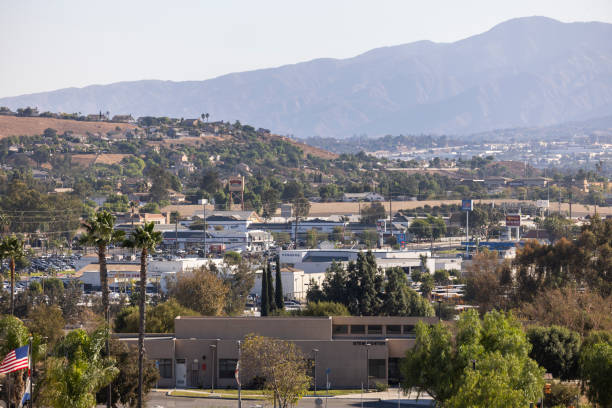
Corona’s position at the OC-IE border creates a persistent demand premium from Orange County commuters
2026 Economic Outlook
- 91 Freeway widening and express lane extension improving OC commute capacity
- Metrolink ridership recovery and service frequency improvements post-pandemic
- Fender Musical Instruments HQ expansion reinforcing Corona’s manufacturing identity
- South Corona master-planned development continuing to attract OC families
- Corona Regional Medical Center expansion adding healthcare employment
- Norco College enrollment growth creating secondary rental demand near campus
What Makes This Market Unique
The Corona-Norco dual market offers two genuinely distinct investment strategies that are rarely available in close proximity:
- OC Commuter Premium (Corona) – Tenants who earn OC wages but choose to live in Corona for space and value bring higher income qualifications, better credit profiles, and longer tenancy intentions than typical IE renters. They are functionally OC tenants paying near-IE prices.
- Equestrian Niche (Norco) – Horse property investors in Southern California face almost zero competition from other investment markets. There is simply no other accessible equestrian community at Norco’s scale within the Los Angeles basin. This scarcity creates a tenant retention moat that no conventional SFH market can replicate.
- Circle City Geography – Corona’s original circular street layout (hence “Corona” or Crown) creates a tight, centralized downtown adjacent to both Metrolink stations and creates natural neighborhood identity that supports values in the historic core.
- Riverside County Framework – Unlike San Bernardino County markets, Corona and Norco fall under Riverside County jurisdiction, with its own court system, sheriff, and regulatory framework. This matters for eviction timelines and code enforcement response.
Historical Performance
| Period | Market Driver | Avg Annual Appreciation | Key Event |
|---|---|---|---|
| 2012-2016 | Post-recession recovery, OC spillover begins accelerating | 6-9% | 91 Express Lanes open; Corona-OC commute becomes routine |
| 2017-2019 | OC price surge forces more families inland, South Corona builds out | 9-13% | South Corona master-planned communities sell through rapidly |
| 2020-2022 | Pandemic remote work, space premium, OC exodus | 20-28% | Inventory at historic lows; OC workers flood Corona and Norco |
| 2023-2024 | Rate shock, price normalization | 2-4% | Inventory rose modestly; OC commuter demand remained structural |
| 2025-2026 | Rate stabilization, continued OC migration, infrastructure improvements | 5-8% (projected) | 91 Freeway improvements support sustained OC commuter appeal |
Demographic Trends Driving Demand
- OC Wage Earners Seeking Space – Orange County professionals earning $100,000-$200,000 per year who cannot afford OC homeownership continue moving to Corona, renting while saving or waiting for rate improvements
- Horse-Keeping Families (Norco) – Southern California has essentially no other urban-adjacent equestrian community at Norco’s scale; this tenant segment has functionally zero alternatives, creating extraordinary retention
- Corona-Norco USD Demand – Families specifically relocating for school district access drive demand for SFH in the district’s highest-performing attendance zones
- Healthcare Sector Employment – Corona Regional Medical Center, Kaiser Permanente, and a growing network of medical offices provide stable, well-paid local employment that supplements OC commuter demand
- Manufacturing and Fender Effect – Fender’s continued HQ presence and the broader manufacturing/technology employment base in Corona attract professionals who prefer local employment to an OC commute
- Norco College – The community college’s 16,000+ student enrollment creates a secondary rental market in the area surrounding campus
📚 New to real estate investing? Master the fundamentals with our professional course Learn more →
2. Neighborhood Hotspots
Corona and Norco Investment Neighborhood Map
Interactive map of investment neighborhoods across Corona and Norco. Green stars show top hotspots, blue circles mark established markets, and orange circles highlight emerging areas.
Core Investment Neighborhoods
Detailed Submarket Analysis
| Neighborhood | Price Range | Cap Rate | Growth Drivers | Best Strategy |
|---|---|---|---|---|
| South Corona / Sycamore Creek | $700K-$950K | 4.0-5.0% | OC commuters, top schools, newer construction, family demand | Premium family buy-and-hold, OC commuter targeting |
| Norco Horse Properties | $750K-$1.2M | 4.5-5.5% | Equestrian niche, zero alternatives, ultra-low vacancy | Long-term equestrian hold, tenant retention niche |
| North Main / Metrolink | $600K-$820K | 4.5-5.5% | Transit access, OC commuters, diverse housing, Metrolink | Transit-adjacent buy-and-hold, commuter premium |
| West Corona / Chase Drive | $620K-$850K | 4.5-5.5% | 91 Freeway proximity, family demand, established neighborhoods | Family SFH, OC commuter, lower entry than South Corona |
| East Corona / Green River | $580K-$780K | 4.8-5.8% | Value-to-rent, freeway access, school quality, diverse demand | Balanced returns, best yield in Corona proper |
| Downtown Corona Circle | $520K-$720K | 5.0-6.0% | Metrolink, revitalization, historic character, value-add | Value-add, commuter proximity, revitalization upside |
| Norco College Area | $600K-$800K | 4.8-5.8% | College enrollment, Norco community, equestrian lifestyle adjacent | Family and college-adjacent demand, community focus |
| South Norco / River Road | $650K-$950K | 4.5-5.5% | Santa Ana River trails, rural character, equestrian, large lots | Rural lifestyle rental, horse property expansion |
| North Corona Hills | $750K-$1.1M | 3.8-4.8% | Views, custom homes, affluent tenants, premium positioning | Luxury family rental, executive tenant targeting |
| Downtown Revitalization Zone | $480K-$660K | 5.5-7.0% | Revitalization investment, Metrolink access, lowest entry | Early-stage value-add, patient capital required |
Expert Insight: “Norco horse properties are the most misunderstood investment in the entire Inland Empire. Investors see a $800,000 price tag and a $4,000/month rent and think the cap rate is too low. What they miss is the vacancy rate. I’ve managed Norco horse properties for 20 years and the average tenancy in my portfolio is 6.8 years. When you run a 6.8-year vacancy-adjusted hold period versus a typical SFH with 18-month average tenancies and factor in zero leasing fees and minimal maintenance because horse families take extraordinary care of their properties, the actual return profile is dramatically better than the headline cap rate suggests.” – Linda Morrison, Principal, Norco Equestrian Properties
3. Property Types
| Investment Goal | Best Property Type | Best Neighborhoods | Minimum Capital |
|---|---|---|---|
| Best Appreciation | South Corona OC commuter SFH | South Corona, North Hills | $185,000+ |
| Best Tenant Retention | Norco horse property | Norco Horsetown, South Norco | $190,000+ |
| Best Yield | East Corona SFH or downtown value-add | East Corona, Downtown Circle | $145,000+ |
| Lowest Management | Newer South Corona SFH or condo | South Corona, Eastvale adjacent | $110,000+ |
Don’t guess the costs. Our Complete Renovation & Remodeling Cost Guide covers 400+ pages of project-by-project breakdowns with real contractor pricing ranges.
4. Cost Analysis
Acquisition Cost Breakdown (Corona / Norco)
| Expense Item | Typical Cost | Example ($680,000 Property) | Notes |
|---|---|---|---|
| Down Payment | 25% (investment) | $170,000 | Standard for investment properties in California |
| Closing Costs | 2-3% of price | $13,600-$20,400 | Title, escrow, lender fees, California transfer tax, recording |
| General Inspection | $400-$650 | $525 | HVAC critical in IE heat. Pool/spa inspection if applicable. |
| Equestrian Inspection (Norco) | $500-$1,200 | $800 (if applicable) | Norco horse properties require stable/paddock structural assessment and manure management review |
| HOA Review (if applicable) | $200-$500 | $350 | Common in South Corona planned communities; confirm rental permissions |
| Initial Repairs / Cosmetics | 0-5% of price | $0-$34,000 | Newer South Corona stock often move-in ready; older downtown Corona needs updating |
| Reserves (6 months) | 6 months expenses | $17,000-$24,000 | Essential given California eviction timelines. Higher for equestrian properties. |
| TOTAL MINIMUM ENTRY | ~30-35% of value | $201,475-$249,275 | Significant capital required; strong primary income essential for negative carry |
Sample Cash Flow Analysis: East Corona 3-Bedroom SFH, OC Commuter Tenant
| Item | Monthly | Annual | Notes |
|---|---|---|---|
| Monthly Rent (3BR SFH) | $2,950 | $35,400 | 3-bedroom, East Corona, updated kitchen and baths, OC commuter tenant |
| Less Vacancy (5%) | -$148 | -$1,770 | Conservative for OC commuter demand; actual vacancy often lower |
| Property Taxes | -$605 | -$7,260 | ~1.07% of $680K (Riverside County base + local bonds) |
| Insurance | -$145 | -$1,740 | Landlord policy; flat Corona not in wildfire zone, standard rates |
| HOA (if applicable) | -$0 | -$0 | East Corona older streets often have no HOA; South Corona typically $180-$250/month |
| Property Management (9%) | -$252 | -$3,024 | Recommended for AB 1482 compliance; OC commuter tenants are relatively easy to manage |
| Maintenance + CapEx (7%) | -$197 | -$2,364 | OC commuter tenants maintain properties well; lower than average IE maintenance |
| Net Operating Income | $1,603 | $19,242 | Before mortgage |
| Mortgage ($680K purchase, 25% down, 6.75%, 30yr) | -$3,312 | -$39,744 | $510,000 loan balance. Above conforming; may require jumbo product. |
| CASH FLOW | -$1,709 | -$20,502 | Negative carry. Far better than equivalent OC property; requires funded reserves. |
| Cap Rate | 2.83% | NOI / Purchase Price. Reflects premium commuter market positioning. | |
| Total Return (6% appreciation + equity) | ~16-20% | Including appreciation, equity paydown. Funded negative carry is the cost of the position. |
This Corona example illustrates the OC commuter premium dynamic: higher rents than comparable Inland Empire markets, lower vacancy from stable tenant demand, but entry prices that push the cap rate below what San Bernardino or Riverside markets offer. The investment thesis is appreciation-led, with the $1,709/month negative carry functioning as the cost of holding a property in a supply-constrained OC-adjacent location that benefits from two appreciation drivers simultaneously: Inland Empire growth and OC price pressure.
Norco Horse Property Cash Flow: Different Math, Different Logic
| Item | Monthly | Annual |
|---|---|---|
| Rent (4BR + stables, Norco) | $4,100 | $49,200 |
| Vacancy (2% – extraordinary retention) | -$82 | -$984 |
| All Expenses (taxes, insurance, mgmt, maintenance) | -$1,940 | -$23,280 |
| NOI | $2,078 | $24,936 |
| Mortgage ($850K purchase, 25% down, 6.75%) | -$4,140 | -$49,680 |
| CASH FLOW | -$2,062 | -$24,744 |
| Adjusted for 2% vacancy vs 5% standard | +$123/mo effective improvement | +$1,476/yr |
The Norco horse property shows deeper negative carry than East Corona, but the 2% vacancy rate and near-zero leasing cost (horse families do not leave) combined with tenants who self-maintain the property means the effective annual cost of ownership is lower than headline numbers suggest. The investment case is built on niche scarcity rather than yield or appreciation alone.
Expert Insight: “The corona market is misunderstood by investors who benchmark it against Rancho Cucamonga or Riverside. You’re not buying Riverside real estate; you’re buying Orange County commuter catchment area at a 35-45% discount to OC pricing. When the OC market rises, Corona rises with it, lagged by 12-18 months. When OC prices compress, Corona cushions the decline because the baseline inland demand still exists. It’s one of the few IE submarkets where I would describe the appreciation story as genuinely structural rather than cyclical.” – Robert Kim, Director, Pacific Coast Investment Advisors
5. Legal Framework
⚠️ California and Equestrian-Specific Compliance Notice
California’s statewide tenant protection laws apply fully in Corona and Norco. Neither city has local rent control beyond AB 1482. Norco investors face an additional layer of equestrian-specific legal considerations including liability for horse-related injuries, environmental regulations governing manure disposal, and specialized lease provisions that must address animal husbandry responsibilities. Always consult a California-licensed real estate attorney with experience in equestrian property leases before purchasing a Norco horse property.
California Statewide Regulations
- AB 1482 Rent Cap: Annual increases capped at 5% + local CPI (Riverside-San Bernardino-Ontario CPI index), maximum 10% regardless of CPI. Applies to most units built before 2010. SFH owned by individual landlords with proper exemption notice and new construction (15 years or newer) are generally exempt.
- AB 1482 Just Cause Eviction: Covered units require enumerated cause for termination. Grounds include non-payment, nuisance, criminal activity, owner move-in, and substantial remodel. Lease expiration alone is insufficient.
- AB 12 Security Deposit (2024): Maximum 1 month’s rent for unfurnished units. Particularly important for Norco horse properties where animal damage risk is higher; consider additional protections in lease terms since deposit limits cannot be exceeded.
- 3-Day Notice: Non-payment requires 3-day notice before filing unlawful detainer.
- Proposition 13: Property taxes capped at 1% of assessed value at purchase; annual increases limited to 2% or CPI. Riverside County adds local bonds, bringing effective rates to approximately 1.05-1.10%.
- California ADU Laws: Statewide ADU reforms allow most SFH lots in Corona and Norco to add an accessory dwelling unit, subject to local standards.
Norco-Specific Legal Considerations
Norco horse properties involve legal issues that do not apply to standard residential rentals:
- Equestrian Lease Provisions: Horse property leases must explicitly address: maximum number and type of animals permitted, manure storage and removal responsibilities, stable maintenance obligations, liability for animal-related injuries on the property, and restoration obligations at lease end.
- Liability Insurance: Landlords renting horse properties should require tenants to carry equine liability insurance and name the landlord as additional insured. Consult an insurance agent specializing in equestrian properties.
- Environmental Compliance: California RWQCB regulations govern manure management for properties with more than a specified number of animals. Ensure the lease places compliance responsibility on the tenant and verify the property has a compliant manure management plan.
- Norco City Code: Norco’s municipal code actively protects horse-keeping rights and regulates stable construction, setbacks, and animal density. Verify any planned improvements comply with current equestrian zoning standards.
- Business License: Both Corona and Norco require rental property owners to obtain a city business license. Annual renewal required.
Useful Resources
- City of Corona: coronaca.gov
- City of Norco: norco.ca.us
- California Apartment Association: caanet.org
- Riverside County Superior Court: riverside.courts.ca.gov
| Regulation | Corona / Norco Requirement | Exemptions | Investor Impact |
|---|---|---|---|
| Rent Increases | AB 1482: 5% + Riverside CPI, max 10% | SFH individual owners (with notice), new construction 15 yrs+ | Annual increases require CPI research and documented calculation |
| Just Cause Eviction | Required for covered units | Exempt SFHs, new construction, owner-occupied 2-4 units | Documentation from day one essential for all tenancies |
| Security Deposit | 1 month maximum (AB 12) | Limited exceptions | Critical for horse properties where animal damage risk exists; lease protections are the primary remedy |
| Local Rent Control | None beyond AB 1482 | N/A | Advantage over LA and OC markets with additional local ordinances |
| Equestrian Liability | California equine liability statute provides partial protection | Gross negligence by landlord not protected | Require tenant equine liability insurance; name landlord as additional insured |
| Eviction Timeline | 3-day notice, Riverside County Superior Court | Non-payment fastest; just cause slower | 30-90 days uncontested; 90-150 days contested. Reserves essential. |
6. Step-by-Step Corona and Norco Investment Playbook
Choose Your Market Identity: OC Commuter Corona vs Equestrian Norco
These are fundamentally different investment strategies that happen to be geographically adjacent. Be clear which you are executing before searching for property:
OC Commuter Corona Strategy
Target South Corona, West Corona, or Metrolink-adjacent properties. OC-employed tenants pay premium rents, maintain properties well, and renew consistently. Total return depends heavily on OC market cycles and interest rate trajectory.
Equestrian Norco Strategy
Target Norco horse properties with functioning stables, paddocks, and trail access. Tenant retention of 5-8 years eliminates most leasing costs. Scarcity of alternatives creates pricing power when tenant turnover does occur. Deep negative carry but extraordinarily low management burden once the right tenant is in place.
Value-Add Downtown Corona
Buy dated properties in the historic circle at below-market prices. Renovate to modern standards. Rent to Metrolink commuters or local professionals who want downtown proximity. Best yield in the market post-renovation but highest execution risk.
ADU Development Play
Purchase a Corona SFH on a standard lot eligible for ADU addition. Build detached ADU over 12-18 months. Additional $1,000-$1,400/month income dramatically improves yield and property value. Best on lots in East Corona or North Main area where ADU placement works.
Build Your Corona / Norco Team
This market requires specialists who understand both the OC commuter premium dynamics and, for Norco investors, the equestrian property category:
- Riverside County Investor Agent: Must understand the OC commuter premium pricing model and know how to evaluate Norco horse properties as investment assets rather than primary residences. Most agents in this market specialize in one or the other; find one with experience in both.
- California Real Estate Attorney (Equestrian Specialist for Norco): Standard California LLC and lease review for Corona properties. For Norco, you need an attorney with specific equestrian property lease experience who can draft enforceable provisions for animal husbandry obligations, liability, and environmental compliance.
- Property Manager with Equestrian Experience (Norco): Standard IE property managers cannot manage Norco horse properties. You need a manager with specific equestrian property experience who understands stable maintenance standards, manure management compliance, and how to evaluate horse property tenant applications.
- Equestrian Insurance Specialist (Norco): Standard landlord policies are inadequate for horse properties. An equestrian insurance specialist will structure the right coverage for stable liability, animal-related property damage, and environmental exposure.
- California CPA (Riverside County): Proposition 13 implications, depreciation strategy, and AB 12 security deposit accounting are all California-specific requirements your CPA must understand for this market.
Expert Tip: For Norco horse properties, the most valuable thing you can do before making an offer is to hire a Norco-based equestrian property manager for a $200-$400 pre-purchase consultation. They will evaluate the property’s horse-keeping infrastructure, identify deferred maintenance on stables and paddocks, assess the manure management setup, and give you a realistic rent estimate from current market comparables. This intelligence is worth far more than the consultation fee.
Market-Specific Due Diligence
Corona Physical Due Diligence
- HVAC full inspection: IE summers reach 110°F; AC failure creates immediate habitability issues
- Pool and spa inspection if applicable: Very common in Corona; significant liability and maintenance cost
- Roof condition assessment: Flat and tile roofs common; check for end-of-life indicators
- HOA CC&R rental restriction review for South Corona planned communities
- 91 Freeway noise assessment for properties near freeway corridors: some locations have significant noise impact on tenant satisfaction
- Electrical panel capacity for modern tenant load
Norco Equestrian Due Diligence
- Stable structural assessment: Roof, framing, stall door hardware, drainage
- Paddock footing condition: Drainage critical to prevent mud accumulation that creates horse injury risk
- Manure management infrastructure: Storage location, removal access, fly control systems
- Water supply capacity: Horses drink 10-12 gallons per day; verify adequate water supply and plumbing
- Trail access rights: Confirm existing trail access is legally secured and not subject to private property disputes
- Zoning confirmation: Verify current animal density allowances and any recent code changes affecting equestrian use
- Environmental review: Previous soil contamination from animal waste; verify no RWQCB violations on record
Tenant Acquisition and Long-Term Management
The tenant acquisition strategy differs fundamentally between Corona and Norco:
OC Commuter Tenant Targeting (Corona)
- List on all major platforms with specific mention of Metrolink access, 91 Express Lane proximity, and school district
- List timing matters: OC workers typically search for Corona rentals in March-July for school-year moves
- Corporate relocation programs: Major OC employers (Boeing, Disneyland, Irvine tech companies) use relocation services that place employees in transit-accessible markets
- Income verification: Target households with $120,000-$220,000+ combined income; these tenants comfortably afford $3,000/month rent
Equestrian Tenant Targeting (Norco)
- Advertise exclusively in horse community channels: local tack shops, Norco Horseowner’s Association, equestrian Facebook groups for Southern California horse owners
- Verify horse credentials before showing: Ask specifically about number, breed, and care history of horses to pre-qualify serious equestrian families
- Require equine liability insurance proof as part of move-in requirements
- Reference check prior horse property landlords; previous behavior at equestrian properties is the best predictor of future behavior
7. Financing Options for Corona and Norco
| Loan Type | Down Payment | Rate Premium | Best For | Corona / Norco Note |
|---|---|---|---|---|
| Conventional Conforming | 25% | +0.5-0.75% | Properties at or below $806,500 | East Corona and older neighborhoods often qualify; South Corona and Norco may exceed the limit |
| Jumbo Investment | 25-30% | +0.75-1.25% | South Corona and Norco horse properties above conforming limit | Most horse properties require jumbo financing given price points; shop specialty equestrian lenders |
| FHA (House Hack) | 3.5% | Standard + MIP | Owner-occupying one unit of 2-4 unit property | Limited duplex inventory in Corona; best used for downtown adjacent older duplexes |
| DSCR Loan | 25-30% | +1.5-2.5% | Self-employed investors, no income verification | Most Corona and Norco properties do not qualify at 1.0x DSCR at current rates and prices |
| Portfolio Loan | 20-30% | +1-2% | Multiple properties, LLC ownership | Riverside County community banks; useful for equestrian properties that don’t fit standard underwriting |
| Equestrian Specialty Lenders | 25-35% | +0.5-1.5% | Norco horse properties with significant non-residential improvements | Farm Credit and equestrian specialty lenders understand stable and paddock value; standard lenders often struggle to appraise equestrian improvements accurately |
| ADU / Construction Loan | 20-25% | +1-2% | Post-purchase ADU development | HELOC on existing equity is typically the most cost-effective ADU financing in this price range |
Norco Appraisal Warning: Horse properties in Norco are frequently under-appraised by standard residential appraisers who do not understand equestrian improvement value. Stables, arenas, and paddock systems represent significant value but are often treated as nominal additions by appraisers unfamiliar with the equestrian market. Request an appraiser with documented equestrian property experience for any Norco horse property purchase. This can affect financing eligibility and your ability to refinance or sell at a fair market price. Some investors use equestrian specialty lenders specifically because these lenders use appraisers who understand the category.
8. Frequently Asked Questions

Knowledge Quiz: Corona and Norco Real Estate Investment
Open Quiz
5 quick questions on what you just learned about Corona and Norco investing
1) What makes Norco horse properties so unique as a real estate investment compared to standard SFH rentals?
Answer: C
Norco is essentially the only urban-adjacent equestrian community at scale in the LA basin. Horse-owning families have nowhere else to go within commuting distance, creating tenancy lengths of 5-8 years and vacancy rates as low as 2%. This scarcity-driven retention is the core of the investment thesis, not appreciation rates or financing advantages.
2) What is the core economic driver behind the OC commuter premium in Corona’s rental market?
Answer: A
The OC commuter premium works because tenants in Corona earn OC wages (often $100,000-$200,000+ combined household income) but pay IE prices. A comparable home in Irvine costs $1.2M-$1.8M vs $700K-$950K in South Corona. These tenants have higher income qualifications, better credit, and greater stability than typical IE renters, improving the investment quality even though prices are lower than OC.
3) What specific Norco horse property due diligence item does the guide flag as critical that most standard inspections miss?
Answer: D
The guide specifically flags water supply capacity as a critical Norco due diligence item. Horses require 10-12 gallons of water per day each. A property with inadequate water supply or plumbing capacity cannot adequately support horse keeping, which is the entire premise of the Norco investment thesis. This is rarely caught by standard home inspectors unfamiliar with equestrian properties.
4) Why do the guide’s authors specifically warn about using standard residential appraisers for Norco horse property purchases?
Answer: B
The guide warns that stables, arenas, and paddock systems represent significant value that standard residential appraisers often treat as nominal additions, leading to under-appraisal. This affects loan-to-value calculations at purchase, refinancing ability later, and the ability to sell at fair market value. The guide recommends requesting appraisers with documented equestrian property experience or using equestrian specialty lenders whose appraisers understand the category.
5) According to the guide, which Corona submarket offers the best balance between yield and OC commuter tenant quality?
Answer: C
The guide identifies East Corona/Green River as offering the best value-to-rent ratio and cap rates (4.8-5.8%) in the Corona market while still attracting quality OC commuter and local professional tenants. South Corona offers better appreciation and tenant quality but at higher prices and lower cap rates (4.0-5.0%). East Corona is the balanced choice for investors who want yield without South Corona’s entry cost premium.
Work With a Local Expert in Corona and Norco
We are building a verified network of real estate professionals across every market we cover.

About Our Expert Network
We are finalizing partnerships with verified real estate professionals across every market featured on Builds and Buys. Each expert in our network is selected for their hands-on investment experience, local market knowledge, and commitment to helping buyers and investors make sound decisions.
Our local specialists offer:
- Proven experience with investment and income-producing properties
- Deep knowledge of local pricing, rental yields, and neighborhood dynamics
- Guidance on financing, legal structure, and due diligence
- Access to off-market and pre-market opportunities
- Full transaction support from search through closing
- Ongoing portfolio and property management referrals
Services Covered
- Property sourcing and acquisition
- Investment analysis and underwriting
- Buyer representation
- Market comparables and valuations
- Short-term and long-term rental strategy
- Value-add and renovation guidance
- Legal and title referrals
- Financing and lender connections
- Property management referrals
- Insurance and inspection referrals
- 1031 exchange coordination
- Exit strategy planning
Get Connected or Join Our Network
Looking for a local expert to help with your investment? Reach out and we will connect you with the right professional for your market and strategy.
Are you a real estate professional with a track record working with investors? We are always expanding our network of verified local experts.
Contact us at support@buildsandbuys.com
Find Specialized Real Estate Professionals in Corona and Norco
Ready to Invest in Corona and Norco?
Corona and Norco together offer something genuinely rare in Southern California: two distinct investment strategies in close proximity, each with its own structural moat. Corona’s OC commuter premium creates a tenant class with higher incomes, better credit, and greater stability than most IE markets can claim. Norco’s equestrian niche is among the most defensible tenant retention strategies anywhere in California, built on the simple reality that horse-owning families in the LA basin have nowhere else to go. Neither market will make you rich overnight, and both require patient, long-term capital with the income to fund negative carry. But for investors who match their strategy to their resources and stay the course, these two cities offer appreciation fundamentals and tenant profiles that are difficult to replicate elsewhere in the Inland Empire.
Continue Your Research
California State Guide
See how Corona and Norco compare to other California markets from LA to Sacramento.
Temecula/Murrieta Guide
Compare Corona to southern Riverside County’s wine country and family market.
144-Lesson Course
University-level real estate education covering financing, law, strategy, and management.
For further guidance, explore our State-by-State Investor guides, browse our expert articles, or follow our Step-by-Step Investment Guide.



