Bozeman Montana Real Estate Investment Guide For 2026
A comprehensive resource for investors looking to capitalize on Montana’s fastest growing city, powered by Montana State University, a booming tech and outdoor industry economy, and proximity to Yellowstone and Big Sky in 2026
Quick answers: Top 5 most searched Bozeman investment questions ▼
Migration data: Where people are moving from to Bozeman ▼
In This Guide
Click on any section to navigate directly to that content
1. Bozeman Market Overview
Market Fundamentals
Bozeman has spent the past decade transforming from a quiet university and ranching town into one of the most closely watched small real estate markets in the United States. Set in the Gallatin Valley and surrounded by the Bridger, Tobacco Root, and Spanish Peaks mountain ranges, Bozeman benefits from a rare combination of forces: a major research university, an unusually robust technology and photonics employer base, world class proximity to Yellowstone National Park and Big Sky Resort, and one of the strongest waves of high income wealth migration of any city its size in America.
Key economic indicators that define Bozeman’s investment case:
- Population: 56,000 plus city, 130,000 plus Gallatin County
- Major Employers: Montana State University, Oracle, RightNow Technologies legacy ecosystem, Bridger Photonics, Simms Fishing Products, Yellowstone Club affiliated employers
- Median Household Income: $74,000 and rising with continued remote worker inflow
- Job Growth: Among the fastest of any Montana metro, consistently above national average
- University Enrollment: 17,000 plus students at MSU, with growing graduate and research programs
- Tourism Proximity: Yellowstone National Park (90 minutes), Big Sky Resort (45 minutes), Bridger Bowl (25 minutes)
Bozeman’s economy has diversified well beyond the university over the past fifteen years. A genuine technology cluster has formed around photonics, optics, and software, anchored by MSU research spinoffs and remote offices for larger national companies. This diversification reduces Bozeman’s dependence on tourism alone and supports a deeper, more durable rental demand base than a typical resort town.
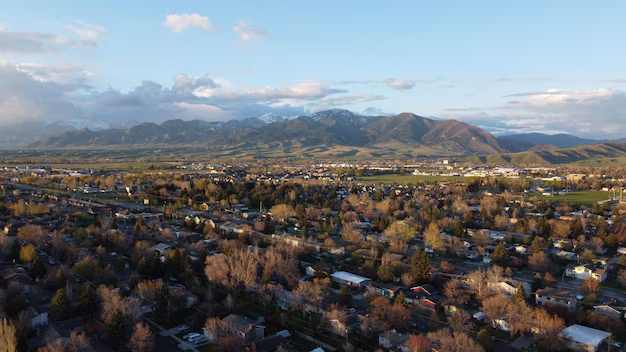
Bozeman’s setting in the Gallatin Valley combines university energy, a growing tech sector, and unmatched access to Yellowstone and Big Sky
2026 Economic Outlook
- Continued expansion of Bozeman Yellowstone International Airport adding direct flights, easing relocation friction
- MSU research funding growth driving graduate program and faculty hiring
- Big Sky Resort continued capital investment supporting regional tourism and second home demand
- Photonics and optics sector hiring outpacing most other Montana industries
- Belgrade and Four Corners absorbing overflow growth as Bozeman proper land becomes scarcer
Investment Climate
Bozeman’s investment environment mirrors many high growth mountain west cities: extraordinary long term appreciation potential offset by high entry costs and difficult cash flow on conventional financing terms. Successful Bozeman investors tend to share these characteristics:
- Long term orientation with five to fifteen year hold periods common among top performers
- Appreciation first mentality accepting thinner or negative current income in exchange for sustained equity growth
- University awareness for investors targeting the MSU student rental niche
- STR zoning fluency given the City of Bozeman’s increasingly specific short term rental zoning rules
- Outer market flexibility with willingness to consider Belgrade and Four Corners for better cash flow characteristics
Montana’s broader regulatory environment remains relatively landlord friendly compared to coastal states, with no rent control and a comparatively fast eviction process. The primary regulatory complexity in Bozeman specifically relates to short term rental zoning, which the city has tightened in recent years in response to housing affordability pressure from residents and a vocal segment of the City Commission.
Historical Performance
| Period | Market Driver | Avg Annual Appreciation | Key Event |
|---|---|---|---|
| 2012-2016 | Post recession recovery, early tech sector growth | 5-8% | RightNow Technologies acquisition by Oracle anchors local tech credibility |
| 2017-2019 | National recognition as a top small city, early remote work migration | 8-12% | Bozeman appears repeatedly on best small city and best places to live lists |
| 2020-2022 | Pandemic migration wave, remote work explosion | 22-32% | Among the fastest appreciating markets in the nation; inventory hit historic lows |
| 2023-2024 | Rate shock, normalization | 1-4% | Sharp slowdown from pandemic peak; some price softening in upper tier homes |
| 2025-2026 | Rate stabilization, continued wealth migration | 5-9% (projected) | Tech sector hiring and university growth supporting renewed demand |
Bozeman’s long term appreciation track record places it among the strongest performing small cities in the country over the past fifteen years. The 2020 to 2022 period in particular produced returns that rival any market in the nation, driven by a unique combination of remote work flexibility and lifestyle appeal that proved durable even as national markets cooled afterward.
Demographic Trends Driving Demand
- Montana State University Growth – Enrollment and research funding both expanding, creating consistent student rental demand and growing graduate and faculty housing needs
- Technology and Photonics Sector – A genuine cluster of optics, software, and research companies has formed around MSU spinoffs, providing high income employment beyond tourism and agriculture
- California and Pacific Northwest Migration – High earning remote workers and retirees relocating for lifestyle, outdoor access, and more favorable tax treatment
- Yellowstone and Big Sky Proximity – Tourism infrastructure and second home demand spilling over from these world class destinations into Bozeman’s housing market
- Young Professional Concentration – Bozeman’s median age near 30 reflects a disproportionately renter age population among both students and young professionals
- Geographic Constraint – Mountain ranges on multiple sides of the Gallatin Valley limit long term land supply, supporting sustained price growth
📚 New to real estate investing? Master the fundamentals with our professional course Learn more →
2. Neighborhood Hotspots
Bozeman Investment Neighborhood Map
Interactive map of Bozeman’s investment neighborhoods. Green stars show top hotspots, blue circles mark established markets, and orange circles highlight emerging areas.
Core Investment Neighborhoods
Detailed Submarket Analysis: Bozeman and Gallatin Valley
| Neighborhood | Price Range (SFH) | Cap Rate | Growth Drivers | Best Strategy |
|---|---|---|---|---|
| MSU University District | $600K to $850K | 5.0 to 7.0% | Student enrollment growth, research funding, walkability | By the bedroom, small multi family |
| Northeast Neighborhood | $650K to $950K | 3.5 to 5.0% | Brewery district, downtown proximity, value add stock | Value add renovation, BRRRR |
| Cottonwood and Canyon Gate | $700K to $1.1M | 3.0 to 4.5% | Remote workers, new construction, family migration | Buy and hold, premium long term rental |
| Downtown Bozeman | $750K to $1.4M | 2.5 to 3.5% | Walkability, premium demographics, limited supply | Pure appreciation, premium rental |
| Sourdough and South Bozeman | $700K to $1.0M | 3.0 to 4.0% | Trailhead access, family demand, established neighborhood | SFH buy and hold |
| Bridger Canyon Foothills | $800K to $1.3M | 2.5 to 3.5% | Mountain views, ski access, low supply | Pure appreciation, lifestyle rental |
| Belgrade | $450K to $650K | 4.5 to 6.0% | Affordability, commuter access, airport proximity | Balanced returns, family rental |
| Four Corners | $550K to $800K | 4.0 to 6.0% | County zoning flexibility, Big Sky corridor, commercial growth | Long term rental or STR where permitted |
| Manhattan and Three Forks | $350K to $550K | 5.5 to 7.0% | Lowest entry cost, growing commuter base | Best cash flow in Gallatin Valley |
Expert Insight: “The biggest mistake out of state investors make in Bozeman is assuming it behaves like a typical small Montana town. It does not. Bozeman trades more like a junior version of Boulder or Bend, where the buyer pool includes a meaningful share of cash rich relocators who are not price sensitive in the way a traditional rental market would suggest. That changes the math for value add investors. Renovated product in the Northeast neighborhood sells to owner occupants nearly as fast as it sells to investors, which keeps a floor under prices even when rental cash flow looks thin.” – Gallatin Valley investment property advisor
3. Property Types
| Investment Goal | Best Property Type | Best Neighborhoods | Minimum Capital |
|---|---|---|---|
| Maximum Cash Flow | By the bedroom student home | MSU University District | $150,000+ |
| Maximum Appreciation | SFH in constrained premium locations | Downtown, Bridger Canyon Foothills | $200,000+ |
| Balanced Returns | Value add SFH or duplex | Northeast neighborhood, South Bozeman | $160,000+ |
| Lowest Management Burden | New construction long term rental | Cottonwood, Canyon Gate, Belgrade | $180,000+ |
Don’t guess the costs. Our Complete Renovation & Remodeling Cost Guide covers 400+ pages of project by project breakdowns with real contractor pricing ranges.
4. Cost Analysis
Acquisition Cost Breakdown (Bozeman)
| Expense Item | Typical Cost | Example ($700,000 Property) | Notes |
|---|---|---|---|
| Down Payment | 20 to 25% (investment) | $140,000 to $175,000 | Standard for investment properties; 20% possible with strong credit |
| Closing Costs | 2 to 3% of price | $14,000 to $21,000 | Title, escrow, lender fees, recording |
| General Inspection | $450 to $650 | $550 | Include well and septic inspection for properties outside city sewer |
| Radon Test | $150 to $250 | $175 | Montana has elevated radon zones; mitigation systems run $900 to $1,600 |
| Initial Repairs / Touch Up | 0 to 8% of price | $0 to $56,000 | Highly variable; older Northeast neighborhood stock often needs updates |
| Reserves (6 months) | 6 months expenses | $14,000 to $20,000 | Emergency fund for vacancy, snow load repairs, and winter heating system failures |
| TOTAL MINIMUM ENTRY | ~25 to 38% of value | $168,875 to $266,500 | Significant capital required; comparable to many mid sized coastal markets |
Sample Cash Flow Analysis: MSU District 4 Bedroom Student Rental
| Item | Monthly | Annual | Notes |
|---|---|---|---|
| Rental Income (4 BR at $825/room) | $3,300 | $39,600 | By the bedroom near MSU; utilities often included in rent |
| Less Vacancy (5%) | -$165 | -$1,980 | Some summer softness; offset by strong fall lease up demand |
| Property Taxes | -$390 | -$4,680 | ~0.85% effective rate on $740K assessed value |
| Insurance | -$165 | -$1,980 | Landlord policy; student rental and wildfire exposure rider applicable |
| Utilities (heat, water, trash, internet) | -$280 | -$3,360 | Montana winters drive higher heating costs than most markets |
| Property Management (10%) | -$330 | -$3,960 | Recommended for out of state owners; student coordination adds value |
| Maintenance + CapEx | -$330 | -$3,960 | Higher than average due to student wear and snow load maintenance; budget 10% of rent |
| Net Operating Income | $1,640 | $19,680 | Before mortgage |
| Mortgage ($740K purchase, 20% down, 7.0%, 30yr) | -$3,939 | -$47,268 | On $592,000 loan balance |
| CASH FLOW | -$2,299 | -$27,588 | Negative at current rates; improves with rate reductions or self management |
| Cap Rate | 2.66% | NOI / Purchase Price | |
| Total Return (7% appreciation) | ~18% | Including equity, appreciation, principal paydown |
This example reflects Bozeman’s reality at current price levels: even the best cash flow strategy in the market, student housing leased by the bedroom, produces negative current income at today’s interest rates. Investors entering Bozeman in 2026 are underwriting primarily on appreciation and long term equity growth, with student housing simply minimizing the size of the negative carry relative to whole house rental alternatives.
Expert Insight: “Bozeman investors need to make peace with negative cash flow as the cost of admission. What separates winners from losers here is not who can engineer positive cash flow on day one, because almost nobody can at current prices, it’s who has the reserves and income stability to hold for seven to ten years without being forced to sell during a soft patch. The investors who bought in 2015 and held are sitting on extraordinary gains today. The ones who panicked during the 2023 slowdown locked in losses they did not need to take.” – Bozeman based real estate investment advisor
5. Legal Framework
✅ Montana: A Relatively Landlord Friendly State With Local STR Complexity
Montana’s statewide landlord tenant law is comparatively balanced and predictable, with no rent control and a reasonably efficient eviction process. The main regulatory complexity for Bozeman investors specifically relates to the city’s short term rental zoning rules, which differ meaningfully from unincorporated Gallatin County. Always consult a Montana licensed real estate attorney before acquiring rental property, particularly if STR income is part of your investment plan.
Montana State Landlord Tenant Law (Key Points)
- No Rent Control: Montana has no statewide or local rent control. Landlords may raise rents with proper notice and no political risk of future rent caps in Bozeman specifically.
- Eviction Process: Non payment requires a 3 day pay or vacate notice. Material lease violations typically require a 14 day notice with a 3 day cure period for curable defaults. Uncontested evictions can complete in 3 to 6 weeks.
- Security Deposits: No statutory cap on the amount in Montana. Must be returned within 10 days if no deductions, or 30 days if deductions are itemized.
- Notice for Rent Increases: Generally requires the same notice period as termination of tenancy, typically a full rental period for month to month leases.
- Habitability Standards: Standard safe and habitable requirements; working heat is functionally essential given Montana winters.
- Entry Notice: Reasonable notice required for non emergency entry, generally interpreted as at least 24 hours.
City of Bozeman and Gallatin County Specifics
- STR Zoning: The City of Bozeman restricts non owner occupied short term rentals in many residential zoning districts. Owner occupied STRs with the operator present generally face fewer restrictions than pure investment STRs.
- STR Permitting: Where permitted, STR operators must obtain a permit through the City of Bozeman Community Development Department and comply with applicable life safety and parking requirements.
- Gallatin County (Unincorporated): Areas like Four Corners outside Bozeman city limits generally face less restrictive STR zoning, making them attractive for investors specifically pursuing an STR strategy.
- Zoning Verification: Always confirm current zoning designation and STR eligibility directly with the relevant jurisdiction before purchasing, as Bozeman has actively revised its STR ordinance in recent years.
- Property Tax: Montana property taxes are assessed locally; Gallatin County effective residential rates are moderate relative to national averages but rising with valuation growth.
- Resort Tax Consideration: Big Sky and certain nearby resort areas impose a local resort tax on lodging and certain goods; Bozeman proper does not currently impose a comparable resort tax.
Useful Resources
- City of Bozeman Community Development: bozeman.net
- Gallatin County Planning: gallatincomt.virtualtownhall.net
- Montana Department of Revenue: mtrevenue.gov
- Montana Landlords Association resources via local realtor associations
| Regulation | City of Bozeman | Unincorporated Gallatin County | Investor Impact |
|---|---|---|---|
| Rent Control | None | None | Full flexibility to adjust rents to market across the entire valley |
| Non Owner Occupied STR | Restricted in many residential zones | More permissive in most areas | Pure investment STR strategy often better suited to Four Corners and county areas |
| Owner Occupied STR | Generally permitted with a permit | Generally permitted | Viable for house hacking style investors who live on site part of the year |
| Eviction Timeline | 3 to 6 weeks uncontested | 3 to 6 weeks uncontested | Faster than most coastal markets; reduces bad tenant financial exposure |
| Property Tax | Moderate, rising with valuations | Moderate, rising with valuations | Budget for periodic reassessment increases given rapid local appreciation |
6. Step by Step Bozeman Investment Playbook
Define Your Bozeman Strategy
Bozeman is not a cash flow market at today’s prices. Before buying, be clear on which of these strategies you are executing:
University Housing Play
Target three to five bedroom properties within walking or biking distance of MSU. Lease by the bedroom for the strongest cash flow available in the Bozeman market. Accept higher management intensity in exchange for the best income relative to price.
Pure Appreciation Play
Buy in supply constrained premium locations such as downtown or the Bridger Canyon foothills. Accept meaningful negative cash flow as the cost of holding a structurally appreciating asset in one of America’s strongest small city growth stories.
Value Add / BRRRR
Buy dated properties in the Northeast neighborhood or older pockets of South Bozeman. Renovate to capture both rent growth and Bozeman’s strong owner occupant resale demand for updated product.
Outer Valley Cash Flow Play
Purchase in Belgrade, Four Corners, or the Manhattan and Three Forks corridor for meaningfully lower entry prices and better cap rates, accepting a longer commute to Bozeman proper employment and amenities.
Build Your Bozeman Team
Bozeman’s market has matured quickly and the right team members make a meaningful difference in outcome given the competitive nature of the market.
- Bozeman Specialist Real Estate Agent: Should have specific investor experience and understand by the bedroom rental analysis, STR zoning nuance, and the differences between city and county jurisdiction.
- Montana Licensed Real Estate Attorney: For entity setup, lease compliance, and STR zoning verification before purchase.
- Bozeman Area Property Manager: For student housing, find a manager with an existing MSU student tenant pipeline and a track record managing turnover efficiently between academic years.
- Local General Contractor: For value add work in the Northeast neighborhood, contractors familiar with Bozeman’s historic district guidelines and snow load building requirements are essential.
- Montana CPA: For depreciation strategy and entity structuring given the relatively high transaction values involved in Bozeman purchases.
Expert Tip: When interviewing property managers for student housing, ask specifically how they handle the August lease up cycle and whether they maintain a waiting list through the MSU off campus housing office. Managers without an established student pipeline will struggle to fill rooms efficiently in a market where competition for quality student housing has intensified alongside enrollment growth.
Bozeman Specific Due Diligence
Standard due diligence items plus these Bozeman critical checks:
Physical Due Diligence
- Heating system inspection; furnace failure during Montana winters is a genuine emergency
- Roof and snow load assessment; verify roof can handle Bozeman’s seasonal snowfall
- Radon test given Montana’s elevated radon zones
- Well and septic inspection for properties outside Bozeman city utility service
- Foundation and basement moisture check given freeze thaw cycles
- Wildfire exposure assessment for properties in foothill or forested adjacent areas
Regulatory Due Diligence
- Confirm current zoning designation and STR eligibility with City of Bozeman or Gallatin County
- Pull permits for any improvements, particularly unpermitted basement or accessory dwelling conversions
- Check historic district guidelines if purchasing in the Northeast neighborhood
- Verify HOA rules for any rental restrictions in newer subdivisions
- Review water rights documentation for any rural or county adjacent property
- Confirm current tenant lease terms and any active disputes if acquiring an occupied property
Competing in Bozeman’s Market
Bozeman remains a competitive market despite the post pandemic slowdown. Strategies that work:
- Pre inspections: Conduct your inspection before submitting an offer in competitive situations, allowing clean non contingent offers that perform better in multiple offer scenarios.
- Off market sourcing: Build relationships with Bozeman focused agents who maintain seller networks, particularly for the Northeast neighborhood where good value add opportunities rarely reach the open market.
- Expand your search radius: Investors willing to consider Belgrade, Four Corners, or the Manhattan corridor access meaningfully better pricing and yield than Bozeman city limits alone.
- Watch the academic calendar: Student rental properties sometimes list during summer vacancy periods. Understanding the August lease up cycle prevents misreading a temporarily vacant property as underperforming.
- Build local relationships: Bozeman’s investor community, while growing, remains small enough that local broker and contractor relationships can surface off market opportunities before MLS listing.
7. Financing Options for Bozeman
| Loan Type | Down Payment | Rate Premium | Best For | Bozeman Note |
|---|---|---|---|---|
| Conventional Investment | 20 to 25% | +0.5 to 0.75% | Strong W-2 income, good credit | Many Bozeman properties approach or exceed conforming limits; jumbo financing common above roughly $800K |
| Jumbo Investment | 25 to 30% | +0.75 to 1.25% | $800K to $1.5M properties | Standard for downtown and foothill purchases |
| DSCR Loan | 20 to 25% | +1.0 to 2.0% | Self employed, multiple properties | Bozeman’s low cap rates mean DSCR qualification can be difficult at current prices; student housing properties qualify more readily than whole house rentals |
| House Hacking (FHA) | 3.5% | Standard + MIP | Owner occupying one unit of a 2 to 4 unit property | Best entry point for new investors with limited capital; especially effective near MSU |
| Portfolio Loan | 20 to 30% | +0.5 to 1.5% | Multiple properties, self employed | Local Montana community banks often more flexible on student housing and county properties |
| Hard Money (Bridge) | 15 to 25% | 8 to 12% rate | BRRRR acquisitions, competitive offers | Several Montana based hard money lenders active in the Gallatin Valley market |
Bozeman Financing Reality: Most Bozeman investment properties do not generate enough net operating income to qualify easily for DSCR financing at current price levels and interest rates. This pushes most Bozeman investors toward conventional or jumbo loans requiring full income documentation. Strong outside income, often from a tech, healthcare, or professional career, is the common thread among investors who successfully carry Bozeman properties through periods of negative cash flow while building long term equity.
8. Frequently Asked Questions

Knowledge Quiz: Bozeman Real Estate Investment
Open Quiz
5 quick questions on what you just learned about Bozeman investing
1) Why is non owner occupied STR investing more difficult within Bozeman city limits than in unincorporated Gallatin County?
Answer: C
The City of Bozeman has tightened STR zoning rules in many residential districts in response to housing affordability concerns, while unincorporated Gallatin County areas such as Four Corners generally maintain more permissive zoning for STR operation, making them a more reliable option for investors prioritizing STR income.
2) What does the guide identify as the primary reason most Bozeman investment properties produce negative cash flow at today’s prices?
Answer: B
Bozeman’s elevated home prices relative to achievable rents, similar to other high growth lifestyle markets like Boulder or Bend, mean that even strong rental strategies like by the bedroom student housing typically produce negative cash flow at current interest rates. Investors largely underwrite on appreciation and long term equity growth rather than current income.
3) Which neighborhood does the guide identify as Bozeman’s most active value add corridor?
Answer: D
The Northeast Neighborhood, anchored by the historic railroad district and a growing brewery and restaurant scene, is identified as Bozeman’s most active value add corridor, offering older housing stock with genuine renovation upside and strong owner occupant resale demand.
4) What is the typical eviction timeline in Montana for an uncontested non payment case?
Answer: A
Montana’s eviction process begins with a 3 day pay or vacate notice for non payment, followed by court filing, a hearing typically scheduled within one to three weeks, and prompt sheriff enforcement. Total uncontested timeline is typically 3 to 6 weeks, considerably faster than many coastal states.
5) Which outer Gallatin Valley area does the guide identify as offering the lowest entry cost for cash flow focused investors?
Answer: C
The Manhattan and Three Forks corridor in the western Gallatin Valley offers the lowest entry cost of the areas covered in this guide, with prices in the $350,000 to $550,000 range and cap rates of 5.5 to 7.0%, making it the strongest option for investors specifically prioritizing affordability and cash flow over proximity to Bozeman’s core.
Work With a Local Expert in Bozeman
We are building a verified network of real estate professionals across every market we cover.

About Our Expert Network
We are finalizing partnerships with verified real estate professionals across every market featured on Builds and Buys. Each expert in our network is selected for their hands on investment experience, local market knowledge, and commitment to helping buyers and investors make sound decisions.
Our local specialists offer:
- Proven experience with investment and income producing properties
- Deep knowledge of local pricing, rental yields, and neighborhood dynamics
- Guidance on financing, legal structure, and due diligence
- Access to off market and pre market opportunities
- Full transaction support from search through closing
- Ongoing portfolio and property management referrals
Services Covered
- Property sourcing and acquisition
- Investment analysis and underwriting
- Buyer representation
- Market comparables and valuations
- Short term and long term rental strategy
- Value add and renovation guidance
- Legal and title referrals
- Financing and lender connections
- Property management referrals
- Insurance and inspection referrals
- 1031 exchange coordination
- Exit strategy planning
Get Connected or Join Our Network
Looking for a local expert to help with your investment? Reach out and we will connect you with the right professional for your market and strategy.
Are you a real estate professional with a track record working with investors? We are always expanding our network of verified local experts.
Contact us at support@buildsandbuys.com
Find Specialized Bozeman Real Estate Professionals
Ready to Invest in Bozeman?
Bozeman is not an easy market. High entry costs, thin cash flow, and increasingly specific STR zoning rules challenge investors who are unprepared. But for investors who understand the market, build the right local team, and commit to a long term strategy, Bozeman has consistently delivered some of the strongest appreciation of any small American city. The combination of Montana State University, a genuine technology sector, and a structural wealth migration story that shows no signs of reversing creates an investment case that is difficult to replicate elsewhere in the Mountain West.
Continue Your Research
Montana State Guide
See how Bozeman compares to Missoula, Kalispell, Whitefish, and other Montana markets.
Step by Step Invest
Complete framework for building a real estate investment strategy from scratch.
144-Lesson Course
University level real estate education covering financing, law, strategy, and management.
For further guidance, explore our State by State Investor guides, browse our expert articles, or follow our Step by Step Investment Guide.