Boulder City Real Estate Investment Guide For 2026
A comprehensive resource for investors targeting Nevada’s most unique real estate market, the only city in the state with no casinos, where Hoover Dam history, Lake Mead access, and a protected no-growth charter combine to create genuinely scarce supply and consistent appreciation
Quick answers: Top 5 most searched Boulder City investment questions ▼
Who lives here: The Boulder City resident and tenant profile ▼
In This Guide
Click on any section to navigate directly to that content
1. Boulder City Market Overview
Market Fundamentals
Boulder City is unlike any other real estate market in Nevada and arguably unlike any other market in the American West. Founded in 1931 as a planned federal government community to house Hoover Dam construction workers, Boulder City was built with an explicit no-gambling charter that it has maintained for nearly a century. Today it is a small city of 16,000 people sitting 25 miles southeast of Las Vegas, surrounded by federal lands that prevent expansion, anchored by Hoover Dam tourism and Lake Mead recreation, and governed by a community that takes its no-casino identity seriously.
Key characteristics defining Boulder City’s investment case:
- Population: 16,000 with growth deliberately managed by city policy and federal land constraints
- Major Employers: Bureau of Reclamation (Hoover Dam), National Park Service (Lake Mead NRA), Boulder City municipal government, Boulder City School District, tourism and recreation sector
- Median Household Income: $65,000; stable federal employment base
- Land Constraint: Federal government owns approximately 75 percent of land surrounding the city; new residential development is severely limited by land availability
- No Casinos: Only incorporated Nevada city with a charter prohibition on gambling; preserves small-town character
- Lake Mead Access: Adjacent to Lake Mead National Recreation Area, the largest reservoir in the United States; major outdoor recreation asset
The fundamental Boulder City investment thesis is simple: supply is permanently constrained while demand continues to grow. Federal land ownership limits new residential development, the no-casino charter limits commercial development and preserves residential character, and consistent demand from retirees, federal employees, and Las Vegas commuters creates persistent upward pressure on existing home values.
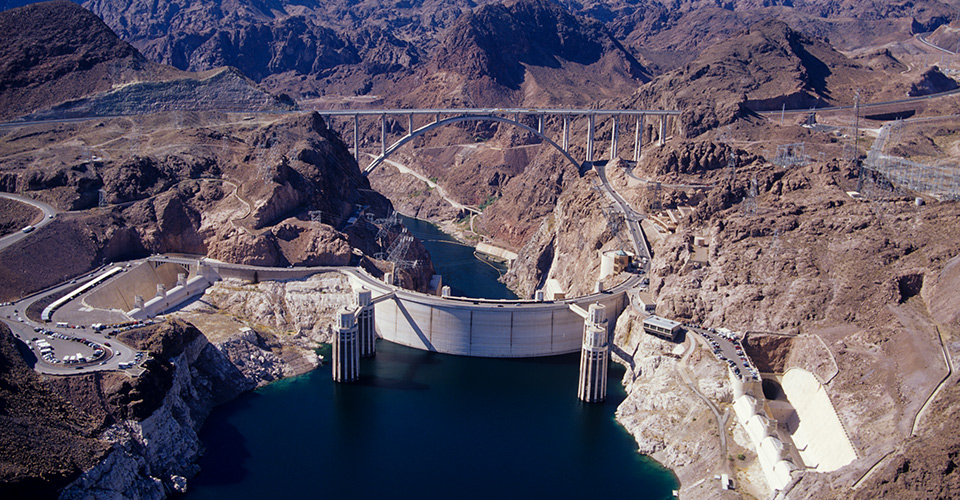
Boulder City sits adjacent to Hoover Dam and Lake Mead, Nevada’s most significant federal recreation destination, creating a unique combination of historic character and outdoor lifestyle appeal
2026 Economic Outlook
- Hoover Dam tourism continuing at 1 million+ annual visitors generating local economic activity
- Lake Mead water level recovery creating improved recreation conditions and visitation
- Henderson price appreciation continuing to push residents south toward Boulder City
- Solar energy development on federal lands creating new engineering and operations employment near Boulder City
- Historic downtown renovation continuing to attract small business and tourism investment
- Retiree inflow from California persisting as Nevada tax advantages remain compelling
Investment Climate
Boulder City is a niche market for specific investor profiles. It is not for investors seeking rapid appreciation, large tenant pools, or high-yield workforce housing strategies. It is for investors who value scarcity-driven appreciation, low management intensity, quality tenants, and the stability of a small community with structural supply constraints. These characteristics make it an excellent portfolio diversifier for investors who hold more active investments in Las Vegas or Henderson.
- Permanent supply constraint from federal land ownership creating a structurally undersupplied market where demand consistently exceeds new supply
- Small-town character premium that cannot be replicated elsewhere in the Las Vegas metro; retirees and quality-of-life seekers specifically choose Boulder City and do not substitute it with Henderson or Las Vegas proper
- Retiree tenant stability creating very low vacancy, long average tenancies, and minimal management intensity comparable to Carson City’s government employee demographic
- Limited tenant pool as the flip side of the small market; vacancy when it occurs can take longer to fill than in larger markets due to the smaller renter population
- Desert climate considerations similar to Las Vegas: HVAC maintenance is critical; no winter heating concerns unlike Reno or Carson City
Historical Performance
| Period | Market Driver | Avg Annual Appreciation | Key Event |
|---|---|---|---|
| 2009-2013 | Post-recession recovery | 3-6% | Declined less than Las Vegas and Henderson due to federal employment stability and land constraints |
| 2014-2019 | Las Vegas recovery, Henderson price growth spillover | 6-9% | Henderson appreciation beginning to push quality-of-life seekers toward Boulder City |
| 2020-2022 | Pandemic migration, remote work, outdoor recreation demand surge | 14-22% | Remote workers discovered Boulder City’s lifestyle; Lake Mead recreation demand surged |
| 2023-2024 | Rate normalization, stabilization | 3-5% | Market stabilized; supply constraint maintained appreciation support above metro average |
| 2025-2026 | Rate stabilization, continued retiree inflow, Henderson spillover | 5-8% (projected) | Lake Mead recovery improving recreation conditions; Henderson price growth continuing |
Demographic Trends Driving Demand
- Retiree Inflow from California – Boulder City’s no-casino character, Nevada zero income tax, and Lake Mead recreation access make it a specific target for California retirees who want a quiet small-town lifestyle rather than the resort-style retirement of Henderson or Summerlin
- Henderson Price Spillover – As Henderson median prices cross $455,000, households seeking Las Vegas metro access at lower prices and smaller-town character are moving to Boulder City as the adjacent affordable alternative
- Outdoor Recreation Demand – Lake Mead boating, fishing, hiking, and camping attract a lifestyle demographic that specifically values Boulder City’s proximity to one of the largest recreation areas in the American West
- Federal Employment Stability – Bureau of Reclamation and National Park Service employees create a stable, well-compensated tenant base with federal government employment security
- Solar Energy Development – Large-scale solar projects on federal lands near Boulder City are creating a new engineering and operations employment sector that is bringing higher-income workers to the area
- Historic Tourism – Hoover Dam receives over 1 million visitors annually, generating hospitality employment and supporting the local economy in ways that create stable secondary housing demand
📚 New to real estate investing? Master the fundamentals with our professional course Learn more →
2. Neighborhood Hotspots
Boulder City Investment Neighborhood Map
Interactive map of Boulder City investment neighborhoods. Green stars show top hotspots, blue circles mark established markets, and orange circles highlight emerging areas.
Core Investment Neighborhoods
Detailed Submarket Analysis: Boulder City Neighborhoods
| Neighborhood | Price Range (SFH) | Cap Rate | Growth Drivers | Best Strategy |
|---|---|---|---|---|
| East Side / Lake Mead Corridor | $390K-$580K | 5.0-6.0% | Lake Mead proximity, outdoor lifestyle premium, retiree demand | Best appreciation, premium retiree tenants, long-term hold |
| Historic Core / Central | $350K-$520K | 5.5-6.5% | Historic character, downtown access, government employees, tourism | Balanced returns, historic premium, government tenants |
| West Side / New Residential | $375K-$530K | 5.5-6.5% | Henderson proximity, commuter appeal, newer construction | Commuter rentals, lower maintenance, balanced returns |
| North Boulder City | $320K-$460K | 6.0-7.0% | Most affordable entry, established neighborhood, value potential | Best cash flow, affordable entry, value-add opportunity |
| South Boulder City | $330K-$470K | 5.5-6.5% | US 95 access, commuter friendly, Hoover Dam proximity | Commuter housing, balanced returns |
| Downtown Renovation Corridor | $280K-$420K | 5.5-7.5% | Urban renewal, tourism economy, boutique character, renovation upside | Value-add, historic renovation, highest yield, 7+ year hold |
Expert Insight: “Boulder City is the most misunderstood market in the Las Vegas metro. Investors look at the size (16,000 people), think ‘too small,’ and move on to Henderson or North Las Vegas. They’re missing the point. The supply constraint from federal land ownership is permanent and structural. The no-casino charter means Boulder City will never develop the commercial density that would erode its residential character. The retiree demographic is growing as California aging population seeks Nevada tax advantages. I’ve managed properties in Boulder City for 12 years with average vacancy rates of 2 to 3 percent. You simply cannot achieve that in Henderson or Las Vegas. The yields aren’t as high, but the total cost of ownership is genuinely lower.” – Robert Chen, Boulder City Realty Group
3. Property Types
| Investment Goal | Best Property Type | Best Neighborhoods | Minimum Capital |
|---|---|---|---|
| Best Appreciation | Historic SFH near Lake Mead | East Side, Historic Core | $105,000+ |
| Lowest Management Intensity | Single-story retiree-optimized | Central, East Side | $100,000+ |
| Best Cash Flow | Older SFH or value-add | North Boulder City, South | $90,000+ |
| Tourism STR Premium | Permitted STR near downtown | Historic Core, Downtown | $98,000+ |
Our Complete Renovation & Remodeling Cost Guide covers 400+ pages of project-by-project breakdowns with real contractor pricing ranges.
4. Cost Analysis
Acquisition Cost Breakdown (Boulder City)
| Expense Item | Typical Cost | Example ($400,000 Property) | Notes |
|---|---|---|---|
| Down Payment | 25% (investment) | $100,000 | Standard investment property requirement |
| Closing Costs | 2-3% of price | $8,000-$12,000 | Nevada transfer tax modest; Clark County recording fees standard |
| General Inspection | $350-$600 | $450 | Desert climate: HVAC inspection critical; older properties need thorough systems check |
| Historic Property Assessment (if applicable) | $500-$1,500 | $750 (if pre-1960) | For original dam-era and early post-war properties; assess systems condition before committing to purchase |
| HVAC Inspection | $150-$300 | $200 | Desert climate HVAC is primary operating cost; age and condition critical to assess at purchase |
| Initial Repairs | 0-10% of price | $0-$40,000 | Older Boulder City properties can have significant deferred maintenance; budget accordingly |
| Reserves (6 months) | 6 months expenses | $10,000-$13,000 | Retiree tenants provide stable income; reserves still prudent for HVAC replacement planning |
| TOTAL MINIMUM ENTRY | ~28-33% of value | $119,400-$166,500 | Similar to Henderson and Las Vegas; more accessible than California equivalent |
Sample Cash Flow Analysis: Central Boulder City Single-Family Home
| Item | Monthly | Annual | Notes |
|---|---|---|---|
| Gross Rent | $1,950 | $23,400 | 3BR, central Boulder City, retiree or government employee tenant |
| Less Vacancy (3%) | -$59 | -$702 | Retiree tenants stay 3 to 7 years; among lowest vacancy rates in any Nevada market |
| Property Taxes | -$233 | -$2,800 | ~0.70% of $400K assessed; Clark County rate competitive |
| Insurance | -$100 | -$1,200 | Desert climate; no flood or earthquake zone; favorable Nevada rates |
| Property Management (9%) | -$176 | -$2,106 | Smaller PM market in Boulder City; some Henderson PM companies cover Boulder City |
| Maintenance + CapEx (9%) | -$176 | -$2,106 | Desert HVAC primary cost; older properties budget higher; retirees maintain well reducing wear |
| Net Operating Income | $1,206 | $14,486 | Before mortgage; strong for a small market with scarce supply |
| Mortgage ($415K purchase, 25% down, 6.75%, 30yr) | -$1,010 | -$12,120 | Principal and interest on $311,250 loan |
| CASH FLOW | +$196 | +$2,366 | Positive cash flow with retiree tenant stability; genuinely favorable combination |
| Cap Rate | 3.49% (NOI / Purchase Price) | Strong for scarcity-driven market with structural supply constraint | |
| Total Return (6.5% appreciation) | ~33% | Including appreciation, equity, principal paydown on 25% down |
Boulder City’s financial profile is modest but genuine: positive cash flow with 3 percent vacancy driven by retiree tenant stability, consistent appreciation from structural supply constraints, and a total return that, while lower than peak Nevada markets, is achieved with significantly less management stress and operational risk. The 3 percent vacancy assumption is not aspirational; it reflects actual Boulder City performance data from property managers who have operated there for years.
Boulder City Specific Operating Costs
| Cost Item | Typical Range | Boulder City Consideration |
|---|---|---|
| HVAC Maintenance | $200-$400/year | Desert climate; units run hard May through September. Annual service mandatory. Budget $5,000 to $10,000 for replacement on a 10 to 15 year cycle. Boulder City shares Las Vegas’s desert HVAC intensity. |
| Desert Landscaping | $75-$150/month | Water conservation is a community value in Boulder City; drought-tolerant landscaping preferred. Converting older grass lawns to xeriscaping adds tenant appeal and reduces water costs. Nevada water restrictions increasingly stringent. |
| Property Tax | 0.6-0.8% of value | Clark County effective rates competitive; Boulder City properties taxed at same Clark County rates as Las Vegas and Henderson. A $400,000 property generates approximately $2,400 to $3,200 annually. |
| Older Property Systems | Variable | Boulder City has a higher percentage of pre-1970 homes than most comparable markets. Electrical panels, plumbing, and roofing in older properties may need updates. A thorough pre-purchase inspection prevents surprise capital expenditures. |
| Property Management Access | 9-11% of rent | Boulder City’s PM market is very small; most out-of-state investors use Henderson-based PM companies that cover Boulder City. Fees may be slightly higher than Henderson proper due to distance. Verify coverage before purchasing. |
Expert Insight: “The surprise for most of my clients buying Boulder City for the first time is the HVAC bill on older properties. We have homes here from the 1940s with original duct work and systems that were replaced once in 1985. The new investor buys a charming 1947 Craftsman for $380,000, then gets a quote to replace the HVAC and upgrade the ductwork for $14,000. That’s not a deal breaker at all given the appreciation potential, but it’s a cost that needs to be in the purchase analysis, not discovered after closing. Always get a dedicated HVAC inspection on any Boulder City property built before 1990.” – Robert Chen, Boulder City Realty Group
5. Legal Framework
✅ Boulder City Operates Under Nevada’s Highly Landlord-Favorable Law
Boulder City is a Clark County city operating under Nevada Revised Statutes Chapter 118A, the same investor-favorable framework governing Las Vegas, Henderson, and all Nevada cities. No rent control, no just cause eviction at lease end, and a 3 to 5 week eviction process for non-payment apply fully. Boulder City adds a business license requirement and has its own planning and zoning framework that includes the no-casino charter, but neither adds material landlord-tenant regulatory burden beyond state law. The desert climate replaces Reno’s heating habitability requirement with a cooling habitability obligation.
Nevada State Law: Key Provisions
- No Rent Control: Nevada prohibits local rent control ordinances statewide. Boulder City landlords may raise rents to full market rate with 45 days written notice, with no limit on frequency or amount.
- No Just Cause Eviction: At lease end, landlords can choose not to renew for any legal reason. No justification required to the tenant or government entity.
- 5-Day Pay or Quit: Non-payment evictions begin with a 5-day notice. Uncontested cases complete in 3 to 5 weeks. Rarely needed with retiree and federal employee tenants.
- Security Deposits: Maximum 3 months rent. Must return with itemized deductions within 30 days of move-out.
- Cooling Habitability: Functional air conditioning is legally required in Nevada rental properties. A June HVAC failure in Boulder City is a habitability emergency requiring immediate response. Same obligation as Las Vegas; opposite season from Reno’s heating requirement.
- Lease Terms: Annual leases expire at term end without cause required. Month-to-month requires 30 days notice from either party.
Boulder City Specific Requirements
- Business License: Boulder City requires a City Business License for rental properties. Modest annual fee; renew annually. Separate from Clark County or Las Vegas license requirements.
- No-Casino Charter: Relevant to investment because it permanently prevents casino development from disrupting residential neighborhoods. For residential landlords, the no-casino charter is a positive attribute protecting community character, not a restriction on rental operations.
- STR Permit: Boulder City requires a Short-Term Rental permit for rentals under 30 days. Application includes property inspection and neighborhood notification requirements. Verify current ordinance requirements before purchasing for STR purposes as the ordinance has been updated in recent years.
- Historic Properties: Some Boulder City properties within the National Historic Landmark District may be subject to state and federal historic preservation guidelines for exterior modifications. Check designation status before purchasing for renovation.
- Water Conservation: Clark County and Boulder City have active water conservation requirements affecting landscaping. Lawn installation in new construction is prohibited in most cases; existing grass removal may be incentivized with utility rebates.
Boulder City Key Resources
- Boulder City Business License: bcnv.org
- Boulder City Planning: 702-293-9282
- Nevada NRS Chapter 118A: leg.state.nv.us
- Clark County Assessor: assessor.clarkcountynv.gov
| Issue | Boulder City / Nevada Rule | Investor Impact |
|---|---|---|
| Rent Control | Prohibited statewide; unlimited increases with 45 days notice | Raise to market annually; Boulder City’s 4 to 5% rent growth fully capturable |
| Eviction Speed | 3 to 5 weeks for non-payment | Rarely needed with retiree and federal tenants; available and fast when needed |
| Cooling Habitability | Functional A/C legally required; summer emergency obligation | Service HVAC every spring; establish emergency contractor relationship; June failure is immediate habitability emergency |
| No-Casino Charter | City charter prohibits gambling; permanent restriction | Protects residential character permanently; positive for residential landlords; community character cannot be disrupted by gaming development |
| STR Permit | Required; current ordinance includes inspection and notification | Verify current requirements before STR purchase; rules have been updated; process is manageable but time-consuming |
| State Income Tax | None on rental income | Full rental income retained; same Nevada advantage as all markets in this series |
6. Step-by-Step Boulder City Investment Playbook
Choose Your Boulder City Strategy
Boulder City’s small market supports three distinct investor approaches:
Scarcity Appreciation Play
Buy in the Historic Core or East Side near Lake Mead. Accept moderate cap rates in exchange for permanent supply constraint appreciation and the lowest-management retiree tenant base available in the Las Vegas metro. Best for investors who want a truly passive hold that appreciates consistently without drama.
Tourism STR Play
Buy a permitted or permittable property within walking distance of downtown and Hoover Dam visitor infrastructure. Rent long-term during summer shoulder season (June to September) when heat reduces Hoover Dam tourism, switch to STR for peak season (October to May). Requires seasonal management active attention.
Affordable Cash Flow Entry
Buy in North Boulder City or older south side neighborhoods at entry prices of $320,000 to $460,000. Target government employees and Las Vegas commuters as tenants. Best cash flow in the city with still-conservative management demands given Boulder City’s community character relative to larger Nevada metro markets.
Historic Renovation Value-Add
Buy a 1930s to 1950s historic property needing systems updates and cosmetic renovation. Update HVAC, electrical, and kitchen and bathrooms while preserving historic character. Finished historic renovations command the strongest rents in the market. Requires renovation experience and contractor relationships in a small market.
Build Your Boulder City Team
- Boulder City Specialist Agent: The Boulder City market is small enough that local agent expertise is genuinely critical. Look for an agent who specifically knows Boulder City, not just Southern Nevada generally. Ask: “How many Boulder City investment properties have you sold in the past two years?” An agent who primarily sells Henderson or Las Vegas will not have the Boulder City-specific knowledge your investment needs.
- Nevada LLC Attorney: Form before purchase. Boulder City and Henderson or Las Vegas properties can be held in the same Nevada LLC. Essential for any out-of-state investor.
- Property Manager with Boulder City Coverage: Many Henderson PM companies will manage Boulder City properties; the 20 to 25 minute drive is not prohibitive. Verify explicitly that they currently manage in Boulder City, not just that they will. Ask how many properties they currently manage there and get references from Boulder City property owners specifically.
- HVAC Contractor: Pre-establish before summer. A June HVAC failure in Boulder City creates a habitability emergency. Identify a contractor who services Boulder City specifically, not just the Henderson market, as response times matter.
- Renovation Contractor (if applicable): For historic property purchases, identify a contractor with Boulder City renovation experience before you close. Historic properties have quirks that inexperienced contractors from Las Vegas or Henderson may not anticipate.
Retiree Marketing Tip: When listing Boulder City properties for retiree tenants, emphasize: proximity to Lake Mead recreation, single-story layout, desert landscaping, attached garage, and proximity to Boulder City Hospital and medical facilities. Retirees research these factors specifically. Properties listed with “single-story, no stairs” and “3 minutes to Lake Mead boat ramp” consistently rent faster and at premium rates compared to generic listings. Also note Boulder City’s no-casino, small-town character explicitly; many retirees choose Boulder City precisely because it is not like Las Vegas or Henderson.
Boulder City Specific Due Diligence
Physical Due Diligence
- HVAC age and condition: desert systems run intensively May through September; replacement budget mandatory if over 12 years old
- Electrical panel age and capacity: pre-1970 properties often have undersized or outdated electrical requiring upgrade
- Plumbing condition: older Boulder City properties may have galvanized or original copper supply lines needing assessment
- Roof condition: desert UV exposure; verify underlayment condition not just surface
- Water heater age: verify current condition and replacement timeline
- Desert landscaping compliance: verify water conservation status and any required grass removal obligations
- Foundation check: desert soil can settle; verify foundation condition especially on pre-1960 properties
Regulatory Due Diligence
- Confirm Boulder City business license requirement and any existing violations on the property
- For historic properties: verify National Historic Landmark District designation status; confirm what modifications require review
- Verify STR permit eligibility and current ordinance requirements if STR is planned
- Check for any open building permits or code violations
- Confirm water conservation compliance status; verify no pending lawn conversion requirements
- For properties on federal leasehold land (a small percentage of Boulder City): confirm ownership structure and lease terms; most properties are fee simple but verify
Managing Effectively in Boulder City
- Summer HVAC preparation is mandatory: Service air conditioning every April before the heat season. Boulder City temperatures regularly exceed 110 degrees June through August. A June HVAC failure is a habitability emergency requiring same-day response. Your property manager must have a preferred HVAC contractor with Boulder City coverage pre-established.
- Capture annual rent growth: Nevada’s no-rent-control law means you should raise to market at every lease renewal. Boulder City rent growth of 4 to 5 percent annually compounds meaningfully. Retiree tenants are generally understanding of market-rate increases when presented professionally; their fixed income is adjusted for cost of living and they are familiar with this economic reality.
- Market to retirees specifically: Use retiree-oriented listing language, emphasize single-story features and accessibility, mention Lake Mead recreation access, and list on retirement community boards and California retiree relocation networks. Retirees who choose Boulder City are specifically looking for it; they are not randomly browsing Henderson and Las Vegas listings.
- STR seasonal management: If pursuing the tourism STR strategy, the Boulder City STR market is seasonal with peak demand October through May aligned with Hoover Dam tourism season. Summer heat (June through September) reduces tourism significantly; plan for lower STR revenue or long-term fallback tenancy during these months.
- Lake Mead water levels: Monitor Lake Mead water levels; lower levels reduce marina and boating recreation which affects the outdoor lifestyle premium that drives some Boulder City rental demand. The lake has been recovering since 2022 drought lows; continued recovery supports the recreation lifestyle narrative.
7. Financing Options for Boulder City
| Loan Type | Down Payment | Rate Premium | Best For | Boulder City Note |
|---|---|---|---|---|
| Conventional Investment | 25% | +0.5-0.75% | W-2 income investors; most common choice | All Boulder City properties below conforming limit; no jumbo required; standard Southern Nevada lenders cover Boulder City |
| DSCR Loan | 25-30% | +1-2% | LLC borrowing; no income documentation | Boulder City rents support 1.0x DSCR in most properties; verify individual property before assuming qualification |
| Portfolio Loan | 20-25% | +0.75-1.5% | Multi-property investors | Boulder City properties can typically be combined in portfolio loan structures with Henderson or Las Vegas properties under Southern Nevada lenders |
| House Hacking (FHA) | 3.5% | Standard + MIP | Owner-occupying; first investment | Good entry for investors who want to live in Boulder City while building equity; small duplex inventory exists in older sections |
| Renovation Loan | Varies | Varies | Historic property renovation | FHA 203k or conventional renovation loans available for Boulder City historic property acquisition and renovation; combine purchase and renovation financing |
| Hard Money (Bridge) | 15-25% | 8-12% rate | Value-add and renovation acquisitions | Southern Nevada hard money lenders cover Boulder City; useful for historic renovation BRRRR plays before seasoned refinance |
⚠️ Federal Leasehold Land Note
A small percentage of Boulder City properties are on federal leasehold land rather than fee simple ownership. This affects financing options significantly: most conventional lenders will not finance properties on federal leaseholds, and DSCR lenders typically exclude them as well. Before making an offer on any Boulder City property, confirm whether the land ownership is fee simple or federal leasehold. Your agent and title company should flag this immediately. Fee simple properties are the standard and the investment-grade choice; leasehold properties require specialized financing and legal review before purchase.
8. Frequently Asked Questions

Knowledge Quiz: Boulder City Real Estate Investment
Open Quiz
5 quick questions on what you just learned about Boulder City investing
1) What makes Boulder City’s supply constraint structurally different from other Nevada markets and why is it permanent?
Answer: B
The guide explains that federal government ownership of approximately 75 percent of surrounding land physically prevents Boulder City from expanding outward as other Nevada cities can. Combined with the no-casino charter that prevents the commercial development that would otherwise erode residential character, Boulder City faces a structural supply constraint that is not a policy decision that could be reversed but a physical and legal reality. This is why appreciation driven by supply scarcity is more reliable in Boulder City than in markets where zoning could be changed to allow more development.
2) What critical due diligence item is unique to Boulder City that the guide warns investors about before making any offer?
Answer: C
The guide has a dedicated warning box about federal leasehold land, explaining that some Boulder City properties sit on federal government-owned land where the homeowner holds only a ground lease. Most conventional lenders and DSCR lenders will not finance leasehold properties. The guide instructs investors to confirm fee simple ownership in writing from the title company before proceeding with any due diligence expenses. The vast majority of properties are fee simple, but the existence of some leaseholds makes verification non-optional.
3) What does the guide identify as Boulder City’s cooling habitability requirement and how does it differ from Northern Nevada markets?
Answer: A
The guide specifically notes that Boulder City shares Las Vegas’s desert climate cooling habitability requirement rather than Reno and Carson City’s heating habitability requirement. Nevada law requires functional HVAC in rental properties; in Boulder City the critical obligation is cooling, not heating. The guide recommends servicing A/C every April before heat season, and notes that a June HVAC failure is a habitability emergency requiring same-day response. This is the opposite of Reno and Carson City where a December heating failure is the emergency.
4) According to the guide’s expert quote, what actual vacancy rate does a well-managed Boulder City property typically achieve, and what explains it?
Answer: D
The expert quote from Robert Chen of Boulder City Realty Group specifically states 12 years of managing Boulder City properties with average vacancy rates of 2 to 3 percent. The guide uses 3 percent vacancy in its cash flow model, the same ultra-low rate used for Carson City’s Empire Ranch government employees. The explanation is the same: retirees stay 3 to 7 years and vacate predictably when they downsize or move to assisted living, not unpredictably like workforce tenants who move for employment changes. This 2 to 3 percent vs. 4 to 5 percent vacancy difference is worth $2,400 to $4,800 in additional annual revenue at $2,000/month rent.
5) What does the guide recommend as the most appropriate role for Boulder City in a diversified Nevada investor portfolio?
Answer: C
The guide’s FAQ specifically addresses market size concerns by recommending Boulder City as one property within a diversified Nevada portfolio rather than a concentration strategy. The guide suggests that investors who want only one Nevada property should probably choose Henderson or Sparks due to larger tenant pools and more liquid exits. However, investors building a 3 to 5 property Nevada portfolio should include one Boulder City property to add scarcity-driven appreciation, very low vacancy, and the retiree demographic stability that no other Las Vegas metro market can provide.
Work With a Local Expert in Boulder City
We are building a verified network of real estate professionals across every market we cover.

About Our Expert Network
We are finalizing partnerships with verified real estate professionals across every market featured on Builds and Buys. Each expert is selected for hands-on investment experience, local market knowledge, and commitment to helping investors make sound decisions.
- Deep knowledge of Boulder City’s unique no-casino charter, federal land constraints, and fee simple vs. leasehold ownership
- Experience with historic property renovation and the local permit environment
- Understanding of the retiree demographic and tourism STR market
- Access to off-market Boulder City opportunities
- Full transaction support from search through closing
Services Covered
- Property sourcing and acquisition
- Fee simple vs. leasehold verification
- Historic renovation guidance
- Retiree tenant marketing strategy
- Tourism STR strategy and permitting
- Investment analysis and underwriting
- Legal and title referrals
- Financing and lender connections
- Property management referrals
- Insurance and inspection referrals
- LLC setup coordination
- Exit strategy planning
Get Connected or Join Our Network
Looking for a Boulder City investment expert? We will connect you with the right professional for your strategy.
Contact us at support@buildsandbuys.com
Find Specialized Boulder City Real Estate Professionals
Ready to Invest in Boulder City?
Boulder City is Nevada’s most unique real estate market and the right choice for investors who understand that scarcity, stability, and simplicity are worth more than maximum yield. The permanent supply constraint from federal land ownership, the no-casino charter preserving residential character, and a retiree and government employee tenant base delivering 2 to 3 percent actual vacancy create a genuinely distinctive investment environment. Investors who verify fee simple ownership, inspect HVAC thoroughly, build the right local team, and approach Boulder City as a portfolio diversifier rather than a concentration strategy consistently find that it delivers on its promise of reliable, low-drama appreciation.
Continue Your Research
For further guidance, explore our State-by-State Investor guides, browse our expert articles, or follow our Step-by-Step Investment Guide.