
Tulsa Real Estate Investment Guide For 2026
A comprehensive resource for investors looking to capitalize on a reinvented American city, driven by the Gathering Place revitalization, a growing arts and tech scene, and some of the most affordable urban entry prices in the country, in 2026
Quick answers: Top 5 most searched Tulsa investment questions ▼
Migration data: Where people are moving from to Tulsa ▼
In This Guide
Click on any section to navigate directly to that content
1. Tulsa Market Overview
Market Fundamentals
Tulsa has undergone one of the most genuine urban reinventions of any mid-size American city over the past decade. Anchored by the George Kaiser Family Foundation’s $465 million Gathering Place riverfront park, a nationally recognized remote-worker relocation program, and sustained investment in the historic Greenwood District, Tulsa now offers investors urban amenities and appreciation potential at prices most comparable-sized cities left behind years ago.
Key economic indicators that define Tulsa’s investment case:
- Population: 415,000+ city proper, 1.0M+ greater metro area
- Major Employers: American Airlines (largest maintenance base in the world), Tulsa Public Schools, healthcare systems, energy companies including ONEOK and Williams Companies
- Median Household Income: $58,000+ citywide, with significant variation by neighborhood
- Job Growth: Steady and diversifying beyond traditional energy dependence
- State Income Tax: Oklahoma’s top marginal rate is 4.75%
- Vacancy Rate: Under 6% citywide, varying meaningfully by neighborhood
Tulsa’s economy has historically been more cyclical than Oklahoma City’s due to greater energy sector concentration, but continued diversification into aerospace, healthcare, and a growing entrepreneurship ecosystem has reduced this volatility meaningfully over the past decade.
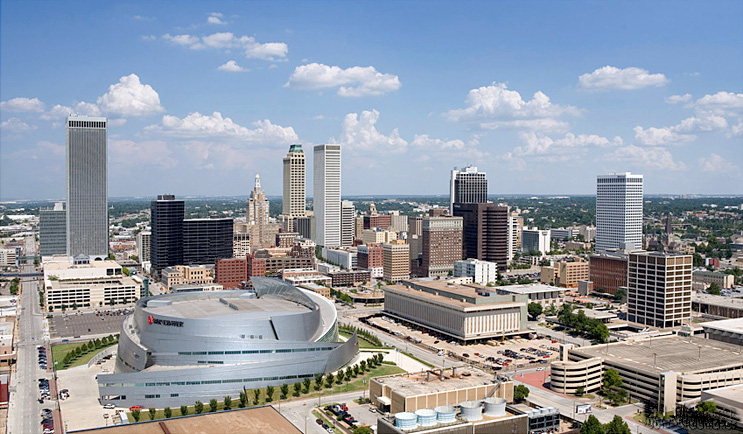
Tulsa’s Gathering Place and downtown revitalization have transformed the city’s investment narrative
2026 Economic Outlook
- Continued Tulsa Remote program growth attracting higher-income residents
- Greenwood District revitalization investment continuing to expand
- American Airlines maintenance base expansion supporting aerospace employment
- Growing tech and entrepreneurship ecosystem centered around downtown
- Sustained arts and culinary scene growth in Blue Dome and Brady Districts
Investment Climate
Tulsa rewards investors who understand its genuinely uneven neighborhood-level trajectory. Unlike a uniformly appreciating suburb, Tulsa’s core city offers dramatically different opportunities block by block. Successful Tulsa investors tend to share these characteristics:
- Neighborhood-level expertise understanding which specific corridors are benefiting from revitalization investment versus which remain purely value plays
- Appreciation patience recognizing that Tulsa’s turnaround story plays out over 7-10+ year hold periods, not quick flips
- Cash flow discipline Tulsa’s lower entry prices mean cash flow-focused strategies are genuinely viable, unlike in premium suburban markets
- Landlord-friendly execution leveraging Oklahoma’s straightforward eviction and lease laws
- Diversification awareness recognizing Tulsa Remote and aerospace growth as genuine diversification away from pure energy-sector cyclicality
Tulsa’s older housing stock and historically lower average price point mean investors have access to a wider range of both value-add and cash-flow opportunities than in Oklahoma City’s more uniformly suburban-dominated metro.
Historical Performance
| Period | Market Driver | Avg Annual Appreciation | Key Event |
|---|---|---|---|
| 2010-2014 | Energy sector recovery, slow post-recession growth | 2-4% | Gathering Place planning and construction begins |
| 2015-2019 | Gathering Place construction, downtown revitalization | 3-5% | Blue Dome and Brady Districts see first wave of investment |
| 2020-2022 | Gathering Place opens, Tulsa Remote gains national attention | 9-12% | Out-of-state buyers discover Tulsa’s affordability and amenities |
| 2023-2024 | Rate normalization, continued downtown investment | 5-6% | Greenwood District investment continues to expand |
| 2025-2026 | Sustained diversification, continued in-migration | 6-8% (projected) | Tulsa Remote program continues expanding participant base |
Tulsa’s 15-year track record shows average annual appreciation of 5-7%, with a notable acceleration since the Gathering Place’s 2018 opening and the Tulsa Remote program’s 2019 launch. A $150,000 Midtown Tulsa property purchased in 2015 is worth approximately $230,000-$260,000 today.
Demographic Trends Driving Demand
- Tulsa Remote Participants – Thousands of qualifying remote workers relocated since program launch, concentrated in Midtown and downtown-adjacent housing
- Aerospace and Manufacturing Employment – American Airlines’ Tulsa maintenance base, the largest in the world, anchoring a stable blue-collar and technical workforce
- Arts and Culinary Growth – Blue Dome and Brady Arts Districts attracting young professionals and creative-economy workers
- Greenwood District Investment – Historic Black Wall Street revitalization drawing both public and private investment to North Tulsa
- University Presence – University of Tulsa and Oklahoma State University-Tulsa supporting steady student and academic-adjacent demand
- Healthcare Sector Growth – Saint Francis, Ascension St. John, and OSU Medical Center supporting professional tenant demand
📚 New to real estate investing? Master the fundamentals with our professional course Learn more →
2. Neighborhood Hotspots
Tulsa Investment Neighborhood Map
Interactive map of Tulsa’s investment neighborhoods. Green stars show top hotspots, blue circles mark established markets, and orange circles highlight emerging areas.
Core Investment Neighborhoods
Detailed Submarket Analysis: All Tulsa Neighborhoods
| Neighborhood | Price Range (SFH) | Cap Rate | Growth Drivers | Best Strategy |
|---|---|---|---|---|
| Midtown / Cherry Street | $225K-$550K | 5.0-6.5% | Walkability, Tulsa Remote demand | Value-add historic homes, appreciation |
| Maple Ridge | $275K-$700K | 4.5-5.5% | Historic architecture, established prestige | Pure appreciation, luxury rental |
| Brookside | $250K-$600K | 4.5-6.0% | River proximity, retail corridor | Established appreciation play |
| Pearl District / Downtown | $200K-$450K | 5.5-7.0% | Downtown proximity, loft conversions | Urban revitalization play |
| Riverside / Gathering Place Area | $225K-$500K | 5.0-6.0% | Gathering Place proximity, riverfront | Balanced appreciation and yield |
| South Tulsa / 71st Street | $200K-$375K | 5.5-6.5% | Retail corridor, family demand | Family buy-and-hold |
| Kendall-Whittier | $150K-$275K | 6.0-7.5% | University proximity, growing investment | Value-add, mixed tenant appeal |
| Greenwood District / North Tulsa | $100K-$225K | 8.0-11.0% | Historic significance, sustained investment | Highest yield in Tulsa, revitalization play |
| West Tulsa | $100K-$200K | 7.5-9.5% | Affordable entry, industrial employment | Cash flow focus, workforce housing |
Expert Insight: “Tulsa is the most misunderstood real estate market I work in. Investors from the coasts see the price point and assume it means the city is declining, when in fact the opposite is true. The Gathering Place alone fundamentally changed how people think about living here, and Tulsa Remote has brought real income into Midtown that wasn’t there a decade ago. The neighborhoods closest to that public investment, Midtown, Brookside, and increasingly the Pearl District, are where I tell clients to focus for appreciation. Greenwood is where I send clients purely chasing yield.” – Marcus Webb, Principal, Green Country Investment Realty
3. Property Types
| Investment Goal | Best Property Type | Best Neighborhoods | Minimum Capital |
|---|---|---|---|
| Maximum Appreciation | Historic SFH in constrained premium locations | Maple Ridge, Midtown, Brookside | $56,250+ |
| Maximum Yield | Value-add workforce housing | Greenwood District, West Tulsa | $25,000+ |
| Balanced Returns | Small multi-family, established SFH | Kendall-Whittier, Florence Park | $37,500+ |
| Lowest Management | Suburban-style SFH, newer stock | South Tulsa / 71st Street Corridor | $50,000+ |
Don’t guess the costs. Our Complete Renovation & Remodeling Cost Guide covers 400+ pages of project-by-project breakdowns with real contractor pricing ranges.
4. Cost Analysis
Acquisition Cost Breakdown (Tulsa)
| Expense Item | Typical Cost | Example ($225,000 Property) | Notes |
|---|---|---|---|
| Down Payment | 25% (investment) | $56,250 | Standard for investment properties in Tulsa |
| Closing Costs | 2-3% of price | $4,500-$6,750 | Title, escrow, lender fees, recording |
| General Inspection | $350-$550 | $450 | Especially important for Tulsa’s older historic housing stock |
| Foundation Inspection | $300-$500 | $400 | Recommended given Oklahoma’s expansive clay soils |
| Roof Certification | $150-$250 | $200 | Insurers often require given hail exposure |
| Initial Repairs | 0-15% of price | $0-$33,750 | Highly variable given the wide age range of Tulsa’s housing stock |
| Reserves (6 months) | 6 months expenses | $5,500-$8,000 | Emergency fund for vacancy and repairs |
| TOTAL MINIMUM ENTRY | ~29-32% of value | $66,850-$71,650 | Among the most accessible urban entry points in the country |
Sample Cash Flow Analysis: Midtown Historic Single-Family Home
| Item | Monthly | Annual | Notes |
|---|---|---|---|
| Gross Rent | $1,650 | $19,800 | 3BR, Midtown, renovated historic home |
| Less Vacancy (6%) | -$99 | -$1,188 | Conservative estimate for a diversified urban market |
| Property Taxes | -$195 | -$2,340 | ~0.95% effective rate on $246K assessed value |
| Insurance | -$115 | -$1,380 | Landlord policy; reflects Oklahoma hail/wind risk and older construction |
| Property Management (10%) | -$165 | -$1,980 | Standard Tulsa metro rate, slightly higher for urban core properties |
| Maintenance + CapEx | -$165 | -$1,980 | 10% of rent, reflecting older housing stock |
| Net Operating Income | $911 | $10,932 | Before mortgage |
| Mortgage ($246K price, 25% down, 6.5%, 30yr) | -$1,166 | -$13,992 | Principal and interest only |
| CASH FLOW | -$255 | -$3,060 | Modest negative carry at 25% down; near break-even at 30%+ down |
| Cap Rate | 4.44% | NOI / Purchase Price | |
| Total Return (7% appreciation) | ~19-23% | Including equity, appreciation, principal paydown |
Greenwood District and West Tulsa properties, purchased below $150,000, typically achieve genuinely positive cash flow even at 25% down given their much stronger rent-to-price ratios, though they require more active management and a higher tolerance for tenant turnover.
Expert Insight: “The mistake out-of-state investors make with Tulsa is treating it like a single market. A Midtown historic home and a Greenwood District rental are functionally different investments with different risk profiles, different tenant pools, and different management demands. Decide whether you’re buying appreciation or buying yield first, then pick your neighborhood, don’t do it the other way around.” – Patricia Owens, CPA, Green Country Real Estate Tax Advisors
5. Legal Framework
✅ Landlord-Friendly Market
Tulsa operates under Oklahoma’s statewide landlord-friendly legal framework. There is no rent control, no just-cause eviction requirement, and a comparatively fast eviction process. Tulsa does have city-specific rental property registration and code enforcement programs relevant to older housing stock that investors should understand before purchasing. Always consult an Oklahoma-licensed real estate attorney before acquiring rental properties.
Oklahoma Landlord-Tenant Law
- No Just Cause Requirement: Landlords may decline to renew a lease for any lawful reason at the end of the lease term with proper notice.
- Non-Payment Notice: 5-day notice to pay or vacate before filing for eviction.
- No-Cause Termination (Month-to-Month): 30-day written notice required from either party.
- Security Deposits: No statutory maximum amount. Must be returned within 30 days of move-out (45 days if itemized deductions require additional documentation).
- No Rent Control: Oklahoma law preempts any local rent control ordinances statewide.
- No Source of Income Protection: Landlords may decline Section 8 vouchers unless they choose to participate.
Tulsa-Specific Considerations
- Rental Property Code Compliance: Tulsa’s older housing stock, particularly in Midtown and North Tulsa, can carry more code enforcement scrutiny; confirm any open violations before purchase.
- Historic District Guidelines: Properties in designated historic districts like Maple Ridge may carry exterior modification restrictions relevant to renovation plans.
- Written Lease Agreements: Use Oklahoma-specific lease templates covering pets, late fees, and maintenance responsibilities clearly.
- Documented Move-In Condition: Photograph and document condition at move-in, particularly important for older housing stock.
- Fair Housing Compliance: Federal Fair Housing Act protections apply regardless of state landlord-friendliness.
- Professional Management: Strongly recommended for out-of-state investors, particularly in North Tulsa and value-add corridors requiring more active oversight.
Useful Tulsa Resources
- City of Tulsa: cityoftulsa.org
- Oklahoma Real Estate Commission: orec.ok.gov
- Tulsa Real Estate Investors Association: local chapter resources
- Tulsa County Court Clerk (evictions): oscn.net
| Regulation | Oklahoma / Tulsa Requirement | Comparison Market (Seattle) | Investor Impact |
|---|---|---|---|
| Eviction | No just cause required; 30-45 day realistic timeline | Just cause required always; 90-180+ days | Significantly faster resolution of problem tenants |
| Rent Increases | No statutory cap or advance notice requirement beyond lease terms | 180 days notice for CPI-exceeding increases | Full flexibility to adjust rents to market at renewal |
| Code Enforcement | Active enforcement program for older housing stock | RRIO required with rolling inspections | Confirm no open violations before purchasing older properties |
| Registration | No blanket rental registration requirement | RRIO required with rolling inspections | Generally lower administrative burden |
6. Step-by-Step Tulsa Investment Playbook
Choose Appreciation or Yield First
Tulsa’s neighborhood-by-neighborhood variation means the very first decision an investor makes should be whether they are chasing the city’s revitalization-driven appreciation story or its genuinely strong cash flow in more affordable corridors.
Appreciation Strategy
Buy a historic home in Midtown, Brookside, or Maple Ridge. Accept modest negative carry in exchange for exposure to Tulsa’s strongest, most sustained neighborhood-level appreciation story.
Cash Flow Strategy
Target Greenwood District or West Tulsa for Oklahoma’s highest urban cap rates while still capturing meaningful appreciation upside from sustained public revitalization investment.
Build Your Tulsa Team
- Neighborhood-Specialist Real Estate Agent: Given Tulsa’s block-by-block variation, a broad-market agent isn’t sufficient; find one who works specifically in your target corridor.
- Local Property Manager: Especially important in North Tulsa and West Tulsa, where hands-on tenant relationships matter more than in premium suburbs.
- Foundation and Historic-Home Inspector: Tulsa’s older housing stock combined with Oklahoma’s expansive clay soils make foundation evaluation essential.
- Insurance Broker with Oklahoma Hail/Wind and Older-Home Experience: Shop coverage carefully; older roofs and systems affect both cost and availability.
- Real Estate CPA familiar with the Tulsa market: For depreciation strategy and understanding any applicable historic renovation tax incentives.
Tulsa-Specific Due Diligence
Physical Due Diligence
- Foundation inspection given expansive clay soil conditions, especially important for older homes
- Electrical and plumbing system age assessment for pre-1960s housing stock
- Roof age and hail damage history (request insurance claim history)
- Storm shelter presence, a meaningful rental amenity
- Lead paint and other older-home hazard assessment for pre-1978 construction
Regulatory Due Diligence
- Check for open code enforcement violations, particularly important in older neighborhoods
- Confirm historic district status and any applicable exterior modification restrictions
- Verify property tax assessment history
- Review any active revitalization or tax increment financing district status that could affect future value
- Confirm zoning if considering conversion to multi-family use
Competing and Managing in Tulsa
- Pre-approval with local lenders: Local Oklahoma lenders often close faster than national retail banks, strengthening offers in competitive Midtown listings.
- Off-market sourcing: Build relationships with neighborhood-specific agents who track pocket listings, particularly valuable in the revitalizing Greenwood and Pearl Districts.
- Renovation contractor relationships: Essential for any value-add strategy in older Tulsa housing stock; vet contractors specifically experienced with historic homes.
- Tenant screening: Oklahoma’s landlord discretion allows selecting the strongest applicant from a pool; use consistent, documented criteria to stay fair-housing compliant.
- Typical Tulsa management fees: 9-11% of monthly rent for single-family management in the urban core, with leasing fees of 50-100% of one month’s rent.
7. Financing Options for Tulsa
| Loan Type | Down Payment | Rate Premium | Best For | Tulsa Note |
|---|---|---|---|---|
| Conventional Investment | 20-25% | +0.5-0.75% | Strong W-2 income, good credit | Most Tulsa properties fall well under conforming loan limits |
| DSCR Loan | 20-25% | +1-2% | Investors who want no income verification | Strong candidate market given Tulsa’s healthy rent-to-price ratios, especially in Greenwood and West Tulsa |
| Portfolio Loan | 20-25% | +0.75-1.5% | Multiple properties, self-employed | Local Tulsa banks and credit unions active in this space |
| House Hacking (FHA) | 3.5% | Standard + MIP | Owner-occupying one unit of a 2-4 unit property | Genuine multi-family inventory available in Midtown and Kendall-Whittier |
| Hard Money (Bridge) | 15-25% | 9-13% rate | Value-add acquisitions requiring renovation before refinance | Several Tulsa-area hard money lenders active given the volume of value-add opportunity |
Tulsa Financing Reality: Tulsa’s wide price range means financing strategy should follow neighborhood strategy. Greenwood District and West Tulsa properties often qualify comfortably for DSCR loans given strong rent-to-price ratios, while premium Midtown and Maple Ridge historic homes may require full income documentation or larger down payments to comfortably hit 1.0x coverage given their higher price points relative to achievable rents.
8. Frequently Asked Questions

Knowledge Quiz: Tulsa Real Estate Investment
Open Quiz
5 quick questions on what you just learned about Tulsa investing
1) What is the Gathering Place?
Answer: B
The Gathering Place is a $465 million riverfront park funded by the George Kaiser Family Foundation, one of the largest privately funded public parks in U.S. history, and a central driver of Tulsa’s urban revitalization narrative.
2) What is Tulsa Remote?
Answer: C
Tulsa Remote is a nationally recognized program that pays qualifying remote workers $10,000 to relocate to Tulsa, bringing thousands of higher-income residents into the city since launch.
3) Which neighborhood offers Tulsa’s highest cap rates according to the guide?
Answer: D
The Greenwood District and North Tulsa core offer cap rates of 8.0-11.0%, the highest in the city, driven by low entry prices and sustained revitalization investment.
4) What historical context should investors understand before investing in the Greenwood District?
Answer: A
Greenwood was the site of the 1921 Tulsa Race Massacre and the historic “Black Wall Street,” and investors should approach the neighborhood’s ongoing revitalization with genuine awareness of and respect for this history.
5) How does Oklahoma’s eviction process compare under Tulsa’s legal framework?
Answer: B
Tulsa follows the same statewide Oklahoma process as the rest of the state: no just-cause requirement and a realistic 30-45 day timeline for non-payment cases.
Work With a Local Expert in Tulsa
We are building a verified network of real estate professionals across every market we cover.

About Our Expert Network
We are finalizing partnerships with verified real estate professionals across every market featured on Builds and Buys. Each expert in our network is selected for their hands-on investment experience, local market knowledge, and commitment to helping buyers and investors make sound decisions.
Our local specialists offer:
- Proven experience with investment and income-producing properties
- Deep knowledge of local pricing, rental yields, and neighborhood dynamics
- Guidance on financing, legal structure, and due diligence
- Access to off-market and pre-market opportunities
- Full transaction support from search through closing
- Ongoing portfolio and property management referrals
Services Covered
- Property sourcing and acquisition
- Investment analysis and underwriting
- Buyer representation
- Market comparables and valuations
- Historic renovation and value-add guidance
- Neighborhood-specific rental strategy
- Legal and title referrals
- Financing and lender connections
- Property management referrals
- Insurance and inspection referrals
- 1031 exchange coordination
- Exit strategy planning
Get Connected or Join Our Network
Looking for a local expert to help with your investment? Reach out and we will connect you with the right professional for your market and strategy.
Are you a real estate professional with a track record working with investors? We are always expanding our network of verified local experts.
Contact us at support@buildsandbuys.com
Find Specialized Tulsa Real Estate Professionals
Ready to Invest in Tulsa?
Tulsa offers something few American cities can genuinely claim: a real, verifiable urban turnaround story still trading at prices that haven’t fully caught up to it. Whether you’re chasing appreciation in a renovated Midtown historic home, or the strongest cash flow yields in Oklahoma in the Greenwood District, Tulsa’s combination of genuine revitalization investment, a diversifying economy, and Oklahoma’s landlord-friendly legal environment makes it one of the country’s most compelling underpriced urban markets for patient, informed investors.
Continue Your Research
Oklahoma State Guide
See how Tulsa compares to Oklahoma City, Broken Arrow, Owasso, and other Oklahoma markets.
Broken Arrow Guide
Explore Tulsa’s largest suburb, anchoring the metro’s southeast side.
144-Lesson Course
University-level real estate education covering financing, law, strategy, and management.
For further guidance, explore our State-by-State Investor guides, browse our expert articles, or follow our Step-by-Step Investment Guide.



