Longmont Real Estate Investment Guide For 2026
A comprehensive resource for investors targeting Boulder County’s most accessible market, where a growing tech and manufacturing economy, a genuine affordability gap below Boulder and even Loveland, a revitalizing downtown, and a position equidistant between Denver and Fort Collins create one of the Front Range’s most overlooked balanced investment opportunities in 2026
Quick answers: Top 5 most searched Longmont investment questions ▼
Migration data: Where people are moving from to Longmont ▼
In This Guide
Click on any section to navigate directly to that content
1. Longmont Market Overview
Market Fundamentals
Longmont is Boulder County’s most overlooked real estate investment market, and that oversight is increasingly the opportunity. Sitting 16 miles northeast of Boulder on US 287 and the Diagonal Highway, Longmont provides full access to Boulder County’s open space network, outdoor recreation infrastructure, and economic spillover from one of the nation’s most dynamic university and tech cities, at a price point that is 45 to 50% below Boulder’s median.
What distinguishes Longmont from other Boulder County cities is that it has developed a genuine independent economic identity rather than being purely a Boulder bedroom community. Seagate Technology’s Longmont campus, a growing bioscience corridor along the Diagonal, LeftHand Brewing and Oskar Blues anchoring a craft economy, and the NextLight municipal fiber optic network that has made Longmont one of America’s best-connected cities have created a local economic foundation that attracts and retains workers independent of Boulder employment cycles.
- Population: 95,000+ city proper, Boulder County’s second largest city
- Major Employers: Seagate Technology, Envision Solar, UCHealth Longs Peak Hospital, St. Vrain Valley School District, LeftHand Brewing, Oskar Blues, growing bioscience cluster
- Median Household Income: $72,000 and growing
- NextLight: City-owned gigabit fiber internet available to most Longmont addresses, a unique infrastructure asset
- Vacancy Rate: Under 4% citywide for quality units
- Boulder County Position: Full Boulder County open space access, schools, and growth management at 45 to 50% below Boulder pricing
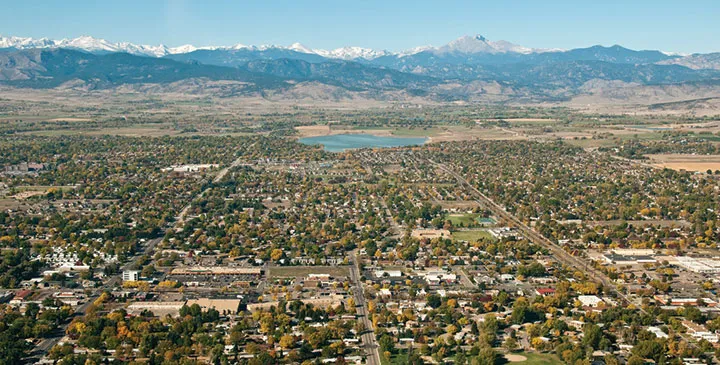
Longmont sits at the nexus of Boulder County’s supply constraints and its own growing tech and craft economy, creating investment dynamics unavailable in any other Boulder County city
2026 Economic Outlook
- NextLight fiber expansion continuing to attract tech remote workers from Denver and Boulder
- Bioscience cluster on Diagonal corridor adding high-income employment
- Downtown Main Street revitalization continuing with new restaurants, breweries, and retail
- Boulder County open space purchases further limiting new development, supporting appreciation
- St. Vrain Valley School District’s strong reputation continuing to attract family tenants
- UCHealth Longs Peak Hospital expansion adding healthcare employment anchor
The Longmont Investment Case: Honest Assessment
Structural Advantages
- Boulder County appreciation dynamics at 45 to 50% below Boulder entry pricing
- NextLight gigabit fiber creates a unique tech remote worker tenant pipeline unavailable in most Colorado cities
- Boulder County growth management limits new supply in the same way it does throughout the county
- Own economic identity (tech manufacturing, bioscience, craft brewing) beyond pure Boulder dependency
- St. Vrain Valley School District reputation attracts stable family tenant base
- Downtown revitalization is real and ongoing, driving appreciation momentum in Old Town
- Significantly more landlord-friendly than Boulder city proper
Risks to Underwrite Honestly
- Entry prices of $450,000 to $620,000 produce negative cash flow at standard investment financing, similar to Fort Collins and Loveland
- St. Vrain River and Left Hand Creek flood risk affects some Longmont properties, similar to Loveland’s Big Thompson issue
- Boulder County court system is more tenant-oriented than Larimer County, with longer eviction timelines
- Appreciation is strong but typically 1 to 2 points below Boulder’s own market annually
- Longmont’s Hispanic community in the east side has historically produced working-class rental dynamics that require active management
- Front Range hail risk applies equally to Longmont as to Fort Collins and Loveland
Historical Performance
| Period | Market Driver | Avg Annual Appreciation | Key Event |
|---|---|---|---|
| 2013-2018 | NextLight launch, Boulder overflow begins, downtown revitalization starts | 6-10% | 2013 flood causes damage but triggers infrastructure investment; NextLight launches 2014 |
| 2018-2020 | Boulder County overflow accelerates, tech remote worker migration begins | 7-11% | Longmont’s national “best place” rankings driving broad awareness |
| 2020-2022 | Pandemic remote work surge; NextLight advantage becomes mainstream | 17-24% | NextLight fiber draws tech workers nationally; Longmont prices surge |
| 2022-2024 | Rate shock, normalization | 2-5% | Market cools but Boulder County fundamentals sustain floor |
| 2025-2026 | Rate stabilization, bioscience growth, downtown maturation | 6-10% (projected) | Remote worker base buying homes in Longmont, tightening rental supply further |
Longmont vs Boulder County Market Comparison
| Market | Median Price | Cap Rate | Key Advantage | Best For |
|---|---|---|---|---|
| Longmont | $510,000 | 4.5-6.0% | Boulder County at 50% discount, NextLight fiber, own economy | Balanced returns, tech worker rentals, Old Town value-add |
| Boulder | $975,000 | 3.0-4.5% | Pure supply constraint, CU Boulder, maximum appreciation | Pure appreciation, high capital investors |
| Louisville | $780,000 | 3.0-4.2% | Highest-quality family neighborhood in Boulder County | Executive rental, premium appreciation hold |
| Erie | $560,000 | 4.3-5.5% | Newer construction, I-25 access, family demand | New construction family rental, lower maintenance |
| Fort Collins | $550,000 | 4.3-5.8% | CSU 34,000+ enrollment, larger city, more established | CSU student housing, balanced appreciation and income |
Longmont’s position in this table is striking: it offers the best cap rates in Boulder County by a wide margin, at entry prices less than 55% of Boulder and comparable to Fort Collins. For investors who want Boulder County appreciation dynamics without Boulder pricing, Longmont is the only viable option in the county. This makes it genuinely unique in the Colorado Front Range investment landscape.
📚 New to real estate investing? Master the fundamentals with our professional course Learn more →
2. Neighborhood Hotspots
Longmont Investment Neighborhood Map
Interactive map of Longmont’s investment neighborhoods. Green stars show top hotspots, blue circles mark established markets, and orange circles highlight emerging and value-add areas.
Core Investment Neighborhoods
Detailed Submarket Analysis: Longmont Neighborhoods
| Neighborhood | Price Range | Cap Rate | Growth Drivers | Best Strategy |
|---|---|---|---|---|
| Old Town | $480K-$720K | 5.0-6.5% | Historic revitalization, downtown investment, walkability | Long term hold, appreciation focus, remote workers |
| SW / Tech Corridor | $490K-$680K | 4.8-5.8% | Seagate, bioscience, UCHealth, NextLight fiber | Professional tenant hold, stable income |
| NW / St. Vrain Corridor | $500K-$700K | 4.8-6.0% | Top schools, Boulder County open space, family demand | Family buy and hold, St. Vrain schools appeal |
| SE Longmont | $450K-$620K | 5.0-6.2% | Affordable entry, family demand, working professionals | Balanced family rental, affordable Longmont entry |
| Central / Main St Adjacent | $460K-$640K | 5.0-6.5% | Downtown proximity, below Old Town pricing, walkability | Value play vs Old Town, remote worker tenants |
| East Longmont | $380K-$520K | 6.0-8.0% | Working class demand, value-add stock, gentrification path | BRRRR, value-add, experienced investors only |
| North Longmont | $460K-$640K | 5.0-6.2% | Family demand, I-25 access, established neighborhoods | Family buy and hold, commuter rentals |
| Diagonal Corridor | $480K-$680K | 4.8-6.0% | Bioscience employment, Boulder proximity, dual access | Professional tenant, Boulder commuter rental |
Expert Insight: “Longmont is the one market in Boulder County where the math still works for a real estate investor. I have clients who could not make Boulder pencil at any down payment, but who bought in Old Town Longmont in 2020 and are sitting on $150,000 to $200,000 in equity today while still holding a cash-flowing-neutral property. The NextLight fiber story is real too. I had a software architect from San Francisco move into one of my Longmont rentals specifically because NextLight guaranteed symmetrical gigabit upload speeds that she could not get in the suburbs of Denver or Fort Collins. That is a new kind of tenant that did not exist five years ago.” – Boulder County investor with properties across the county spectrum
3. Property Types
| Investment Goal | Best Property Type | Best Neighborhood | Minimum Capital |
|---|---|---|---|
| Best Boulder County Appreciation Value | Old Town SFH or bungalow | Old Town Longmont | $120,000-$180,000 |
| Best Stable Professional Tenant | SW Longmont SFH near tech employers | Southwest / Tech Corridor | $123,000-$170,000 |
| Best Yield Play | East Longmont BRRRR | East Longmont | $95,000-$145,000 |
| Lowest Capital Entry | FHA duplex house hack | Central or East Longmont | $20,000-$25,000 (FHA) |
| Schools-Driven Family Demand | SFH in strong SVVSD school zone | NW Longmont, SW Longmont | $125,000-$175,000 |
Longmont renovation costs run at Denver-comparable rates with standard Front Range contractor availability. Our Complete Renovation & Remodeling Cost Guide covers 400+ pages of project-by-project breakdowns to help you budget Old Town and East Longmont value-add renovations accurately.
4. Cost Analysis
Acquisition Cost Breakdown (Longmont Single Family)
| Expense Item | Typical Cost | Example ($510,000 Property) | Notes |
|---|---|---|---|
| Down Payment | 20-25% | $102,000-$127,500 | 25% recommended for better carry management |
| Closing Costs | 2-3% | $10,200-$15,300 | Title, escrow, lender fees, Boulder County recording |
| General Inspection | $400-$550 | $470 | Include hail damage roof inspection; Front Range hail is a real risk |
| Radon Test | $150-$250 | $180 | Boulder County has moderate radon levels; always test |
| NextLight Fiber Verification | $0 (online check) | $0 | Check nextlightfiber.com for exact address availability; critical for tech worker marketing |
| Flood Zone Check | $0 (FEMA online) | $0 | Check msc.fema.gov for St. Vrain River and Left Hand Creek flood risk; 2013 flood was significant |
| Initial Repairs | 0-7% | $0-$35,700 | Old Town older stock may need significant updates; East Longmont BRRRR targets budget separately |
| Reserves (6 months) | $10,000-$15,000 | $12,000 | Standard reserve for Front Range investment property |
| TOTAL MINIMUM ENTRY | ~25-32% | $124,850-$190,950 | Comparable to Fort Collins and Loveland entry costs; lower than Boulder |
Cash Flow Analysis: Old Town Longmont Tech Worker Rental (3BR, 25% Down)
| Item | Monthly | Annual | Notes |
|---|---|---|---|
| Gross Rent | $2,400 | $28,800 | Old Town 3BR, NextLight fiber, $540,000 purchase. Tech worker premium rent. |
| Less Vacancy (5%) | -$120 | -$1,440 | Tech workers are long-tenancy; 5% is conservative for this tenant type |
| Property Taxes | -$383 | -$4,590 | ~0.85% of $540K; Boulder County |
| Insurance | -$140 | -$1,680 | Hail endorsement; similar to Front Range peers |
| Property Management (9%) | -$204 | -$2,448 | Lower PM rate reflects quality tenant and longer average tenancy |
| Maintenance + CapEx (9%) | -$204 | -$2,448 | Standard 9% for older Old Town stock; may be lower post-renovation |
| Net Operating Income | $1,349 | $16,194 | Cap rate: 3.0% on purchase price |
| Mortgage ($405,000, 25% down, 6.75%, 30yr) | -$2,628 | -$31,532 | Principal and interest |
| CASH FLOW (25% down) | -$1,279 | -$15,338 | Negative at 25% down; comparable to Front Range peers |
| Annual Appreciation (9%) | +$48,600 | 9% appreciation on $540,000; Old Town Longmont at maturation cycle | |
| Total Return Year 1 | +$33,262 | Appreciation ($48,600) minus carry (-$15,338) = +$33,262 on ~$135K invested (24.6% total return) |
Longmont’s Boulder County position drives a first-year total return of 24.6% on invested capital, comparable to Fort Collins and slightly higher than Loveland, at the same entry price range as Fort Collins but in a Boulder County market with potentially stronger long-term appreciation as the county’s supply constraints become increasingly binding. The negative carry is manageable for investors with solid income and is more than offset by the appreciation math.
The NextLight Rent Premium: Quantifying the Fiber Advantage
NextLight fiber availability measurably affects rental income in Longmont. A comparison of comparable 3-bedroom properties with and without NextLight fiber access shows a consistent rent differential:
| Property Type | NextLight Available | Typical 3BR Rent | Typical Tenant |
|---|---|---|---|
| Old Town 3BR, renovated | Yes (full coverage) | $2,400-$2,900 | Tech remote worker, $90K-$150K income |
| SW Longmont 3BR, newer | Yes (full coverage) | $2,200-$2,700 | Tech worker or engineer, $75K-$130K income |
| SE Longmont 3BR, standard | Partial coverage | $1,900-$2,300 | Family household, $60K-$90K income |
| East Longmont 3BR, older | Limited coverage (expanding) | $1,700-$2,100 | Working class, $45K-$70K income |
The NextLight premium translates to $300 to $600 per month in additional rental income on comparable properties. Over a year, that is $3,600 to $7,200 in additional gross rent. At a 5% cap rate, that additional income represents $72,000 to $144,000 in additional property value. Always verify NextLight availability at the specific property address on nextlightfiber.com before purchasing with tech worker rental plans in mind. Coverage is widespread but not universal.
Expert Insight: “The NextLight story changed how I market Longmont rentals. I stopped leading with schools and neighborhood character and started leading with the internet. I put the NextLight logo in every listing, I list the specific speed tier the property qualifies for, and I market on remote work forums and tech company Slack channels alongside Zillow. My Old Town Longmont properties now get inquiries from software engineers in Seattle and data scientists in San Francisco who are specifically searching for NextLight addresses. These are $120,000-income renters who pay first and last, wire the deposit, and have never once asked me to lower the rent. Boulder County has been doing this forever. Longmont is just starting to realize it has something Boulder does not: gigabit internet at every residential address.” – Longmont property manager and investor
5. Legal Framework
✅ Longmont: More Landlord-Friendly Than Boulder, Similar to Fort Collins
Longmont operates under Colorado state landlord-tenant law with significantly fewer hostile tenant-protection overlays than Boulder city proper. There is no just cause eviction requirement, no first-in-time tenant selection mandate, no mandatory source of income protection, and no extended rent increase notice period. Longmont is in Boulder County, and Boulder County courts tend to be slightly more tenant-oriented and slower for eviction processing than Larimer County courts, typically adding 5 to 10 days to the eviction timeline. Investors coming from the Boulder city experience will find Longmont dramatically more straightforward. Investors coming from Larimer County will find it marginally more complex.
Colorado State Law in Longmont
- Non-Payment Eviction: 10 day demand, then unlawful detainer. Boulder County typical timeline: 35 to 50 days. Slightly longer than Larimer County but far faster than Denver or Boulder city.
- Lease Violation: 3 day notice to cure, then unlawful detainer. Timeline: 28 to 45 days.
- End of Lease: 21 day written notice for month to month. No just cause required in Longmont.
- Security Deposits: No statutory cap. Must return within 60 days. One month’s rent is market standard in Longmont.
- Rent Increases: 21 day notice. No rent control. No advance notice requirement beyond state law.
- Habitability: Standard Colorado requirements. Longmont Building Services enforces minimum standards on complaint basis.
Longmont Specific Considerations
- Rental License: Longmont has some rental registration requirements. Confirm current status with Longmont Building Services before renting any property. Requirements may have evolved from this guide’s publication.
- Flood Zone: The 2013 Colorado Front Range floods caused significant damage in Longmont along the St. Vrain River and Left Hand Creek. Always check FEMA flood maps before purchasing any Longmont property near these waterways. Flood insurance requirements apply for properties in SFHAs.
- Energy Code: Boulder County has been an early adopter of various building energy standards. For renovation projects, confirm current Longmont energy code requirements with Building Services, particularly for major renovations that may trigger energy upgrades.
- Boulder County STR: Confirm Longmont’s specific STR permit requirements if planning any short-term rental use. Boulder County has active STR regulations for unincorporated areas; Longmont city limits have their own rules.
- East Longmont Tenant Considerations: East Longmont’s significant Hispanic population means bilingual property management and lease materials are strongly recommended for landlords operating in this area. Fair housing compliance is standard, but cultural competency significantly improves tenant relations and management efficiency.
Useful Longmont Resources
- Longmont Building Services: longmontcolorado.gov/building
- NextLight Fiber: nextlightfiber.com
- Boulder County Assessor: bouldercounty.gov/property
- Colorado Landlord Tenant Law: cobar.org/landlord-tenant
| Regulation | Longmont | Boulder City | Fort Collins |
|---|---|---|---|
| Just Cause Eviction | Not required | Not required (but political pressure) | Not required |
| Eviction Timeline | 35-50 days | 45-75 days (complex tenant rights) | 30-45 days |
| Occupancy Restrictions | Standard Colorado | Very restrictive (3+1 occupancy rule) | 3-4 unrelated adults |
| Rent Control | None (state preemption) | None (state preemption) | None (state preemption) |
| Overall Regulatory Burden | Moderate | High | Low to Moderate |
⚠️ Longmont 2013 Flood: Know Before You Buy Near Waterways
The September 2013 Colorado Front Range floods caused catastrophic damage throughout Boulder County, including significant property losses in Longmont along the St. Vrain River and Left Hand Creek corridors. Multiple Longmont neighborhoods experienced flooding, infrastructure damage, and property write-offs. While significant mitigation investment has occurred since 2013, flood risk along the St. Vrain and Left Hand Creek remains real. Always verify FEMA flood zone designation (msc.fema.gov) before purchasing any Longmont property within reasonable distance of these waterways. This is not a rare concern, Boulder County flood events have occurred multiple times in recorded history, with 2013 being the most recent major event. Flood insurance premiums for SFHA-designated Longmont properties range from $800 to $3,500+ annually depending on elevation and coverage amount.
6. Step-by-Step Longmont Investment Playbook
Choose Your Longmont Strategy
Strategy A: NextLight Tech Worker
Buy a property in full NextLight coverage area (Old Town, SW Longmont, NW Longmont). Verify fiber availability at specific address. Market specifically to tech remote workers on tech job boards and remote work communities. Premium rent, excellent tenant quality, minimal vacancy.
Strategy B: Old Town Appreciation
Buy the best Old Town property your capital allows. Historic character, downtown revitalization momentum, permanent supply constraint. Accept negative carry as cost of holding Boulder County’s best value-add appreciation play. Hold 10+ years.
Strategy C: East Longmont BRRRR
Buy distressed working-class housing in East Longmont at $380,000 to $520,000. Renovate with local contractors. ARV spread of $80,000 to $120,000 achievable. Refinance and redeploy. Best equity building in Longmont. Requires Spanish-language management capability for the East Longmont tenant base.
Strategy D: SVVSD Schools Family
Buy a 3 to 4 bedroom home in a top-rated St. Vrain Valley School District school zone. Market to families with school-age children. Expect 3 to 5 year tenancies through the children’s school cycle. Lowest management intensity in Longmont outside of professional tenants.
Build Your Longmont Team
- Longmont Investment Agent: Longmont’s investor agent community is smaller than Denver or Fort Collins. Find an agent who understands the NextLight fiber value proposition, knows Old Town revitalization dynamics, and can provide current rental comp data for the tech worker rental market. Ask for their familiarity with the NextLight service area map.
- Boulder County Property Manager: Ensure your PM is NextLight-aware and knows how to market to tech worker tenants if that is your strategy. For East Longmont, verify they have Spanish-language capability or can manage that tenant base effectively. Boulder County PMs should be familiar with local flood zone disclosures.
- Flood Zone Specialist: Before purchasing near the St. Vrain River or Left Hand Creek, consult a flood insurance specialist familiar with Boulder County’s flood maps and premium ranges. Do this before making an offer, not after.
- Tech Worker Marketing Channels: Beyond standard PM platforms, consider partnering with remote work community forums, tech company Slack channels, and NextLight’s own community resources to reach the specific tenant demographic that pays Longmont’s premium rents.
- Local Contractor (for BRRRR): East Longmont BRRRR investors need a contractor relationship before purchasing. Longmont has a reasonable contractor market at Front Range standard rates. Get bids before closing on any value-add acquisition.
Longmont Specific Due Diligence
Physical Due Diligence
- Verify NextLight fiber availability at specific address on nextlightfiber.com before purchase for any tech worker rental strategy
- FEMA flood zone check for any property near St. Vrain River or Left Hand Creek (msc.fema.gov)
- Roof inspection with hail damage history: Front Range hail risk identical to Fort Collins and Loveland
- Radon test: Boulder County moderate radon levels
- Foundation inspection for older Old Town and East Longmont properties; some have expansive soil issues
- Sewer scope for pre-1975 construction in Old Town and central neighborhoods
Market and Regulatory Due Diligence
- Confirm current Longmont rental license requirements before purchase
- Verify school zone assignment for any property being marketed on SVVSD school quality; confirm with the district directly as boundaries shift
- Check HOA rules for any newer development properties regarding rental use
- Pull permit records for unpermitted additions in older Old Town and East Longmont properties
- Confirm STR permit requirements if planning short-term rental use
- Confirm flood insurance availability and estimated premium before finalizing any SFHA-adjacent acquisition
Marketing the Longmont NextLight Advantage
Longmont’s most distinctive competitive advantage for landlords is NextLight, and most property managers in the market do not use it effectively. Here is how to activate this advantage:
- Lead with NextLight in every listing: Include the NextLight logo, specific speed tier, and a one-line description of what gigabit fiber enables (video conferencing, 4K streaming on multiple devices simultaneously, cloud gaming, large file transfers) in every listing for a NextLight-connected property.
- Post in remote work communities: Facebook groups for remote workers in Colorado, Reddit’s r/digitalnomad, r/remotework, and tech company internal channels are channels where NextLight-connected Longmont properties can differentiate from every other rental listing in the state.
- Reach Seagate and bioscience employees: Seagate’s Longmont campus and the Diagonal corridor bioscience employers have employees who may currently rent in Boulder or Denver and commute. Marketing directly to these employers’ HR or housing channels can produce a qualified tenant pipeline.
- Price to market with fiber premium: When setting rent, use current NextLight-connected comparable rentals, not all Longmont rentals. The fiber premium is $200 to $500 per month for the right tenant and it is real and defensible in the market.
7. Financing Options for Longmont
| Loan Type | Down Payment | Rate Premium | Best For | Longmont Note |
|---|---|---|---|---|
| FHA (House Hack) | 3.5% | Standard + MIP | Owner-occupied duplex | Best low-capital entry into Boulder County real estate. Longmont duplexes at $580,000 to $720,000 qualify within FHA limits ($20,300 to $25,200 down). Boulder County appreciation at FHA entry capital. |
| Conventional Investment (25%) | 25% | +0.5-0.75% | Standard SFH investment | Most Longmont properties within conforming limits. 25% down recommended to keep carry manageable. Comparable capital requirements to Fort Collins and Loveland. |
| DSCR Loan | 20-25% | +1.5-2.5% | Self-employed, no income documentation | Longmont’s standard cap rates of 4.5 to 6.0% mean most properties do not qualify at 1.0x DSCR. East Longmont post-BRRRR properties with 7%+ stabilized cap rates may qualify. Shop DSCR lenders willing to use NextLight-premium rent projections. |
| Hard Money (BRRRR) | 15-25% | 8-12% rate | East Longmont distressed acquisitions | Active hard money market in the Front Range serves Longmont deals. Short renovation hold periods of 4 to 9 months make economics viable. Crucial to have contractor relationships and renovation budget confirmed before drawing hard money. |
| Portfolio Loan | 20-30% | +1-2% | Multiple Longmont properties, older construction | Boulder County banks including local credit unions offer portfolio products for older Old Town properties that may not pass conventional appraisal requirements due to property condition or age. |
Longmont Financing in Boulder County Context: Longmont offers Boulder County’s most accessible financing profile. The same 25% down payment that buys a $510,000 Longmont investment property ($127,500) would only reach approximately 13% down on a $975,000 Boulder property. For investors who believe Boulder County’s appreciation dynamics are among Colorado’s strongest long-term investment fundamentals (a well-supported thesis), Longmont is the only city in the county where those fundamentals are accessible with a realistic capital base. Investors who can afford Boulder should invest in Boulder. Investors who cannot afford Boulder but want Boulder County exposure should be in Longmont.
8. Frequently Asked Questions

Knowledge Quiz: Longmont Real Estate Investment
Open Quiz
5 questions on what you just learned about investing in Longmont
1) What is NextLight and why does the guide say it creates a unique rental advantage that no other Colorado city can match?
Answer: B
NextLight is Longmont’s city-owned fiber optic internet network, launched in 2014. It offers true symmetrical gigabit speeds (1 Gbps upload AND download) at residential rates, which is unique for residential single-family homes. This attracts tech remote workers who need reliable upload speeds for video conferencing, large file transfers, and cloud work. The guide shows these tenants earn $90,000 to $160,000+ annually and pay $300 to $600 per month more than standard tenants for NextLight-connected properties.
2) Why does the guide call Longmont Boulder County’s best-kept secret for real estate investors?
Answer: C
The guide’s comparison table shows that Longmont at $510,000 median produces cap rates of 4.5% to 6.0%, while Boulder at $975,000 produces only 3.0% to 4.5%. That is essentially the same Boulder County supply constraints and appreciation dynamics at 47% of the entry price with meaningfully better yields. No other Boulder County city offers this combination because all others (Louisville, Lafayette, Superior, Erie) trade much closer to Boulder pricing.
3) What does the guide identify as the specific flood risk event investors must research for Longmont properties near waterways?
Answer: D
The guide’s flood risk section specifically references the September 2013 Colorado Front Range floods that caused substantial damage within Longmont’s city limits, distinguishing it from Loveland’s 1976 Big Thompson event which occurred primarily in the canyon. The 2013 floods make Longmont’s St. Vrain River and Left Hand Creek corridors a genuine due diligence item. The guide directs investors to check FEMA flood maps at msc.fema.gov for any property near these waterways.
4) According to the guide’s NextLight rent premium table, how much more monthly rent does a NextLight-connected Old Town 3BR command versus a standard East Longmont 3BR without fiber?
Answer: A
The NextLight rent premium table in the guide shows Old Town 3BR with NextLight at $2,400 to $2,900 per month versus East Longmont 3BR without fiber at $1,700 to $2,100 per month. The difference is $700 to $1,200 per month, or $8,400 to $14,400 annually. The guide notes the premium translates to $72,000 to $144,000 in additional property value at a 5% cap rate, making NextLight availability a meaningful acquisition consideration.
5) What cultural competency consideration does the guide identify as important for investors operating in East Longmont?
Answer: C
The guide’s FAQ section on East Longmont’s Hispanic community notes that Spanish-language property management and materials significantly improve tenant relations and management efficiency, though English-language management is legally sufficient. The guide also notes that East Longmont working-class tenants may have income from non-traditional sources (cash income, multiple earners, non-standard employment) requiring bank statement verification rather than standard paystubs. Fair housing compliance using identical screening criteria for all applicants is emphasized throughout.
Work With a Local Expert in Longmont
We are building a verified network of real estate professionals across every market we cover.

About Our Expert Network
We are finalizing partnerships with verified real estate professionals across every market featured on Builds and Buys. Each expert is selected for their hands-on investment experience, local market knowledge, and commitment to helping investors make sound decisions.
Our Longmont specialists offer:
- Deep knowledge of NextLight fiber coverage map and tech worker rental marketing strategy
- Old Town Longmont revitalization dynamics and appreciation trajectory analysis
- East Longmont BRRRR opportunity identification and East Side tenant base navigation
- Boulder County flood zone expertise and flood insurance specialist referrals
- SVVSD school zone verification and family tenant strategy guidance
Services Covered
- Property sourcing and acquisition
- Investment analysis and underwriting
- Buyer representation
- NextLight tenant marketing strategy
- Old Town appreciation holds
- East Longmont BRRRR guidance
- Legal and title referrals
- Financing and lender connections
- Boulder County property management
- Flood insurance referrals
- 1031 exchange coordination
- Boulder County portfolio building
Get Connected or Join Our Network
Looking for a Longmont expert? Reach out and we will connect you with the right professional for your market and strategy.
Contact us at support@buildsandbuys.com
Find Specialized Longmont Real Estate Professionals
Ready to Invest in Longmont?
Longmont is the investment thesis that most Front Range investors are just now discovering. Boulder County’s appreciation dynamics and supply constraints at half the price. A city-owned gigabit fiber network that creates a tenant pipeline of tech remote workers earning $90,000 to $160,000 that no other Colorado city can replicate. A genuinely revitalizing Old Town with permanent historic supply constraint. A working-class East Side with BRRRR economics that produce the highest yields in the county. A St. Vrain Valley School District that keeps families anchored for multi-year tenancies. And a regulatory environment that is dramatically more manageable than Boulder city proper. The carry is negative at current rates, as it is throughout the Front Range. But Longmont’s Boulder County position means the appreciation engine is running on the same fuel as one of America’s most studied and consistently performing real estate markets, at an entry price that makes the math work for serious investors who have been priced out of Boulder itself.
Continue Your Research
Colorado State Guide
See how Longmont compares to all 41 Colorado city investment guides.
Boulder Guide
Compare Longmont’s accessible entry point against Boulder’s higher appreciation ceiling.
144-Lesson Course
University-level real estate education covering BRRRR, total return analysis, and Boulder County portfolio building.
For further guidance, explore our State-by-State Investor guides, browse our expert articles, or follow our Step-by-Step Investment Guide.