
Fort Collins Real Estate Investment Guide For 2026
A comprehensive resource for investors targeting Northern Colorado’s most dynamic city, where Colorado State University enrollment, a thriving craft brewing and tech economy, quality-of-life driven in-migration, and a supply-constrained Old Town core create one of the Front Range’s most balanced real estate investment markets in 2026
Quick answers: Top 5 most searched Fort Collins investment questions ▼
Migration data: Where people are moving from to Fort Collins ▼
In This Guide
Click on any section to navigate directly to that content
1. Fort Collins Market Overview
Market Fundamentals
Fort Collins occupies a unique position in the Colorado real estate landscape: it is simultaneously a university city, a craft economy hub, a tech corridor, and a quality-of-life destination that has attracted a disproportionately educated and income-growing population. The city’s consistent appearance on national best-places-to-live rankings is not incidental to its real estate performance, it is the mechanism by which demand is sustained and amplified year after year.
Colorado State University anchors everything. With 34,000+ enrolled students, a $1.8 billion annual economic impact, and a university that is actively expanding its research and graduate programs, CSU is the single largest driver of Fort Collins rental demand. But the market’s strength goes well beyond student housing. CSU graduates who love Fort Collins stay, forming a deep young professional tenant class. Craft breweries, outdoor recreation access, tech employers, and healthcare systems add additional demand layers. And Denver’s continued price appreciation sends an ongoing stream of buyers northward who often rent in Fort Collins before purchasing.
- Population: 170,000+ city proper, 370,000+ Larimer County
- Major Employers: Colorado State University, HP Inc., UCHealth, Banner Health, Woodward, Poudre School District, city and county government
- CSU Enrollment: 34,000+ students, Colorado’s second largest university
- Median Household Income: $72,000 and growing
- Vacancy Rate: Under 4% citywide, under 2% in campus-adjacent neighborhoods
- Annual Job Growth: 2.5 to 3.2%, consistently above national average
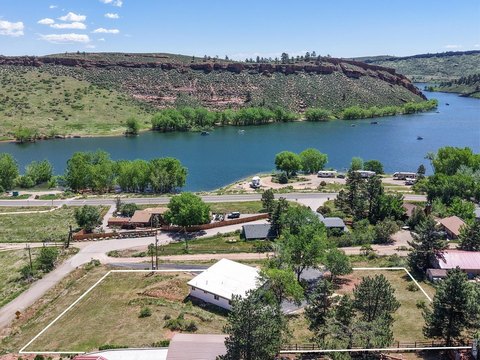
Fort Collins combines Colorado State University’s 34,000+ enrollment with a craft economy and outdoor lifestyle that consistently attracts and retains high-income residents
2026 Economic Outlook
- CSU’s new medical school adding graduate enrollment and healthcare employment
- Remote worker base from Denver and Boulder continuing to grow
- I-25 corridor tech growth creating employment without requiring Denver commute
- Larimer County growth management policies limiting new supply, supporting prices
- Old Town revitalization continuing to attract retail and hospitality investment
- Windsor and Timnath growth pushing higher-income buyers into Fort Collins proper
The Fort Collins Investment Case: Honest Assessment
Structural Advantages
- CSU’s 34,000+ enrollment creates the deepest student rental demand pool in Northern Colorado
- Quality-of-life reputation drives sustained in-migration that is not dependent on a single employer
- Larimer County growth management limits new supply, supporting appreciation trajectory
- More landlord-friendly than Denver, Boulder, or any major Colorado urban market
- Old Town supply constraint rivals any Colorado neighborhood outside resort markets
- Denver overflow creates a permanent secondary demand layer for both renters and buyers
- Diversity of demand across students, healthcare workers, tech professionals, and remote workers
Risks to Underwrite Honestly
- Entry prices of $480,000 to $650,000 produce negative cash flow at standard investment financing
- Fort Collins has a rental housing licensing program and inspection requirements that add compliance burden
- Student rentals require active summer vacancy management, though CSU’s scale reduces vacancy duration vs smaller schools
- Appreciation velocity is strong but below Boulder, which benefits from tighter supply constraints
- I-25 corridor growth is adding supply in Windsor, Timnath, and Johnstown, which competes for family renters though not for Old Town or campus-adjacent properties
Historical Performance
| Period | Market Driver | Avg Annual Appreciation | Key Event |
|---|---|---|---|
| 2012-2016 | CSU growth, post-recession recovery, craft economy emergence | 6-10% | Fort Collins recognized nationally as top place to live; demand accelerates |
| 2016-2020 | Denver overflow, tech corridor growth, CSU expansion | 7-11% | Fort Collins prices climb steadily; inventory remains historically tight |
| 2020-2022 | Remote work surge, pandemic-era demand explosion | 16-22% | Fort Collins receives significant Denver and Front Range remote worker migration |
| 2022-2024 | Rate shock, normalization | 2-5% | Market cools but maintains strong rental demand; inventory stays low |
| 2025-2026 | Rate stabilization, CSU medical school, continued I-25 growth | 7-11% (projected) | New CSU medical school enrollment expanding graduate and professional tenant base |
Fort Collins vs Northern Colorado Comparison
| Market | Median Price | Cap Rate | University | Best Strategy |
|---|---|---|---|---|
| Fort Collins | $550,000 | 4.3-5.8% | CSU (34,000+) | Balanced appreciation and income, CSU student housing, Old Town hold |
| Greeley | $390,000 | 5.5-7.5% | UNC (12,000+) | Cash flow, BRRRR, student housing |
| Loveland | $490,000 | 4.5-6.0% | None | Family rentals, balanced returns |
| Longmont | $510,000 | 4.5-5.8% | None | Boulder overflow, tech workers |
| Boulder | $975,000 | 3.0-4.5% | CU Boulder (36,000+) | Pure appreciation, supply constraint play |
Fort Collins sits in the ideal sweet spot between Greeley’s cash flow and Boulder’s appreciation. It offers CSU enrollment at 3x the size of UNC or FLC, stronger appreciation than Greeley, and 40% lower entry prices than Boulder. For investors building a Northern Colorado or Front Range portfolio, Fort Collins is typically the first choice for balanced total return investors and the anchor market around which other allocations are built.
📚 New to real estate investing? Master the fundamentals with our professional course Learn more →
2. Neighborhood Hotspots
Fort Collins Investment Neighborhood Map
Interactive map of Fort Collins’s investment neighborhoods. Green stars show top investment hotspots, blue circles mark established markets, and orange circles highlight emerging and value-add areas.
Core Investment Neighborhoods
Detailed Submarket Analysis: Fort Collins Neighborhoods
| Neighborhood | Price Range | Cap Rate | Growth Drivers | Best Strategy |
|---|---|---|---|---|
| Old Town | $560K-$950K | 4.0-5.0% | Walkability, breweries, historic supply constraint, CSU adjacency | Long term hold, appreciation focus, professional tenants |
| Campus West / Aggie Village | $490K-$720K | 5.0-6.5% | CSU walking distance, 34,000 student demand, per bedroom income | Per bedroom student rental, small multi-family, duplex |
| Midtown / South College | $440K-$620K | 5.0-6.5% | Urban renewal, BRT access, value-add stock, revitalization | Value-add, BRT appreciation play, balanced returns |
| South Fort Collins / Fossil Creek | $490K-$720K | 4.5-5.8% | Quality schools, Fossil Creek open space, family demand | Family buy and hold, long tenancies, low management |
| East Fort Collins / Harmony | $480K-$700K | 4.5-5.8% | HP and tech employment, I-25 access, professional tenants | Professional rental, I-25 commuter focus |
| North Fort Collins | $460K-$650K | 4.8-6.0% | More affordable entry, commuter demand, improving amenities | Balanced returns, family focus, below-median entry |
| CSU Campus Core (north) | $460K-$660K | 5.0-6.5% | CSU adjacency, student demand, more affordable than Campus West | Student rental, value-add, multi-family |
| Mason BRT Corridor | $430K-$620K | 5.0-6.5% | BRT transit, revitalization, CSU to downtown link | Transit corridor appreciation, value-add |
| Timnath (adjacent) | $450K-$640K | 5.0-6.2% | New construction, Fort Collins proximity, commuter demand | New construction, commuter rentals, family housing |
Expert Insight: “The biggest mistake I see out-of-state investors make in Fort Collins is buying south Fort Collins family rentals when what they should be buying is Campus West student rentals or Old Town holds. The south Fort Collins family rental produces slightly better cap rates on paper, but the Campus West student rental produces comparable current income plus CSU enrollment growth as a permanent demand floor, and the Old Town hold produces the kind of decade-over-decade appreciation that changes lives. Fort Collins investors who have built real wealth here all own something near CSU or in Old Town. The south Fort Collins buy is comfortable but it is not where the alpha is.” – Northern Colorado investment advisor with a 22-property Fort Collins portfolio
3. Property Types
| Investment Goal | Best Property Type | Best Location | Minimum Capital |
|---|---|---|---|
| Best Long-Term Appreciation | Old Town SFH or bungalow | Old Town, Eastside historic | $165,000-$240,000 |
| Best Cash Flow (relative) | CSU duplex or per bedroom SFH | Campus West, north CSU | $125,000-$185,000 |
| Lowest Management Intensity | Newer SFH with professional family | Fossil Creek, Harmony Road | $125,000-$180,000 |
| Lowest Capital Entry | FHA duplex house hack near CSU | Campus area, Midtown | $22,000-$28,000 (FHA) |
| Best Value-Add Upside | Midtown older SFH or duplex | Midtown, Mason BRT corridor | $110,000-$165,000 |
Fort Collins renovation costs run at Denver-comparable rates with a slight premium for Old Town historic work. Our Complete Renovation & Remodeling Cost Guide covers 400+ pages of project-by-project breakdowns to help you budget Midtown value-add and Campus West student rental upgrades accurately.
4. Cost Analysis
Acquisition Cost Breakdown (Fort Collins Single Family)
| Expense Item | Typical Cost | Example ($550,000 Property) | Notes |
|---|---|---|---|
| Down Payment | 20-25% | $110,000-$137,500 | 25% recommended for better cash flow management |
| Closing Costs | 2-3% | $11,000-$16,500 | Title, escrow, lender fees, Larimer County recording |
| General Inspection | $400-$550 | $475 | Hail inspection important on Front Range; check for roof hail damage history |
| Radon Test | $150-$250 | $180 | Larimer County has moderate radon levels; test always recommended |
| Rental License (city required) | $75-$200/yr | $150/yr | Fort Collins requires rental license and periodic inspection; budget for compliance |
| Initial Repairs | 0-7% | $0-$38,500 | Campus West older stock may need HVAC, roof, or plumbing updates |
| Reserves (6 months) | $10,000-$16,000 | $13,000 | Moderate reserves needed; less critical than Denver due to lower operating costs |
| TOTAL MINIMUM ENTRY | ~26-32% | $134,805-$205,805 | Meaningful capital required but substantially below Denver entry costs |
Cash Flow Analysis: Campus West CSU Student Rental (4BR Per Bedroom)
| Item | Monthly | Annual | Notes |
|---|---|---|---|
| Gross Rent (4 beds × $700) | $2,800 | $33,600 | Campus West 4BR, per bedroom. $580,000 purchase price |
| Less Vacancy (10%) | -$280 | -$3,360 | CSU’s 34,000 enrollment keeps vacancy lower than smaller schools |
| Property Taxes | -$411 | -$4,930 | ~0.85% of $580K; Larimer County |
| Insurance | -$140 | -$1,680 | Hail endorsement important on Front Range; slightly higher than inland markets |
| Fort Collins Rental License | -$13 | -$150 | City required; annual renewal |
| Property Management (10%) | -$252 | -$3,024 | Per bedroom student leasing adds complexity; 10% reflects this |
| Maintenance + CapEx (10%) | -$252 | -$3,024 | Student rentals require 10% budget; older Campus West stock may be higher |
| Net Operating Income | $1,452 | $17,432 | Cap rate: 3.0% on purchase price |
| Mortgage ($435,000, 25% down, 6.75%, 30yr) | -$2,822 | -$33,858 | Principal and interest |
| CASH FLOW | -$1,370 | -$16,426 | Negative carry at 25% down, 6.75% rates |
| Annual Appreciation (9%) | $4,350 | $52,200 | Year 1 appreciation estimate at 9% on $580K |
| Total Return (Year 1) | +$35,774 | Cash flow (-$16,426) + appreciation ($52,200) = +$35,774 total return on ~$145K invested |
This example illustrates the core Fort Collins investment logic: negative cash flow of $1,370 per month is more than offset by annual appreciation of $52,200, producing a total first-year return of $35,774 on a $145,000 initial investment. That is a 24.7% total return in year one on capital invested, even with the negative carry. As rents increase over time, the cash flow gap narrows while the appreciation base compounds. Over 10 years at these parameters, Fort Collins properties have consistently produced extraordinary total returns for investors who hold through the market cycle.
The Fort Collins + Greeley Portfolio Strategy
Experienced Northern Colorado investors often combine Fort Collins and Greeley properties to balance the portfolio:
| Portfolio Component | Monthly Cash Flow | Annual Appreciation | Role in Portfolio |
|---|---|---|---|
| Fort Collins (Campus West, $580K) | -$1,370 | +$52,200 | Appreciation engine; negative carry subsidized by Greeley |
| Greeley (UNC area, $390K, 25% down) | -$500 to +$100 | +$19,500 (5% est.) | Near neutral carry; reduces portfolio blended negative carry |
| Greeley (East GJ BRRRR, $390K) | +$100 to +$300 | +$15,600 (4% est.) | Cash flow positive; directly offsets Fort Collins carry |
| Combined Portfolio (3 properties) | -$970 to -$1,270 net | +$87,300 combined | Total return well above $87,000; manageable combined carry |
The portfolio strategy shows why experienced Northern Colorado investors hold in both markets. Greeley’s near-neutral or positive cash flow properties reduce the blended portfolio carry, while Fort Collins appreciation compounds the total return. This is more capital efficient than concentrating entirely in one market.
Expert Insight: “People get distracted by cap rates in Fort Collins and miss the point. Fort Collins has appreciated at 8 to 11% annually for the better part of two decades, with only brief interruptions. On a $550,000 property, 9% appreciation is $49,500 per year. Even if you are carrying $1,200 per month negative, you are still netting $35,100 in year one before principal paydown and tax benefits. No cash flow market in Colorado produces that math. The key is holding power: you need income or reserves to cover the carry through market cycles. Investors who sold in 2023 when rates spiked locked in losses on properties that have since recovered and moved higher. The strategy only works for patient capital.” – Northern Colorado investment advisor
5. Legal Framework
✅ Fort Collins: More Landlord-Friendly Than Denver, Manageable Compliance
Fort Collins operates under Colorado state landlord-tenant law with some city-specific additions that are more compliance-oriented than tenant-rights focused. The city has a Rental Housing Program that requires landlord registration and periodic rental inspections, which adds administrative burden but does not approach Denver’s regulatory complexity. There is no just cause eviction requirement, no first-in-time tenant selection rule, no mandatory source of income protection beyond Colorado state law, and no rent control. Evictions in Larimer County typically complete in 30 to 45 days. The overall regulatory environment is substantially more investor-friendly than Denver or Boulder, placing Fort Collins in Colorado’s second tier of landlord-friendly markets after Weld and Mesa County.
Colorado State Law in Fort Collins
- Non-Payment Eviction: 10 day demand, then unlawful detainer. Larimer County typical timeline: 30 to 45 days. Larimer courts are less congested than Denver courts.
- Lease Violation: 3 day notice to cure, then unlawful detainer. Timeline: 25 to 40 days.
- End of Lease: 21 day written notice for month to month. No just cause requirement.
- Security Deposits: No statutory cap. Must return within 60 days with itemized deductions. Market standard in Fort Collins is one month’s rent.
- Rent Increases: 21 day notice. No rent control. No extended notice period beyond state law.
- Habitability: Standard Colorado requirements. Fort Collins has active rental inspection that enforces minimum standards.
Fort Collins Specific Compliance
- Rental Housing License: Fort Collins requires all rental properties to obtain a city rental license. Annual renewal, fee of approximately $150 per unit. Non-compliance can result in fines.
- Rental Inspection Program: Fort Collins conducts periodic rental inspections on a rotating basis. Properties must meet minimum habitability and maintenance standards. Inspections are scheduled with advance notice. Properties in violation receive correction orders.
- Occupancy Limits: City ordinance limits unrelated occupants per dwelling. Critical for CSU student rental planning. Fort Collins’s occupancy limit typically restricts to 3 or 4 unrelated adults depending on dwelling and zone. Confirm current limits before purchasing with per-bedroom rental plans.
- STR in Fort Collins: Fort Collins allows STR with a city license. Less restrictive than Denver’s primary-residence-only rule but requires compliance with city STR regulations. Not a primary investment strategy for most Fort Collins residential investors given the strong long-term rental market.
- Hail Damage Disclosure: Colorado requires sellers to disclose known hail damage. Front Range hail is a real insurance issue; confirm roof age and insurance history before purchasing.
Useful Fort Collins Resources
- Fort Collins Rental Housing Program: fcgov.com/rentals
- Larimer County Assessor: larimer.gov/assessor
- Colorado Landlord Tenant Law: cobar.org/landlord-tenant
- Fort Collins Housing Authority: fchousing.com
| Regulation | Fort Collins | Denver | Investor Impact |
|---|---|---|---|
| Just Cause Eviction | Not required | Required | Fort Collins landlords can end tenancies at lease expiration |
| Rental License | Required, ~$150/yr | RRIO required | Manageable compliance requirement; budget for annual fee |
| Rental Inspections | Periodic, scheduled | RRIO rolling cycle | Maintain properties to habitability standard; no surprise inspections |
| Eviction Timeline | 30-45 days typical | 45-90 days typical | Larimer County courts process evictions faster than Denver courts |
| Rent Control | None (state preemption) | None (state preemption) | Colorado prohibits local rent control statewide |
| Occupancy Limits | 3-4 unrelated adults per unit | Varies by zoning | Critical for CSU per-bedroom leasing; confirm limit before purchasing |
6. Step-by-Step Fort Collins Investment Playbook
Choose Your Fort Collins Strategy
Fort Collins offers three distinct investment profiles, each suited to a different investor type and capital base:
Strategy A: Old Town Appreciation Hold
Buy the most irreplaceable property your capital allows in or adjacent to Old Town. Accept negative carry as the cost of holding a permanently scarce asset. Hold 10+ years. This is Fort Collins’s highest total return strategy for investors with sufficient income or reserves to manage the carry.
Strategy B: CSU Student Rental
Buy a 4 to 5 bedroom home in Campus West or north CSU area. Lease per bedroom to CSU students. Maximize income per dollar invested in Fort Collins. Summer vacancy requires active management. Best income optimization strategy in the market.
Strategy C: Midtown Value-Add
Buy a Midtown older property at a relative discount to Old Town and Campus West. Renovate to improve rents and ARV. Hold for the corridor revitalization appreciation as urban renewal investment matures and BRT access improves tenant quality.
Strategy D: FHA House Hack
Buy a duplex near CSU or in Midtown with 3.5% FHA down payment. Live in one unit, rent the other. Rental income of $1,900 to $2,400 reduces your monthly housing cost dramatically. Build equity in a strong appreciation market with minimal initial capital. Best first Fort Collins investment for new investors.
Build Your Fort Collins Team
- Fort Collins Investment Agent: Fort Collins has a robust real estate agent community but fewer who specialize in investor-specific analysis. Find an agent who can provide per-bedroom rental comps for Campus West, understands Midtown revitalization value drivers, and regularly closes investment property transactions. Ask for their last 10 investor transactions specifically.
- Northern Colorado Property Manager: Fort Collins PMs should have documented CSU student rental experience if that is your strategy. Ask specifically about their summer vacancy management process and current occupancy rates for student properties. For family rentals, ask about their tenant screening process and average days-vacant-to-re-leased.
- Fort Collins Compliance Consultant: For first-time Fort Collins investors, a brief consultation with a local property management company or real estate attorney on the city’s rental license and inspection requirements saves time and prevents compliance violations.
- Colorado Real Estate Attorney: For entity setup, lease review to ensure compliance with state and city requirements, and any disputes that arise.
- Local Lender: Larimer County banks and credit unions understand the local market. For older Campus West properties that may have appraisal challenges, a local portfolio lender may have more flexibility than a national bank.
- Hail Damage Insurance Specialist: Front Range hail is a real risk. Confirm roof age, hail damage history, and insurance availability before purchase. A broker familiar with Colorado hail insurance is useful.
Fort Collins Specific Due Diligence
Physical Due Diligence
- Roof inspection with hail damage history check: Front Range hail is frequent and expensive; a compromised roof can result in $20,000+ replacement and insurance gaps
- Radon test: Larimer County has moderate radon levels; mitigation runs $800 to $1,500 if needed
- HVAC age and condition: older Campus West homes often have aging furnaces; budget for replacement if over 15 years
- Sewer scope for older (pre-1980) properties in Campus West and Old Town areas
- Foundation inspection for older homes, particularly those with basement conversions near CSU
- Flood zone check for properties near the Poudre River, Spring Creek, or Fossil Creek drainages
Regulatory Due Diligence
- Confirm city rental license status and any outstanding violations for the property
- Verify occupancy limit for your intended use, specifically for per-bedroom CSU student rental plans
- Check zoning for any planned ADU additions
- Review any HOA rules if purchasing a condo or planned community property
- Pull city permit records for any unpermitted renovations, especially basement conversions and ADUs in older homes
- Confirm flood insurance status if property is in or near a FEMA Special Flood Hazard Area
Competing in Fort Collins’s Market
Fort Collins is a competitive market, particularly for Old Town and Campus West properties. CSU-adjacent homes regularly receive multiple offers from both investors and owner-occupants. Old Town homes in desirable price ranges ($600,000 to $850,000) often have brief marketing periods.
- Pre-inspections: Campus West and Midtown properties are more likely to accept inspection contingencies than Old Town premium properties. For Old Town, consider a pre-inspection to allow a cleaner offer.
- Off-market sourcing: Fort Collins’s investor community is active. Building relationships with local agents and property managers who know when landlords are planning to sell produces off-market opportunities before they hit the MLS.
- Mid-year targeting: January through March (post-holidays, pre-spring rush) and September through November (after summer frenzy) see less competition in Campus West. Student rental investors often list in spring when students are signing leases; off-cycle purchases avoid that competition.
- Occupied properties with below-market rents: Sellers who have long-term tenants paying below-market rents often price at modest discounts. For investors who can navigate the tenant transition, these properties offer the opportunity to immediately push rents to market rate.
7. Financing Options for Fort Collins
| Loan Type | Down Payment | Rate Premium | Best For | Fort Collins Note |
|---|---|---|---|---|
| FHA (House Hack) | 3.5% | Standard + MIP | Owner-occupied duplex | Best low-capital entry. Fort Collins duplexes near CSU in $620,000 to $780,000 range qualify within FHA conforming limits. Down payment of $21,700 to $27,300 for a full market appreciation exposure. |
| Conventional Investment (25%) | 25% | +0.5-0.75% | Standard SFH investment | Most Fort Collins investment properties qualify within conforming limits. 25% down is the minimum recommended to keep negative carry manageable. Most Campus West and Midtown properties fall within conventional limits. |
| Jumbo Investment | 25-30% | +0.75-1.25% | Old Town premium properties | Old Town homes above $806,500 require jumbo financing. Rate premium adds to negative carry; investors in this segment typically have strong income to absorb it. |
| DSCR Loan | 20-25% | +1.5-2.5% | Self-employed, no income verification | Fort Collins cap rates of 4.3 to 5.8% mean most properties do NOT qualify at 1.0x DSCR with current rates. Campus West per-bedroom rentals may qualify at 1.0x. Shop multiple DSCR lenders who accept per-bedroom income calculations. |
| Portfolio Loan | 20-30% | +1-2% | Multiple Fort Collins properties | Local Larimer County banks and credit unions offer portfolio products useful for investors with multiple properties or for older Campus West stock that may not pass conventional appraisal. |
| Home Equity (HELOC/Cash-out) | From existing equity | Variable | Recycling equity into Fort Collins | Many Fort Collins investors use appreciated equity from other Colorado properties or their primary home to fund Fort Collins acquisitions, reducing the ongoing financing cost. |
Fort Collins Financing Reality: Like Denver and Boulder, most Fort Collins investment properties do not produce positive cash flow at standard 20 to 25% down investment financing at current rates. The critical distinction is that Fort Collins produces 8 to 11% annual appreciation that, when factored into total return, makes the negative carry economically rational for investors with the income or reserves to sustain it. The investors who cannot hold Fort Collins through a 2 to 3 year rate shock or vacancy period should consider Greeley first, where the margin for error is wider and the capital requirements are lower. Fort Collins rewards patient, well-capitalized investors who understand the total return model.
8. Frequently Asked Questions

Knowledge Quiz: Fort Collins Real Estate Investment
Open Quiz
5 questions on what you just learned about investing in Fort Collins
1) What does the guide show as the total first-year return on a Campus West CSU student rental at 25% down, including appreciation at 9%?
Answer: C
The cash flow table shows annual negative carry of -$16,426 and annual appreciation of +$52,200 at 9% on $580,000, producing a net total return of +$35,774 in year one on approximately $145,000 invested. That is a 24.7% total return even with negative monthly carry. This is the core Fort Collins investment logic the guide frames throughout the cost analysis section.
2) What does the guide identify as the single most important due diligence item specific to Front Range hail risk in Fort Collins?
Answer: B
The guide explicitly calls out Front Range hail as a real and frequent risk in the Fort Collins due diligence section. A compromised roof can result in $20,000+ replacement and potential insurance gaps if the previous claim history is problematic. The guide also recommends a hail endorsement on insurance policies as a cost line item in the cash flow analysis.
3) What is the critical compliance issue for investors planning per-bedroom CSU student rentals in Fort Collins?
Answer: D
The guide specifically calls out Fort Collins’s occupancy limit ordinance as one of the most important compliance issues for student rental investors. Most residential zones limit unrelated adults to 3 per dwelling. A 4-bedroom home in a 3-person-limit zone can only legally be leased to 3 students, reducing per-bedroom income. Always verify the specific zone limit before purchasing with a per-bedroom student rental plan.
4) According to the guide, what is the advantage of the combined Fort Collins and Greeley portfolio strategy?
Answer: A
The portfolio strategy table in the guide shows that combining a Fort Collins appreciation hold (negative carry of -$1,370/month) with one or two Greeley near-neutral properties reduces the combined portfolio carry to -$970 to -$1,270 per month while capturing $87,300 in combined annual appreciation. Greeley’s cash flow subsidizes Fort Collins’s carry while Fort Collins’s appreciation drives the total return.
5) Why does the guide say Midtown Fort Collins may be in a similar early-cycle investment position to what Old Town offered in 2008 to 2012?
Answer: C
The guide identifies three concrete indicators of Midtown’s revitalization: the Midtown Urban Renewal Authority with committed TIF funding, MAX BRT access connecting the corridor to CSU and downtown, and new restaurant and retail investment. These are the same early-cycle signals that preceded Old Town’s appreciation phase. The $80,000 to $150,000 value gap versus equivalent Old Town properties represents the investment opportunity for early-cycle investors willing to wait 5 to 10 years for the cycle to mature.
Work With a Local Expert in Fort Collins
We are building a verified network of real estate professionals across every market we cover.

About Our Expert Network
We are finalizing partnerships with verified real estate professionals across every market featured on Builds and Buys. Each expert is selected for their hands-on investment experience, local market knowledge, and commitment to helping investors make sound decisions.
Our Fort Collins specialists offer:
- Deep knowledge of CSU student rental market, Old Town appreciation dynamics, and Midtown value-add opportunities
- Fort Collins rental license and inspection compliance guidance
- Occupancy limit analysis for per-bedroom student rental plans
- Hail insurance specialist referrals for Front Range properties
- Northern Colorado portfolio strategy covering both Fort Collins and Greeley
Services Covered
- Property sourcing and acquisition
- Investment analysis and underwriting
- Buyer representation
- CSU student rental strategy
- Old Town appreciation holds
- Midtown value-add guidance
- Legal and title referrals
- Financing and lender connections
- Property management referrals
- Rental license compliance
- 1031 exchange coordination
- Northern Colorado portfolio building
Get Connected or Join Our Network
Looking for a Fort Collins expert? Reach out and we will connect you with the right professional for your market and strategy.
Contact us at support@buildsandbuys.com
Find Specialized Fort Collins Real Estate Professionals
Ready to Invest in Fort Collins?
Fort Collins rewards investors who understand that real estate is a decade-long wealth building vehicle, not a monthly income statement. CSU’s 34,000+ enrollment is not going anywhere. The Larimer County growth management policies that limit new supply are not changing. The quality of life that brings 60%+ college-educated residents to a mid-size Colorado city with two national park units within 45 minutes is not replicable elsewhere in Northern Colorado at this price point. Old Town’s historic character will continue to attract the highest-income professional tenant class in the region. And the same Midtown corridor that looks like a discount today will likely be Fort Collins’s next appreciation wave for patient investors who arrive early. The carry is real, the negative cash flow is uncomfortable month to month, but the decade-long returns for investors who hold have consistently outperformed every Northern Colorado alternative.
Continue Your Research
Colorado State Guide
See how Fort Collins compares to all 41 Colorado city investment guides.
Greeley Guide
Explore Fort Collins’s Northern Colorado cash flow partner market, 30 miles to the east.
144-Lesson Course
University-level education covering student housing, total return analysis, financing, and portfolio building.
For further guidance, explore our State-by-State Investor guides, browse our expert articles, or follow our Step-by-Step Investment Guide.



