
Durango Real Estate Investment Guide For 2026
A comprehensive resource for investors targeting Southern Colorado’s most dynamic mountain city, where Fort Lewis College enrollment, four-season outdoor recreation, remote worker migration, and a geography that makes further sprawl nearly impossible combine to create one of Colorado’s most defensible long-term real estate markets
Quick answers: Top 5 most searched Durango investment questions ▼
Migration data: Where people are moving from to Durango ▼
In This Guide
Click on any section to navigate directly to that content
1. Durango Market Overview
Market Fundamentals
Durango is one of Colorado’s most compelling long-term real estate investments precisely because it defies easy categorization. It is too large and economically diverse to be merely a resort town, yet too supply-constrained and outdoor-lifestyle-driven to be a conventional mid-size city. Sitting where the San Juan Mountains meet the high desert plateau of the Colorado Plateau, Durango is hemmed in on every side by federal wilderness, national forest, and canyon terrain that makes meaningful new housing supply practically impossible without going much further out from the city core.
That supply constraint, combined with sustained demand from Fort Lewis College, year-round tourism, remote worker migration, and a healthcare and government employment base, creates the foundation for one of Southern Colorado’s most defensible appreciation stories. The city’s 2026 investment case rests on:
- Population: 20,000+ city, 56,000+ La Plata County
- Major Employers: Fort Lewis College, Mercy Hospital (Centura Health), La Plata County, federal agencies, Durango Mountain Resort (Purgatory), tourism sector
- FLC Enrollment: 3,500 to 4,000 students, creating consistent housing demand near campus
- Tourism Volume: 500,000+ Durango-Silverton Railroad riders annually, 600,000+ Mesa Verde visitors, plus Purgatory skiers and Animas River users
- Vacancy Rate: Under 4% citywide, well under 3% for quality units
- Geographic Supply Constraint: San Juan Mountains, BLM land, and Weminuche Wilderness limit expansion in every direction
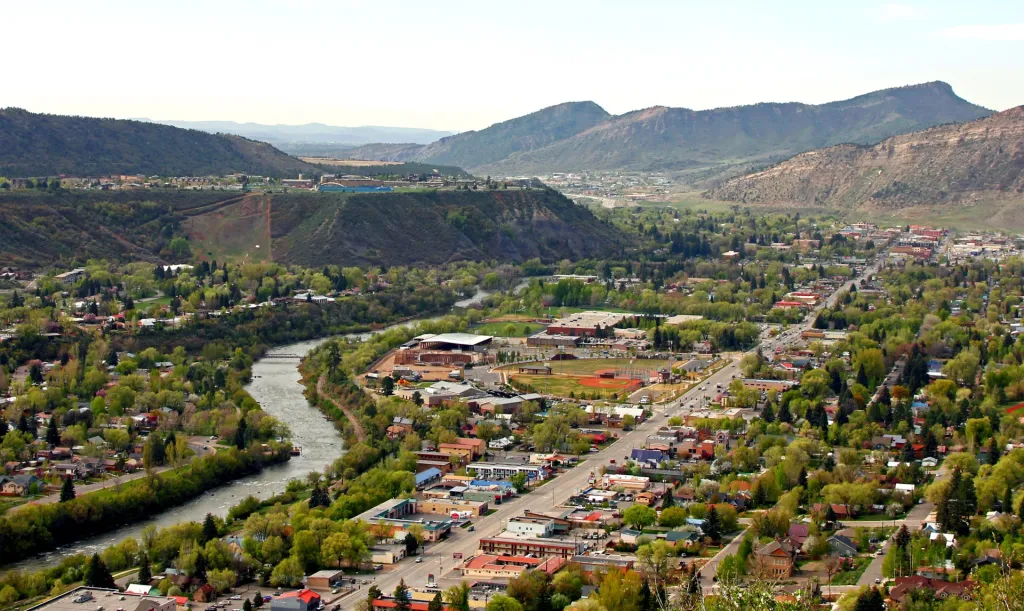
Durango’s San Juan Mountain setting and Animas River corridor create irreplaceable geographic appeal that structurally supports long-term property values
2026 Economic Outlook
- Remote worker base continuing to mature and buy, reducing rental supply and supporting prices
- Fort Lewis College enrollment growth after national enrollment recovery
- Purgatory Resort ongoing capital investment improving ski season demand
- Durango-Silverton Railroad continues to anchor spring through fall tourism
- Mesa Verde National Park proximity drawing year-round visitor spending
- Durango-La Plata County Airport adding routes, reducing Southern Colorado isolation
The Durango Investment Case: Honest Assessment
Structural Advantages
- Geographic supply constraint is permanent and strengthening over time
- Four-season demand anchors (skiing, rafting, hiking, railroad tourism, Mesa Verde) reduce seasonal vulnerability
- Fort Lewis College produces year-round baseline rental demand independent of tourism
- STR permitted for investor-owned properties with licensing, unlike many Colorado cities
- Remote worker migration is accelerating as Durango’s profile rises nationally
- La Plata County landlord regulations follow Colorado state law with no hostile city overlay
- 55%+ appreciation since 2019 reflects real demand, not speculative excess
Risks to Underwrite Honestly
- Wildfire risk is real and increasing in the San Juan region (see 2018 416 Fire context)
- High entry prices ($480,000 to $650,000 for quality properties) compress cash flow at conventional financing
- Durango is 340 miles from Denver, limiting buyer pool at exit to more regionally concentrated demand
- Winter road conditions on US 550 north toward Purgatory are serious; property management logistics require planning
- FLC enrollment at 3,500 to 4,000 is smaller than CMU or UNC, so student rental demand is more concentrated and less diversified
- Luxury rental ceiling exists but is below Telluride or Aspen, capping the top of the market
Historical Performance
| Period | Market Driver | Avg Annual Appreciation | Key Event |
|---|---|---|---|
| 2012-2018 | Steady mountain town growth, FLC stability | 4-7% | 2018 416 Fire causes brief market hesitation, quickly recovers |
| 2018-2020 | Post-fire recovery, growing lifestyle appeal | 6-9% | Durango begins attracting broader national awareness as outdoor lifestyle destination |
| 2020-2022 | Remote work surge, pandemic demand explosion | 20-28% | Durango among Colorado’s fastest appreciating markets as remote workers flood in |
| 2022-2024 | Rate shock, normalization | 3-6% | Market cools but does not correct; supply remains extremely tight |
| 2025-2026 | Remote worker base buying, FLC growth, continued tourism | 5-9% (projected) | Permanent remote worker residents converting rental supply into owner occupied, further tightening market |
Durango vs Colorado Mountain City Comparison
| Market | Median Price | LTR Cap Rate | University | Best Strategy |
|---|---|---|---|---|
| Durango | $580,000 | 4.5-6.5% | Fort Lewis College (3,500-4,000) | Balanced: appreciation + income, STR, FLC student housing |
| Steamboat Springs | $720,000 | 3.5-5.0% | None | STR focused, pure resort appreciation |
| Crested Butte | $750,000 | 3.0-4.5% | Western Colorado University (nearby) | Dual season STR, limited supply play |
| Telluride | $1,800,000+ | 1.5-3.0% | None | Ultra luxury, premium STR, limited supply |
| Grand Junction | $365,000 | 5.5-7.5% | CMU (12,000+) | Cash flow, BRRRR, student housing |
Durango occupies a compelling middle position: more affordable and economically stable than Steamboat, Crested Butte, and Telluride, with better appreciation and lifestyle premium than Grand Junction. For investors who want mountain town appreciation with university town stability, Durango is the best positioned Colorado market to deliver both simultaneously.
📚 New to real estate investing? Master the fundamentals with our professional course Learn more →
2. Neighborhood Hotspots
Durango Investment Neighborhood Map
Interactive map of Durango’s investment neighborhoods and surrounding La Plata County opportunity zones. Green stars show top investment hotspots, blue circles mark established markets, and orange circles highlight emerging and STR opportunity areas.
Core Investment Neighborhoods
Detailed Submarket Analysis: Durango and La Plata County
| Neighborhood / Area | Price Range | Cap Rate | Growth Drivers | Best Strategy |
|---|---|---|---|---|
| Downtown / Animas City | $520K-$850K | 4.5-5.5% | Walkability, FLC, Railroad tourism, remote workers | Long term hold, appreciation, remote worker rental |
| FLC Campus Area | $480K-$680K | 5.0-7.0% | FLC enrollment, walkability, student demand | Per bedroom student rental, small multi-family |
| Purgatory Corridor | $450K-$1.2M | 8-14% (STR gross) | Ski resort, summer MTB, dual season demand | STR focus, dual season management, resort appreciation |
| North Main / College Mesa | $480K-$720K | 4.5-6.0% | FLC adjacency, valley views, family demand | Family rental, balanced returns |
| Three Springs | $500K-$720K | 4.5-5.8% | Newer construction, family demand, south Durango | Family buy and hold, newer construction low maintenance |
| South Durango / Bodo | $420K-$580K | 5.0-6.5% | Affordability, workforce tenants, Mesa Verde corridor | Cash flow focus, workforce housing |
| Animas Valley (rural) | $580K-$1.5M | 7-12% (STR) | Animas River, mountain views, STR premium | Premium STR, long term hold, unique properties |
| Bayfield (15 miles east) | $380K-$540K | 5.5-7.0% | Durango commuters, affordability, growing demand | Affordable entry, commuter rental, long hold |
Expert Insight: “The question I get most from out-of-state investors is whether Durango is a resort market or a town. The answer is that it is genuinely both, and that dual nature is the investment thesis. The FLC base means there is always a rental market when ski season ends and before summer tourism peaks. The tourism anchors mean there is an STR ceiling that a purely university town cannot offer. Very few Colorado markets offer both simultaneously at under $600,000 median entry. That is why Durango has outperformed most comparable-sized Colorado cities over a 10-year hold period.” – Southern Colorado investment advisor
3. Property Types
| Investment Goal | Best Property Type | Best Location | Minimum Capital |
|---|---|---|---|
| Maximum Income | Purgatory ski STR | Purgatory Resort corridor | $125,000-$300,000 |
| Best Cash Flow (LTR) | FLC duplex student rental per bedroom | FLC campus area | $155,000-$240,000 |
| Lowest Management | Newer SFH with remote worker or professional | Three Springs, College Mesa | $125,000-$180,000 |
| Lowest Capital Entry | FHA duplex house hack near FLC | FLC area, South Durango | $22,000-$34,000 (FHA 3.5%) |
| Best Long Term Appreciation | Downtown SFH or condo, supply constrained location | Downtown, Animas City | $130,000-$215,000 |
Mountain town renovation costs in Durango run 15 to 25% above Denver rates due to construction access and limited contractor availability. Budget accordingly. Our Complete Renovation & Remodeling Cost Guide covers 400+ pages of project-by-project breakdowns to help you avoid underestimating renovation budgets in mountain markets.
4. Cost Analysis
Acquisition Cost Breakdown (Durango Single Family)
| Expense Item | Typical Cost | Example ($580,000 Property) | Notes |
|---|---|---|---|
| Down Payment | 20-25% | $116,000-$145,000 | 25% down is recommended for approaching cash flow neutrality |
| Closing Costs | 2-3% | $11,600-$17,400 | Title, escrow, lender fees, La Plata County recording |
| General Inspection | $450-$650 | $550 | Higher than Denver; Durango inspectors are in demand |
| Radon Test | $150-$300 | $200 | La Plata County has elevated radon in some areas |
| Wildfire Insurance Premium | $2,500-$5,000/yr | $3,500/yr | Wildfire risk in the San Juan region means higher insurance than Denver. Critical line item. |
| Initial Repairs / Updates | 0-8% | $0-$46,400 | Durango renovation costs 15 to 25% above Denver rates; budget generously |
| Reserves (6 months) | $12,000-$18,000 | $15,000 | Higher than Front Range due to higher operating costs in mountain market |
| TOTAL MINIMUM ENTRY | ~27-33% | $146,850-$221,550 | Significant capital required; Durango is not a budget entry market |
Cash Flow Analysis: FLC Student Rental (4BR Per Bedroom)
| Item | Monthly | Annual | Notes |
|---|---|---|---|
| Gross Rent (4 beds × $625) | $2,500 | $30,000 | 4BR near FLC, per bedroom. $530,000 purchase |
| Less Vacancy (9%) | -$225 | -$2,700 | FLC outdoor culture keeps more students year round vs large universities |
| Property Taxes | -$375 | -$4,505 | ~0.85% of $530K; La Plata County |
| Insurance (wildfire premium) | -$292 | -$3,500 | Higher than Denver due to wildfire risk designation |
| Property Management (10%) | -$228 | -$2,730 | PM rates in Durango run slightly above Denver |
| Maintenance + CapEx (11%) | -$251 | -$3,003 | Mountain climate increases maintenance vs Front Range |
| Net Operating Income | $1,129 | $13,562 | Cap rate: 2.56% on purchase price |
| Mortgage ($397,500, 25% down, 6.75%, 30yr) | -$2,579 | -$30,942 | Principal and interest |
| CASH FLOW (25% down) | -$1,450 | -$17,380 | Negative carry at current rates even with per bedroom strategy |
Honest Cash Flow Context: Durango is not a cash flow market. At current prices and interest rates, even the most optimized FLC per-bedroom strategy produces meaningful negative carry. What Durango offers instead is: strong structural appreciation (55%+ since 2019, projected 5 to 9% annually forward), a supply constraint that becomes more pronounced each year as the surrounding wilderness is permanently protected, and STR optionality that conventional long term rental markets cannot match. Durango investors are buying a 10 to 20 year appreciation story, not a monthly income statement. The Purgatory STR example below shows where the income upside actually lives in this market.
STR Revenue Analysis: Purgatory Resort Corridor (3BR, Ski Adjacent)
| Season | Months | Avg Nightly Rate | Occupancy | Monthly Revenue |
|---|---|---|---|---|
| Peak Winter (ski) | Dec-Mar (4 months) | $320 | 80% | $7,680 |
| Summer (MTB / hiking) | Jun-Sep (4 months) | $210 | 65% | $4,095 |
| Shoulder Seasons | Apr-May, Oct-Nov (4 months) | $140 | 40% | $1,680 |
| Annual Gross Revenue | 12 months | Blended $237 | Blended 63% | $53,460/yr gross |
| Less STR Management (25%) | -$13,365/yr | |||
| Less Expenses (taxes, insurance, supplies) | -$9,000/yr | |||
| Net STR Income (before mortgage) | $31,095/yr | |||
| Mortgage ($562,500, 25% down on $750K, 6.75%) | -$43,603/yr | |||
| Net Cash Flow | -$12,508/yr |
Even the Purgatory STR strategy shows negative cash flow at current rates on a $750,000 purchase. The investment thesis for Durango is total return: 6 to 10% annual appreciation on a supply-constrained mountain property plus STR income that dramatically narrows the negative carry versus a conventional long term rental. A $750,000 Purgatory property at 8% annual appreciation adds $60,000 in value in year one alone, well exceeding the annual negative carry.
Expert Insight: “I stopped trying to make Durango pencil on a cash flow spreadsheet in 2018 and started running total return analysis instead. A property I bought in the FLC area for $395,000 in 2018 is now worth $680,000. The negative carry over seven years was roughly $85,000 total. The appreciation was $285,000. That is a 200,000 dollar difference. No cash flow market in Colorado has produced that spread. The strategy in Durango is to buy the most irreplaceable property your capital allows, manage the carry with STR if you can, and hold for a decade.” – Durango investor with an 8-property La Plata County portfolio
5. Legal Framework
✅ La Plata County Landlord Friendly Environment
Durango and La Plata County operate under Colorado state landlord tenant law with no significant hostile city overlays. There is no just cause eviction requirement, no first in time tenant selection rule, and no mandatory source of income protection beyond state law. STR is permitted for investor-owned properties within Durango city limits with a city license, unlike Denver’s primary residence restriction. La Plata County (unincorporated areas including Purgatory corridor) has its own STR permit system that is manageable and not prohibitive. The overall regulatory environment is substantially more investor-friendly than Denver, Boulder, or any of Colorado’s major urban markets.
Colorado State Law in Durango
- Non-Payment Eviction: 10 day demand, then unlawful detainer. La Plata County timeline: 30 to 50 days. Small court system means scheduling can take longer than Front Range.
- Lease Violation: 3 day notice to cure, then unlawful detainer. Timeline: 25 to 40 days.
- End of Lease: 21 day notice for month to month. No just cause required.
- Security Deposits: No state cap. Must return within 60 days. Market standard is one month in Durango.
- Rent Increases: 21 day notice. No rent control. No advance notice beyond state requirement.
- Habitability: Standard Colorado requirements. Durango is in a high altitude, high snow environment; landlords must maintain heating systems actively.
Durango and La Plata County Specific Considerations
- City STR License: Required for all STR within Durango city limits. Life safety inspection required. Occupancy limits apply. Contact Durango Community Development for current license requirements and fees.
- La Plata County STR: Unincorporated La Plata County (including Purgatory corridor) has a separate STR permit system with its own requirements. Obtain current rules from La Plata County Planning before purchasing with STR intent.
- Wildfire Defensible Space: Colorado requires defensible space maintenance for properties in wildland urban interface zones. Most Durango area properties are in WUI zones. This is a maintenance obligation with legal and insurance implications.
- Water Rights: Less of an issue than Western Slope agricultural areas, but rural La Plata County properties may have water rights considerations. Use a local attorney for any rural or agricultural zone property.
- Snow Removal Liability: Mountain properties have significant snow and ice liability. Ensure lease agreements clearly assign snow removal responsibilities. This is legally and practically more significant than in Denver.
- FLC Occupancy: City code limits unrelated occupants per dwelling. Confirm per bedroom occupancy limits before marketing student rentals.
Useful Durango Resources
- Durango Community Development: durangogov.org/commdev
- La Plata County Planning: co.laplata.co.us/planning
- Durango Fire Protection District: durangofire.org
- Colorado Landlord Tenant Law: cobar.org/landlord-tenant
| Regulation | Durango / La Plata County | Denver | Investor Impact |
|---|---|---|---|
| STR for Investment Properties | Permitted with city or county license | Primary residence only | Durango investors can STR investment properties; Denver investors cannot |
| Just Cause Eviction | Not required | Required | Durango landlords can end tenancies at lease expiration |
| Rent Control | None (Colorado state preemption) | None (state preemption) | Colorado prohibits local rent control statewide |
| Wildfire Defensible Space | Required for WUI zone properties (most of Durango area) | Not applicable | Ongoing maintenance obligation with insurance and legal implications |
| Eviction Timeline | 30-50 days (small court system) | 45-90 days | La Plata County courts are less congested but also have less capacity |
⚠️ Wildfire Risk: Critical Durango-Specific Disclosure
The 2018 416 Fire burned 54,000 acres north of Durango, came within miles of the city, caused significant property damage, and forced widespread evacuations. The 2002 Missionary Ridge Fire is another major historical event. The San Juan region’s fire risk is real, ongoing, and increasing with climate trends.
What investors need to know: (1) Wildfire insurance in the Durango area costs $2,500 to $5,000+ annually for investment properties, significantly above Denver rates. (2) Some insurers are reducing or eliminating coverage in Colorado mountain areas. Confirm insurance availability before closing on any Durango property. (3) Colorado’s defensible space law (5 feet to 30 feet clearance zones) is a maintenance obligation for WUI zone properties. Non-compliance can create liability. (4) Properties adjacent to federal lands or in heavily wooded areas carry higher risk ratings that affect both insurance availability and premiums. Always obtain an insurance commitment before finalizing purchase.
6. Step-by-Step Durango Investment Playbook
Accept Durango’s Total Return Framework
Before you look at a single property in Durango, accept this foundational truth: Durango is a total return market, not a cash flow market. If your investment model requires positive monthly cash flow from day one at standard financing, Durango is not the right market for you right now. If you understand that a supply-constrained mountain property appreciating at 6 to 9% annually produces extraordinary total returns over 10 to 20 years, even with negative monthly carry, then Durango makes compelling sense. The investors who made the most money in Durango over the last decade were those who bought in 2015 to 2018, accepted the carry, and held. A $400,000 property in 2018 is worth $680,000 to $720,000 today. That is a $300,000 gain on a $100,000 down payment, a return profile that no Colorado cash flow market has matched over the same period.
Strategy A: FLC Student Rental
Best income minimization strategy. Per bedroom leasing near campus produces the most income per dollar invested in Durango. Requires active management. Summer vacancy must be managed proactively.
Strategy B: Purgatory STR
Best income strategy in the Durango market. Ski season plus summer MTB season creates dual demand. Requires STR management capability or a strong local STR company. Higher purchase prices offset by higher income.
Strategy C: Downtown Long Term Hold
Pure appreciation play in Durango’s most irreplaceable neighborhood. Professional or remote worker tenant. Lowest management intensity. Negative carry of $1,500 to $2,500 per month accepted as cost of holding a permanently scarce asset.
Strategy D: Bayfield Affordable Entry
Lowest entry point into La Plata County at $380,000 to $540,000. Bayfield is absorbing Durango overflow demand. Appreciates in correlation with Durango but from a lower base. Best strategy for investors with under $100,000 in capital.
Build Your Durango Team
- Durango Investment Agent: The Durango real estate agent community is small. Find one who specifically works with investors and understands the STR permit process, FLC rental market data, and Purgatory corridor property dynamics. A generalist residential agent will cost you significant money in Durango.
- La Plata County Property Manager: Critical for out of state investors. A Durango PM needs to understand the FLC student rental cycle, the Purgatory STR season, and mountain maintenance requirements. Ask for current vacancy data and references from investors with similar properties.
- STR Management Company: If pursuing Purgatory or city STR, a specialized STR company is mandatory. Ask for their actual occupancy data and revenue records from comparable Durango properties, not projections. AirDNA data for the Purgatory corridor should be reviewed independently before acquisition.
- Wildfire Insurance Specialist: Before closing on any Durango property, confirm insurance coverage and premium with a broker who specializes in Colorado mountain properties. Do not assume standard homeowner’s insurance will cover or be available. This step is non-negotiable.
- Local Attorney: For STR permit navigation, defensible space compliance review, and any La Plata County rural property water rights questions.
- Mountain Contractor: Durango has a limited contractor pool and renovation costs run 15 to 25% above Denver rates. For any value-add or renovation plan, build contractor relationships before purchasing and get bids before closing.
Durango Specific Due Diligence
Physical Due Diligence
- Wildfire risk assessment: hire a defensible space professional to assess property risk rating and required clearance work
- Confirm wildfire insurance availability and premium BEFORE closing, not after
- Roof inspection for high snow load capacity: Durango receives significant snowfall; under-engineered roofs are a serious liability
- HVAC system inspection: heating systems are life safety equipment in mountain climates; budget for replacement if older than 15 years
- Radon test: La Plata County has elevated radon readings in some areas
- Foundation inspection for properties on steep slopes or hillside lots; erosion and soil movement are more common than Front Range
- For Purgatory corridor properties: access road condition in winter, HOA snow removal obligations, and utility reliability
Market and Regulatory Due Diligence
- Confirm STR permit availability for the specific property address (city vs county jurisdiction matters)
- Pull current La Plata County or City of Durango STR regulations; these evolve and what was true two years ago may have changed
- Review HOA rules for any condo or planned community property; some Durango HOAs restrict STR or rental altogether
- Confirm FLC occupancy limits for student rental plan; city ordinance limits unrelated occupants
- Check FEMA flood maps for any Animas River corridor or drainage-adjacent properties
- For Purgatory properties: confirm resort ownership of ski access and any easements affecting the property
Competing in Durango’s Market
Durango is a competitive market with limited inventory and a buyer pool that increasingly includes well-capitalized remote workers and investors from Denver, California, and the Pacific Northwest. Properties in desirable downtown and FLC locations regularly receive multiple offers.
- Pre-inspections: As with most competitive Colorado mountain markets, conducting your inspection before offer allows cleaner, non-contingent or limited contingency offers that win in multiple-offer situations. Durango inspectors are in demand; build the relationship before you need it urgently.
- Off market sourcing: Durango’s tight-knit community means off market deals exist for investors with local agent relationships. Direct mail to long-term homeowners in the FLC area and Animas City has produced deals for patient investors.
- Seasonal timing: February through April (post-ski rush, pre-summer) and October through November (between summer and ski seasons) tend to see lighter buyer competition. Listing supply also tends to be lower, but the competition for available properties is less frenzied.
- Flexibility on occupancy: Sellers with existing tenants or seasonal occupancy situations sometimes accept below-market offers from buyers who will take on the complexity. For investors, these situations are often opportunities.
7. Financing Options for Durango
| Loan Type | Down Payment | Rate Premium | Best For | Durango Note |
|---|---|---|---|---|
| FHA (House Hack) | 3.5% | Standard + MIP | Owner occupied duplex near FLC | Best low capital Durango entry. A duplex near FLC at $650,000 (3.5% down = $22,750) with one unit renting at $2,000/month cuts housing cost significantly. Conforming limits allow most Durango duplexes. |
| Conventional Investment (25%) | 25% | +0.5-0.75% | Standard investment property | Most properties qualify within conforming limits. 25% down is recommended minimum for Durango given higher operating costs and negative carry management. |
| Second Home Loan | 10-20% | +0.25-0.5% | STR properties where you also personally use | Purgatory STR investors who also use the property for personal ski trips can potentially qualify for second home rates if occupancy threshold is met. Lower rate but restrictions on rental income. |
| DSCR Loan | 20-25% | +1.5-2.5% | STR-qualifying income documentation | Some Purgatory STR properties qualify at 1.0x DSCR using STR income projections. Lenders vary on how they accept STR income. Shop carefully; FLC student rentals rarely qualify at 1.0x. |
| Portfolio Loan | 20-30% | +1-2% | Multiple La Plata County properties | Local Southern Colorado banks and credit unions offer portfolio products that work well for multi-property Durango investors or older construction that may not pass conventional appraisal. |
| Cash Purchase | 100% | None | Investors with substantial capital wanting positive cash flow | A cash purchase is the only reliable path to positive monthly cash flow in Durango at current prices and rates. Many successful Durango investors use cash or near-cash positions to hold the carry comfortably. |
Durango Financing Reality: Unlike Greeley or Grand Junction where 25% down can achieve near-positive or positive cash flow, Durango requires either substantially higher down payments (40%+) or STR income to approach cash flow neutrality. The investors who build successful Durango portfolios typically have strong W-2 or business income that comfortably covers the monthly carry while the asset appreciates. This is not a beginners market. It rewards investors who understand that real estate is a long-term wealth building vehicle and who have the financial capacity to hold through market cycles without depending on rental income to cover their costs.
8. Frequently Asked Questions

Knowledge Quiz: Durango Real Estate Investment
Open Quiz
5 questions on what you just learned about investing in Durango
1) What does the guide say is the primary investment framework investors must accept before buying in Durango?
Answer: A
The guide explicitly frames Durango as a total return market where investors accept negative monthly carry in exchange for 6 to 11% annual appreciation on a permanently supply-constrained asset. An investor who bought at $395,000 in 2018 and carried negative cash flow over seven years still netted approximately $200,000 more than any cash flow market would have produced over the same period.
2) Why does the guide say FLC students tend to be better tenants than students at large party-school universities?
Answer: C
FLC’s identity is built around outdoor education, adventure sports, and environmental stewardship. Students choose FLC for the mountain lifestyle, not party culture. They spend weekends mountain biking and skiing rather than damaging properties. The small enrollment of 3,500 to 4,000 also creates social accountability that moderates extreme behavior more effectively than large universities.
3) What is the most critical due diligence step that the guide says must be completed BEFORE signing a Durango purchase contract?
Answer: D
The guide specifically states that investors must confirm wildfire insurance availability before closing, not after. Some national insurers are reducing or eliminating coverage in Colorado WUI zones. Discovering this after you are under contract creates a serious problem. The guide calls this non-negotiable due diligence.
4) What peak nightly rate does the guide project for well-positioned Purgatory Resort ski-adjacent properties during peak winter season?
Answer: B
The guide’s STR revenue analysis projects $250 to $450 per night for well-positioned ski-adjacent Purgatory properties during peak December through March ski season at 80% occupancy. Summer mountain biking season (June through September) achieves $210 per night at 65% occupancy. Total annual gross revenue of approximately $53,000+ is projected for a 3-bedroom property.
5) By how much do Durango renovation costs exceed comparable Denver renovation costs, and what is the primary driver of that premium?
Answer: C
The guide states Durango renovation costs run 15 to 25% above Denver rates. The primary drivers are a limited contractor pool in a 20,000-person market where demand exceeds supply, material delivery premiums for a remote location, and skilled labor scarcity that drives electricians, plumbers, and HVAC specialists to geographic premium pricing. Investors should use local contractor bids, not Denver cost assumptions, for any Durango renovation plan.
Work With a Local Expert in Durango
We are building a verified network of real estate professionals across every market we cover.

About Our Expert Network
We are finalizing partnerships with verified real estate professionals across every market featured on Builds and Buys. Each expert is selected for their hands-on investment experience, local market knowledge, and commitment to helping investors make sound decisions.
Our Durango specialists offer:
- Deep knowledge of FLC rental market dynamics, Purgatory STR economics, and downtown appreciation trends
- STR permit navigation for both Durango city limits and La Plata County properties
- Wildfire insurance specialist referrals for mountain property coverage
- Contractor network connections for mountain renovation projects
- Full transaction support from search through closing
Services Covered
- Property sourcing and acquisition
- Investment analysis and underwriting
- Buyer representation
- STR permit and compliance navigation
- FLC student rental strategy
- Purgatory STR optimization
- Legal and title referrals
- Financing and lender connections
- Property management referrals
- Wildfire insurance specialist referrals
- 1031 exchange coordination
- Exit strategy planning
Get Connected or Join Our Network
Looking for a Durango expert? Reach out and we will connect you with the right professional for your market and strategy.
Contact us at support@buildsandbuys.com
Find Specialized Durango Real Estate Professionals
Ready to Invest in Durango?
Durango rewards investors who think in decades. The San Juan Mountains that hem the city on every side are not going anywhere. The federal wilderness that prevents sprawl is permanently protected. Fort Lewis College is not relocating. The Durango and Silverton Narrow Gauge Railroad will continue to carry 500,000 visitors annually through the Animas Canyon. Purgatory will continue skiing. The Animas River will continue flowing. And remote workers will continue discovering that Southern Colorado’s most livable mountain city offers them everything Telluride and Aspen offer at a fraction of the price. Buy the most irreplaceable property your capital allows, manage the carry with STR income if you can, and let time and geography do the work. That has been the winning Durango strategy for the last twenty years and the fundamental drivers that made it work have only strengthened.
Continue Your Research
Colorado State Guide
See how Durango compares to all 41 Colorado city investment guides including Telluride, Steamboat, and Crested Butte.
Telluride Guide
Compare Durango against Colorado’s most exclusive mountain market for investors with larger capital bases.
144-Lesson Course
University-level real estate education covering STR strategy, mountain market investing, financing, and total return analysis.
For further guidance, explore our State-by-State Investor guides, browse our expert articles, or follow our Step-by-Step Investment Guide.



