
Worland Wyoming Real Estate Investment Guide For 2026
A comprehensive resource for investors targeting Wyoming’s Bighorn Basin agricultural hub, where sugar beet processing, energy production, and genuine small-town affordability combine to create Wyoming’s highest residential cap rates and one of the most accessible cash flow entry points in the Rocky Mountain region
Quick answers: Top 5 most searched Worland investment questions ▼
Migration data: Where people are moving from to Worland ▼
In This Guide
Click on any section to navigate directly to that content
1. Worland Market Overview
Market Fundamentals
Worland occupies a unique position in Wyoming’s investment landscape as the Bighorn Basin’s agricultural capital. As the county seat of Washakie County and the commercial center for an extensive irrigated farming region, Worland’s economy is anchored by an agricultural heritage that has sustained the community through every energy boom and bust cycle Wyoming has experienced. With approximately 5,400 residents and a county population of around 8,500, Worland is Wyoming’s smallest significant investment market, but it offers cap rates and price-to-rent ratios that no larger Wyoming city can match.
Key economic indicators defining Worland’s investment case:
- Population: 5,400 city, 8,500 Washakie County
- Primary Employer: Western Sugar Cooperative sugar beet processing plant
- Energy Sector: Washakie County oil and gas production
- Healthcare: Washakie Medical Center, county’s largest stable employer
- Agriculture: Irrigated sugar beet, hay, barley, and livestock operations throughout Bighorn Basin
- No State Income Tax: Full Wyoming advantage; significant for agricultural landowners and retirees
Worland’s investment proposition is honest and straightforward: this is Wyoming’s maximum yield market, not its maximum appreciation market. Investors who understand and embrace this distinction find returns that are genuinely difficult to replicate elsewhere in the state.
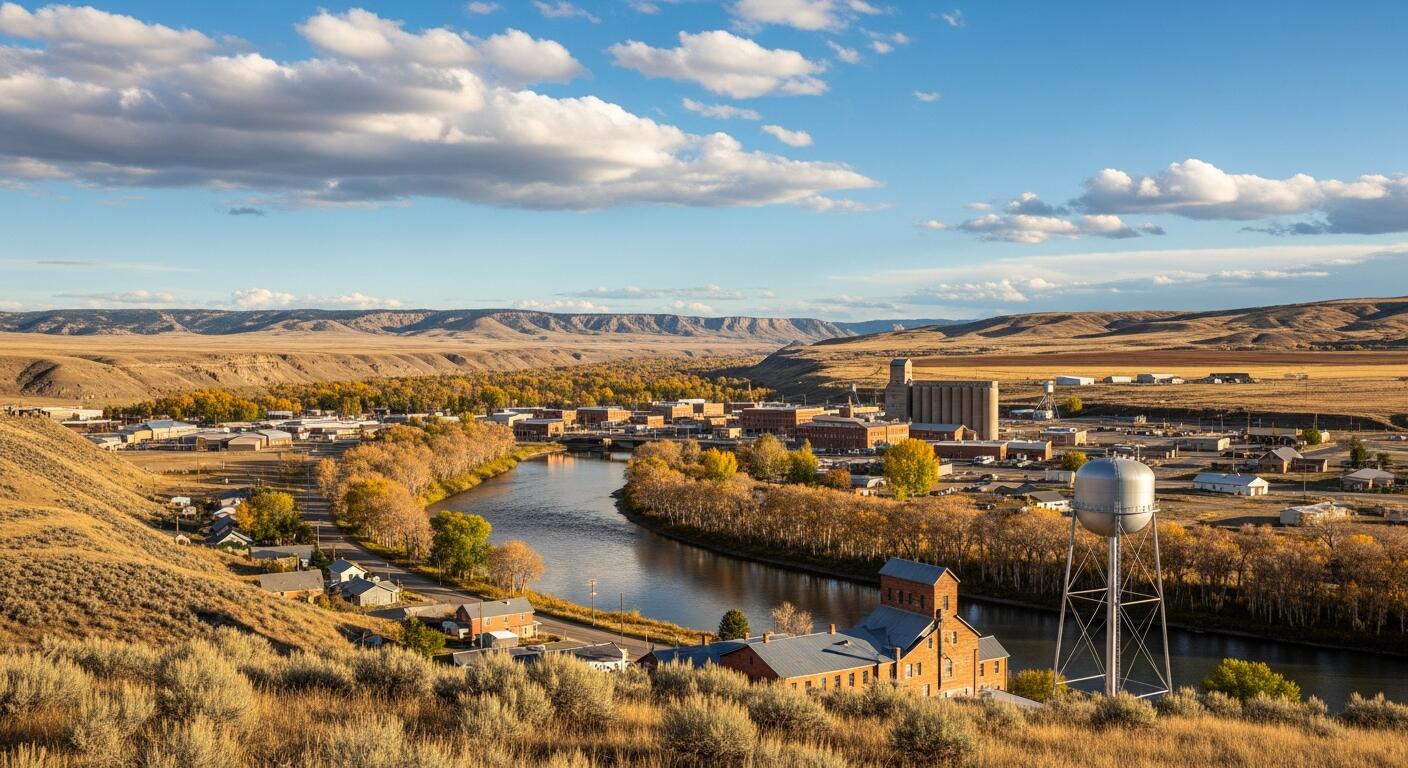
The Bighorn Basin’s dramatic canyon and agricultural landscape surrounds Worland, offering outdoor access that is increasingly attractive to remote workers and retirees
2026 Economic Outlook
- Western Sugar Cooperative processing expansion under study
- Washakie Medical Center adding outpatient services
- Bighorn Canyon National Recreation Area visitation growing
- Remote worker in-migration accelerating as broadband improves
- Thermopolis Hot Springs tourism spillover benefiting Worland lodging and rentals
Why Worland Works for Cash Flow Investors
The numbers are simple and compelling. A 3-bedroom home in Worland acquires for $220,000 to $270,000 and rents for $1,050 to $1,350 per month. At 25% down with a 7% mortgage, monthly principal and interest runs approximately $1,100 to $1,350. Add property taxes (Wyoming’s lowest effective rate), insurance, and maintenance, and the total expense structure on most Worland properties leaves a narrow but genuine positive monthly cash flow before management fees.
Three characteristics make Worland’s cash flow story more durable than it might appear for a small market:
- Agricultural sector stability. Sugar beet farming, livestock operations, and hay production do not correlate with energy prices. When Gillette contracts, Worland holds steady. The Western Sugar plant has operated continuously since the 1920s and serves growers across the Bighorn Basin who have no viable alternative processor.
- Healthcare employment anchor. Washakie Medical Center employs nurses, physicians, and allied health professionals who are stable, long-term residents regardless of agricultural or energy sector conditions. Healthcare workers in small Wyoming towns are among the most reliable tenant profiles in the state.
- Very limited new construction. Worland’s small size means almost no new housing is being built. The existing stock is absorbed gradually by in-migration and household formation, maintaining vacancy rates that investors can manage with disciplined pricing and maintenance.
Historical Performance
| Period | Market Driver | Avg Annual Appreciation | Key Event |
|---|---|---|---|
| 2010-2015 | Agricultural stability, modest energy activity | 2-4% | Steady sugar beet production; healthcare expanding |
| 2015-2019 | Energy downturn; agriculture buffers decline | 1-3% | Energy worker exits offset by stable ag sector; minimal price movement |
| 2020-2022 | Pandemic migration, remote work, affordability appeal | 6-10% | Remote workers and Colorado retirees discover Bighorn Basin affordability |
| 2023-2024 | Sustained in-migration, healthcare growth | 4-7% | Washakie Medical expansion and retiree arrivals sustain demand |
| 2025-2026 | Agricultural and healthcare stability, outdoor recreation growth | 4-6% (projected) | Bighorn Canyon visitation rising; Thermopolis tourism spillover growing |
Worland’s historical record tells a consistent story: slow and steady appreciation during stable periods, modest resilience during downturns, and genuine upside participation during migration waves. Investors should not buy Worland expecting 10 to 12% annual appreciation. They should buy it expecting 4 to 6% appreciation combined with 7 to 8% cap rates, totaling 11 to 14% annual total returns on a stable, low-drama investment.
Demand Drivers in Detail
- Western Sugar Cooperative – The sugar beet processing plant is Worland’s economic heartbeat. Operating for over a century, the plant employs hundreds during the fall campaign and dozens year-round in management, maintenance, and agricultural services. These employees are stable, committed community members who anchor the rental market.
- Agricultural Ecosystem – Beyond the sugar plant, Worland serves as the commercial hub for Bighorn Basin agriculture. Farm managers, agribusiness professionals, equipment dealers, and agricultural lenders all maintain Worland addresses, creating a diverse professional tenant pool.
- Washakie Medical Center – The county hospital employs physicians, nurses, and allied health workers who are among Worland’s most stable, highest-income tenants. Healthcare professional housing near the medical center commands a modest premium and experiences very low turnover.
- Energy Sector – Washakie County oil and gas operations provide supplemental employment that strengthens the market during energy upcycles. Unlike Gillette or Rock Springs, Worland does not depend on energy, making energy employment a bonus rather than a necessity.
- Thermopolis Tourism Overflow – Hot Springs State Park in Thermopolis 20 miles north draws year-round visitors to the world’s largest hot spring. When Thermopolis accommodations fill, visitors overflow to Worland, creating a supplemental short-term rental market for properties positioned to capture this demand.
- Bighorn Canyon Recreation – Growing visitation to Bighorn Canyon National Recreation Area along the Montana border, combined with Bighorn National Forest access, is generating new interest in the Worland area as an affordable base for outdoor recreation.
📚 New to real estate investing? Master the fundamentals with our professional course Learn more →
2. Neighborhood Hotspots
Worland Investment Neighborhood Map
Interactive map of Worland’s investment neighborhoods and surrounding Bighorn Basin opportunities. Green stars mark top hotspots, blue circles show established markets, and orange circles highlight emerging areas.
Core Investment Neighborhoods
Detailed Submarket Analysis: Worland Neighborhoods
| Neighborhood | Price Range (SFH) | Cap Rate | Growth Drivers | Best Strategy |
|---|---|---|---|---|
| Downtown / Historic Core | $190K to $270K | 7.5 to 8.5% | Walkability, retirees, healthcare workers, character housing | Buy-and-hold, retiree focus, value-add |
| North Worland / Sugar Plant Area | $175K to $250K | 8 to 9% | Sugar plant proximity, worker housing, seasonal demand peak | Maximum yield, BRRRR, worker housing |
| Washakie Medical Center Area | $225K to $320K | 7 to 8% | Healthcare workers, stable employment, quality tenant demographic | Quality buy-and-hold, low-management-intensity strategy |
| East Worland Residential | $220K to $310K | 6.5 to 7.5% | Newer construction, family demand, lower maintenance | Remote investor preferred, family rentals |
| South Worland | $165K to $240K | 7.5 to 9% | Affordability, agricultural worker demand, value-add potential | Lowest entry price, maximum cash flow, BRRRR |
| Thermopolis Corridor (Rural) | $150K to $300K | 6 to 9% (mixed) | Thermopolis tourism overflow, hot springs access | Mixed STR and long-term, tourism positioning |
Expert Insight: “Worland is the market that serious Wyoming investors know about and almost nobody from outside the state does. You can buy a 3-bedroom house for $210,000, put $30,000 into it, and rent it for $1,250 a month. At 25% down that is positive cash flow from day one with a cap rate north of 8%. The sugar beet plant runs every year without fail. The hospital runs every year without fail. The tenants are farmers and nurses and energy workers, not speculative buyers. This is as close to a pure cash flow machine as you can find in Wyoming.” – Dale Mortensen, Bighorn Basin Properties
3. Property Types
| Investment Goal | Best Property Type | Best Location | Minimum Capital |
|---|---|---|---|
| Maximum Cash Flow Yield | Value-add SFH post-renovation | North Worland, South Worland | $50,000 to $70,000 |
| Best Tenant Quality | Quality SFH for healthcare workers | Medical center area | $58,000 to $82,000 |
| Seasonal Premium Income | Near sugar plant, furnished option | North Worland | $45,000 to $65,000 |
| Lowest Management Burden | Newer SFH, East Worland | East Worland Residential | $56,000 to $80,000 |
Don’t guess the costs. Our Complete Renovation & Remodeling Cost Guide covers 400+ pages of project-by-project breakdowns with real contractor pricing ranges.
4. Cost Analysis
Acquisition Cost Breakdown (Worland)
| Expense Item | Typical Cost | Example ($245,000 Property) | Notes |
|---|---|---|---|
| Down Payment | 25% (investment) | $61,250 | Standard for investment; 20% possible with strong credit |
| Closing Costs | 2 to 3% | $4,900 to $7,350 | Wyoming’s lean closing cost structure; title and escrow fees are modest |
| General Inspection | $300 to $450 | $375 | Focus on HVAC, roof, and plumbing; older Worland homes have deferred maintenance |
| Radon Test | $150 to $250 | $175 | Wyoming has elevated radon in many areas; always test before purchase |
| Initial Repairs | 0 to 10% of price | $0 to $24,500 | Older Worland stock often needs roofing, HVAC, and electrical work |
| Reserves (6 months) | 6 months expenses | $6,000 to $9,000 | Small market; maintain 12-month reserve recommended for energy cycle protection |
| TOTAL MINIMUM ENTRY | ~30 to 36% | $72,700 to $102,650 | Wyoming’s absolute lowest investment entry point at this market quality |
Sample Cash Flow Analysis: North Worland 3-Bedroom SFH (Buy-and-Hold)
| Item | Monthly | Annual | Notes |
|---|---|---|---|
| Gross Rent | $1,150 | $13,800 | 3BR, North Worland, clean and functional condition |
| Less Vacancy (10%) | -$115 | -$1,380 | Conservative for Worland’s small market |
| Property Taxes | -$120 | -$1,440 | ~0.6% of $240,000 assessed; Wyoming’s low effective rate |
| Insurance | -$85 | -$1,020 | Landlord policy; Wyoming wind coverage essential |
| Maintenance + CapEx (9%) | -$104 | -$1,242 | Older stock; conservative reserve for HVAC and roof |
| Property Management (10%) | -$115 | -$1,380 | Many Worland investors self-manage given simple Wyoming law |
| Net Operating Income | $611 | $7,338 | Before mortgage; cap rate of 3.06% on $240K purchase |
| Mortgage ($180,000 at 7%, 30yr) | -$1,198 | -$14,376 | 25% down on $240,000 purchase price |
| CASH FLOW (managed) | -$587 | -$7,044 | Slightly negative with full professional management and 10% vacancy |
| CASH FLOW (self-managed, 8% vacancy) | +$305 | +$3,660 | Genuine positive cash flow with self-management and quality long-term tenant |
| Cap Rate (purchase price) | 8.1% | NOI without management fee / purchase price; excellent for any small market | |
| Total Return (5% appreciation) | ~13 to 15% | Including equity growth, appreciation, and principal paydown |
The Worland cash flow picture depends significantly on management approach. With professional management and conservative 10% vacancy the numbers come in slightly negative, reflecting current high interest rates. Self-managing investors with quality tenants routinely achieve genuine positive monthly cash flow. The sugar beet seasonal strategy adds $3,000 to $5,000 in premium rental income during the September through December campaign, which meaningfully improves the annual picture for North Worland properties near the plant.
Expert Insight: “The sugar beet campaign is Worland’s secret weapon for investors who know about it. From September through December, that plant is running full tilt and workers need somewhere to stay. I have clients who raise their rents $200 to $300 per month for those four months and get no pushback because workers want to be close to the plant and there is limited supply. Over a year that seasonal premium adds $800 to $1,200 to annual income on a North Worland property. Combined with the base cash flow it is a very compelling picture for what you pay to get in.” – Sandra Kowalski, Worland Property Management
5. Legal Framework
Wyoming: The Simplest Landlord-Tenant Environment in the West
Wyoming’s landlord-tenant framework is the most straightforward in the Rocky Mountain region. No rent control, no just cause eviction requirements, no source of income protections, and no local regulatory overlay in Worland. The City of Worland does not require landlord registration or rental property licensing. Investors can acquire, lease, and manage Worland properties under a simple, consistent legal framework with none of the compliance complexity that characterizes Colorado, Washington, or California markets.
Wyoming Landlord-Tenant Essentials
- No Rent Control: Wyoming state law prohibits rent control statewide. Landlords adjust rents freely with lease-term or 30-day notice, limited only by the market.
- Eviction (Non-Payment): 3-day notice to pay or quit. File unlawful detainer after 3 days. Washakie County courts schedule hearings promptly. Full eviction typically resolves in 3 to 6 weeks from initial notice.
- Eviction (Lease Violation): 3-day notice to cure or quit. No just cause requirement for non-renewal of month-to-month tenancies; 30-day notice to vacate is sufficient.
- Security Deposits: Maximum 1.5 months rent for unfurnished units. Return within 30 days with itemized deductions statement.
- Tenant Screening: Full landlord discretion subject to federal Fair Housing. No source-of-income protections, no ban-the-box requirements, and no credit check limitations beyond federal law.
- Habitability: Landlords must maintain heating, running water, and weatherproofing. Tenants cannot unilaterally withhold rent for maintenance failures.
Worland-Specific Considerations
- No Rental Registration: The City of Worland does not require landlord registration or rental operating licenses. Zero compliance overhead beyond standard building permits for renovations.
- Seasonal Rental Compliance: Sugar beet campaign seasonal rentals and Thermopolis overflow short-term rentals require Wyoming lodging tax (4%) collection and remittance if stays are less than 30 days. Register with Wyoming Department of Revenue before operating STRs.
- Agricultural Land Considerations: Wyoming water rights law is complex and critical for any agricultural land purchase. Water rights are separate from land titles in Wyoming; always verify water rights with a Wyoming water law attorney before any agricultural acquisition.
- No STR Ordinance: Worland has no specific short-term rental ordinance as of 2026. STR operations are permitted subject to Wyoming lodging tax compliance.
- Property Taxes: Washakie County effective rate is approximately 0.6% of assessed value, among Wyoming’s lowest effective rates and nationally competitive.
- Building Permits: Required for structural renovations and additions; not required for cosmetic work. Washakie County building department is accessible and processes permits efficiently.
Useful Worland Resources
- City of Worland: cityofworland.org
- Washakie County Assessor: washakiecountywy.gov
- Wyoming DOR (STR Tax): revenue.wyo.gov
- Wyoming Attorney General Landlord Guide: ag.wyo.gov
| Regulation | Wyoming / Worland Rule | Investor Impact |
|---|---|---|
| Eviction Speed | 3-day notice, 3 to 6 weeks total | Fastest eviction resolution in the Rocky Mountain region |
| Rent Increases | Any amount; 30-day notice for month-to-month | Full flexibility; seasonal premium charging fully permissible |
| Rental Registration | Not required in Worland | Zero compliance cost; no inspections or licensing overhead |
| Short-Term Rentals | No local ordinance; Wyoming lodging tax applies | Permitted with tax compliance; no caps, permits, or approval required |
| Security Deposits | Max 1.5 months; return within 30 days | Simple, workable framework; clear Wyoming statute |
| Tenant Screening | Full landlord discretion per federal Fair Housing | Standard credit, income, and rental history screening fully permissible |
6. Step-by-Step Worland Investment Playbook
Choose Your Worland Strategy
Worland rewards investors who are honest with themselves about what they want and choose the right strategy accordingly:
Maximum Yield Buy-and-Hold
Buy the cleanest available SFH in North Worland or downtown at the lowest price point. Self-manage using Wyoming’s simple landlord law. Target sugar plant workers, ag employees, and healthcare staff as your tenant pool. Accept modest appreciation in exchange for Wyoming’s highest cash flow yields.
Sugar Beet Seasonal Premium
Buy a property near the Western Sugar plant and furnish it modestly. Lock in a long-term tenant for January through August at standard rates, with a written agreement allowing a seasonal premium increase from September through December for the plant campaign. Adds $800 to $1,200 annual income over standard buy-and-hold.
Healthcare Anchor Rental
Invest in a well-maintained home near Washakie Medical Center. Market specifically to medical professionals. Accept a slightly lower cap rate in exchange for dramatically better tenant quality, lower turnover, and virtually zero management issues. Best strategy for remote investors.
BRRRR / Value-Add
Buy the ugliest fixable house in North Worland or South Worland at maximum discount. Renovate to clean, functional standard. Refinance at improved ARV, recycling capital into the next acquisition. Worland’s low prices mean renovation budgets are modest and ARV improvements meaningful.
Build Your Worland Team
- Local Real Estate Agent: Worland has a very small active agent community. Find one who specifically understands investor needs and has recent comparable sales experience in your target neighborhoods. Ask how many investment transactions they completed in the past 12 months.
- Property Manager: A local Worland property manager is the single most important team member for any remote investor. Interview them specifically about their process for marketing to Western Sugar workers during the campaign season and their experience managing healthcare worker tenants.
- Contractor: Worland has a limited contractor pool. Establish the relationship before making your first offer. The best local contractors have 2 to 4 month waitlists. Ask your property manager for their maintenance vendor contacts as a starting point.
- Wyoming Title Company: Use a title company with Washakie County experience. Water rights complexities on any agricultural-adjacent property require a knowledgeable local title examiner.
- Community Bank: Worland area community banks and credit unions often offer investment property loans with local appraisal relationships that national lenders lack for very small markets. First State Bank and similar institutions are worth approaching for portfolio loan products.
Worland-Specific Due Diligence
Physical Due Diligence
- Radon test: Bighorn Basin area has elevated readings; test every property
- Heating system: Critical in Wyoming winters; inspect furnace age and condition carefully
- Roof: Wyoming wind and hail damage prevalent; inspect metal flashing and vent caps for hail denting
- Foundation: Check for settling and cracking, particularly in older downtown homes
- Electrical: Many downtown homes have original or early-update wiring; budget for panel upgrades if needed
- Insulation: Older Worland homes frequently have inadequate attic insulation; impacts winter heating costs and tenant satisfaction
Market and Legal Due Diligence
- Verify rental comps through local property manager; Worland MLS rental data is minimal
- Check Western Sugar plant schedule and confirm campaign season dates for properties near the plant
- Confirm zoning with City of Worland planning for any intended use beyond standard residential rental
- Review title commitment for any agricultural access easements or mineral reservations on properties near farming operations
- Check flood zone status: Wind River and its irrigation canals create flood exposure for some Worland properties
- Water and sewer: Verify city connection versus well and septic for any rural-adjacent property
Operating Successfully in Worland
- Market through Western Sugar HR: The cooperative’s human resources department will post housing listings for workers arriving for the campaign season. This is the most efficient channel for filling North Worland properties during the September through December period.
- Post at Washakie Medical Center: The hospital’s employee bulletin board and HR department are the fastest channels for reaching medical professional tenants. Properties within 10 minutes of the hospital fill quickly through this channel at above-market rates.
- Price competitively, not cheaply: Worland’s tenant pool is small enough that a property priced $50 per month below market fills faster and attracts better applications than one priced at or above market. The difference in annual income is $600; the difference in tenant quality is often significant.
- Maintain winter-ready systems aggressively: Worland winters are severe and prolonged. Heating system failures in January create emergency repair costs, temporary vacancy liability, and unhappy tenants who leave. Budget generously for HVAC maintenance and maintain a system replacement reserve from year one.
- Maintain 12-month reserves: Worland is small enough that energy sector softness can temporarily increase vacancy to 12 to 15%. A 12-month expense reserve insulates against this without forcing distressed selling decisions.
7. Financing Options for Worland
| Loan Type | Down Payment | Rate Premium | Best For | Worland Note |
|---|---|---|---|---|
| Conventional Investment | 25% | +0.5 to 0.75% | W-2 income, strong credit | All Worland properties fall well within conforming limits; standard access |
| DSCR Loan | 25 to 30% | +1.5 to 2.5% | Self-employed, portfolio builders | Worland’s 8%+ cap rates strongly support DSCR qualification; verify with specific lender on very small market comfort |
| Community Bank Portfolio | 20 to 25% | +0.75 to 1.5% | Local investors, relationship lending | Worland community banks understand local value and appraisal dynamics better than national lenders |
| Hard Money (Bridge) | 15 to 25% | 9 to 12% rate | BRRRR acquisitions, renovation projects | Wyoming hard money lenders in Casper and Billings serve Worland; verify small-market comfort and appraisal approach |
| HELOC on Existing Property | Equity-based | Prime + 1 to 2% | Investors leveraging equity from existing properties | Worland’s low prices mean renovation loans are modest; HELOC works well for value-add funding |
| USDA Rural Loan | 0% (owner-occupied) | Standard + guarantee fee | Owner-occupants in eligible rural areas | Worland proper and some surrounding areas qualify for USDA; check eligibility at usda.gov |
Worland Financing Reality: Worland offers Wyoming’s strongest DSCR loan viability among small markets. At $240,000 acquisition prices and 8% cap rates, the debt service coverage math works in a way it simply does not in Cheyenne, Sheridan, or Jackson. Self-employed investors and portfolio builders who cannot use W-2 income documentation can often finance Worland properties through DSCR channels unavailable to them in larger, lower-cap-rate Wyoming markets. However, some national DSCR lenders are uncomfortable with markets under 5,000 to 10,000 population; verify lender small-market comfort before going under contract.
8. Frequently Asked Questions

Knowledge Quiz: Worland, Wyoming Real Estate Investment
Open Quiz
5 quick questions on what you just learned about investing in Worland
1) What is the Western Sugar Cooperative campaign season and why does it matter to landlords?
Answer: A
The Western Sugar Cooperative processes sugar beets from the Bighorn Basin from approximately September through December. During this 3 to 4 month campaign, the plant runs 24 hours daily and brings in seasonal workers who need nearby housing. North Worland landlords can charge a $150 to $300 per month seasonal premium, adding $800 to $1,200 to annual income compared to standard year-round flat rents.
2) What makes Worland’s economy more resilient than typical Wyoming energy towns?
Answer: C
Worland’s three employment anchors, Western Sugar Cooperative, Washakie Medical Center, and Washakie County energy operations, do not move together. When energy softens, agricultural processing and healthcare continue normally. This three-sector structure is why Worland barely declined during the 2015 to 2019 Wyoming energy downturn while Gillette and Rock Springs experienced meaningful corrections.
3) What unique tourism resource near Worland creates short-term rental overflow demand?
Answer: D
Thermopolis’s Hot Springs State Park is a year-round Wyoming landmark drawing hundreds of thousands of visitors annually. When Thermopolis lodging fills during peak periods, visitors overflow to Worland on US-20. Well-positioned Worland properties can capture this overflow at $80 to $150 per night. The hot spring never freezes, making this a year-round rather than purely seasonal opportunity.
4) What is Wyoming’s water rights doctrine and why does it matter for agricultural land near Worland?
Answer: B
Wyoming follows the prior appropriation doctrine, meaning water rights are completely separate from land titles and are assigned based on who filed for them first (senior rights beat junior rights during shortage years). Purchasing agricultural land near Worland without verifying which water rights are included and their priority date is a serious mistake. Always engage a Wyoming water law attorney before any agricultural land purchase in Washakie County.
5) Which Worland neighborhood offers the highest cap rates at the lowest acquisition prices?
Answer: C
North Worland near the Western Sugar Cooperative plant offers Worland’s highest cap rates at 8 to 9% and its lowest acquisition prices at $175,000 to $250,000. The combination of low entry costs, year-round worker housing demand, and the seasonal campaign premium produces Wyoming’s strongest pure cash flow yield in a residential market. The trade-off is that this is also the area with the oldest housing stock requiring the most active maintenance management.
Work With a Local Expert in Worland
We are building a verified network of real estate professionals across every market we cover.

About Our Expert Network
We are finalizing partnerships with verified real estate professionals across every market featured on Builds and Buys. Each expert in our network is selected for their hands-on investment experience, local market knowledge, and commitment to helping buyers and investors make sound decisions.
- Proven experience with investment and income-producing properties
- Deep knowledge of local pricing, rental yields, and neighborhood dynamics
- Guidance on financing, legal structure, and due diligence
- Access to off-market and pre-market opportunities
- Full transaction support from search through closing
- Ongoing portfolio and property management referrals
Services Covered
- Property sourcing and acquisition
- Investment analysis and underwriting
- Buyer representation
- Market comparables and valuations
- Short-term and long-term rental strategy
- Value-add and renovation guidance
- Legal and title referrals
- Financing and lender connections
- Property management referrals
- Insurance and inspection referrals
- 1031 exchange coordination
- Exit strategy planning
Get Connected or Join Our Network
Looking for a local expert in Worland? Reach out and we will connect you with the right professional for your market and strategy.
Are you a real estate professional with a track record working with investors in Washakie County? We are always expanding our expert network.
Contact us at support@buildsandbuys.com
Find Specialized Wyoming Real Estate Professionals
Ready to Invest in Worland?
Worland is Wyoming’s maximum yield market, and it is one of the best-kept secrets in Rocky Mountain real estate investing. The combination of agricultural stability, healthcare employment, three-sector economic diversification, Wyoming’s zero income tax, and the state’s most landlord-friendly legal framework creates a cash flow profile that investors in larger markets work much harder to achieve. Entry costs are Wyoming’s lowest. Cap rates are Wyoming’s highest. The sugar beet seasonal premium is unique. And the Bighorn Basin outdoor lifestyle is only gaining national recognition. For investors who do their homework, build local relationships, and hold with patience, Worland delivers what most markets only promise.
Continue Your Research
Wyoming State Guide
See how Worland compares to Riverton, Douglas, Casper, and other Wyoming markets.
Step-by-Step Invest
Complete framework for building a real estate investment strategy from scratch.
144-Lesson Course
University-level real estate education covering financing, law, strategy, and management.
For further guidance, explore our State-by-State Investor guides, browse our expert articles, or follow our Step-by-Step Investment Guide.



