
Gillette Real Estate Investment Guide For 2026
A comprehensive resource for investors considering Wyoming’s self-proclaimed Energy Capital of the Nation, where the highest median household income in this guide series, world class community amenities, and an active energy transition strategy converge in 2026
Quick answers: Top 5 most searched Gillette investment questions ▼
Migration data: Where people are moving from to Gillette ▼
In This Guide
Click on any section to navigate directly to that content
1. Gillette Market Overview
Market Fundamentals
Gillette calls itself the Energy Capital of the Nation, and the data supports the claim: Campbell County produces roughly 30% of U.S. coal supply and the Powder River Basin mines to Gillette’s north and south represent some of the last large scale surface mining operations in the country. But the guide’s most important Gillette fact is not the coal. It is the median household income. Campbell County’s median household income runs over $90,000, about 30% above the Wyoming state average and the highest of any city in this guide series. High wage energy workers who own most of their homes but occasionally rent produce a small but financially capable rental tenant base unlike any other Wyoming market.
- Population: 33,846, Wyoming’s third largest city
- Major Employers: Powder River Basin coal mines (Arch Coal, Blackjewel successors), Campbell County Health, Gillette College, Walmart Distribution Center, energy service companies
- Median Household Income: Over $90,000 (Campbell County), the highest of any city in this Wyoming guide series
- Renter Occupied Units: Only 25%, meaning 75% of residents own their home, the lowest renter share in this guide series
- No State Income Tax and effective property tax rate approximately 0.62% in Campbell County
- Median Home Price: Approximately $320,000, with Zillow showing $360,105 up 9.2% in the past year
Gillette’s community has also made an unusual investment of mineral wealth into public amenities: the Campbell County Recreation Center (190,000 square feet with a climbing wall, aquatics, and indoor sports), the Energy Capital Sports Complex (a regional and national youth tournament destination), and Gillette College now operating as its own independent district. These assets have made Gillette a genuine sports tourism destination and have helped stabilize the community in ways that raw extraction wealth alone could not.
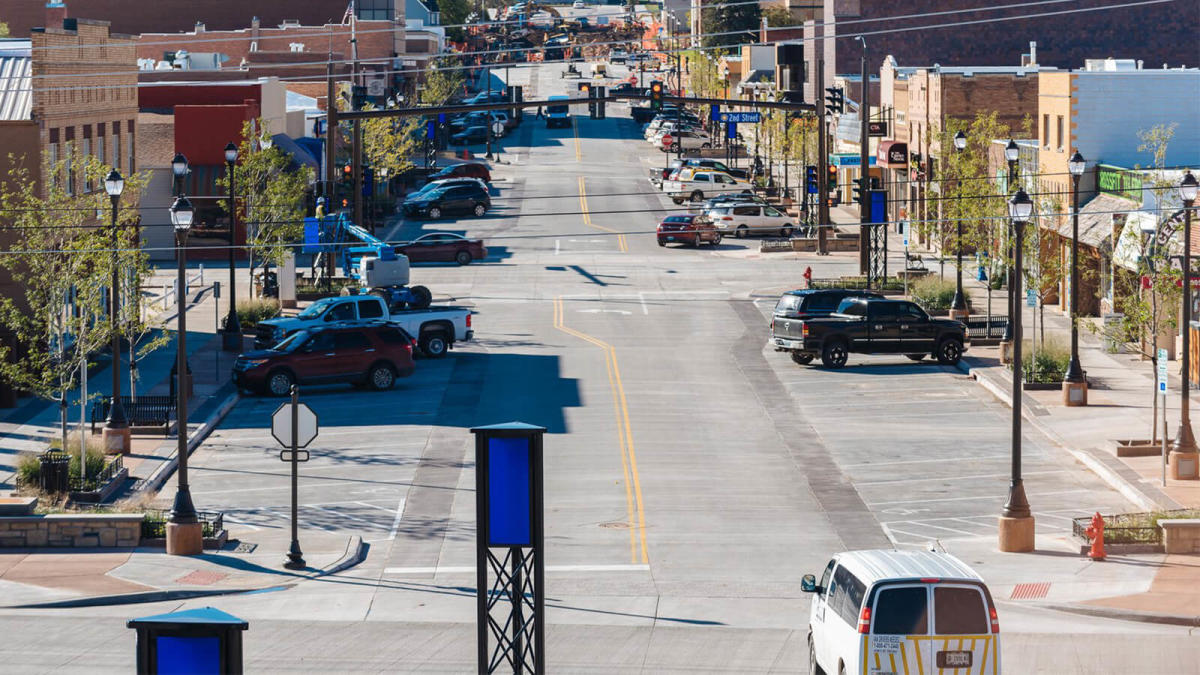
Gillette’s investment in amenities like the Campbell County Recreation Center has produced a community quality of life that outlasts any single energy commodity
2026 Economic Outlook
- Zillow showing 9.2% home value appreciation over the past year, among the strongest in Wyoming
- Coal production still ongoing from Powder River Basin mines, though down 40% from 2008 peak
- Integrated Test Center and Wyoming Innovation Center positioning Gillette as a carbon technology hub
- Sports tourism revenue from Energy Capital Sports Complex contributing to sales tax stabilization
- Gillette College expanding workforce training and nursing programs independently of Sheridan district
⚠️ The Coal Transition: Gillette’s Long Horizon Risk
Gillette’s core challenge is structural, not cyclical. Unlike Casper’s oil and gas cycle, which fluctuates with price and can recover quickly, coal’s decline in the U.S. is a secular trend driven by the national energy grid’s shift away from coal-fired power. Production has fallen more than 40% since 2008 and the direction is unlikely to reverse. The Bureau of Land Management’s 2024 decision to make federal Powder River Basin lands unavailable for future coal leases signals the long term trajectory clearly. Investors who hold a 3 to 5 year horizon in Gillette are exposed to this trend in a way that 15 to 20 year holders are not. The community’s response, a genuine and multifaceted diversification effort rather than denial, is the most positive signal available. Buy long and buy near the amenities that will outlast coal.
Historical Performance
| Period | Driver | Avg Appreciation | Key Event |
|---|---|---|---|
| Pre-2008 | Coal production at peak | 4 to 8% | Peak U.S. coal demand supporting strong Gillette economy |
| 2008 to 2016 | Coal decline begins, coal company bankruptcies | 1 to 4% | Modest appreciation despite industry headwinds; population held stable |
| 2017 to 2019 | Continued restructuring, sports economy builds | 2 to 5% | Energy Capital Sports Complex driving visitor revenue; economy more resilient than predicted |
| 2020 to 2022 | Pandemic migration, low rates | 8 to 15% | Out of state buyers discovered Gillette’s affordability and quality of life |
| 2025 to 2026 | Re-acceleration | 7 to 9% (Zillow) | Zillow showing 9.2% past year; low inventory continues to support prices |
The remarkable story in Gillette’s historical data is the stability: despite coal company bankruptcies and a 40% production decline, home prices have continued modest appreciation and the population has not followed the typical coal town trajectory of rapid outmigration. This resilience, which researchers explicitly note as unusual in coal communities, is the central investment thesis for Gillette, not the coal itself but the community that coal built and that has invested in its own future.
Demand Drivers
- Powder River Basin Coal and Oil: Still employing roughly 3,700 direct mining workers plus service industry at above state average wages
- Energy Capital Sports Complex: National and regional youth tournaments driving visitor traffic and hotel, restaurant, and retail spending year round
- Campbell County Recreation Center: One of Wyoming’s premier public recreation facilities, attracting families and enhancing quality of life retention
- Integrated Test Center and Wyoming Innovation Center: Carbon capture and coal-to-products innovation positioning Gillette for potential long term tech employment
- Gillette College: Independent since separating from Sheridan’s district, expanding nursing and workforce training programs
- Campbell County Health: The regional hospital providing stable healthcare employment independent of energy cycles
📚 New to real estate investing? Master the fundamentals with our professional course Learn more →
2. Neighborhood Hotspots
Gillette Investment Neighborhood Map
Green stars show top investment hotspots, blue circles mark established markets, and orange circles highlight the workforce housing corridor.
Core Investment Neighborhoods
Submarket Analysis
| Neighborhood | Price Range | Cap Rate | Growth Drivers | Best Strategy |
|---|---|---|---|---|
| Near Rec Center / Gillette College | $270K-$420K | 5.5-7.0% | Best amenity access, family demand | Long term family hold |
| Westover Hills and Professional Corridors | $280K-$450K | 5.0-6.5% | Most desirable, professional tenants | Premium professional hold |
| Sleepy Hollow and Central Affordable Areas | $220K-$350K | 5.5-7.0% | Best entry price, energy family tenants | Affordable cash flow |
| Foothills Estates and New Construction | $320K-$480K | 4.5-6.0% | Newer homes, professional appeal | Low maintenance appreciation hold |
| Energy Capital Sports Complex Area | $290K-$440K | 5.0-6.5% | Sports tourism, event economy | Event adjacent, long term hold |
| Campbell County Health Area | $250K-$380K | 5.0-6.5% | Healthcare workers, non cyclical | Stable non energy anchor |
| Stocktrail / Industrial Corridor | $200K-$300K | 6.5-8.0% | Highest yields, energy worker proximity | High yield, coal cycle aware |
Expert Insight: “What out of state investors consistently underestimate is the tenant quality here. When a mine manager rents from me, he is making $110,000 a year. He mows the lawn, he changes filters, and he pays on the first. He is not a desperate renter, he is a person who does not want to buy until he knows whether Arch Coal’s successor entity is still operating in five years. That is my tenant. The yield is moderate but the headaches are minimal and the checks do not bounce.” – Dave Kimball, Broker, Campbell County Real Estate Group
3. Property Types
| Investment Goal | Best Property Type | Best Neighborhoods | Minimum Capital |
|---|---|---|---|
| Best High Income Tenants | Professional family SFH | Westover Hills, near Rec Center | $70,000+ |
| Best Cash Flow | Affordable SFH or workforce duplex | Sleepy Hollow, Stocktrail | $55,000+ |
| Most Transition Resilient | Non energy anchor SFH | Near hospital, Gillette College | $63,000+ |
| Maximum Income Short Term | Corporate furnished rental | Near industrial corridors | $65,000+ |
Our Complete Renovation & Remodeling Cost Guide covers 400+ pages of project by project breakdowns with real contractor pricing ranges.
4. Cost Analysis
Acquisition Cost Breakdown (Gillette)
| Expense Item | Typical Cost | Example ($300,000 Property) | Notes |
|---|---|---|---|
| Down Payment | 25% (investment) | $75,000 | Standard for investment properties |
| Closing Costs | 2-3% of price | $6,000-$9,000 | Title, escrow, lender fees |
| Inspection | $400-$600 | $500 | Standard whole home inspection |
| Wildfire Risk Assessment | $150-$350 | $250 | 99% of Gillette properties carry some wildfire risk per First Street Foundation data |
| Initial Repairs | 0-6% of price | $0-$18,000 | Newer construction and Foothills Estates homes typically need less |
| Reserves (8 months) | 8 months expenses | $10,000-$13,000 | Coal transition risk warrants larger reserves than purely government anchored markets |
| TOTAL MINIMUM ENTRY | ~27-32% of value | $81,000-$96,000 | Moderate capital requirement, between Casper and Laramie |
Sample Cash Flow Analysis: Near Rec Center Single Family Home
| Item | Monthly | Annual | Notes |
|---|---|---|---|
| Gross Rent | $1,650 | $19,800 | 3BR near Campbell County Rec Center, energy family tenant |
| Less Vacancy (5%) | -$83 | -$990 | Conservative; Gillette energy tenants tend to stay 2 to 4 years |
| Property Taxes | -$155 | -$1,860 | 0.62% effective rate on $300,000 value |
| Insurance | -$108 | -$1,300 | Landlord policy with wildfire exposure rider |
| Property Management (10%) | -$165 | -$1,980 | Optional for hands on local owners |
| Maintenance + CapEx (6%) | -$99 | -$1,188 | Lower than student rentals; energy family tenants take good care of homes |
| Net Operating Income | $1,040 | $12,482 | Before mortgage |
| Mortgage ($300,000 price, 25% down, 6.75%, 30yr) | -$1,461 | -$17,537 | P&I only, $225,000 loan |
| CASH FLOW | -$421 | -$5,055 | Modestly negative; typical for Gillette SFH; total return remains solid |
| Cap Rate | 4.16% | NOI / Purchase Price; near Casper College area example | |
| Total Return (3.5% appreciation) | ~9-12% | Even negative carry positions produce solid total returns with appreciation and principal paydown |
Gillette’s cash flow profile sits between Laramie and Cody: modestly negative at standard 25% down financing, with total return solid when appreciation and principal paydown are included. What distinguishes the Gillette investment is not the monthly cash flow number but the tenant quality, an energy family earning over $90,000 annually who stays 2 to 4 years, maintains the property well, and rarely misses rent. That tenant profile is genuinely different from anything else in this guide series.
Expert Insight: “The misunderstanding about Gillette is that investors treat it like a distressed coal town. It is not. My best tenants earn more than any professional I rented to in Denver. They are careful with money precisely because they know their industry is in transition. They are not going to trash a rental and skip out on the last month. They are going to leave it spotless because they know they might need a reference next time they move. That tenant quality is the story here, not the cap rate.” – Dave Kimball, Broker, Campbell County Real Estate Group
5. Legal Framework
⚠️ Gillette Compliance Notice
Gillette operates under the identical minimal Wyoming statewide framework found throughout this guide series, with no additional city or county level landlord tenant complexity. The single Gillette specific item worth noting is wildfire risk: First Street Foundation data shows 99% of Gillette properties carry some wildfire exposure, making insurance shopping a genuine due diligence step for every purchase.
Wyoming Statewide Regulations
- Eviction for Nonpayment: 3 day notice to pay rent or vacate under Wyo. Stat. § 1-21-1002. Fast, low cost, genuinely enforced.
- Eviction for Lease Violation: 3 day notice to cure or vacate, no second chance required.
- Month to Month Termination: 30 days written notice, no cause required.
- Security Deposits: No statutory cap. Return within 30 days with itemized statement.
- No Rent Control: Full freedom to set and increase rent.
- No Source of Income Protection: Vouchers not required to be accepted.
- 24 Hour Entry Notice: Required for non emergency landlord entry.
Gillette Specific Practices
- Corporate Lease Addendums: For furnished corporate rentals, use addendums covering company relocation policies, early termination by corporate sponsor, and furniture liability.
- Written Lease Always: Wyoming does not require it but given energy company rotation patterns, a clear written lease is essential.
- Wildfire Insurance: Confirm coverage before closing; 99% of Gillette properties carry some wildfire exposure.
- Larger Reserves: Eight to twelve months appropriate given coal’s long-term transition trajectory.
- Follow the Court Process: Self help eviction is illegal in Wyoming regardless of circumstances.
Useful Gillette Resources
- Campbell County Assessor: ccgov.net
- Wyoming Legal Services: wyomingdpa.org
- Campbell County Circuit Court: courts.state.wy.us
| Regulation | Wyoming / Gillette Standard | National Comparison | Investor Impact |
|---|---|---|---|
| Eviction for Nonpayment | 3 day notice, 2 to 4 weeks total | National average 4 to 8+ weeks | Fast, low cost process |
| Rent Control | None | Increasingly common in many U.S. cities | Full flexibility to set and increase rents |
| Wildfire Risk | Major risk citywide (99% per First Street) | Varies widely | Insurance shopping required for every purchase |
| Effective Property Tax Rate | 0.62% Campbell County | 1.02% national median | 39% lower carrying cost than typical U.S. market |
6. Step by Step Gillette Investment Playbook
Define Your Gillette Strategy
Energy Family Premium Hold
Buy near the rec center and schools for Gillette’s highest income, lowest headache tenant base. Accept modestly negative carry in exchange for the guide series’ most capable renters.
Affordable Cash Flow Entry
Buy in Sleepy Hollow or similar affordable central areas at a lower entry price for the guide’s best Gillette cash flow, while still benefiting from the high income tenant base that defines the whole city.
Transition Resilient Non Energy
Buy near Campbell County Health or Gillette College for a tenant base insulated from coal’s long term decline. Lower yield but the most confident 15 to 20 year hold in Gillette.
Corporate Furnished Rental
Buy near industrial facilities and establish energy company direct relationships. Furnished corporate placements command 25 to 40% premiums over standard leases for investors comfortable with monthly management.
Build Your Gillette Team
- Gillette Investor Focused Agent: Should understand the genuine difference between energy family neighborhoods and industrial corridor housing, and have relationships with energy company HR departments who coordinate relocations.
- Wyoming Real Estate Attorney: For entity setup and corporate lease templates.
- Insurance Agent Familiar With Gillette Wildfire Exposure: 99% of properties carry exposure; confirm insurability before writing offers.
- Property Manager With Corporate Rental Experience: If targeting furnished rentals, verify the manager has direct energy company relationships.
Key Insight: Gillette’s most valuable landlord relationship is not with a property manager but with the human resources departments of Campbell County’s major energy employers. A direct relationship with an HR coordinator who handles relocations can fill vacancies before a property hits the open market.
Gillette Specific Due Diligence
Physical Due Diligence
- Roof age and condition; Gillette’s cold winters and high wind exposure accelerate wear
- Wildfire defensible space assessment
- Furnace age and heating system condition
- Foundation in older stock near industrial areas
Coal Transition Monitoring
- Track current Powder River Basin mine employment levels annually
- Monitor new energy company announcements and BLM lease decisions
- Watch Gillette College and Campbell County Health employment trends as transition indicators
- Follow Advance Gillette and Wyoming Innovation Center progress on carbon technology commercialization
Typical Gillette Management Fees
- Single family long term management: 8-10% of monthly rent
- Multi family management: 7-9%
- Leasing fee: 50-75% of one month’s rent
- Corporate furnished rental management: 15-20% given turnover management
- Lease renewal fee: $100-$200
Self management is viable for local owners. Remote investors benefit most from management given the importance of ongoing coal transition monitoring.
7. Financing Options for Gillette
| Loan Type | Down Payment | Best For | Gillette Note |
|---|---|---|---|
| Conventional Investment | 25% | Most single family and multi family | Standard rates currently 6.4-6.9% before investor premium; straightforward for in-town properties |
| FHA House Hacking | 3.5% | Owner occupying one unit of a duplex | Viable strategy in Gillette; energy worker income means tenant half can cover much of the mortgage |
| DSCR Loan | 25-30% | Investors avoiding income verification | Can work for well located properties; lenders may factor coal transition risk in DSCR underwriting |
| Portfolio Loan | 20-25% | Multiple properties, self employed | Regional Wyoming banks are familiar with the Gillette energy market |
| Higher Down (30-35%) | 30-35% | Investors wanting breakeven or positive cash flow | Adding 5-10% above standard on a $300,000 home moves monthly cash flow close to neutral or positive |
Gillette Financing Reality: Gillette finances straightforwardly for standard in-town properties. The one lender awareness item is that some national DSCR lenders may apply a coal transition risk discount to their underwriting of Gillette properties, sometimes requiring a higher down payment than in other Wyoming markets. Regional Wyoming banks, who have financed through multiple Gillette energy cycles, are typically more pragmatic than national lenders on this point.
8. Frequently Asked Questions

Knowledge Quiz: Gillette Real Estate Investment
Open Quiz
5 quick questions on what you just learned about Gillette investing
1) What makes Gillette’s tenant base distinctly different from every other city in this Wyoming guide series?
Answer: A
The guide’s most important Gillette fact is not the coal. It is that Campbell County’s median household income runs over $90,000, about 30% above the Wyoming state average, producing a rental tenant base of high-earning energy workers who treat their rentals with exceptional care and rarely miss payments.
2) What is Gillette’s primary long-term investment risk?
Answer: C
Unlike Casper’s oil cycle risk which fluctuates with price and can recover, coal’s decline is a secular trend driven by the national grid’s shift away from coal-fired power. The guide recommends a 15 to 20 year hold orientation precisely because the transition plays out over decades rather than years.
3) How has Gillette avoided the typical coal town population collapse?
Answer: D
Researchers describe Gillette as an exceedingly rare coal community that is not hemorrhaging its population. The combination of diverse mineral revenue, proactive amenity investment, and a genuine sports tourism economy has maintained the community in ways most comparable coal towns have not achieved.
4) What does the guide identify as Gillette’s renter share compared to the other Wyoming cities in this series?
Answer: B
Gillette’s 25% renter share is the lowest of any city in this guide series. This means fewer competing tenants than in Laramie or Casper, requiring broader vacancy marketing and larger reserves, but the tenants who do exist are among the highest income renters in the state.
5) What hold period does the guide recommend for a Gillette real estate investment?
Answer: C
The guide explicitly recommends a 15 to 20 year hold orientation, the longest of any city covered, because Gillette’s investment thesis requires the community to complete a multi-decade transition from coal. Short holds are the highest risk window; long holds benefit from years of high-income tenant cash flow and position the investor to participate in the outcome of the transition rather than exit at its most uncertain midpoint.
Work With a Local Expert in Gillette
We are building a verified network of real estate professionals across every market we cover.

About Our Expert Network
We are finalizing partnerships with verified real estate professionals across every market featured on Builds and Buys. Each expert is selected for hands on investment experience, local market knowledge, and a commitment to helping buyers and investors make sound decisions.
- Proven experience with investment and income producing properties
- Deep knowledge of local pricing, rental yields, and neighborhood dynamics
- Guidance on financing, legal structure, and due diligence
- Energy company relocation network relationships
- Full transaction support from search through closing
Get Connected or Join Our Network
Looking for a Gillette expert? We will connect you with the right professional for your strategy.
Contact us at support@buildsandbuys.com
Find Specialized Gillette Real Estate Professionals
Ready to Invest in Gillette?
Gillette is the Coal Capital Paradox of this guide series: the highest median household incomes, the lowest renter share, a community that has outperformed every prediction made about coal towns over the past two decades, and a secular energy transition challenge that requires the longest investment horizon of any city we cover. Investors who arrive expecting a distressed coal community will be surprised. Investors who arrive expecting a simple cash flow play will be disappointed. What Gillette actually offers is a patient capital opportunity, with exceptionally capable tenants, a community investing in its own future, and a 15 to 20 year window to participate in the outcome of that investment.
Continue Your Research
For further guidance, explore our State-by-State Investor guides, browse our expert articles, or follow our Step-by-Step Investment Guide.



