
Hamilton Montana Real Estate Investment Guide For 2026
A comprehensive resource for investors looking to capitalize on the Bitterroot Valley’s largest town, genuine biomedical research employment anchor, and a growing population of remote workers and retirees drawn to one of Montana’s most scenic mountain valleys in 2026
Quick answers: Top 5 most searched Hamilton investment questions ▼
Migration data: Where people are moving from to Hamilton ▼
In This Guide
Click on any section to navigate directly to that content
1. Hamilton Market Overview
Market Fundamentals
Hamilton sits in the heart of the Bitterroot Valley roughly 45 minutes south of Missoula, serving as Ravalli County’s seat and the valley’s largest commercial center. What distinguishes Hamilton from many small Montana towns is Rocky Mountain Laboratories, a National Institutes of Health biomedical research facility that has anchored stable, well paying scientific employment in the community for decades.
Key economic indicators that define Hamilton’s investment case:
- Population: 5,000 plus city, 45,000 plus Ravalli County
- Major Employers: Rocky Mountain Laboratories (NIH), Marcus Daly Memorial Hospital, Ravalli County government, Hamilton School District, agricultural and timber related businesses, growing small business and retail sector
- Median Household Income: $54,000, modest overall but supported by stable federal research salaries among a meaningful share of the workforce
- Job Growth: Steady, anchored by Rocky Mountain Laboratories and healthcare rather than tourism cyclicality
- Federal Employment Stability: Rocky Mountain Laboratories provides a genuinely recession resistant employment base uncommon in small Montana towns
- Missoula Proximity: 45 minutes to Missoula, giving Hamilton residents access to the broader Missoula employment base and amenities while retaining lower cost housing
Unlike many Bitterroot Valley towns that depend primarily on agriculture, tourism, or Missoula commuter income, Hamilton has a genuinely independent economic anchor through Rocky Mountain Laboratories. This gives Hamilton investors exposure to a stable, federally backed employment base alongside the valley’s broader appeal to retirees and remote workers.
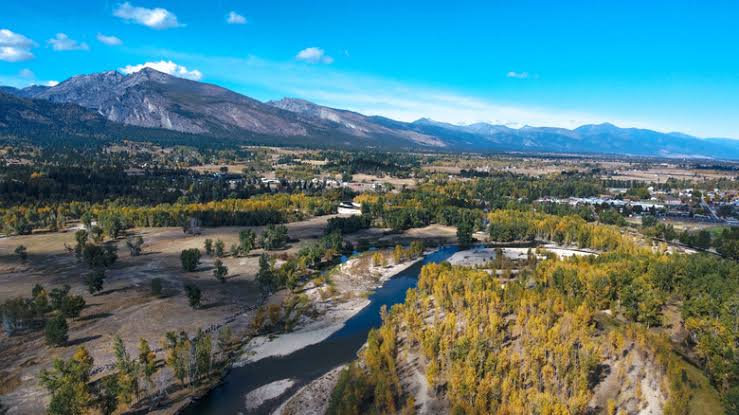
Hamilton’s combination of stable federal research employment and dramatic Bitterroot Mountain scenery creates a distinctive, recession resistant investment market
2026 Economic Outlook
- Continued stable employment at Rocky Mountain Laboratories supporting steady professional rental demand
- Growing retiree and remote worker migration drawn by the Bitterroot Valley’s scenery and affordability relative to Missoula
- Marcus Daly Memorial Hospital continuing modest expansion as the valley’s primary healthcare provider
- Sustained overflow demand from buyers priced out of Missoula’s escalating housing costs
- Limited new construction continuing to keep vacancy low across the rental market
Investment Climate
Hamilton offers a genuinely more affordable and stable alternative to Missoula’s compressed pricing, anchored by a federal research employer rather than tourism or university cyclicality. Successful Hamilton investors tend to share these characteristics:
- Professional and workforce rental fluency given Hamilton’s mix of research staff, healthcare workers, and agricultural employment
- Patience with a smaller, less liquid market compared to Missoula’s broader inventory
- Value add appetite for Hamilton’s historic downtown housing stock offering renovation upside
- Retiree and second home awareness given the valley’s growing appeal to buyers from across the country seeking mountain scenery at accessible prices
- Comfort with modest STR demand recognizing Hamilton’s quieter, less tourist saturated character compared to Missoula or Montana’s resort towns
Montana’s statewide landlord tenant framework applies equally in Hamilton, with no rent control and a relatively efficient eviction process. Hamilton carries less local regulatory complexity than Missoula given its smaller scale and more modest STR demand, though registration requirements still apply within city limits.
Historical Performance
| Period | Market Driver | Avg Annual Appreciation | Key Event |
|---|---|---|---|
| 2012-2016 | Post recession recovery, stable research sector hiring | 3-5% | Rocky Mountain Laboratories continues steady staffing levels through the recovery period |
| 2017-2019 | Early Missoula overflow demand, growing retiree interest | 5-8% | Hamilton begins attracting more out of state retiree and remote worker buyers |
| 2020-2022 | Pandemic migration wave, remote work explosion | 16-22% | Strong appreciation as Bitterroot Valley captures broader Montana migration demand |
| 2023-2024 | Rate shock, normalization | 2-4% | Moderate slowdown; Hamilton’s stable employment base cushions the adjustment |
| 2025-2026 | Rate stabilization, continued Missoula overflow and retiree demand | 4-7% (projected) | Renewed demand growth as Missoula pricing continues pushing buyers toward the Bitterroot Valley |
Hamilton’s appreciation has tracked a more moderate path than Montana’s high profile resort markets, reflecting its identity as a stable, employment anchored small city rather than a tourism destination. This has translated into a steadier, less volatile long term price trajectory, with Rocky Mountain Laboratories’ continued operation providing a meaningful floor under local demand.
Demographic Trends Driving Demand
- Rocky Mountain Laboratories Stability – Continued NIH funded research operations provide a genuinely recession resistant employment anchor uncommon in small Montana communities
- Missoula Overflow Demand – Buyers and renters increasingly priced out of Missoula turning to Hamilton for a comparable Bitterroot Valley lifestyle at meaningfully lower cost
- Retiree and Remote Worker Migration – Out of state buyers drawn by the valley’s mountain scenery and affordability relative to Bozeman, Missoula, or Western resort markets
- Agricultural and Ranching Heritage – The Bitterroot Valley’s working agricultural identity continues supporting a meaningful local employment and rental base
- Healthcare Sector Stability – Marcus Daly Memorial Hospital provides additional steady employment supporting the broader rental market
- Limited New Construction – Hamilton’s modest pace of new housing development relative to demand has kept rental vacancy consistently low
📚 New to real estate investing? Master the fundamentals with our professional course Learn more →
2. Neighborhood Hotspots
Hamilton Investment Neighborhood Map
Interactive map of Hamilton’s investment neighborhoods. Green stars show top hotspots, blue circles mark established markets, and orange circles highlight emerging areas.
Core Investment Neighborhoods
Detailed Submarket Analysis: Hamilton
| Neighborhood | Price Range (SFH) | Cap Rate | Growth Drivers | Best Strategy |
|---|---|---|---|---|
| Historic Downtown Hamilton | $350K to $510K | 6.0 to 8.0% | Value add stock, downtown core, small town walkability | Value add renovation, BRRRR |
| Rocky Mountain Laboratories Adjacent | $420K to $600K | 5.0 to 6.5% | Federal research employment, stable demand | Buy and hold, professional rental |
| South Hamilton | $340K to $460K | 5.5 to 7.5% | Affordability, family rental demand | Cash flow focused buy and hold |
| Daly Addition | $400K to $560K | 5.0 to 6.0% | Hospital proximity, established neighborhood | SFH buy and hold |
| West Hamilton | $410K to $580K | 5.0 to 6.0% | Mountain views, quiet family setting | SFH buy and hold |
| Hamilton Heights | $450K to $650K | 4.5 to 5.5% | Newer construction, professional demand | Balanced returns, professional rental |
| Bitterroot River Corridor | $480K to $750K | 4.0 to 5.5% | River access, scenic recreational appeal | Premium long term rental, modest second home appeal |
| Corvallis Adjacent | $380K to $540K | 5.0 to 6.5% | Lower entry cost, rural character | Best cash flow in the broader valley |
Expert Insight: “What makes Hamilton different from most small Montana towns is that it has a genuine federal employer anchoring the local economy. Rocky Mountain Laboratories has been here for decades and is not going anywhere, which gives investors a level of demand stability you do not get in towns that depend purely on tourism or agriculture. Combine that with steady retiree interest in the Bitterroot Valley, and you get a market that is more boring in a good way than most of Montana’s hotter headlines.” – Bitterroot Valley based investment property advisor
3. Property Types
| Investment Goal | Best Property Type | Best Neighborhoods | Minimum Capital |
|---|---|---|---|
| Maximum Cash Flow | Small multi family or South Hamilton SFH | South Hamilton, Historic Downtown | $65,000+ |
| Maximum Stability | SFH near Rocky Mountain Laboratories | Rocky Mountain Laboratories Adjacent | $85,000+ |
| Balanced Returns | Value add SFH or duplex | Historic Downtown Hamilton | $65,000+ |
| Lowest Entry Cost | SFH in outer valley corridor | Corvallis Adjacent | $76,000+ |
Don’t guess the costs. Our Complete Renovation & Remodeling Cost Guide covers 400+ pages of project by project breakdowns with real contractor pricing ranges.
4. Cost Analysis
Acquisition Cost Breakdown (Hamilton)
| Expense Item | Typical Cost | Example ($440,000 Property) | Notes |
|---|---|---|---|
| Down Payment | 20 to 25% (investment) | $88,000 to $110,000 | Standard for investment properties; 20% possible with strong credit |
| Closing Costs | 2 to 3% of price | $8,800 to $13,200 | Title, escrow, lender fees, recording |
| General Inspection | $400 to $600 | $500 | Include well and septic inspection for outer valley and rural fringe properties |
| Radon Test | $150 to $250 | $175 | Montana has elevated radon zones; mitigation systems run $900 to $1,600 |
| Initial Repairs / Touch Up | 0 to 9% of price | $0 to $39,600 | Highly variable; historic downtown stock often needs updates, newer construction needs little |
| Reserves (6 months) | 6 months expenses | $8,000 to $11,500 | Emergency fund for vacancy, snow load repairs, and winter heating system failures |
| TOTAL MINIMUM ENTRY | ~24 to 36% of value | $105,625 to $174,975 | More accessible than comparable Missoula entry costs |
Sample Cash Flow Analysis: South Hamilton Single Family Rental
| Item | Monthly | Annual | Notes |
|---|---|---|---|
| Rental Income (3BR whole house) | $1,650 | $19,800 | Strong demand from working families and healthcare employees |
| Less Vacancy (4%) | -$66 | -$792 | Low vacancy given limited housing stock relative to demand |
| Property Taxes | -$210 | -$2,520 | ~0.82% effective rate on $410K assessed value |
| Insurance | -$125 | -$1,500 | Standard landlord policy |
| Property Management (9%) | -$149 | -$1,788 | Recommended for out of state owners |
| Maintenance + CapEx | -$165 | -$1,980 | Budget 10% of rent for ongoing upkeep and reserves |
| Net Operating Income | $935 | $11,220 | Before mortgage |
| Mortgage ($400K purchase, 20% down, 7.0%, 30yr) | -$2,128 | -$25,536 | On $320,000 loan balance |
| CASH FLOW | -$1,193 | -$14,316 | Negative at full leverage; meaningfully improves with multi family or value add purchase |
| Cap Rate | 2.81% | NOI / Purchase Price | |
| Total Return (6% appreciation) | ~13% | Including equity, appreciation, principal paydown |
This single family example shows a modest negative carry at full leverage, similar to most Montana single family purchases at current rates. Hamilton’s small multi family and historic downtown value add properties typically perform meaningfully better on a cash flow basis given their stronger cap rates, making them worth strong consideration for investors prioritizing day one income over central location.
Expert Insight: “Hamilton buyers tend to fall into two camps: people who want the most stable possible tenant pool near Rocky Mountain Laboratories, and people chasing better day one cash flow through downtown value add or multi family. Both strategies work here, which is not true everywhere in Montana. The trade off is mostly about how much active management you want to take on.” – Hamilton based real estate investment advisor
5. Legal Framework
✅ Montana: A Relatively Landlord Friendly State With Minimal Hamilton Specific Complexity
Montana’s statewide landlord tenant law is comparatively balanced and predictable, with no rent control and a reasonably efficient eviction process. Hamilton carries less local regulatory complexity than larger Montana markets given its smaller scale and more modest STR demand, though standard registration and zoning rules still apply. Always consult a Montana licensed real estate attorney before acquiring rental property.
Montana State Landlord Tenant Law (Key Points)
- No Rent Control: Montana has no statewide or local rent control. Landlords may raise rents with proper notice and no political risk of future rent caps in Hamilton specifically.
- Eviction Process: Non payment requires a 3 day pay or vacate notice. Material lease violations typically require a 14 day notice with a 3 day cure period for curable defaults. Uncontested evictions can complete in 3 to 6 weeks.
- Security Deposits: No statutory cap on the amount in Montana. Must be returned within 10 days if no deductions, or 30 days if deductions are itemized.
- Notice for Rent Increases: Generally requires the same notice period as termination of tenancy, typically a full rental period for month to month leases.
- Habitability Standards: Standard safe and habitable requirements; working heat is functionally essential given Montana winters.
- Entry Notice: Reasonable notice required for non emergency entry, generally interpreted as at least 24 hours.
City of Hamilton and Ravalli County Specifics
- STR Registration: The City of Hamilton requires short term rental operators to register with the city and comply with applicable zoning and life safety requirements.
- STR Demand Profile: Hamilton’s STR demand is meaningfully more modest than Missoula or Montana’s resort towns given its quieter, less tourist saturated character; most investors prioritize long term rental strategies here.
- Ravalli County (Unincorporated): Areas surrounding Hamilton, including Corvallis and parts of the Bitterroot River Corridor, generally fall under Ravalli County zoning with somewhat different and often more permissive rules than city limits.
- Floodplain Considerations: Properties near the Bitterroot River may fall within FEMA designated floodplain zones, affecting insurance requirements and certain construction rules.
- Property Tax: Montana property taxes are assessed locally; Ravalli County effective residential rates are moderate relative to national averages.
- Federal Facility Proximity: No special zoning restrictions apply near Rocky Mountain Laboratories itself, though investors should verify standard residential zoning for any property near the facility.
Useful Resources
- City of Hamilton Planning Department: cityofhamilton.net
- Ravalli County Planning Department: rc.mt.gov
- Montana Department of Revenue: mtrevenue.gov
- Montana Department of Natural Resources and Conservation (water rights and floodplain): dnrc.mt.gov
| Regulation | City of Hamilton | Unincorporated Ravalli County | Investor Impact |
|---|---|---|---|
| Rent Control | None | None | Full flexibility to adjust rents to market across the entire valley |
| STR Registration | Required, modest demand profile | County rules apply, generally less restrictive | Long term rental remains the primary strategy regardless of jurisdiction |
| Floodplain Restrictions | Applies to riverfront parcels | Applies to riverfront and Bitterroot adjacent parcels | Verify FEMA flood zone status before purchasing river corridor properties |
| Eviction Timeline | 3 to 6 weeks uncontested | 3 to 6 weeks uncontested | Faster than most coastal markets; reduces bad tenant financial exposure |
| Property Tax | Moderate | Moderate | Budget for periodic reassessment increases given continued valley appreciation |
6. Step by Step Hamilton Investment Playbook
Define Your Hamilton Strategy
Hamilton’s stable employment base and growing retiree appeal support a few distinct strategies. Be clear on which of these you are executing:
Research Employee Stability Play
Target homes near Rocky Mountain Laboratories. Lease to research and scientific staff for the most stable, predictable rental demand in the Hamilton market, backed by a genuine federal employer.
Missoula Overflow Appreciation Play
Buy in growth corridors like Hamilton Heights or West Hamilton, positioned to capture continued price appreciation as more Missoula priced out buyers turn to the Bitterroot Valley.
Value Add / BRRRR
Buy dated properties in historic downtown Hamilton. Renovate to capture both rent growth and strong owner occupant resale demand, at entry prices well below comparable Missoula opportunities.
Outer Valley Cash Flow Play
Purchase toward Corvallis or Victor for meaningfully lower entry prices and better cap rates, accepting a slightly longer commute to Hamilton proper employment and amenities.
Build Your Hamilton Team
Hamilton’s stable economic anchor rewards investors who understand both its federal research employer base and its relationship to the broader Missoula market.
- Hamilton Specialist Real Estate Agent: Should understand both the historic downtown value add market and the newer growth corridors, with investor specific experience comparing Hamilton to Missoula.
- Montana Licensed Real Estate Attorney: For entity setup, lease compliance, and floodplain verification where relevant for river adjacent properties.
- Hamilton Area Property Manager: For out of state owners, a manager experienced with research employee and family tenant screening and the local Bitterroot Valley tenant base.
- Local General Contractor: For value add work in historic downtown Hamilton, contractors familiar with the area’s older home systems are essential.
- Montana CPA: For depreciation strategy and entity structuring, particularly important for investors comparing Hamilton and Missoula acquisitions within the same portfolio.
Expert Tip: When evaluating Hamilton properties for research employee tenants, ask your agent or property manager about typical Rocky Mountain Laboratories staff turnover and relocation patterns. Federal research positions tend to come with longer tenure than typical Montana service sector jobs, which can translate into genuinely lower tenant turnover for nearby rentals.
Hamilton Specific Due Diligence
Standard due diligence items plus these Hamilton critical checks:
Physical Due Diligence
- Heating system inspection; furnace failure during Montana winters is a genuine emergency
- Roof and snow load assessment; verify roof can handle Bitterroot Valley seasonal snowfall
- Radon test given Montana’s elevated radon zones
- Well and septic inspection for properties outside Hamilton city utility service, common in Corvallis, Victor, and the rural fringe
- Floodplain status verification for any property near the Bitterroot River or its tributaries
- Foundation and basement moisture check given freeze thaw cycles, particularly relevant for older historic downtown homes
Regulatory Due Diligence
- Confirm current zoning designation and STR eligibility with City of Hamilton or Ravalli County
- Verify FEMA flood zone status and associated insurance requirements for river corridor properties
- Pull permits for any improvements, particularly in older historic downtown properties
- Review HOA rules for any rental restrictions in newer subdivisions, where covenants are increasingly common
- Verify water rights documentation for any rural or county adjacent property
- Confirm current tenant lease terms and any active disputes if acquiring an occupied property
Competing in Hamilton’s Market
Hamilton remains a comparatively accessible market, though well priced historic downtown properties and homes near Rocky Mountain Laboratories can move quickly. Strategies that work:
- Pre inspections: Conduct your inspection before submitting an offer in competitive situations, allowing clean non contingent offers that perform better when multiple offers occur.
- Off market sourcing: Build relationships with Hamilton focused agents who maintain seller networks, particularly for historic downtown value add opportunities that can move quickly once listed.
- Consider the outer valley: Investors willing to consider Corvallis or Victor adjacent areas access meaningfully better pricing and yield than central Hamilton alone.
- Watch the Missoula comparison: Track Missoula’s pricing trends closely, since Hamilton’s overflow demand intensity, and therefore appreciation pace, tends to correlate with how quickly Missoula continues pricing out buyers.
- Build local relationships: Hamilton’s smaller, tighter knit real estate community rewards investors who show up consistently and build genuine local relationships with agents, contractors, and property managers.
7. Financing Options for Hamilton
| Loan Type | Down Payment | Rate Premium | Best For | Hamilton Note |
|---|---|---|---|---|
| Conventional Investment | 20 to 25% | +0.5 to 0.75% | Strong W-2 income, good credit | Hamilton’s accessible pricing keeps most properties comfortably within conforming loan limits |
| DSCR Loan | 20 to 25% | +1.0 to 2.0% | Self employed, multiple properties | Hamilton’s solid cap rates make DSCR qualification achievable, especially for multi family and value add |
| House Hacking (FHA) | 3.5% | Standard + MIP | Owner occupying one unit of a 2 to 4 unit property | Strong entry point for new investors, particularly in historic downtown Hamilton |
| Portfolio Loan | 20 to 30% | +0.5 to 1.5% | Multiple properties, self employed | Local Montana community banks active in financing Bitterroot Valley properties |
| USDA Rural Development Loan | 0% (owner occupant only) | Standard + guarantee fee | Owner occupants in eligible rural areas | Some outer Ravalli County areas may qualify; not applicable to pure investment purchases |
Hamilton Financing Reality: Hamilton’s lower price point relative to Missoula keeps most properties comfortably within conforming loan limits, simplifying financing compared to many Missoula or Bozeman purchases. DSCR loan qualification is generally achievable given Hamilton’s solid cap rates, particularly for value add and small multi family purchases in historic downtown Hamilton, which generally see the easiest qualification given their stronger cap rates relative to newer construction or research adjacent single family homes.
8. Frequently Asked Questions

Knowledge Quiz: Hamilton Real Estate Investment
Open Quiz
5 quick questions on what you just learned about Hamilton investing
1) What federal employer anchors Hamilton’s economy and distinguishes it from many small Montana towns?
Answer: B
Rocky Mountain Laboratories, a National Institutes of Health biomedical research facility, anchors stable, well paying scientific employment in Hamilton, giving the city a genuinely independent and recession resistant economic identity uncommon in small Montana towns.
2) How do Hamilton’s typical cap rates compare to Missoula’s?
Answer: C
Hamilton’s lower entry prices relative to achievable rents produce cap rates of 5.0 to 7.0%, comfortably beating Missoula’s more compressed cap rate range, reflecting Hamilton’s more accessible price point within the Bitterroot Valley.
3) Which neighborhood does the guide identify as Hamilton’s best historic value add corridor?
Answer: D
Historic Downtown Hamilton, the city’s original town core built around its agricultural and ranching heritage, is identified as Hamilton’s best value add opportunity, offering older homes at prices well below comparable Missoula properties.
4) What is the typical eviction timeline in Montana for an uncontested non payment case?
Answer: A
Montana’s eviction process begins with a 3 day pay or vacate notice for non payment, followed by court filing, a hearing typically scheduled within one to three weeks, and prompt sheriff enforcement. Total uncontested timeline is typically 3 to 6 weeks, considerably faster than many coastal states.
5) Why does the guide describe Hamilton as more stable than many Montana tourism dependent markets?
Answer: C
Rocky Mountain Laboratories’ federal research employment provides Hamilton with a genuinely stable economic anchor that is generally less exposed to the seasonal tourism cyclicality that drives demand volatility in many other Montana markets.
Work With a Local Expert in Hamilton
We are building a verified network of real estate professionals across every market we cover.

About Our Expert Network
We are finalizing partnerships with verified real estate professionals across every market featured on Builds and Buys. Each expert in our network is selected for their hands on investment experience, local market knowledge, and commitment to helping buyers and investors make sound decisions.
Our local specialists offer:
- Proven experience with investment and income producing properties
- Deep knowledge of local pricing, rental yields, and neighborhood dynamics
- Guidance on financing, legal structure, and due diligence
- Access to off market and pre market opportunities
- Full transaction support from search through closing
- Ongoing portfolio and property management referrals
Services Covered
- Property sourcing and acquisition
- Investment analysis and underwriting
- Buyer representation
- Market comparables and valuations
- Short term and long term rental strategy
- Value add and renovation guidance
- Legal and title referrals
- Financing and lender connections
- Property management referrals
- Insurance and inspection referrals
- 1031 exchange coordination
- Exit strategy planning
Get Connected or Join Our Network
Looking for a local expert to help with your investment? Reach out and we will connect you with the right professional for your market and strategy.
Are you a real estate professional with a track record working with investors? We are always expanding our network of verified local experts.
Contact us at support@buildsandbuys.com
Find Specialized Hamilton Real Estate Professionals
Ready to Invest in Hamilton?
Hamilton offers Bitterroot Valley investors a genuinely compelling combination: meaningfully lower entry costs than Missoula, a stable economic identity anchored by a federal research employer, and strong exposure to the broader valley’s appreciation story without Missoula’s compressed yields and intense competition. For investors who want real exposure to the Bitterroot Valley’s growth without paying Missoula’s premium, Hamilton represents one of the state’s more accessible and dependable investment markets heading into 2026.
Continue Your Research
Montana State Guide
See how Hamilton compares to Missoula, Bozeman, and other Montana markets.
Step by Step Invest
Complete framework for building a real estate investment strategy from scratch.
144-Lesson Course
University level real estate education covering financing, law, strategy, and management.
For further guidance, explore our State by State Investor guides, browse our expert articles, or follow our Step by Step Investment Guide.



