
Sandy Real Estate Investment Guide For 2026
A comprehensive resource for investors targeting Salt Lake County’s premier tech corridor community, where Silicon Slopes proximity, exceptional schools, canyon access, and some of the valley’s most desirable family neighborhoods create a compelling combination of appreciation, tenant quality, and long-term demand durability
Quick answers: Top 5 most searched Sandy investment questions ▼
Migration data: Who is moving to Sandy and why ▼
In This Guide
Click on any section to navigate directly to that content
1. Sandy / Draper Market Overview
Market Fundamentals
Sandy and Draper sit at the southern gateway of Salt Lake County, occupying a position that gives residents simultaneous access to downtown Salt Lake City employment via TRAX, Silicon Slopes tech employers via I-15, and some of the world’s best skiing and hiking via Big and Little Cottonwood Canyons. This trifecta of connectivity, top-ranked schools, and outdoor recreation access has made the Sandy to Draper corridor one of the most consistently desirable residential addresses in Utah, attracting a concentration of high-income professional families that creates a rental market defined by quality rather than volume.
Key economic indicators defining Sandy and Draper’s investment case:
- Sandy Population: 100,000+ with stable, family-oriented demographics
- Draper Population: 55,000+ and growing, particularly in the east bench and tech corridor areas
- Median Household Income: $92,000 Sandy, $115,000 Draper (among the highest in Utah)
- School District: Canyons School District, consistently top-rated in Utah
- TRAX Access: Sandy Center and Crescent View stations serve Sandy; Draper has limited but planned transit
- Canyon Access: Big Cottonwood (Brighton, Solitude) and Little Cottonwood (Alta, Snowbird) both accessed from this corridor
- Vacancy Rate: Under 4% across most product types
Sandy and Draper’s economic base is diverse and anchored by proximity rather than local employment. Residents work across Salt Lake County, Silicon Slopes, and increasingly from home, choosing Sandy and Draper specifically for lifestyle, schools, and outdoor access rather than employment proximity. This means rental demand is not dependent on any single employer and has historically proven resilient through economic cycles.
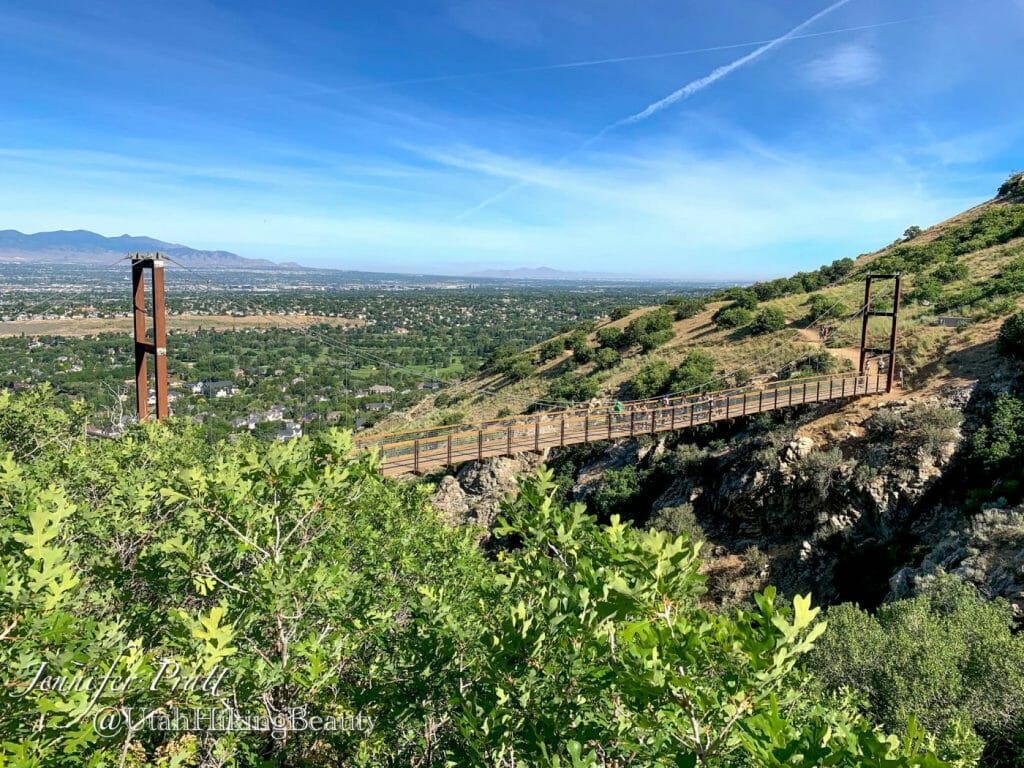
Sandy and Draper’s position at the mouth of Big and Little Cottonwood Canyons creates a premium that no other Salt Lake County suburb can fully replicate
2026 Growth Catalysts
- Draper tech corridor continuing to attract new office park development
- Corner Canyon High School national recognition driving Draper family demand
- Snowbird and Alta’s ski season expansion improving canyon destination appeal
- TRAX frequency improvements reducing downtown SLC commute friction from Sandy
- Continued California professional migration seeking Sandy’s lifestyle at half the California cost
Investment Climate
Sandy and Draper’s investment environment is defined by a premium tenant base that demands quality but rewards patience. Key investor characteristics who succeed in these markets:
- Quality-over-yield orientation accepting cap rates of 4.5 to 5.5 percent in exchange for the lowest default rates and longest average tenancy in Salt Lake County
- School district awareness understanding that properties in the Canyons School District command meaningful premiums and attract specific family demographics
- Canyon access targeting in Draper and east Sandy, where outdoor recreation proximity adds a quantifiable rent premium
- TRAX proximity strategy in Sandy, where transit access to downtown SLC broadens the tenant pool significantly
- Long-term hold discipline as the patient investor who holds Sandy or Draper properties for 7 to 12 years captures appreciation cycles driven by ongoing demand for limited premium inventory
The primary risk in Sandy and Draper is entry price. These are not cash flow markets at current rates with conventional investment financing. Investors who purchase expecting near-term positive cash flow will be disappointed. The thesis here is appreciation driven by durable demand, low vacancy, and quality tenant demographics that protect property condition and support rent growth over time.
Historical Performance
| Period | Market Driver | Avg Annual Appreciation | Key Event |
|---|---|---|---|
| 2010-2015 | Post-recession recovery, early Silicon Slopes growth | 5-7% | Draper tech corridor begins attracting major employers; Sandy TRAX extension opens |
| 2016-2019 | Tech boom, California migration begins, school district reputation solidifies | 9-13% | Corner Canyon HS opens in Draper; Draper becomes recognized as SL County’s premium address |
| 2020-2022 | Pandemic migration, premium suburban surge, remote work | 22-28% | Sandy and Draper among fastest appreciating SL County communities; record low inventory |
| 2023-2024 | Rate shock, normalization | 4-8% | Market absorbed correction with resilience; school district premium maintained values |
| 2025-2026 | Rate stabilization, continued migration, canyon premium | 10-14% (projected) | Draper tech corridor Phase 2 development, continued California professional in-migration |
Demographic Trends Driving Demand
- Canyons School District Premium – Families with school-age children actively research and relocate specifically for Canyons District access. Corner Canyon HS, Brighton HS, and Alta HS have national reputations that draw families from across the state and from out-of-state relocations.
- Canyon Recreation Access – The Big and Little Cottonwood Canyon systems provide access to four world-class ski resorts (Alta, Snowbird, Brighton, Solitude) and year-round hiking at a level that very few U.S. metropolitan areas can match. This is a real, quantifiable premium that outdoor-oriented tech professionals pay for.
- Dual Employment Corridor – Sandy and Draper’s I-15 midpoint position gives residents realistic commute access to both downtown Salt Lake City (north) and Silicon Slopes tech corridor (south), effectively doubling the employment base accessible from a single residence.
- California Professional Migration – Bay Area and Los Angeles tech professionals relocating to Utah consistently choose Sandy and Draper because the lifestyle, schools, and outdoor access most closely replicate the premium suburban experience they left, at 40 to 50 percent less cost.
- Established Neighborhood Quality – Sandy’s decades of development have produced mature, tree-lined neighborhoods with established retail, restaurants, and community infrastructure that newer communities cannot replicate for years. This maturity commands its own premium.
- Mountain Supply Constraint – The Wasatch Mountains prevent any eastward expansion of Sandy or Draper. As population grows, demand competes for a fixed housing stock in the most desirable foothill areas, supporting long-term price appreciation.
📚 New to real estate investing? Master the fundamentals with our professional course Learn more →
2. Neighborhood Hotspots
Sandy / Draper Investment Neighborhood Map
Interactive map of Sandy and Draper investment neighborhoods. Green stars show top investment hotspots, blue circles mark established markets, and orange circles highlight emerging corridors.
Core Investment Areas
Detailed Submarket Analysis: Sandy and Draper
| Neighborhood | Price Range (SFH) | Cap Rate | Growth Drivers | Best Strategy |
|---|---|---|---|---|
| East Sandy / Alta HS | $580K-$850K | 4.5-5.5% | Alta HS premium, canyon access, mountain views | Premium long-term hold, school-driven families |
| Draper East Bench / Corner Canyon | $700K-$1.2M | 4.0-5.0% | Corner Canyon HS, premium demographics, views | Appreciation-first, luxury family rental |
| Sandy TRAX Corridor | $500K-$700K | 5.0-6.0% | TRAX access, dual demand, downtown SLC commuters | Balanced hold, best Sandy value |
| South Sandy / Draper Border | $560K-$780K | 4.8-5.8% | Draper spillover, school improvement, appreciation | Transition appreciation play |
| Draper Tech Corridor | $580K-$800K | 4.8-5.8% | Tech employment, professional tenants, newer construction | Professional tenant targeting |
| Central Sandy / Highland Drive | $520K-$700K | 5.0-5.8% | Established community, school access, reliable demand | Consistent long-term hold |
| Sandy West / 7800 South | $470K-$630K | 5.5-6.5% | Affordability, TRAX proximity, same school district | Value-add, better cash flow, lower entry |
| South Draper / Suncrest | $750K-$1.4M | 3.5-4.5% | Valley views, luxury, limited supply | Pure appreciation, luxury market |
Expert Insight: “The most consistent wealth-building I have seen in Sandy and Draper over 15 years comes from investors who bought near top-rated high schools and held through the school cycles. Families who move in for Corner Canyon or Alta High School often stay 6 to 8 years until their youngest graduates. That means one or two tenant families over a decade, almost no vacancy, and full appreciation capture. The investors who try to flip or trade frequently in this market consistently underperform the ones who buy quality, attract a school-bound family, and simply hold.” – Rachel Nance, Cottonwood Heights Investment Realty
3. Property Types
| Investment Goal | Best Property Type | Best Area | Minimum Capital |
|---|---|---|---|
| Maximum Appreciation | Draper luxury SFH or east bench | Corner Canyon area, east Draper | $210,000+ |
| Best Cap Rate | TRAX-proximate SFH or west Sandy | Sandy Center / Crescent View station area | $130,000+ |
| Longest Tenancy | School zone SFH | Alta HS or Corner Canyon HS territory | $155,000+ |
| Value-Add / BRRRR | Older SFH west Sandy | West Sandy, 7800 South corridor | $120,000+ |
Don’t guess the costs. Our Complete Renovation & Remodeling Cost Guide covers 400+ pages of project-by-project breakdowns with real contractor pricing ranges.
4. Cost Analysis
Acquisition Cost Breakdown (Sandy / Draper)
| Expense Item | Typical Cost | Example ($620,000 Property) | Notes |
|---|---|---|---|
| Down Payment | 25% (investment) | $155,000 | Standard investment loan; Draper luxury may require jumbo at 30% |
| Closing Costs | 2-3% of price | $12,400-$18,600 | Utah closing costs below national average |
| Home Inspection | $400-$600 | $500 | Sandy and Draper homes well-maintained; still inspect including drainage and seismic on east bench |
| Radon Test | $150-$250 | $200 | Salt Lake County has elevated radon; always test |
| Initial Touch-Up | $1,000-$6,000 | $2,000-$5,000 | Budget for carpet, paint, and landscaping to match neighborhood standards; tenant quality expectations are high |
| Reserves (6 months) | 6 months expenses | $14,000-$18,000 | Higher absolute reserves needed at higher price points; consider larger reserves for Draper luxury given higher monthly costs |
| TOTAL MINIMUM ENTRY | ~29-32% of value | $184,100-$197,300 | Higher absolute capital requirement than most Utah markets; justified by superior tenant quality and appreciation |
Sample Cash Flow Analysis: East Sandy School Zone vs. Sandy TRAX vs. Draper Corner Canyon
| Item | East Sandy School Zone (4BR) | Sandy TRAX Corridor (3BR) | Draper Corner Canyon (4BR) |
|---|---|---|---|
| Purchase Price | $700,000 | $570,000 | $880,000 |
| Monthly Rent | $2,750 | $2,350 | $3,200 |
| Property Taxes | -$409/mo | -$333/mo | -$514/mo |
| Insurance | -$155/mo | -$130/mo | -$195/mo |
| HOA (if any) | -$50/mo | $0 | -$100/mo |
| Property Management (9%) | -$248/mo | -$212/mo | -$288/mo |
| Maintenance + CapEx | -$220/mo | -$188/mo | -$256/mo |
| Vacancy (3.5% / 4% / 3%) | -$96/mo | -$94/mo | -$96/mo |
| Net Operating Income | $1,572/mo | $1,393/mo | $1,751/mo |
| Mortgage (25% down, 6.5%, 30yr) | -$3,317/mo | -$2,700/mo | -$4,170/mo |
| MONTHLY CASH FLOW | -$1,745 | -$1,307 | -$2,419 |
| Cap Rate | 2.69% | 2.93% | 2.39% |
| Total Return (13% appreciation) | ~24% | ~22% | ~26% |
All three Sandy and Draper scenarios show meaningful negative cash flow at current rates. This is the consistent reality of premium Salt Lake County markets. The TRAX corridor scenario shows the best cap rate and cash flow balance at -$1,307/month, making it the most accessible entry point. The Draper Corner Canyon scenario carries the highest negative carry (-$2,419/month) but projects the best total return (26%) driven by Draper’s historically strongest appreciation rate. Sandy and Draper are definitively appreciation markets; investors who enter expecting near-term positive cash flow will be consistently disappointed.
Expert Insight: “I tell every investor who asks about Sandy and Draper the same thing: this is not a cash flow market at current rates and it never has been at the price-to-rent ratios that exist here. It is a market where you hold for 8 to 12 years, almost never have a vacancy because your tenant family stays until their youngest graduates high school, and sell a significantly appreciated asset to a California buyer who thinks Utah prices are still a bargain compared to what they sold in Marin County. That is the Sandy-Draper investment thesis, and it works very well for investors who understand it going in.” – Mark Halverson, Cottonwood Realty Group
5. Legal Framework
✅ Utah State Law with No Municipal Complications
Sandy and Draper both operate under Utah’s landlord-friendly framework with no additional municipal tenant protections. No rent control, no just-cause eviction requirement, and a 25 to 45 day non-payment eviction timeline. Neither city has enacted tenant protection ordinances, maintaining the full flexibility of Utah state law. The only regulatory complexity in this market is HOA governance, which varies by development and can affect rental permissions, particularly in newer Draper master-planned communities.
Utah State Landlord-Tenant Essentials
- No Rent Control: Prohibited statewide. Raise rents at each lease renewal without restriction.
- Non-Payment Eviction: 3-day pay-or-vacate notice. Court filing day four. Typical resolution 25 to 45 days.
- Lease Termination: 15-day notice for month-to-month. Fixed-term leases expire naturally.
- Security Deposits: No statutory cap. Return within 30 days with itemized accounting.
- Tenant Screening: Full landlord discretion within fair housing requirements. Sandy and Draper’s high-income tenant pool makes thorough credit and income screening important for protecting property condition.
- Entry Notice: 24 hours required except genuine emergencies.
HOA Considerations in Sandy and Draper
A higher proportion of Sandy and Draper properties, particularly in Draper, have HOA governance:
- Draper master-planned communities: Several newer Draper developments have HOA rules governing rental permissions, rental caps, and minimum lease terms. Review CC&Rs before purchase.
- Townhome HOAs: Sandy townhome communities vary in rental policies. Some cap investor ownership percentage; others require minimum lease terms of 6 to 12 months.
- HOA reserve health: Draper’s newer communities often have well-funded HOAs. Older Sandy communities vary. Always review reserve fund adequacy before purchasing.
- Short-term rentals: Most Sandy and Draper residential HOAs prohibit STR under 30 days. Sandy city has STR permit requirements. Neither market is positioned as an STR investment thesis.
Useful Resources
- Utah Apartment Association: uaahq.org
- Sandy City Business Licensing: sandy.utah.gov
- Draper City: draper.utah.gov
- Utah Courts: utcourts.gov
| Regulation | Sandy / Draper / Utah | Comparison (Seattle) | Investor Impact |
|---|---|---|---|
| Eviction | 3-day notice; 25-45 day total | Just cause; 90-180 day typical | Far lower legal costs; in practice Sandy-Draper evictions are extremely rare given high-income tenants |
| Rent Control | Prohibited statewide | No formal control but heavy restrictions | Full flexibility to adjust rents to market at each renewal |
| HOA Governance | Varies by development; CC&Rs govern | HOAs common but less master-plan scale | Review Draper community CC&Rs before every purchase |
| STR Rules | Sandy city permit required; most HOAs prohibit | Primary residence only; 120-day cap | STR not a viable strategy in Sandy-Draper residential zones |
| Tenant Screening | Landlord discretion within fair housing | First-in-time rule | Choose best qualified applicant; income verification critical at premium price points |
6. Step-by-Step Sandy / Draper Investment Playbook
Choose Your Sandy / Draper Strategy
School Zone Appreciation Hold
Buy in Alta HS or Corner Canyon HS territory. Attract a family with school-age children. Hold for 6 to 10 years through the school cycle. Sell to the next California buyer. Generates the longest tenancy and best total return of any Sandy-Draper strategy but requires the most patient capital.
TRAX Value Strategy (Sandy)
Buy near Sandy Center or Crescent View TRAX station. Target dual demand of local families and downtown SLC commuters. Best cap rate in the market at lower entry prices than east Sandy alternatives.
Draper Premium Appreciation
Buy in east Draper near Corner Canyon or tech corridor. Target the highest-income tenant demographic in the market. Accept deep negative carry (-$2,000+/month) for Draper’s historically strongest appreciation rate and lowest default risk in the entire Wasatch Front.
West Sandy Value-Add
Buy older west Sandy stock, renovate kitchen and bathrooms, increase rents and ARV. Same Canyons District at 15 to 25 percent lower entry. Best BRRRR path in the market. Better cash flow than east Sandy alternatives after renovation.
Build Your Sandy / Draper Team
- Canyons District-Experienced Agent: Must know precisely which addresses fall within which school attendance boundaries, how school zone boundaries have shifted, and which properties command the school premium versus those that do not despite similar proximity.
- Utah Real Estate Attorney: For CC&R review on Draper HOA properties and LLC structuring. Sandy and Draper properties at $600,000 to $1,000,000+ warrant proper asset protection structuring.
- Premium Property Manager: Sandy and Draper tenants have high expectations. A property manager who specializes in the professional family demographic, maintains properties to upper-tier standards, and has a track record with school-driven tenancy produces meaningfully better outcomes than a generalist manager.
- Salt Lake County CPA: Property tax appeals are particularly valuable in Sandy and Draper given the pace of appreciation. An experienced CPA familiar with county assessment practices can save $500 to $2,000 annually through proper assessment challenges.
Expert Tip: Before purchasing any Sandy or Draper property with a school zone thesis, verify the specific school attendance boundary at the parcel level. School district boundaries can change, and a property that is technically within Sandy or Draper may feed to a different school than the one you are targeting. The Canyons School District website has an address-specific school finder tool. Use it before you make an offer, not after.
Sandy / Draper-Specific Due Diligence
Physical Checks
- Radon test (mandatory; Salt Lake County elevated)
- Foundation and drainage check for east bench properties where slope and drainage create occasional water intrusion issues
- Seismic review for east Sandy and Draper foothill properties near the Wasatch Fault line
- Roof condition and snow load capacity
- HVAC condition for seasonal extremes
- Landscaping condition: tenants in this demographic expect well-maintained yards; budget for landscaping maintenance as a cost
Market and School Zone Checks
- Verify specific school attendance boundary at the parcel level using Canyons District address lookup
- Confirm HOA CC&Rs if applicable for rental permissions and minimum lease terms
- Check driving time to major employment centers (I-15 tech corridor and downtown SLC)
- Verify TRAX station proximity if that is part of your positioning strategy
- Confirm canyon access drive time (key marketing point for outdoor-oriented tenants)
- Research planned development near property that could affect views or traffic patterns
Marketing to Sandy and Draper’s Premium Tenants
Sandy and Draper tenant searches are highly specific. Understanding how these tenants search and what they prioritize makes the difference between 14 days on market and 60 days on market:
- Lead with the specific school name: “Brighton High School attendance area” or “Corner Canyon High School district” should appear in the first sentence. These families do not search by neighborhood name; they search by school name.
- State canyon drive time explicitly: “12-minute drive to Big Cottonwood Canyon entrance” is a specific, valuable, marketing claim that resonates strongly with the outdoor-oriented professional family demographic that dominates Sandy and Draper rental demand.
- Highlight commute access: “7-minute drive to I-15 onramp for Silicon Slopes commute” and “3-minute walk to Sandy Center TRAX station” are concrete commute time claims that this demographic specifically values and searches for.
- Property quality expectations: Sandy and Draper families expect clean, well-maintained homes that feel comparable to what they might purchase. Freshly painted walls, clean carpet or hard floors, and well-maintained landscaping are baseline requirements, not premiums, in this market.
- Home office space: Remote and hybrid work is common in this demographic. A dedicated office room or a well-lit space that can function as a home office commands a meaningful rent premium in Sandy and Draper listings.
7. Financing Options for Sandy / Draper
| Loan Type | Down Payment | Rate Premium | Best For | Sandy / Draper Note |
|---|---|---|---|---|
| Conventional Investment | 25% | +0.5-0.75% | W-2 investors, Sandy properties | Most Sandy properties within conforming limits; standard investment pricing applies |
| Jumbo Investment | 25-30% | +0.75-1.25% | Draper premium properties above $806,500 | Required for Corner Canyon area and luxury Draper east bench properties; Zions Bank and Celtic Bank competitive on jumbo investment in Utah |
| DSCR Loan | 25-30% | +1.5-2.5% | Self-employed, portfolio builders | West Sandy value-add properties at $480-$570K may approach 1.0x DSCR after renovation. Premium Sandy and Draper properties will not qualify at current cap rates. |
| Portfolio Loan | 20-30% | +1-2% | Multi-property investors | Zions Bank, Celtic Bank, and Mountain America Credit Union offer competitive Utah portfolio products for 3-plus property investors |
| Home Equity / HELOC | N/A (equity-based) | Prime + 0.5-1% | Investors with equity in primary residence | Many Sandy and Draper investors use HELOC from their own appreciated primary residence to fund investment down payments; effective strategy in this appreciation market |
| Hard Money / Bridge | 20-25% | 8-12% rate | Value-add acquisitions, BRRRR | West Sandy BRRRR strategy; refinance into conventional after renovation stabilizes property value |
Sandy / Draper Financing Reality: The HELOC-funded down payment strategy is uniquely relevant in Sandy and Draper because many investors already own a primary residence in Salt Lake County that has appreciated significantly. A Sandy homeowner who bought in 2018 for $450,000 and now has a property worth $720,000 has accumulated $270,000 in equity, of which $150,000 to $180,000 is accessible via HELOC at prime plus 0.5 to 1 percent. Using that HELOC to fund a 25 percent down payment on an investment property, then renting the investment property, and letting the Sandy appreciation cycle compound on both properties simultaneously is one of the most efficient wealth-building strategies available to existing homeowners in this market.
8. Frequently Asked Questions

Knowledge Quiz: Sandy / Draper Real Estate Investment
Open Quiz
5 quick questions on what you just learned about Sandy and Draper investing
1) Why do school-driven tenants in Sandy and Draper produce the longest average tenancy of any Salt Lake County renter demographic?
Answer: C
Families who relocate specifically to access Alta, Brighton, or Corner Canyon High Schools make a deliberate decision tied to their children’s educational timeline. Once enrolled, the family has a strong incentive to remain in the same home until the youngest child graduates, which creates voluntary tenancy of 4 to 7 years. This is not contractual but behavioral. It is driven by the disruption and social cost of changing schools mid-cycle. The guide identifies this as the lowest-turnover renter demographic in all of Salt Lake County, making school-zone properties highly valuable for investors who prioritize stability and low vacancy costs.
2) What is the canyon access premium and how large is it in Sandy and Draper rental pricing?
Answer: B
The guide quantifies the canyon access premium at 8 to 15 percent for properties within 10 minutes of Big or Little Cottonwood Canyon entrance. On a $2,400/month rent, this equals $190 to $360 per month in additional income. The premium is year-round because the canyons serve as both ski destinations in winter and major hiking, biking, and climbing destinations in summer. The guide also explicitly states that this is a year-round recreation premium, not a ski-season-only premium, and cautions investors not to claim canyon proximity for properties with 25-minute canyon drives, as the target tenant demographic knows the geography well enough to recognize overclaiming.
3) Which Sandy submarket does the guide identify as offering the best cap rate and balanced returns within the Sandy-Draper market?
Answer: A
The guide’s cash flow analysis shows the Sandy TRAX Corridor property at -$1,307/month, the best cash flow of the three scenarios analyzed, with a cap rate of 2.93 percent versus 2.69 for east Sandy and 2.39 for Draper Corner Canyon. The TRAX positioning creates dual demand from local families who choose Sandy for its school district and from downtown SLC commuters who want Sandy’s lifestyle at lower prices than Sugar House. This dual demand produces very consistent low vacancy. The guide calls this the best value-for-capital in the Sandy-Draper market and specifically recommends it for investors who want Sandy market exposure at the most accessible entry point.
4) What is the most critical pre-purchase verification step for any investor pursuing a school zone thesis in Sandy or Draper?
Answer: D
The guide is explicit: school district boundaries can be granular enough that two homes on opposite sides of a street may feed to different schools. Neighborhood reputation and general area knowledge are not sufficient for a school zone investment thesis. The Canyons School District website (canyonsdistrict.org) has an address-specific school finder tool that identifies the exact school assignment for any parcel address. The guide calls this the most important 5 minutes of due diligence on any Sandy-Draper investment with a school zone thesis and warns that buying based on neighborhood assumption rather than parcel-level verification is a common and costly error.
5) The guide describes Sandy and Draper as fundamentally what type of investment market?
Answer: C
The guide is clear and consistent: Sandy and Draper are not cash flow markets. The expert quote explicitly states “I tell every investor who asks about Sandy and Draper the same thing: this is not a cash flow market at current rates and it never has been.” The thesis is appreciation-driven: buy in a school zone, attract a family with school-age children who stays 6 to 10 years, accumulate appreciation driven by ongoing California professional migration, and sell to a California buyer who views even appreciated Utah prices as affordable relative to Bay Area or LA values. This is the Sandy-Draper investment thesis, and it requires patient capital and realistic expectations about near-term cash flow.
Work With a Local Expert in Sandy / Draper
We are building a verified network of real estate professionals across every market we cover.

About Our Expert Network
We are finalizing partnerships with verified real estate professionals across every market featured on Builds and Buys. Each expert is selected for their investment experience and local market knowledge.
Our local Sandy and Draper specialists offer:
- Deep knowledge of Canyons School District attendance boundaries and school zone investment value
- Canyon access premium expertise and targeted marketing to outdoor-oriented professional families
- TRAX corridor positioning strategy for dual-demand properties
- Draper CC&R review coordination and HOA rental policy expertise
- Full transaction support from search through closing
- Premium family-demographic property management referrals
Services Covered
- Property sourcing and acquisition
- School zone investment analysis
- Buyer representation
- Canyon premium positioning
- TRAX corridor strategy
- Value-add and renovation guidance
- Legal and title referrals
- Financing and lender connections
- Premium property management referrals
- Insurance and inspection referrals
- 1031 exchange coordination
- Exit strategy planning
Get Connected or Join Our Network
Looking for a Sandy or Draper investment specialist? Reach out and we will connect you with the right professional.
Are you a real estate professional specializing in Sandy, Draper, or Canyons District investment? We are always expanding our network.
Contact us at support@buildsandbuys.com
Find Specialized Sandy / Draper Real Estate Professionals
Ready to Invest in Sandy / Draper?
Sandy and Draper represent the patient investor’s best thesis in Salt Lake County. The combination of Canyons School District’s top-ranked schools, canyon access to world-class skiing and hiking, dual employment corridor access to both SLC and Silicon Slopes, and a tenant demographic of high-income professional families produces something genuinely rare in real estate: a market where your tenants stay longer, pay reliably, maintain properties carefully, and leave you holding a significantly appreciated asset to sell to the next wave of California arrivals who have discovered that Utah provides the outdoor lifestyle they want at half the price they were paying on the coast. For patient investors with adequate reserves, Sandy and Draper consistently reward holding with some of the strongest 10-year total returns in the Utah market.
Continue Your Research
Utah State Guide
See how Sandy and Draper compare to other Utah markets including Lehi, Salt Lake City, and St. George.
Salt Lake City Guide
Compare Sandy and Draper to urban SLC neighborhoods like Sugar House, Ballpark, and the 9th and 9th district.
144-Lesson Course
University-level real estate education covering financing, law, strategy, and management.
For further guidance, explore our State-by-State Investor guides, browse our expert articles, or follow our Step-by-Step Investment Guide.



