
Kingman Arizona Real Estate Investment Guide For 2026
A comprehensive resource for investors targeting Arizona’s Route 66 gateway and Mohave County seat, where I-40 corridor logistics growth, proximity to Las Vegas, strong Bullhead City-Laughlin workforce spillover, genuinely affordable price points, and some of Arizona’s highest cash-on-cash returns combine to create a compelling entry-level and income-focused investment opportunity
Quick answers: Top 5 most searched Kingman investment questions ▼
Migration data: Where people are moving from to Kingman ▼
In This Guide
Click on any section to navigate directly to that content
1. Kingman Market Overview
Market Fundamentals
Kingman is the Mohave County seat and northwest Arizona’s primary regional center, sitting at the intersection of Interstate 40, US Highway 93, and historic Route 66 about 100 miles from Las Vegas and 190 miles from Phoenix. It is not a glamorous or well-known investment market, which is precisely why the numbers work. At a median home price under $250,000 with rents generating 8 to 12 percent cap rates, Kingman offers what Phoenix, Tucson, and even Bullhead City investors increasingly cannot find: genuinely positive cash flow from the first month with investment capital requirements accessible to a much broader range of investors.
Key fundamentals defining Kingman’s investment case:
- Population: 32,000 city; 75,000+ Mohave County seat area
- Location: I-40 / US-93 intersection; 100 miles from Las Vegas; 190 miles from Phoenix
- Employment: Mohave County government, Kingman Regional Medical Center, I-40 logistics, Route 66 tourism and hospitality, Las Vegas commuters
- Median Home Price: $235,000 (Arizona’s most affordable inhabited city)
- Cap Rates: 8 to 12 percent achievable
- Cash Flow: Positive in most financing scenarios at current prices
The honest assessment of Kingman is that it is a cash flow market, not an appreciation market. The returns are real but the appreciation ceiling is limited. Investors who need glamour, viral growth stories, or 15 percent annual appreciation will be disappointed. Investors who need a $40,000 down payment to generate $300 to $600 positive monthly cash flow from a stable employment-anchored rental market will find Kingman delivers exactly that.
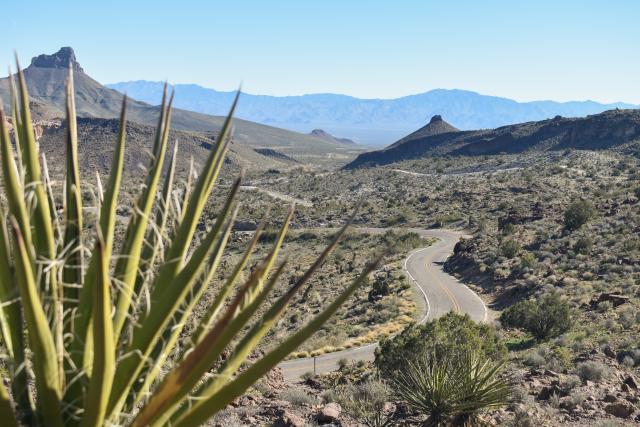
Kingman’s strategic position at the I-40 and US-93 intersection, combined with Route 66 heritage and proximity to Las Vegas, creates a diversified employment base supporting Arizona’s best cash-on-cash returns
2026 Economic Outlook
- I-40 logistics corridor continuing to attract distribution operations
- Kingman Regional Medical Center serving growing regional population
- Route 66 tourism growing with domestic and international road-trip interest
- Mohave County population growth driven by Arizona affordability migration
- Renewable energy projects (solar) adding construction employment in region
Why Kingman Produces Arizona’s Best Cash-on-Cash Returns
The mathematics of cash-on-cash return in real estate investing favor markets where the ratio of monthly rent to purchase price is highest. In Kingman, a $220,000 home generating $1,450 per month produces a gross rent multiplier (GRM) of approximately 12.6, compared to a $420,000 Marana property generating $2,050 per month with a GRM of 17.1. This difference translates directly into cash-on-cash returns that favor Kingman by a substantial margin.
| Market | Purchase Price | Monthly Rent | Gross Cap Rate | 25% Down |
|---|---|---|---|---|
| Kingman | $220,000 | $1,450 | ~7.9% | $55,000 |
| Bullhead City | $265,000 | $1,600 | ~7.2% | $66,250 |
| Sahuarita | $295,000 | $1,800 | ~7.3% | $73,750 |
| Marana | $420,000 | $2,050 | ~5.9% | $105,000 |
This comparison shows that Kingman’s price-to-rent ratio is genuinely superior to all comparable Arizona markets, not because rent is high but because price is low. For investors who can manage the tradeoffs of a smaller, less liquid market, Kingman delivers returns that other Arizona markets simply cannot match at any capital level.
Historical Performance
| Period | Market Driver | Avg Annual Appreciation | Key Event |
|---|---|---|---|
| 2010-2016 | Recovery, I-40 corridor stable | 2-4% | Kingman stabilizes post-recession; logistics corridor employment consistent |
| 2017-2019 | Modest growth, regional discovery | 4-6% | Las Vegas worker overflow beginning; Arizona affordability awareness growing |
| 2020-2022 | Pandemic affordability surge | 18-25% | Arizona affordability discovery; Kingman among last affordable markets found by pandemic buyers |
| 2023-2024 | Rate normalization, stable employment | 3-5% | Market moderates; I-40 and government employment maintain demand floor |
| 2025-2026 | Logistics growth, Las Vegas overflow | 5-8% (projected) | I-40 logistics expansion; Las Vegas housing costs continuing to push workers toward Arizona |
📚 New to real estate investing? Master the fundamentals with our professional course Learn more →
2. Neighborhood Hotspots
Kingman Investment Neighborhood Map
Interactive map of Kingman’s investment neighborhoods. Green stars show top hotspots, blue circles mark established markets, and orange circles highlight emerging areas.
Core Investment Neighborhoods
Detailed Submarket Analysis: Kingman Neighborhoods
| Area | Price Range | Cap Rate | Primary Demand | Best Strategy |
|---|---|---|---|---|
| North Kingman | $225K-$340K | 8-10% | Healthcare, government, quality workforce | Quality hold, healthcare worker rental |
| Central Kingman | $190K-$290K | 9-12% | I-40 logistics, county workers, broad base | Maximum cash flow, broad tenant base |
| South Kingman | $165K-$260K | 10-13% | Industrial workers, logistics staff | Highest yield, value-add, BRRRR |
| Route 66 East District | $175K-$265K | 9-12% | Tourism workers, Route 66 hospitality | Workforce rental, modest STR tourism |
| Golden Valley / US-93 | $155K-$240K | 10-14% | Dual BHC/Kingman/LV commuters | Lowest entry, highest yield, dual market |
| Airport Area | $185K-$275K | 9-11% | Aviation workers, airport logistics | Aviation housing, airport growth play |
Expert Insight: “The investors who do best in Kingman are the ones who come in with realistic expectations. They are not expecting Scottsdale appreciation. They are not expecting a Sedona STR premium. What they are expecting is a $220,000 house that rents for $1,450 per month and generates $250 to $400 positive monthly cash flow from day one with conventional financing. That expectation is met consistently in this market. I have investors who bought 3 to 4 Kingman properties with the capital that would have funded a single Phoenix investment, and they are collecting five to six times the monthly cash flow on the same capital deployed. The compound effect of that cash flow reinvested over 10 years is genuinely significant. Kingman rewards the patient investor who does the math rather than the investor who chases headlines.” – David Okafor, Northwest Arizona Investment Properties
3. Property Types
| Investment Goal | Best Property Type | Best Location | Minimum Capital |
|---|---|---|---|
| Maximum Cash Flow | Multi-family or central workforce rental | Central or south Kingman | $38,000-$58,000 |
| Quality Tenant Focus | Government and healthcare rental | North Kingman | $56,000-$85,000 |
| Best BRRRR | Value-add older stock | South or central older Kingman | $41,000-$65,000 |
| Lowest Entry | Golden Valley or Route 66 area | Golden Valley, south Kingman fringe | $31,000-$48,000 |
Don’t guess the costs. Our Complete Renovation & Remodeling Cost Guide covers 400+ pages of project-by-project breakdowns with real contractor pricing ranges.
4. Cost Analysis
⚠️ Heat Cost Note: Kingman summers reach 105 to 112 degrees Fahrenheit, which is somewhat less extreme than Bullhead City’s 115 to 120 degrees but still significantly hotter than Phoenix or Tucson. Budget AC replacement at 10 to 14 year cycles rather than the 12 to 15 year standard, and maintain higher CapEx reserves than you would for a Tucson or Phoenix property. Lower heat intensity than Bullhead City but higher than Prescott Valley or Flagstaff.
Sample Cash Flow Analysis: Central Kingman 3BR I-40 Workforce Rental
| Item | Monthly | Annual | Notes |
|---|---|---|---|
| Gross Rent | $1,400 | $16,800 | 3BR central Kingman, near I-40 access, updated |
| Less Vacancy (7%) | -$98 | -$1,176 | Slightly elevated vs. Tucson; some summer tenant transitions in extreme heat |
| Property Taxes | -$138 | -$1,656 | Mohave County rate approximately 0.7% on lower assessed values; very low absolute tax |
| Insurance | -$90 | -$1,080 | Landlord policy; Mohave County rates among Arizona’s lowest |
| Property Management (10%) | -$140 | -$1,680 | Local Kingman management; 10% reflects smaller market management complexity |
| Maintenance + CapEx (14%) | -$196 | -$2,352 | Elevated vs. Tucson; older housing stock + moderate desert heat; less than Bullhead City |
| Net Operating Income | $738 | $8,856 | Before mortgage; 3.7% cap rate on $235K property |
| Mortgage ($235K purchase, 25% down, 7.0%, 30yr) | -$1,172 | -$14,064 | On $176,250 loan balance; lowest absolute debt service in any guide series city |
| CASH FLOW | -$434 | -$5,208 | Negative at 7% but significantly better than any comparable AZ market; positive at 6.5% |
| South Kingman BRRRR ($185K buy + $30K reno, $1,350 rent) | +$117 | +$1,404 | Positive cash flow at 7% after renovation; best scenario in guide series |
| Cash Purchase ($235K, $1,400 rent) | +$738 | +$8,856 | 3.77% unlevered NOI yield; highest unlevered suburban yield in the guide series |
The Kingman cash flow story in the Arizona context: The central Kingman scenario at $235,000 is -$434 per month at 7 percent, which is meaningfully better than Phoenix East Valley (-$800 to -$1,200) and even Marana (-$846). At 6.5 percent, Kingman reaches breakeven. The BRRRR scenario generates genuine positive cash flow even at 7 percent, which is true of almost no other Arizona suburban market covered in this guide series. Cash purchase investors earn 3.77 percent unlevered NOI yields, the highest of any Arizona market covered. For the investor whose capital constraint is real, the lowest down payment in this guide ($58,750 on $235,000) combined with the closest-to-positive cash flow of any market makes Kingman the clearest path to getting started in Arizona real estate with limited capital.
Expert Insight: “I tell every new investor who calls me with $50,000 and asks about Arizona: start in Kingman. Not because it is the most exciting market. Because it is the one where the math works at that capital level. A $50,000 down payment on a $220,000 central Kingman property gets you within $150 to $250 per month of cash flow breakeven at current rates. If you can withstand $200 per month negative for the first year while rates potentially improve, you own an asset generating 6 to 8 percent annual appreciation, building equity every month, and preparing to be cash flow positive. Try getting that close to breakeven with $50,000 anywhere near Phoenix. You cannot do it.” – Jennifer Tso, Kingman Real Estate and Investment Group
5. Legal Framework
✅ Full Arizona Landlord-Friendly Framework
Kingman and Mohave County operate under Arizona state landlord-tenant law with no local rent control, no just cause eviction requirements, and Mohave County Justice Court proceedings. The standard 5-day pay-or-quit, 25 to 35 day total eviction process applies fully. No HOA prevalence in most Kingman properties reduces compliance complexity. Arizona’s landlord framework applies cleanly in Kingman with minimal local complications.
Arizona Landlord Law in Kingman
- Non-Payment Eviction: 5-day pay-or-quit notice. File Mohave County Justice Court on day 6. Hearing within 2 to 3 weeks. Total 25 to 35 days.
- Lease Violation: 10-day notice to cure for material violations.
- Month-to-Month: 30-day notice, no cause required.
- Security Deposit: Maximum 1.5 months rent. Return within 14 business days.
- Rent Control: Prohibited statewide. City of Kingman cannot impose any restrictions.
- HVAC Habitability: AC maintenance required; Kingman summers 105 to 112 degrees make cooling important though somewhat less extreme than Bullhead City.
- No HOA Prevalence: Most Kingman properties are not in HOA communities, reducing compliance complexity and eliminating rental cap concerns common in Marana master-planned communities.
Kingman-Specific Compliance
- City Business License: City of Kingman may require a rental property business license. Verify current requirements at cityofkingman.gov before renting.
- STR Registration: Arizona state STR rights protected; city registration required for short-term rentals. Simpler process than Sedona or even Bullhead City.
- Water and Utility Infrastructure: Some older Kingman properties have aging water infrastructure. Inspect plumbing carefully on pre-1990 properties. Water heater and plumbing condition is a key inspection item.
- Manufactured Home Considerations: Some Kingman affordable properties are manufactured homes on land. Financing for manufactured homes differs from site-built; verify before purchase. Manufactured homes can produce excellent yields but have specific legal and financing considerations.
- I-40 Noise: Properties very close to I-40 may have traffic noise that affects tenant comfort and retention. Inspect at different times of day to assess noise impact.
Key Resources
- City of Kingman: cityofkingman.gov
- Mohave County Justice Court: mohavecourts.com
- Arizona Landlord-Tenant Act: azleg.gov
6. Step-by-Step Kingman Investment Playbook
Choose Your Kingman Strategy
I-40 Workforce Cash Flow
Buy central Kingman homes in the $190,000 to $260,000 range near I-40 employment access. Rent to logistics workers, truckers, and industrial employees at $1,200 to $1,500 per month. Consistently positive cash flow in most financing scenarios. The straightforward core Kingman strategy.
BRRRR Maximum Returns
Buy older south Kingman homes at $165,000 to $220,000. Update to market standard at $15,000 to $35,000. Rent improved property at premium rates. Refinance and repeat. Kingman’s strong positive post-renovation cash flow environment makes it the best BRRRR starting market for new investors in Arizona.
Multi-Family Portfolio Building
Buy Kingman duplexes and triplexes at $250,000 to $400,000. Each unit generates $950 to $1,300 per month in rent. Multi-family properties in Kingman produce some of the highest absolute monthly cash flow amounts achievable in Arizona at accessible total investment levels.
North Kingman Quality Hold
Buy north Kingman homes in the $225,000 to $320,000 range near KRMC and county government. Rent to healthcare workers and government professionals. Higher tenant quality, lower vacancy, and better appreciation than central or south Kingman. Accept slightly lower cap rates for better stability.
Build Your Kingman Team
- Kingman-Specific Investment Agent: Kingman is a small, specialized market. A general Arizona agent will not have granular knowledge of which neighborhoods actually produce what rents, where the I-40 worker demand is strongest, and what properties have value-add potential versus hidden problems. Ask specifically about their Kingman investor transaction volume.
- Local Kingman Property Manager: For out-of-state investors, a local property manager who specifically works in Kingman is essential. The workforce tenant pool here has specific characteristics (shift work, variable income stability, heat-related summer transitions) that require local market knowledge. Ask for their current Kingman vacancy rate specifically.
- HVAC Contractor: As with all extreme desert heat markets, a reliable local HVAC contractor with emergency response capability is essential. Kingman’s 105 to 112 degree summers require proactive AC maintenance.
- Home Inspector with Experience on Older Kingman Stock: Much of Kingman’s affordable housing is 1970s to 1990s construction. A local inspector who specifically knows Kingman’s common construction issues, water infrastructure challenges, and desert climate wear patterns will catch problems that general inspectors miss.
Expert Tip: For first-time investors in Kingman, buy your first property with a local agent who does investor transactions regularly, not the cheapest agent you can find. Kingman’s older housing stock has specific issues (aging plumbing, outdated electrical, deferred maintenance from previous cash-strapped owners) that a knowledgeable agent will help you avoid or price appropriately. The due diligence investment on your first Kingman purchase saves multiples of its cost by steering you away from problematic properties.
Kingman-Specific Due Diligence
Physical Inspection Priorities
- AC system age and SEER rating (elevated CapEx in desert heat)
- Plumbing age and condition (older Kingman homes have aging pipes)
- Electrical panel capacity and safety (pre-1980 panels may need updating)
- Roof condition and remaining life
- Foundation integrity (desert caliche soil and expansive clay)
- Verify property is site-built vs. manufactured (financing implications)
- I-40 proximity noise assessment
Market Due Diligence
- Verify actual rental comps from local manager for specific street and neighborhood
- Assess I-40 employment proximity value for specific address
- Check for any manufactured home status (see permit records)
- Research Mohave County assessor data for tax history
- Verify city business license requirements for rental operation
- Assess whether neighborhood is improving, stable, or declining
- Research any planned I-40 industrial development that could improve or affect the area
Operate Successfully in Kingman
- Price rent accurately for the specific neighborhood: Kingman has meaningful rent variation between north, central, and south neighborhoods. Pricing a central Kingman property at north Kingman rates will result in extended vacancy. Pricing a renovated south Kingman property at its actual improved market rate rather than discounting to fill quickly generates significantly better annual income. Verify current comparable rents with a local manager before every new tenancy.
- Screen tenants carefully in a workforce market: Kingman’s workforce tenant pool includes workers with variable income stability. A logistics worker on a steady full-time salary and a worker in a temporary position may both apply for the same property. Verify employment type (full-time permanent vs. temporary contract) and income documentation carefully. The extra screening time prevents the cost of an eviction.
- AC maintenance is non-negotiable: Annual spring service before the heat season, knowledge of your AC unit’s age, and a relationship with a local HVAC contractor who will respond to emergencies. This applies in Kingman just as in Bullhead City and Yuma, though the temperatures are somewhat less extreme.
- Reinvest cash flow into portfolio growth: Kingman’s positive cash flow is genuinely distinctive in the Arizona market. The $300 to $600 per month many Kingman investors generate can be reinvested within 3 to 4 years to fund the down payment on a second Kingman property, beginning the compounding cycle that is the genuine long-term wealth-building case for this market.
7. Financing Options for Kingman
| Loan Type | Down Payment | Rate Premium | Best For | Kingman Note |
|---|---|---|---|---|
| Conventional Investment | 20-25% | +0.5-0.75% | Standard investment properties | All Kingman properties far under conforming limit; straightforward approval; lowest absolute down payment in guide series |
| DSCR Loan | 20-25% | +1.5-2.5% | Self-employed investors | Kingman is the easiest DSCR qualification market in Arizona; central properties routinely achieve 1.0x+ DSCR at current rents and prices |
| Hard Money / Bridge | 15-25% | 8-12% | BRRRR acquisitions | Kingman’s positive post-renovation cash flow makes BRRRR the most viable hard money strategy in Arizona |
| Cash Purchase | 100% | None | Maximum income, competitive offers | 3.77% unlevered NOI yield on central properties; best unlevered suburban yield in Arizona |
| Home Equity / HELOC | Equity-based | Prime +0-1% | Using primary home equity for Kingman investment | Small HELOC against primary residence can fund 2-4 Kingman properties; optimal leverage strategy for equity-rich investors |
| Portfolio Lending | 20-30% | +1-2% | Multiple Kingman properties | Portfolio lenders who understand small-market Arizona well suited for multi-property Kingman investors |
Kingman DSCR Advantage: Kingman is genuinely the easiest DSCR qualification market in Arizona and one of the most accessible in the Western United States. A $220,000 central Kingman property generating $1,400 per month produces a gross rent multiple of 12.9 and a DSCR typically well above 1.0x even at DSCR loan rates, which include the 1.5 to 2.5 percent premium. Self-employed investors who are locked out of DSCR qualification in Phoenix, Tucson, Marana, or any other Arizona market covered in this guide may find that Kingman is the first Arizona market where they can actually qualify. Bring recent Kingman rent comps to any DSCR lender conversation to demonstrate the market’s favorable income-to-price characteristics.
8. Frequently Asked Questions

Knowledge Quiz: Kingman Real Estate Investment
Open Quiz
5 quick questions on what you just learned about Kingman investing
1) What is the fundamental reason Kingman’s cap rates remain high while comparable Arizona markets have compressed?
Answer: B
The FAQ on cap rate persistence identifies four structural factors: investor awareness lag (most investors focus on Phoenix, Tucson, Scottsdale, Flagstaff and perceive Kingman as remote), appreciation ceiling limitation (appreciation investors are not bidding up prices), market size liquidity discount (small buyer pool when selling creates a risk premium), and employment profile perception (logistics and government employment perceived as less glamorous). The guide notes: “The cap rate premium exists because fewer investors have looked carefully at Kingman. For investors who do look carefully, the gap between perception and reality is the investment opportunity.”
2) The guide includes a market comparison table showing Kingman’s price-to-rent ratio versus other Arizona cities. What does this demonstrate?
Answer: C
The comparison table shows Kingman at $220K/$1,450 (7.9% gross cap), Bullhead City at $265K/$1,600 (7.2%), Sahuarita at $295K/$1,800 (7.3%), and Marana at $420K/$2,050 (5.9%). The guide explains: “This comparison shows that Kingman’s price-to-rent ratio is genuinely superior to all comparable Arizona markets, not because rent is high but because price is low.” The $55,000 minimum down payment is also the lowest in the guide series.
3) Why does the guide identify Kingman as the easiest DSCR qualification market in Arizona?
Answer: D
The financing section states: “Kingman is genuinely the easiest DSCR qualification market in Arizona and one of the most accessible in the Western United States. A $220,000 central Kingman property generating $1,400 per month produces a gross rent multiple of 12.9 and a DSCR typically well above 1.0x even at DSCR loan rates.” The guide notes: “Self-employed investors who are locked out of DSCR qualification in Phoenix, Tucson, Marana, or any other Arizona market covered in this guide may find that Kingman is the first Arizona market where they can actually qualify.”
4) For a first-time investor with $50,000 to $75,000, how does the guide compare starting in Kingman versus Phoenix?
Answer: A
The FAQ directly compares these paths: “The first-time investor who starts in Kingman and reinvests cash flow can own 2 to 3 Kingman properties within 8 to 10 years on their initial capital. The Phoenix investor is still managing one modestly negative property and hoping appreciation has been sufficient.” The expert insight puts it plainly: “Try getting that close to breakeven with $50,000 anywhere near Phoenix. You cannot do it.”
5) What specific physical due diligence issue does the guide flag as unique to Kingman’s affordable housing stock that investors from other markets might miss?
Answer: C
The due diligence section lists: “Plumbing age and condition (older Kingman homes have aging pipes)” and “Electrical panel capacity and safety (pre-1980 panels may need updating)” as specific older-stock risks. It also calls out “Verify property is site-built vs. manufactured (financing implications)” as a Kingman-specific issue, noting that “manufactured homes can produce excellent yields but have specific legal and financing considerations” that differ from site-built properties. The expert tip warns that older Kingman stock has “aging plumbing, outdated electrical, deferred maintenance from previous cash-strapped owners.”
Work With a Local Expert in Kingman
We are building a verified network of real estate professionals across every market we cover.

About Our Expert Network
We are finalizing partnerships with verified real estate professionals specializing in the Kingman market, including I-40 corridor workforce housing, value-add and BRRRR opportunity identification, multi-family sourcing, and first-time investor guidance.
- I-40 workforce housing market expertise
- Value-add and BRRRR property identification and renovation guidance
- Manufactured vs. site-built property assessment
- Multi-family sourcing in Kingman and Mohave County
- Full transaction support from search through closing
Services Covered
- Cash flow property sourcing
- BRRRR value-add guidance
- Multi-family acquisition
- Buyer representation
- Route 66 STR guidance
- First-time investor support
- Legal and title referrals
- Property management referrals
- Financing connections
- DSCR loan guidance
- Exit strategy planning
- Portfolio growth strategy
Get Connected or Join Our Network
Looking for a Kingman investment specialist? Reach out and we will connect you with the right professional.
Contact us at support@buildsandbuys.com
Find Specialized Kingman Real Estate Professionals
Ready to Invest in Kingman?
Kingman is the final city in this Arizona guide series and in many ways its most honest market: a no-frills, what-you-see-is-what-you-get cash flow investment with Arizona’s best price-to-rent ratio, the lowest minimum entry capital, and the clearest path to positive monthly income available anywhere in the state. It does not offer Sedona’s drama, Phoenix’s scale, or Flagstaff’s mountain character. What it offers instead is the fundamental arithmetic of real estate investing working in the investor’s favor, with stable employment anchors, Arizona’s landlord-friendly legal framework fully intact, and a BRRRR environment that produces positive returns when most other Arizona markets cannot. For the patient, math-oriented investor who prioritizes income over headlines, Kingman deserves a serious look.
Continue Your Research
Arizona State Guide
Compare all Arizona cities and find the right market for your investment strategy.
Bullhead City Guide
Compare Kingman’s I-40 model with Bullhead City’s Laughlin casino workforce approach.
144-Lesson Course
University-level real estate education covering financing, law, strategy, and management.
For further guidance, explore our State-by-State Investor guides, browse our expert articles, or follow our Step-by-Step Investment Guide.



