Gardnerville Real Estate Investment Guide For 2026
A comprehensive resource for investors targeting Nevada’s premier Carson Valley lifestyle market, where Sierra Nevada views, Lake Tahoe proximity, Douglas County’s low tax rates, and a high-income California migrant wave create a compelling appreciation-focused investment case
Quick answers: Top 5 most searched Gardnerville investment questions ▼
Migration data: Where people are moving from to Gardnerville ▼
In This Guide
Click on any section to navigate directly to that content
1. Gardnerville Market Overview
Market Fundamentals
Gardnerville sits at the heart of Nevada’s Carson Valley, a wide agricultural basin framed by the eastern Sierra Nevada to the west and the Pine Nut Mountains to the east. At 4,700 feet elevation, 15 miles south of Carson City and 30 to 40 minutes from South Lake Tahoe, it occupies a position that is genuinely unique in the Nevada real estate landscape: all the benefits of Nevada’s tax and regulatory environment with a lifestyle that rivals anything the California mountains can offer, at a fraction of the cost.
Key fundamentals defining Gardnerville’s investment case:
- Population: ~6,500 Gardnerville, ~25,000 greater Carson Valley including Minden, Genoa, and surrounding ranches
- County: Douglas County, Nevada’s wealthiest county by median income per capita and one of the lowest property tax rates in the state at 0.5 to 0.7%
- Employment Access: Carson City 15 miles north, South Lake Tahoe 30 to 40 miles west, Reno-Sparks metro 50 miles north
- Lifestyle Draw: Paragliding (world-class launch sites), East Fork Carson River fishing and kayaking, Sierra Nevada hiking, Lake Tahoe skiing
- Median Household Income: $75,000 to $90,000 with California migrants significantly raising the income ceiling
- Agricultural Preservation: Open space protection limits residential development density, structurally supporting property values
- No State Income Tax: Nevada’s core advantage applies fully
Gardnerville is not a logistics town or a government bedroom community in the way Fernley or Dayton are. It is a lifestyle market, and that distinction matters for investors. Demand here is driven by people choosing quality of life, not just economic necessity. That discretionary demand typically supports premium rents and above-average appreciation, but also means the market is more sensitive to broader economic conditions than employment-anchored markets.
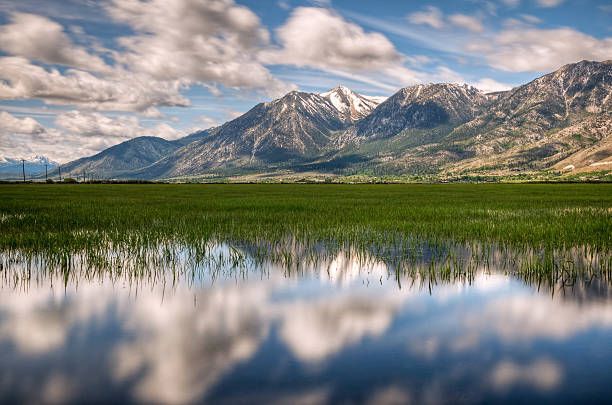
The Carson Valley offers Sierra Nevada views and Lake Tahoe proximity with Nevada’s tax advantages and Douglas County’s lowest-in-state property tax rates
2026 Economic Outlook
- California high-net-worth migration continuing as Bay Area tax burden remains high
- Remote work permanence enabling full relocation rather than just retirement
- Agricultural land preservation limiting new housing supply
- South Lake Tahoe STR restrictions pushing overflow demand into Carson Valley
- Outdoor tourism and paragliding reputation driving short-term rental demand
Investment Climate
Gardnerville is an appreciation-first market with a secondary income story that strengthens for investors who pursue the right strategies. The core thesis rests on three pillars that are unlikely to reverse: California’s ongoing tax burden driving migration, Lake Tahoe’s increasing unaffordability pushing buyers to the valley floor, and agricultural land preservation creating a structural supply ceiling.
- Appreciation-focused returns with 7 to 10% annual growth driven by lifestyle demand and supply constraints
- Douglas County tax advantage improving NOI by $400 to $1,600 annually versus comparable Nevada markets
- STR opportunity tied to Tahoe proximity and Carson Valley tourism, generating premium income for well-positioned properties
- Premium tenant demographic with California migrants paying quality rents on time with low turnover
- Nevada legal environment without any Douglas County regulatory additions, clean and landlord-friendly
The primary challenge: cash flow is typically near neutral to negative with conventional 25% down financing at $525,000 median prices. Investors who buy Gardnerville for cash flow alone will be disappointed. The market rewards investors who understand total return and can sustain a modest carry while appreciation and principal paydown compound over time.
Historical Performance
| Period | Market Driver | Avg Annual Appreciation | Key Event |
|---|---|---|---|
| 2010-2014 | Post-recession recovery, early California migration | 3-5% | Carson Valley recognized as affordable Tahoe alternative |
| 2015-2019 | Bay Area tech wealth migration, Tahoe overflow | 6-9% | Lifestyle market recognition grows, inventory tightens |
| 2020-2022 | Remote work migration, California exodus peak | 16-24% | Carson Valley among fastest-appreciating rural Nevada markets |
| 2023-2024 | Rate normalization, lifestyle demand holding | 5-8% | Market stabilizes at elevated base, quality buyers remain active |
| 2025-2026 | Continued California migration, Tahoe STR restrictions pushing buyers to valley | 7-10% (projected) | Agricultural preservation limits supply, demand grows with California exodus |
Demographic Trends Driving Demand
- California High-Net-Worth Retirees – Bay Area homeowners selling $1.2M to $2M+ homes and buying in Gardnerville for $500,000 to $700,000, banking significant equity while eliminating state income tax. The most powerful demand driver in the market.
- Remote Workers with California Salaries – Tech workers, consultants, and professionals from the Bay Area or LA who can work from anywhere but want Nevada tax savings combined with mountain lifestyle. They pay California-equivalent rents in a Nevada market.
- Tahoe Market Refugees – South Lake Tahoe and Incline Village buyers priced out of those markets who still want lake and mountain access. Gardnerville provides 30 to 40 minute Tahoe access at 40 to 60% lower purchase prices.
- Outdoor Recreation Enthusiasts – Paragliding attracts a global community of pilots to Minden-Tahoe Airport and the Carson Valley launch sites. Hiking, cycling, fishing, and skiing draw year-round outdoor lifestyle seekers.
- Agricultural Lifestyle Seekers – California buyers seeking small ranches, hobby farms, and rural acreage who want Nevada’s tax environment and the valley’s agricultural character.
- Carson City Government Workers – The northernmost segment of the Carson Valley market, similar to Dayton but with a longer commute offset by more attractive lifestyle attributes.
📚 New to real estate investing? Master the fundamentals with our professional course Learn more →
2. Neighborhood Hotspots
Gardnerville Investment Neighborhood Map
Interactive map of Gardnerville and the Carson Valley’s investment neighborhoods. Green stars show top hotspots, blue circles mark established markets, and orange circles highlight emerging areas.
Core Investment Neighborhoods
Detailed Submarket Analysis: Carson Valley Area
| Area | Price Range (SFH) | Cap Rate | Growth Drivers | Best Strategy |
|---|---|---|---|---|
| Central Gardnerville | $490K-$580K | 5.0-6.0% | Carson City commuters, California migrants, amenity access | Buy-and-hold, balanced returns |
| Gardnerville Ranchos / Views | $550K-$750K | 4.5-5.5% | Mountain views, larger lots, premium lifestyle tenant | Appreciation hold, premium rental |
| Minden Adjacent | $500K-$600K | 5.0-6.0% | County seat proximity, professional tenants, government | Professional tenant focus, stable hold |
| Genoa / South Valley | $650K-$1.5M+ | 3.5-5.0% | Premium views, limited inventory, wealthy demographic | Pure appreciation, luxury rental |
| Johnson Lane Area | $450K-$600K | 5.0-6.5% | Larger lots, rural feel, California lifestyle migrants | Value-add, ranchette rental, lifestyle appeal |
| Topaz Lake / South Douglas | $350K-$500K | 5.5-7.5% | Recreation, casino, lake access, STR potential | STR play, recreation rental, lower entry |
Expert Insight: “What people miss about the Carson Valley is the Douglas County tax rate. At 0.5 to 0.6% of assessed value, you are paying $2,600 to $3,200 per year in property taxes on a $530,000 home. In Washoe County or Clark County, you are paying $4,500 to $6,000. That difference goes straight to your net operating income every year without doing anything. Combined with Nevada’s zero income tax and the lifestyle that keeps Californians here long-term, the total return picture is stronger than the entry price suggests.” – Active Douglas County investor
3. Property Types
| Investment Goal | Best Property Type | Best Area | Minimum Capital |
|---|---|---|---|
| Maximum Appreciation | Ranchette or view property | Gardnerville Ranchos, Genoa, South Valley | $150,000+ |
| Balanced Returns | Established SFH, central location | Central Gardnerville, Minden adjacent | $130,000+ |
| Best Income | STR near Tahoe corridor or recreational areas | West Gardnerville, Topaz Lake area | $120,000+ |
| Lowest Entry | Topaz Lake area or value-add older stock | South Douglas County, older Gardnerville | $100,000+ |
Don’t guess the costs. Our Complete Renovation & Remodeling Cost Guide covers 400+ pages of project-by-project breakdowns with real contractor pricing ranges.
4. Cost Analysis
Acquisition Cost Breakdown (Gardnerville)
| Expense Item | Typical Cost | Example ($525,000 Property) | Notes |
|---|---|---|---|
| Down Payment | 25% (investment) | $131,250 | Standard for investment property conventional financing |
| Closing Costs | 2-3% of price | $10,500-$15,750 | Title, escrow, lender fees, recording. Nevada closing costs are reasonable. |
| General Inspection | $400-$600 | $500 | HVAC, roof, insulation. Four-season climate means heating and cooling both matter. |
| Well / Septic Inspection | $500-$900 | $600 | Critical for ranchettes and larger lot properties. Many Gardnerville homes outside city utilities. |
| Irrigation / Water Rights Review | $500-$1,500 | $800 | For agricultural or larger lot properties. Water rights are significant assets in the valley. |
| Initial Repairs / Updates | 0-6% of price | $0-$31,500 | Older homes may need HVAC, roofing, or kitchen updates to achieve premium rents |
| Reserves (6 months) | 6 months expenses | $12,000-$16,000 | Higher reserve for rural or larger lot properties with additional systems |
| TOTAL MINIMUM ENTRY | ~28-32% of value | $155,650-$196,400 | Higher capital requirement than Fernley or Dayton, reflecting premium market |
Sample Cash Flow Analysis: Central Gardnerville 3-Bedroom SFH
| Item | Monthly | Annual | Notes |
|---|---|---|---|
| Gross Rent | $2,100 | $25,200 | 3BR, central Gardnerville, updated, California tenant |
| Less Vacancy (4%) | -$84 | -$1,008 | Low vacancy due to stable California migrant tenant base |
| Property Taxes | -$247 | -$2,963 | ~0.56% of $525K assessed. Douglas County’s advantage. |
| Insurance | -$130 | -$1,560 | Landlord policy. Rural properties may be slightly higher. |
| Property Management (9%) | -$189 | -$2,268 | Carson Valley based management. Options more limited than Reno. |
| Maintenance + CapEx (8%) | -$168 | -$2,016 | Four-season climate. HVAC, roof, and irrigation systems all factor in. |
| Net Operating Income | $1,282 | $15,385 | Before mortgage. Douglas County tax advantage clearly visible. |
| Mortgage ($525K, 25% down, 6.75%, 30yr) | -$1,278 | -$15,336 | Principal and interest on $393,750 loan |
| MONTHLY CASH FLOW | +$4 | +$49 | Essentially breakeven. Douglas County tax rate is what makes this possible. |
| Cap Rate | 2.93% | NOI / Purchase Price | |
| Total Return (8% appreciation) | ~34% | Including equity, appreciation, principal paydown, cash flow |
This example highlights the unique Gardnerville story: Douglas County’s 0.56% property tax rate saves roughly $1,300 to $2,000 annually versus a comparable Washoe or Clark County property. That saving is what pushes the cash flow to near-breakeven rather than the -$300 to -$500 range that Carson City or Reno might show on an equivalent investment. The total return picture, anchored by 8% annual appreciation on a leveraged $525,000 asset, remains compelling despite the thin income margin.
Expert Insight: “Most Nevada investors overlook the property tax difference between counties. On a $525,000 purchase in Douglas County versus Washoe County, you save $1,500 to $2,000 per year in property taxes every single year for as long as you own the property. Over a 10-year hold, that is $15,000 to $20,000 in additional net income before you even consider appreciation. Douglas County’s rate is a structural advantage that does not get priced into most buyers’ analysis until after they have owned here for a few years.” – Nevada CPA and investor
5. Legal Framework
✅ Clean Nevada Environment with Douglas County Specifics
Gardnerville operates under Nevada state landlord-tenant law with Douglas County administrative rules. There are no local rent control ordinances, no additional tenant protections beyond state law, and no city-specific compliance requirements (Gardnerville is an unincorporated community within Douglas County). Investors benefit from Nevada’s straightforward landlord environment alongside Douglas County’s specific considerations around water rights, agricultural zoning, and STR registration.
Nevada State Law Key Points
- Summary Eviction: 7-day notice to pay or quit for non-payment. File for summary eviction with Douglas County Justice Court if tenant does not comply. Uncontested cases resolve in 3 to 4 weeks total.
- No Rent Control: Nevada law preempts all local rent control ordinances. No limits on rent increases with proper notice.
- Rent Increase Notice: 45 days written notice for periodic tenancies. At lease renewal for fixed-term leases.
- Security Deposit: Maximum 3 months’ rent. Return with itemized statement within 30 days of departure.
- No Just Cause Required: 30-day notice to end month-to-month tenancy is sufficient. No cause required.
- Entry Notice: 24-hour advance notice for non-emergency entry.
- No State Income Tax: Nevada’s zero income tax applies to all rental income after federal deductions.
Douglas County Specific Considerations
- Unincorporated Status: Gardnerville is unincorporated. Douglas County planning and building departments govern, not a city government. This simplifies some regulatory interactions.
- STR Registration: Douglas County has a short-term rental ordinance requiring registration, compliance with health and safety standards, and neighbor notification in some cases. Verify current requirements before operating any STR in the county.
- Water Rights: Any agricultural or larger lot purchase should include a water rights review. Senior water rights on irrigated parcels are significant assets and must transfer properly in any sale. A water rights attorney is essential for agricultural acquisitions.
- Zoning and Agricultural: Much of the valley is zoned for agriculture or has agricultural overlays. Verify zoning before any development plan. The Valley’s agricultural preservation policies are a feature for investors (supply constraint) but a consideration for builders.
- Well and Septic: Common outside the main Gardnerville corridor. Douglas County Environmental Health standards apply.
Useful Gardnerville Resources
- Douglas County: douglascountynv.gov
- Douglas County Assessor: douglascountynv.gov/assessor
- Nevada State Engineer (water): water.nv.gov
- Nevada Justice Court: nevadajudiciary.us
| Regulation | Nevada / Douglas County | California Comparison | Investor Impact |
|---|---|---|---|
| Eviction Timeline | 7-day notice, 3-4 weeks uncontested | 60-120+ days minimum | Dramatically faster, lower legal exposure |
| Property Tax Rate | 0.5-0.7% (Douglas County) | 0.7-1.1% (varies) | $1,500-$2,500 annual NOI advantage |
| State Income Tax | None | Up to 13.3% | Major after-tax return improvement for California investors |
| Rent Control | None statewide or locally | Statewide AB 1482 plus local ordinances | Full market rent flexibility |
| STR Regulation | Douglas County registration required | Highly variable, often prohibitive in many markets | Simpler than most California markets, must verify county requirements |
| Water Rights | Prior appropriation doctrine. Water rights are separate property. | Riparian rights in most of California | Critical to verify for any agricultural or larger lot purchase |
6. Step-by-Step Gardnerville Investment Playbook
Choose Your Gardnerville Strategy
Gardnerville supports distinct strategies based on property type and tenant target. Be clear on which you are pursuing before entering the market:
California Migrant Appreciation Hold
Buy a quality SFH in Central Gardnerville or the Ranchos area. Target California remote workers and retirees as tenants. Accept near-neutral cash flow in exchange for 8 to 10% annual appreciation on a quality asset with a premium tenant demographic.
STR Tahoe Overflow Play
Buy a quality furnished home with recreational appeal near the US-395 corridor. Market aggressively to Tahoe visitors, paragliding tourists, and outdoor recreation groups. Requires active management but delivers the highest income yield in the market.
Ranchette Premium Hold
Buy a larger lot property with views or agricultural character. Target the high-income California migrant who specifically came to Nevada for the land and lifestyle. Lowest cap rate but highest appreciation and most differentiated product in the market.
Value-Add Carson Valley
Target dated 1970s and 1980s homes in established Gardnerville neighborhoods. Renovate to modern standards to attract the California migrant tenant at premium rents. Higher risk than other strategies but the best opportunity to improve yield on entry.
Build Your Gardnerville Team
Gardnerville is a small, specialized market. Your team must understand Carson Valley specifically, not just Nevada in general:
- Carson Valley Specialist Agent: Must have investment transaction experience in the Gardnerville-Minden corridor specifically. Ask how many investment sales they have closed in Douglas County in the past 12 months and what their view is on the California migration trend’s impact on the market.
- Property Manager with Valley Experience: Very limited options compared to Reno or Las Vegas. Carson City-based managers sometimes cover the valley. Verify active Douglas County rental portfolio and familiarity with California migrant tenant expectations.
- Water Rights Attorney: Essential for any agricultural or larger lot purchase. Not optional. Water rights mistakes are expensive and can take years to resolve.
- Nevada STR Registration Specialist: If pursuing a short-term rental strategy, work with someone who knows current Douglas County STR ordinance requirements and can walk you through registration.
- Nevada CPA with Agricultural Experience: For any larger lot or ranch property, a CPA who understands agricultural tax treatment, water rights depreciation, and conservation easement opportunities can significantly improve after-tax returns.
Gardnerville-Specific Due Diligence
Physical Due Diligence
- HVAC inspection covering both heating and cooling. True four-season climate demands both systems work well.
- Roof condition and insulation. Mountain proximity and four-season weather accelerate wear.
- Well water testing for mineral content, bacteria, and flow rate if on well water.
- Irrigation system inspection for any agricultural or larger lot property.
- Septic inspection if outside city sewer service area.
- Foundation and grading, particularly for older homes that may have settled in the valley soil.
Legal and Market Due Diligence
- Water rights verification and transfer documentation for any agricultural property.
- Zoning confirmation for intended use including STR, agricultural, or any development plans.
- Douglas County STR permit status and current ordinance requirements if STR is the strategy.
- Agricultural preservation overlay check for development or improvement plans.
- Rental comparable verification from local management or agent, not online estimates.
- Current tenant lease terms and status if buying occupied rental property.
Marketing Your Gardnerville Rental
Gardnerville’s premium tenant demographic requires a targeted marketing approach that differs from typical Nevada rental markets:
- Lead with lifestyle, not just specs: California migrants chose Gardnerville for a reason. Your listing should open with “Sierra Nevada views, 30 minutes to Lake Tahoe, zero Nevada state income tax” before mentioning bedrooms and baths. Sell the life, not the square footage.
- Target California platforms: Sacramento and Bay Area Facebook groups for Nevada movers, LinkedIn for remote workers, Zillow searches filtered for Nevada from California IP addresses. These channels reach your highest-value prospects directly.
- Photography matters more here: Mountain views, agricultural character, and outdoor spaces are worth professional photography investment. A $500 photo shoot that showcases the Sierra Nevada backdrop will attract the $2,200/month California tenant who might scroll past a poorly photographed listing.
- Outdoor recreation language: Mention paragliding, East Fork Carson River access, hiking, and Tahoe skiing proximity in your listings. These draw the outdoor lifestyle demographic that pays premium rents and stays for years.
- Long-term lease incentives: Offer a small rent discount for 24-month leases. California migrants who have relocated are committed for the long term. Locking them in reduces your vacancy and management costs significantly.
7. Financing Options for Gardnerville
| Loan Type | Down Payment | Rate Premium | Best For | Gardnerville Note |
|---|---|---|---|---|
| Conventional Investment | 25% | +0.5-0.75% | Strong W-2 income, good credit | Some Gardnerville SFH properties within conforming limits. Standard product for most purchases. |
| Jumbo Investment | 25-30% | +0.75-1.25% | $650K+ properties including ranchettes and Genoa homes | Needed for premium view properties and Genoa ranches. Local Nevada lenders often more competitive on jumbo terms. |
| Portfolio Loan | 20-30% | +1-2% | Multiple properties, self-employed, rural properties | Good for ranchettes and agricultural properties that may not qualify for agency financing. Local Nevada community banks know the valley. |
| Agricultural Loan | 20-35% | Varies significantly | Larger acreage, farming operations, water rights included | Farm Credit System (AgFirst, others) active in Nevada. Understand terms carefully, structures differ from residential. |
| DSCR Loan | 20-25% | +1.5-2.5% | Self-employed, no income docs | Gardnerville cap rates rarely qualify for DSCR at 1.0x coverage given current rates. Check each property individually. |
| Owner-Occupied then Convert | 5-10% | Standard rate | Moving to Gardnerville from California, buying primary residence | Very common for California migrants. Buy primary with 5 to 10% down, live one year, convert to rental when buying next home. Lowest entry capital. |
Gardnerville Financing Reality: Gardnerville’s cap rates of 4.5 to 6.0% generally do not qualify for DSCR financing at current interest rates. Most investors use conventional or jumbo loans requiring full income documentation. The strong California migrant demand for the market often means buyers are arriving with significant equity from California home sales, reducing the financing burden. Many Gardnerville investment purchases involve a substantial down payment from California home proceeds rather than maximum leverage. This investor profile tends to hold long-term rather than cycling properties quickly.
8. Frequently Asked Questions

Knowledge Quiz: Gardnerville Real Estate Investment
Open Quiz
5 quick questions on what you just learned about Gardnerville investing
1) What is Douglas County’s structural property tax advantage over other Nevada counties?
Answer: C
The guide identifies Douglas County’s 0.5 to 0.7% effective property tax rate as a structural NOI advantage worth $1,500 to $2,000 annually versus comparable properties in Washoe County (Reno) or Clark County (Las Vegas). On the cash flow analysis for a $525,000 property, the annual property tax bill runs approximately $2,963, well below what the same property would cost in other Nevada counties. Over a 10-year hold, this difference compounds to $15,000 to $20,000 in additional net income.
2) What is the primary demand driver the guide identifies as unique to Gardnerville versus Fernley or Dayton?
Answer: A
The guide explicitly distinguishes Gardnerville as a lifestyle market, not a logistics or government employment market like Fernley or Dayton. Demand is driven by California retirees selling $1M+ Bay Area homes, remote workers with California salaries choosing Nevada’s tax advantages, Tahoe refugees priced out of lake markets, and outdoor recreation enthusiasts. This discretionary lifestyle demand supports premium rents and above-average appreciation but makes the market more sensitive to broader economic conditions than employment-anchored markets.
3) What critical legal issue does the guide identify as unique to Gardnerville agricultural and ranchette purchases?
Answer: D
The guide gives extensive coverage to water rights as a non-negotiable due diligence item for any agricultural or larger lot Gardnerville purchase. Nevada uses prior appropriation doctrine and water rights are separate property that can be sold separately from the land. The Carson River decree governs water use in the valley. Senior water rights are significant assets. The guide recommends a Nevada water rights attorney as essential and non-optional for any agricultural acquisition.
4) What does the guide recommend as the primary marketing message for Gardnerville rental listings?
Answer: B
The guide recommends selling the lifestyle first, noting that California migrants specifically chose Gardnerville for the Sierra Nevada views, Tahoe access, and outdoor recreation. The marketing approach should open with lifestyle attributes before mentioning bedrooms or square footage, target California platforms where the highest-value prospects are searching, invest in professional photography that showcases mountain backdrops, and use outdoor recreation language to attract the demographic that will pay premium rents and stay for years.
5) How does the guide characterize Gardnerville’s STR market compared to South Lake Tahoe?
Answer: C
The guide notes that South Lake Tahoe has aggressively restricted short-term rentals with permit caps, moratoriums, and strict compliance requirements. Douglas County’s STR ordinance requires registration and compliance but is described as “more manageable” than most California markets. The guide identifies this regulatory divergence as redirecting STR investor interest to the Carson Valley, and projects that as Tahoe restrictions tighten further, more investors will discover Gardnerville’s positioning as the Tahoe-adjacent STR alternative.
Work With a Local Expert in Gardnerville
We are building a verified network of real estate professionals across every market we cover.

About Our Expert Network
We are finalizing partnerships with verified real estate professionals across every market featured on Builds and Buys. Each expert is selected for hands-on investment experience, local market knowledge, and commitment to helping buyers and investors make sound decisions.
- Proven experience with investment and income-producing properties
- Deep knowledge of local pricing, rental yields, and neighborhood dynamics
- Guidance on financing, legal structure, and due diligence
- Access to off-market and pre-market opportunities
- Full transaction support from search through closing
- Ongoing portfolio and property management referrals
Services Covered
- Property sourcing and acquisition
- Investment analysis and underwriting
- Buyer representation
- Market comparables and valuations
- Short-term and long-term rental strategy
- Value-add and renovation guidance
- Legal and title referrals
- Financing and lender connections
- Property management referrals
- Insurance and inspection referrals
- 1031 exchange coordination
- Exit strategy planning
Get Connected or Join Our Network
Looking for a local expert to help with your investment? We will connect you with the right professional for your market and strategy.
Are you a real estate professional with a track record working with investors? We are always expanding our network.
Contact us at support@buildsandbuys.com
Find Specialized Gardnerville Real Estate Professionals
Ready to Invest in Gardnerville?
Gardnerville is a market defined by structural advantages that are not going away: California’s relentless tax burden driving high-income migration, Lake Tahoe’s unaffordability pushing buyers to the valley floor, and agricultural land preservation creating a supply ceiling that supports prices year after year. Douglas County’s property tax rate, the lifestyle that keeps California migrants here for decades rather than months, and Nevada’s clean legal environment combine to produce a total return story that rewards patient, quality-focused investors. This is not a market for maximum cash flow. It is a market for investors who understand that living in the shadow of the Sierra Nevada commands a premium, and that premium has historically been a very reliable investment.
Continue Your Research
For further guidance, explore our State-by-State Investor guides, browse our expert articles, or follow our Step-by-Step Investment Guide.