Las Vegas Real Estate Investment Guide For 2026
A comprehensive resource for investors looking to capitalize on one of America’s most dynamic, high-growth Sun Belt markets driven by tourism, technology migration, and zero state income tax in 2026
Quick answers: Top 5 most searched Las Vegas investment questions ▼
Migration data: Where people are moving from to Las Vegas ▼
In This Guide
Click on any section to navigate directly to that content
1. Las Vegas Market Overview
Market Fundamentals
Las Vegas stands as one of the most compelling real estate investment cities in North America for 2026, combining genuinely achievable positive cash flow, strong appreciation, zero state income tax, and landlord-friendly law in a single market. From the master-planned luxury of Summerlin and Henderson to the high-yield workforce corridors of North Las Vegas and the emerging arts scene of Downtown, the Las Vegas Valley offers diverse investment opportunities across a wide range of strategies and price points.
Key economic indicators that define Las Vegas’s investment case:
- Population: 680,000+ city proper, 2.3M+ greater metro area
- Major Employers: MGM Resorts, Caesars Entertainment, Wynn Resorts, Amazon, Google, Switch, Nevada Health, UNLV, Reid International Airport
- Median Household Income: $62,000 metro, rising with California migration
- Job Growth: 3.1% annually, well above national average driven by tourism recovery and tech expansion
- No State Income Tax: One of only 9 states without income tax, saving $15,000 to $80,000 annually for California transplants
- Vacancy Rate: Under 5% metro wide, driven by population growth exceeding housing supply
Las Vegas’s economy, once entirely reliant on gaming and hospitality, has diversified significantly into technology, logistics, healthcare, and professional services. The arrival of the Raiders NFL stadium, Allegiant Stadium, the Formula 1 Las Vegas Grand Prix, and the incoming MLB Athletics franchise signals a city repositioning as a tier-one sports and entertainment destination driving sustained population and income growth.
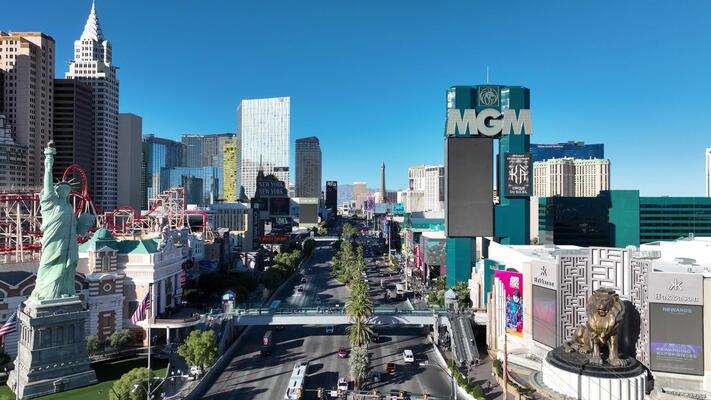
Las Vegas has evolved far beyond gaming into a diversified Sun Belt economy attracting California migration at record rates
2026 Economic Outlook
- Formula 1 Las Vegas Grand Prix expanding global tourism and short-term rental demand
- Oakland Athletics relocation to Las Vegas driving stadium district development
- Switch, Google, and Amazon data center expansions creating tech employment
- Raiders HQ and practice facility anchoring Henderson sports economy
- UNLV medical school expansion growing healthcare sector employment
- I-15 and US-95 corridor logistics growth driven by e-commerce distribution
Investment Climate
Las Vegas offers what few major U.S. markets can in 2026: a genuine path to positive cash flow with conventional financing. While Seattle and Los Angeles investors must accept negative carry hoping for appreciation to compensate, Las Vegas investors in the right submarkets can achieve both. This combination, paired with Nevada’s landlord-friendly legal environment, creates an unusually favorable investment climate.
- Positive cash flow potential in North Las Vegas, East Side, and workforce corridors with 25 percent down
- Appreciation upside driven by California migration, population growth, and economic diversification
- Landlord-friendly law with no rent control, streamlined eviction process, and reasonable tenant protection balance
- Tax efficiency through zero state income tax on rental income and no state capital gains tax
- Accessible entry points with median home prices 55 percent below Los Angeles and 52 percent below Seattle
The primary risks in Las Vegas include economic sensitivity to tourism downturns (as demonstrated in 2020), periodic oversupply in specific submarkets, HOA restrictions on rentals in master-planned communities, and higher property management costs relative to rents in premium areas. Investors who understand the market’s submarket diversity and choose entry points aligned with their strategy consistently outperform.
Historical Performance
| Period | Market Driver | Avg Annual Appreciation | Key Event |
|---|---|---|---|
| 2012-2016 | Post-recession recovery, investor buying | 8-14% | Market rebounded from 2008 lows; institutional buying peaked |
| 2017-2019 | Raiders relocation announced, California migration begins | 9-12% | Allegiant Stadium breaks ground; tech sector emerging |
| 2020-2022 | Pandemic dip then explosive recovery | 15-24% | Remote workers and California exodus; inventory hit historic lows |
| 2023-2024 | Rate normalization, market stabilization | 3-6% | F1 Grand Prix debut; inventory rising but absorption stayed strong |
| 2025-2026 | Rate stabilization, continued migration, sports economy | 6-9% (projected) | Athletics stadium construction driving Henderson and nearby submarkets |
Las Vegas has delivered average annual appreciation of 6 to 8 percent over the last 15 years, with significant variance across cycles. The 2008 crash hit Las Vegas harder than almost any U.S. market, with prices falling 60 percent peak to trough. However, the recovery from 2012 onward has been equally dramatic. A $200,000 Las Vegas property purchased at the 2012 bottom would be worth approximately $520,000 to $580,000 today. Investors who understand cycle timing and submarket selection have consistently outperformed national averages.
Demographic Trends Driving Demand
- California Exodus – Over 50,000 Californians relocate to Las Vegas annually, bringing higher incomes and willingness to pay premium rents while transitioning to homeownership
- Hospitality and Tourism Employment – 300,000+ gaming and hospitality workers create stable, consistent workforce housing demand across all price points
- Sports and Entertainment Economy – Raiders, Knights, WNBA Aces, Formula 1, and incoming Athletics create year-round economic activity and employment
- Remote Worker Influx – No state income tax and low cost of living attract high-income remote workers from coastal metros who rent premium units before buying
- Retiree Population – Nevada’s tax environment and climate attract retirees, generating demand for single-story homes, condos, and age-restricted communities
- Logistics and Warehousing Growth – Amazon, Walmart, and major e-commerce fulfillment centers generate thousands of working-class jobs driving affordable rental demand
📚 New to real estate investing? Master the fundamentals with our professional course Learn more →
2. Neighborhood Hotspots
Las Vegas Investment Neighborhood Map
Interactive map of Las Vegas investment neighborhoods. Green stars show top hotspots, blue circles mark established markets, and orange circles highlight emerging areas.
Core Investment Neighborhoods
Detailed Submarket Analysis: All Las Vegas Valley Neighborhoods
| Neighborhood | Price Range (SFH) | Cap Rate | Growth Drivers | Best Strategy |
|---|---|---|---|---|
| North Las Vegas | $275K-$425K | 5.5-7.0% | Logistics growth, new master-planned communities, affordability | Cash flow focus, workforce housing, positive carry |
| Summerlin | $450K-$900K | 4.0-5.0% | Master-planned luxury, top schools, Red Rock proximity, California transplants | Appreciation play, executive rentals, long-term hold |
| Henderson Green Valley | $400K-$700K | 4.5-5.5% | Family demographics, healthcare jobs, premium retail, top schools | Balanced returns, stable family tenants, buy-and-hold |
| Southwest Las Vegas | $350K-$600K | 5.0-6.0% | Growth corridor, newer construction, Strip proximity, medical district | Newer properties, balanced returns, growth appreciation |
| Henderson Anthem | $400K-$800K | 4.5-5.5% | Golf courses, premium demographics, master-planned stability | Retiree market, stable appreciation, low management |
| Spring Valley | $325K-$500K | 5.0-6.5% | Ethnic diversity, Strip proximity, restaurant corridor, stable workforce | Consistent cash flow, diverse tenant base, buy-and-hold |
| Enterprise / Southern Highlands | $325K-$600K | 5.0-6.5% | Established family areas, good schools, Strip proximity | Family rentals, balanced approach, stable market |
| Downtown Arts District | $200K-$400K | 6.0-8.5% | Urban revitalization, city investment, creative economy, gentrification | Value-add, BRRRR, best urban cash flow, 7+ year hold |
| Sunrise Manor / East Las Vegas | $225K-$375K | 7.0-9.0% | Military base demand, affordable entry, workforce housing | High yield focus, Nellis AFB tenants, value investing |
| Centennial Hills / Providence | $375K-$575K | 4.5-5.5% | Northwest growth corridor, newer housing, top schools, family appeal | Family buy-and-hold, new construction, appreciation corridor |
Expert Insight: “The biggest misconception about Las Vegas investing is that the whole market moves together. It does not. North Las Vegas is essentially a different market from Summerlin, with different tenant profiles, different employment drivers, and different return characteristics. The investors generating the strongest returns right now are those who buy North Las Vegas for cash flow and Summerlin or Henderson for appreciation, building a portfolio that balances both objectives. Chasing one without the other is leaving money on the table.” – Michael Reyes, Principal, Vegas Valley Investment Properties
3. Property Types
| Investment Goal | Best Property Type | Best Neighborhoods | Minimum Capital |
|---|---|---|---|
| Maximum Positive Cash Flow | SFH workforce housing | North Las Vegas, Sunrise Manor, East Las Vegas | $80,000+ |
| Best Long-Term Appreciation | SFH in master-planned community | Summerlin, Henderson, Inspirada | $120,000+ |
| Balanced Returns | SFH in established family suburb | Southwest LV, Spring Valley, Centennial Hills | $100,000+ |
| Highest Event-Driven Returns | STR-eligible condo or SFH | Clark County unincorporated near Strip | $100,000+ |
Don’t guess the costs. Our Complete Renovation & Remodeling Cost Guide covers 400+ pages of project-by-project breakdowns with real contractor pricing ranges.
4. Cost Analysis
Acquisition Cost Breakdown (Las Vegas)
| Expense Item | Typical Cost | Example ($415,000 Property) | Notes |
|---|---|---|---|
| Down Payment | 25% (investment) | $103,750 | Standard investment property requirement |
| Closing Costs | 2-3% of price | $8,300-$12,450 | Title, escrow, lender fees, recording. Nevada transfer tax is modest. |
| General Inspection | $350-$600 | $450 | HVAC inspection especially important in desert climate; units work very hard |
| Roof and Pool Inspection | $200-$400 | $300 | Desert UV degradation hits roofs hard; pool equipment inspections critical if pool present |
| HOA Review | $300-$600 | $400 | Mandatory in master-planned communities. Verify rental policy and pending special assessments. |
| Initial Repairs | 0-8% of price | $0-$33,200 | HVAC, appliances, desert landscaping most common items |
| Reserves (6 months) | 6 months expenses | $10,000-$15,000 | Emergency fund for vacancy and repairs |
| TOTAL MINIMUM ENTRY | ~28-32% of value | $123,200-$165,550 | Much more accessible than Seattle ($252K+) or Los Angeles ($300K+) |
Sample Cash Flow Analysis: North Las Vegas Single-Family Home
| Item | Monthly | Annual | Notes |
|---|---|---|---|
| Gross Rent | $1,700 | $20,400 | 3BR, North Las Vegas, Aliante area, market rate |
| Less Vacancy (5%) | -$85 | -$1,020 | Conservative estimate; actual LV vacancy historically below 5% |
| Property Taxes | -$275 | -$3,300 | ~1% of $330K assessed value; Nevada property tax is low |
| Insurance | -$100 | -$1,200 | Landlord policy; no flood risk; no earthquake zone adds to low rate |
| HOA (if applicable) | -$60 | -$720 | North LV HOA fees typically modest vs. Summerlin or Henderson |
| Property Management (9%) | -$153 | -$1,836 | Competitive management fees; LV has strong PM market |
| Maintenance + CapEx (8%) | -$136 | -$1,632 | HVAC and desert landscaping primary costs; no winter damage |
| Net Operating Income | $891 | $10,692 | Before mortgage |
| Mortgage ($350K purchase, 25% down, 6.75%, 30yr) | -$852 | -$10,224 | Principal and interest on $262,500 loan |
| CASH FLOW | +$39 | +$468 | Near breakeven but positive, rare in today’s market |
| Cap Rate | 3.06% (NOI / Purchase Price) | Actual cash-on-cash is 0.5% at purchase; improves with rent growth | |
| Total Return (8% appreciation) | ~35% | Including equity, appreciation, principal paydown on 25% down |
This example illustrates what makes Las Vegas exceptional compared to most major U.S. markets: a conventional financed investment property producing positive (or near-zero) cash flow. In Seattle, the equivalent property would produce negative $2,000+ per month. In Los Angeles, negative $3,000+. Las Vegas investors build wealth through total return, but without the monthly bleeding that most other major market investors accept as standard.
Ongoing Operating Costs: Las Vegas Specific Items
| Cost Item | Typical Range | Las Vegas Consideration |
|---|---|---|
| HVAC Maintenance | $200-$400/year | Critical in Las Vegas. Units run 6+ months at maximum capacity. Annual tune-ups are mandatory, not optional. Budget for full replacement every 10 to 15 years. |
| Desert Landscaping | $100-$200/month | Nevada water restrictions are tightening. Properties with grass lawns face surcharges and eventual required conversion to desert landscaping. Factor conversion costs into purchase analysis on older properties. |
| Pool Maintenance | $150-$300/month | Properties with pools command 10 to 15 percent higher rents but add $1,800 to $3,600 in annual maintenance. Verify pool equipment age during inspection. |
| HOA Fees | $50-$350/month | The majority of Las Vegas properties are in HOA communities. Fees vary widely: North LV neighborhoods $50 to $100, Summerlin $100 to $250, high-end Henderson communities $200 to $350+. |
| Property Tax | 0.5-1.0% of value | Nevada property taxes are among the lowest in the Western U.S. Clark County effective rate averages 0.6 to 0.8 percent. Primary residences get homestead exemptions; investment properties do not. |
| Roof Maintenance | $500-$2,000/year | Desert UV degrades roofing materials faster than humid climates. Tile roofs (common in LV) have long lifespans but underlayment requires periodic replacement. Inspect at purchase and budget for 20-year replacement. |
Expert Insight: “The number one mistake I see California investors make in Las Vegas is not accounting for HVAC and desert-specific costs. They run numbers based on what they know from San Diego or the Bay Area, where a two-unit house never stresses the AC system. In Las Vegas, an HVAC system that runs 14 hours a day for six months will wear out in 10 to 12 years. Budget $6,000 to $10,000 per unit for HVAC replacement every decade, and factor that into your CapEx reserves from day one.” – Sandra Park, CPA and Real Estate Investor, Henderson, Nevada
5. Legal Framework
✅ Nevada Is One of America’s Most Landlord-Friendly States
Unlike California, New York, or Seattle, Nevada strongly protects property owner rights. There is no statewide rent control, no just cause eviction requirement, and the eviction process typically resolves in 3 to 5 weeks. This legal environment is a primary reason why investors across the country specifically target Nevada as a rental investment destination. Always consult a Nevada-licensed real estate attorney for specific guidance and to stay current with any local ordinances.
Nevada Landlord-Tenant Law Overview
Nevada Revised Statutes Chapter 118A governs residential landlord-tenant relationships statewide. Key investor-favorable provisions:
- No Rent Control: Nevada law prohibits local governments from enacting rent control ordinances. Landlords may raise rent to market rate with proper notice. No cap on the amount of increase.
- No Just Cause Eviction Requirement: At lease end, Nevada landlords can choose not to renew for any legal reason with proper notice. No requirement to justify non-renewal.
- Streamlined Eviction Process: Non-payment evictions start with a 5-day pay-or-quit notice. Summary eviction hearings are available and move quickly. Total process typically 3 to 5 weeks for uncontested cases.
- Security Deposits: Maximum 3 months rent. Must return within 30 days of move-out with itemized deductions. Normal wear and tear cannot be deducted.
- Rent Increase Notice: 45 days written notice required for rent increases. No restriction on frequency or amount of increase.
- Lease Termination: Month-to-month tenancies require 30 days notice from either party. Annual leases expire at term end without required cause for non-renewal.
Las Vegas Specific Considerations
While Nevada state law is favorable, the City of Las Vegas and Clark County have added specific requirements investors must know:
- Business License: All rental properties in the City of Las Vegas require a City Business License ($200 to $500/year depending on units). Clark County unincorporated areas have their own license requirement.
- Short-Term Rental Permits: City of Las Vegas requires an STR permit and enforces proximity restrictions. Many residential HOAs prohibit STRs. Always verify by specific address.
- Lead Paint Disclosure: Required for all pre-1978 construction, as under federal law.
- HOA Rules: Many Las Vegas properties are in HOA-governed communities. HOA rules can restrict rental activity, tenant approval, parking, pets, and exterior modifications. Review HOA documents before purchase.
- Habitability Standards: Nevada requires landlords to maintain functional HVAC in residential rentals, which is critical given desert temperatures. Failure to maintain cooling in Las Vegas summers can constitute a lease breach.
- Water Sub-Metering: Some properties have master-metered water. If tenants pay water, proper sub-metering and disclosure is required.
Useful Nevada Resources
- Nevada Revised Statutes Chapter 118A: leg.state.nv.us
- City of Las Vegas Business License: lasvegasnevada.gov
- Clark County Assessor: assessor.clarkcountynv.gov
- Nevada Real Estate Division: red.nv.gov
| Regulation | Nevada Requirement | California Comparison | Investor Impact |
|---|---|---|---|
| Rent Control | Prohibited statewide | AB 1482 limits increases to 5% + CPI | Full market rent adjustment rights; massive advantage |
| Eviction (Non-payment) | 5-day notice; 3 to 5 weeks total | 3-day notice; often 3 to 6 months total | Fast, predictable; dramatically reduces risk |
| Eviction (No Cause) | 30-day notice for month-to-month; not required at lease end | Just cause required in many jurisdictions | Full flexibility at lease renewal decision |
| Rent Increases | 45 days notice; no cap on amount | 90 days notice; capped at 5% + CPI (max 10%) | Unrestricted rent growth to market rate |
| Security Deposit | Up to 3 months rent; 30 days to return | 2 months rent max; 21 days to return | Higher deposit ceiling provides better tenant risk coverage |
| State Income Tax on Rent | None | Up to 13.3% | Full rental income kept; enormous long-term wealth advantage |
6. Step-by-Step Las Vegas Investment Playbook
Define Your Las Vegas Strategy
Las Vegas is rare among major U.S. cities in that it genuinely supports multiple distinct strategies. Choose yours before buying:
Cash Flow First
Buy workforce housing in North Las Vegas, Sunrise Manor, or East Las Vegas. Target 5.5 to 7 percent cap rates and genuine positive cash flow with 25 percent down. Prioritize stable employment sectors: logistics, military, hospitality. Best for investors who want income today without large reserves for negative carry.
Appreciation Play
Buy in Summerlin, Henderson, or Inspirada master-planned communities. Accept lower cap rates (4 to 5 percent) in exchange for premium tenant quality, lower management intensity, and consistent 8 to 11 percent annual appreciation driven by California migration and new development activity.
Value-Add / BRRRR
Buy dated 1980s or 1990s homes in Spring Valley, older Henderson, or East Las Vegas. Update kitchens, bathrooms, HVAC, and desert landscaping. Increase rents 25 to 40 percent. Refinance at new value and repeat. Works best with contractor relationships and local market knowledge.
Short-Term Rental (Event-Driven)
Purchase in Clark County unincorporated areas near the Strip. Leverage Las Vegas’s 42 million annual visitors, Formula 1, Super Bowl, New Year’s Eve, and major boxing events for premium rates. Requires business license, active management, and careful HOA and zoning verification before purchase.
Build Your Las Vegas Team
Las Vegas is a market where having the right local team dramatically accelerates your results. Key team members:
- Las Vegas Investor-Specialist Agent: Must understand the difference between the HOA and non-HOA investment landscape, have access to off-market inventory, and be familiar with short-term rental permit zones if that is your strategy.
- Nevada Real Estate Attorney: For entity setup (LLC is strongly recommended for Nevada investment properties), lease template review, and any eviction proceedings.
- Las Vegas Property Manager: Look for managers who specialize in residential investment properties and have documented experience with the specific submarkets you are buying in. Ask specifically about their HVAC vendor relationships and response times in summer months.
- Nevada-Licensed CPA: To optimize depreciation strategy, entity structure, and maximize the benefit of Nevada’s zero income tax environment, particularly for investors relocating from high-tax states.
- Reliable HVAC Contractor: Non-negotiable in Las Vegas. Establish the relationship before you need emergency service in August.
Expert Tip: When interviewing Las Vegas property managers, ask specifically: “What is your summer HVAC emergency response protocol?” and “How many of your managed properties had HVAC failures last August and what was the average resolution time?” A manager who cannot answer these questions clearly does not operate at the standard your investment requires in a desert climate.
Las Vegas Specific Due Diligence
Standard due diligence items plus these Nevada-critical checks:
Physical Due Diligence
- HVAC inspection and age documentation. Replacement budget if over 10 years old.
- Roof inspection; tile roofs common in LV. Verify underlayment condition, not just tile surface.
- Pool and pool equipment inspection if property has a pool
- Water heater age and condition; Las Vegas hard water accelerates deterioration
- Desert landscaping compliance; verify water features and grass are within current Clark County water regulations
- Foundation check for expansive soil movement, common in Las Vegas Valley clay soils
- Window and door seal condition; desert UV degrades seals and affects HVAC efficiency
Regulatory and HOA Due Diligence
- Obtain and review full HOA CC&Rs before submitting any offer. Verify rental policy, waiting lists, and any current special assessments.
- Confirm rental permit eligibility if STR is planned; verify by address with City of Las Vegas or Clark County
- Review HOA meeting minutes for past 2 years for planned special assessments or maintenance issues
- Check Clark County records for any open code violations on the property
- Verify business license requirements for the specific jurisdiction (City LV, North LV, Henderson, or Clark County unincorporated)
- Confirm school district boundaries if targeting family tenants; attendance boundaries matter to tenants
Competing and Managing in Las Vegas
Strategies for acquisition and long-term management success in Las Vegas:
- Move quickly: Well-priced Las Vegas investment properties move in 7 to 21 days. Have financing pre-approved and be prepared to submit offers immediately on properties meeting your criteria.
- New construction incentives: Las Vegas builders regularly offer rate buydowns and closing cost credits that significantly improve cash flow in the first years of ownership. Work with an agent who has builder relationships and can negotiate incentive packages.
- Tenant screening: Nevada’s favorable eviction laws make thorough upfront screening less critical than in California, but a systematic process (credit, income at 3x rent, rental history verification) still protects your investment and reduces turnover costs.
- Summer preparation: Ensure HVAC systems are serviced before May each year. A summer HVAC failure in Las Vegas constitutes a habitability violation and can trigger lease termination rights. Budget $300 to $600 for annual preventive maintenance per unit.
- Rent pricing: Use Rentometer, Zillow Rental Manager, and local PM comparables to stay at market rent. Nevada’s no-rent-control environment means you can and should adjust to market annually. Leaving rent below market more than one cycle significantly impacts long-term returns.
7. Financing Options for Las Vegas
| Loan Type | Down Payment | Rate Premium | Best For | Las Vegas Note |
|---|---|---|---|---|
| Conventional Investment | 25% | +0.5-0.75% | Strong W-2 income, good credit | Most LV properties fall within conforming limits; no jumbo required unlike Seattle or LA |
| DSCR Loan | 25-30% | +1-2% | Investors who want no income verification; LLC borrowing | Unlike Seattle, LV’s higher cap rates mean many properties qualify at 1.0x DSCR; viable option here |
| Portfolio Loan | 20-25% | +0.75-1.5% | Multiple properties; self-employed investors | Western Alliance, Nevada State Bank, and regional lenders offer competitive portfolio products |
| House Hacking (FHA) | 3.5% | Standard + MIP | Owner-occupying one unit of a 2-4 unit property | Best entry point for new investors with limited capital; duplexes available in older LV neighborhoods |
| VA Loan | 0% | Below market | Veterans and active military; must occupy | Nellis AFB creates strong military buyer and renter market. Veterans can buy-occupy-rent strategy after 1 year occupancy. |
| New Construction Builder Financing | 5-20% | Below market (buydown) | New construction buyers | Major LV builders offer 2-1 or permanent rate buydowns significantly improving first-year cash flow |
| Hard Money (Bridge) | 15-25% | 8-12% rate | BRRRR acquisitions; competitive cash offers | Several Las Vegas hard money lenders active; useful for value-add acquisition before refinancing |
Las Vegas Financing Advantage: Unlike Seattle or Los Angeles where most investment properties cannot qualify for DSCR loans due to sub-1.0x coverage ratios, many Las Vegas properties, especially in North Las Vegas and workforce corridors, generate enough rental income to meet DSCR requirements. This opens up LLC-level borrowing without income documentation for investors building larger portfolios. Combined with Nevada’s zero income tax, this creates a significantly more favorable environment for scaling a real estate portfolio than most comparable Sun Belt markets.
8. Frequently Asked Questions

Knowledge Quiz: Las Vegas Real Estate Investment
Open Quiz
5 quick questions on what you just learned about Las Vegas investing
1) What is the most landlord-favorable aspect of Nevada’s rental law compared to California?
Answer: B
Nevada prohibits local rent control ordinances statewide, has no just cause eviction requirement at lease end, and processes evictions in 3 to 5 weeks for non-payment. Compared to California’s 3 to 6 month eviction timeline, AB 1482 rent caps, and just cause protections, Nevada is dramatically more landlord-friendly, which is a primary reason California investors target Nevada for rental properties.
2) Which Las Vegas neighborhood does the guide identify as offering the best positive cash flow for conventional investors in 2026?
Answer: A
North Las Vegas is highlighted throughout the guide as the metro’s best cash flow market. Entry points of $275,000 to $425,000 paired with rents of $1,600 to $1,900 per month can produce near-breakeven or positive cash flow with 25 percent down financing, which is genuinely rare among major U.S. markets in 2026.
3) What critical HOA due diligence step does the guide say is mandatory before purchasing any Las Vegas investment property?
Answer: C
The guide emphasizes that Las Vegas HOA rental policies range from fully permissive to complete prohibition. Some communities have rental caps with waiting lists where you could close on a property and wait 12 to 24 months before legally renting it. The CC&Rs must be reviewed in full before any offer. Getting verbal confirmation is not sufficient; written confirmation from HOA management is required.
4) What does the guide identify as the most important Las Vegas-specific maintenance cost that investors from other markets typically underestimate?
Answer: D
The guide’s expert insight specifically calls out HVAC as the number one mistake California investors make when analyzing Las Vegas properties. Systems that run at maximum capacity for 6 months in desert heat wear out in 10 to 12 years, requiring $6,000 to $10,000 per unit for replacement. This cost must be built into CapEx reserves from day one and is not something investors from temperate climates typically budget for.
5) Why can Las Vegas investors often use DSCR loans when Seattle investors typically cannot?
Answer: B
Seattle properties typically generate NOI well below their debt service costs due to 3 to 4.5 percent cap rates combined with 6.5 percent+ mortgage rates, meaning debt service coverage ratios below 1.0x and disqualification from DSCR loans. Las Vegas properties at 5.5 to 7 percent cap rates can cover their debt service at 1.0x or above, making DSCR financing viable. This allows investors to borrow under LLCs without income documentation, a significant advantage for portfolio scaling.
Work With a Local Expert in Las Vegas
We are building a verified network of real estate professionals across every market we cover.

About Our Expert Network
We are finalizing partnerships with verified real estate professionals across every market featured on Builds and Buys. Each expert in our network is selected for their hands-on investment experience, local market knowledge, and commitment to helping buyers and investors make sound decisions.
Our local specialists offer:
- Proven experience with investment and income-producing properties
- Deep knowledge of local pricing, rental yields, and neighborhood dynamics
- Guidance on financing, legal structure, and due diligence
- Access to off-market and pre-market opportunities
- Full transaction support from search through closing
- Ongoing portfolio and property management referrals
Services Covered
- Property sourcing and acquisition
- Investment analysis and underwriting
- Buyer representation
- Market comparables and valuations
- Short-term and long-term rental strategy
- Value-add and renovation guidance
- Legal and title referrals
- Financing and lender connections
- Property management referrals
- Insurance and inspection referrals
- 1031 exchange coordination
- Exit strategy planning
Get Connected or Join Our Network
Looking for a local expert to help with your Las Vegas investment? Reach out and we will connect you with the right professional for your market and strategy.
Are you a real estate professional with a track record working with investors in Las Vegas? We are always expanding our network of verified local experts.
Contact us at support@buildsandbuys.com
Find Specialized Las Vegas Real Estate Professionals
Ready to Invest in Las Vegas?
Las Vegas is one of the few major U.S. markets where investors can realistically target positive cash flow, strong appreciation, zero state income tax, and landlord-friendly law simultaneously. The key is entering the right submarket for your strategy, understanding the HOA landscape, and building a local team that knows the desert-specific operational requirements of managing Nevada investment properties. Investors who master these fundamentals have consistently generated some of the strongest risk-adjusted returns available anywhere in North America.
Continue Your Research
Nevada State Guide
See how Las Vegas compares to Reno, Henderson, Carson City, and other Nevada markets.
Step-by-Step Invest
Complete framework for building a real estate investment strategy from scratch.
144-Lesson Course
University-level real estate education covering financing, law, strategy, and management.
For further guidance, explore our State-by-State Investor guides, browse our expert articles, or follow our Step-by-Step Investment Guide.