
Island Park Idaho Real Estate Investment Guide For 2026
A comprehensive resource for investors targeting America’s premier Yellowstone gateway vacation rental market, where world-class Henry’s Fork fly fishing, 500+ miles of groomed snowmobile trails, and 4 million annual Yellowstone visitors converge in one of Idaho’s most dramatic natural settings
Quick answers: Top 5 most searched Island Park investment questions ▼
Visitor data: Who visits Island Park and why ▼
1. Island Park Market Overview
⚠️ Remote Market, Vacation Rental Focus: Island Park is one of Idaho’s most remote investment markets (80 miles from Idaho Falls, 300+ miles from Boise) with a permanent population of approximately 200 to 300 people. There is no meaningful long-term rental market. This is an entirely vacation rental-driven investment, with income from Yellowstone visitors, Henry’s Fork anglers, snowmobile groups, and hunters/wildlife viewers. Investors must have a reliable local property management and maintenance network before purchasing. Self-management from distance is not viable for most investors.
Market Fundamentals
Island Park is a community in Fremont County, Idaho, along Highway 20 in the shadow of the Continental Divide at approximately 6,300 feet elevation. It encompasses several distinct communities: Macks Inn in the north (closest to Yellowstone), Last Chance and Harriman Ranch area (fly fishing hub), Island Park Village and Shotgun Valley (central area), and Elk Creek to the south. The community is best understood as a collection of vacation cabin communities rather than a single town. Its claim to unique geographic distinction is its main street: at 33 miles, Island Park Boulevard (Highway 20) is technically the longest “main street” in America. What matters for investors is what sits at both ends: Yellowstone National Park to the northeast and the Henry’s Fork fly fishing corridor throughout.
Key fundamentals:
- Yellowstone Proximity: 18-25 miles from the west entrance near Macks Inn; Yellowstone receives 4-5 million visitors annually
- Henry’s Fork: One of the world’s most famous trout streams; world-class fly fishing throughout the Island Park area
- Snowmobiling: 500+ miles of groomed trails; America’s premier snowmobile destination
- Hunting: Greater Yellowstone ecosystem; elk, moose, deer hunting in fall
- Elevation: 6,300 feet; deep, reliable winter snow; cold springs and falls
- Fremont County: No STR restrictions; permissive vacation rental environment
- No permanent resident rental market: 90%+ of Island Park housing is vacation/seasonal use
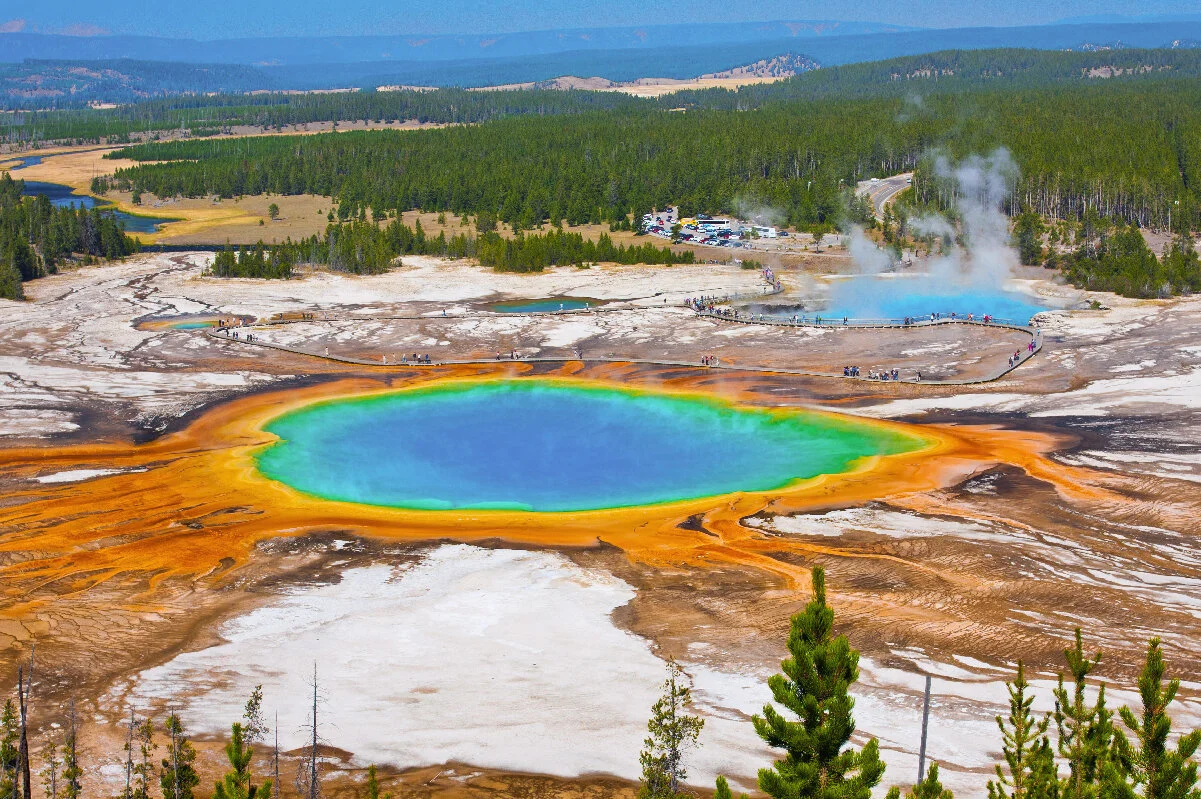
Island Park sits in the Greater Yellowstone ecosystem, offering three distinct demand seasons for STR investors
Island Park vs. Donnelly: Key Differences
- Yellowstone: Island Park only; no equivalent elsewhere in Idaho
- Henry’s Fork: World-famous fly fishing; brings international visitors
- Winter: Snowmobiling (not skiing); different guest demographic than Tamarack
- Fall: Island Park has meaningful fall hunting/wildlife season; Donnelly does not
- Remoteness: Island Park is 4+ hours from Boise vs. 1.5 hours for Donnelly; different feeder market
- Price: Island Park runs $320K-$500K+ for cabin properties, similar range to Donnelly
Island Park’s Three-Season Revenue Profile
☀️ Summer (June-August)
Primary season. Yellowstone visitation, fly fishing, and wildlife viewing peak. July 4 and mid-August weeks are fully booked months in advance. $180-$320/night for 3BR cabins at 70-85% occupancy. Highest revenue season by a significant margin.
❄️ Winter (Jan-Mar)
Snowmobile season. January and February are peak months. Large groups of 8-16 book entire cabins for 3-5 nights at $200-$300/night. Less predictable than summer due to snow variability. Adds 25-35% to annual revenue.
🍂 Fall (Sep-Oct)
Hunter/wildlife season. September elk and moose hunters; October Yellowstone wildlife migration. $140-$200/night at 35-50% occupancy. Island Park’s unique third season that Donnelly lacks. Adds 10-15% to annual revenue.
🌧️ Spring (Apr-May)
Weakest season. Snowmobile season over, summer not started, fishing not peak. Revenue near zero for many weeks. Mud season at high elevation. Plan financially for 4-6 weeks of near-zero occupancy. Maintain reserves accordingly.
Why Island Park is Unique Among Idaho STR Markets
- Yellowstone proximity is irreplaceable; no other Idaho market has this
- Henry’s Fork brings international fly fishing visitors annually
- Three distinct demand seasons (summer, winter, fall) prevent hard income cliffs
- National, not regional, visitor origin: Yellowstone guests come from across the US and internationally
- Snowmobile trail network and infrastructure is already built; no development risk
- Fremont County permissive STR environment with no regulatory uncertainty
Honest Operational Challenges
- Remote location (80+ miles from Idaho Falls) makes self-management impractical
- Very few professional STR managers specifically serving Island Park
- 6,300 feet elevation; deep snow; winter property damage risk without maintenance
- Spring shoulder is genuinely dead; 4-6 weeks of near-zero revenue
- Very thin inventory; finding the right property requires patience and local knowledge
- Highway 20 closes in severe weather; snow access is not always guaranteed
📚 New to real estate investing? Master the fundamentals with our professional 144-lesson course Learn more →
2. Investment Zones
Island Park Investment Zone Map
Interactive map of Island Park’s primary investment zones along the Highway 20 corridor from the Yellowstone entrance to Ashton.
Primary Investment Zones
Expert Insight: “The Macks Inn area has changed materially in the past 10 years. When I first started managing properties there, most guests were regional Idaho and Utah families who came because it was cheap and close to Yellowstone. Now I regularly get bookings from California, Texas, and the East Coast, and even international guests who want to see Yellowstone without paying Yellowstone lodge prices. Those guests have higher expectations, they write more detailed reviews, and they pay for quality. The properties that have invested in professional furnishings and kitchen equipment earn 30 to 40% more than the equivalent cabin with dated finishes just down the road. Guest expectations at Island Park have moved significantly upmarket, and the investors who have not matched that shift are leaving money on the table.” – Jennifer Morse, Greater Yellowstone Vacation Properties
3. Property Types
Yellowstone Gateway Cabin (Macks Inn)
The premium Island Park product. 3 to 4 bedroom cabin within 20 to 30 minutes of Yellowstone’s west entrance. Captures national and international Yellowstone visitor demand. These properties have the most consistent occupancy and the highest peak-week rates in Island Park. Purchase prices of $420,000 to $700,000+ are the highest in the area but generate the strongest annual revenue.
Henry’s Fork River Access Cabin
Properties adjacent to or with easy access to the Henry’s Fork, especially the Last Chance and Box Canyon sections. Fly fishing guests pay 20 to 40% premium for river access and book longer stays (4 to 7 nights). These properties also benefit from summer Yellowstone demand but have a distinct fishing guest demographic that travels from around the world and becomes loyal repeat customers.
Snowmobile-Ready Group Cabin
Properties with snowmobile trail access and sufficient space for groups of 8 to 14 guests. Large cabins with 4 to 5 bedrooms earn the highest per-stay revenue in Island Park during January and February snowmobile season. A well-positioned 5BR cabin earns $400 to $600/night from snowmobile groups paying $50 to $80 per person per night. Winter heating systems and snow management are critical.
Budget / Value Entry Cabin
Older or more simply appointed cabins in central or south Island Park at $290,000 to $400,000. These properties generate $18,000 to $28,000 gross annually with lower peak-week rates. Entry-level Island Park exposure for budget-conscious investors. Often need renovation to compete on Airbnb/VRBO platforms, but the renovation investment generates outsized revenue returns in a demand-constrained market.
Three-Season Premium Cabin
Properties positioned to capture all three Island Park seasons: Yellowstone proximity in summer, snowmobile access in winter, and hunting/wildlife access in fall. The ideal Island Park investment: diversified across three demand drivers reduces seasonality risk significantly. Typically requires a central Island Park location with reasonable access to all three demand corridors.
Large Group / Event Cabin (5-7BR)
Larger properties accommodating 12 to 20 guests generate the highest absolute revenue in Island Park. Family reunion groups, corporate retreats, fishing party groups, and snowmobile expeditions all book large Island Park cabins at $500 to $900+/night. These properties require significant management investment but deliver the market’s highest gross annual revenue of $55,000 to $80,000+ for the best-positioned large cabins.
Our Complete Renovation & Remodeling Cost Guide covers 400+ project types including high-altitude cabin and vacation home work.
4. STR Revenue Analysis
Three-Season Revenue Breakdown: 3BR Central Island Park Cabin
| Season | Period | Nightly Rate | Occupancy | Available Days | Revenue |
|---|---|---|---|---|---|
| Peak Summer | Jun 15 – Aug 31 | $230 | 72% | 77 | $12,769 |
| Spring / Early Summer | May 15 – Jun 14 | $155 | 38% | 30 | $1,767 |
| Peak Winter (Jan-Feb) | Jan 1 – Feb 28 | $195 | 60% | 59 | $6,903 |
| Fall (Sep-Oct) | Sep 1 – Oct 31 | $165 | 42% | 61 | $4,224 |
| Holiday Weeks | Jul 4, Dec 26-Jan 1, other holidays | $295 | 95% | 28 | $7,842 |
| Winter Dec + Mar | Dec 1-25, March | $160 | 30% | 55 | $2,640 |
| Deep Off-Season (Apr, Nov) | April, November | $110 | 12% | 60 | $792 |
| GROSS ANNUAL | Blended $206 | Blended 43% | 370 available | $36,937 |
Full P&L: 3BR Central Island Park Cabin at $400,000
| Item | Monthly Avg | Annual | Notes |
|---|---|---|---|
| Gross STR Revenue | $3,078 | $36,937 | Three-season gross; before all fees |
| STR Management Fee (25%) | -$769 | -$9,234 | Island Park/Fremont County area management; 20-28% typical |
| Platform Fees + Cleaning + Supplies | -$390 | -$4,680 | Airbnb fees + professional cleaning + restocking |
| Utilities + Internet | -$240 | -$2,880 | Higher at elevation; winter heating significant; year-round cost |
| STR Insurance | -$165 | -$1,980 | STR commercial policy; verify snow load and remote location coverage |
| Property Taxes | -$190 | -$2,280 | Fremont County ~0.60-0.65% of assessed value |
| Maintenance + CapEx + Snow Mgmt (8%) | -$247 | -$2,957 | High elevation adds cost; snow removal, roof maintenance, pipe protection essential |
| Net STR Income | $1,077 | $12,926 | Before mortgage; STR cap rate 3.23% on $400K |
| Mortgage ($400K, 25% down, 6.75%, 30yr) | -$2,243 | -$26,921 | $300,000 loan at 6.75% |
| CASH FLOW | -$1,166 | -$13,995 | Negative carry; appreciation + revenue thesis required |
| Total Return (8% appreciation) | ~16% | $32K equity – $14K carry = $18K net on $100K invested | |
| Macks Inn Premium (Yellowstone zone) | STR gross $46K-$52K | Yellowstone-adjacent at $450K-$500K can materially improve the carry picture vs this model |
The model shows -$1,166/month carry on a central Island Park cabin. This is consistent with Donnelly and similar to Hayden. The key difference from Donnelly is the maintenance cost: at 6,300 feet elevation with deep winter snows, 8% for maintenance and CapEx is more appropriate than the 6% used for lower-elevation properties. Snow removal, pipe freeze prevention, roof maintenance, and the wear from extreme seasonal temperature swings add real cost. Investors who underbudget for maintenance at Island Park’s elevation regularly face unpleasant surprises. The vacation home loan strategy (10-15% down for personal use buyers) can substantially improve the cash flow picture by reducing the mortgage principal.
Fremont County Transient Occupancy Tax: Idaho does not have a uniform statewide short-term rental tax, but Fremont County may apply a room or occupancy tax to STR revenue. Airbnb and VRBO typically collect and remit applicable local taxes automatically in Idaho, but verify this with your property manager and accountant before projecting net revenue. Tax rates of 3 to 8% effectively reduce your gross revenue by that percentage and should be reflected in your pro-forma modeling.
5. Legal Framework
✅ Fremont County: Zero STR Regulations, Pure Idaho State Law
Fremont County and the Island Park area have no short-term rental ordinances, permits, registration requirements, density caps, or minimum stay requirements as of 2026. This is one of Idaho’s most permissive STR environments. Idaho Code Title 55 statewide landlord-tenant law applies for any long-term component. STR operators have near-complete operational freedom limited only by HOA restrictions on specific properties and transient occupancy tax obligations.
STR Legal Environment
- No STR Permits: Fremont County requires no operating license or permit as of 2026. Verify directly with Fremont County before investing; STR regulations change.
- No Density Caps: No ordinance limits how many STRs can operate in any area; Yellowstone corridor is exempt from the urban STR restriction trend.
- National Forest Adjacent: Many Island Park properties are near or adjacent to Targhee National Forest. Federal land boundaries affect what guests can access and what activities are permitted. Confirm property boundary vs. national forest boundary on any rural Island Park property.
- Yellowstone Proximity Note: Yellowstone is federal land with its own regulations. Island Park properties are not inside the park. Verify that your marketing accurately describes proximity without implying park lodging status.
High-Elevation Property Specifics
- Septic Systems: Many Island Park properties are on septic. High-elevation septic systems have specific failure modes from freeze-thaw cycles. Inspect thoroughly and confirm winter freeze prevention systems.
- Well Water: Properties on private wells need annual testing and freeze prevention for water lines exposed to extreme cold.
- Fire Risk: Greater Yellowstone ecosystem has significant wildfire exposure. Confirm insurance coverage includes wildfire; confirm defensible space compliance.
- Wildlife: Bear, moose, and other large wildlife visit Island Park properties regularly. Guests must be informed; locking bear containers or bear-proof trash storage may be required in some areas near the park.
- Snowmobile Trail Easements: Some properties are adjacent to groomed snowmobile trail corridors; confirm trail easements and any access rights issues before purchasing.
6. Island Park Investment Playbook
Choose Your Island Park Demand Thesis
Yellowstone Gateway (Macks Inn)
Buy in the Macks Inn area for maximum summer revenue. Yellowstone demand is national, consistent, and growing. Accept premium purchase prices for maximum STR income. Most predictable revenue profile.
Henry’s Fork Fly Fishing
Buy near Last Chance for international fly fishing demand. Longer stays, repeat annual guests, premium rates. Fishing season (June-October) is the primary driver with some snowmobile winter supplementing.
Three-Season Diversified
Buy centrally for access to Yellowstone visitors, snowmobile trail system, and hunting corridor. Lower per-season peak revenue than Yellowstone gateway but more evenly distributed annually. Best risk-adjusted profile.
Personal Use + STR
Buy for personal hunting, fishing, and Yellowstone access; rent when not using. Hybrid model reduces STR revenue but provides personal enjoyment. Idaho/Utah families with outdoor recreation affinity most common buyer profile here.
Build Your Island Park Team Before Buying
This step is more important in Island Park than in any other market in this guide series. The remoteness and specialization of the Island Park market means that buying without a team in place is genuinely reckless. The following must be in place before closing:
- Local STR Property Manager: Either an Island Park-based operator or an Ashton/Idaho Falls-based company with confirmed Island Park properties under management. Ask for their current Island Park booking performance on AirDNA. A manager 80 miles away who has never managed a Fremont County property is not an Island Park manager.
- Emergency Maintenance Contact: A licensed plumber, electrician, and HVAC technician reachable within 2 to 4 hours of any Island Park property. Pipe bursts at 6,300 feet in January are emergencies; the nearest large city is 80 miles away.
- Snow Removal Service: Contracted snow removal before you close. Deep island Park winters with 150+ inches of annual snowfall require regular clearing of driveways, decks, and roof rakes. Guest access is impossible without it.
- Island Park Area Agent: An agent who has specifically closed vacation cabin transactions in the Island Park/Fremont County area. Macks Inn cabin values are not comparables for Last Chance river access properties; local expertise matters here more than in any urban Idaho market.
- Idaho CPA with STR Experience: Same critical need as Donnelly. Remote location, federal land adjacency, and hunting/fishing permit related issues create unique tax planning needs for Island Park STR investors.
Island Park-Specific Due Diligence
Property Checks
- Septic inspection and winter freeze protection verification
- Well water quality test and winter freeze protection for supply lines
- Roof structure inspection for snow load capacity (150+ inches annual snowfall)
- Heating system: adequate BTU capacity for 6,300-foot elevation winters
- National Forest boundary: confirm property boundary vs. adjacent federal land
- Wildfire defensible space compliance
- Snowmobile trail easement review if trail-adjacent
Revenue and Market Checks
- Request 2 to 3 years of actual STR revenue statements if property is an existing STR
- Pull AirDNA or Mashvisor data for the specific Island Park zone before buying; Macks Inn and Last Chance are different markets
- Verify winter road access and snowmobile trail connectivity from your specific property address
- Henry’s Fork river access: confirm fishing rights, public access points, and distance to prime water if targeting fishing guests
- Fremont County room tax compliance check on existing STR properties
Optimize for Island Park’s Unique Guest Mix
- Yellowstone Marketing: List on Airbnb, VRBO, and Hipcamp with “Yellowstone National Park gateway” as the lead description. Include driving time to the west entrance in your listing. Yellowstone guests specifically search for lodging near the park; your proximity is your headline.
- Fly Fishing Amenities: Rod holders, wader-drying racks, fish cleaning station, and local fishing guide contact cards convert fishing visitors into repeat annual guests. Fly fishing guests are the most loyal repeat guests in the Island Park market.
- Snowmobile Guest Infrastructure: Covered snowmobile storage or easy off-loading area, boot and suit drying systems, and a mud room or entry area where wet gear can be managed without tracking into the cabin interior. Snowmobile groups are large and messy; properties that accommodate this reality earn better reviews and more repeat business.
- Annual Repeat Guest Program: Island Park’s most valuable guests become annual visitors. Create a simple repeat guest discount structure (10% off for returning guests who book direct) and communicate it in your check-out message. A guest who books 5 nights per year at $230/night for 6 consecutive years generates $6,900 in guaranteed revenue with zero marketing cost.
7. Financing Options for Island Park
| Loan Type | Down Payment | Rate | Best For | Island Park Note |
|---|---|---|---|---|
| Vacation Home Loan | 10-15% | Slightly above primary | Personal use + STR hybrid investors | Same strategy as Donnelly. 10-15% down saves $35,000-$60,000 in required capital on a $400,000 property vs. 25% investment loan. Requires genuine personal use intent. |
| Conventional Investment | 25% | +0.5-0.75% | Pure STR investors, no personal use | Most Island Park cabins are within conforming limits. Rural and septic/well properties may need portfolio lenders. Appraisals in thin Island Park market can be challenging; budget 2-4 weeks for remote rural appraisal completion. |
| DSCR (STR Income) | 20-25% | +1.5-2.5% | Self-employed; uses projected STR income | Some DSCR lenders use AirDNA market revenue for Island Park STR qualification. Particularly useful for existing STR properties with revenue history. Shop specifically for lenders with vacation rental STR experience in rural Idaho markets. |
| Portfolio / Rural Loan | 20-30% | +1-2% | Septic/well rural properties | Rural properties on septic and well with limited comparable sales may be non-warrantable. Idaho Central Credit Union and local community banks in Idaho Falls and Rexburg hold rural Fremont County portfolio loans. |
Appraisal Reality in Island Park: Remote vacation cabin markets like Island Park have genuinely difficult appraisal environments. Comparable sales can be months or years old; the thin inventory means that two cabins a half mile apart can be truly different markets depending on river access, snowmobile trail proximity, or Yellowstone distance. Budget extra time (2 to 4 weeks beyond normal appraisal timelines) for remote Fremont County appraisals. Consider ordering an independent appraisal before making an offer on a highly priced Island Park property to confirm you are paying within the supportable market range. Properties with claimed STR revenue histories should be appraised on income approach, not just sales comparison.
8. Frequently Asked Questions

Knowledge Quiz: Island Park Idaho Vacation Rental Investment
Open Quiz
5 quick questions on Island Park STR investing and the Yellowstone gateway market
1) What makes Island Park’s STR demand fundamentally different from Donnelly’s?
Answer: D
Donnelly’s demand is primarily regional: Boise Metro families within 1.5 hours who want a ski or lake weekend getaway. Island Park’s demand transcends regional markets. Yellowstone visitors come from across the US and internationally; Henry’s Fork fly fishers travel from the UK, Japan, and Australia specifically for that water; snowmobile groups come from Utah, Idaho, and the Pacific Northwest. This national/international demand makes Island Park less cyclically dependent on regional economic conditions and more resilient to local market downturns.
2) What is the most important operational requirement the guide identifies for Island Park investors specifically?
Answer: B
The guide identifies building the local team before purchasing as the most critical Island Park-specific step, and the reason is Island Park’s distance: 80 miles from Idaho Falls, 300+ miles from Boise. A pipe burst at -20°F in January requires someone on-site within hours, not days. A missed snow removal can make a property inaccessible for guest check-in. The guide specifically states that buying Island Park without a confirmed local PM, maintenance contacts, and snow removal service is genuinely reckless, not just suboptimal. This is more emphatic than the equivalent warning for any other market in the Idaho series.
3) Why does the guide specifically highlight the fall season (September-October) as a distinct Island Park STR advantage?
Answer: A
The guide’s seasonal analysis identifies four revenue periods for Island Park, with fall (September-October) being the third distinct revenue season that Donnelly and most other Idaho STR markets lack entirely. The Greater Yellowstone ecosystem’s fall concentration of wildlife, the elk and moose hunting season, and the Yellowstone fall foliage and migrating wildlife viewing create 35 to 50% occupancy at $140 to $200/night. This fall revenue adds 10 to 15% to annual income and prevents the hard September income cliff common in summer-only markets. The only “dead” season in Island Park is April-May spring mud season.
4) Why does the guide apply an 8% maintenance and CapEx budget for Island Park properties vs. 5-6% for lower-elevation Idaho markets?
Answer: C
The guide explicitly addresses Island Park’s elevation costs as a distinct budget item. With 150 to 200+ inches of annual snowfall, roofs require raking to prevent ice dams and structural overload. Driveways need regular snow removal. Pipes exposed to -20°F nights freeze and burst without prevention systems. Year-round utility costs are $2,400 to $3,600 vs. $1,200 to $1,800 at lower elevations. The extreme seasonal temperature swings (from -20°F to 85°F+) accelerate wear on exterior materials, sealants, and roofing. All of these add real operating cost that underbudgeting investors at Island Park regularly discover through expensive surprises.
5) What does the guide identify as Island Park’s most resilient demand driver compared to other Idaho STR markets?
Answer: B
The guide identifies Yellowstone’s national and international visitor base as Island Park’s most resilient demand driver. Yellowstone visitation has grown for decades and is driven by travelers from across the US and internationally who plan Yellowstone trips regardless of regional economic conditions or whether it is a good ski season or bad snow year. Donnelly’s ski demand is vulnerable to poor snow seasons. Island Park’s snowmobile demand is also snow-dependent. But Yellowstone visitors book regardless of snow conditions; they come for geysers, bison, and wolves, not snow. This makes Island Park’s summer Yellowstone revenue the most resilient income stream in Idaho’s vacation rental market.
Work With a Local Expert in Island Park
We are building a verified network of real estate professionals across every market we cover.

About Our Expert Network
Our Island Park specialists are selected for their Fremont County vacation property transaction experience and their knowledge of the Yellowstone gateway, Henry’s Fork fly fishing, and snowmobile market dynamics that drive Island Park STR performance.
- Yellowstone gateway Macks Inn zone market expertise
- Henry’s Fork river access evaluation and fishing property positioning
- Fremont County STR management referrals with Year-round Idaho vacation properties
- High-elevation property due diligence: septic, well, snow load, freeze prevention
- Vacation home vs. investment property financing guidance for remote properties
Get Connected or Join Our Network
Contact us at support@buildsandbuys.com
Find Island Park Real Estate Professionals
Ready to Invest in Island Park?
No other location in Idaho offers what Island Park offers. Yellowstone National Park is not just a visitor attraction; it is a perpetual demand generator that has grown for decades and will continue growing as long as people want to see geysers and bison. The Henry’s Fork is not just a stream; it is a world destination that brings anglers from every continent. The snowmobile trail network is not infrastructure under construction; it has been operating for decades and it draws more riders every year. Island Park requires operational seriousness that no other Idaho market demands quite as emphatically. But for investors who are willing to build that operational foundation before buying, Island Park is the most uniquely positioned vacation rental investment in the state. Nothing else in Idaho can say “gateway to Yellowstone.” Nothing else can say “world-class Henry’s Fork fly fishing.” Those are not marketing claims. They are facts that have been generating visitor dollars for decades and will keep generating them.
Continue Your Research
Idaho State Guide
Compare Island Park to every Idaho market and see how the Greater Yellowstone ecosystem fits the statewide investment picture.
Donnelly Guide
Compare Island Park to Donnelly, Idaho’s other major vacation rental market, to choose the right recreational demand profile for your strategy.
144-Lesson Course
Master vacation rental investing, seasonal revenue management, remote property operations, and Mountain West resort market strategy.
For further guidance, explore our State-by-State Investor guides, browse our expert articles, or follow our Step-by-Step Investment Guide.



