Kuna Idaho Real Estate Investment Guide For 2026
A comprehensive resource for investors targeting one of the Boise Metro’s fastest-growing family communities, offering Ada County appreciation potential at a 25 to 30% discount to Meridian prices
Quick answers: Top 5 most searched Kuna investment questions ▼
Migration data: Who’s moving to Kuna and why ▼
In This Guide
Click any section to navigate directly
1. Kuna Market Overview
Market Fundamentals
Kuna is a rapidly growing city in Ada County located approximately 20 miles south of Boise and 12 miles south of Meridian. It is one of the fastest-growing communities in Idaho, absorbing families and young professionals who want Boise Metro access at prices meaningfully below what Meridian and Eagle now command. Kuna’s critical differentiator from Canyon County alternatives like Nampa and Caldwell is its Ada County address, which means it participates directly in Boise’s property tax structure, Ada County school quality perceptions, and the same underlying appreciation drivers that have made the Boise Metro one of America’s strongest regional real estate markets for two decades.
Key economic indicators defining Kuna’s investment case:
- Population: 25,000+ city proper, growing 6 to 8% annually
- County: Ada County, same as Boise, Meridian, Eagle, and Garden City
- Major Employers (commuter base): St. Luke’s Health, St. Alphonsus, Micron Technology, HP Inc., Clearwater Paper, City of Boise, Ada County
- Median Household Income: $72,000, above Canyon County average and growing
- Median Age: 29 years old, young family-dominated community
- New Construction Dominance: 60%+ of current housing is built since 2010
- Price vs. Meridian: 25 to 30% discount for equivalent square footage and finish level
The Kuna investment story is fundamentally about one thing: timing the compression of the price gap between Kuna and Meridian. As Kuna adds commercial anchors, improves its road network, and its school district reputation strengthens, the justification for paying a 25 to 30% premium to live in Meridian instead of Kuna erodes. Investors who buy during the current transition phase are positioned to capture that gap-closing as an additional layer of appreciation on top of the underlying Boise Metro growth trajectory.
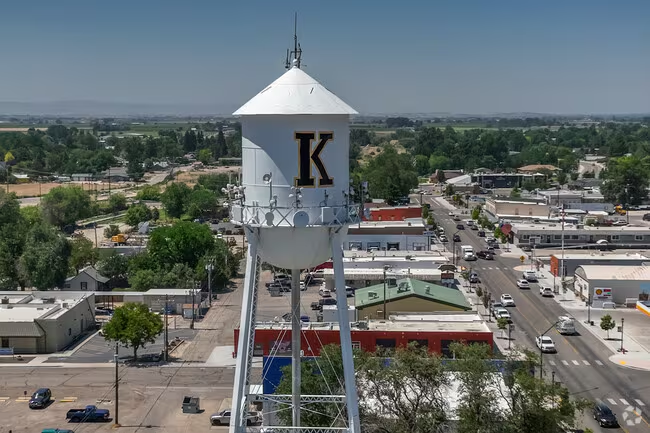
Kuna sits 20 miles south of Boise in Ada County, offering Boise Metro fundamentals at a 25 to 30% price discount to Meridian
2026 Growth Catalysts
- New grocery and retail anchors reducing residents’ commute dependency on Meridian
- Master-planned communities with parks, trails, and community amenities
- Ada County infrastructure investment in Kuna Road and Ten Mile interchange
- Kuna Joint School District expanding facilities to match population growth
- Growing roster of local dining, services, and small businesses replacing bedroom-community feel
Kuna’s Place in the Boise Metro Pecking Order
| City | County | Median Price | Typical Yield | Appreciation Tier | Best For |
|---|---|---|---|---|---|
| Boise (North End) | Ada | $650K+ | 3-4.5% | High / Mature | Long-term appreciation, luxury rentals |
| Meridian | Ada | $530K | 4-5% | Strong / Established | Family buy-and-hold, lower management |
| Kuna | Ada | $390K | 4.5-5.5% | Strong / Growing | Gap-compression appreciation play, patient investors |
| Nampa | Canyon | $420K | 5-6.5% | Solid / Growing | Balanced cash flow and appreciation |
| Caldwell | Canyon | $355K | 5.5-7% | Moderate / Improving | Cash flow-first, multi-family |
Kuna occupies a unique position: it is priced comparably to Canyon County cities (Nampa, Caldwell) but sits in Ada County with the superior long-term appreciation fundamentals that come with it. This combination of Canyon-level entry prices with Ada-level appreciation potential is the core Kuna investment thesis. The gap to Meridian is not random, it reflects Kuna’s current stage of infrastructure development, and it is compressing.
Historical Performance
| Period | Market Driver | Avg Annual Appreciation | Key Event |
|---|---|---|---|
| 2010-2015 | Post-recession recovery, agricultural heritage | 3-5% | Kuna begins attracting Boise families priced out of Boise |
| 2015-2019 | Boise Metro growth spillover, new construction begins | 8-12% | Master-planned subdivisions launch; Kuna becomes a recognized Boise Metro submarket |
| 2020-2022 | Pandemic migration, in-migration surge, remote work | 20-30% | Kuna among Idaho’s fastest appreciating submarkets; inventory collapses |
| 2023-2024 | Rate normalization, volume pullback | 3-6% | Prices hold while transaction volume drops 40%+; builders offer incentives on new construction |
| 2025-2026 | Rate stabilization, continued in-migration, infrastructure investment | 8-12% (projected) | Commercial anchors opening, Ada County infrastructure commitments driving renewed momentum |
The Honest Investment Case for Kuna
Why Kuna Works
- Ada County address means superior appreciation fundamentals vs. Canyon County alternatives at similar price points
- Genuine 25 to 30% discount to equivalent Meridian property that is likely to compress as Kuna matures
- High-quality family tenant demographic with long tenure, reliable payment records, and low property damage
- New construction dominance means low maintenance costs during hold period
- Builder incentive programs (rate buy-downs, closing cost contributions) can reduce effective purchase cost
- Idaho’s landlord-friendly laws apply fully, no Ada County additions
Honest Limitations
- Cash flow is generally negative at current prices and rates; this is an appreciation-first market, not a cash flow market
- Bedroom community status means some residents may leave if major Meridian employment shifts
- Infrastructure lag: some areas have growing pains with traffic, utilities, and services behind residential growth
- Investment thesis requires patience: the Meridian gap compresses over years, not months
- New construction rental competition is high; multiple properties may compete for the same family tenant in any given season
📚 New to real estate investing? Master the fundamentals with our professional 144-lesson course Learn more →
2. Neighborhood Hotspots
Kuna Investment Neighborhood Map
Interactive map of Kuna’s investment neighborhoods. Green stars show top hotspots, blue circles mark established markets, and orange circles highlight emerging areas.
Core Investment Neighborhoods
Detailed Submarket Analysis: Kuna Neighborhoods
| Neighborhood | Price Range | Cap Rate | Growth Drivers | Best Strategy |
|---|---|---|---|---|
| NE Kuna / Meridian Border | $390K-$530K | 4.5-5.5% | Meridian proximity, commute advantage, new construction | Long-term family buy-and-hold |
| Master-Planned / Quartz Creek | $400K-$560K | 4.5-5% | Community amenities, trails, parks, premium family appeal | New construction passive buy-and-hold |
| Central / Kuna Road Corridor | $360K-$490K | 4.5-5.5% | Commercial access, mix of ages, improving amenities | Balanced buy-and-hold, moderate value-add |
| Historic Downtown / Core | $320K-$430K | 4.5-5.5% | Affordability, value-add upside, downtown proximity | Value-add, BRRRR, lower entry |
| South Kuna / Farmway Road | $375K-$560K | 4-5% | Larger lots, rural appeal, horse-property market | Lifestyle property, large-lot family hold |
| North Kuna / Ten Mile Growth | $375K-$510K | 4-5% | Growth corridor, infrastructure investment, lowest entry | Speculative long-term appreciation play (7-10 yr) |
Expert Insight: “Investors who compare Kuna to Nampa purely on cap rate are making the wrong comparison. Kuna is in Ada County. When you buy in Kuna you are buying into the same property tax base, the same school district quality reputation pipeline, and the same appreciation fundamentals as Meridian. You’re just buying at a discount because the restaurant and retail amenity gap is still real. That gap is closing. The investors who bought northeast Kuna in 2017 and 2018 got Meridian-level appreciation on Canyon County-level initial prices. I expect the same story for north and northeast Kuna over the next five to seven years.” – Jessica Park, Ada County Investment Properties
3. Property Types
| Investment Goal | Best Property Type | Best Location | Minimum Capital |
|---|---|---|---|
| Best Appreciation | New construction near Meridian border | NE Kuna, master-planned communities | $105,000+ |
| Best Entry Price | Value-add older SFH | Historic core, central corridor | $90,000+ plus renovation |
| Best Cash Flow | Builder incentive new construction or mid-term furnished | Active builder communities | $100,000+ |
| Lowest Management | New construction 4BR, master-planned | Master-planned communities, NE Kuna | $110,000+ |
Get accurate cost estimates before you commit. Our Complete Renovation & Remodeling Cost Guide covers kitchen, bathroom, flooring, and 30+ other project categories with real contractor pricing ranges.
4. Cost Analysis
⚠️ Honest Cash Flow Context: Kuna is primarily an appreciation-focused market. At current prices and interest rates, conventional-financed SFH investments in Kuna will generally produce negative monthly cash flow of $400 to $700 per month. This is better than Boise or Meridian by $200 to $400, but it is still negative. The investment thesis rests on total return including appreciation, not month-to-month income. Investors who need cash flow from day one should look at Caldwell, Nampa, or Rexburg instead.
Acquisition Cost Breakdown (Kuna)
| Expense Item | Typical Cost | Example ($390,000 Property) | Notes |
|---|---|---|---|
| Down Payment | 25% (investment) | $97,500 | House hack via FHA at 3.5% if owner-occupying |
| Closing Costs | 2-3% | $7,800-$11,700 | Builder may contribute 2-3% toward closing on new construction |
| Inspection | $350-$500 | $425 | New construction inspections should include pre-drywall phase if possible |
| Initial Setup (if resale) | $0-$15,000 | $2,000-$8,000 | Paint, carpet, minor cosmetics to attract quality tenants faster |
| Reserves (6 months) | 6 months PITI | $15,000-$18,000 | More critical here given negative monthly carry; maintain larger reserves |
| TOTAL MINIMUM ENTRY | ~32-36% | $122,000-$152,000 | Higher reserves recommended given negative carry |
Sample Cash Flow Analysis: 4BR New Construction in NE Kuna
| Item | Monthly | Annual | Notes |
|---|---|---|---|
| Gross Rent | $2,050 | $24,600 | 4BR 2-bath, NE Kuna, new construction, quality family tenant |
| Less Vacancy (5%) | -$103 | -$1,230 | Family tenants average 3-5 year stays; actual vacancy often lower |
| Property Taxes | -$215 | -$2,580 | Ada County ~0.73% of $355K assessed value |
| Insurance | -$105 | -$1,260 | Landlord policy on new construction |
| Property Management (10%) | -$195 | -$2,340 | Ada County management fees: 8-10% of collected rent |
| Maintenance + CapEx (5%) | -$97 | -$1,168 | New construction; 5% conservative for first 5 years |
| Net Operating Income | $1,335 | $16,022 | Before mortgage |
| Mortgage ($410K purchase, 25% down, 6.75%, 30yr) | -$1,994 | -$23,928 | $307,500 loan at 6.75% |
| CASH FLOW (market rate) | -$659 | -$7,906 | Negative carry; total return thesis required |
| CASH FLOW (builder rate buy-down to 5.75%) | -$363 | -$4,356 | Builder incentive mortgage at 5.75%: $1,797/month |
| Cap Rate | 3.91% | NOI / Purchase Price | |
| Total Return (10% appreciation) | ~18% | After cash flow cost: equity + appreciation on leveraged basis |
This analysis illustrates both the challenge and the opportunity. At market rate financing, Kuna requires a monthly subsidy of $659, which reduces but does not eliminate the total return case if appreciation runs at 9 to 11% annually. Builder incentive financing cuts that shortfall nearly in half to $363 per month, which many investors absorb against the appreciation upside. The key insight: an investor buying a $410K Kuna home at 10% annual appreciation sees $41,000 in equity growth per year, against a $7,900 annual cash flow cost. The net annual return in that scenario exceeds 16% on the $122K invested, even with negative monthly carry.
Total Return Context: Investors evaluating Kuna should calculate total return, not just monthly cash flow. A $410,000 Kuna property at 10% annual appreciation generates $41,000 in equity growth in year one alone. Even after the $7,900 annual cash flow cost, the net return on a $122,000 total capital investment exceeds 27% in year one if appreciation holds. Over a 7-year hold at 8% average annual appreciation, a $410K Kuna property reaches approximately $703,000, representing $293,000 in equity growth against a total cash flow cost of approximately $55,000. The math works for long-term investors who enter with sufficient reserves.
5. Legal Framework
✅ Ada County Adds Zero Restrictions on Top of Idaho’s Already Landlord-Friendly State Law
Kuna and Ada County follow Idaho Code Title 55 statewide landlord-tenant law with no additional local landlord ordinances, rental registration programs, or just cause eviction requirements. Despite being in the same county as Boise, Ada County does not have the type of progressive landlord regulations found in tenant-protective metros elsewhere. Kuna landlords operate with the same legal simplicity as any other Idaho city outside Seattle-equivalent regulatory pressure.
Idaho Landlord-Tenant Law: Key Provisions
- No Rent Control: Idaho Code preempts rent control statewide. No Ada County or Kuna ordinance can limit rent increases. Landlords adjust rents freely at renewal with proper notice.
- No Just Cause Requirement: Leases can be non-renewed at expiration without explanation. 30-day notice terminates month-to-month tenancies.
- 3-Day Pay or Quit: Non-payment of rent triggers a 3-day notice. Average Ada County eviction timeline is 21 to 35 days for uncontested cases.
- No Source of Income Protection: Kuna landlords can legally decline Section 8 vouchers and screen on payment source.
- Security Deposit: No statutory cap. Return within 21 days with itemized statement.
- No Rental Registration: No permits, inspections, or registration required in Kuna or Ada County.
- No STR Restrictions: Kuna has no short-term rental ordinance as of 2026.
- HOA Considerations: Master-planned community HOAs in Kuna may have rental restrictions; review CC&Rs before closing on any HOA property.
HOA Alert: New Construction Due Diligence
The majority of new construction in Kuna’s master-planned communities carries HOA memberships. Unlike government regulations, HOA restrictions are private contractual obligations that can include:
- Rental caps: Some Kuna HOAs limit the percentage of homes that can be rented at any time (typically 15 to 25%). If the cap is reached, you may not be able to rent your property legally until a spot opens.
- Tenant approval requirements: Some HOAs require tenant approval or background checks separate from your screening process.
- STR prohibitions: HOAs can and do prohibit short-term rentals even where city law is silent.
- Lease term minimums: Some HOAs require minimum 6 or 12-month leases, eliminating mid-term rental strategies.
⚠️ Required Due Diligence: Request the full CC&Rs, bylaws, and any rental policy documents from every Kuna HOA community before making an offer. Confirm the current rental cap status with the HOA management company, not just the listing agent. This one step prevents the most common and most serious mistake new Kuna investors make.
| Regulation | Idaho / Kuna (State Law) | Possible HOA Addition | Investor Impact |
|---|---|---|---|
| Rent Control | None statewide | N/A (HOAs cannot limit rent) | Full flexibility on rent adjustment |
| Rental Cap | No restriction | HOA may cap at 15-25% rentals | CRITICAL: Verify cap availability before buying in HOA communities |
| Eviction | 3-day notice, 21-35 day process | N/A (HOAs do not affect eviction) | Fast resolution, lower legal cost |
| STR | No city restrictions | HOA may prohibit STR | Check HOA before pursuing STR strategy |
| Lease Terms | No minimum term required | HOA may require 6 or 12 month minimum | May restrict mid-term rental strategy |
| Registration | None required | HOA may require tenant notification | Minor administrative step only |
6. Step-by-Step Kuna Investment Playbook
Define Your Kuna Strategy
Kuna is a single-strategy market for most investors: long-term appreciation with a managed negative carry. The variation is in entry approach and timeline.
New Construction / Passive Hold
Buy builder-new in a master-planned community or NE Kuna. Leverage builder incentives for rate buy-down. Hire a PM and hold for 7 to 10 years. Minimal active involvement required.
Value-Add / BRRRR
Buy distressed older home in central or historic Kuna. Renovate to modern family standards. Refinance at improved ARV to extract equity. Repeat with extracted capital.
Mid-Term Furnished Rental
Buy new construction near Boise Metro employment corridors. Furnish and market for 30+ day corporate and healthcare stays. Premium rents reduce or eliminate negative carry while maintaining appreciation upside.
Builder Incentive Capture
Target active builder communities offering rate buy-downs and closing cost contributions. Current incentives can reduce effective purchase cost by $15K-$30K and cut monthly carry by $200-$400. Time purchases around builder quarter-end and year-end incentive peaks.
Build Your Kuna Team
- Ada County Investment Agent: Should have specific Kuna transaction experience. Ask about builder relationships and incentive programs they have recently closed. A Boise-only focused agent may not know the Kuna new construction market well enough to identify the best builder incentive deals.
- Property Manager with Kuna Family Housing Experience: Family SFH management in Kuna is less complex than student housing or workforce housing, but finding a PM who actively manages Kuna properties reduces the learning curve significantly. Ada County management fees run 8 to 10%.
- Builder Representative Relationships: For new construction, develop relationships with onsite sales agents at the communities you’re targeting. They will alert you to incentive windows and price adjustments before they go public.
- Idaho CPA: Depreciation strategy, entity structuring, and Ada County property tax appeal procedures worth professional guidance before your first purchase.
- HOA Documents Reviewer: For any HOA property, have your agent or attorney review the full CC&Rs with specific attention to rental caps, tenant approval requirements, and STR prohibitions before making any offer.
Kuna-Specific Due Diligence
New Construction Checks
- Builder reputation: review online forums and Boise-area investor groups for builder quality and warranty follow-through
- Pre-drywall inspection if possible: catch structural, electrical, and plumbing issues before they’re covered
- HOA rental cap status: confirm current utilization vs. cap before closing
- Lot premium analysis: corner lots, backing to open space, south-facing yards all command rental premiums
- Infrastructure timeline: verify road, school, and commercial access is committed, not speculative
Resale and Value-Add Checks
- Full structural inspection; Kuna has some expansive soil risk; verify foundation and drainage
- Irrigation water rights check if property has landscaping irrigation system
- Ada County Assessor records for actual tax history and assessment accuracy
- Verify current rent comps within half-mile using Zillow, Rentometer, and PM market data
- Zoning check for any planned nearby development that could affect desirability
- School boundary confirmation: school districts matter to family renters and should be verified precisely
Operate Successfully and Manage the Carry
Managing Negative Cash Flow Responsibly
Kuna’s negative carry requires a specific financial management approach that investors from cash flow markets often underestimate:
- Reserve Fund: Maintain a minimum of 12 months of negative carry plus 3 months of mortgage payment as a combined reserve. For a -$600/month property, that means $7,200 in carry reserves plus $6,000 in mortgage reserves = $13,200 minimum emergency fund.
- Rent Review Annually: Idaho’s freedom to raise rents means diligent landlords narrow the gap each year. A 6 to 8% annual rent increase on the Kuna market reduces negative carry by $100 to $150 per month per year. After 4 to 5 years, the property may approach break-even even without refinancing.
- Tax Benefits: Depreciation on a $390K+ property generates $12,000 to $14,000+ in annual paper depreciation that offsets ordinary income for investors who qualify. Work with an Idaho CPA to maximize this benefit.
- Refinancing Timeline: As appreciation builds equity and if rates decline, a cash-out refinance at a lower rate can simultaneously extract equity for another purchase and reduce monthly payments. Model this into your hold strategy from day one.
7. Financing Options for Kuna
| Loan Type | Down Payment | Rate | Best For | Kuna Note |
|---|---|---|---|---|
| Builder Rate Buy-Down | 5-10% (owner) / 20-25% (investor) | 5.5-6.25% (current incentive) | New construction buyers; primary priority | Most valuable Kuna-specific financing option. Saves $200-$400/month vs. market rate. Ask every builder community about current incentive programs. |
| Conventional Investment | 25% | +0.5-0.75% premium | W-2 investors, good credit, resale purchases | All Kuna properties within conforming limits. Standard approach for resale SFH acquisitions. |
| FHA House Hack | 3.5% | Standard + MIP | First-time investors willing to live in property | Kuna does not have large multi-family stock, but owner-occupying a home while converting a basement ADU is a viable Kuna entry strategy |
| DSCR Loan | 20-25% | +1.5-2.5% | Self-employed investors | Challenging in Kuna given cap rate vs. rate spread; likely requires 30%+ down to qualify at 1.0x DSCR |
| Hard Money / Bridge | 15-25% | 8-12% | Value-add BRRRR projects in older Kuna | Use for fast close on distressed properties; refinance to conventional after renovation stabilizes |
| Idaho Housing Programs | 3-3.5% | Below market | Owner-occupied only, income limits | Idaho Housing and Finance Association programs benefit owner-occupant house hackers in Kuna |
Builder Incentive Strategy: The single most powerful financing tool for Kuna investors right now is builder-funded rate buy-downs on new construction. Builders like Toll Brothers, Hubble Homes, and Hayden Homes are actively competing for buyers with incentive packages that can include permanent rate buy-downs to 5.5 to 6.25%, $10,000 to $20,000 in closing cost contributions, and free upgrades worth $15,000 to $30,000. Quarter-end and year-end are historically the best times to negotiate maximum incentive packages. Investors who time their new construction purchase to coincide with a builder incentive peak can reduce their effective all-in cost by $30,000 to $50,000 compared to buying between incentive periods.
8. Frequently Asked Questions

Knowledge Quiz: Kuna Idaho Real Estate Investment
Open Quiz
5 quick questions on what you just learned about Kuna investing
1) What is the primary investment thesis for buying in Kuna rather than Caldwell or Nampa?
Answer: C
Kuna’s key advantage over Canyon County alternatives is its Ada County address, which ties it to the same appreciation fundamentals as Boise and Meridian. The current 25 to 30% discount to equivalent Meridian properties reflects Kuna’s current stage of commercial infrastructure development. As that infrastructure matures and the bedroom community discount erodes, investors who bought during the transition phase capture above-average appreciation on top of the underlying metro growth trajectory.
2) What is the most critical due diligence step unique to buying new construction in a Kuna master-planned community?
Answer: A
HOA rental caps are the most commonly overlooked and most consequential issue in Kuna master-planned community purchases. Some HOAs limit the percentage of homes that can be rented (typically 15 to 25%). If the cap is at capacity when you close, you legally cannot rent the property until a spot opens. Always request and review the full CC&Rs, bylaws, and rental policy documents from the HOA management company directly, not from the listing agent, before making any offer on a HOA property.
3) How does the guide describe the typical monthly cash flow on a new construction 4BR Kuna home at conventional financing rates?
Answer: D
The guide’s detailed cash flow analysis shows a 4BR Kuna home at $410K generating approximately -$659/month at 6.75% market rate financing. Builder incentive rate buy-downs to 5.75% reduce that to approximately -$363/month. The guide explicitly frames Kuna as an appreciation-first market where negative carry is accepted against the total return case, and recommends investors who need positive cash flow look at Caldwell, Nampa, or Rexburg instead.
4) What is the most effective financing strategy unique to the Kuna new construction market?
Answer: B
Builder-funded rate buy-downs are Kuna’s most powerful financing tool. Builders like Toll Brothers, Hubble Homes, and Hayden Homes are offering permanent rate buy-downs to 5.5 to 6.25% (versus 6.75%+ open market) plus closing cost contributions worth $10,000 to $20,000 and upgrade packages worth $15,000 to $30,000. Quarter-end and year-end are historically the best times to negotiate maximum incentive packages. The total incentive value can reach $30,000 to $50,000, materially improving the investment economics.
5) What type of investor profile does the guide say Kuna works BEST for?
Answer: C
The guide explicitly states that Kuna is not suitable for cash flow-first investors or those who need properties to cover expenses from month one. The ideal Kuna investor has other income or cash flow assets, plans a 5+ year hold, and views the property primarily as an appreciation vehicle. Kuna’s strength is in long-term total return driven by Ada County appreciation fundamentals and the ongoing compression of the Meridian price gap.
Work With a Local Expert in Kuna
We are building a verified network of real estate professionals across every market we cover.

About Our Expert Network
Our Kuna specialists are selected for their specific experience in Ada County investment property acquisition, new construction builder relationships, and family SFH management. Every expert has closed investment transactions in Kuna and understands the HOA landscape across active builder communities.
- Direct builder relationships and access to pre-launch incentive information
- Knowledge of rental cap status across all major Kuna HOA communities
- Investment analysis including total return modeling, not just cap rate
- Property management referrals with Ada County family housing track records
- HOA document review guidance and CC&R interpretation
Get Connected or Join Our Network
Contact us at support@buildsandbuys.com
Find Specialized Kuna Real Estate Professionals
Ready to Invest in Kuna?
Kuna is not a cash flow market and investors who approach it expecting Rexburg or Caldwell yields will be disappointed. But for investors who understand what it actually is, an Ada County appreciation play at Canyon County prices, it offers something genuinely compelling: access to the Boise Metro’s long-term growth story at a 25 to 30% discount to Meridian, with a maturing infrastructure trajectory that points directly toward gap compression. The ideal Kuna investor enters with patience, adequate reserves, and a clear understanding that total return is the metric, not monthly income. For that investor, Kuna’s combination of Ada County fundamentals, improving community infrastructure, high-quality family tenant demographics, and available builder incentives makes it one of the most strategically interesting sub-$400K markets in the western United States.
Continue Your Research
Idaho State Guide
See how Kuna fits into Idaho’s complete investment picture from the Boise Metro to North Idaho and Eastern Idaho markets.
Meridian Guide
Understand the established market Kuna is converging toward, including Meridian’s neighborhood dynamics and long-term appreciation track record.
144-Lesson Course
University-level real estate education covering total return analysis, financing strategy, legal structures, and long-term portfolio building.
For further guidance, explore our State-by-State Investor guides, browse our expert articles, or follow our Step-by-Step Investment Guide.