Nampa Real Estate Investment Guide For 2026
A comprehensive resource for investors looking to capitalize on one of Idaho’s fastest-growing cities, combining Treasure Valley affordability with strong rental demand and consistent appreciation
Quick answers: Top 5 most searched Nampa investment questions ▼
Migration data: Where people are moving from to Nampa ▼
In This Guide
Click on any section to navigate directly to that content
1. Nampa Market Overview
Market Fundamentals
Nampa is Idaho’s second-largest city and the seat of Canyon County, positioned 20 miles west of Boise along the I-84 corridor. What makes Nampa compelling for investors in 2026 is a combination that is rare in the American West: meaningful affordability advantage over its metro neighbor, a diverse and growing employment base, and the same structural demand drivers fueling the broader Treasure Valley boom.
Key economic indicators that define Nampa’s investment case:
- Population: 115,000+ city, 245,000+ Canyon County
- Major Employers: Amazon (fulfillment center, 1,500+ jobs), St. Luke’s Nampa Medical Center, Nampa School District, Amalgamated Sugar, SkyWest Airlines (training center), IDACORP, J.R. Simplot
- Median Household Income: $65,000+ (growing 4.2% annually)
- Job Growth: 2.8% annually, above national average
- Canyon County Growth Rate: One of the top 20 fastest-growing counties in the United States
- Vacancy Rate: Under 4% citywide, supporting strong rental demand
- Renter-Occupied Housing: Approximately 35% of Nampa households rent
Nampa’s economy spans logistics and fulfillment, food processing, healthcare, education, and manufacturing. This diversity creates resilient housing demand across multiple tenant demographics, from Amazon warehouse workers seeking affordable 2-bedroom apartments to St. Luke’s nurses renting 3-bedroom homes with their families.
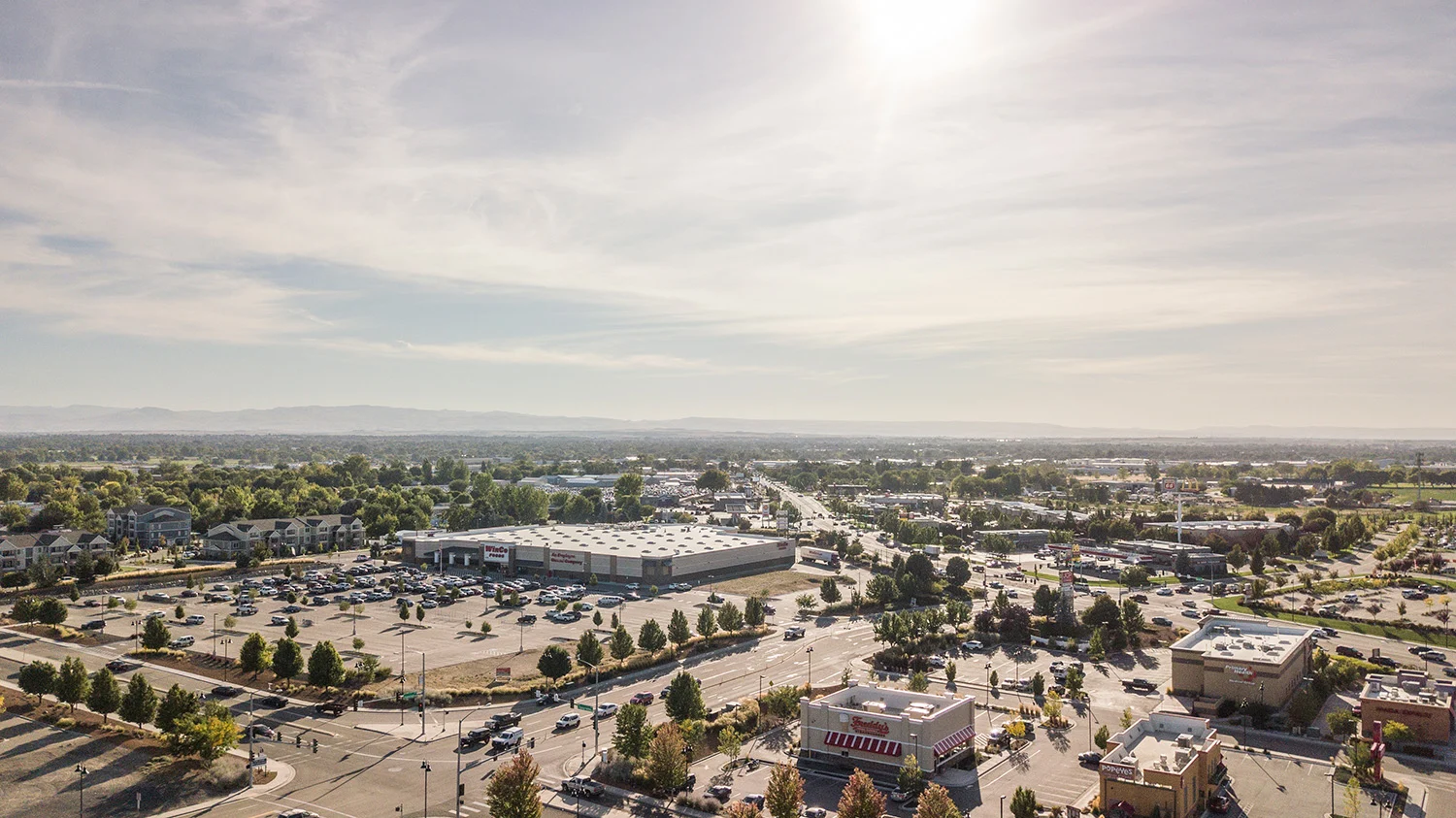
Nampa anchors Canyon County’s rapid growth as the Treasure Valley’s affordable alternative to Boise
2026 Economic Outlook
- Amazon fulfillment center expansion adding warehouse and logistics roles
- St. Luke’s Nampa Medical Center continued campus development
- I-84 corridor commercial and industrial development ongoing
- Northwest Nazarene University enrollment growth driving student housing demand
- Canyon County infrastructure investment supporting residential development
- Nampa Gateway Center area attracting national retailers and employers
Investment Climate
Nampa’s investment environment offers something increasingly rare in the Mountain West: a market where disciplined investors can still find properties approaching cash flow neutrality with conventional financing, while sharing the appreciation tailwinds of the broader Boise metro. The city operates under Idaho’s uniformly landlord-friendly state law with no local rent control, no just cause eviction requirements, and a fast court system for the rare contested eviction.
- Price-to-rent advantage over Boise of 15 to 20%, meaning better initial cash flow at comparable rent levels
- Multi-family opportunities in the $450,000 to $700,000 range with genuine cap rates of 5 to 7%
- Value-add potential in Midland, Downtown, and Industrial Corridor properties where cosmetic renovation adds 15 to 30% to rents
- Entry-level accessibility for investors with $90,000 to $130,000 in capital who are priced out of Ada County
- Regulatory simplicity compared to any Pacific Northwest market, reducing compliance overhead significantly
The city’s primary risk factors are its dependence on the Boise metro employment base and exposure to the same interest-rate sensitivity affecting all Western markets. Investors should model at least a 7.5% vacancy allowance for the first year of a new acquisition and maintain 6 months of reserves given construction-driven supply additions in the $350,000 to $450,000 price range.
Historical Performance
| Period | Market Driver | Avg Annual Appreciation | Key Event |
|---|---|---|---|
| 2012-2016 | Post-recession recovery, Boise spillover begins | 4-6% | Canyon County population growth accelerates |
| 2017-2019 | Amazon fulfillment center opens, Boise tech boom spillover | 7-10% | Nampa establishes identity as Treasure Valley’s affordable hub |
| 2020-2022 | Pandemic migration, California affordability exodus | 18-28% | Bidding wars, months of inventory hit historic lows statewide |
| 2023-2024 | Rate shock, market normalization | 3-6% | Prices held better than national markets due to supply constraint |
| 2025-2026 | Rate stabilization, continued Canyon County infrastructure investment | 7-11% (projected) | Commercial development and employer announcements renewing momentum |
Nampa’s 10-year appreciation track record sits at 7 to 9% annually, placing it among the top performing secondary markets in the Mountain West. A $200,000 Nampa property purchased in 2015 would be worth approximately $420,000 to $470,000 today. The pandemic era spike compressed affordability but did not fundamentally break the demand equation, as Nampa remains priced 25 to 35% below Boise for comparable properties.
Demographic Trends Driving Demand
- California Affordability Migration – Households from the Bay Area, Sacramento, and Southern California arriving with Western incomes and finding homeownership within reach for the first time
- Boise Overflow – Families priced out of Ada County discovering that Canyon County offers the same quality of life at a meaningful discount, with Boise employment still accessible
- Amazon and Logistics Workforce – A young, mobile workforce earning $18 to $25 per hour needing affordable 1 and 2 bedroom rentals near the I-84 corridor
- Northwest Nazarene University – 2,200+ students creating demand for off-campus housing within walking and biking distance of campus
- Healthcare Expansion – St. Luke’s Nampa campus growth bringing nurses, technicians, and administrators seeking 3-bedroom family rentals
- Young Family Formation – Nampa’s median age of 31 and large household-with-children share creates persistent demand for larger rental homes with yards
📚 New to real estate investing? Master the fundamentals with our professional course Learn more →
2. Neighborhood Hotspots
Nampa Investment Neighborhood Map
Interactive map of Nampa’s investment neighborhoods. Green stars show top hotspots, blue circles mark established markets, and orange circles highlight emerging areas.
Core Investment Neighborhoods
Detailed Submarket Analysis: All Nampa Neighborhoods
| Neighborhood | Price Range (SFH) | Cap Rate | Growth Drivers | Best Strategy |
|---|---|---|---|---|
| Downtown Nampa | $310K-$490K | 5.0-6.5% | Revitalization, historic character, walkability | Value-add, BRRRR, small multi-family |
| East Nampa / Gateway | $360K-$540K | 4.8-6.0% | Amazon proximity, I-84 access, newer construction | Buy-and-hold, family rentals, turnkey |
| Lake Lowell Area | $430K-$720K | 4.0-5.5% | Lake access, higher-income tenants, larger lots | Appreciation, executive rental, long-term hold |
| NNU Campus Area | $330K-$530K | 5.0-6.5% | NNU enrollment, faculty demand, year-round occupancy | Student housing, small multi-family, duplex |
| Midland District | $290K-$430K | 5.5-7.0% | Affordability, diverse workforce, value-add stock | Cash flow focus, workforce housing, BRRRR |
| North Nampa / Sundance | $390K-$590K | 4.5-5.5% | School district, family appeal, newer homes | Family buy-and-hold, lower maintenance |
| Karcher / Central West | $320K-$490K | 5.0-6.0% | Retail access, healthcare proximity, mid-tier demand | Balanced returns, SFH buy-and-hold |
| Industrial Corridor | $270K-$390K | 6.0-7.5% | Workforce housing, manufacturing employment | Max cash flow, workforce housing, duplex |
| South Nampa | $380K-$560K | 4.5-5.5% | New construction, Meridian spillover, growth area | New construction buy-and-hold, family focus |
| Lone Star / West Nampa | $310K-$480K | 4.5-5.5% | Larger lots, rural feel, long-term growth potential | Lifestyle rental, larger lot development |
Expert Insight: “The most overlooked opportunity in Nampa right now is the Industrial Corridor just north of Downtown. Properties in the $280,000 to $350,000 range are renting to manufacturing and logistics workers for $1,500 to $1,700 a month, producing gross yields that simply do not exist in Ada County. These aren’t glamorous properties, but the tenant pool is stable, vacancy is low, and the total returns including appreciation have consistently beaten trophy Boise assets over any 5-year period we’ve analyzed.” – David Reyes, Canyon County Investment Properties
3. Property Types
| Investment Goal | Best Property Type | Best Neighborhoods | Minimum Capital |
|---|---|---|---|
| Maximum Cash Flow | Small multi-family or workforce SFH | Industrial Corridor, Midland, Downtown | $80,000+ |
| Balanced Returns | Mid-market SFH or value-add | East Nampa, NNU Area, Karcher | $100,000+ |
| Maximum Appreciation | Lake Lowell area SFH or new construction | Lake Lowell, North Nampa, South Nampa | $110,000+ |
| Lowest Management | New construction townhome or SFH | South Nampa, East Nampa new builds | $100,000+ |
Don’t guess the costs. Our Complete Renovation & Remodeling Cost Guide covers 400+ pages of project-by-project breakdowns with real contractor pricing ranges.
4. Cost Analysis
Acquisition Cost Breakdown (Nampa)
| Expense Item | Typical Cost | Example ($392,000 Property) | Notes |
|---|---|---|---|
| Down Payment | 25% (investment) | $98,000 | Standard for investment properties; 20% possible with strong credit |
| Closing Costs | 2-3% of price | $7,840-$11,760 | Title, escrow, lender fees, recording. Idaho closing costs are moderate. |
| General Inspection | $350-$550 | $425 | Include roof and crawlspace inspection. Older Nampa homes often have deferred maintenance. |
| Sewer Scope | $175-$300 | $225 | Recommended for all pre-1990 Nampa homes. Clay lines are common. |
| Initial Repairs | 0-8% of price | $0-$31,360 | Older Nampa stock often needs HVAC, roof, and kitchen updates for rent-ready condition |
| Reserves (6 months) | 6 months expenses | $10,000-$14,000 | Emergency fund for vacancy and unexpected repairs |
| TOTAL MINIMUM ENTRY | ~28-32% of value | $116,490-$155,770 | Significantly more accessible than Boise or Meridian entry requirements |
Sample Cash Flow Analysis: East Nampa 3BR Single-Family
| Item | Monthly | Annual | Notes |
|---|---|---|---|
| Gross Rent | $1,900 | $22,800 | 3BR, East Nampa, updated condition, $375,000 purchase |
| Less Vacancy (5%) | -$95 | -$1,140 | Conservative estimate; Nampa vacancy currently under 4% |
| Property Taxes (~0.85%) | -$266 | -$3,188 | Canyon County effective property tax rate ~0.85% |
| Insurance | -$115 | -$1,380 | Landlord policy; Idaho rates are lower than coastal states |
| Property Management (9%) | -$171 | -$2,052 | Recommended for out-of-area investors; Idaho mgmt rates are competitive |
| Maintenance + CapEx (8%) | -$152 | -$1,824 | Use 10% for pre-1990 homes; 6-8% for post-2000 construction |
| Net Operating Income | $1,101 | $13,216 | Cap rate: 3.52% on $375,000 |
| Mortgage ($281,250 at 6.875%, 30yr) | -$1,847 | -$22,164 | 25% down on $375K purchase price |
| MONTHLY CASH FLOW | -$746 | -$8,948 | Negative, but substantially better than comparable Boise assets |
| Annual Appreciation (9%) | +$33,750 | 9% of $375,000 property value | |
| Principal Paydown (Year 1) | +$3,720 | Equity building through mortgage amortization | |
| Total Annual Return | +$28,522 | 26.1% return on $109,250 total capital deployed |
Nampa vs. Boise Comparison: A comparable $575,000 Boise property would show cash flow of negative $1,400 to $1,800 per month under the same assumptions, while producing similar appreciation in percentage terms. Nampa’s lower absolute price means the same appreciation rate produces lower annual dollar gains, but the required capital is also 35 to 40% lower, producing competitive or better returns on invested capital.
Path to Positive Cash Flow: Midland District Duplex
The clearest path to positive or near-positive cash flow in Nampa is through small multi-family acquisition, particularly duplexes in the Midland and Downtown areas. Here is a realistic example:
| Item | Monthly | Annual |
|---|---|---|
| Unit A Rent (2BR) | $1,450 | $17,400 |
| Unit B Rent (2BR) | $1,425 | $17,100 |
| Gross Income | $2,875 | $34,500 |
| Operating Expenses (38%) | -$1,093 | -$13,110 |
| NOI | $1,782 | $21,390 |
| Cap Rate ($480K purchase) | 4.46% | |
| Mortgage ($360K at 6.875%) | -$2,364 | -$28,368 |
| Cash Flow | -$582 | -$6,984 |
A house-hack approach (owner-occupying one unit using an FHA loan at 3.5% down) changes this math significantly. With FHA financing on a duplex, the owner-occupied unit’s rent covers most or all of the owner’s housing cost, effectively making the investment cash flow positive from day one while building equity in a Canyon County asset.
Expert Insight: “Investors coming from California or the Pacific Northwest sometimes dismiss Nampa because the numbers look similar to what they see in Boise. The difference is capital efficiency. You deploy $110,000 instead of $175,000 to own a comparable asset in the same metro employment market. For an investor with $350,000 to put to work, that difference means three Nampa properties instead of two Boise properties, with Nampa’s stronger cash flow profile reducing the monthly carry on the larger portfolio. The total wealth creation over a 10-year hold tends to favor the diversified Nampa portfolio.” – Marcus Hill, Treasure Valley Investment Group
5. Legal Framework
✅ Idaho: One of America’s Most Landlord-Friendly States
Idaho’s landlord-tenant law is governed entirely at the state level by the Idaho Residential Landlord and Tenant Act. Nampa and Canyon County add no local rent control, no just cause eviction requirements, and no additional screening restrictions beyond federal Fair Housing law. Investors coming from California, Oregon, Washington, or New York will find the regulatory environment dramatically simpler and more favorable here. This guide provides an overview. Consulting an Idaho-licensed real estate attorney before your first acquisition is still recommended.
Idaho Landlord-Tenant Law: Key Provisions
- No Rent Control: Idaho state law expressly prohibits local rent control ordinances. Landlords can raise rents to market rates at lease renewal with proper notice. No CPI limits, no percentage caps, no approval requirements.
- No Just Cause Eviction: Idaho landlords can choose not to renew a lease for any lawful reason. No documentation of cause is required for non-renewal at lease end.
- Non-Payment Notice: 3-day pay-or-vacate notice for non-payment of rent. If tenant does not comply, landlord can file for eviction immediately after the 3 days expire.
- Lease Termination: 30-day written notice to terminate a month-to-month tenancy. No cause required.
- Security Deposits: No statutory maximum on security deposit amount. Must be returned within 21 days of tenancy end with itemized deductions or full refund.
- Source of Income: Idaho does not require landlords to accept Section 8 housing vouchers. Acceptance is entirely at the landlord’s discretion.
- Landlord Entry: 24-hour advance notice required for non-emergency entry. No notice required for genuine emergencies.
- Repair and Deduct: Tenants may repair and deduct only after proper written notice and landlord failure to repair within a reasonable time. Limited to one month’s rent per incident.
Eviction Process in Canyon County
Idaho’s eviction process is among the fastest and most straightforward of any state:
- Serve Notice: 3-day pay-or-vacate (non-payment) or 30-day no-cause notice. Notice must be served personally, by posting and mailing, or by certified mail.
- File Complaint: File Complaint for Unlawful Detainer in Canyon County Magistrate Court. Filing fee approximately $166.
- Hearing Scheduled: Hearing typically scheduled within 3 to 7 days of filing for non-payment cases.
- Judgment: If tenant does not appear or cannot show valid defense, judgment for landlord is entered at hearing.
- Writ of Possession: Writ issued immediately following judgment.
- Sheriff Execution: Canyon County Sheriff executes writ within 3 to 5 days, removing tenant if they have not vacated.
Total realistic timeline: 3 to 5 weeks for uncontested cases. Contested cases with valid tenant defenses may extend to 6 to 10 weeks. Compare this to Seattle (3 to 6 months) or California (4 to 8 months) and the landlord-friendliness advantage is immediate and measurable.
Useful Idaho Resources
- Idaho Legislature (Landlord-Tenant Act): legislature.idaho.gov
- Canyon County Magistrate Court: canyoncounty.id.gov
- Idaho Rental Owners and Managers Association: idahoroma.org
- Idaho Legal Aid: idaholegalaid.org
| Regulation | Nampa / Idaho | Seattle / Washington | Investor Impact |
|---|---|---|---|
| Rent Control | Prohibited statewide | 180-day notice for above-CPI increases | Idaho landlords can raise to market immediately at renewal |
| Eviction Cause | No just cause required | Just cause always required | Idaho landlords can remove problem tenants much more easily |
| Non-Payment Notice | 3 days | 14 days | Faster action reduces lost rent significantly |
| Tenant Screening | Landlord discretion (fair housing limits only) | First-in-time rule; strict source of income rules | Idaho landlords can select the best qualified applicant |
| Security Deposits | No maximum; 21-day return | Move-in fee limits; 21-day return | Idaho allows greater upfront protection from risky tenants |
| Section 8 Acceptance | Landlord’s choice | Mandatory | Idaho landlords retain full discretion on voucher acceptance |
| Eviction Timeline | 3 to 5 weeks (typical) | 3 to 6 months (typical) | Idaho dramatically reduces lost rent during eviction process |
Best Practice: Even though Idaho’s landlord-tenant law is favorable, professional lease agreements and documentation discipline remain important. Use Idaho-specific lease agreements (not generic national templates), conduct thorough move-in and move-out inspections with signed documentation and photos, and maintain written records of all communications with tenants. The Idaho Rental Owners and Managers Association provides current lease templates updated for state law.
6. Step-by-Step Nampa Investment Playbook
Define Your Nampa Strategy
Nampa supports several distinct investment strategies with meaningful differences in capital requirements, active involvement, and return profiles. Commit to one before buying:
Cash Flow Maximization
Buy workforce housing in Midland, Industrial Corridor, or Downtown at $290,000 to $400,000. Accept older stock and more active management in exchange for the city’s best yields. Requires local contractor relationships and a stomach for working-class tenant management.
Balanced Growth Strategy
Buy mid-market SFH in East Nampa or North Nampa at $370,000 to $530,000. Accept modest negative cash flow in exchange for newer stock, lower maintenance, and appreciation aligned with broader Treasure Valley growth. The most common strategy for out-of-state investors.
Value-Add / BRRRR
Acquire dated 1960s through 1980s properties in Downtown and Midland at $270,000 to $370,000. Renovate kitchens, baths, and mechanicals to push rents 25 to 40% above unrenovated comparables. Refinance recovered equity, repeat. Requires contractor access and renovation management capability.
House Hacking
Buy a duplex or triplex using FHA financing (3.5% down) and owner-occupy one unit. The other unit’s rent covers most or all of the mortgage payment, building equity while living nearly rent-free. Best entry strategy for investors with limited capital who want to learn the market.
Build Your Nampa Team
Unlike Seattle’s regulatory complexity, Nampa’s team requirements are simpler but local knowledge still matters significantly. Key team members:
- Canyon County Investment Agent: Must understand Nampa’s distinct submarket characteristics. An agent who primarily works Ada County will mis-price Nampa properties and miss the local dynamics that distinguish neighborhoods by one or two blocks.
- Idaho-Licensed Property Manager: Nampa management fees run 8 to 10% of collected rent. Interview specifically about their Canyon County eviction experience and how they handle the 3-day notice process. Verify they use Idaho-current lease agreements.
- Local Contractor Network: For value-add strategy specifically, local contractor relationships are the difference between success and failure. Nampa has a solid pool of renovation contractors serving the Canyon County remodel market.
- Idaho Real Estate CPA: Idaho has its own state income tax at a flat 5.8% rate. A CPA familiar with Idaho investment property depreciation, cost segregation, and Canyon County property tax appeal procedures will pay for themselves quickly.
- Title Company: Use a Canyon County-based title company with Nampa transaction experience. Stewart, First American, and several local independents all operate here.
Pro Tip: The Nampa Chamber of Commerce and Canyon County Association of Realtors both maintain referral networks. For property management specifically, ask for references from investors who own 5 or more Nampa properties. A manager who handles only 1 to 2 units in Nampa alongside a primarily Ada County portfolio will not know the neighborhood nuances that affect vacancy and rent optimization in Canyon County’s distinct submarkets.
Nampa-Specific Due Diligence
Physical Due Diligence
- Full inspection including crawlspace and roof (many Nampa homes have crawlspace foundations with moisture issues)
- Sewer scope for all pre-1990 construction (clay lines are common)
- HVAC inspection and age verification (Nampa’s high desert climate is hard on systems)
- Irrigation and landscaping systems (overhead cost for landlord if not tenant responsibility)
- Verify Canyon County permit history for any additions or conversions
- Well and septic inspection for properties outside city water/sewer service area
Financial Due Diligence
- Pull current tenant leases and verify rent amounts against market comparables
- Review last 12 months of utility bills if any landlord-paid utilities
- Verify Canyon County property tax assessment and check for any special assessments
- Confirm HOA status and fees for any subdivision property
- Check for any City of Nampa code violations or outstanding permits
- Verify irrigation district membership and annual assessments for properties with irrigation rights
Competing in Nampa’s Market
Nampa’s market is more accessible than Ada County but still competitive for well-priced properties in desirable zones. Strategies that work:
- Pre-approval letter specificity: Use a Canyon County-familiar lender for your pre-approval letter. Sellers and agents in Nampa have seen enough out-of-state buyers fall through on financing to discount offers without strong local lender backing.
- Off-market focus for value-add: The best Midland and Downtown value-add properties rarely hit MLS. Direct mail to long-term owners in target zip codes (83651, 83686) combined with driving for dollars identifies pre-MLS opportunities.
- Occupied tenant properties: Properties with existing tenants often sit longer and discount more. For investors comfortable managing Idaho tenancies, these can represent the best risk-adjusted entry.
- New construction builder relationships: South Nampa builders periodically release investor-friendly packages on 3 to 5 home lots. Establishing relationships with active Canyon County builders like Woodbridge Homes and Blackrock provides early access.
- Canyon County foreclosures and probate: A meaningful number of Canyon County properties move through probate and estate sales annually, often at below-market pricing for investors willing to navigate the slower timeline.
Property Management in Nampa
Idaho’s favorable landlord laws mean property management is more about efficiency than compliance navigation. Key management priorities in Nampa:
Tenant Screening Best Practices
Idaho allows landlord discretion in tenant selection (within federal fair housing law). Effective Nampa screening includes:
- Minimum income requirement of 2.5 to 3x monthly rent (verifiable income)
- Credit check with minimum score threshold (typically 580 to 620 for workforce housing)
- Rental history verification: direct contact with prior two landlords
- Background check through Idaho-compliant screening service
- Employment verification letter or last two pay stubs
Typical Nampa Property Management Fees
- Single-family management: 8-10% of monthly collected rent
- Multi-family management: 7-9% of monthly collected rent
- Leasing fee: 50-75% of one month’s rent
- Lease renewal fee: $150-$250 per renewal
- Maintenance coordination fee: Some managers charge 10-15% markup on repairs
Total management costs including leasing fees amortized over a typical 18-month tenancy average out to approximately 11 to 13% of gross rent for most Nampa SFH properties.
7. Financing Options for Nampa
| Loan Type | Down Payment | Rate Premium | Best For | Nampa Note |
|---|---|---|---|---|
| Conventional Investment | 25% | +0.5-0.75% | W-2 income, good credit, standard SFH | Most Nampa properties fall under the $806,500 conforming loan limit; no jumbo needed |
| FHA (House Hack) | 3.5% | Standard + MIP | Owner-occupying 2-4 unit property | Best entry strategy for first-time investors; Nampa duplexes fit FHA limits |
| DSCR Loan | 25-30% | +1.5-2.5% | Self-employed, no income verification | Works better in Nampa than Boise due to better rent-to-value ratio; still tight on most SFH |
| Portfolio Loan | 20-30% | +1-2% | Multiple properties, scaling investors | Idaho Central Credit Union and Banner Bank offer local portfolio products |
| Hard Money (Bridge) | 15-25% | 9-12% rate | BRRRR acquisitions, value-add projects | Several Boise-based hard money lenders actively fund Canyon County BRRRR deals |
| Conventional with 20% Down | 20% | +0.75-1.25% (PMI) | Capital preservation, leveraged entry | PMI is cancelable once equity reaches 20%; useful for investors preserving capital across multiple deals |
| HELOC / Cash-Out Refi | N/A | Prime-based or fixed | Recycling equity from existing properties | Investors with existing Idaho equity can access capital efficiently for additional Nampa acquisitions |
Nampa Financing Advantage Over Boise: Because most Nampa investment properties fall well below the $806,500 conforming loan limit, investors avoid the higher rates and stricter requirements of jumbo financing. This means more Nampa buyers can access standard conventional investment loans at competitive rates, and DSCR products work better here than in Boise’s higher-priced market because the rent-to-value ratio is more favorable. Idaho Central Credit Union is worth contacting for local portfolio products, particularly for investors building a multi-property Canyon County portfolio.
8. Frequently Asked Questions

Knowledge Quiz: Nampa Real Estate Investment
Open Quiz
5 quick questions on what you just learned about Nampa investing
1) What is the primary reason Nampa typically offers better cash flow than Boise for real estate investors?
Answer: B
The guide explains that Nampa home prices sit 25 to 35% below comparable Boise properties while rents run only 10 to 15% lower. This compressed price-to-rent ratio is the core reason Nampa delivers meaningfully better initial cash flow and cap rates than Boise’s core markets, even though both cities share the same Treasure Valley employment base.
2) How many days notice must a Nampa landlord give a tenant for non-payment of rent before filing for eviction?
Answer: A
Under the Idaho Residential Landlord and Tenant Act, landlords must serve a 3-day pay-or-vacate notice for non-payment of rent. If the tenant does not pay or vacate within 3 days, the landlord can immediately file an unlawful detainer complaint in Canyon County Magistrate Court. This compares favorably to Seattle’s 14-day requirement and California’s similar 3-day notice but much slower court process.
3) Which Nampa neighborhood does the guide identify as offering the highest rental yields for cash-flow-focused investors?
Answer: C
The guide identifies the Industrial Corridor as offering the highest yields in Nampa at 6.0 to 7.5%, with entry prices in the $270,000 to $390,000 range. Workforce housing near Nampa’s manufacturing and food processing employers produces the strongest cash-on-cash returns, though it requires more active management than newer neighborhoods. The guide’s expert quote specifically calls this the most overlooked opportunity in Nampa.
4) What is the house hacking strategy described in the guide and why is it particularly advantageous in Nampa?
Answer: D
House hacking means owner-occupying one unit of a multi-family property (2 to 4 units) using FHA financing at just 3.5% down. The other unit’s rent covers most or all of the mortgage payment. The guide explains this works well in Nampa because Nampa duplexes fit within FHA loan limits and Nampa’s duplex prices are accessible enough for investors with limited capital. With only $20,000 to $40,000 down on a $480,000 Nampa duplex, an investor can control a Canyon County appreciating asset while living nearly rent-free.
5) What is the typical eviction timeline for an uncontested non-payment case in Canyon County, Idaho?
Answer: B
The guide describes a total realistic timeline of 25 to 35 days for uncontested non-payment evictions in Canyon County: 3-day notice, filing, summons, hearing (days 10 to 21), writ of possession, and sheriff execution (days 25 to 35). This compares to 3 to 6 months in Seattle and 4 to 8 months in California, and is a major reason Idaho’s landlord-friendly environment reduces investment risk and lost rent exposure relative to West Coast markets.
Work With a Local Expert in Nampa
We are building a verified network of real estate professionals across every market we cover.

About Our Expert Network
We are finalizing partnerships with verified real estate professionals across every market featured on Builds and Buys. Each expert in our network is selected for their hands-on investment experience, local market knowledge, and commitment to helping buyers and investors make sound decisions.
Our local specialists offer:
- Proven experience with Canyon County investment and income-producing properties
- Deep knowledge of Nampa’s neighborhood dynamics, pricing, and rental yields
- Guidance on financing, legal structure, and Idaho-specific due diligence
- Access to off-market and pre-market Canyon County opportunities
- Full transaction support from search through closing
- Ongoing portfolio and property management referrals
Services Covered
- Property sourcing and acquisition
- Investment analysis and underwriting
- Buyer representation
- Market comparables and valuations
- Long-term rental strategy
- Value-add and renovation guidance
- Legal and title referrals
- Financing and lender connections
- Property management referrals
- Insurance and inspection referrals
- 1031 exchange coordination
- Exit strategy planning
Get Connected or Join Our Network
Looking for a local expert to help with your Nampa investment? Reach out and we will connect you with the right professional for your market and strategy.
Are you a Canyon County real estate professional with a track record working with investors? We are always expanding our network of verified local experts.
Contact us at support@buildsandbuys.com
Find Specialized Nampa Real Estate Professionals
Ready to Invest in Nampa?
Nampa is not a market that makes headlines the way Boise does, but that is precisely what makes it compelling. The Treasure Valley’s employment base, in-migration drivers, and appreciation dynamics apply here with equal force, at an entry price that is 25 to 35% more accessible. Idaho’s landlord-friendly legal environment, Canyon County’s active commercial development, and Nampa’s diverse employer base create an investment case that rewards patient, disciplined investors across multiple strategies, from workforce housing cash flow to value-add BRRRR to long-term appreciation in the Lake Lowell corridor.
Continue Your Research
Idaho State Guide
See how Nampa compares to Boise, Meridian, Coeur d’Alene, and other Idaho markets.
Boise Guide
Compare Nampa to Boise’s market metrics, neighborhoods, and investment dynamics side by side.
144-Lesson Course
University-level real estate education covering financing, law, strategy, and management.
For further guidance, explore our State-by-State Investor guides, browse our expert articles, or follow our Step-by-Step Investment Guide.