
Culver City and Mid-City LA Real Estate Investment Guide For 2026
A comprehensive resource for investors targeting one of Los Angeles’s most concentrated technology and entertainment corridors — where Amazon Studios, Apple TV+, TikTok’s US headquarters, Sony Pictures, and the Metro E Line transit premium converge in a built-out urban market with strict rent stabilization, a powerful ADU development opportunity, and appreciation dynamics driven by LA’s most permanent, highest-income tenant base in 2026
Quick answers: Top 5 most searched Culver City/Mid-City investment questions ▼
Migration data: Who’s renting in Culver City and Mid-City LA ▼
1. Culver City and Mid-City LA Market Overview
Market Fundamentals
Culver City and the broader Mid-City LA corridor represent the convergence point of Los Angeles’s two most powerful economic forces: the global entertainment industry and Silicon Beach’s technology ecosystem. Situated between Santa Monica/Venice to the west and downtown LA to the east, bisected by the Metro E Line and surrounded by Sony Pictures, Amazon Studios, Apple TV+, TikTok’s US headquarters, and a dense cluster of streaming and tech companies, this market hosts the highest-income renters in the LA Basin.
This is emphatically not a cash-flow investment market. Cap rates of 3.5–4.8% mean most leveraged purchases carry significant negative cash flow. But Culver City and Mid-City LA are among the most appreciation-reliable markets in Southern California — built-out urban environments with permanent institutional demand drivers that support multi-decade compounding value growth.
- Culver City: Independent city, ~40,000 residents — “Heart of Screenland,” Sony Pictures, Amazon Studios, Apple TV+
- Mid-City LA: Palms, Mar Vista, Jefferson Park, Mid-City neighborhoods — ~85,000 residents
- Key Employers: Sony Pictures, Amazon Studios, Apple TV+, TikTok/ByteDance US HQ, HBO, Snapchat (nearby), Kaiser Permanente West LA
- Metro Access: E Line (Expo Line) — Culver City station, La Cienega/Jefferson station, Palms station
- Beach Proximity: Venice Beach 4 miles; Santa Monica Pier 6 miles
- LAX Proximity: 6–8 miles — LA’s international airport workforce and travelers create additional housing demand
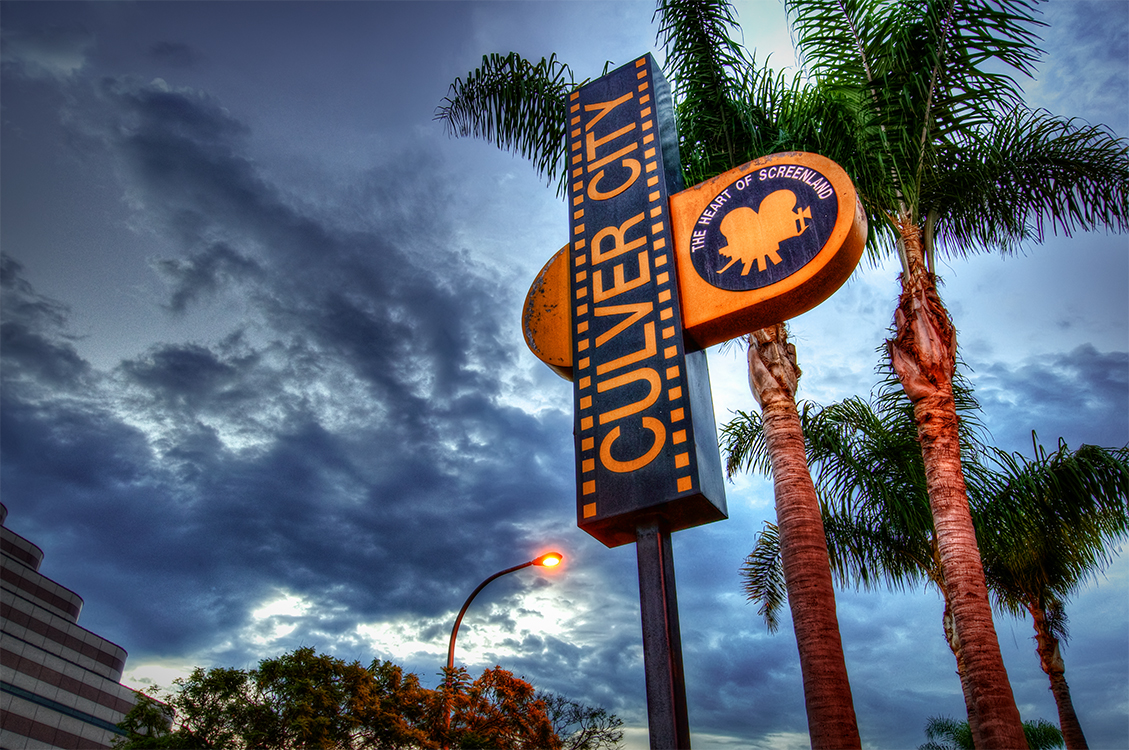
Culver City and Mid-City LA — the heart of LA’s entertainment and Silicon Beach technology corridor
2026 Economic Outlook
- Amazon Studios Phase 2 expansion at former Sony lot continuing
- TikTok / ByteDance US HQ expansion at Culver City campus
- Metro E Line ridership growing as LA builds transit culture
- Culver City Arts District revitalization maturing
- Jefferson Park / Mid-City gentrification corridor expanding east
- ADU streamlining by both Culver City and LA City accelerating development
The Investment Reality: Appreciation Over Income
What this market is: An appreciation vehicle with world-class employment anchors, permanent supply constraints (built-out urban grid with no room for new development), and the highest-income tenant base in the LA Basin. Investors who buy and hold 10–20 years in Culver City and Mid-City LA have historically generated 7–10% annual total returns — primarily through appreciation and equity building rather than cash flow.
What this market is not: A cash-flow market. Investors who underwrite Culver City or Mid-City LA expecting net positive monthly income on a conventional leveraged purchase will be disappointed. The investment case requires patience, capital reserves for negative carry, and a long time horizon. Investors who need their real estate portfolio to generate current income should look elsewhere in the California guide series.
Historical Performance
| Period | Driver | Appreciation | Key Event |
|---|---|---|---|
| 2010–2015 | Entertainment recovery, Silicon Beach emergence | 8–12% | Google, Yahoo, Facebook establish Playa Vista presence; Culver City prices surge |
| 2016–2019 | Streaming wars, Amazon/Apple/Amazon prime studio expansion, Metro E Line opens | 9–13% | Amazon Studios Culver City; Metro Expo Line; streaming boom employs thousands |
| 2020–2022 | Pandemic, streaming acceleration, remote work premium on space | 14–22% | Culver City SFH median surpasses $1.3M; tech worker migration to westside accelerates |
| 2023–2024 | Rate normalization, streaming consolidation | -2% to +4% | Writers/Actors strikes affect entertainment; prices soften slightly; tech layoffs create some rental demand |
| 2025–2026 | Industry recovery, TikTok expansion, ADU supply relief | 5–8% (projected) | TikTok Culver City expansion; streaming industry recovery; ADU construction adding rental supply |
Permanent Demand Drivers
- Sony Pictures Entertainment — One of Hollywood’s “Big Five” studios has called Culver City home since 1915. Its historic lot at Washington Blvd and Overland Ave employs thousands and will remain in Culver City permanently. Sony’s presence anchors the city’s entertainment identity regardless of individual project cycles
- Amazon Studios / Amazon MGM Studios — Amazon’s content production operations are centered in Culver City, making it the company’s primary LA entertainment hub. Amazon’s scale and financial position make this commitment essentially permanent
- Apple TV+ — Apple’s streaming service has significant content operations in Culver City. As one of the world’s most valuable companies, Apple’s LA presence is not subject to the budget pressures that affect smaller production companies
- TikTok / ByteDance US Headquarters — TikTok’s US headquarters in Culver City employs thousands of engineers, content moderators, trust and safety professionals, and executives. Political uncertainty around TikTok has created periodic speculation, but ByteDance has continued expanding its Culver City presence
- Silicon Beach Ecosystem — Google’s ~3,500-person LA campus in Playa Vista (2 miles from Culver City), YouTube’s operations, Snap’s Santa Monica headquarters, and dozens of tech and digital media companies within a 5-mile radius create a permanent high-income employment cluster
- Metro E Line Transit Spine — The E Line connects Culver City directly to downtown Santa Monica (6 minutes), USC (15 minutes), and downtown LA (30 minutes). Transit access diversifies employment reachability and supports premium rents in walkable transit-adjacent properties
📚 New to real estate investing? Master the fundamentals with our professional course Learn more →
2. Neighborhood Hotspots
Culver City and Mid-City LA Investment Map
Core Investment Neighborhoods
Submarket Comparison
| Neighborhood | Price Range (SFH) | Cap Rate | Jurisdiction | Key Driver |
|---|---|---|---|---|
| Culver City Core | $1.3M–$1.8M | 3.5–4.5% | Culver City (CC TPO) | Sony, Amazon, Apple, Metro E Line |
| Palms / Mar Vista | $1.0M–$1.5M | 3.8–5.0% | City of LA (LA RSO) | Tech/entertainment overflow, Metro E Line |
| Jefferson Park / Mid-City | $880K–$1.2M | 4.0–5.5% | City of LA (LA RSO) | Gentrification momentum, ADU, affordability |
| Culver City South (Fox Hills) | $950K–$1.4M | 4.0–5.0% | Culver City (CC TPO) | Culver City amenities, slightly more affordable |
| View Park / Windsor Hills | $1.0M–$1.8M+ | 3.5–4.5% | LA County / City | Architectural prestige, creative class migration |
| Leimert Park | $780K–$1.1M | 4.5–6.0% | City of LA (LA RSO) | Metro K Line, cultural district, early-stage |
Expert Insight: “Culver City is the most reliably appreciating small city in Los Angeles County. The combination of Sony Pictures as a permanent institutional anchor, Amazon and Apple expanding their content operations, and TikTok building its US headquarters creates a density of employment that simply doesn’t exist anywhere else in LA at this scale. My advice to investors: understand the Culver City Tenant Protection Ordinance cold before you buy, focus on properties where you have clear RSO exemption or genuine exempt status, and buy for the decade — not for the year.” — Rachel Kim, CCIM, Westside Commercial and Investment Properties
3. Property Types
Don’t guess the costs. Our Complete Renovation & Remodeling Cost Guide covers 400+ pages of project-by-project breakdowns with real contractor pricing ranges — including ADU-specific cost guides.
4. Cost Analysis
Acquisition Cost Breakdown (Culver City / Mid-City LA)
| Expense Item | Typical Cost | Example ($1,250,000 Property) | Notes |
|---|---|---|---|
| Down Payment | 25–30% | $312,500–$375,000 | Most properties require jumbo financing above $806,500 conforming limit; 25–30% down typical for jumbo investment loans |
| Closing Costs | 2–3% | $25,000–$37,500 | Title, escrow, lender fees; LA City and County transfer taxes apply — one of the highest transfer tax environments in California |
| City Transfer Tax (LA City) | 0.56% (LA City) or 0.45% (CC) | $5,625–$7,000 | LA City: 0.56% city + 0.11% county = 0.67% total. Culver City: 0.45%. Verify current rates — LA City has discussed Measure ULA-style increases |
| Home Inspection + Sewer | $600–$1,000 | $800 | Always include sewer lateral inspection on older LA stock — LAMC section 64.30 may require seller certification |
| Rent Control Status Check | $200–$400 (attorney) | $300 | Critical — confirm CC TPO or LA RSO status, current lawful rent, and any existing tenant rights before purchase |
| Reserves | $25,000–$50,000 | $35,000 | Reserves must cover negative carry during vacancies AND relocation assistance if invoking owner move-in provisions |
| TOTAL MINIMUM ENTRY | ~32–42% of value | $379,225–$455,800 | Highest entry capital of any market in this California guide series — requires substantial investor capital |
Sample Cash Flow Analysis: Palms 3BR SFH (No ADU)
| Item | Monthly | Annual | Notes |
|---|---|---|---|
| Gross Rent | $5,800 | $69,600 | 3BR Palms SFH, tech/entertainment worker tenant; market rent post-2024 vacancy |
| Less Vacancy (5%) | -$290 | -$3,480 | Westside vacancy is tight; 5% is conservative; professional tenants often stay 2–4 years |
| Property Taxes (Prop 13 basis) | -$1,094 | -$13,125 | ~1.05% of $1,250,000 purchase price; includes special assessments |
| Insurance | -$280 | -$3,360 | LA landlord policy; LA insurance market has tightened — get quotes before close |
| Property Management (9%) | -$522 | -$6,264 | LA westside PM firms; know CC TPO and LA RSO compliance |
| Maintenance + CapEx (6%) | -$348 | -$4,176 | Professional tech/entertainment tenants maintain properties well; lower-end of CA range |
| Net Operating Income | $3,266 | $39,195 | Before mortgage; strong for an LA westside property |
| Mortgage ($1.25M, 30% down, 6.75%, 30yr jumbo) | -$5,684 | -$68,208 | $875,000 jumbo loan at 6.75%; jumbo investment rates typically 0.5–0.75% above conforming |
| NET CASH FLOW | -$2,418 | -$29,013 | Significant negative carry — expected in this market; investor must be funded for this |
| Same Property + ADU ($2,800/mo ADU rent) | +$382 | +$4,584 | ADU transforms cash flow from deeply negative to slightly positive — the power of ADU strategy |
| Total Return (7% appreciation) | ~21% | Appreciation + equity buildup + NOI on 30% down payment; compelling total return despite negative carry |
The ADU transformation: This table illustrates the most important insight in the Culver City / Mid-City investment playbook. The same $1,250,000 Palms property generating -$2,418/month without an ADU becomes +$382/month with a $2,800/month ADU (after ADU build costs are separately capitalized). That swing of $2,800/month represents the difference between a difficult-to-sustain deeply-negative investment and a genuinely self-funding one. Investors who acquire properties with ADU potential and build them are accessing the westside market’s most compelling value-creation tool.
5. Legal Framework
⚠️ Dual Rent Control Jurisdiction Warning
This market is governed by two completely separate tenant protection frameworks depending on which side of the city boundary a property falls. Culver City properties follow the Culver City Tenant Protection Ordinance (CC TPO). Properties in the City of Los Angeles (Palms, Mar Vista, Jefferson Park, Mid-City) follow the Los Angeles Rent Stabilization Ordinance (LA RSO). These are different laws, administered by different cities, with different rent caps, just cause eviction procedures, relocation assistance requirements, and exemption criteria. Never assume one framework applies to a property in the other city. Always verify jurisdiction and coverage status with a California-licensed real estate attorney before any purchase.
Culver City Tenant Protection Ordinance (CC TPO)
- Coverage: Most residential units in the city of Culver City, including units in buildings of all sizes built before a specific date. Both rent increase limits AND just cause eviction protections apply to covered units.
- Rent Increases: Annual allowable increases are set by the city and tied to CPI. Culver City’s TPO has historically allowed increases in the 3–5% range annually — verify current rate with the Culver City Housing Division.
- Just Cause: Landlords must have documented just cause to terminate a tenancy after the initial lease period. Acceptable causes include non-payment, material violations, nuisance, illegal activity, owner/family move-in, substantial rehabilitation, and demolition.
- Relocation Assistance: When invoking owner move-in, substantial rehabilitation, or demolition just cause, Culver City requires landlords to pay relocation assistance to displaced tenants — amounts vary by household size and income. Budget for this before acquiring a covered property with relocation strategy planned.
- Exemptions: Single-family homes (with proper AB 1482 notice), condos, and newer construction may have exemptions — verify each property individually. Do not assume SFH exemption applies in Culver City without confirming with the CC Housing Division and a local attorney.
Los Angeles Rent Stabilization Ordinance (LA RSO)
- Coverage: Residential units in the City of Los Angeles built on or before October 1, 1978. Covers most older multifamily units in Palms, Mar Vista, Jefferson Park, and Mid-City LA.
- Rent Increases (RSO units): Annual increases tied to LA CPI, typically 3–5% in recent years. The LA Housing Department publishes the current allowable increase annually.
- Just Cause: Similar to Culver City — fault-based (non-payment, violations) and no-fault (owner move-in, substantial rehabilitation, demolition) just cause categories. No-fault evictions trigger relocation assistance obligations.
- AB 1482 + RSO Interaction: Properties covered by RSO are generally not subject to AB 1482 separately — RSO provides the local rent control framework. SFH and condos in LA City may fall under AB 1482 if not covered by RSO.
- LA Mansion Tax (Measure ULA): Properties selling over $5,000,000 in LA City are subject to a 4% transfer tax under Measure ULA. Most residential properties in this guide’s price range ($800,000–$2,000,000) are below this threshold, but verify for any higher-end acquisition.
- AB 12 Deposits: Maximum one month’s rent for most residential properties since 2024.
| Issue | Culver City (CC TPO) | LA City (LA RSO) | Strategy Response |
|---|---|---|---|
| Annual Rent Cap | CC CPI-tied (verify annually) | LA CPI-tied (verify annually) | Always check current allowable increase before any rent increase notice |
| Just Cause Eviction | Required under CC TPO | Required under LA RSO | Document everything; work with a local landlord attorney from day one |
| Relocation Assistance | Required for no-fault evictions | Required for no-fault evictions | Budget for relocation assistance before any owner move-in or rehabilitation strategy |
| SFH Exemption | Verify with CC Housing Division + attorney | AB 1482 exemption with proper notice | Never assume SFH exemption — confirm property-by-property before purchase |
| ADU Tenants | New ADUs generally exempt from CC TPO if new construction | New ADUs generally exempt from LA RSO | New ADUs offer market-rate rents without RSO/TPO caps — confirms the ADU strategy advantage |
The ADU Exemption Advantage: New ADUs — both detached and attached — are generally considered new construction and fall outside the coverage of the LA RSO and Culver City TPO. This means ADU rents are at market rate from inception and can be increased annually under AB 1482 (5%+CPI or 10% max) rather than the more restrictive local ordinances. For investors, this creates a two-tier rent structure: the main house operates under RSO/TPO rules if older, while the new ADU operates at market rates. New ADU tenancies also start fresh for just-cause purposes, giving landlords significantly more flexibility than with long-tenanted RSO units.
6. Step-by-Step Culver City / Mid-City Investment Playbook
Choose Your Westside Strategy
SFH + ADU Development
Buy an SFH with ADU development potential. Build ADU. Transform negative carry to breakeven or positive. Capture appreciation on the full combined value. The market’s highest total-return strategy for investors with development capital.
Jefferson Park Appreciation
Buy in the gentrification corridor. Accept moderate negative carry. Wait for convergence with Palms and Mar Vista prices 3–5 years ahead. Best near-term appreciation upside at most accessible entry pricing in the Metro E Line corridor.
Culver City Long-Term Hold
Buy premium Culver City SFH or small multifamily. Accept significant negative carry. Target tech/entertainment tenants for premium rents and excellent property care. Hold 15–20 years. Suited for high-net-worth investors with capital reserves.
Multifamily Value-Add
Acquire small apartment building with below-market tenants (RSO/TPO covered). As units turn over, achieve market rents. Patience required — LA tenant protection ordinances mean this plays out over years, not months. Strong long-term total return.
ADU Development — The Step-by-Step Process in Culver City and LA City
ADU development is the most compelling value-creation strategy in this market. Here is the specific process:
- Verify ADU feasibility before purchase: Check lot size, setback requirements, and existing structure for detached ADU viability. The LA County ADU Accelerator program and Culver City’s streamlined ADU permitting have reduced barriers significantly since 2020. Most SFH lots of 5,000+ sq ft qualify for a standard ADU.
- Hire an ADU-specialist architect: LA and Culver City have ADU architects and permit-expeditors who specialize in streamlined ADU approvals. Pre-designed ADU plans approved for the relevant city can reduce permitting time from 6–12 months to 3–6 months. Companies like Dwellito, Villa, and local architect firms with ADU experience are worth the cost premium.
- Budget accurately: Fully permitted, constructed, and finished detached ADU in the LA market runs $180,000–$320,000 depending on size (400–1,200 sq ft), finish level, and utility connection complexity. Garage conversions run $80,000–$150,000. Never budget based on national averages — LA construction costs are among the nation’s highest.
- Know the financing options: ADU construction loans, cash-out refinance of existing equity, renovation loans (203k style for attached ADUs), or private construction financing. The equity built by the ADU (typically $350,000–$600,000 in value added) often exceeds build cost by $150,000–$300,000 — making the construction effectively equity-positive from day one.
- Market the ADU at market rates: New ADU rentals are exempt from LA RSO and CC TPO. Price aggressively — entertainment and tech workers pay premium rents for well-designed, private, independent ADU units in Culver City and Palms. Fully furnished ADUs can achieve $3,200–$5,500/month depending on size and quality.
Marketing to Entertainment and Tech Workers
The entertainment and tech workforce is the target demographic in this market. Their needs differ from standard rental tenants:
- Home office is essential: Streaming, VFX, and tech workers spend significant time working from home. Dedicated office space, high-speed fiber internet (Spectrum and AT&T fiber are available throughout Culver City and Palms), and quiet separate workspace are genuine rent-differentiating amenities worth $300–$600/month premium.
- Outdoor space matters disproportionately: LA tech and entertainment workers prize outdoor entertaining, year-round weather enjoyment, and garden/patio space. Properties with well-designed outdoor living areas command meaningful premiums over comparable homes without them.
- Listing platforms: Furnished Finder (for furnished shorter-term executive rentals), Zillow premium listing (standard for this market), Compass Rentals (strong in the westside market), and LinkedIn posting to entertainment/tech professional networks all reach the target demographic effectively.
- Price quality over volume: Entertainment and tech professionals have high incomes and will pay for quality. A perfectly maintained, freshly painted, fully appliance-upgraded home at $5,800/month will outperform a dated comparable at $5,200/month in time-to-rent and tenant quality. Never cut corners on finishes in this tenant market.
- Pet policy: Entertainment and tech workers at high percentages have pets. A pet-friendly policy (with appropriate deposit within AB 12 limits) significantly expands your addressable tenant pool in this market. Pet restrictions are a meaningful competitive disadvantage for high-end westside rentals.
7. Financing Options for Culver City and Mid-City LA
| Loan Type | Down Payment | Rate | Best For | Notes |
|---|---|---|---|---|
| Jumbo Investment | 25–30% | +0.75–1.25% | Most Culver City / Palms acquisitions | Properties over $806,500 require jumbo — virtually all SFH in this market; multiple jumbo lenders active in LA westside |
| Conventional Investment | 25% | +0.5–0.75% | Jefferson Park / lower-price Mid-City; condos | Available for properties under $806,500 — some Jefferson Park and Leimert Park properties qualify |
| Portfolio Loan | 20–30% | +1–2% | Multiple properties; complex income | LA-area private banks (Mechanics Bank, Preferred Bank) understand local investment market; good for building a westside portfolio |
| ADU Construction Loan | 20–30% of total project | +1.5–3% | SFH + ADU development strategy | RenoFi loans, cash-out refinance, or ADU-specific construction products; ADU adds $350K–$600K in value — makes math attractive even at higher construction loan rates |
| Cash-Out Refinance | N/A (existing equity) | Current jumbo rates | Funding ADU construction from existing equity | Investors who bought westside properties 2010–2019 at $600K–$900K now have $400K–$1M+ in equity to fund ADU construction |
| DSCR Loan | 25–30% | +1.5–2.5% | Self-employed investors | SFH alone unlikely to hit 1.0x DSCR; SFH + ADU combined income may qualify; verify specific property before applying for DSCR |
LA Insurance Market Warning (2026): California’s insurance market has tightened significantly throughout LA, with several major carriers pulling back or raising rates substantially. Before closing on any Culver City or LA westside property, obtain insurance quotes from at least 3 carriers. Some areas have difficulty obtaining coverage from standard markets and require the California FAIR Plan or a surplus lines carrier. Insurance costs affect cash flow and should be confirmed — not estimated — before finalizing any investment analysis.
8. Frequently Asked Questions

Knowledge Quiz: Culver City and Mid-City LA Investment
Open Quiz
5 questions on what you just learned about westside LA investing
1) What is the most important value-creation strategy the guide identifies for Culver City and Mid-City LA investors?
Answer: C
The guide’s cash flow analysis demonstrates clearly: the same $1,250,000 Palms property goes from -$2,418/month without an ADU to +$382/month with a $2,800/month ADU — a swing of $2,800/month that transforms the investment’s sustainability. Meanwhile, the ADU adds $350,000–$600,000 in property value at build costs of $180,000–$320,000, creating equity-positive development economics. The guide calls this “the market’s most compelling value-creation tool” and makes it the central strategy in the playbook.
2) Why is it critical to determine whether a property falls under Culver City jurisdiction vs. City of LA jurisdiction before purchase?
Answer: A
The guide opens the legal section with a “dual jurisdiction warning” emphasizing that Culver City and LA City are governed by completely separate tenant protection frameworks. The CC TPO and LA RSO have different rent caps, coverage criteria, just cause eviction procedures, and relocation assistance requirements. The guide notes that Culver City is completely surrounded by LA, and some streets change jurisdiction block by block — the address alone is insufficient. Verification requires a GIS lookup, not assumption based on mailing address.
3) What specific advantage do newly built ADUs have over existing RSO/TPO-covered units in terms of rent regulation?
Answer: D
The guide specifically identifies the ADU exemption from local rent stabilization as a key strategic advantage. New ADUs are considered new construction and fall outside the coverage of the LA RSO and CC TPO. This means ADU rents start at full market rate and increase annually under the AB 1482 framework (5%+CPI or 10% max) rather than the potentially stricter local ordinances. New ADU tenancies also start fresh for just-cause purposes, giving landlords more flexibility than with long-tenanted RSO/TPO units.
4) What does the guide identify as the Metro E Line’s specific impact on rental values?
Answer: B
The guide documents an 8–15% property value premium for properties within a 10-minute walk of E Line stations, supported by academic and real estate studies. The driver is that entertainment and tech workers commute to multiple locations throughout LA (Sony, a Hollywood meeting, a production facility in Burbank) and Metro access reduces car dependency for this demographic. The guide recommends listing transit time explicitly in rental listings and treating walkable Metro access as a rent-differentiating amenity worth $300–$600+/month premium.
5) Why does the guide characterize this as an “appreciation market” rather than a “cash flow market”?
Answer: C
The guide’s cash flow analysis shows a $1,250,000 Palms SFH generating -$2,418/month net cash flow — before the ADU strategy is applied. The combination of 3.5–4.8% cap rates and jumbo loan costs (6.75%+) means rental income covers NOI but not total debt service. The guide explicitly states: “Investors who underwrite Culver City or Mid-City LA expecting net positive monthly income on a conventional leveraged purchase will be disappointed.” The investment thesis is appreciation plus equity buildup, not current income.
Work With a Local Expert in Culver City and Mid-City LA
We are building a verified network of real estate professionals across every market we cover.

About Our Expert Network
- Culver City TPO and LA RSO dual-jurisdiction expertise
- ADU permitting, design, and construction management
- Entertainment and tech worker tenant marketing strategy
- Jumbo investment loan relationships and structuring
- Metro E Line transit-adjacent value identification
- Mid-City gentrification corridor timing and due diligence
Services Covered
- Property sourcing
- Investment analysis
- Buyer representation
- ADU development
- RSO/TPO compliance
- Tenant marketing
- Legal referrals
- Property management
- Insurance (LA market)
- Contractor referrals
- STR permit guidance
- Exit strategy
Get Connected or Join Our Network
Contact us at support@buildsandbuys.com
Find Specialized Culver City / Mid-City LA Real Estate Professionals
Ready to Invest in Culver City and Mid-City LA?
Culver City and Mid-City LA represent LA’s most concentrated convergence of permanent, high-income employment and transit infrastructure. Sony Pictures has been here since 1915. Amazon and Apple chose this neighborhood for their entertainment operations for compelling reasons that won’t change. TikTok built its US headquarters here. The Metro E Line transformed westside mobility. The result is one of California’s most appreciation-reliable investment environments — not for cash-flow investors, but for those who understand that building wealth through real estate in LA’s core is a long-term, compounding enterprise that rewards patience and penalizes impatience. Master the rent stabilization landscape, execute the ADU strategy where possible, and hold for the decade. That is the Culver City playbook.
Continue Your Research
For further guidance, explore our State-by-State Investor guides, browse our expert articles, or follow our Step-by-Step Investment Guide.



