
Eureka and the North Coast Real Estate Investment Guide For 2026
A comprehensive resource for investors targeting California’s most affordable genuine coastal market — where Victorian architecture meets redwood forests, Cal Poly Humboldt drives student rental demand, remote worker migration from the Bay Area is reshaping the local economy, and median home prices under $420,000 create cash-flow opportunities that exist nowhere else on the California coast in 2026
Quick answers: Top 5 most searched Eureka/North Coast investment questions ▼
Migration data: Where people are moving from to Humboldt County ▼
In This Guide
Click on any section to navigate directly to that content
1. Eureka and the North Coast Market Overview
Market Fundamentals
Eureka and the greater Humboldt County North Coast represent California’s most compelling affordability exception on the coast. While every other California coastal market has long since passed $800,000–$1,000,000 median home prices, Eureka sits at approximately $400,000 with legitimate coastal access — Humboldt Bay, the Pacific Ocean, redwood forests, and a genuine small-city community character that draws a growing population of remote workers, artists, outdoor enthusiasts, and lifestyle migrants.
This is not a large market. Eureka’s population is approximately 27,000; Humboldt County as a whole has 135,000 residents. The investment market is correspondingly intimate — which means local relationships, local management, and local knowledge matter more here than in any other market covered in this guide.
- Population: ~27,000 Eureka; ~135,000 Humboldt County
- Major Employers: St. Joseph Hospital (Providence), Cal Poly Humboldt, Humboldt County government, Simpson Timber successors, Pacific Seafood, Coast Seafoods
- University: Cal Poly Humboldt (formerly Humboldt State) — ~9,000+ students in Arcata
- Tourism: Redwood National and State Parks, Avenue of the Giants, Trinidad, Lost Coast
- Median Home Price: ~$400,000 Eureka; ~$520,000 Arcata; ~$480,000 McKinleyville
- California’s Most Affordable True Coastal Market
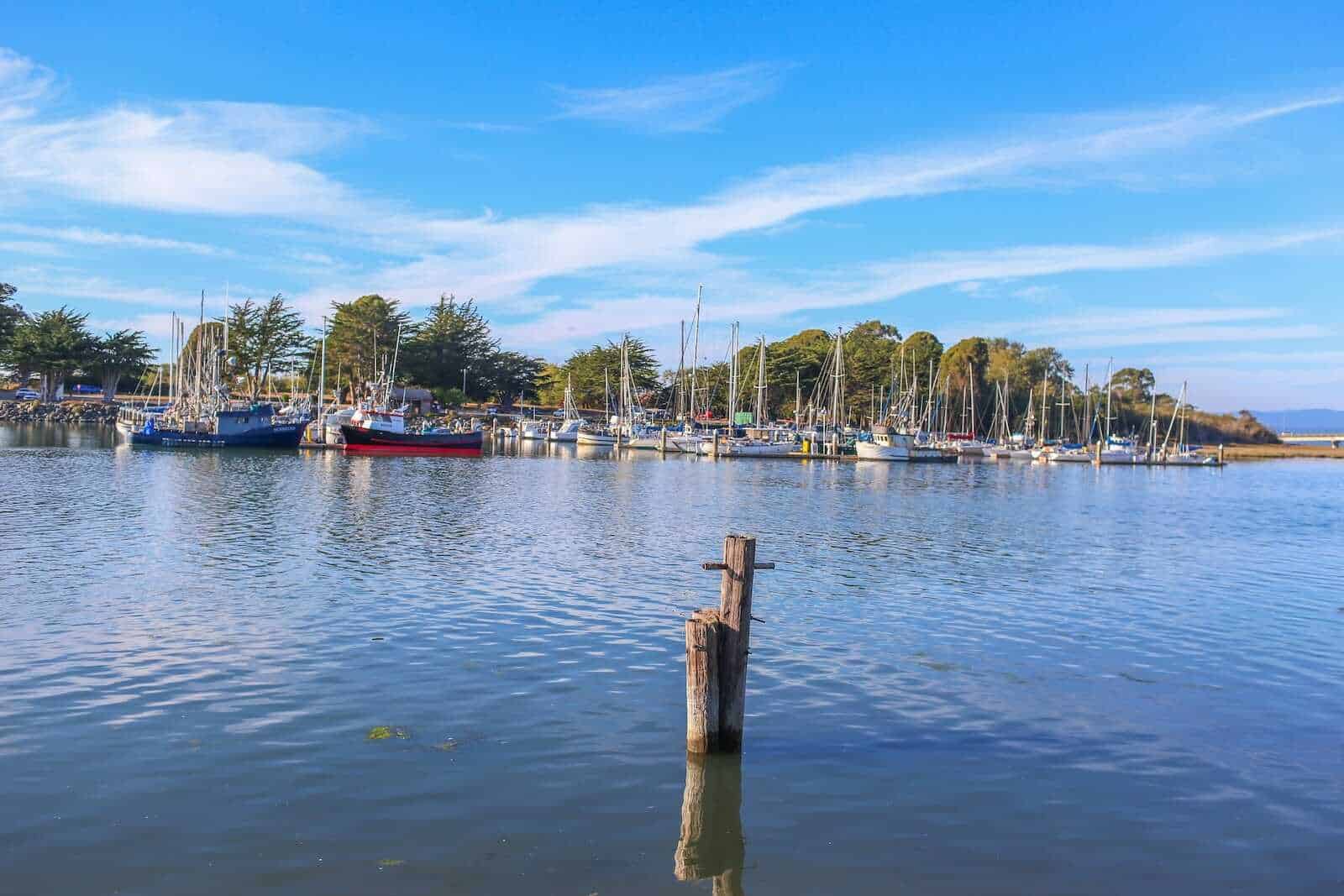
Eureka and the North Coast — California’s most affordable coastal market, surrounded by old-growth redwoods and the Pacific Ocean
2026 Economic Outlook
- Cal Poly Humboldt enrollment growth continuing post-rebranding
- St. Joseph Hospital (Providence) expansion adding healthcare jobs
- Remote worker migration from Bay Area and Sacramento ongoing
- North Coast tourism recovering and expanding beyond summer peak
- Humboldt Bay commercial fishing stabilizing after regulatory adjustments
- Old Town Eureka revitalization adding commercial and residential investment
The North Coast Investment Case: Honest Assessment
The case for investing: California’s only sub-$450,000 median coastal market. Genuine supply constraint from rugged terrain and limited developable land. Multi-driver rental demand (university, healthcare, remote workers, tourism). Cap rates of 5.5–7.5% that don’t exist elsewhere on the California coast. Victorian-era housing stock creates unique value-add opportunity. Growing popularity with remote workers creating a new higher-income tenant class.
The honest caveats: This is a small, remote market. Property management infrastructure is limited compared to larger California cities. Finding qualified contractors takes longer. Tenant pool is smaller, though demand relative to supply is strong. The region’s economic history includes periods of contraction tied to timber industry decline. Local management relationships are not optional — they are essential. Investors who treat Humboldt County like a hands-off passive investment market frequently underperform.
Historical Performance
| Period | Market Driver | Avg Annual Appreciation | Key Event |
|---|---|---|---|
| 2010–2015 | Recovery, healthcare and university stability | 3–5% | Market rebounds moderately; healthcare and university provide employment floor |
| 2016–2019 | Cannabis economy peak, early Bay Area spillover | 5–8% | California cannabis legalization changes Emerald Triangle economics; first Bay Area remote workers arrive |
| 2020–2022 | Remote work migration, pandemic outdoor lifestyle shift | 14–20% | Eureka median surges from ~$280K to ~$400K; remote workers discover North Coast lifestyle |
| 2023–2024 | Rate normalization, stabilization | 1–4% | Prices hold; Cal Poly Humboldt rebranding drives enrollment and housing demand |
| 2025–2026 | Cal Poly growth, healthcare expansion, continued remote work | 4–6% (projected) | CPH enrollment growth continues; Providence healthcare expansion; tourism growing year-round |
Demographic Trends Driving Demand
- Cal Poly Humboldt Enrollment Growth — The 2022 Cal Polytechnic rebranding elevated the university’s profile and has driven growing enrollment interest. The university has limited on-campus housing capacity, meaning a significant portion of the student population must find off-campus rentals in Arcata and Eureka
- Remote Worker Migration — Bay Area tech workers priced out of or choosing to leave urban California discovered the North Coast during 2020–2022 and many have not left. The lifestyle — old-growth redwoods, Pacific surf, small-city community — is genuinely unique and incomparable within California. These remote workers represent a permanently elevated premium rental tier
- Healthcare Employment — St. Joseph Hospital (Providence) is Humboldt County’s largest private employer and continues expanding its regional healthcare network. Nursing, physician, and healthcare administration staff need quality housing in a market that has chronically underbuilt relative to demand
- Tourism Economy — Redwood National and State Parks draw millions of visitors annually. The broader North Coast tourism economy — Avenue of the Giants, Trinidad, the Lost Coast — creates hospitality and service employment that supports workforce rental demand
- Limited Supply Constraint — Eureka and Humboldt County face extreme terrain-based development constraints. Coastal bluffs, redwood forests, Humboldt Bay wetlands, and mountainous topography mean that developable land for new housing is severely limited. New construction has lagged demand for decades
- Government and Education Employment — Humboldt County government, public schools, and Cal Poly Humboldt provide a stable government employment base that anchors the market through economic cycles
📚 New to real estate investing? Master the fundamentals with our professional course Learn more →
2. Neighborhood Hotspots
Eureka and North Coast Investment Map
Interactive map of North Coast investment neighborhoods. Green stars show top hotspots, blue circles mark established markets, and orange circles highlight emerging areas.
Core Investment Neighborhoods
Detailed Submarket Analysis
| Neighborhood | Price Range | Cap Rate | Primary Driver | Best Strategy |
|---|---|---|---|---|
| Arcata / CPH Area | $480K–$680K | 5.5–7.5% | Cal Poly Humboldt students and faculty | By-the-room student housing, faculty rentals |
| Henderson Center (Eureka) | $370K–$510K | 5.5–6.8% | Remote workers, healthcare, walkability | Passive buy-and-hold, professional tenants |
| McKinleyville | $440K–$580K | 5.0–6.2% | Family demand, newer construction, airport access | Family rental, passive |
| Old Town Eureka | $310K–$490K | 5.8–7.5% | Revitalization, remote workers, Victorian | Value-add, Victorian restoration, revitalization |
| Fortuna | $330K–$470K | 5.5–6.8% | Healthcare, family demand, affordability | Healthcare workforce, family rental |
| Trinidad / Westhaven | $550K–$1.2M+ | 5.0–8.0% STR | Coastal premium, vacation rental, extreme scarcity | STR, premium long-term, appreciation |
Expert Insight: “Humboldt County is the market that rewards the investors who understand it and punishes the ones who don’t. The returns are real — I’ve managed properties here generating 6–7% cap rates for a decade, which you simply can’t get anywhere else on the California coast. But you cannot manage this market from a spreadsheet in Los Angeles. You need boots on the ground, contractor relationships, and property management that knows the tenant pool. The investors who come in thinking it works like San Diego or Sacramento are always disappointed. The ones who engage properly are always glad they found it.” — Lisa Huang, Property Manager, North Coast Property Solutions
3. Property Types
| Investment Goal | Best Property Type | Best Areas | Min Capital |
|---|---|---|---|
| Maximum Yield | Student housing (by-the-room) | Arcata within 1 mile of CPH | $140,000+ |
| Best Passive Investment | SFH targeting remote workers / healthcare | Henderson Center, McKinleyville | $110,000+ |
| Best Cash Flow | Small multifamily | Central Eureka, central Arcata | $155,000+ |
| Unique / STR | Coastal STR / Victorian restoration | Trinidad, Old Town Eureka | $150,000+ |
Don’t guess the costs. Our Complete Renovation & Remodeling Cost Guide covers 400+ pages of project-by-project breakdowns with real contractor pricing ranges.
4. Cost Analysis
Acquisition Cost Breakdown (North Coast)
| Expense Item | Typical Cost | Example ($420,000 Property) | Notes |
|---|---|---|---|
| Down Payment | 25% | $105,000 | All North Coast properties well under conforming limit — accessible conventional rates |
| Closing Costs | 2–3% | $8,400–$12,600 | Title, escrow, lender fees; Humboldt County transfer tax applies |
| Home Inspection | $450–$650 | $550 | Include moisture/mold inspection — North Coast fog and rain make this critical |
| Pest / Dry Rot Inspection | $150–$350 | $250 | Critical on the North Coast — wet climate accelerates dry rot; can be extensive in older Victorians |
| Initial Renovation / Moisture Remediation | 0–10% of price | $0–$42,000 | Victorian-era and older stock often needs moisture work, dry rot repair, insulation |
| Reserves | $10,000–$18,000 | $12,000 | Roof and moisture are primary capital risks in this wet climate |
| TOTAL MINIMUM ENTRY | ~32–42% of value | $126,200–$190,400 | Lowest entry capital requirement of any California coastal investment market |
Sample Cash Flow Analysis: Henderson Center Eureka 3BR SFH
| Item | Monthly | Annual | Notes |
|---|---|---|---|
| Gross Rent | $2,150 | $25,800 | 3BR Henderson Center, remote worker tenant, updated home |
| Less Vacancy (5%) | -$108 | -$1,290 | North Coast vacancy is tight; professional tenants stay 2+ years |
| Property Taxes | -$368 | -$4,410 | ~1.05% of $420K purchase price |
| Insurance | -$180 | -$2,160 | North Coast coastal proximity and older housing stock increases insurance cost |
| Property Management (10%) | -$215 | -$2,580 | Essential — local PM is non-negotiable for out-of-area investors in this market |
| Maintenance + CapEx (10%) | -$215 | -$2,580 | Wet climate requires higher maintenance budget — moisture, exterior upkeep, roofing |
| Net Operating Income | $1,064 | $12,780 | Before mortgage; strong NOI for California coastal property |
| Mortgage ($420K, 25% down, 6.5%, 30yr) | -$1,996 | -$23,952 | $315K loan; conventional — no jumbo, unlike most California coastal markets |
| NET CASH FLOW | -$932 | -$11,172 | Moderate negative; best negative carry ratio of any California coastal market |
| Arcata 4BR Student Housing (by-room, $850/room) | +$280 | +$3,360 | By-the-room model generates actual positive cash flow; $560K purchase |
| Cap Rate (SFH) | 3.04% | NOI / Purchase; strong for California coastal property | |
| Total Return (5% appreciation) | ~17% | Including equity, appreciation, principal paydown |
The by-the-room Arcata student housing comparison demonstrates the most compelling income opportunity on the North Coast. A 4BR Arcata property at $560,000 with 4 rooms at $850/month generates $3,400 gross rent — after all expenses including the higher management requirements of student housing, this model produces approximately +$280/month positive cash flow. For an investor seeking actual coastal California positive cash flow, this is one of the very few paths that genuinely delivers it at current interest rates.
Expert Insight: “People always ask me why Eureka is so cheap compared to every other California coastal city. The honest answer is isolation. Eureka is 280 miles from San Francisco and there’s no easy way to get there. That geographic isolation is the reason prices are low — and it’s also the reason prices will continue growing, because remote work has made the isolation matter much less than it used to. We had a one-way ticket to becoming another expensive California coastal city as soon as the technology allowed people to work from anywhere. That process is underway. Investors who buy now are buying ahead of that curve.” — Dave Thompson, Broker, Humboldt Bay Real Estate
5. Legal Framework
⚠️ California Landlord-Tenant Law and North Coast Notice
Eureka, Arcata, and other North Coast cities are governed by California statewide landlord-tenant law. The City of Arcata enacted a Rent Stabilization Ordinance that applies to certain rental properties in Arcata — a meaningful difference from Eureka. Always consult a California-licensed real estate attorney and verify current local ordinances, as regulations vary between Humboldt County communities.
California AB 1482 and Arcata Rent Control
- AB 1482 (Statewide): Annual rent increases capped at 5% plus local CPI or 10% total for covered properties throughout Humboldt County. Just cause eviction required after 12 months of tenancy for qualifying units.
- Arcata Rent Stabilization Ordinance (RSO): Arcata has a local rent stabilization ordinance that applies to residential units built before a certain date and not exempt under state law. This is stricter than statewide AB 1482 in some respects. Investors buying in Arcata must verify current RSO provisions — they differ from the statewide law and affect rent increase limits and eviction procedures for covered units.
- Eureka: No additional local rent control beyond AB 1482. More straightforward than Arcata for landlords operating covered units.
- SFH Exemption: Individual-owned SFH and condos are exempt from AB 1482 if proper written notice is served. In Arcata, verify whether the RSO has separate provisions for SFH before relying on the state-law exemption.
- Student Housing Note: By-the-room rental of individual bedrooms is treated as separate tenancies in some jurisdictions. Consult a California attorney about how Arcata’s RSO applies to by-the-room student housing before acquiring properties for this strategy.
North Coast-Specific Considerations
- Coastal Commission Zone: Properties in Eureka’s waterfront areas and coastal bluff communities may be subject to California Coastal Commission jurisdiction. Any development, significant renovation, or construction in the coastal zone requires a Coastal Development Permit (CDP). Verify coastal zone status before any planned renovation.
- Moisture and Habitability: California Civil Code’s habitability requirements include maintaining adequate weather-proofing, protection from dampness, and functioning heating. The North Coast’s wet climate makes moisture intrusion an active habitability concern — proactive maintenance is a legal obligation, not just a good practice.
- AB 12 Security Deposits: Maximum one month’s rent (effective 2024). Careful upfront screening is more important than ever.
- Short-Term Rental Permits: Both Eureka and Arcata require STR permits. Verify current permit availability and neighborhood caps with each city before purchasing with STR intent. Humboldt County has also been actively reviewing STR regulations in unincorporated areas including Trinidad and McKinleyville.
- Cannabis-Adjacent Properties: Properties near active cannabis cultivation or processing operations may face tenant concerns, insurance complications, and in some cases local ordinance restrictions. Review the specific property’s neighborhood before purchase.
Key Resources
- City of Eureka: ci.eureka.ca.gov
- City of Arcata: cityofarcata.org
- Arcata RSO: cityofarcata.org/rent-stabilization
- Humboldt County: humboldtgov.org
| Regulation | Eureka | Arcata | Investor Strategy Response |
|---|---|---|---|
| Rent Control | AB 1482 only | AB 1482 + Arcata RSO | In Arcata, verify RSO coverage before any purchase; SFH exemptions may differ |
| Just Cause Eviction | After 12 months (AB 1482) | AB 1482 + RSO provisions | Screen tenants rigorously; document all violations from day one |
| STR Permits | Required; verify availability | Required; verify availability | Confirm permit status directly with each city before STR-intended purchase |
| Coastal Commission | Waterfront areas only | Bay-adjacent areas | Verify coastal zone status for any renovation project near waterfront |
| AB 12 Deposits | Max 1 month (2024) | Max 1 month (2024) | Rigorous screening essential |
6. Step-by-Step North Coast Investment Playbook
Choose Your North Coast Strategy
CPH Student Housing (Arcata)
Buy 4–5BR home within 1 mile of Cal Poly Humboldt. Rent by the room. Achieve the market’s highest yields. Accept active management requirements — student turnover, by-the-room leasing, summer occupancy management.
Remote Worker Professional (Eureka)
Buy renovated SFH in Henderson Center or McKinleyville. Market to Bay Area remote workers seeking North Coast lifestyle at Eureka pricing. 2+ year tenancies, excellent property care, minimal management demands.
Victorian Restoration / Value-Add
Acquire dated Victorian in Old Town Eureka or adjacent areas. Restore to high standard. Capture premium rents from remote workers and creative class. Old Town’s revitalization momentum adds appreciation upside on top of renovation-forced equity gains.
Trinidad Coastal STR
Buy ocean-view property in Trinidad or Westhaven. Operate as STR with professional management. Access California’s most dramatic affordable coastal scenery — dramatic headlands, sea stacks, redwood access. Very limited supply makes permits extremely valuable.
The Non-Negotiable: Local Management Infrastructure
This is the most important operational insight for any North Coast investor: You cannot manage Humboldt County properties remotely without robust local infrastructure. This is not a recommendation — it is a requirement that separates successful North Coast investors from unsuccessful ones.
- Property management firms: Humboldt County has a limited but capable property management industry. Interview at least 3 firms before selecting one. Verify they have experience with your specific property type (student housing, Victorian, SFH) and understand both Arcata’s RSO and Eureka’s standard AB 1482 framework.
- Contractor network: Finding qualified contractors in Humboldt County takes longer than in larger metros. The most important contractors to identify before you need them: a licensed plumber familiar with older North Coast plumbing, a roofer experienced in wet-climate roof maintenance, and a moisture/dry rot remediation specialist. Get these relationships established before purchasing.
- Local bank or credit union relationship: North Coast community lenders (Redwood Capital Bank, Umpqua Bank’s local branches) understand the local market in ways that out-of-state lenders often don’t. A local banking relationship also helps with refinancing and portfolio loans down the road.
- Response time standards: Moisture problems in the North Coast’s wet climate can escalate from minor to expensive in weeks. Your management infrastructure must be able to respond to roof leaks, moisture intrusion, and exterior maintenance needs within 24–48 hours — not the 5–10 day response times acceptable in drier California markets.
North Coast-Specific Due Diligence
Physical Due Diligence
- Moisture and mold inspection — mandatory on every North Coast purchase; the wet climate makes this the primary physical risk
- Dry rot inspection — particularly critical for Victorian-era properties; untreated dry rot can be structurally significant
- Roof condition — wet climate accelerates roofing material degradation; budget for replacement in 5–10 years on older roofs
- Foundation drainage — North Coast rainfall requires proper grading and drainage away from foundations
- Insulation quality — older North Coast homes are often under-insulated; poor insulation = high heating costs = tenant complaints
- Window sealing — coastal fog and rain penetrates poorly-sealed windows; check for moisture damage around all window frames
Market and Regulatory
- Arcata RSO coverage status — different from AB 1482; verify before purchase in any Arcata property
- Coastal zone status — confirm whether Coastal Commission jurisdiction applies before renovation plans
- STR permit status and city availability if STR is planned
- AB 1482 exemption status — confirm SFH exemption eligibility; verify no prior owner missed serving required notices
- Current tenant lease terms and rental history
- Any outstanding city code violations related to moisture, habitability, or fire safety
Marketing to Remote Workers — The North Coast’s Growing Premium Segment
The remote worker migration to Humboldt County is real, growing, and creates a permanently higher-income tenant tier that simply didn’t exist here before 2020. Marketing specifically to this demographic:
- Internet quality is your #1 amenity: Remote workers will pay $200–$400/month premium for fiber internet access over standard cable. Install gigabit fiber if available in your neighborhood. List the specific internet provider and speed prominently in every listing.
- Home office setup matters: Dedicated office space, good natural light, and quiet street-facing conditions command meaningful premiums. If the property has a bonus room or den, position it explicitly as a home office in your listing.
- List on remote worker platforms: Airbnb furnished longer-term (30-day+), Furnished Finder, and LinkedIn-targeted marketing toward Bay Area and Sacramento professionals reach the remote worker demographic better than standard Craigslist or Zillow.
- Emphasize lifestyle proximity: Distance to Redwood National Park, Humboldt Bay, surfing beaches, and hiking trails is a genuine amenity to this demographic. List these explicitly. “5 minutes from old-growth redwoods” is a compelling differentiator that exists nowhere else in California at this price point.
- Price quality over affordability: Remote workers earning Bay Area salaries are not looking for the cheapest rental. A renovated, well-maintained property listed at $2,400/month will outperform an unrenovated comparable at $1,900/month in this demographic — and generate better tenants over a longer hold.
7. Financing Options for the North Coast
| Loan Type | Down Payment | Rate Premium | Best For | North Coast Note |
|---|---|---|---|---|
| Conventional Investment | 25% | +0.5–0.75% | Strong income, good credit | All North Coast properties well under conforming limit — no jumbo needed anywhere in the county |
| DSCR Loan | 25–30% | +1.5–2.5% | Self-employed, no income verification | Student by-the-room model and multifamily can reach 1.0x DSCR — some of the better DSCR opportunities on the California coast |
| FHA (House Hacking) | 3.5% | Standard + MIP | First-time investors, owner-occupants | Excellent entry — 3.5% down on $380K Eureka duplex is ~$13,300; lowest-capital coastal California entry available |
| Portfolio / Local Bank | 20–25% | +1–2% | Multiple properties, complex income | Redwood Capital Bank and Umpqua Bank North Coast branches have portfolio products familiar with Humboldt market |
| Hard Money (Bridge) | 25–30% | 8–12% | Value-add Victorian restoration | Northern California hard money lenders active; use for Victorian restoration; refi after renovation is complete |
| STR Vacation Loan | 10–20% | +0.25–0.75% (second home) | Trinidad STR with personal use intent | Second home financing available if genuine personal use planned; better rates than pure investment loan |
The North Coast Financing Advantage: Every property in Humboldt County — even the most desirable Trinidad oceanfront — is under the conventional conforming loan limit. This is the only California coastal county where investors can access standard conventional investment property rates on every acquisition without exception. For investors building a portfolio of 3–5 North Coast properties, this conforming loan access across the entire portfolio means dramatically lower all-in financing costs compared to building a comparable coastal portfolio in Santa Cruz, Santa Barbara, or Monterey counties where jumbo loans become unavoidable.
8. Frequently Asked Questions

Knowledge Quiz: Eureka and North Coast Investment
Open Quiz
5 quick questions on what you just learned about North Coast investing
1) What is the structural reason Eureka home prices remain dramatically below every other California coastal city?
Answer: B
The guide explains that Eureka’s price discount vs. other California coastal cities is fundamentally a geographic isolation penalty — the 4.5–5 hour drive from San Francisco made the area impractical for Bay Area workers who needed to be physically present at their offices. Remote work has reduced this penalty dramatically for a growing segment of workers, and the guide argues this is the structural basis for the price convergence thesis: as isolation penalty diminishes, Eureka’s prices should catch up with its coastal peer markets.
2) What is the most important operational requirement the guide identifies as non-negotiable for North Coast investors?
Answer: D
The guide is emphatic that local management infrastructure is not a recommendation but a requirement. Humboldt County’s remoteness, limited contractor availability, wet-climate maintenance urgency (moisture problems can escalate quickly), and small property management market mean that investors who attempt remote management without proper local infrastructure consistently underperform. The guide devotes a full playbook step to building this infrastructure before acquisition.
3) Why is moisture inspection so critical on the North Coast compared to most California investment markets?
Answer: A
Humboldt County’s wet climate — 40–60+ inches of annual rainfall combined with persistent marine fog — makes moisture the primary physical risk for every North Coast property. The guide identifies moisture inspection as mandatory (not optional) on every North Coast purchase, and notes that dry rot in Victorian properties can be structurally significant. The wet climate also requires 10–12% annual maintenance budgeting vs. the 7–9% typical in dry California markets, and faster roof replacement cycles.
4) What makes Arcata legally distinct from Eureka for landlords?
Answer: C
Arcata’s local Rent Stabilization Ordinance predates AB 1482 and may impose stricter provisions than the statewide law — including tighter rent caps and broader coverage. The guide strongly recommends verifying Arcata RSO status for any Arcata property before purchase and consulting an Arcata-knowledgeable attorney before investing there. Eureka follows AB 1482 only, which makes it more straightforward from a regulatory standpoint.
5) What is the key strategy for managing summer vacancy in Arcata student housing?
Answer: B
The guide identifies summer occupancy as the primary cash-flow challenge in Arcata student housing and provides four specific strategies: 11–12 month lease structures with summer commitment discounts; facilitated subletting to visitors and seasonal workers during summer; mixing by-the-room rentals with year-round employed residents; and graduate student targeting for more stable occupancy. Critically, the guide recommends stress-testing deals at 85–90% annual occupancy — if it only works at 95%+, summer vulnerability makes it too risky.
Work With a Local Expert on the North Coast
We are building a verified network of real estate professionals across every market we cover.

About Our Expert Network
We are finalizing partnerships with verified real estate professionals across every market on Builds and Buys. Each expert is selected for hands-on investment experience, local market knowledge, and commitment to helping investors make sound decisions.
- Experience with Eureka, Arcata, and North Coast investment properties
- Understanding of Arcata RSO vs. Eureka AB 1482 framework
- Cal Poly Humboldt student housing strategy expertise
- Victorian restoration and Old Town revitalization knowledge
- Local contractor and moisture remediation specialist referrals
- Remote worker marketing strategy and premium rental positioning
Services Covered
- Property sourcing and acquisition
- Investment analysis and underwriting
- Buyer representation
- Student housing strategy
- Victorian restoration guidance
- Remote worker marketing strategy
- Legal and title referrals
- Property management referrals
- Insurance referrals (wet climate)
- Contractor referrals (moisture specialists)
- STR permit guidance
- Exit strategy planning
Get Connected or Join Our Network
Looking for a local expert for your North Coast investment? We will connect you with the right professional.
Contact us at support@buildsandbuys.com
Find Specialized North Coast Real Estate Professionals
Ready to Invest on the North Coast?
Eureka and the North Coast represent California’s last great coastal investment value. Every structural requirement of a sound long-term investment is present: genuine supply constraint from rugged terrain and limited developable land, multi-driver rental demand from the university, healthcare, and growing remote worker demographic, cap rates of 5.5–7.5% that don’t exist anywhere else on the California coast, and a price convergence thesis driven by the permanent structural shift of remote work reducing the region’s historic isolation penalty. This is not a market for passive, hands-off investors. But for investors who engage properly — with local management, local contractors, and realistic expectations — the North Coast offers what increasingly few California markets can: genuine cash flow and genuine appreciation potential in the same investment.
Continue Your Research
For further guidance, explore our State-by-State Investor guides, browse our expert articles, or follow our Step-by-Step Investment Guide.



