
South Lake Tahoe Real Estate Investment Guide For 2026
A comprehensive resource for investors targeting one of California’s most dynamic mountain resort markets — where year-round recreation, remote worker demand, vacation rental income, and severe supply constraints combine to create compelling long-term investment opportunities in 2026
Quick answers: Top 5 most searched South Lake Tahoe investment questions ▼
Migration data: Where people are moving from to South Lake Tahoe ▼
In This Guide
Click on any section to navigate directly to that content
1. South Lake Tahoe Market Overview
Market Fundamentals
South Lake Tahoe is one of California’s most structurally unique real estate markets. Physically surrounded by the Tahoe Regional Planning Agency (TRPA) environmental protection zone, the city cannot grow outward. Every home that exists is essentially irreplaceable. Visitor demand runs 15+ million annually. Remote workers have permanently swelled the full-time population. And the hospitality industry creates a persistent workforce rental demand that the existing housing stock was never built to satisfy.
Key economic indicators:
- Population: ~22,000 city, ~65,000 greater Tahoe basin
- Major Employers: Caesars Entertainment (Harrah’s/Harveys), Heavenly Mountain Resort (Vail Resorts), Barton Health, El Dorado County, South Tahoe Public Utility District
- Tourism: 15+ million annual visitors; $5B+ annual economic impact to Tahoe region
- Remote Worker Influx: Est. 4,000–6,000 Bay Area and Sacramento remote workers permanently relocated post-2020
- TRPA Development Limit: Hard cap on new construction preserving existing supply permanently
- Year-Round Recreation: Skiing (Nov–Apr), hiking/biking (May–Oct), lake activities (Jun–Sep)
The TRPA’s strict environmental regulations, which require environmental threshold scores for any new construction, effectively mean the housing supply in the Tahoe basin is permanently constrained. This single regulatory reality underpins the entire long-term investment case for South Lake Tahoe real estate.
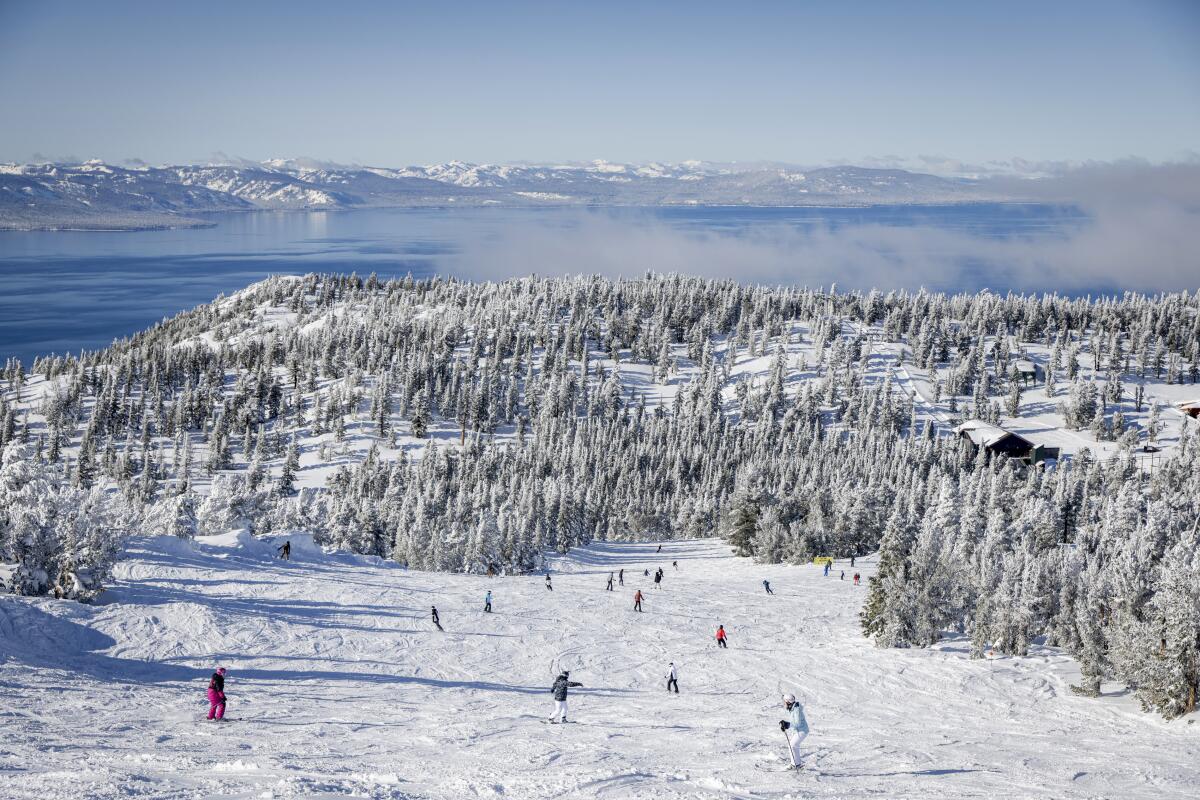
South Lake Tahoe — where TRPA supply constraints, year-round recreation, and remote worker demand converge
2026 Economic Outlook
- Vail Resorts continued investment in Heavenly Mountain infrastructure
- Barton Health expansion increasing healthcare employment
- Post-Caldor Fire rebuilding creating renovation and new-build opportunities
- Climate change extending shoulder seasons and growing summer visitation
- Continued Bay Area and Sacramento remote worker relocation
- STR regulatory environment stabilizing after 2022–2024 reform period
Investment Climate
South Lake Tahoe supports two distinct investor profiles that rarely overlap cleanly:
- STR/vacation rental investors — seeking gross yields of 8–12% from short-term guests, accepting high operating costs, active management requirements, and regulatory complexity in exchange for strong gross income
- Long-term appreciation investors — buying for 7–15+ year holds, accepting negative or break-even cash flow, banking on TRPA supply constraints and continued remote worker migration to drive values
- Hybrid investors — using VHR permit properties for STR in peak seasons (ski season, July–August) and transitioning to long-term rentals during shoulder season to optimize occupancy and income
The critical variable that determines which strategy is available to you is VHR permit status. Properties without existing, transferable VHR permits cannot legally operate short-term rentals in the city. Always verify permit status before purchase if STR income is part of your thesis.
Historical Performance
| Period | Market Driver | Avg Annual Appreciation | Key Event |
|---|---|---|---|
| 2010–2015 | Post-recession recovery, growing STR market | 4–6% | Airbnb popularizes Tahoe cabin rentals; investor interest grows |
| 2016–2019 | STR boom, ski resort investment, tourism growth | 6–9% | VHR permit regulations tighten; supply constrained further |
| 2020–2022 | Pandemic remote work migration, outdoor lifestyle demand | 18–28% | Median prices surge from ~$450K to ~$700K; inventory collapses |
| 2023–2024 | Rate normalization, market stabilization | 2–5% | Caldor Fire recovery; prices hold despite national rate headwinds |
| 2025–2026 | Rate stabilization, continued remote work demand | 5–8% (projected) | TRPA supply constraint permanent; summer tourism expanding |
Demographic Trends Driving Demand
- Remote Work Permanence — Bay Area tech workers with Tahoe second homes converting to primary residences; permanently removing units from the rental pool and increasing competition for remaining inventory
- Year-Round Tourism — Climate change has extended the shoulder seasons; summer visitation now rivals winter; STR demand is less concentrated in ski season than it was a decade ago
- Hospitality Workforce — Casino and ski resort employees earn modest wages but need local housing; chronic shortage of workforce housing creates persistent long-term rental demand
- Caldor Fire Rebuilding — The 2021 Caldor Fire destroyed significant housing in nearby El Dorado County; displaced families created additional demand pressure in South Lake Tahoe that has not fully resolved
- Healthcare and Education — Barton Health system and Lake Tahoe Unified School District employ stable mid-income workforces that need year-round rentals
- Retiree Lifestyle Migration — Affluent retirees from California’s coast seeking mountain lifestyle and lower El Dorado County cost of living vs. coastal markets
📚 New to real estate investing? Master the fundamentals with our professional course Learn more →
2. Neighborhood Hotspots
South Lake Tahoe Investment Neighborhood Map
Interactive map of South Lake Tahoe’s investment neighborhoods. Green stars show top hotspots, blue circles mark established markets, and orange circles highlight emerging areas.
Core Investment Neighborhoods
Detailed Submarket Analysis
| Neighborhood | Price Range | STR Gross Yield | Growth Drivers | Best Strategy |
|---|---|---|---|---|
| Tahoe Keys / Lakeshore | $850K–$3.5M+ | 7–10% | Waterfront scarcity, marina, highest nightly rates | Premium STR, long-term appreciation |
| Al Tahoe / Bijou | $550K–$950K | 8–11% | Heavenly Village proximity, year-round, accessible | Balanced STR + appreciation |
| Stateline / Heavenly Corridor | $500K–$1.2M | 8–12% | Ski access, casinos, winter peak demand | Ski-season STR, hybrid strategy |
| Meyers / Upper Truckee | $480K–$750K | 5–7% | Affordability, full-time residents, remote workers | Long-term rental, affordable entry |
| South Y / Ski Run Blvd | $480K–$850K | 6–9% | Marina access, central location, retail | Mid-range STR, year-round demand |
| Tahoe Paradise / Christmas Valley | $500K–$780K | 6–8% | Residential feel, river access, affordability | STR + long-term hybrid, value play |
| Bijou Park / El Dorado Beach | $520K–$900K | 7–9% | Beach access, improving STR, lake proximity | Value-add, emerging STR performance |
Expert Insight: “The single biggest mistake I see new Tahoe investors make is buying a property without an existing VHR permit assuming they can get one later. The city paused new permit issuance in several neighborhoods and the process is neither guaranteed nor fast. Always buy with an existing, transferable permit already attached to the property if STR income is your primary strategy. Budget at least 20–30% of your acquisition cost for marketing, management, supplies, and compliance. Tahoe is an active market — passive operation does not produce good results.” — Karen Mitchell, STR Property Manager, Tahoe Mountain Rentals
3. Property Types
| Investment Goal | Best Property Type | Best Neighborhoods | Minimum Capital |
|---|---|---|---|
| Maximum STR Income | Waterfront cabin with VHR permit | Tahoe Keys, Al Tahoe lakefront | $300,000+ |
| Best Risk-Adjusted Returns | Renovated cabin, hybrid STR/LTR | Al Tahoe, Bijou, Stateline corridor | $175,000+ |
| Lowest Management Burden | Long-term rental SFH | Meyers, South Y, Tahoe Paradise | $150,000+ |
| Best Value-Add Upside | Dated cabin needing full renovation | Bijou Park, Al Tahoe, Bijou | $200,000+ |
Don’t guess the costs. Our Complete Renovation & Remodeling Cost Guide covers 400+ pages of project-by-project breakdowns with real contractor pricing ranges.
4. Cost Analysis
Acquisition Cost Breakdown (South Lake Tahoe)
| Expense Item | Typical Cost | Example ($720,000 Property) | Notes |
|---|---|---|---|
| Down Payment | 25% (investment) | $180,000 | Standard for investment / second home property |
| Closing Costs | 2–3% | $14,400–$21,600 | Title, escrow, lender, recording |
| Home Inspection | $500–$800 | $650 | Include roof, chimney, and snow load evaluation |
| Septic Inspection | $300–$600 | $450 | Critical — septic replacement in Tahoe can run $15,000–$40,000 |
| Initial Renovation / Furnishing | $25,000–$150,000 | $50,000–$80,000 | Tahoe STR market rewards quality; hot tub alone $8K–$15K |
| VHR Permit (if not included) | Paid via purchase price premium | $20,000–$60,000 price premium | Existing VHR permits are priced into the property; new permits not available in many areas |
| Reserves (6 months + seasonal) | $20,000–$35,000 | $25,000 | Seasonal cash flow variability requires larger reserves than typical rentals |
| TOTAL MINIMUM ENTRY | ~38–48% of purchase price | $270,000–$367,000 | Significant upfront capital required; renovation is not optional for competitive STR |
Sample STR Cash Flow Analysis: Al Tahoe 3-Bedroom Cabin with VHR Permit
| Item | Monthly Avg | Annual | Notes |
|---|---|---|---|
| Gross STR Revenue | $7,000 | $84,000 | 3BR renovated cabin, VHR permit, hot tub, ~65% annual occupancy |
| STR Platform Fees (3%) | -$210 | -$2,520 | Airbnb/VRBO host fee |
| STR Management (28%) | -$1,960 | -$23,520 | Full-service Tahoe STR management; includes cleaning, supplies, guest services |
| Property Taxes | -$630 | -$7,560 | ~1.05% of $720K purchase price |
| Insurance (STR Policy) | -$350 | -$4,200 | STR-specific policy; higher than standard landlord policy |
| Utilities (guest-occupied) | -$400 | -$4,800 | Gas, electric, water, Wi-Fi, hot tub chemistry |
| HOA / VHR Permit Fee | -$100 | -$1,200 | Annual VHR permit renewal ~$900–$1,500/year |
| Maintenance + CapEx (10%) | -$700 | -$8,400 | Mountain environment is hard on properties; snow, moisture, high guest turnover |
| Net Operating Income | $2,650 | $31,800 | Before mortgage debt service |
| Mortgage ($720K, 25% down, 6.75%, 30yr) | -$3,510 | -$42,120 | $540K loan; note: vacation home financing may have different terms |
| NET CASH FLOW | -$860 | -$10,320 | Modest negative carry for a well-managed STR — far better than typical CA investment |
| Cap Rate | 4.4% | NOI / Purchase Price | |
| Total Return (6% appreciation + principal) | ~22% | Including equity buildup, appreciation on leveraged asset |
This analysis shows why Tahoe STR investing is compelling despite the management complexity. A near-breakeven monthly cash position on a well-managed STR, combined with 6%+ annual appreciation on a leveraged asset, generates total returns that are difficult to achieve anywhere else in California. The key variables are: VHR permit in place, quality renovation completed, and professional management engaged from day one.
Expert Insight: “People underestimate operating costs in Tahoe. The mountain environment is genuinely hard on properties — freeze-thaw cycles, snow loads, hot tub maintenance, and high guest turnover all add up. Budget 35–40% of gross STR revenue for all-in operating costs before debt service. If your numbers only work at 25% operating costs, the property probably doesn’t work. But if it survives the 40% stress test, you likely have a very strong investment that appreciates reliably while generating meaningful income.” — Tom Bergmann, CPA, Tahoe Investment Partners
5. Legal Framework
⚠️ Critical South Lake Tahoe VHR Compliance Notice
South Lake Tahoe’s Vacation Home Rental (VHR) permit system is among the most complex and actively enforced STR regulatory frameworks in California. Operating without a valid permit carries fines of up to $5,000 per day per violation. This guide provides an overview only — always consult a South Lake Tahoe real estate attorney and the City’s Community Development Department before operating any rental property. Regulations have changed significantly in 2022–2024 and continue to evolve.
South Lake Tahoe VHR Regulations
- VHR Permit Required: All short-term rentals (under 30 days) within city limits require a Vacation Home Rental permit issued by the City of South Lake Tahoe.
- Neighborhood Caps: Many neighborhoods have reached their permit limits. New permits are not available in capped areas — you must acquire a property with an existing, transferable permit.
- Good Neighbor Guidelines: Mandatory compliance with quiet hours (10 PM–8 AM), maximum guest occupancy, parking limitations, and trash management requirements. Violations can result in permit suspension or revocation.
- TOT Registration: All VHR operators must collect and remit Transient Occupancy Tax (TOT) to the city. Current rate: 10% of nightly rate. Platforms (Airbnb, VRBO) remit TOT automatically for city-registered properties.
- Annual Renewal: VHR permits require annual renewal with inspection. Permits do not transfer automatically with property sale — verify transferability with city before closing.
- Owner Presence: Some permit categories require owner or designated local agent to be contactable 24/7 during guest stays.
TRPA and California Regulations
- TRPA Environmental Rules: The Tahoe Regional Planning Agency governs all development and significant renovation in the basin. Any project that disturbs impervious surface, affects vegetation, or changes building footprint requires TRPA review. This is separate from city permits.
- California AB 1482: Statewide rent control applies to eligible long-term rental properties. Properties used primarily for STR that occasionally house long-term tenants may still be subject to just cause eviction requirements if a tenant establishes 12-month residency.
- Septic Regulations: South Lake Tahoe Utility District (STPUD) regulates all sewer connections and septic systems. All properties must be connected to sewer; no private septic permitted in city limits.
- Fire Defensible Space: El Dorado County requires 100-foot defensible space compliance for all properties. Post-Caldor Fire enforcement has intensified significantly.
- Snow Load and Building Codes: All construction and major renovation must comply with Tahoe’s exceptional snow load requirements. Non-compliant structures are insurance risks.
Key Resources
- City VHR Program: cityofslt.us/vhr
- TRPA: trpa.org
- STPUD (Utilities): stpud.dst.ca.us
- El Dorado County Planning: edcgov.us/planning
| Regulation | Requirement | Investor Impact | Strategy Response |
|---|---|---|---|
| VHR Permit | Required; many areas capped | Cannot operate STR without permit | Only buy properties with existing transferable permits for STR strategy |
| TOT (10%) | Must collect and remit | Reduces effective nightly rate by 10% | Platforms collect automatically; register with city to enable |
| Occupancy Limits | 2 per bedroom + 2 additional | Limits large group bookings in smaller homes | Buy properties with bedroom count matching target guest group size |
| TRPA Development | All significant work requires TRPA review | Renovation projects are slower and more expensive | Factor 30–60% premium on renovation timelines and costs vs. non-Tahoe projects |
| Good Neighbor Rules | Quiet hours, parking, trash rules | Neighbor complaints can trigger permit review | Set clear house rules; use noise monitoring devices; communicate proactively with neighbors |
| AB 1482 (Long-Term) | Just cause eviction after 12 months | Long-term tenants gain protections | For hybrid strategy, use short-term (30-day) agreements in shoulder season rather than longer leases |
6. Step-by-Step South Lake Tahoe Investment Playbook
Define Your Tahoe Strategy Before You Search
Your strategy determines what you look for. The three viable approaches in South Lake Tahoe today:
Active STR Strategy
Buy a property with an existing VHR permit. Renovate to modern Tahoe luxury standard. Engage professional STR management. Target 60–70%+ occupancy with strong nightly rates. Accept ~40% all-in operating cost ratio.
Long-Term Appreciation Hold
Buy in a supply-constrained neighborhood without VHR permit. Rent long-term to remote workers or casino/ski industry employees. Accept moderate negative cash flow, banking on TRPA supply limits driving long-term appreciation.
Hybrid Seasonal Strategy
VHR permit property operated as STR during peak ski (Dec–Mar) and summer (Jul–Aug) seasons. Transitioned to 30-day furnished rentals during shoulder seasons (Apr–Jun, Sep–Nov). Maximizes gross income while maintaining flexibility and reducing seasonal vacancy risk.
Value-Add Renovation Play
Acquire a dated cabin with VHR permit at below-market pricing. Invest $60,000–$150,000 in renovation. Immediately increase nightly rates by $100–$250 and annual gross income by $30,000–$60,000. Force significant equity gain through improved NOI capitalization.
Build Your Tahoe-Specific Team
- Tahoe-Specialist Real Estate Agent: Must understand VHR permit status, neighborhood caps, and how to verify permit transferability. This is non-negotiable — a general agent who doesn’t know Tahoe VHR regulations can cost you the entire investment thesis.
- STR Property Management Company: Tahoe has a robust professional STR management ecosystem. Full-service managers (Vacasa, Tahoe Getaways, Tahoe Mountain Rentals) charge 25–35% but handle everything. For remote investors, professional management is not optional.
- TRPA-Experienced Contractor: For renovation projects, you need a contractor with completed TRPA permit experience. TRPA reviews add time and cost; an experienced contractor already knows the submission requirements.
- California/El Dorado Real Estate Attorney: For VHR permit transferability verification, entity structuring, and any AB 1482 compliance on long-term rental components.
- STR-Specialized CPA: Tahoe STR properties generate complex tax situations — mixed personal use, depreciation strategies, TOT compliance, and California vs. federal treatment. Use a CPA familiar with vacation rental tax law.
Tahoe-Specific Due Diligence
Physical Due Diligence
- Roof condition and snow load rating — replacement costs $25,000–$70,000 in Tahoe
- Foundation and drainage — freeze-thaw cycles cause significant damage
- HVAC and heating system — mountain climate requires reliable heating; propane vs. natural gas distinction
- Hot tub condition and plumbing — replacement cost $8,000–$18,000; guests expect it
- Defensible space compliance — verify 100-foot clearance; non-compliant properties face insurance challenges
- TRPA coverage status — verify any impervious surface or vegetation impacts from prior work
Regulatory Due Diligence
- VHR permit number, current status, and transferability — verify directly with city before removing contingency
- Neighborhood cap status — confirm the neighborhood has not hit its permit limit, blocking future permit renewal
- Outstanding VHR violations — search city records for any prior violations tied to the permit
- HOA rental restrictions — if applicable, verify STR is explicitly permitted in CC&Rs
- TRPA permit history for any additions or improvements
- STR revenue history from seller — request 2+ years of actual booking data, not projected
Optimizing Your Tahoe STR Performance
- Listing quality: Professional photography, drone shots of lake/mountain views, and detailed amenity descriptions are table stakes in the Tahoe market. Properties with professional listing photography typically achieve 20–35% higher booking rates.
- Amenity investment: Hot tub, fast Wi-Fi, ski storage, EV charging, fireplace, and well-stocked kitchen are the baseline for Tahoe guests expecting premium experiences. Each amenity tier upgrade increases achievable nightly rates meaningfully.
- Dynamic pricing: Use dynamic pricing tools (PriceLabs, Wheelhouse) to capture premium rates on holiday weekends (Christmas, New Year’s, Presidents’ Day, 4th of July, Labor Day) and adjust automatically for low-demand periods.
- Shoulder season revenue: Market aggressively in May–June and September–October to remote workers seeking month-long “workcations.” These extended stays (30+ days) also sidestep VHR permit requirements for that period.
- Guest experience: Tahoe’s STR market is competitive. 5-star reviews drive direct booking inquiries and better Airbnb/VRBO algorithm placement. Invest in welcome packages, local activity guides, and rapid response to any guest issues.
7. Financing Options for South Lake Tahoe
| Loan Type | Down Payment | Rate | Best For | Tahoe Note |
|---|---|---|---|---|
| Second Home Conventional | 10–20% | +0.25–0.5% | Personal use + rental, owner intends to use seasonally | Better rates than investment property loans; requires genuine personal use intent |
| Investment Property Conventional | 25% | +0.5–0.75% | Pure investment, no personal use planned | Standard investment property terms; most Tahoe properties under conforming limit |
| DSCR (STR Income Based) | 25–30% | +1.5–2.5% | Self-employed, no income verification, STR income qualifying | Some DSCR lenders accept STR income (AirDNA data); verify lender familiarity with Tahoe market |
| Portfolio / Local Bank | 20–30% | +1–2% | Complex income, multiple properties, non-warrantable condos | El Dorado Savings Bank and Banner Bank have Tahoe-area portfolio products |
| Hard Money (Bridge) | 20–30% | 8–12% | Renovation value-add acquisitions | Use for value-add acquisition; refi to conventional once renovation complete and STR income documented |
| Cash Purchase | 100% | N/A | Competitive offers, renovation projects, maximum cash flow | Cash buyers win competitive situations; refi after 6–12 months of STR income documentation for best leverage terms |
Tahoe Financing Note: The second home vs. investment property classification has significant financial implications — second home loans offer better rates and lower down payments. However, lenders vary widely on how much STR activity is permissible for a property to qualify as a second home. Some lenders require the owner to use the property personally for at least 14 days per year or 10% of rental days. Discuss STR intent explicitly with your lender before committing to a loan structure, and work with a mortgage broker familiar with vacation property lending in mountain resort markets.
8. Frequently Asked Questions

Knowledge Quiz: South Lake Tahoe Real Estate Investment
Open Quiz
5 quick questions on what you just learned about South Lake Tahoe investing
1) What is the single most important due diligence step for any South Lake Tahoe STR purchase?
Answer: B
The VHR permit is the foundation of the entire STR investment thesis. Without a valid, transferable permit, you cannot legally operate short-term rentals in South Lake Tahoe. Many neighborhoods have hit permit caps meaning new permits are not available. The guide emphasizes verifying directly with the city — not relying on agent representations — before removing any contingency.
2) What regulatory body permanently limits new housing construction in the South Lake Tahoe basin?
Answer: C
The TRPA is a bistate (California and Nevada) environmental protection agency that governs all development in the Lake Tahoe basin. Its strict environmental threshold requirements effectively create a permanent hard cap on new construction in the basin — the single most important structural factor supporting long-term South Lake Tahoe real estate values.
3) According to the guide, what all-in operating cost ratio should investors stress-test their Tahoe STR numbers against?
Answer: D
The guide’s expert quote recommends stress-testing at 35–40% all-in operating costs before debt service. Mountain environment maintenance, high-turnover STR cleaning, full-service management fees (25–35%), utilities, insurance, and VHR permit costs all combine. If a deal only works at 25% operating costs, it probably doesn’t work in the real world.
4) What is the primary reason remote work has permanently changed the South Lake Tahoe real estate market?
Answer: A
The guide explains that pre-2020, South Lake Tahoe was primarily a weekend and seasonal destination. Remote work allowed Bay Area tech professionals to permanently relocate, converting what were second homes or seasonal rentals into primary residences. This simultaneously reduced rental supply and increased permanent demand — pushing median prices from ~$450K in 2019 to $650K+ by 2024.
5) Which neighborhood does the guide identify as the best balance of accessible entry price, STR performance, and year-round demand in South Lake Tahoe?
Answer: C
The guide explicitly calls Al Tahoe / Bijou the “sweet spot” for South Lake Tahoe STR investors — within walking or biking distance of Heavenly Village, casinos, and the lakefront, with entry prices significantly below Tahoe Keys and strong 8–11% gross STR yield. Tahoe Keys offers higher yields but requires dramatically more capital. Meyers offers lower prices but weaker STR performance.
Work With a Local Expert in South Lake Tahoe
We are building a verified network of real estate professionals across every market we cover.

About Our Expert Network
We are finalizing partnerships with verified real estate professionals across every market on Builds and Buys. Each expert is selected for hands-on investment experience, local market knowledge, and commitment to helping investors make sound decisions.
- Proven experience with STR/VHR permit properties and investment transactions
- Deep knowledge of South Lake Tahoe VHR regulations and neighborhood permit caps
- Guidance on TRPA compliance for renovation projects
- Access to off-market and pre-market opportunities
- Full transaction support from search through closing
- STR management company referrals and performance benchmarking
Services Covered
- VHR permit verification and acquisition
- Investment analysis and underwriting
- STR revenue benchmarking
- Buyer representation
- TRPA renovation guidance
- Vacation rental strategy
- Legal and title referrals
- STR management company referrals
- Insurance referrals (STR-specific)
- Contractor referrals (TRPA-experienced)
- 1031 exchange coordination
- Exit strategy planning
Get Connected or Join Our Network
Looking for a local expert for your Tahoe investment? We will connect you with the right professional for your market and strategy.
Contact us at support@buildsandbuys.com
Find Specialized South Lake Tahoe Real Estate Professionals
Ready to Invest in South Lake Tahoe?
South Lake Tahoe is one of California’s most structurally sound long-term real estate markets. TRPA regulations permanently cap supply. Year-round recreation demand continues to grow. Remote workers have permanently elevated the full-time population. And the vacation rental market, properly operated with valid permits and professional management, generates gross income that is nearly impossible to achieve in conventional California residential markets. For investors who approach the market with clear strategy, verified permits, and realistic operating cost assumptions, South Lake Tahoe delivers compelling returns across multiple economic cycles.
Continue Your Research
California State Guide
See how South Lake Tahoe compares to all other California markets.
Sacramento Guide
Compare with the nearest major metro — many Tahoe investors also hold Sacramento properties.
144-Lesson Course
University-level real estate education covering financing, law, strategy, and management.
For further guidance, explore our State-by-State Investor guides, browse our expert articles, or follow our Step-by-Step Investment Guide.



