
Visalia and Tulare Real Estate Investment Guide For 2026
A comprehensive resource for investors targeting two of California’s most underrated Central Valley markets — anchored by healthcare, agriculture, and logistics, with accessible entry prices and strong workforce housing demand in 2026
Quick answers: Top 5 most searched Visalia/Tulare investment questions ▼
Migration data: Where people are moving from to Visalia/Tulare ▼
In This Guide
Click on any section to navigate directly to that content
1. Visalia and Tulare Market Overview
Market Fundamentals
Visalia and Tulare sit at the heart of Tulare County, California’s most productive agricultural county by dollar value and one of the top-producing agricultural counties in the entire United States. Yet these markets are far more than farm towns. Visalia has evolved into the region’s undisputed commercial, healthcare, and retail hub — a clean, well-managed city of 145,000 that attracts professional residents who could live elsewhere but choose Visalia for its quality of life, cost of living, and proximity to both Sequoia National Park and major California highway corridors. Tulare, 8 miles to the south, is more agricultural in character but benefits from significant logistics investment driven by its Highway 99 positioning and hosts the World Ag Expo — the largest agricultural exposition on earth.
Key economic indicators across both markets:
- Combined Population: 215,000+ (cities), 475,000+ Tulare County
- Top Employer: Kaweah Health — 7,000+ employees, Tulare County’s largest
- Agriculture: Tulare County ranks #1 or #2 nationally in dairy, and top 5 in citrus, grapes, and almonds by production value
- Logistics: Amazon fulfillment and Walmart distribution in Tulare; multiple national distribution operators along Highway 99
- Median Household Income: $62,000 Visalia; $52,000 Tulare
- Rental Vacancy Rate: 4–6% Visalia; 5–7% Tulare
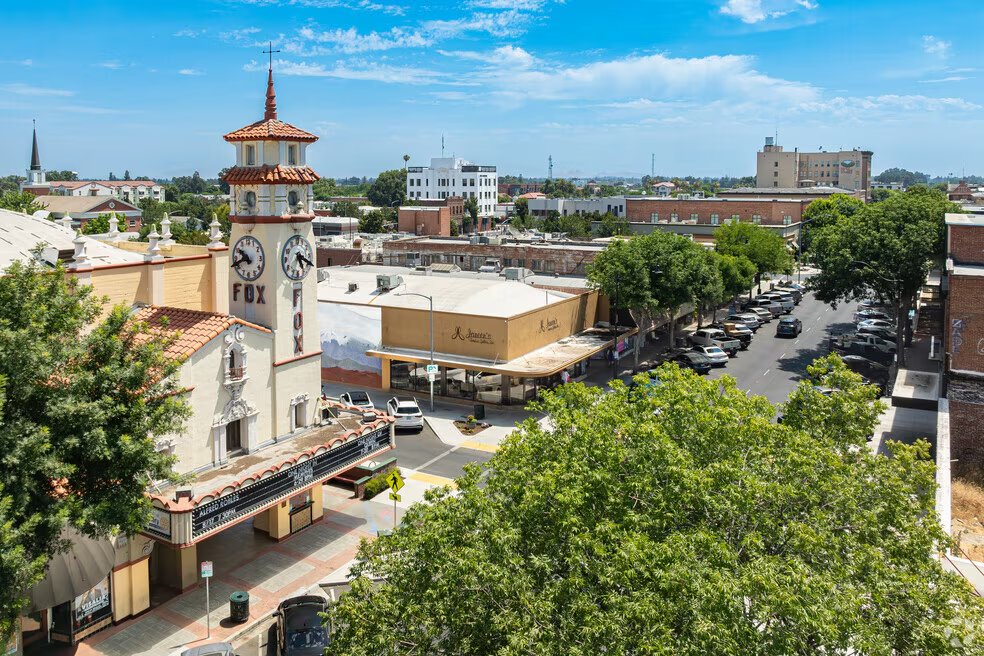
Tulare County’s agricultural and healthcare economy anchors consistent rental demand in both cities
2026 Economic Outlook
- Kaweah Health campus expansion adding healthcare employment and housing demand
- Amazon and logistics sector continuing to expand Tulare operations
- College of the Sequoias enrollment growth supporting student and young professional housing
- Agricultural commodity prices recovering, supporting ag management professional demand
- Highway 99 corridor investment attracting new commercial and logistics operations
- Remote worker migration from Bay Area and LA continuing to add higher-income renters
Visalia vs. Tulare — Investment Comparison
| Factor | Visalia | Tulare | Edge |
|---|---|---|---|
| Median Home Price | $375,000 | $310,000 | Tulare (lower entry) |
| Typical Rent (3BR) | $1,800–$2,050 | $1,500–$1,750 | Visalia (higher absolute) |
| Cap Rate Range | 4.5–6.0% | 5.5–7.5% | Tulare (higher yield) |
| Appreciation (10yr avg) | 5–7% | 4–6% | Visalia (stronger growth) |
| Tenant Quality | Professional / healthcare / management | Workforce / agricultural / logistics | Visalia (mid-high) |
| Management Intensity | Low–moderate | Moderate–high (workforce tier) | Visalia (easier) |
| Vacancy Rate | 4–6% | 5–7% | Visalia (lower) |
| Cash Flow (25% down) | -$200 to +$50/month | -$50 to +$300/month | Tulare (better income) |
Most experienced investors combine both markets in their portfolio — Visalia for quality and appreciation, Tulare for cash flow optimization and lower entry capital requirements.
Historical Performance
| Period | Market Driver | Avg Annual Appreciation | Key Event |
|---|---|---|---|
| 2010–2015 | Post-recession recovery, agricultural income growth | 4–7% | Kaweah Delta expansion; Amazon logistics entry into Tulare |
| 2016–2019 | Steady employment growth, Bay Area spillover begins | 5–8% | Visalia recognized as among California’s fastest-growing mid-size cities |
| 2020–2022 | Pandemic migration surge, affordability discovery | 16–22% | Remote workers and LA families flood Visalia; bidding wars common |
| 2023–2024 | Rate normalization, volume decline | 2–4% | Prices held well; rental demand remained firm throughout rate cycle |
| 2025–2026 | Healthcare expansion, logistics growth, rate stabilization | 4–6% (projected) | Kaweah Health campus expansion; Tulare logistics sector growing |
Demographic Trends Driving Demand
- Kaweah Health Expansion — The hospital’s ongoing campus growth and affiliated clinic network expansion consistently adds healthcare workers to the Visalia rental market, creating predictable new demand each year
- Agricultural Management Class — Tulare County’s multi-billion dollar agricultural economy supports a large management and professional class based primarily in Visalia, creating stable upper-mid-market rental demand
- Logistics Employment Growth — Amazon and Walmart’s Tulare facilities are among the county’s fastest-growing private employers, adding thousands of warehouse and logistics management workers annually
- College of the Sequoias — With 16,000+ students, COS creates meaningful demand for off-campus rentals and entry-level housing near the Visalia campus
- Remote Worker Migration — Visalia’s quality of life — clean streets, good schools, outdoor access, and 2-hour drive to both Bay Area and LA — makes it increasingly attractive to remote professionals maintaining coastal incomes
- Sequoia Gateway Appeal — Proximity to Sequoia and Kings Canyon National Parks supports some short-term rental and vacation home activity in the foothills east of Visalia
📚 New to real estate investing? Master the fundamentals with our professional course Learn more →
2. Neighborhood Hotspots
Visalia and Tulare Investment Map
Interactive map covering both cities. Green stars mark top hotspots, blue circles show established markets, and orange circles highlight emerging areas.
Core Investment Neighborhoods
Detailed Submarket Analysis: All Neighborhoods
| Neighborhood | City | Price Range | Cap Rate | Growth Drivers | Best Strategy |
|---|---|---|---|---|---|
| Northwest / Kaweah Corridor | Visalia | $380K–$560K | 4.5–5.8% | Healthcare workers, top schools, newer construction | Appreciation, professional rental |
| Central / Mooney–Akers | Visalia | $320K–$470K | 5.0–6.2% | Retail access, diverse employment, liquidity | Balanced returns, first investment |
| Southeast Visalia | Visalia | $280K–$400K | 5.2–6.5% | Affordability, renovation upside, diverse demand | Value-add, BRRRR |
| Downtown / Arts District | Visalia | $260K–$390K | 5.5–7.0% | Revitalization, government employment, arts scene | Value-add, multifamily, BRRRR |
| COS Campus Area | Visalia | $300K–$420K | 5.2–6.8% | Student demand, young professionals, room rental | Student rental, room-by-room |
| North Tulare / Amazon | Tulare | $250K–$360K | 5.8–7.5% | Amazon/Walmart workers, logistics growth | Cash flow, workforce housing |
| South Tulare | Tulare | $280K–$400K | 5.0–6.5% | Newer construction, family demand, growth | Family buy-and-hold |
| East Tulare / Affordable | Tulare | $200K–$290K | 6.5–8.5% | Workforce demand, Section 8, agriculture | Maximum yield, Section 8 |
Expert Insight: “Visalia is one of the cleanest, most underrated mid-size cities in California. People who visit expecting a dusty farm town leave surprised. The downtown arts district is genuinely vibrant, the schools are competitive, and the healthcare system anchors employment in a way that most small cities don’t have. For investors, the best opportunity right now is the northwest corridor near Kaweah Health — every expansion phase adds a new wave of medical professionals who need quality housing near work, and supply has not kept up with that demand.” — Patricia Medina, Principal Broker, Valley Investment Realty
3. Property Types
| Investment Goal | Best Property Type | Best Location | Minimum Capital |
|---|---|---|---|
| Maximum Appreciation | Newer SFH near Kaweah Health | Northwest Visalia | $100,000+ |
| Maximum Cash Flow | Tulare workforce SFH or small multifamily | North/East Tulare | $58,000+ |
| Balanced Returns | Mid-market 3BR SFH | Central Visalia | $82,000+ |
| Value-Add Upside | BRRRR fixer SFH or duplex | SE Visalia, Downtown Visalia, East Tulare | $80,000+ |
| Lowest Entry Cost | East Tulare affordable SFH | East Tulare | $53,000+ |
Don’t guess the costs. Our Complete Renovation & Remodeling Cost Guide covers 400+ pages of project-by-project breakdowns with real contractor pricing ranges.
4. Cost Analysis
Acquisition Cost Breakdown
| Expense Item | Typical Cost | Example ($345,000 Property) | Notes |
|---|---|---|---|
| Down Payment | 25% (investment) | $86,250 | Standard investment; 20% possible with strong qualifying profile |
| Closing Costs | 2–3% of price | $6,900–$10,350 | Title, escrow, lender fees — competitive with other Central Valley markets |
| General Inspection | $300–$500 | $400 | HVAC condition critical in San Joaquin Valley heat; check A/C age carefully |
| Pest / Termite Inspection | $150–$275 | $200 | Required by most lenders; termite pressure common in older Tulare County housing |
| Initial Make-Ready | $2,000–$15,000 | $3,500–$10,000 | Paint, flooring, appliances to reach market-ready condition |
| Property Management Setup | First month + leasing fee | $1,600–$3,300 | PM fees typically 8–10% in Visalia/Tulare; leasing fee 50–75% of one month |
| Reserves (6 months) | 6 months expenses | $7,500–$11,000 | HVAC, roof, and vacancy buffer |
| TOTAL MINIMUM ENTRY | ~30–36% of value | $106,350–$136,500 | Well below coastal California requirements; accessible for most investors |
Sample Cash Flow Analysis: Two Market Scenarios
Scenario A — Central Visalia 3BR SFH ($350,000 purchase, professional rental)
| Item | Monthly | Annual | Notes |
|---|---|---|---|
| Gross Rent | $1,875 | $22,500 | 3BR, Central Visalia, professionally managed |
| Less Vacancy (5%) | -$94 | -$1,125 | Low vacancy in established Visalia neighborhoods |
| Property Taxes (1.15%) | -$336 | -$4,025 | CA Prop 13 base rate; 2% max annual increase thereafter |
| Insurance | -$112 | -$1,344 | Standard landlord policy; reasonable rates in Central Valley |
| Property Management (9%) | -$169 | -$2,025 | Competitive PM rates in Visalia |
| Maintenance + CapEx (8%) | -$150 | -$1,800 | Budget for HVAC; San Joaquin Valley summers demand reliable A/C |
| Net Operating Income | $1,014 | $12,181 | Cap rate: 3.48% on $350K — honest before-mortgage return |
| Mortgage ($262.5K, 6.75%, 30yr) | -$1,702 | -$20,424 | 25% down on $350K; principal and interest |
| CASH FLOW | -$688 | -$8,243 | Negative but significantly better than comparable coastal CA market |
| Total Return (6% appreciation + equity) | ~17% | On $87,500 invested capital; appreciation carries the return |
Scenario B — North Tulare Workforce 3BR SFH ($265,000 purchase, Section 8)
| Item | Monthly | Annual | Notes |
|---|---|---|---|
| Gross Rent (Section 8 voucher) | $1,600 | $19,200 | Tulare County Housing Authority voucher rate, 3BR |
| Less Vacancy (2% — Section 8) | -$32 | -$384 | Government-backed payments; vacancy only between tenants |
| Property Taxes (1.15%) | -$254 | -$3,048 | Lower absolute tax on lower-priced Tulare property |
| Insurance | -$88 | -$1,056 | Standard landlord policy |
| Property Management (9%) | -$144 | -$1,728 | Ensure PM has Section 8 / HQS inspection experience |
| Maintenance + CapEx (10%) | -$160 | -$1,920 | Older Tulare housing stock; budget conservatively |
| Net Operating Income | $922 | $11,064 | Cap rate: 4.17% on $265K — better ratio than Scenario A |
| Mortgage ($198.75K, 6.75%, 30yr) | -$1,288 | -$15,456 | 25% down on $265K |
| CASH FLOW | -$366 | -$4,392 | Self-managed = +$144/month positive; much better than coastal CA |
| Total Return (5% appreciation + equity) | ~18% | On $66,250 invested; lower capital requirement amplifies percentage return |
Both scenarios show negative cash flow with professional management and conventional financing — the honest picture for most Central Valley markets at current rates. The key advantage over coastal California is the dramatically lower capital requirement and near-breakeven cash flow. A Visalia investor covers a smaller monthly deficit with far less capital at risk than a San Diego investor covering a much larger one. Multifamily and self-management both improve the picture substantially.
Expert Insight: “The smart play in this market is pairing a Central Visalia property for quality and appreciation with a North Tulare duplex for cash flow. The Visalia property gives you the upside story — healthcare employment, quality tenants, steady appreciation. The Tulare duplex gives you income offset. Together the portfolio cash flow is much closer to neutral than either alone, and you’re diversified across tenant profiles and employment sectors. Total capital for both is still less than a single San Diego property.” — James Reyes, Portfolio Advisor, San Joaquin Valley Real Estate
5. Legal Framework
✅ No Local Rent Control in Either City
Neither Visalia nor Tulare has adopted local rent control ordinances beyond California’s statewide AB 1482 framework. This is a meaningful landlord advantage — only state law applies, and single-family homes with proper AB 1482 exemption notices in the lease face no rent increase limitations. Compared to operating in Los Angeles, Oakland, or Sacramento, Visalia and Tulare are straightforward jurisdictions with predictable, consistent regulatory environments.
California State Regulations
- AB 1482 (Rent Cap + Just Cause): Applies to covered multi-unit properties built before January 1, 2005 without exemption notice. Caps increases at 5% + local CPI, max 10%. Just cause eviction required after 12 months. Single-family homes are exempt with proper written notice included in the lease — critical documentation for all SFH investors in both cities.
- AB 12 Security Deposit Cap (July 2024): Maximum one month’s rent for most residential properties. Requires stronger upfront screening — credit checks, references, income verification — and co-signers for higher-risk applicants.
- Source of Income Protections: California prohibits discrimination against Section 8 voucher holders. The Tulare County Housing Authority administers the local HCV program for both cities. Voucher rates in Tulare and Visalia are competitive with market rents in the workforce housing tier.
- HVAC Habitability: San Joaquin Valley summers regularly exceed 108°F. Functional air conditioning is considered practically required for habitability. Budget for HVAC service contracts and proactive unit replacement at the 12–15 year mark.
- Proposition 13: California’s property tax limitation caps annual increases at 2% after purchase, providing excellent tax cost predictability for long-hold investors at Visalia and Tulare’s accessible purchase prices.
Practical Compliance Guidance
- AB 1482 exemption notice: Include written AB 1482 exemption language in every SFH lease. Without it, the rent cap applies by default. This is a one-time lease setup that protects your ability to price to market at every renewal.
- Eviction process: California unlawful detainer in Tulare County Superior Court. Uncontested non-payment evictions typically take 35–60 days. Contested or just-cause disputes extend to 90–150 days. Document every lease violation from day one.
- Section 8 HQS inspection: If using Section 8 tenants, request an initial inspection from the Tulare County Housing Authority before marketing. HVAC, electrical, plumbing, and structural items must pass. Budget 2–3 weeks for inspection and any required repairs.
- Smoke/CO detectors: Required in all units; landlord responsible for installation and documentation at every move-in.
- Lead paint disclosure: Required for pre-1978 properties. Many Tulare and older Visalia homes fall in this category; use the federally required disclosure form.
Key Resources
- Tulare County Housing Authority: tularecounty.ca.gov/housing
- Visalia City Code Enforcement: visalia.city
- Tulare County Superior Court: tulare.courts.ca.gov
- California DRE: dre.ca.gov
| Regulation | Applies In | Key Requirement | Investor Action |
|---|---|---|---|
| Rent Cap (AB 1482) | Both cities | 5% + CPI max for covered units; SFH exempt with notice | Include AB 1482 exemption in every SFH lease |
| Just Cause Eviction | Both cities | Required after 12 months for covered properties | Document violations; serve proper 3-day notices |
| Security Deposit Cap | Both cities | One month’s rent maximum (AB 12) | Thorough screening; co-signers for higher-risk tenants |
| Section 8 Acceptance | Both cities | Cannot refuse based on voucher status | Apply consistent financial and character screening |
| HVAC Habitability | Both cities | Functional cooling practically required in summer | Service A/C annually; budget for replacement at 12–15 years |
| Lead Paint Disclosure | Pre-1978 properties | Federal disclosure required at lease signing | Use standard EPA disclosure form; keep signed copies |
6. Step-by-Step Visalia/Tulare Investment Playbook
Choose Your Strategy and City
The first decision is which market and strategy serves your investment goals. These are genuinely different markets with different risk-return profiles.
Visalia — Healthcare/Professional
Buy near Kaweah Health in Northwest Visalia. Target nurses, PAs, and medical management. Accept near-neutral cash flow for best appreciation and simplest management in the combined market.
Tulare — Cash Flow / Logistics
Buy near Amazon/Walmart in North Tulare. Target logistics workers, agricultural employees, and Section 8 voucher holders. Best yields in the combined market with lower appreciation upside.
Visalia — Value-Add / BRRRR
Buy dated properties in Southeast Visalia or downtown below market. Renovate to current standard. Refinance and repeat. Low Central Valley renovation costs make the spread very favorable.
Combined Portfolio Strategy
One Visalia mid-market SFH + one Tulare duplex. Visalia provides appreciation and tenant quality; Tulare provides income to offset Visalia’s negative carry. Total portfolio near cash-flow neutral with diversified employment exposure.
Build Your Local Team
- Investment Agent — Visalia/Tulare Specialist: Must know current rental comps by street, not just neighborhood averages. Should be able to tell you the typical lease-up time for a renovated 3BR in Central Visalia versus an older SFH in North Tulare. Ask for at-least-three investor client references.
- Property Manager with Section 8 Experience: If operating in Tulare’s workforce tier, your PM must have active relationships with the Tulare County Housing Authority and current HQS inspection process knowledge.
- California Real Estate Attorney: For AB 1482 exemption notices, lease templates, and eviction guidance when needed. One-time setup that protects your investment for the life of the hold.
- HVAC Contractor: The critical relationship in any San Joaquin Valley market. Establish this before placing your first tenant — summer A/C failures in 105°F heat are habitability emergencies.
- Local General Contractor: Essential for value-add and BRRRR strategies. Central Valley GC rates are meaningfully lower than coastal California; shop for quality contractors before buying renovation candidates.
Pro Tip: The Visalia Association of Realtors hosts investor networking events and can connect you with both agents and PMs with specific investment experience. Tulare’s smaller market means the investment-focused professional community is tight-knit — one good referral opens multiple doors.
Market-Specific Due Diligence
Physical Checks
- HVAC age and condition — top priority; budget $7,000–$13,000 for replacement if unit is over 12 years old in this climate
- Roof condition — intense UV and heat cycling accelerates wear; tile outperforms composition shingle here
- Foundation — San Joaquin Valley clay soils expand and contract seasonally; check for settling
- Pest inspection — termite pressure in Tulare County is real; factor treatment costs
- Irrigation systems — drought-tolerant landscaping reduces operating costs; check for functioning drip systems
- Insulation quality — poor insulation drives up tenant utility costs and reduces your competitive position
Market and Regulatory Checks
- Confirm AB 1482 exemption eligibility — verify build date and unit count
- Check for code violations with Visalia or Tulare city code enforcement before closing
- Research actual current rents on Zillow, Craigslist, and Rentometer for the specific block
- Verify Section 8 payment standards with Tulare County Housing Authority if targeting that tier
- Confirm school district boundaries — Visalia Unified versus outside-district placement affects tenant demand meaningfully
- Review any HOA rules for rental restrictions in newer communities
Positioning for Agricultural Cycle Risk
Unlike Bakersfield’s oil cycle, Visalia and Tulare’s agricultural exposure is more diversified and less volatile — almonds, citrus, grapes, and dairy don’t all move together. But agricultural cycles still affect the workforce housing tier, particularly in Tulare:
- Commodity price sensitivity: When almond or dairy prices drop significantly, agricultural worker employment and incomes are affected. This mainly impacts the Tulare workforce housing tier; Visalia’s healthcare and government employment base is largely insulated.
- Drought impact: Extended drought reduces crop acreage and seasonal worker demand. The 2021–2022 drought meaningfully affected Tulare County employment. Water policy and storage infrastructure are long-term risk factors to monitor.
- Healthcare as hedge: Kaweah Health employment is completely independent of agricultural cycles — one of the key structural reasons to hold Visalia assets alongside Tulare ones.
- Diversification strategy: If your Tulare property targets Amazon or Walmart workers rather than purely agricultural workers, logistics cycle risk (much more stable) replaces agricultural cycle risk.
7. Financing Options for Visalia and Tulare
| Loan Type | Down Payment | Rate Premium | Best For | Visalia/Tulare Note |
|---|---|---|---|---|
| Conventional Investment | 25% | +0.5–0.75% | W-2 income, good credit | All properties fall within conventional loan limits; straightforward approval for qualified investors |
| DSCR Loan | 25–30% | +1.5–2.5% | Self-employed, no income verification | Tulare affordable tier properties with Section 8 rents can approach DSCR qualification with 30%+ down; Visalia mid-market typically does not qualify at current rates |
| FHA Owner-Occupant | 3.5% | Standard + MIP | First investment via duplex house hack | Visalia or Tulare duplex purchased via FHA with 3.5% down; live in one unit, rent the other — near-zero net housing cost is achievable |
| Portfolio Loan | 20–30% | +1–2% | Multiple properties, self-employed | Central Valley community banks and Valley Farm Credit serve agricultural region investors with portfolio products |
| Hard Money / Bridge | 15–25% | 9–13% rate | BRRRR acquisitions, fast close | Lower absolute loan amounts make bridge costs manageable; BRRRR cycles work well with low renovation costs |
| 1031 Exchange Into Market | Equity from sale | Standard rates | Exiting appreciated coastal assets | 1031-exchanging equity from a single coastal California property can fund 2–4 Visalia/Tulare properties, dramatically improving portfolio cash flow while deferring capital gains |
1031 Exchange Strategy: One of the most powerful Visalia/Tulare plays for existing California investors. Selling a single San Diego or Bay Area property that has appreciated significantly and 1031-exchanging into multiple Visalia and Tulare properties allows you to convert coastal California equity into a portfolio of near-cash-flow-neutral or positive properties with much lower maintenance demands. Timing: identify replacement properties within 45 days of sale close, complete purchase within 180 days. Work with a 1031-qualified intermediary (QI) before listing your relinquished property.
8. Frequently Asked Questions

Knowledge Quiz: Visalia and Tulare Real Estate Investment
Open Quiz
5 quick questions on what you just learned about Visalia and Tulare investing
1) What makes Kaweah Health such a significant driver of Visalia’s rental market?
Answer: A
Kaweah Health (formerly Kaweah Delta) is Tulare County’s single largest employer at 7,000+ employees. Its ongoing campus expansion and affiliated clinic growth continuously add healthcare workers — nurses, therapists, physicians’ assistants, administrators — to the Visalia rental market. These are high-quality tenants with stable incomes who prefer housing near their workplace, directly benefiting Northwest Visalia investment properties.
2) Which part of the combined Visalia/Tulare market does the guide identify as offering the highest cash flow yields, and what drives demand there?
Answer: C
North and East Tulare offer cap rates of 5.8–7.5% (North Tulare) and 6.5–8.5% (East Tulare) — the highest in the combined market. Amazon and Walmart distribution facilities in Tulare employ thousands of workers needing nearby affordable housing, and Section 8 voucher holders represent a significant portion of demand in these zones, providing guaranteed government payment and lower vacancy risk.
3) What is the recommended “combined portfolio strategy” the guide describes for Visalia/Tulare investors?
Answer: D
The guide recommends pairing a Central Visalia SFH (appreciation, professional tenants, healthcare stability) with a Tulare duplex (cash flow, logistics employment, Section 8). Together the portfolio approaches cash-flow neutrality, with the Tulare income offsetting Visalia’s negative carry. The combined capital requirement is still less than a single San Diego or Bay Area property, and employment exposure is diversified across healthcare, government, logistics, and agriculture.
4) The World Ag Expo in Tulare creates a specific short-term rental opportunity. What is it?
Answer: B
The World Ag Expo is held over three days each February at the International Agri-Center in Tulare. It draws 100,000+ attendees and fills every hotel in the region. Investors with STR properties near the Expo grounds can charge $200–$400/night during this period, generating $1,500–$3,000 in three days. Outside this peak period, the guide cautions that neither city sustains enough consistent STR demand for a purely short-term strategy.
5) Why does the guide highlight the 1031 exchange as a particularly powerful strategy for investors targeting Visalia and Tulare?
Answer: C
A single appreciated San Diego or Bay Area property might have $500,000–$800,000 in equity. 1031-exchanging that equity into Visalia and Tulare properties (at $250,000–$400,000 each) can produce 2–4 replacement properties — converting one coastal appreciation asset into multiple near-cash-flow-neutral or positive Central Valley holdings while deferring the capital gains tax that would otherwise be due on the sale. The portfolio cash flow improvement can be dramatic.
Work With a Local Expert in Visalia or Tulare
We are building a verified network of real estate professionals across every market we cover.

About Our Expert Network
We are finalizing partnerships with verified real estate professionals across every market featured on Builds and Buys. Each expert is selected for hands-on investment experience, local market knowledge, and commitment to helping investors make sound decisions.
- Proven experience with investment and income-producing properties
- Deep knowledge of local pricing, rental yields, and neighborhood dynamics
- Guidance on financing, legal structure, and due diligence
- Access to off-market and pre-market opportunities
- Full transaction support from search through closing
- Ongoing portfolio and property management referrals
Services Covered
- Property sourcing and acquisition
- Investment analysis and underwriting
- Buyer representation
- Section 8 / HCV program guidance
- Value-add and BRRRR strategy
- 1031 exchange coordination
- Legal and title referrals
- Financing and lender connections
- Property management referrals
- Insurance and inspection referrals
- STR permit and compliance guidance
- Exit strategy planning
Get Connected or Join Our Network
Looking for a local expert in Visalia or Tulare? Reach out and we will connect you with the right professional for your strategy.
Contact us at support@buildsandbuys.com
Find Specialized Visalia and Tulare Real Estate Professionals
Ready to Invest in Visalia or Tulare?
Visalia and Tulare don’t offer coastal appreciation or urban excitement. What they offer is something more valuable for many investors: a diversified, multi-sector economy with accessible entry prices, no local rent control, and genuine rental demand from healthcare workers, logistics employees, agricultural professionals, and government workers who need quality housing regardless of what’s happening in the stock market or interest rate environment. Used together as a paired strategy, these markets give you Visalia’s quality and appreciation alongside Tulare’s cash flow — at a combined capital requirement that leaves plenty of room to build a genuinely diversified California portfolio.
Continue Your Research
California State Guide
See how Visalia/Tulare compare to Fresno, Bakersfield, Merced, and other Central Valley markets.
Step-by-Step Invest
Complete framework for building a real estate investment strategy from scratch.
144-Lesson Course
University-level real estate education covering financing, law, strategy, and management.
For further guidance, explore our State-by-State Investor guides, browse our expert articles, or follow our Step-by-Step Investment Guide.



