
Chula Vista Real Estate Investment Guide For 2026
A comprehensive resource for investors targeting San Diego County’s second-largest city, where a transformative bayfront development, cross-border economy, military demand, and relative San Diego affordability converge to create one of Southern California’s most compelling emerging investment stories for 2026
Quick answers: Top 5 most searched Chula Vista investment questions ▼
Migration data: Where people are moving from to Chula Vista ▼
In This Guide
Click on any section to navigate directly to that content
1. Chula Vista Market Overview
Market Fundamentals
Chula Vista is San Diego County’s second-largest city and, as of 2026, its most dynamic investment story. The opening of the Gaylord Pacific Resort and Convention Center on the Chula Vista Bayfront, a $1.2 billion project representing the largest hotel and convention complex in California history, has catalyzed a transformation that is reshaping the city’s identity from an overlooked San Diego suburb into a genuine destination city with its own economic anchor. Coupled with the ongoing San Diego County housing affordability crisis that continues to push buyers and renters southward, a permanent military population base of enormous scale, and one of the most unique cross-border economies in North America, Chula Vista offers an investment case that is simultaneously accessible and compelling.
Key economic indicators defining Chula Vista’s investment case:
- Population: 275,000+, San Diego County’s second-largest city
- Major Employers: Gaylord Pacific Resort (3,500+ direct jobs), Sharp Chula Vista Medical Center, Scripps Mercy Hospital, U.S. Navy (Naval Station SD 15 min), Sweetwater Union High School District, Rohr/Goodrich Aerospace
- Median Household Income: $76,000+
- Military Demand: Naval Station San Diego houses 50+ ships and 30,000+ sailors with hundreds of permanent change of station (PCS) moves per year, creating consistent housing demand in Chula Vista
- Cross-Border Economy: San Diego-Tijuana is the busiest land border crossing in the Western Hemisphere, and thousands of professionals commute daily, creating unique dual-market demand for Chula Vista housing
- Vacancy Rate: Under 4.0% citywide
Chula Vista’s investment environment has historically been underpriced relative to its San Diego County peers because of an outdated perception of the city as a declining suburb. The Bayfront transformation, combined with eastern Chula Vista’s emergence as a master-planned community rival to Irvine, is forcing a re-rating of that perception in real time.
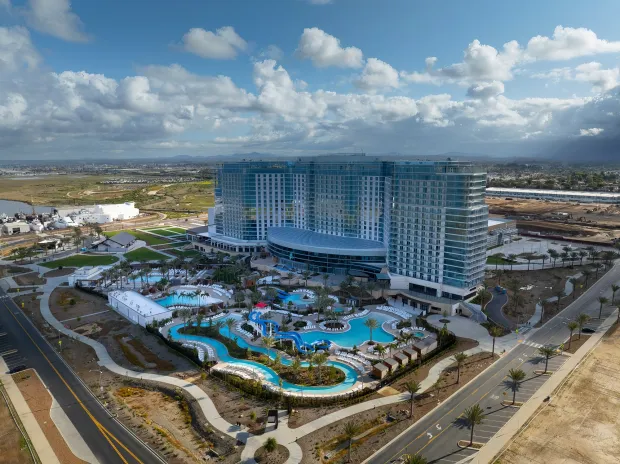
The Gaylord Pacific Resort and Chula Vista Bayfront development represent the largest single economic transformation in the city’s history
2026 Economic Outlook
- Gaylord Pacific Resort fully operational, drawing 500,000+ annual convention visitors
- Chula Vista Bayfront Phase 2 adding retail, restaurants, and 2,500+ residential units
- UC San Diego Chula Vista campus expansion attracting research and education employment
- Cross-border manufacturing growth in Tijuana driving continued binational commuter demand
- San Diego Trolley extension improving transit connectivity to central San Diego
The Gaylord Pacific Effect: Understanding the Investment Catalyst
The Gaylord Pacific Resort and Convention Center deserves specific attention because its scale and implications for Chula Vista real estate are without precedent in the city’s history. To understand why it matters so much:
| Metric | Detail | Real Estate Impact |
|---|---|---|
| Total Investment | $1.2 billion total project cost | Largest single private investment in South Bay San Diego history; signals permanent commitment |
| Room Count | 1,600 hotel rooms | Creates overflow housing demand for extended-stay and mid-term rental properties nearby |
| Convention Space | 400,000+ sq ft, largest in California | Draws national and international convention traffic, establishing Chula Vista as a convention destination |
| Direct Employment | 3,500+ permanent jobs | New permanent workforce needing housing within commuting range of the bayfront |
| Annual Visitors | 500,000+ projected annually | New visitor economy creates demand for nearby short-term and mid-term accommodations |
| Multiplier Effect | 10,000+ indirect and induced jobs projected | Restaurants, retail, transportation, and support services expansion creates additional housing demand |
Historical Performance
| Period | Market Driver | Avg Annual Appreciation | Key Event |
|---|---|---|---|
| 2010-2014 | Post-recession recovery, military housing demand rebounds | 4-7% | Otay Ranch Phase 2 development drives eastern Chula Vista growth |
| 2015-2019 | San Diego affordability crisis begins pushing buyers south | 7-11% | Bayfront redevelopment plan approved; cross-border manufacturing surge drives worker demand |
| 2020-2022 | Pandemic remote work draws San Diego refugees; inventory hits historic lows | 14-19% | Chula Vista among fastest appreciating San Diego County cities; Otay Ranch fully sold out repeatedly |
| 2023-2024 | Rate shock; military BAH increase partially offsets rate impact | 2-4% | Market holds well; Gaylord Pacific construction completion visible; pre-opening anticipation building |
| 2025-2026 | Gaylord Pacific opens; rate stabilization; bayfront transformation visible | 6-10% (projected) | City narrative shifts from suburb to destination; bayfront and western corridor see strongest appreciation |
Demographic Trends Driving Demand
- Military Housing Demand – Naval Station San Diego’s 50+ ships and 30,000+ sailors generate consistent PCS-driven housing demand, and military BAH (Basic Allowance for Housing) rates have increased significantly, making Chula Vista one of the most accessible markets for active-duty military families in San Diego County
- San Diego Affordability Spillover – San Diego’s median home price exceeding $900,000 continues to push buyers and renters southward, with Chula Vista absorbing much of this overflow demand at price points 20-30% below comparable central San Diego neighborhoods
- Cross-Border Economy – The San Diego-Tijuana binational region is one of the world’s largest and most economically integrated cross-border metropolitan areas. Thousands of professionals, engineers, and manufacturing workers commute daily from the U.S. side to Tijuana employment centers, and Chula Vista’s proximity to the border makes it a natural residence for this population
- Filipino and Latino Community Anchors – Chula Vista hosts one of the largest Filipino-American communities in the United States and a substantial Latino population, creating deeply rooted neighborhood cultures with multi-generational tenant loyalty and very low vacancy in established community areas
- Healthcare Sector Growth – Sharp Chula Vista Medical Center and Scripps Mercy Hospital Chula Vista collectively employ thousands of healthcare workers who form a stable middle-income renter base
- Gaylord Pacific Resort Economy – The resort’s 3,500 direct jobs and 10,000+ indirect jobs are creating an entirely new workforce demographic in the city, one that needs housing in western Chula Vista close to the bayfront employment center
📚 New to real estate investing? Master the fundamentals with our professional course Learn more →
2. Neighborhood Hotspots
Chula Vista Investment Neighborhood Map
Interactive map of Chula Vista’s investment neighborhoods. Green stars show top hotspots, blue circles mark established markets, and orange circles highlight emerging areas.
Core Investment Neighborhoods
Detailed Submarket Analysis: Chula Vista Neighborhoods
| Neighborhood | Price Range | Cap Rate | Growth Drivers | Best Strategy |
|---|---|---|---|---|
| Bayfront / Harbor | $550K-$950K | 3.5-5.0% | Gaylord Pacific, new development, transformation | Appreciation, new construction hold, mid-term rental |
| Otay Ranch | $700K-$1.1M | 4.0-4.8% | Master-planned quality, schools, family demand | Long-term SFH appreciation, family rental |
| Eastlake | $650K-$1.0M | 4.0-5.0% | Lake, golf, amenities, established professional renters | Balanced appreciation and yield, SFH hold |
| Western Chula Vista | $550K-$800K | 5.0-6.5% | Military demand, Filipino community, cross-border workers | Cash flow, value-add, BRRRR, multi-family |
| Third Avenue Village | $550K-$850K | 4.5-6.0% | Arts revival, bayfront spillover, downtown activation | Appreciation, mixed-use, urban play |
| Rancho Del Rey | $650K-$950K | 4.0-5.0% | Family stability, central location, established schools | Stable hold, family rental, low management intensity |
| Sunbow / Telegraph Canyon | $600K-$850K | 4.2-5.0% | Central location, freeway access, established community | Balanced returns, family SFH hold |
| Bonita / Sunnyside | $750K-$1.3M | 3.5-4.5% | Larger lots, affluent demographic, low density | Long-term appreciation, prestige hold |
| South Chula Vista | $600K-$850K | 4.5-5.5% | Border proximity, cross-border commuter demand | Cross-border workforce rental, value entry |
| Otay Mesa / New Port of Entry | $550K-$750K | 5.0-6.5% | Border commerce growth, logistics employment | Emerging play, early-stage, patient hold |
Expert Insight: “The Gaylord Pacific is going to do for Chula Vista’s western corridor what the Petco Park stadium did for downtown San Diego in the early 2000s. Properties within a mile of Petco appreciated 40-60% in the decade following the stadium’s opening as restaurants, bars, and residential development clustered around the new anchor. We are expecting a similar dynamic in western Chula Vista over the next 5-10 years, and investors who have already positioned are going to look very smart in retrospect.” – Marcus Johnson, Principal, South Bay Realty Advisors
3. Property Types
| Investment Goal | Best Property Type | Best Neighborhoods | Minimum Capital |
|---|---|---|---|
| Maximum Appreciation | Bayfront new development or Otay Ranch SFH | Bayfront, Otay Ranch newest phases | $162,500+ |
| Best Cash Flow in Chula Vista | Multi-family or value-add SFH | Western CV, Mid-City, South CV | $150,000+ |
| Balanced Yield + Appreciation | Eastlake or Rancho Del Rey SFH | Eastlake, Rancho Del Rey, Sunbow | $162,500+ |
| Military BAH-Aligned Income | 3-4BR SFH or townhome near I-805 | Western CV, Mid-City, Rancho Del Rey | $150,000+ |
Don’t guess the costs. Our Complete Renovation & Remodeling Cost Guide covers 400+ pages of project-by-project breakdowns with real contractor pricing ranges.
4. Cost Analysis
Acquisition Cost Breakdown (Chula Vista)
| Expense Item | Typical Cost | Example ($700,000 Property) | Notes |
|---|---|---|---|
| Down Payment | 25% (investment) | $175,000 | Standard for California investment; most Chula Vista SFH fits conforming limits |
| Closing Costs | 2-3% of price | $14,000-$21,000 | Title, escrow, lender fees, SD County transfer tax |
| General Inspection | $400-$650 | $500 | Full inspection including roof, foundation, HVAC, plumbing |
| Termite Inspection | $150-$300 | $200 | San Diego County has significant termite activity; western CV older homes especially |
| Lead/Asbestos (pre-1978) | $300-$500 | $350 | Mandatory disclosure; western CV older stock commonly affected |
| Sewer Lateral / Inspection | $175-$350 | $250 | Recommended for pre-1985 western CV properties |
| Initial Repairs | 0-8% of price | $0-$56,000 | Variable; older western CV stock often needs deferred maintenance |
| Reserves (6 months) | 6 months operating expenses | $10,000-$16,000 | Emergency fund for vacancy, repairs, and California compliance costs |
| TOTAL MINIMUM ENTRY | ~27-30% of value | $200,000-$269,000 | Among the most accessible in San Diego County at the quality level offered |
Sample Cash Flow Analysis: Western Chula Vista Duplex
| Item | Monthly | Annual | Notes |
|---|---|---|---|
| Unit 1 Rent (3BR, military family) | $3,100 | $37,200 | BAH-aligned 3BR, western CV, military tenant |
| Unit 2 Rent (2BR) | $2,200 | $26,400 | 2BR, Filipino community or cross-border worker tenant |
| Gross Income | $5,300 | $63,600 | |
| Less Vacancy (3%) | -$159 | -$1,908 | Conservative for military/community tenant base |
| Property Taxes | -$645 | -$7,740 | ~1.05% of $737K assessed value |
| Insurance | -$175 | -$2,100 | Landlord policy; earthquake rider recommended |
| Property Management (10%) | -$530 | -$6,360 | Military-experienced PM strongly recommended |
| Maintenance + CapEx | -$530 | -$6,360 | ~10% for 1970s-era duplex |
| Net Operating Income | $3,261 | $39,132 | Before mortgage |
| Mortgage ($737K total, 25% down, 6.75%, 30yr) | -$3,598 | -$43,176 | P&I on $552,750 loan |
| CASH FLOW | -$337 | -$4,044 | Near-neutral; among the best in San Diego County |
| Cap Rate | 5.31% | NOI / Total Cost | |
| Total Return (7% appreciation) | ~24% | Including equity, appreciation, principal paydown, tax benefits |
This analysis demonstrates why western Chula Vista multi-family is one of the most compelling investment opportunities in all of San Diego County. Near-neutral cash flow ($337/month negative carry) combined with 7% annual appreciation, strong principal paydown, and Prop 13 tax compounding produces total returns that significantly outperform the minimal negative carry cost. House hackers who occupy one unit with FHA financing at 3.5% down can achieve genuinely positive cash flow on day one, making this one of the most accessible entry strategies in coastal California.
Expert Insight: “Military tenants are the most underappreciated renter demographic in the San Diego market. They pay BAH-aligned rents that are set by the federal government regardless of broader market conditions, they tend to be extremely responsible tenants with clean rental histories and strong motivation to maintain their housing, and they give you the SCRA early termination right as the only real downside risk, which you mitigate by having a military-experienced property manager. For a duplex in western Chula Vista with one military tenant and one community member, I routinely see vacancy rates below 1% annually and zero evictions over 5-plus year periods. That consistency is worth a lot more than a higher cap rate with unpredictable tenants.” – Lisa Chen, Managing Broker, South Bay Military Housing Specialists
5. Legal Framework
⚠️ California Compliance Notice for Chula Vista
Chula Vista has no local rent control ordinance as of 2026. The city is governed exclusively by California’s statewide AB 1482 Tenant Protection Act, making it meaningfully more investor-friendly than Los Angeles, Long Beach, or San Francisco. Military tenants introduce an additional layer through the Servicemembers Civil Relief Act (SCRA), which allows active-duty military to break leases under certain circumstances. Property managers and investors in military-heavy markets like Chula Vista must understand SCRA protections and have a management approach for the small percentage of military tenants who use them. Always consult a California-licensed real estate attorney before acquiring rental properties.
California AB 1482 (Statewide)
Chula Vista operates exclusively under California’s Tenant Protection Act of 2019:
- Rent Increase Cap: Annual increases limited to 5% + local CPI, maximum 10% per year. San Diego County CPI has run approximately 3-5% in recent years. Applies to multi-family buildings constructed before January 1, 2007.
- Just Cause Eviction: After 12 months of tenancy, landlords must demonstrate just cause. At-fault causes include non-payment and lease violations. No-fault causes (owner move-in, demolition, substantial renovation) require one month’s rent relocation assistance.
- Vacancy Decontrol: When a tenant voluntarily vacates, rent resets fully to market rate for the next tenancy. This is the primary long-term income normalization mechanism.
- Exempt Properties: Single-family homes and condos with individual owner landlords (non-corporate) with proper written notice are exempt. Properties built after January 1, 2007 are exempt for 15 years. Owner-occupied 2-unit buildings are exempt.
- No Local Overlay: Unlike LA or Long Beach, Chula Vista adds nothing additional to AB 1482. This simpler regulatory framework is a genuine competitive advantage for investors.
Servicemembers Civil Relief Act (SCRA)
The SCRA is a federal law with specific implications for landlords renting to active-duty military tenants:
- Lease Termination Right: Active-duty servicemembers can terminate a lease with 30 days written notice if they receive deployment orders of 90+ days or a permanent change of station (PCS) to a new duty location. The termination is legally protected and landlords cannot refuse it.
- Practical Frequency: In a well-managed military rental portfolio in Chula Vista, SCRA terminations typically affect 10-20% of military tenancies over a 3-year period. The termination process is clean and well-defined, and re-leasing to the next military family is typically rapid given the PCS cycle.
- Interest Rate Cap: The SCRA also caps interest rates on pre-service debts at 6%, which affects any payment plan or late fee arrangements with military tenants.
- Best Practices: Military-experienced property managers maintain relationships with base housing offices and relocation services that create a pipeline of incoming military tenants to refill units after SCRA terminations with minimal vacancy.
- HOA Rules: If the property is in an HOA, verify there are no restrictions on military tenant documentation or lease term requirements that might conflict with SCRA protections.
Key Resources
- Chula Vista City Housing: chulavistaca.gov/housing
- California Apartment Association: caanet.org
- Navy Housing San Diego: cnic.navy.mil/sandiego
- SD County Rental Housing: sdhc.org
| Regulation | Chula Vista Requirement | vs. LA / Long Beach | Investor Impact |
|---|---|---|---|
| Local Rent Control | None | LA and LB have additional local layers | Simpler compliance, more operational flexibility |
| Rent Cap | 5% + CPI, max 10% (AB 1482) | LA/LB: additional local caps more restrictive | Pre-2007 buildings capped at state level only |
| Just Cause Eviction | After 12 months (AB 1482) | LA/LB: stricter local requirements | Standard California process applies |
| SCRA (Military) | Federal law applies to military tenants | Applies in all California cities | Military-experienced PM essential; PCS terminations well-managed |
| AB 1482 Exemptions | SFH/condo individual owner, post-2007, owner-occupied 2-unit | Same state exemptions; LA/LB local ordinances don’t add exemptions | Otay Ranch new construction, SFH purchases often exempt |
| Vacancy Decontrol | Full market reset on voluntary vacancy | LB local ordinance: same; LA: same | Primary income normalization mechanism for pre-2007 stock |
6. Step-by-Step Chula Vista Investment Playbook
Choose Your Primary Strategy
Chula Vista’s diverse sub-markets support multiple viable investment strategies. Choose your primary approach before evaluating properties:
Bayfront Transformation Play
Acquire near the Gaylord Pacific and the Bayfront development zone. This is the highest-conviction appreciation play in the market, buying into the early stage of a transformation that comparable resort-anchored developments have demonstrated generates 15-25% appreciation premium over 5-7 years post-opening.
Military Cash Flow Strategy
Acquire a 3-4BR SFH or duplex in western Chula Vista priced at or near current BAH rates. Military tenants provide government-guaranteed income, low vacancy, and a property manager pipeline through base housing offices. Near-neutral cash flow is achievable, which is exceptional for San Diego County.
Master-Planned Appreciation Hold
Buy in Otay Ranch or Eastlake and hold 10+ years. These communities deliver consistent appreciation driven by school quality, amenity density, and the ongoing new-construction premium. Families in the rental market pay above-average rents for master-planned quality, and AB 1482 exemption in new construction adds flexibility.
Value-Add BRRRR
Acquire dated 1960s-1980s properties in western Chula Vista. Renovate to current standards. Refinance improved equity. The stable military and community renter base ensures rapid re-leasing after renovation with minimal vacancy. Best margins in San Diego County for this strategy at current entry prices.
Build Your Chula Vista Team
- San Diego County Investor-Focused Agent: Must have specific Chula Vista sub-market experience. Should understand which properties are AB 1482 exempt, how to underwrite military BAH rental scenarios, and the specific dynamics of the Bayfront development zone and its investment implications.
- California Landlord-Tenant Attorney: For entity structure, AB 1482 compliance, and SCRA lease clause review. Military lease addendums that properly document SCRA rights while protecting the landlord’s interests require California-licensed attorney review.
- Military-Experienced Property Manager: This is a non-negotiable for Chula Vista investors. A military-experienced PM maintains relationships with Naval Station San Diego housing offices, understands SCRA procedures, and has a pipeline of incoming military tenants that minimizes vacancy between PCS assignments. Ask any PM candidate: “How do you handle a SCRA termination, and what is your typical re-leasing timeline after military PCS vacancy?”
- ADU-Experienced Contractor: For value-add or ADU strategies in western Chula Vista, verify permit-pull experience with the City of Chula Vista Building Department specifically. ADU permitting in Chula Vista has improved significantly but requires local process knowledge.
- San Diego County CPA: For Prop 13 reassessment planning, military rental income tax treatment, and AB 1482 compliance documentation requirements in annual filings.
Expert Tip: Interview property management companies by asking: “What is your relationship with the Naval Station San Diego housing office, and how many Chula Vista military PCS placements did you facilitate last year?” Companies with active base housing relationships are far more effective at maintaining income continuity in military-heavy Chula Vista sub-markets than general property managers.
Chula Vista-Specific Due Diligence
Physical Due Diligence
- Termite inspection for all properties (San Diego County has high subterranean termite activity)
- Foundation evaluation for hillside properties in eastern CV (expansive soils common)
- Sewer lateral inspection for all pre-1985 western CV properties
- Lead and asbestos assessment for pre-1978 properties (mandatory disclosure)
- HVAC condition assessment for San Diego summer heat performance
- Unpermitted additions check (common in older western CV stock)
- ADU feasibility assessment including lot coverage, setbacks, and utility capacity for any renovation-focused acquisition
Regulatory Due Diligence
- Confirm AB 1482 coverage status based on build year and ownership structure
- Review all current leases for rent amounts, terms, and military SCRA addendum status
- Pull permit history for all improvements (particularly unpermitted garage conversions)
- Verify ADU eligibility with Chula Vista Building Department for any ADU-dependent acquisition
- Check for HOA rules in master-planned communities (Otay Ranch, Eastlake) regarding rental limitations and lease term minimums
- Confirm any Mello-Roos or special assessment districts associated with the property (common in eastern CV master-planned communities)
- Verify no outstanding code violations with the City of Chula Vista
Competing in the Chula Vista Market
- Mello-Roos awareness in eastern CV: Many Otay Ranch and Eastlake properties carry Mello-Roos special tax assessments that add $1,500-$4,000 annually to the effective property tax burden. Investors who underwrite without accounting for Mello-Roos often over-pay. Verify the CFD (Community Facilities District) assessment for every eastern CV property before submitting an offer.
- Pre-inspections for competitive Otay Ranch properties: New and near-new Otay Ranch properties receive multiple offers when well-priced. Conducting a pre-inspection allows you to submit a non-contingent offer that sellers strongly prefer.
- Military tenant assumption: Western Chula Vista duplexes and SFHs with existing military tenants are often sold at a slight discount because retail buyers are uncertain about SCRA protections. For investors with military PM relationships who understand these leases, acquiring occupied military properties is a legitimate buying advantage.
- Off-market in western CV: Long-term homeowner-landlords in western Chula Vista’s Filipino-American and Latino communities often prefer quiet off-market transactions with buyers who have demonstrated respect for their community and existing tenants. Direct mail and relationship-building through community networks can surface opportunities before they reach the MLS.
- Bayfront timing: The post-Gaylord Pacific appreciation premium is in its earliest stages. Investors who hesitate while waiting for more evidence of the transformation will pay meaningfully more for the same properties 2-3 years from now as the market re-rates the bayfront corridor.
7. Financing Options for Chula Vista
| Loan Type | Down Payment | Rate Premium | Best For | Chula Vista Note |
|---|---|---|---|---|
| Conventional Investment | 25% | +0.5-0.75% | Western CV and mid-tier properties under $806,500 | San Diego County conforming limit is $806,500; covers most western CV and mid-range Chula Vista properties |
| VA Loan (Investor consideration) | 0% (primary residence) | Below market (guaranteed) | Active military or veteran owner-occupants house hacking in Chula Vista | If you are a veteran, VA financing for a 2-4 unit owner-occupied property is the most powerful entry strategy available in the entire Chula Vista market. Zero down on a duplex that generates $2,200-$3,100/month in rental income from the other unit. |
| FHA House Hack | 3.5% | Standard + MIP | Owner-occupying one unit of 2-4 unit property | SD County FHA limits: $806,500 SFH to $1,551,000 fourplex. Best non-military entry strategy for western CV multi-family. |
| DSCR Loan | 25-30% | +1.5-2.5% | Higher-yield western CV multi-family | Western CV multi-family at 5-6.5% cap rates can qualify at 1.0x+ DSCR. One of the better DSCR opportunities in San Diego County. |
| Jumbo Investment | 25-30% | +0.75-1.25% | Bonita, premium Otay Ranch, or Eastlake above $806,500 | Required above $806,500; applicable to premium Otay Ranch new construction and Bonita SFH |
| Hard Money / Bridge | 15-25% | 8-12% rate | BRRRR acquisitions, value-add requiring speed | Multiple SD County hard money lenders active in Chula Vista; useful for distressed or estate acquisitions in western CV |
| ADU / Construction Loan | 20-25% of total | +1-2% | Post-purchase ADU development | HELOC or cash-out refinance after 12 months is the most cost-effective ADU financing path for established equity owners |
Chula Vista Financing Reality: Chula Vista is one of the most financing-accessible markets in San Diego County because its price points align well with conforming loan limits. Most western Chula Vista and mid-city properties fall under the $806,500 conforming limit, allowing conventional investment financing without jumbo products. The VA loan advantage for veteran investors is unparalleled: zero down payment on a 2-4 unit owner-occupied property in western Chula Vista creates a genuinely cash-flow-positive house hack from day one, making Chula Vista one of the best VA-eligible markets in Southern California. DSCR loans are more viable here than in most coastal California markets due to the higher cap rates in western CV, making the strategy accessible to investors who prefer not to use income-documentation products.
8. Frequently Asked Questions

Knowledge Quiz: Chula Vista Real Estate Investment
Open Quiz
5 quick questions on what you just learned about Chula Vista investing
1) What is Mello-Roos and why is it critical to underwrite correctly for eastern Chula Vista properties?
Answer: C
Mello-Roos is a Community Facilities District special tax that funds infrastructure in newer California developments. In Otay Ranch and Eastlake, assessments typically run $1,500-$4,500 annually. A $3,000/year assessment reduces NOI by $250/month, which on a property with $3,200/month rent represents a meaningful 7-8% NOI reduction. Investors who miss Mello-Roos regularly overestimate cap rates on eastern CV properties. Always request the current CFD disclosure statement before submitting an offer.
2) What makes the Gaylord Pacific Resort a transformative event for Chula Vista real estate?
Answer: A
The Gaylord Pacific Resort is a $1.2 billion development featuring 1,600 hotel rooms and 400,000+ square feet of convention space, the largest in California. Its 3,500+ direct jobs and projected 500,000+ annual visitors are transforming Chula Vista from a San Diego suburb into a destination city. The guide compares this to what Petco Park did for downtown San Diego in the early 2000s, where nearby properties appreciated 40-60% in the decade following the stadium’s opening.
3) What is the SCRA and how should Chula Vista landlords manage military tenant lease terminations?
Answer: D
The SCRA allows servicemembers to terminate leases with 30 days written notice when they receive PCS orders or deployment orders of 90+ days. Landlords cannot deny this right or charge penalties. The key to managing SCRA terminations effectively is using a military-experienced property manager who maintains relationships with the Naval Station San Diego housing office, enabling rapid re-leasing to the next incoming PCS family with minimal vacancy between tenancies.
4) Why is the VA loan particularly powerful for house hacking in western Chula Vista?
Answer: B
A veteran can purchase a western Chula Vista duplex with zero down using a VA loan, occupy one unit, and rent the other at $2,200-$3,100/month. This dramatically reduces net housing costs while building equity through appreciation. The owner-occupied 2-unit property is exempt from AB 1482 rent caps, providing maximum flexibility on the rental unit. For veterans, this is one of the most powerful wealth-building entry strategies available in all of Southern California.
5) What is the cross-border economy’s role in Chula Vista real estate demand and why does it create counter-cyclical stability?
Answer: C
The San Diego-Tijuana cross-border workforce creates a renter demographic whose employment depends on the binational economy, particularly Tijuana’s maquiladora manufacturing sector, rather than the San Diego domestic job market. During periods when San Diego’s economy weakens and domestic employment falls, cross-border-employed households remain employed and continue paying rent, providing a counter-cyclical stability buffer. This is a unique Chula Vista investment characteristic not available in pure San Diego domestic markets.
Work With a Local Expert in Chula Vista
We are building a verified network of real estate professionals across every market we cover.

About Our Expert Network
We are finalizing partnerships with verified real estate professionals across every market featured on Builds and Buys. Each expert in our network is selected for their hands-on investment experience, local market knowledge, and commitment to helping buyers and investors make sound decisions.
Our local specialists offer:
- Proven experience with investment properties across Chula Vista sub-markets
- Military housing expertise including SCRA compliance and BAH underwriting
- Deep knowledge of Mello-Roos assessments and their investment impact
- Bayfront development zone market intelligence and acquisition guidance
- Cross-border economy tenant base understanding for south CV investments
- Full transaction support from search through closing
Services Covered
- Property sourcing and acquisition
- Investment analysis and underwriting
- Buyer representation
- Military BAH rental strategy
- Mello-Roos assessment analysis
- Value-add and ADU strategy
- Legal and title referrals
- VA and conventional financing connections
- Military-experienced PM referrals
- Insurance and inspection referrals
- 1031 exchange coordination
- Exit strategy planning
Get Connected or Join Our Network
Looking for a local expert to help with your Chula Vista investment? Reach out and we will connect you with the right professional for your market and strategy.
Are you a real estate professional with Chula Vista investment experience? We are always expanding our network of verified local experts.
Contact us at support@buildsandbuys.com
Find Specialized San Diego County Real Estate Professionals
Ready to Invest in Chula Vista?
Chula Vista in 2026 is at a genuine inflection point that does not come along often in any market. The Gaylord Pacific Resort has opened, the Bayfront transformation is underway, the cross-border economy continues to generate unique counter-cyclical demand, and the city’s military population provides a bedrock of income-consistent housing demand that exists in very few Southern California markets. Whether your strategy is a Bayfront appreciation play positioned ahead of the full transformation, a military-targeted western CV duplex approaching neutral cash flow, or a VA-powered house hack at zero down, Chula Vista offers something exceptionally rare in 2026: a market where multiple viable strategies can be executed at price points meaningfully below the broader San Diego County market, with multiple structural demand drivers that are unlikely to weaken over any realistic investment horizon.
Continue Your Research
California State Guide
See how Chula Vista compares to San Diego, Los Angeles, San Francisco, and other California markets.
Step-by-Step Invest
Complete framework for building a real estate investment strategy from scratch.
144-Lesson Course
University-level real estate education covering financing, law, strategy, and management.
For further guidance, explore our State-by-State Investor guides, browse our expert articles, or follow our Step-by-Step Investment Guide.



