
Fresno Real Estate Investment Guide For 2026
A comprehensive resource for investors targeting California’s most cash-flow-positive major city, where healthcare, education, and agricultural economy anchor genuine positive returns unavailable in any coastal California market
Quick answers: Top 5 most searched Fresno investment questions ▼
Migration data: Where people are moving from to Fresno ▼
In This Guide
Click on any section to navigate directly to that content
1. Fresno Market Overview
Market Fundamentals
Fresno occupies a genuinely unique position in California real estate: it is the only major California city where conventional investors using standard financing can consistently achieve positive monthly cash flow. With a median home price of approximately $365,000, the lowest of any California city with a population above 500,000, and average rents that produce cap rates of 6 to 9 percent, Fresno operates on a completely different financial model than the state’s coastal markets. This is not a story of compromise or lower quality; it is a story of a city with real economic anchors, genuine population growth, and a High-Speed Rail catalyst that will fundamentally reshape its long-term appreciation trajectory.
Key economic indicators defining the Fresno investment case:
- Population: 545,000+ city proper, 1.1M+ metro area
- Major Employers: Community Medical Centers (7,000+ employees), Valley Children’s Hospital (3,500+), Fresno State University (25,000 students, 2,500 staff), State of California agencies, Amazon and UPS logistics centers, Central Valley agricultural processing sector
- California High-Speed Rail: Fresno is the initial terminus and construction hub of California’s HSR project; when complete, will connect Fresno to the Bay Area in under one hour
- Median Household Income: $58,000+ citywide; significantly higher in North Fresno, Clovis, and Fig Garden neighborhoods
- Renter Proportion: 52 percent of households rent, creating an exceptionally large addressable tenant market
- No Local Rent Control: Only California’s statewide AB 1482 applies; full market-rate reset available at vacancy
- Conforming Loan Limit: Fresno County’s $766,550 conforming limit covers virtually every Fresno purchase, meaning no jumbo financing required and no jumbo rate premium
Fresno’s economic base is genuinely diverse. Healthcare is recession-resistant. The university provides permanent student and academic demand. State government employment provides stability. The agricultural economy, while cyclical, has never fully contracted. And the logistics sector is growing rapidly as e-commerce drives warehouse and distribution center expansion along the CA-99 corridor.
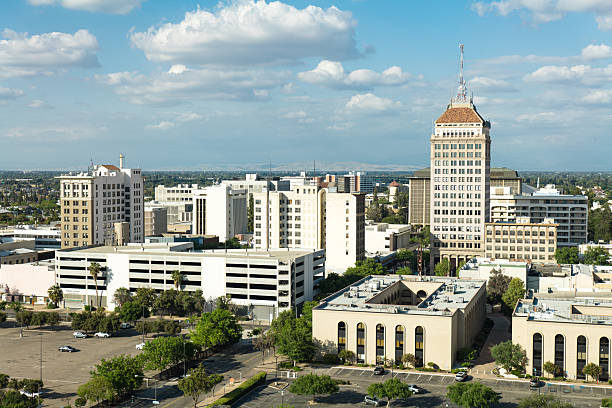
Fresno’s skyline with the Sierra Nevada as a backdrop reflects a city at an economic inflection point, where healthcare, education, logistics, and High-Speed Rail are converging to create California’s most compelling cash flow investment market
2026 Economic Outlook
- California High-Speed Rail construction adding $2B+ in annual regional spending
- Valley Children’s Hospital expansion creating 500+ new medical positions
- Amazon and Chewy distribution center expansions along CA-99 adding 3,000+ jobs
- Fresno State research funding growing with UC system partnership initiatives
- Bay Area migration continuing to improve North Fresno and Clovis demographics
- Fresno Yosemite International Airport capacity expansion supporting business growth
Investment Climate
Fresno’s investment environment is the most accessible in California for investors who want genuine cash flow rather than pure appreciation plays requiring deep negative carry reserves. The market rewards investors who understand several critical dynamics:
- North-South divide awareness understanding that North Fresno and Clovis command premium rents, lower yields but better appreciation, while Central and West Fresno command higher yields with more active management requirements
- School district premium recognizing that Clovis Unified School District access drives a meaningful rent and appreciation premium in neighborhoods north of Herndon Avenue, similar to the school-district effect in Carlsbad or Irvine but at dramatically lower price points
- High-Speed Rail positioning understanding which Fresno neighborhoods benefit most from HSR-driven demand and what the long-term price appreciation catalyst means for current acquisition decisions
- Multi-family advantage understanding that Fresno’s larger stock of affordable duplexes, triplexes, and fourplexes subject only to AB 1482 provides cash flow characteristics unavailable anywhere in coastal California
- Management efficiency deploying professional property management from day one given Fresno’s lower median income and the importance of consistent rent collection and maintenance response in a higher-proportion-renter market
Historical Performance
| Period | Market Driver | Avg Annual Appreciation | Key Event |
|---|---|---|---|
| 2010-2014 | Post-recession recovery from significant 2008 decline | 4-7% | Fresno hit hard in 2008; foreclosure wave created deep value entry for early investors |
| 2015-2019 | Healthcare expansion, logistics growth, early Bay Area discovery | 6-9% | Valley Children’s and Community Medical expansions; Amazon distribution center openings |
| 2020-2022 | Pandemic remote work, Bay Area exodus, California HSR groundbreaking | 18-28% | Fresno became top 10 destination for Bay Area remote workers; prices surged 25%+ in 2021 |
| 2022-2024 | Rate shock, normalization | 2-4% | Prices corrected modestly; cash flow remains positive, reinforcing income investment thesis |
| 2025-2026 | HSR construction momentum, logistics expansion, continued Bay Area migration | 6-9% (projected) | HSR construction creating sustained regional employment; North Fresno outperforming city average |
Fresno’s 20-year appreciation track record is more volatile than coastal markets due to its 2008 decline (prices dropped 40 to 50 percent from peak to trough, the most severe correction in California’s major cities). However, investors who entered at any point before 2019 have seen strong appreciation from the low base, and Fresno’s cash flow characteristics mean they were generating income throughout the hold period rather than subsidizing negative carry. A $150,000 Fresno SFH purchased in 2012 would be worth approximately $380,000 to $420,000 today while having generated positive cash flow throughout.
Demographic Trends Driving Demand
- Bay Area Remote Worker Migration with professionals earning $80,000 to $200,000 in Bay Area salaries discovering they can buy in Fresno for $350,000 to $500,000, spend half what they would on a Bay Area mortgage, and work remotely; a migration that was significantly accelerated by the pandemic and has not fully reversed despite return-to-office trends
- Healthcare Sector Growth with Fresno’s healthcare employment base growing faster than any other sector; Community Medical Centers, Valley Children’s Hospital, and St. Agnes together employ over 15,000 workers and are actively expanding, creating demand across income levels from nursing assistants to cardiologists
- California High-Speed Rail Effect with active construction of the Central Valley section creating immediate employment for 10,000-plus workers and the long-term promise of sub-one-hour connection to the Bay Area, which when complete will fundamentally transform Fresno’s relationship to California’s highest-income job markets
- Fresno State Academic Community with 25,000-plus students and 2,500 faculty and staff creating consistent rental demand in Tower District and Sunnyside neighborhoods, similar to the academic demand anchor in Pasadena but at dramatically lower price points
- Logistics and E-Commerce Expansion with Amazon, Chewy, and multiple third-party logistics operators building large distribution centers along the CA-99 corridor, creating thousands of warehouse and logistics jobs with wages of $17 to $25 per hour that can support rental of $1,200 to $1,800 per month in mid-tier Fresno neighborhoods
- Agricultural Economy Foundation with Fresno County being the most agriculturally productive county in the United States by value, creating a permanent base of agricultural workers, processors, and agribusiness professionals that provides economic stability through cycles that affect other California cities more severely
📚 New to real estate investing? Master the fundamentals with our professional course Learn more →
2. Neighborhood Hotspots
Fresno Investment Neighborhood Map
Interactive map of Fresno’s investment neighborhoods. Green stars show top hotspots, blue circles mark established markets, and orange circles highlight emerging areas.
Core Investment Neighborhoods
Detailed Submarket Analysis: Fresno Neighborhoods
| Neighborhood | Price Range (SFH) | Cap Rate | Growth Drivers | Best Strategy |
|---|---|---|---|---|
| North Fresno / Clovis border | $420K-$650K | 5.5-7.0% | Clovis Unified schools, Bay Area migration, Valley Children’s Hospital | Premium appreciation, school-district hold, ADU |
| Sunnyside | $300K-$450K | 6.5-8.5% | Healthcare workers, Fresno State proximity, balanced demographics | Best cash flow and quality balance; positive cash flow achievable |
| Tower District | $250K-$380K | 7.0-9.5% | Arts district, Fresno State students, gentrification momentum | Highest yields plus appreciation; value-add multi-family |
| Fig Garden | $550K-$1.1M | 4.5-6.0% | Fresno’s prestige address, executive tenants, historic appeal | Premium appreciation, executive rental, long-term hold |
| Woodward Park | $350K-$520K | 6.0-7.5% | Mid-North Fresno, park amenity, Bay Area migration corridor | Balanced returns, appreciation plus cash flow |
| Fresno State / Bulldog District | $270K-$390K | 8.0-11.0% | 25,000 student body, near-zero vacancy, room rental income | Highest Fresno yields; room-by-room rental maximization |
| Clovis (city) | $450K-$750K | 5.0-6.5% | Best schools in Central Valley, premium demographics, Bay Area target | School-premium appreciation, premium family rental |
| HSR District / Downtown | $200K-$340K | 8.0-11.0% | HSR station investment, construction employment, gentrification early | Speculative appreciation play, highest upside, most management intensive |
| West Fresno | $180K-$280K | 9.0-13.0% | Lowest entry in Fresno, logistics employment, workforce housing | Highest yields; experienced investors only; intensive management |
| Northwest Fresno / Shaw | $300K-$430K | 6.5-8.0% | Growth corridor, improving amenities, northwest expansion | Value vs northeast, balanced returns |
Expert Insight: “The investors who have made the most money in Fresno over the past decade did not buy in West Fresno for the 12 percent yield. They bought in Sunnyside and North Fresno at 7 to 8 percent yields, collected positive cash flow while the market appreciated, and now own properties worth twice what they paid. The lesson is that in Fresno, unlike most California markets, you do not have to sacrifice cash flow for appreciation. You can have both in the right neighborhoods. The mistake is going too far south or west chasing yield and ending up with a management nightmare that consumes all the income.” – Marcus Johnson, Principal, Central Valley Investment Group
3. Property Types
| Investment Goal | Best Property Type | Best Area | Minimum Capital |
|---|---|---|---|
| Maximum Cash Flow | Duplex or Fresno State room rental | Tower District, near Fresno State | $75,000+ |
| Best Balance (Cash Flow + Appreciation) | SFH in Sunnyside or Woodward Park | Sunnyside, Woodward Park, Northwest | $85,000+ |
| Maximum Appreciation | SFH in North Fresno or Clovis | North Fresno, Clovis, Fig Garden | $120,000+ |
| Lowest Entry | SFH in West Fresno or Downtown | West Fresno, HSR District | $50,000+ |
Don’t guess the costs. Our Complete Renovation & Remodeling Cost Guide covers 400+ pages of project-by-project breakdowns with real contractor pricing ranges.
4. Cost Analysis
Acquisition Cost Breakdown (Fresno)
| Expense Item | Typical Cost | Example ($370,000 Property) | Notes |
|---|---|---|---|
| Down Payment | 25% (investment) | $92,500 | Far lower than any coastal California market; FHA available for owner-occupants at 3.5% |
| Closing Costs | 2-3% of price | $7,400-$11,100 | Title, escrow, lender fees; Fresno County transfer tax |
| General Inspection | $350-$550 | $425 | Foundation critical for older Central Valley homes; HVAC essential in 100-degree summer heat |
| Pest Inspection | $120-$250 | $150 | Termite risk in older wood-frame stock; Section 1 typically seller-paid |
| Initial Repairs | 0-8% of price | $0-$29,600 | Older Tower District and West Fresno stock often needs significant work |
| Reserves (3 months) | 3 months expenses | $6,000-$10,000 | Positive cash flow means lower reserve requirement than coastal CA markets |
| TOTAL MINIMUM ENTRY | ~28-32% of value | $106,475-$143,775 | Lowest entry cost of any major California city; most accessible California investment market |
Sample Cash Flow Analysis: Sunnyside SFH (California’s Most Accessible Positive Cash Flow)
| Item | Monthly | Annual | Notes |
|---|---|---|---|
| Rental Income | $1,950 | $23,400 | 3BR SFH, Sunnyside, renovated, healthcare worker tenants |
| Less Vacancy (5%) | -$98 | -$1,170 | Conservative; well-managed Fresno properties often see lower vacancy |
| Property Taxes (1.1%) | -$321 | -$3,850 | 1.1% on $350,000 assessed value |
| Insurance | -$120 | -$1,440 | Landlord policy; Fresno rates significantly lower than coastal CA |
| Property Management (9%) | -$170 | -$2,034 | Recommended; AB 1482 compliance and tenant quality control |
| Maintenance / CapEx | -$175 | -$2,100 | 9% of rent; older Central Valley homes need consistent upkeep |
| Net Operating Income | $1,066 | $12,806 | Before mortgage; already positive |
| Mortgage ($350K purchase, 25% down, 7.0% conventional, 30yr) | -$1,745 | -$20,940 | Conventional rate on $262,500 loan (well within Fresno County conforming limit) |
| CASH FLOW | +$321 | +$3,852 | POSITIVE CASH FLOW – essentially impossible in any coastal California market |
| Cap Rate | 3.7% on NOI / 7.3% on gross income basis | Comparable coastal properties have cap rates of 2.5-4.5% | |
| Total Return (8% appreciation) | ~28% | Positive cash flow + 8% appreciation on leveraged position = exceptional total return |
This is the single most important cash flow table in this entire California guide series. Positive $321 per month with conventional 25 percent down financing is simply not achievable in any other major California city. If you add an ADU to this property (generating $1,400 per month in Fresno’s market), the position becomes +$1,721 per month positive cash flow from a $350,000 purchase. That total return of approximately 28 percent annualized on leveraged capital is extraordinary for a California investment and would be called impossible by anyone who had only analyzed coastal markets.
Expert Insight: “The thing people do not understand about Fresno is that you are not giving up on California appreciation when you invest here. You are getting California appreciation plus the cash flow that literally no other California market provides. I have investors who bought in Sunnyside in 2018 for $220,000, collected positive cash flow every month, and are now sitting on $390,000 properties. They never wrote a single check for negative carry. That combination of income and appreciation does not exist in LA, San Francisco, or San Diego. It only exists in Fresno.” – Sandra Wright, Central Valley Real Estate Partners
5. Legal Framework
✅ Fresno Regulatory Advantage: The Simplest California Market
Fresno has no local rent control, no local rent registration requirement, no local eviction moratorium provisions beyond the statewide standard, and essentially no landlord-specific ordinances beyond what California state law requires. This makes Fresno the simplest major California city to operate as a landlord. Only California’s statewide AB 1482 applies, with full market-rate rent reset available at every vacancy, just cause eviction required only after 12 months, and SFH and condo exemption available with proper notice. For investors exhausted by the compliance complexity of LA, Santa Monica, San Francisco, or Oakland, Fresno is a revelation.
California AB 1482 and Fresno-Specific Considerations
AB 1482 (the only rent regulation that applies):
- Annual rent increases capped at 5 percent plus local CPI, maximum 10 percent, for residential properties more than 15 years old
- Just cause eviction required after tenant has occupied for 12 months
- Security deposit capped at 1 month’s rent for most landlords (AB 12)
- SFH and condos with separate title owned by individual landlords may be exempt from the AB 1482 rent cap with proper written notice served at lease commencement
- New construction within the past 15 years exempt from AB 1482 rent cap; full rent-setting flexibility for the exemption period
Fresno-Specific Practical Notes:
- Fresno’s lower median income means a higher proportion of tenants may experience rent increase hardship; documentation and proper notice procedures matter
- AB 12’s one-month security deposit cap is particularly significant in Fresno where tenant income verification is more important; proper screening at move-in is essential protection
- Fresno’s eviction process through Fresno County Superior Court is generally faster than LA or Bay Area courts; non-payment evictions typically resolve in 30 to 45 days without contest
- Section 8 (Housing Choice Voucher) tenants represent a meaningful portion of the Fresno rental market; California requires acceptance of vouchers, and Section 8 can provide payment reliability benefits in some Fresno neighborhoods
Fresno Landlord Best Practices
- Professional Management from Day One: Fresno’s lower median income and higher renter proportion mean tenant quality varies more than coastal markets. Professional property management that screens tenants rigorously and enforces leases consistently is essential for maintaining cash flow and property condition. Do not self-manage remotely from outside the Central Valley.
- HVAC Priority: Fresno summers regularly reach 105 to 110 degrees Fahrenheit. A non-functional HVAC system is an immediate habitability emergency and a legal liability. Maintain all HVAC equipment proactively; do not defer air conditioning repairs under any circumstances.
- AB 1482 Exemption Notice: For qualifying SFH and condos, serve the written exemption notice at lease commencement. This preserves rent flexibility at each turnover.
- Section 8 Screening: If accepting Section 8 vouchers (required under California law), understand the inspection process and make sure your unit passes the Housing Quality Standards inspection before the lease begins. Failed inspections delay move-in and cost income.
- Lease Renewal Discipline: Without local rent control, Fresno landlords have full flexibility to raise rents to market at each renewal (within AB 1482 for covered properties). Use this flexibility consistently to prevent rents from drifting below market over multi-year tenancies.
Key Fresno Resources
- California Apartment Association, Fresno: caanet.org/chapters/fresno
- Fresno County Superior Court (evictions): fresno.courts.ca.gov
- Fresno City Code: fresno.gov/government
- CA Department of Consumer Affairs (tenant rights): dca.ca.gov
| Regulation | Fresno | Sacramento | Los Angeles |
|---|---|---|---|
| Local Rent Control | None | Sacramento Just Cause + AB 1482 | LA RSO (pre-1978 buildings) |
| Annual Rent Cap | 5% + CPI, max 10% (AB 1482 only) | 5% + CPI, max 10% (AB 1482); just cause from day 1 (local) | ~3-5% (LA RSO); 5% + CPI AB 1482 for newer buildings |
| Vacancy Rent Reset | Full market reset (no MAR) | Full market reset at vacancy | Full reset for RSO (vacancy decontrol); MAR limits in Santa Monica |
| Just Cause Eviction | After 12 months (AB 1482 only) | After 12 months (AB 1482); local ordinance also applies | From day one for RSO units |
| Overall Simplicity | ★★★★★ (simplest major CA city) | ★★★☆☆ (local ordinance adds complexity) | ★★☆☆☆ (RSO + multi-jurisdiction complexity) |
6. Step-by-Step Fresno Investment Playbook
Define Your Fresno Strategy
Fresno is the rare California market that supports all four primary investment strategies simultaneously. Choose based on your priorities:
Cash Flow + Appreciation (Sunnyside)
Buy in Sunnyside or Woodward Park. Generate positive cash flow from day one. Add ADU to further improve income. Hold 10-plus years for full appreciation compounding. California’s best risk-adjusted return for investors who want income without coastal sacrifices.
Maximum Cash Flow (University / Tower)
Buy near Fresno State or in Tower District. Maximize income through room-by-room rental or multi-family strategy. Highest yields in any major California city at 8 to 11 percent. Requires more active management but delivers income that supports further acquisition.
North Fresno Premium Appreciation
Buy in North Fresno or Clovis border. Target the Bay Area migration demographic with premium amenities and school district access. Near-neutral to slight positive cash flow while holding one of the Central Valley’s fastest-appreciating asset classes. HSR catalyst makes this particularly compelling long-term.
HSR Speculation (Downtown)
Buy in Downtown Fresno adjacent to the planned HSR station. Collect positive cash flow while holding a speculative appreciation position on the most transformative infrastructure project in California history. Highest risk, highest potential upside of any Fresno strategy.
Build Your Fresno Team
- Fresno Investment Agent: Must understand the north-south quality gradient, school district boundary effects on rent and appreciation, and the specific neighborhoods that attract healthcare professionals versus students versus Bay Area migrants. A general Fresno residential agent without investor experience will not understand these micro-market distinctions that determine returns.
- Fresno Property Management Company: This is the most critical team member in Fresno. Professional management with strong tenant screening, consistent maintenance response, and proven rent collection procedures is absolutely essential. Fresno’s lower median income and higher renter proportion mean the difference between a profitable investment and a management nightmare is almost entirely determined by property management quality. Do not self-manage a Fresno property remotely.
- California Landlord-Tenant Attorney: AB 1482 compliance and eviction proceedings. Fresno County courts are generally more efficient than Bay Area or LA courts, but proper legal counsel for eviction proceedings is still essential when needed.
- Central Valley Contractor Network: Fresno’s construction costs are significantly lower than coastal California, which is a meaningful advantage for value-add and renovation strategies. However, quality varies widely; establish relationships with licensed contractors who have specific experience in the types of older housing stock (1940s to 1970s) common in the neighborhoods with the best investment characteristics.
- HVAC Specialist: Given Fresno’s 100-degree-plus summer temperatures, a reliable HVAC service provider with rapid response is not optional. Budget for preventive HVAC maintenance annually and maintain a relationship with a provider who can respond within 24 hours during summer heat waves.
Expert Tip: Interview Fresno property management companies by asking: “What is your average rent collection rate as a percentage of scheduled rent, and what is your average vacancy rate across your current portfolio?” Industry standard for a well-managed Fresno portfolio is 95-plus percent collection rate and under 5 percent vacancy. Any company that cannot answer these questions immediately or hedges significantly is not operating at the level your investment requires.
Fresno-Specific Due Diligence
Physical Due Diligence
- HVAC condition and age; this is the most critical system in Fresno’s climate; a failing AC unit in July is an emergency
- Foundation inspection; older Fresno homes built on clay soils common in the Central Valley floor may have settlement issues
- Electrical panel; older homes often need 200A upgrade; code requirement for new tenancies and ADU construction
- Pest inspection; termite damage common in older wood-frame stock throughout Central Fresno and Tower District
- Roof condition; Fresno’s intense UV exposure and heat cycling degrades roofing materials faster than coastal climates
- Plumbing; galvanized pipes common in pre-1960 Fresno stock; replacement critical before tenanting
- ADU feasibility; lot size, setbacks, and utility capacity for any property with ADU development plans
Market and Regulatory Due Diligence
- Verify school district boundary; Clovis Unified versus Fresno Unified dramatically affects rent and appreciation in neighborhoods along the boundary
- Confirm AB 1482 coverage status; check certificate of occupancy date for new construction exemption eligibility
- Review neighborhood crime data; Fresno’s crime statistics vary significantly by neighborhood; Crimemapping.com and SpotCrime are useful tools
- Check flood zone status; portions of Fresno near the San Joaquin River and Kings River drainage basin have flood risk
- Verify HOA status if applicable; some North Fresno and Clovis neighborhoods have HOA rental restrictions
- Evaluate proximity to HSR construction activity if purchasing downtown; active construction noise and disruption are real factors
Execute the Cash Flow Strategy and Scale
Fresno’s positive cash flow positions enable a portfolio-building strategy unavailable in coastal California:
- Cash flow recycling: Because Fresno properties generate positive monthly income rather than requiring monthly subsidies, investors can systematically accumulate the positive cash flow from early acquisitions and use it toward down payments on subsequent properties. This self-funding acquisition model is essentially impossible in the Bay Area or LA but is genuinely achievable in Fresno with disciplined management.
- Healthcare employer tenant sourcing: Community Medical Centers, Valley Children’s Hospital, and St. Agnes all have human resources departments that maintain housing information for employees. Contact them directly to list available units. Healthcare professionals are ideal tenants in Fresno; stable employment, income verification, and professional behavioral standards.
- Section 8 strategic deployment: In some Fresno neighborhoods, Section 8 voucher holders can actually strengthen rather than weaken your tenant pool. Payment is guaranteed by the Housing Authority, eliminating the non-payment risk that makes lower-income neighborhoods riskier. Carefully screen Section 8 tenants using the same criteria as non-voucher tenants; the voucher addresses payment risk, not behavioral risk.
- ADU priority: Add ADUs to Sunnyside and North Fresno SFH as early in the hold period as possible. Fresno’s construction costs of $80,000 to $160,000 for a detached ADU are significantly lower than coastal California, and the $1,200 to $1,800 per month income improves an already-positive position to strongly positive.
7. Financing Options for Fresno
| Loan Type | Down Payment | Rate Premium | Best For | Fresno Note |
|---|---|---|---|---|
| Conventional Investment | 25% | +0.5-0.75% | All Fresno SFH and most multi-family | Fresno County conforming limit is $766,550; every standard Fresno purchase qualifies for conventional rates. No jumbo financing required anywhere in the Fresno MSA. |
| FHA (Owner-Occupant) | 3.5% | Standard + MIP | House hacking any Fresno neighborhood | $12,250 down payment on a $350,000 Sunnyside duplex. Lowest entry into cash-flow-positive California real estate available anywhere in the state. |
| DSCR Loan | 20-25% | +1.5-2% | Most Fresno SFH and multi-family; many qualify at 1.0x DSCR | Unlike every other major California city, Fresno properties routinely qualify for DSCR loans because positive cash flow means rental income exceeds debt service. No income verification required. |
| Portfolio Loan | 20-25% | +1-1.5% | Investors building multi-property Fresno portfolios | Portfolio lenders are particularly active in Central Valley markets; Fresno’s positive DSCR characteristics make portfolio loans straightforward to qualify |
| HELOC for ADU | N/A (equity draw) | HELOC prime + 0.5-1% | Adding ADU to existing Fresno property | Construction costs of $80,000 to $160,000 for ADU are meaningfully lower than coastal California; HELOC financing of ADU construction is highly cost-effective in Fresno |
| Hard Money (Bridge) | 15-20% | 9-12% rate | Value-add acquisitions in Tower District, distressed stock | Several Central Valley hard money lenders active in Fresno; particularly useful for distressed Tower District or West Fresno acquisitions requiring rapid close |
| VA Loan (Veterans) | 0% | Below market | Veteran owner-occupants house hacking in Fresno | VA loans in Fresno allow veterans to purchase with zero down, owner-occupy one unit, and collect rent from additional units. Extraordinary wealth-building entry point. |
Fresno Financing Miracle: Fresno is the only major California city where DSCR loans routinely qualify on standard purchases. Every other California city covered in this guide has properties where the DSCR falls below 1.0x at current rates because rents cannot cover debt service. In Fresno, a $350,000 Sunnyside SFH generating $1,950 per month in rent with a $1,745 per month mortgage payment at 7 percent has a DSCR of approximately 1.12x, which qualifies for DSCR financing without any income documentation. For investors who are self-employed, have complex income structures, or simply want to keep their personal debt-to-income ratio clear for other financing needs, this is a genuinely unique California opportunity. It is the financing-access equivalent of the cash flow advantage: something that simply does not exist in LA, the Bay Area, or San Diego.
8. Frequently Asked Questions

Knowledge Quiz: Fresno Real Estate Investment
Open Quiz
5 quick questions on what you just learned about Fresno investing
1) Why is Fresno the only major California city where investors can achieve genuine positive monthly cash flow with conventional financing?
Answer: A
Fresno’s investment case rests on the price-to-rent ratio. A $350,000 Sunnyside SFH renting for $1,950 per month has a rent-to-price ratio that, when combined with standard 25 percent down conventional financing at 7 percent, produces a total monthly payment below the rent level. The guide’s cash flow analysis shows +$321 per month positive cash flow from this scenario. In San Francisco, the equivalent property would cost over $1.5 million for similar rent levels, producing negative cash flow of $5,000-plus per month. The fundamental math is simply more favorable in Fresno than anywhere else in California.
2) What is the California High-Speed Rail’s investment significance for Fresno specifically?
Answer: D
California’s High-Speed Rail project has Fresno as its primary hub station and construction management center for the Central Valley section connecting Merced to Bakersfield. Active construction (not just planning) is underway as of 2026, creating an estimated 10,000 to 12,000 direct and indirect jobs in Fresno County. The near-term economic effect is measurable through construction employment and spending. The long-term catalyst, if HSR completes its Bay Area connection, would be under-one-hour Fresno-to-Bay-Area connectivity that would fundamentally transform Fresno’s commuter viability and could generate above-historical-average appreciation. The guide notes this is a long-horizon thesis requiring patience, not a certainty on any specific timeline.
3) Why is professional property management considered non-negotiable for Fresno real estate investors, particularly those investing remotely?
Answer: B
The guide identifies professional property management as the single most critical success factor for remote Fresno investors. Fresno’s median household income of approximately $58,000 citywide (lower in many rental-heavy neighborhoods) means a higher proportion of tenants may face payment challenges compared to coastal markets where median household income exceeds $100,000. Rigorous tenant screening at move-in, consistent maintenance response that prevents habitability emergencies, and structured rent collection procedures are essential. Investors who self-manage remotely or use low-quality management companies consistently report that deferred maintenance, non-payment, and turnover costs eliminate the positive cash flow advantage that made Fresno attractive in the first place.
4) What specific financing advantage does Fresno offer over every other major California city that investors should understand?
Answer: C
DSCR (Debt Service Coverage Ratio) loans require that a property’s rental income cover its mortgage payment at 1.0x or higher. Because every other major California city has rents that fall significantly below debt service on a standard purchase, DSCR loans are essentially unavailable for standard acquisitions in LA, San Francisco, San Diego, or Sacramento. In Fresno, a $350,000 Sunnyside SFH generating $1,950 per month in rent against a $1,745 per month mortgage has a DSCR of approximately 1.12x, qualifying for DSCR financing without any personal income documentation. This is genuinely unique among California major cities and allows investors with complex income structures, self-employment, or limited W-2 income to access California real estate investment without traditional income verification requirements.
5) What is the most important physical maintenance consideration unique to Fresno’s climate that investors must budget for proactively?
Answer: B
Fresno’s Central Valley location produces summer temperatures that regularly exceed 105 to 110 degrees Fahrenheit. An air conditioning failure in July or August is not merely uncomfortable; it is a habitability emergency. California law requires landlords to maintain rental units at habitable temperatures, and failure to repair AC promptly during extreme heat can expose landlords to habitability claims, rent withholding, and liability. The guide specifically calls out HVAC as the most critical system in Fresno’s climate and recommends budgeting $2,000 to $3,000 per property in HVAC-specific reserves, annual preventive maintenance, and a relationship with an HVAC provider who can respond within 24 hours during summer heat waves.
Work With a Local Expert in Fresno
We are building a verified network of real estate professionals across every market we cover.

About Our Expert Network
We are finalizing partnerships with verified real estate professionals across every market featured on Builds and Buys. Each expert in our network is selected for their hands-on investment experience, local market knowledge, and commitment to helping buyers and investors make sound decisions.
Our local specialists offer:
- Proven experience with investment and income-producing properties
- Deep knowledge of local pricing, rental yields, and neighborhood dynamics
- Guidance on financing, legal structure, and due diligence
- Access to off-market and pre-market opportunities
- Full transaction support from search through closing
- Ongoing portfolio and property management referrals
Services Covered
- Property sourcing and acquisition
- Investment analysis and underwriting
- Buyer representation
- Market comparables and valuations
- Short-term and long-term rental strategy
- Value-add and renovation guidance
- Legal and title referrals
- Financing and lender connections
- Property management referrals
- Insurance and inspection referrals
- 1031 exchange coordination
- Exit strategy planning
Get Connected or Join Our Network
Looking for a local expert to help with your Fresno investment? Reach out and we will connect you with the right professional.
Are you a real estate professional with a track record in Fresno or the Central Valley? We are always expanding our network of verified local experts.
Contact us at support@buildsandbuys.com
Find Specialized Fresno Real Estate Professionals
Ready to Invest in Fresno?
Fresno asks investors to set aside what they think they know about California real estate and engage with the numbers directly. When you do, what you find is the only major California city where conventional investors can generate positive monthly cash flow, the only market where DSCR loans routinely qualify on standard purchases, the only place where a $90,000 down payment can produce both income and California appreciation simultaneously. The management requirements are real. The risks of the lower-income tenant population are real. The importance of professional management cannot be overstated. But for investors who approach Fresno with clear eyes and proper execution, the results are consistently excellent in a way that virtually no other California market can claim across both the income and appreciation dimensions simultaneously.
Continue Your Research
California State Guide
See how Fresno compares to Sacramento, Los Angeles, San Francisco, and other California markets.
Step-by-Step Invest
Complete framework for building a real estate investment strategy from scratch.
144-Lesson Course
University-level real estate education covering financing, law, strategy, and management.
For further guidance, explore our State-by-State Investor guides, browse our expert articles, or follow our Step-by-Step Investment Guide.



