
Santa Monica and West LA Real Estate Investment Guide For 2026
A comprehensive resource for investors navigating Silicon Beach, the entertainment industry corridor, and one of California’s most desirable coastal lifestyle markets, where Google, Snap, Amazon Studios, and Netflix have transformed the Westside into a dual-engine economy of tech and media wealth
Quick answers: Top 5 most searched Santa Monica and West LA investment questions ▼
Migration data: Where people are moving from to the Westside ▼
In This Guide
Click on any section to navigate directly to that content
1. Santa Monica and West LA Market Overview
Market Fundamentals
Santa Monica and West LA represent Southern California’s most dynamic dual-economy real estate corridor, where the legacy entertainment industry and the surging Silicon Beach technology cluster have created a market defined by high income, cultural cachet, beach lifestyle premium, and among the most complex landlord-tenant regulatory environments in the United States. The Westside corridor, encompassing Santa Monica, Venice, Mar Vista, Culver City, West Hollywood, Brentwood, and Westwood, is home to the highest concentration of creative and technology industry wealth outside of Silicon Valley proper.
Key economic indicators defining the West LA investment case:
- Population: 90,000+ Santa Monica city proper, 500,000+ broader West LA corridor
- Silicon Beach Employers: Google (12-acre Venice/Playa Vista campus), Snap Inc. (Santa Monica HQ), Amazon Studios (Culver City), YouTube, Hulu, Riot Games, Activision Blizzard
- Entertainment Industry: Netflix, Sony Pictures, Disney+, Warner Bros Discovery, NBCUniversal, all with significant Westside presence
- UCLA: 47,000+ students, 30,000+ faculty and staff, creating permanent academic rental demand in Westwood, Palms, and Mar Vista
- Median Household Income: $110,000+ Santa Monica; $95,000+ Venice; $105,000+ Culver City
- Rental Vacancy: Under 4% across most of the Westside; under 3% in Venice and near Santa Monica beach
The Westside’s geographic constraints, Pacific Ocean to the west, Santa Monica Mountains to the north, and Los Angeles International Airport flight path to the south, create a natural supply ceiling that has consistently supported prices even during regional downturns. Combined with the dual-engine tech and entertainment economy, this geographic lock creates one of the most structurally resilient urban real estate markets in California.
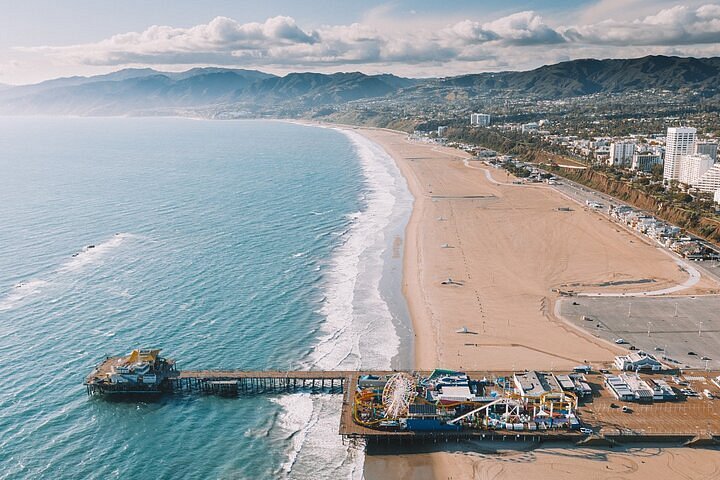
Santa Monica’s iconic pier and coastline anchor one of California’s most resilient real estate markets, where beach access, tech employment, and entertainment industry wealth converge
2026 Economic Outlook
- Google’s Playa Vista and Venice campus expansion adding thousands of jobs
- Streaming wars accelerating content production creating sustained furnished rental demand
- UCLA’s ongoing research expansion drawing additional academic and medical talent
- Expo Line (Metro E Line) improving transit connectivity across the Westside
- Playa Vista tech campus fill-out creating new demand corridor between Venice and LAX
- International tourism recovery driving short-term rental demand where permitted
Investment Climate
The West LA investment environment is defined by exceptional appreciation potential, a culturally premium tenant pool, and a regulatory framework that ranks among the most complex in Southern California. The Santa Monica Rent Control Law (SMRCL) and the Los Angeles Rent Stabilization Ordinance (LARSO) create a multi-jurisdiction regulatory landscape that requires specific expertise before any multi-family acquisition. Successful West LA investors share these characteristics:
- Regulatory intelligence understanding the critical difference between Santa Monica Rent Control, Los Angeles RSO, and Culver City RSO, and targeting the property types and vintages that maximize flexibility within each framework
- Silicon Beach market awareness understanding how Google’s campus expansion, Snap’s hiring cycles, and Amazon Studios’ production calendar affect rental demand and rate trajectories across specific micro-corridors
- Entertainment industry premium marketing furnished units to production companies and individual industry professionals, unlocking $5,000 to $10,000 per month revenue streams unavailable in most other California markets
- ADU strategy execution using California’s statewide ADU laws to add income units on SFH lots in Mar Vista, Palms, and Culver City, where the ADU premium versus the rest of Southern California is among the highest in the state
- Long-term conviction in the Westside lifestyle premium understanding that beach access, walkability, and cultural cachet create a demand floor that transcends employment cycles
Historical Performance
| Period | Market Driver | Avg Annual Appreciation | Key Event |
|---|---|---|---|
| 2010-2014 | Post-recession recovery, early Silicon Beach formation | 6-9% | Google moved into Venice; started the Silicon Beach transformation |
| 2015-2019 | Silicon Beach maturation, streaming industry boom | 9-14% | Snap IPO, Netflix expansion, Amazon Studios opening in Culver City drove Westside demand surge |
| 2020-2022 | Pandemic remote work, space premium for beach access | 14-22% | Beach proximity became the most sought characteristic in Southern California; Westside outperformed most LA markets |
| 2022-2024 | Rate shock, tech layoffs, WGA/SAG strike effect | 1-4% | Writers and actors strike temporarily reduced some entertainment rental demand; tech layoffs softened Venice |
| 2025-2026 | Strike resolution, AI content production, rate stabilization | 5-8% (projected) | Post-strike content surge driving production housing demand; Google and Snap return-to-office pulling tech workers back |
The Westside’s 20-year appreciation track record shows average annual gains of 7 to 9 percent with lower volatility during downturns than East LA or the San Fernando Valley. A $700,000 Santa Monica condo purchased in 2005 would be worth approximately $1.9 to $2.3 million today. The beach and lifestyle premium creates a durable price floor that makes the Westside one of the most defensive California real estate markets during economic downturns.
Demographic Trends Driving Demand
- Silicon Beach Employment Expansion with Google, Snap, Amazon Studios, and hundreds of tech startups employing over 20,000 workers in the Playa Vista to Venice to Santa Monica corridor, creating a sustained premium rental demand tier at $3,500 to $5,500 per month
- Streaming Content Production Surge with Netflix, Amazon, Disney+, and Apple TV+ dramatically expanding content production on the Westside, creating year-round demand for production housing from showrunners, directors, writers, and crew members on assignment
- UCLA Academic Community with 47,000 students and 30,000 faculty and staff representing a self-renewing rental base in Westwood, Brentwood, and Palms that is entirely independent of entertainment and tech employment cycles
- International Wealth Migration with high-net-worth individuals from the Middle East, Latin America, Asia, and Europe choosing Santa Monica and Venice for second homes and long-term residence, creating an all-cash buyer and luxury renter tier that supports prices independent of domestic financing conditions
- Post-Strike Entertainment Recovery with the 2023 WGA and SAG-AFTRA strikes now resolved, the industry’s content production backlog is generating above-average activity in 2025 and 2026, compressing production housing supply across the Westside
- Fitness, Wellness, and Lifestyle Economy with Santa Monica and Venice serving as the national headquarters for the wellness and fitness industry, creating a community of entrepreneurs, creators, and self-employed professionals who choose the Westside specifically for the lifestyle infrastructure and pay premium rents to access it
📚 New to real estate investing? Master the fundamentals with our professional course Learn more →
2. Neighborhood Hotspots
Santa Monica and West LA Investment Neighborhood Map
Interactive map of West LA’s investment neighborhoods. Green stars show top hotspots, blue circles mark established markets, and orange circles highlight emerging areas.
Core Investment Neighborhoods
Detailed Submarket Analysis: Santa Monica and West LA
| Neighborhood | Price Range | Cap Rate | Growth Drivers | Best Strategy |
|---|---|---|---|---|
| Santa Monica (beach-adjacent) | $1.8M-$5M+ | 2.5-3.5% | Beach, lifestyle premium, maximum supply constraint | Maximum appreciation, SFH/condo only (avoid pre-1979 multi-family) |
| Venice | $1.4M-$3.5M+ | 2.8-3.8% | Google campus, Abbot Kinney, beach, Silicon Beach epicenter | Appreciation, SFH, post-1978 units only for multi-family |
| Mar Vista | $1.2M-$1.9M | 3.5-4.5% | Google and Amazon proximity, ADU viability, less rent control | Best Westside value, ADU development, tech renter hold |
| Culver City | $1.1M-$1.8M | 3.5-4.5% | Amazon Studios, Sony Pictures, entertainment industry | Entertainment furnished rental, appreciation, ADU |
| Playa Vista | $900K-$1.5M | 3.8-4.8% | Silicon Beach campus cluster, new construction, no RSO | Best Westside cash flow, tech renter, no rent control complexity |
| Westwood / UCLA | $950K-$1.6M | 3.5-4.5% | UCLA perpetual demand, medical center, faculty premium | Academic community hold, near-zero vacancy, condo appreciation |
| Marina del Rey | $800K-$1.5M | 3.8-5.0% | Marina lifestyle, Silicon Beach access, more affordable Westside | Balanced returns, tech renter, marina premium |
| Palms | $850K-$1.3M | 4.0-5.5% | UCLA adjacency, Culver City spillover, most affordable Westside | Best Westside affordability, student and tech renter mix |
| Brentwood | $2.0M-$5M+ | 2.5-3.5% | UCLA, luxury executives, entertainment wealth, lifestyle premium | Luxury appreciation, premium executive rental |
| Inglewood (SoFi area) | $700K-$1.0M | 4.5-6.0% | SoFi Stadium, entertainment district, proximity to LAX tech corridor | Best adjacent cash flow, speculative gentrification play |
Expert Insight: “The best-kept secret on the Westside right now is Playa Vista. You have new construction that is entirely exempt from LA RSO, you have Google and Amazon as neighbors, and you have condo prices that are 30 to 40 percent below comparable Venice addresses. The only thing you’re giving up is the Abbot Kinney brand and the beach walk, but the tech renter at $200,000 salary cares more about the bike commute to Google than the Venice brand. We’re seeing cap rates in Playa Vista that are simply not available anywhere else in the Westside corridor.” – Alex Torres, Investment Director, Westside Capital Partners
3. Property Types
| Investment Goal | Best Property Type | Best Area | Minimum Capital |
|---|---|---|---|
| Maximum Appreciation | Beach-adjacent SFH or condo | Santa Monica, Venice, Brentwood | $450,000+ |
| Best Cash Flow on Westside | Playa Vista condo or post-1979 multi-family | Playa Vista, Palms, Marina del Rey | $240,000+ |
| Best Value Entry | SFH with ADU potential in Mar Vista or Palms | Mar Vista, Palms, Culver City | $320,000+ |
| Entertainment Income | Furnished SFH or large unit near studios | Culver City, Mar Vista, Marina del Rey | $320,000+ |
Don’t guess the costs. Our Complete Renovation & Remodeling Cost Guide covers 400+ pages of project-by-project breakdowns with real contractor pricing ranges.
4. Cost Analysis
Acquisition Cost Breakdown (West LA / Santa Monica)
| Expense Item | Typical Cost | Example ($1,450,000 Property) | Notes |
|---|---|---|---|
| Down Payment | 25% (investment) | $362,500 | Most West LA SFH require jumbo financing; 25-30% down standard |
| Closing Costs | 2-3% of price | $29,000-$43,500 | Title, escrow, lender fees; LA County documentary transfer tax additional |
| RSO / Rent Control Legal Review | $600-$1,500 | $900 | Critical for any multi-family purchase; must determine SMRCL, LA RSO, or Culver City RSO coverage before offer |
| General Inspection | $500-$800 | $650 | Foundation, drainage, and coastal moisture critical near the beach |
| Pest Inspection | $150-$350 | $200 | Section 1 typically seller-paid; coastal humidity increases termite risk |
| Initial Repairs / Cosmetic Updates | 0-5% of price | $0-$72,500 | Westside tenants expect modern finishes; dated units underperform on rent |
| Reserves (6 months) | 6 months carrying costs | $30,000-$45,000 | Essential; negative carry of $3,000 to $5,000/month requires meaningful reserves |
| TOTAL MINIMUM ENTRY | ~30-35% of value | $423,750-$525,850 | Significant capital required; comparable to Irvine and Silicon Valley entry demands |
Sample Cash Flow Analysis: Mar Vista SFH with ADU (Best Westside Strategy)
| Item | Monthly | Annual | Notes |
|---|---|---|---|
| Main House Rent | $5,200 | $62,400 | 3BR SFH, Mar Vista, renovated, Google proximity |
| ADU Rent (detached studio) | $2,950 | $35,400 | Detached ADU, $190K build, tech worker demand |
| Gross Income | $8,150 | $97,800 | |
| Less Vacancy (4%) | -$326 | -$3,912 | Conservative for high-demand Westside corridor |
| Property Taxes (1.2%) | -$1,680 | -$20,160 | 1.2% on $1.68M post-ADU assessed value |
| Insurance | -$250 | -$3,000 | Landlord policy including ADU; coastal proximity premium |
| Property Management (9%) | -$701 | -$8,412 | Essential for LARSO and AB 1482 compliance |
| Maintenance / CapEx | -$611 | -$7,332 | 7.5% of rent; coastal climate adds maintenance premium |
| Net Operating Income | $4,582 | $54,984 | Before mortgage |
| Mortgage ($1.68M total, 25% down, 7.25% jumbo, 30yr) | -$8,586 | -$103,032 | Jumbo on $1,260,000 loan; rate premium applies |
| CASH FLOW | -$4,004 | -$48,048 | ADU cuts negative carry by ~$2,950/mo vs SFH alone |
| Cap Rate | 3.3% | NOI / Total Cost | |
| Total Return (8% appreciation) | ~17% | Including equity, appreciation, principal paydown |
Without the ADU, this Mar Vista property would run at roughly -$6,950 per month, an almost unsustainable carrying cost for most investors outside of active tech employment. The ADU converts the strategy from borderline impossible to difficult but manageable, and adds $350,000 to $500,000 in immediate property value. For West LA, the ADU is not optional; it is the strategy that makes Westside real estate ownership financially rational for non-entertainment-wealth investors.
Expert Insight: “The entertainment furnished rental market on the Westside is something investors in other California markets genuinely do not understand. When Netflix has a $200 million production shooting at Sony in Culver City, they have 150 people who need housing for six months. Each of those crew members has a housing budget of $5,000 to $8,000 per month from the production company. If you have a renovated 2 or 3 bedroom in Culver City or Mar Vista, you can be fully booked from September through March without a single Airbnb listing. That revenue stream simply does not exist in Sacramento or San Jose.” – Michelle Kim, Westside Property Specialist, LA Capital Realty
5. Legal Framework
⚠️ Critical West LA Multi-Jurisdiction Compliance Notice
The West LA investment corridor spans three different rent control jurisdictions: the Santa Monica Rent Control Law (SMRCL), the Los Angeles Rent Stabilization Ordinance (LA RSO), and the Culver City Rent Stabilization Ordinance (Culver City RSO). These three systems have meaningfully different rules, different rent caps, and different administrative bodies. Determining which jurisdiction applies to a specific property and what the exact coverage status is under that jurisdiction must happen before any offer, not during due diligence. Purchasing a pre-1978 or pre-1979 multi-family building in this corridor without complete legal clarity is the most common and expensive mistake in West LA investing. Always consult a California-licensed attorney specializing in California rent control before any West LA multi-family acquisition.
Three-Jurisdiction Rent Control Overview
Santa Monica Rent Control Law (SMRCL):
- Applies to most residential rental units in Santa Monica built before April 10, 1979
- Administered by the independent Santa Monica Rent Control Board, not the city council
- Sets Maximum Allowable Rents (MAR) that cap what any tenant, including new tenants, can be charged
- Annual increases limited to approximately 1 to 3 percent based on CPI
- Just cause eviction required from the first day of tenancy for covered units
- Relocation assistance required for owner move-in evictions
- Widely considered the strictest rent control system in California
LA Rent Stabilization Ordinance (LA RSO):
- Applies to most multi-family buildings in Los Angeles built before October 1, 1978
- Annual increase tied to CPI; generally 3 to 5 percent per year
- Just cause eviction required for covered tenants
- Applies in Venice, Mar Vista, West Hollywood adjacent, and parts of Palms
- Buildings built October 1, 1978 or later are exempt; subject only to AB 1482
Culver City RSO:
- Applies to most rental units in Culver City built before February 1, 1995
- Annual increases limited; just cause eviction required
- Generally less aggressively administered than Santa Monica Rent Control
- Post-February 1995 construction exempt; subject only to AB 1482
Investor Strategy in a Multi-Jurisdiction Market
- Post-cutoff date targeting: The most important strategic decision in West LA is targeting post-cutoff buildings to avoid rent control complexity entirely. Post-1979 in Santa Monica, post-1978 in LA, and post-1995 in Culver City are the clean targets that give maximum rent flexibility under AB 1482 only.
- SFH and condo preference: Single-family homes and condos with separate title are generally exempt from SMRCL and LA RSO, subject only to AB 1482 after 15 years of age. This is why most sophisticated Westside investors prefer SFH, condos, and townhomes over apartment buildings.
- Playa Vista clean play: All Playa Vista development is from the 1990s and later. The entire neighborhood is exempt from both SMRCL and LA RSO, providing the only large-scale multi-family new construction market on the Westside with no legacy rent control exposure.
- Pre-purchase jurisdiction check: Before any offer, run the address through the Santa Monica Rent Control Board’s online lookup, the City of LA’s ZIMAS system (for LA RSO status), or the Culver City Housing Division. Do not rely on seller disclosure alone.
- AB 1482 for all: Even exempt properties are subject to California’s statewide AB 1482 after 15 years of age. Serve the required exemption notice for qualifying SFH and condo properties to maintain maximum rent-setting flexibility.
Key West LA Resources
- SM Rent Control Board: smgov.net/Departments/RentControl
- LA Housing Department (RSO): hcidla.lacity.org
- Culver City Housing Division: culvercity.org/housing
- LA County ZIMAS (zoning lookup): zimas.lacity.org
| Jurisdiction | Coverage Cutoff Date | Annual Rent Cap | Just Cause Eviction | Investor Impact |
|---|---|---|---|---|
| Santa Monica SMRCL | Before April 10, 1979 | ~1-3% (70% of CPI); also sets MAR for new tenants | From day one of tenancy | Strictest in California; Maximum Allowable Rent caps even new-tenant rents. Avoid pre-1979 multi-family entirely. |
| Los Angeles RSO | Before October 1, 1978 | ~3-5% annually (CPI-tied) | From day one of tenancy for covered units | Less extreme than SMRCL but still very restrictive. Post-1978 buildings avoid RSO entirely. |
| Culver City RSO | Before February 1, 1995 | Annual limit; just cause required | Required for covered tenants | More lenient than SMRCL; post-1995 buildings exempt. Less aggressive enforcement. |
| California AB 1482 (all) | Properties 15+ years old not covered by stricter local law | 5% + CPI, max 10% | Required after 12 months for covered tenants | Baseline protection for all post-cutoff buildings; serve SFH/condo exemption notice to maintain flexibility |
| Playa Vista (all) | Exempt (all construction post-1990) | AB 1482 only | AB 1482 only (after 12 months) | The only large Westside market with no legacy rent control risk whatsoever |
6. Step-by-Step West LA Investment Playbook
Define Your West LA Strategy
The Westside’s complexity demands that you define your approach before engaging with any property:
ADU + Silicon Beach Appreciation
Buy a SFH in Mar Vista, Palms, or Culver City within the Google, Amazon Studios, or Sony Pictures employment orbit. Build ADU. Target tech and entertainment workers as tenants. The Westside’s ADU income premium is among the highest in California.
Entertainment Furnished Rental
Buy or lease a well-appointed 2 to 3 bedroom in Culver City or Mar Vista. Furnish to production quality. Market to entertainment production companies through housing coordinators. $5,000 to $9,000 per month from November through April production season.
Playa Vista Cash Flow Play
Buy a new-construction Playa Vista condo or townhome. No rent control risk, maximum rent flexibility, tech renter demographic earning $200,000-plus. Best Westside cap rates available anywhere. Smaller unit, smaller entry cost, cleaner regulatory environment.
Beach Appreciation (Maximum Hold)
Buy beach-adjacent in Santa Monica or Venice. Accept $4,000 to $6,000 per month negative carry as the holding cost of one of California’s most durable lifestyle and appreciation assets. 10-plus year hold. The beach premium has proven remarkably resistant to all California downturns.
Build Your West LA Team
The multi-jurisdiction regulatory environment makes team selection even more critical on the Westside than elsewhere in California:
- Westside Investment Agent: Must know SMRCL, LA RSO, and Culver City RSO coverage analysis and be able to pull rent control status on any address before you spend time on it. Ask for their last five investment transactions and verify the properties were not all pre-1979 covered buildings they sold without proper disclosure.
- California Rent Control Attorney with West LA Expertise: A general California landlord-tenant attorney is not sufficient for SMRCL questions. You need an attorney who has appeared before the Santa Monica Rent Control Board, understands maximum allowable rent (MAR) calculations, and can advise on the difference between unit-level and building-level exemptions.
- West LA Property Manager: Verify they manage properties under all three West LA rent control systems, not just LA RSO. SMRCL is sufficiently different from LA RSO that a manager without specific Santa Monica Board experience will create compliance problems.
- Entertainment Industry Housing Coordinator Contact: If pursuing furnished rentals, build relationships with housing coordinators at Netflix, Amazon Studios, Sony, and major talent agencies. These coordinators manage housing placements for dozens of crew members per production and represent the most efficient access to the furnished rental market.
- ADU Contractor with LA County Permits: LA County permit requirements differ from the City of Los Angeles requirements. Confirm your contractor knows whether your property is in unincorporated LA County, the City of Los Angeles, City of Santa Monica, or City of Culver City, as each has different permit processes for ADU construction.
Expert Tip: When interviewing West LA property managers, ask: “Can you explain the difference between the Santa Monica Maximum Allowable Rent and a vacancy decontrol unit?” A manager who cannot immediately explain that Santa Monica does not have full vacancy decontrol (unlike LA RSO) does not have the SMRCL expertise your Santa Monica investment requires.
West LA-Specific Due Diligence
Physical Due Diligence
- Foundation inspection; West LA coastal soils and seismic risk both require review
- Moisture and mold inspection; ocean proximity increases coastal humidity and salt air corrosion
- Pest inspection; Section 1 clearance requirement; wood structure coastal termite risk is elevated
- Roof inspection; salt air accelerates deterioration; beach-adjacent properties need inspection every 3 to 5 years
- HVAC; coastal properties typically have lower AC requirements but high humidity ventilation needs
- Electrical panel; many older West LA homes need 200A upgrade for EV charging and ADU power
- ADU feasibility confirmation before purchase if ADU is the strategy
Regulatory Due Diligence
- Run address through SMRCL Board, LA HCIDLA, or Culver City Housing to confirm rent control status
- Verify exact construction date and certificate of occupancy; do not rely on listing data
- Check current tenant lease terms; identify any protected tenants under applicable ordinance
- Confirm AB 1482 exemption notice has been served if applicable; verify with title company
- Verify STR permit status if seller has been operating Airbnb; LA STR requires primary residence
- Check for any outstanding RSO or SMRCL violations filed by current or prior tenants
- Confirm ADU eligibility including LA Bureau of Engineering and street dedication requirements
Compete and Access the Entertainment Rental Market
West LA is a competitive buyer market with all-cash activity from entertainment and tech industry wealth. What works:
- Pre-inspection strategy: In Venice and Santa Monica, pre-inspections before submitting offers are standard practice. The cost of $500 to $800 is routine in a market where the property is worth $2 to $4 million. Waiving inspection contingency based on a pre-inspection is expected in competitive situations.
- RSO-free filtering: Have your agent filter every search by construction date relative to applicable cutoff dates. Only view properties in the post-cutoff category that you have strategically decided to target. Viewing pre-1979 SMRCL buildings leads to time wasted on properties that do not fit your strategy.
- Entertainment housing coordinator network: Build relationships with housing coordinators at Netflix (Culver City), Amazon Studios (Culver City), Sony Pictures (Culver City), and HBO Max (Burbank). These coordinators manage housing placements for dozens to hundreds of crew members per production. A relationship here can fill a furnished unit within days of availability.
- UCLA housing office listing: Register with UCLA’s Faculty/Staff Housing Assistance Program for your Westwood and Palms properties. Faculty and medical staff housing placements through UCLA tend to be multi-year tenancies with the most reliable payment history of any tenant demographic in the Westside market.
- Season the ADU first: If building an ADU, market it to tech workers before the main house lease expires. ADU units in the Silicon Beach corridor lease within 1 to 2 weeks due to extreme demand from Google and Amazon employees seeking housing near campus.
7. Financing Options for West LA
| Loan Type | Down Payment | Rate Premium | Best For | West LA Note |
|---|---|---|---|---|
| Jumbo Investment | 25-30% | +0.75-1.5% | Most West LA SFH and larger condo purchases | LA County conforming limit is $1,149,825. Most Westside SFH exceed this. Standard for Mar Vista, Culver City, and Venice purchases. |
| Conventional Investment | 25% | +0.5-0.75% | Playa Vista condos and Marina del Rey units under $1,149,825 | Most accessible Westside financing option; Playa Vista and Palms often within conforming limit |
| DSCR Loan | 25-30% | +1.5-2.5% | Entertainment investors or post-ADU SFH with improved income | Standard Westside properties do not qualify; post-ADU SFH in Palms or Culver City may approach 1.0x DSCR. Entertainment furnished income not typically counted. |
| Portfolio Loan | 20-30% | +1-2% | Entertainment industry borrowers, self-employed, multiple properties | Several LA-based private banks offer portfolio products for entertainment and media industry borrowers with variable income structures |
| HELOC for ADU | N/A (equity draw) | HELOC prime + 0.5-1% | ADU financing on existing West LA property | Most cost-effective ADU financing. West LA appreciation has created significant equity for most long-term owners. Most banks require 20%+ equity position post-draw. |
| Hard Money (Bridge) | 20-25% | 9-12% rate | Value-add acquisitions in Palms, Del Rey, competitive quick-close | Multiple LA-based hard money lenders active in the Westside corridor; useful for vacant or distressed properties requiring rapid execution |
| FHA (Owner-Occupant) | 3.5% | Standard + MIP | House-hacking near UCLA in Palms | LA County FHA limit is $1,149,825; applicable to some Palms and lower-priced Culver City properties for owner-occupant strategies |
West LA Financing Reality: LA County’s conforming loan limit of $1,149,825 is among the highest in the United States, but the Westside’s price levels still push most SFH purchases into jumbo territory. The key comparative advantage over Playa Vista and Palms condos is that these can often be financed with conventional loans, providing rate savings of 0.75 to 1.5 percent over jumbo. For investors building a portfolio, a Playa Vista condo or Palms multi-family property financed conventionally often pencils better than a Venice or Santa Monica SFH requiring jumbo, even when factoring in the appreciation differential.
8. Frequently Asked Questions

Knowledge Quiz: Santa Monica and West LA Real Estate Investment
Open Quiz
5 quick questions on what you just learned about West LA investing
1) What is the most critical difference between Santa Monica Rent Control (SMRCL) and the LA Rent Stabilization Ordinance (LA RSO) for investors?
Answer: C
The most critical distinction is Santa Monica’s Maximum Allowable Rent (MAR) system. Under LA RSO, when a tenant voluntarily vacates, the landlord can typically reset rents to market rate for the next tenant (vacancy decontrol). Under SMRCL, the Santa Monica Rent Control Board sets a MAR for each controlled unit, and the landlord cannot charge more than that MAR even to a brand-new tenant. For older units, the MAR can be significantly below current market rates. This makes pre-1979 Santa Monica multi-family investment potentially unworkable financially.
2) What is Silicon Beach and which companies anchor its employment base on the Westside?
Answer: B
Silicon Beach is the informal name for the technology and digital media cluster spanning Venice, Santa Monica, Marina del Rey, and Playa Vista. Its anchor companies include Google (12-acre Venice/Playa Vista campus), Snap Inc. (Santa Monica headquarters), Amazon Studios (Culver City), YouTube, Hulu, and Riot Games. The cluster employs over 20,000 workers earning $180,000 to $350,000 in total compensation, creating a premium rental demand tier at $3,500 to $5,500 per month that has transformed the Westside rental market since approximately 2012.
3) Why does Playa Vista offer the best cash flow opportunity on the Westside despite being adjacent to Venice and Silicon Beach?
Answer: A
Playa Vista’s investment case rests on complete rent control exemption and a pricing discount to Venice. All development in Playa Vista was built in 1990 or later, making it fully exempt from both SMRCL (pre-April 1979 cutoff) and LA RSO (pre-October 1978 cutoff). This is the only large-scale Westside market with zero legacy rent control exposure. Combined with 30 to 40 percent lower prices than Venice despite similar proximity to the Google campus, the result is cap rates of 3.8 to 4.8 percent versus 2.5 to 3.5 percent for comparable Venice properties.
4) How does the entertainment industry create a unique rental income opportunity for West LA investors that does not exist in other California markets?
Answer: D
The entertainment industry’s production housing demand is structurally unique to the West LA corridor. When Netflix films a $200M production at Sony in Culver City, each of 150 crew members receives a housing budget of $5,000 to $8,000 per month for the duration of the shoot, typically 4 to 8 months. Housing coordinators manage these placements for production companies. Well-appointed furnished properties near Sony, Amazon Studios, and Netflix offices can generate $5,000 to $10,000 per month on 30-plus day leases, avoiding STR permit requirements while capturing income unavailable in any other California market.
5) Why does the guide identify Mar Vista as offering a better risk-adjusted entry point than Venice for most investors?
Answer: C
Mar Vista’s investment advantage is a pricing discount that does not reflect a meaningful quality difference in the investment fundamentals. Mar Vista SFH prices of $1.2M to $1.9M versus Venice’s $1.4M to $3.5M represent a 25 to 40 percent discount. Both neighborhoods share the same LA RSO framework for pre-1978 multi-family, the same Google employment corridor, similar walkability scores, and equivalent ADU development viability. The result is cap rates of 3.5 to 4.5 percent versus Venice’s 2.8 to 3.8 percent and monthly negative carry roughly $1,500 to $2,500 lower for a comparable strategy. For investors who cannot justify Venice carrying costs, Mar Vista provides approximately 85 percent of the investment quality at 65 to 75 percent of the price.
Work With a Local Expert in Santa Monica and West LA
We are building a verified network of real estate professionals across every market we cover.

About Our Expert Network
We are finalizing partnerships with verified real estate professionals across every market featured on Builds and Buys. Each expert in our network is selected for their hands-on investment experience, local market knowledge, and commitment to helping buyers and investors make sound decisions.
Our local specialists offer:
- Proven experience with investment and income-producing properties
- Deep knowledge of local pricing, rental yields, and neighborhood dynamics
- Guidance on financing, legal structure, and due diligence
- Access to off-market and pre-market opportunities
- Full transaction support from search through closing
- Ongoing portfolio and property management referrals
Services Covered
- Property sourcing and acquisition
- Investment analysis and underwriting
- Buyer representation
- Market comparables and valuations
- Short-term and long-term rental strategy
- Value-add and renovation guidance
- Legal and title referrals
- Financing and lender connections
- Property management referrals
- Insurance and inspection referrals
- 1031 exchange coordination
- Exit strategy planning
Get Connected or Join Our Network
Looking for a local expert to help with your Santa Monica or West LA investment? Reach out and we will connect you with the right professional.
Are you a real estate professional with a track record on the Westside? We are always expanding our network of verified local experts.
Contact us at support@buildsandbuys.com
Find Specialized West LA Real Estate Professionals
Ready to Invest in Santa Monica and West LA?
The Westside is California’s most culturally complex and strategically nuanced real estate market. The three-jurisdiction rent control landscape demands more pre-purchase legal work than any other California market. The entertainment furnished rental opportunity is more lucrative than most investors realize. And the Silicon Beach employment cluster, combined with UCLA’s permanent academic community and one of the world’s most enduring lifestyle premiums in beach access, has created a dual-engine economy that hedges the individual weaknesses of both the tech and entertainment sectors. Investors who do the regulatory homework, target post-cutoff date buildings and SFH with ADU potential, and build relationships with entertainment housing coordinators will find the Westside delivers some of the most distinctive and resilient investment outcomes available in California.
Continue Your Research
California State Guide
See how the Westside compares to Los Angeles, San Francisco, San Diego, Sacramento, Irvine, and Silicon Valley.
Step-by-Step Invest
Complete framework for building a real estate investment strategy from scratch.
144-Lesson Course
University-level real estate education covering financing, law, strategy, and management.
For further guidance, explore our State-by-State Investor guides, browse our expert articles, or follow our Step-by-Step Investment Guide.



