
San Jose and Silicon Valley Real Estate Investment Guide For 2026
A comprehensive resource for investors navigating the world’s highest-income technology corridor, where Apple, Google, Nvidia, and a thousand startups have made the San Jose metro the most expensive and most wealth-generating real estate market in North America
Quick answers: Top 5 most searched San Jose and SV investment questions ▼
Migration data: Where people are moving from to Silicon Valley ▼
In This Guide
Click on any section to navigate directly to that content
1. San Jose and Silicon Valley Market Overview
Market Fundamentals
San Jose and Silicon Valley represent the most income-rich real estate market in the United States. The concentration of Apple, Google, Nvidia, Meta, Cisco, Intel, Adobe, and thousands of profitable tech companies within a 30-mile radius has created a metro where median household incomes in core tech corridors reach $200,000 to $250,000, where software engineers routinely earn $300,000 to $600,000 in total compensation including equity, and where the wealth effect from stock vesting cycles has structurally decoupled local housing demand from national economic conditions.
Key economic indicators defining the Silicon Valley investment case:
- Population: 1.0M+ San Jose city proper, 1.9M Santa Clara County, 4.7M nine-county Bay Area metro
- Major Employers: Apple (Cupertino HQ, 35,000+ local employees), Google (Mountain View HQ), Nvidia (Santa Clara), Cisco (San Jose), Intel (Santa Clara), Adobe (San Jose), eBay, PayPal, ServiceNow, Zoom
- Median Household Income: $130,000+ San Jose; $200,000+ Cupertino, Los Altos, Palo Alto
- San Jose State University: 36,000+ students creating stable mid-tier rental demand in central San Jose
- H-1B Visa Concentration: Santa Clara County receives more H-1B visas than any other county in the United States, creating a permanent pipeline of high-income renters
- Rental Vacancy: Under 4% countywide; under 3% in Apple and Google-adjacent corridors
Silicon Valley’s economic base is the most productive per-capita of any major metro in the world. This productivity translates directly into sustained housing demand through both direct employment (tech workers earning high salaries) and the multiplier effect (every tech job supporting 4 to 6 service sector jobs). The geographic constraints, bay to the north, ocean to the west, and protected open space to the south, create a supply ceiling that has consistently supported prices through every economic cycle of the past 40 years.
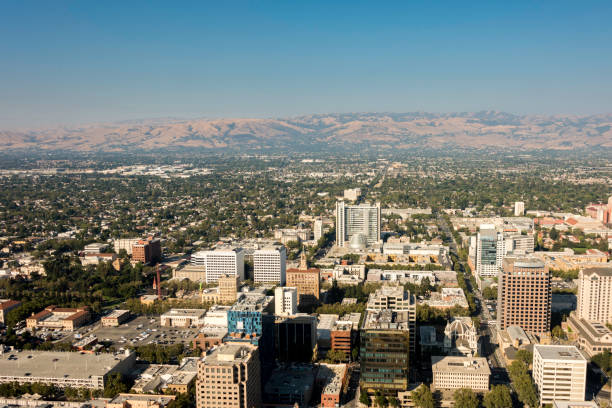
San Jose and Silicon Valley represent the world’s most concentrated technology wealth creation engine, driving real estate demand that has outperformed virtually every other market over the past 40 years
2026 Economic Outlook
- Apple’s continued expansion at its Apple Park campus adding 5,000+ jobs
- Nvidia’s explosive AI chip demand driving unprecedented hiring and compensation
- Return-to-office mandates compressing housing supply as remote workers move back
- Google’s downtown San Jose campus (Google Bay View) creating new demand corridor
- AI startup ecosystem generating a new wave of high-compensation employment
- BART Silicon Valley extension improving access and supporting transit-adjacent appreciation
Investment Climate
Silicon Valley’s investment environment is the most extreme expression of the California appreciation-over-income investment thesis. Cap rates of 2.5 to 4 percent and monthly negative cash flow of $3,000 to $6,000 are the norm, not the exception. Yet total return investors who have held Silicon Valley real estate through full market cycles have generated wealth that few other asset classes can match over equivalent time periods. The investor profile that succeeds here is specific:
- High personal income from tech employment itself, often $300,000 to $600,000 annually, providing the financial capacity to absorb negative carry without distress
- Long-term conviction in the technology sector’s continued dominance of the global economy, underpinning the thesis that Silicon Valley housing demand will not structurally decline
- ADU strategy execution using California’s statewide ADU laws to convert single-family lots into two or three income-producing units, cutting negative carry by $2,000 to $3,500 per month
- Regulatory mastery understanding both California’s AB 1482 and San Jose’s more restrictive local Rent Ordinance, which applies to pre-1979 buildings and is among the strictest local rent control laws in the state
- Cycle awareness recognizing that tech sector contractions, like the 2022 to 2023 tech layoff wave, create temporary price softening that represents buying opportunities rather than structural decline signals
The 2022 to 2023 tech correction, when major layoffs at Meta, Google, Amazon, and others caused Bay Area values to pull back 15 to 25 percent, is the best recent case study. Investors who bought during that window captured both the post-correction appreciation and the ongoing AI-driven hiring surge that followed. Silicon Valley corrections are historically deep, fast, and followed by equally sharp recoveries tied to the next technology cycle.
Historical Performance
| Period | Market Driver | Avg Annual Appreciation | Key Event |
|---|---|---|---|
| 2010-2014 | Mobile internet boom, Facebook/Twitter IPOs | 8-12% | SV recovered faster than all other California metros; IPO wealth driving demand |
| 2015-2019 | Cloud, SaaS, unicorn startup boom | 10-16% | San Jose crossed $1M median for first time; Cupertino and Sunnyvale accelerated further |
| 2020-2022 | Pandemic tech boom, remote work premium for space | 18-28% | Largest two-year appreciation on record; inventory hit historic lows |
| 2022-2023 | Tech layoffs, rate shock, correction | -15% to -20% | Sharpest SV correction since dot-com bust; buying opportunity for long-term investors |
| 2024-2026 | AI revolution, return-to-office, hiring recovery | 7-12% (projected) | Nvidia-driven AI boom creating new wealth cycle; Google Bay View campus activating San Jose downtown |
Silicon Valley’s 30-year appreciation track record averages 8 to 10 percent annually but with significant volatility tied to technology cycles. A $500,000 San Jose property purchased in 2000 would be worth approximately $2.1 to $2.5 million today, including through the dot-com bust, the 2008 financial crisis, and the 2022 tech correction. Long-term holders have been rewarded consistently, but the ride requires the financial and psychological resilience to hold through sharp corrections without being forced to sell.
Demographic Trends Driving Demand
- AI Revolution Employment Wave with Nvidia’s revenue growing from $4B to $130B in four years driving massive compensation and hiring that is actively compressing Bay Area housing supply in 2026
- H-1B Visa Pipeline with Santa Clara County receiving more H-1B visas than any other county in the United States, creating a sustained inflow of high-income renters with multi-year employment commitments to specific companies
- Return-to-Office Compression with Apple, Google, and Meta’s return-to-office mandates pushing tech workers who dispersed to Sacramento, Austin, and Phoenix during the pandemic back into the Bay Area, compressing already tight housing supply
- SJSU Student and Faculty Demand with San Jose State’s 36,000 students and academic staff creating stable mid-market rental demand in central San Jose neighborhoods near campus
- Essential Worker Housing Crisis with teachers, nurses, firefighters, and service workers earning $60,000 to $100,000 competing for housing in a market priced for $200,000 earners, creating a permanent undersupply of workforce-level rental housing
- International Tech Community with Indian and Chinese tech professional communities building deep cultural infrastructure across Santa Clara, Sunnyvale, and Milpitas, making these cities self-reinforcing migration destinations for successive waves of tech immigrants
📚 New to real estate investing? Master the fundamentals with our professional course Learn more →
2. Neighborhood Hotspots
San Jose and Silicon Valley Investment Neighborhood Map
Interactive map of Silicon Valley’s investment neighborhoods. Green stars show top hotspots, blue circles mark established markets, and orange circles highlight emerging areas.
Core Investment Neighborhoods
Detailed Submarket Analysis: Silicon Valley Neighborhoods
| Neighborhood | Price Range | Cap Rate | Growth Drivers | Best Strategy |
|---|---|---|---|---|
| Willow Glen | $1.2M-$2.0M | 2.8-3.5% | Top SJ neighborhood, schools, lifestyle premium | Premium appreciation, low turnover family rental |
| Cambrian / Blossom Hill | $1.1M-$1.7M | 3.0-4.0% | Top schools, south SJ value, ADU potential | Best SJ value vs school quality, ADU development |
| Sunnyvale / Santa Clara | $1.3M-$2.2M | 3.0-4.0% | Apple and Google proximity, tech employment density | Best SV corridor value, tech renter hold |
| Milpitas | $1.0M-$1.6M | 3.5-4.5% | BART access, tech employment, diverse community | Best SV cash flow, BART-adjacent appreciation |
| Downtown San Jose | $650K-$1.1M | 3.5-5.0% | Google Bay View campus, urban revival, condo entry | Urban appreciation play, tech rental, entry-level SV |
| Cupertino | $2.0M-$4.0M+ | 2.0-2.8% | Apple Park, #1 schools, international buyers | Maximum appreciation, school premium, ultra-high entry |
| Mountain View / Los Altos | $1.8M-$4.5M+ | 2.2-3.0% | Google Googleplex, premium schools, established prestige | Pure appreciation, Google employee premium rental |
| Berryessa / North SJ | $900K-$1.4M | 3.5-4.5% | BART Berryessa station, affordable SV entry, newer development | BART-adjacent appreciation, balanced returns |
| East San Jose / Alum Rock | $650K-$950K | 4.5-6.5% | Lowest SV entry, light rail, long-term gentrification | Highest SV yields, patient value-add, 10+ year hold |
| Gilroy / South County | $650K-$900K | 4.5-6.0% | SV commuter affordability, best south corridor yields | Commuter cash flow, entry-level SV orbit |
Expert Insight: “The return-to-office story is not getting enough attention from investors right now. When Apple, Google, and Meta required employees back three or more days per week, they didn’t just affect commutes, they reversed the migration patterns of 2020 and 2021. Workers who moved to Sacramento, Reno, and Phoenix are coming back to Silicon Valley. That means tens of thousands of additional renters competing for a housing stock that didn’t grow while they were gone. We’re in the early stages of a rental compression cycle that will play out over the next three years. The investors who are buying now are going to look very smart in 2027.” – Ryan Chen, Managing Partner, Silicon Valley Real Estate Capital
3. Property Types
| Investment Goal | Best Property Type | Best Area | Minimum Capital |
|---|---|---|---|
| Maximum Appreciation | SFH near Apple or Google campus | Cupertino, Mountain View, Sunnyvale | $450,000+ |
| Best Cash Flow in SV | Post-1979 multi-family or SFH with ADU | East SJ, Milpitas, Berryessa | $280,000+ |
| Lowest Negative Carry | Condo near SJSU or downtown SJ | Downtown SJ, Berryessa | $185,000+ |
| Lowest Entry / House Hack | SFH near SJSU, FHA financing | Near SJSU campus, Downtown SJ | $30,000+ |
Don’t guess the costs. Our Complete Renovation & Remodeling Cost Guide covers 400+ pages of project-by-project breakdowns with real contractor pricing ranges.
4. Cost Analysis
Acquisition Cost Breakdown (San Jose / Silicon Valley)
| Expense Item | Typical Cost | Example ($1,300,000 Property) | Notes |
|---|---|---|---|
| Down Payment | 25% (investment) | $325,000 | Jumbo investment loans typically require 25-30% down |
| Closing Costs | 2-3% of price | $26,000-$39,000 | Title, escrow, lender fees; California escrow typical |
| General Inspection | $600-$900 | $750 | Foundation and drainage critical for SJ’s expansive clay soils |
| Pest / Termite Inspection | $150-$350 | $200 | Section 1 typically seller-paid; Section 2 negotiable |
| SJRO Coverage Legal Review | $500-$1,200 | $700 | Essential for any pre-1979 San Jose purchase; SJRO determination has major financial implications |
| Initial Repairs / Updates | 0-5% of price | $0-$65,000 | Well-maintained properties common in SV; older East SJ stock needs more |
| Reserves (6 months) | 6 months carrying costs | $35,000-$50,000 | Critical reserve requirement given $4,000-$6,000/month negative carry |
| TOTAL MINIMUM ENTRY | ~30-35% of value | $387,650-$480,650 | Among the highest entry costs of any California metro |
Sample Cash Flow Analysis: Sunnyvale SFH with ADU (Best SV Strategy)
| Item | Monthly | Annual | Notes |
|---|---|---|---|
| Main House Rent | $4,800 | $57,600 | 3BR SFH, Sunnyvale, near Apple Park, renovated |
| ADU Rent (detached studio) | $2,800 | $33,600 | Detached ADU, $180K build cost, Apple/Google proximity premium |
| Gross Income | $7,600 | $91,200 | |
| Less Vacancy (4%) | -$304 | -$3,648 | Conservative; SV vacancy typically even lower |
| Property Taxes (1.15%) | -$1,293 | -$15,525 | 1.15% on $1.35M assessed value post-ADU |
| Insurance | -$220 | -$2,640 | Landlord policy including ADU structure |
| Property Management (9%) | -$657 | -$7,884 | Recommended for AB 1482 and SJRO compliance |
| Maintenance / CapEx | -$570 | -$6,840 | 7.5% of rent; well-maintained SV home |
| Net Operating Income | $4,556 | $54,663 | Before mortgage |
| Mortgage ($1.35M total cost, 25% down, 7.25% jumbo, 30yr) | -$6,889 | -$82,668 | Jumbo loan on $1,012,500; premium rate applies |
| CASH FLOW | -$2,333 | -$27,996 | ADU reduces negative carry by ~$2,800/mo vs SFH alone |
| Cap Rate | 4.0% | NOI / Total Cost including ADU | |
| Total Return (9% appreciation) | ~19% | Including equity, appreciation, principal paydown |
This Sunnyvale example illustrates why the ADU strategy is so widely adopted in Silicon Valley. Without the ADU, the same property would typically show $2,500 to $3,200 per month deeper negative carry, making an already difficult position nearly impossible to hold for most investors. The ADU addition also adds $350,000 to $550,000 in immediate property value, creating equity at a rate competitive with appreciation itself. For most SV investors, the ADU is not optional, it is the strategy that makes the market feasible.
Expert Insight: “I tell every client the same thing: if you buy Silicon Valley real estate and you hold it for ten years without being forced to sell, you will make money. The question is not whether you will make money, it is whether you can survive the ride. The volatility is real. The negative carry is real. But so is the fact that Nvidia employees are earning $800,000 a year and there is not enough housing. So is the fact that Apple added 5,000 people in Cupertino this year and there are 600 homes for sale in the entire city. The fundamentals have not changed. The only thing that has changed is the entry price.” – Sandra Liu, Principal, Bay Area Investment Advisors
5. Legal Framework
⚠️ Critical San Jose and California Compliance Notice
San Jose investors face a two-layer compliance challenge: California’s statewide AB 1482 and the San Jose Rent Ordinance (SJRO), which is among the most restrictive local rent control laws in California. The SJRO applies specifically to most residential units in buildings built before September 7, 1979 in San Jose, creating a critical distinction between older and newer housing stock. Purchasing a pre-1979 multi-family building without understanding SJRO implications is one of the most common and expensive mistakes in San Jose real estate investing. Always consult a California-licensed attorney specializing in California rent control law before acquiring any pre-1979 San Jose rental property.
San Jose Rent Ordinance (SJRO) and California Regulations
- San Jose Rent Ordinance (SJRO): Applies to most residential units in San Jose built before September 7, 1979. Caps annual rent increases at approximately 5 percent (tied to 70 percent of local CPI, with a floor of 2% and a ceiling of 5%). Requires just cause for any termination of tenancy for covered units. Administered by the City of San Jose’s Rent Registry and Stabilization Program.
- SJRO Coverage Exemptions: Single-family homes and condos with separate title are generally exempt from the SJRO rent cap (though still subject to AB 1482 after 12 months). Buildings with a certificate of occupancy dated September 8, 1979 or later are generally exempt. Always verify coverage status with the City of San Jose or a California attorney before purchase.
- AB 1482 (Statewide): Applies to most California residential properties not covered by a stricter local ordinance. Caps at 5% + CPI, maximum 10%, for properties 15-plus years old. Just cause required after 12 months of tenancy. Where both SJRO and AB 1482 apply, the stricter protection governs.
- AB 12 Security Deposit Cap: Maximum one month’s rent for most landlords in California as of July 2024.
- STR Prohibition: San Jose prohibits short-term rentals of under 30 days for investment properties. Permit required even for owner-occupied STR operation.
- San Jose Rent Registry: All rental properties subject to the SJRO must be registered with the city’s Rent Registry annually.
Compliance Best Practices for SV Investors
- SJRO Coverage Determination First: Before making any offer on a San Jose residential property, determine its SJRO coverage status. Request verification from the City of San Jose Rent Stabilization Program or obtain a written legal opinion. The difference between a covered and exempt property has enormous implications for rent-setting flexibility, tenant rights, and eventual disposition.
- New Construction Preference: For multi-family investment, prioritize buildings with certificates of occupancy after September 8, 1979, which are generally exempt from the SJRO rent cap. This maintains full AB 1482 coverage (5% + CPI) rather than the tighter SJRO (up to 5% flat) and gives greater flexibility for lease resets at turnover.
- Rent Registry Compliance: Register all covered properties with the San Jose Rent Registry within 30 days of acquisition. Annual renewal required. Failure to register can result in penalties and limitations on rent increases.
- Just Cause Documentation: Maintain detailed records of all lease violations, payment histories, and tenant communications from day one for both SJRO and AB 1482 covered tenants.
- AB 1482 Exemption Notice: For single-family homes and condos, serve the required written exemption notice to tenants if claiming AB 1482 exemption from rent caps. Failure to serve this notice forfeits the exemption.
Key San Jose and SV Resources
- San Jose Rent Stabilization Program: sanjoseca.gov/rent-stabilization
- California Apartment Association: caanet.org
- Santa Clara County Assessor: sccassessor.org
- San Jose Rent Registry Hotline: 408-975-4480
| Regulation | San Jose Requirement | California AB 1482 | Investor Impact |
|---|---|---|---|
| Rent Cap (pre-1979 multi-family) | 2-5% per year (SJRO, 70% of CPI) | 5% + CPI, max 10% | SJRO stricter; limits rent reset ability on long-term tenants dramatically |
| Just Cause Eviction | Required always under SJRO for covered units | Required after 12 months | Cannot remove SJRO-covered tenants without documented cause from day one of tenancy |
| Security Deposit | 1 month max (AB 12) | 1 month max (AB 12) | Uniform statewide; limited upfront protection |
| Post-1979 Multi-Family | Exempt from SJRO; AB 1482 applies | 5% + CPI, max 10% | Significantly better rent flexibility; preferred by investors |
| SFH / Condo | Exempt from SJRO with proper notice | Exempt if notice served; just cause after 12 months | Serve AB 1482 exemption notice; retain maximum rent flexibility |
| Rent Registry | Required annually for SJRO-covered properties | No statewide registry requirement | Non-compliance risks penalties and loss of rent increase rights |
6. Step-by-Step Silicon Valley Investment Playbook
Define Your Silicon Valley Strategy
Silicon Valley requires the most deliberate pre-purchase strategy definition of any California market. The financial stakes, carrying costs, and regulatory complexity are highest here. Choose your approach before looking at any property:
ADU + Appreciation (Core Strategy)
Buy a SFH in a tech-adjacent corridor. Build ADU over 8 to 14 months. Cut monthly negative carry from $5,000 to $6,000 down to $2,000 to $3,000 while adding $350,000 to $550,000 in immediate property value. The single most effective way to make Silicon Valley carrying costs survivable.
Maximum Appreciation (Pure Hold)
Buy near Apple, Google, or Nvidia headquarters. Accept $4,000 to $6,000 per month negative carry as the price of holding the world’s most valuable residential real estate by income-per-capita metrics. Requires total household income of $400,000-plus to carry comfortably.
Entry-Level / Urban Appreciation (Downtown SJ)
Buy a condo in Downtown San Jose near Google’s Bay View campus. Lower entry, lower negative carry, and direct exposure to the urban revival thesis. Best for investors with limited capital who want SV market exposure without $350,000-plus down payments.
Value-Add / BRRRR (East SJ)
Buy dated East San Jose stock at the lowest SV metro entry prices. Renovate to capture tech worker overflow demand. Hold 7 to 10 years for gentrification appreciation. Highest risk, highest yield potential, best for experienced investors with strong SV contractor networks.
Build Your Silicon Valley Team
Silicon Valley’s combination of jumbo financing complexity, SJRO compliance requirements, and intense market competition demands a team with specific local expertise:
- Silicon Valley Investment Agent: Must understand SJRO coverage analysis, ADU development potential assessment, and the specific tech employment corridor effects on each submarket. Ask for their last five investment transactions and verify they were not all owner-occupant purchases.
- California Rent Control Attorney with SJRO Expertise: SJRO compliance is more complex than standard AB 1482 analysis. Your attorney must be current on 2024 to 2025 SJRO amendments and able to advise on post-1979 building preference, rent registry requirements, and exempt property notice procedures.
- SV-Experienced Property Manager: Verify they manage properties specifically in San Jose and understand the SJRO rent registry process, not just statewide AB 1482 compliance.
- Jumbo Mortgage Specialist: Work with a broker active in the SV jumbo market with relationships at Silicon Valley Bank (commercial), First Republic successor institutions, and East West Bank for jumbo investment products. Standard mortgage brokers often lack SV-specific jumbo investment expertise.
- ADU-Permitted Contractor: If pursuing the ADU strategy, your contractor needs City of San Jose building permit experience specifically. San Jose’s permitting timeline and requirements differ from Sunnyvale and Santa Clara (which have their own city permit processes).
Expert Tip: When interviewing property managers, ask: “How many properties do you currently manage under the San Jose Rent Ordinance and when did you last attend a San Jose Rent Stabilization Program training?” Any manager who cannot immediately answer the first question or says “we haven’t needed training” does not have the SJRO-specific expertise your pre-1979 San Jose investment requires.
Silicon Valley-Specific Due Diligence
Physical Due Diligence
- Foundation inspection for expansive clay soils common in San Jose basin
- Sewer lateral inspection (Santa Clara County clay lines prone to root intrusion)
- Earthquake vulnerability assessment for pre-1980 construction (unreinforced masonry at risk)
- Pest and termite inspection with Section 1 clearance requirement
- HVAC condition critical for SV summer heat waves
- Electrical panel inspection; many older SJ homes need 200A upgrade for EV charging and ADU
- Lead and asbestos testing for pre-1978 construction
Regulatory Due Diligence
- SJRO coverage status determination (pre or post-September 7, 1979)
- San Jose Rent Registry status check on any existing tenants
- Verify current tenant lease terms; identify any SJRO or AB 1482 protections applying
- Confirm ADU eligibility for the specific parcel before purchase with ADU plans
- Pull all permits; verify no unpermitted conversions (common in East SJ)
- Flood zone determination (portions of SJ near Guadalupe River and bay margins)
- Confirm intended city jurisdiction (some areas are unincorporated Santa Clara County)
Compete in SV’s Market and Execute Your ADU Plan
Silicon Valley is one of the most competitive buyer markets in the world, with regular all-cash and non-contingent offers in desirable areas. What works:
- Pre-inspections: Pre-inspection before making any offer in Sunnyvale, Cupertino, or Willow Glen. Costs $600 to $900 without guarantee but allows removal of inspection contingency, which is essential for competing with cash buyers.
- Jumbo pre-approval quality: Get a full credit-underwritten commitment letter from a jumbo lender before searching. Standard pre-approval letters are ignored in competitive SV bidding situations. A bank commitment letter is treated nearly as well as cash.
- ADU feasibility pre-screening: Before making any offer on a SFH with ADU plans, have your contractor confirm ADU buildability, utility capacity, and permitting pathway. Discovering an ADU is infeasible after purchase eliminates the core strategy.
- Tech cycle timing: Monitor tech layoff news and interest rate movements for windows when domestic buyer activity dips. International and cash buyers maintain their activity through cycles, but leveraged domestic investors pull back, creating competitive opportunity.
- Corporate relocation sourcing: Build relationships with Apple, Google, and Nvidia’s corporate relocation programs for tenant sourcing. Corporate relocation tenants are pre-screened, income-verified, and motivated by employment commitments to be excellent tenants.
7. Financing Options for Silicon Valley
| Loan Type | Down Payment | Rate Premium | Best For | Silicon Valley Note |
|---|---|---|---|---|
| Jumbo Investment (Standard) | 25-30% | +0.75-1.5% | Most SV SFH and larger condo purchases | Santa Clara County conforming limit is $1,149,825. Most SV SFH exceed this, requiring jumbo. Major rate cost vs. Sacramento or Sacramento-adjacent markets. |
| Conventional Investment | 25% | +0.5-0.75% | Downtown SJ condos and Milpitas properties under $1,149,825 | Santa Clara County has a higher conforming limit than most of California, making some SV condos and townhomes conforming-eligible |
| Super-Jumbo | 30-35% | +1.25-2.0% | Cupertino, Mountain View, Los Altos SFH | Loans above $3M in SV require super-jumbo products with stricter qualification. East West Bank and private banking relationships essential at this level. |
| Portfolio Loan | 20-30% | +1-2% | Self-employed tech founders, multiple properties | East West Bank, Cathay Bank, and First National Bank of Northern California active in SV portfolio space |
| DSCR Loan | 25-30% | +1.5-2.5% | Limited; only post-ADU properties with high combined income | Standard SV properties do not qualify for DSCR; some post-ADU Milpitas and East SJ multi-family can approach 1.0x coverage threshold |
| HELOC for ADU Construction | N/A (equity draw) | HELOC prime + 0.5-1% | Building ADU on existing owned SV property | Most cost-effective ADU financing for owners with 20%+ equity. SV property values make HELOC draws readily accessible for most long-term owners |
| FHA (Owner-Occupant) | 3.5% | Standard + MIP | House-hacking near SJSU or Downtown SJ | FHA limits in Santa Clara County are $1,149,825, making some SJ condos and townhomes FHA-eligible for house-hacking strategies |
Silicon Valley Financing Reality: Santa Clara County has one of the highest conforming loan limits in the United States at $1,149,825. Despite this, the majority of SV SFH purchases still require jumbo financing, and Cupertino and Mountain View purchases routinely need super-jumbo products above $3 million. The combination of jumbo rate premiums, high property tax (1.1 to 1.25 percent on $1.3M to $4M assets), and HOA fees where applicable creates total carrying costs of $9,000 to $20,000 per month before any rent is received. Investors must model these complete carrying costs, not just the mortgage payment, when evaluating Silicon Valley investments.
8. Frequently Asked Questions

Knowledge Quiz: San Jose and Silicon Valley Real Estate Investment
Open Quiz
5 quick questions on what you just learned about Silicon Valley investing
1) What is the San Jose Rent Ordinance (SJRO) and which properties does it apply to?
Answer: B
The San Jose Rent Ordinance (SJRO) is a local rent control law specific to San Jose that applies to most residential units in buildings with certificates of occupancy dated before September 7, 1979. It caps annual rent increases at 70 percent of local CPI, with a 2 percent floor and 5 percent ceiling. This is stricter than California’s statewide AB 1482 cap of 5 percent plus CPI with a 10 percent maximum. Buildings with post-September 7, 1979 occupancy certificates are generally exempt from the SJRO rent cap, though still subject to statewide AB 1482.
2) Why is the ADU strategy the most widely adopted investment approach in Silicon Valley?
Answer: A
The guide’s cash flow analysis shows that a detached ADU in Sunnyvale adds $2,800 per month in rent and reduces the property’s monthly negative carry from roughly $5,100 down to $2,333, a cut of over $2,700 per month. The $180,000 ADU construction cost also creates $350,000 to $550,000 in immediate property value, generating more equity than the build cost on day one. Without this strategy, most Silicon Valley SFH positions are financially unsustainable for non-tech-salary investors.
3) What is the Santa Clara County conforming loan limit and how does it differ from most of California?
Answer: C
Santa Clara County’s conforming loan limit of $1,149,825 is among the highest in the United States, reflecting the region’s exceptional housing costs. This means some Silicon Valley condos and townhomes, particularly in Downtown San Jose, Milpitas, and Berryessa, fall within the conforming limit and avoid the 0.75 to 1.5 percent jumbo rate premium. However, the vast majority of SV SFH purchases, particularly in Sunnyvale, Cupertino, and Mountain View, still exceed this limit and require jumbo financing.
4) What is the primary reason return-to-office mandates from Apple, Google, and Meta matter for Silicon Valley real estate investors in 2025 and 2026?
Answer: D
Return-to-office mandates at Apple, Google, and Meta reversed the pandemic migration pattern that had sent tens of thousands of Silicon Valley tech workers to Sacramento, Austin, and Phoenix. These workers are returning to need housing in the Bay Area. Because no new housing was built during the 2020 to 2022 outflow, the returning population competes for the same stock, compressing vacancy rates and driving rental rate increases that were not anticipated when investors priced acquisitions in 2022 to 2023. This dynamic supports rental appreciation in 2025 and 2026 beyond what baseline models suggested.
5) Which area does the guide identify as Silicon Valley’s highest-yield investment opportunity and what is its long-term thesis?
Answer: A
The guide identifies East San Jose and Alum Rock as the highest-yield investment in the Silicon Valley metro with cap rates of 4.5 to 6.5 percent and entry prices of $650,000 to $950,000 for SFH. The long-term thesis is a 10 to 15 year gentrification arc driven by proximity to the Google Bay View campus, BART Berryessa Station connectivity, VTA light rail access, and the inevitable spillover of tech worker housing demand as all closer neighborhoods price out essential workers. The area currently trades at 45 to 55 percent below Willow Glen despite being within the same city and transit network.
Work With a Local Expert in San Jose and Silicon Valley
We are building a verified network of real estate professionals across every market we cover.

About Our Expert Network
We are finalizing partnerships with verified real estate professionals across every market featured on Builds and Buys. Each expert in our network is selected for their hands-on investment experience, local market knowledge, and commitment to helping buyers and investors make sound decisions.
Our local specialists offer:
- Proven experience with investment and income-producing properties
- Deep knowledge of local pricing, rental yields, and neighborhood dynamics
- Guidance on financing, legal structure, and due diligence
- Access to off-market and pre-market opportunities
- Full transaction support from search through closing
- Ongoing portfolio and property management referrals
Services Covered
- Property sourcing and acquisition
- Investment analysis and underwriting
- Buyer representation
- Market comparables and valuations
- Short-term and long-term rental strategy
- Value-add and renovation guidance
- Legal and title referrals
- Financing and lender connections
- Property management referrals
- Insurance and inspection referrals
- 1031 exchange coordination
- Exit strategy planning
Get Connected or Join Our Network
Looking for a local expert to help with your San Jose or Silicon Valley investment? Reach out and we will connect you with the right professional for your market and strategy.
Are you a real estate professional with a track record working with investors in Silicon Valley? We are always expanding our network of verified local experts.
Contact us at support@buildsandbuys.com
Find Specialized Silicon Valley Real Estate Professionals
Ready to Invest in Silicon Valley?
Silicon Valley is not a market for the faint of heart or thin of capital. The negative carrying costs are real, the regulatory complexity is layered, and the tech sector concentration creates volatility unlike any other major metro. But no market in the world has generated more residential real estate wealth per capita over the past 30 years. The ADU strategy has made the market significantly more accessible than it was a decade ago. The SJRO’s coverage of only pre-1979 stock means modern investors can target exempt buildings with full rent flexibility. And the return-to-office dynamic, combined with the AI employment wave centered on Santa Clara County, has created a supply-demand tension that favors landlords in 2026. For investors who understand the market and have the financial foundation to hold through the inevitable cycles, Silicon Valley remains one of the most compelling long-term wealth-building markets on earth.
Continue Your Research
California State Guide
See how Silicon Valley compares to Los Angeles, San Francisco, Sacramento, San Diego, and Irvine.
Step-by-Step Invest
Complete framework for building a real estate investment strategy from scratch.
144-Lesson Course
University-level real estate education covering financing, law, strategy, and management.
For further guidance, explore our State-by-State Investor guides, browse our expert articles, or follow our Step-by-Step Investment Guide.



