
Tri-Cities Washington Real Estate Investment Guide For 2026
A comprehensive resource for investors targeting Kennewick, Richland, and Pasco, Washington’s fastest-growing metro area, where federal science employment, explosive population growth, and one of the most landlord-friendly environments in the Pacific Northwest converge
Quick answers: Top 5 most searched Tri-Cities investment questions ▼
Migration data: Where people are moving from to the Tri-Cities ▼
In This Guide
Click on any section to navigate directly to that content
1. Tri-Cities Market Overview
Market Fundamentals
The Tri-Cities, comprising Kennewick, Richland, and Pasco at the confluence of the Columbia, Snake, and Yakima Rivers in southeastern Washington, represents one of the most underappreciated investment markets in the Pacific Northwest. It combines the lowest entry prices of any Washington metro with a federal employment base of extraordinary stability, explosive population growth, and a landlord regulatory environment that is the most favorable in the state.
Key economic indicators:
- Population: 320,000+ metro and growing rapidly. Pasco is consistently among the top-growing cities in Washington State.
- Major Employers: Hanford Nuclear Site contractors (WRPS, Bechtel, Amentum), Pacific Northwest National Laboratory (PNNL), Kadlec Regional Medical Center, Lourdes Health, Amazon fulfillment, Port of Pasco, wine and agricultural industry
- Median Household Income: Richland $95,000+; Kennewick $72,000; Pasco $64,000
- Hanford Workforce: 10,000 to 12,000 federally funded positions with contracts extending to 2060+
- No State Income Tax: Major draw for relocators, especially from California and Oregon
- Vacancy Rate: Under 3.5% metro-wide, among the lowest in Washington
Eastern Washington’s hot, dry climate, outdoor recreation along the Columbia River, world-class wine country at the doorstep, and dramatically lower cost of living than the Seattle metro are all contributing to sustained population growth that shows no signs of slowing.
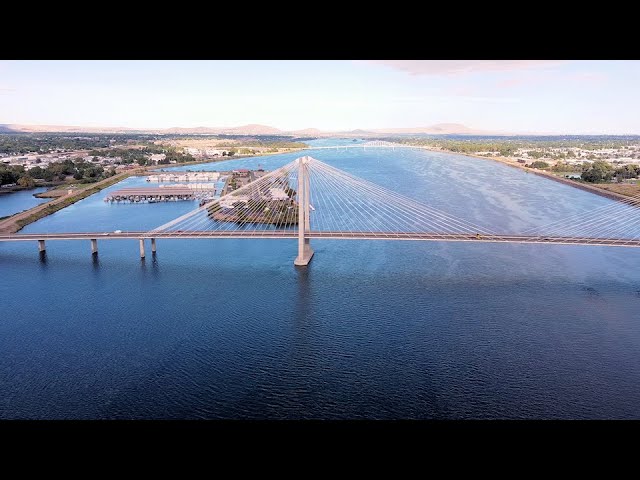
Kennewick, Richland, and Pasco sit at the confluence of the Columbia, Snake, and Yakima Rivers, with Hanford and PNNL defining the economic DNA of the region
2026 Economic Outlook
- Hanford Direct Feed Low Activity Waste (DFLAW) facility now operational, sustaining thousands of technical positions
- PNNL expanding clean energy and battery technology research programs
- Pasco commercial and industrial expansion continuing along the Road 68 and Highway 395 corridors
- Columbia Valley wine industry growing with new winery and hospitality development
- Washington State University Tri-Cities campus expanding enrollment and research presence
The Core Investment Thesis
The Tri-Cities is built on three investment pillars that are rare to find simultaneously in any market:
- Federal employment permanence: Hanford’s cleanup is a congressionally mandated federal obligation that cannot be cancelled, outsourced, or relocated. The Department of Energy has committed to funding it through 2060 and beyond. This is not a corporate employment anchor that can announce layoffs or relocate. It is a legal obligation of the U.S. government, creating one of the most durable employment foundations of any market in the country.
- Population growth compounding: Pasco is growing faster than almost any other city in Washington. The combined metro has been adding 5,000 to 8,000 residents annually for over a decade. New residents require housing, and the pace of new construction has not kept up, creating a structural supply deficit that supports rents and values.
- Price-to-rent ratio advantage: At median prices of $345,000 to $420,000 versus Seattle’s $875,000, investors can deploy significantly less capital per unit and achieve cash flow characteristics that are simply not possible in western Washington markets.
Historical Performance
| Period | Market Driver | Avg Annual Appreciation | Key Event |
|---|---|---|---|
| 2010-2014 | Hanford stable, post-recession recovery | 3-5% | Federal funding maintained Hanford workforce through recession with minimal disruption |
| 2015-2019 | Pasco growth explosion, western WA spillover | 7-11% | Pasco becomes one of fastest-growing cities in WA; Amazon and logistics expansion |
| 2020-2022 | Pandemic remote work migration, inventory collapse | 18-26% | Seattle remote workers discovered the Tri-Cities; multiple offers became standard; prices surged |
| 2023-2024 | Rate correction, normalization | 3-6% | Market softened less than western WA. Hanford workforce insulated from rate-sensitive correction. |
| 2025-2026 | DFLAW operation, continued migration, rate stabilization | 6-10% (projected) | Hanford DFLAW milestones sustaining workforce; PNNL clean energy expansion |
A $250,000 Tri-Cities property purchased in 2010 is worth approximately $600,000 to $750,000 today. More importantly, that same property would have generated positive or near-neutral cash flow for much of that holding period, a combination that is almost impossible to find in western Washington markets where appreciation has been accompanied by deeply negative cash flow throughout the same period.
What Drives Three Different Cities
- Richland is the most affluent of the three cities, built around PNNL and its proximity to the Hanford site. It attracts the highest-income tenant demographic, federal scientists, and engineers who are stable, long-term renters. Property values and rents are highest here, but so is the quality and reliability of tenants.
- Kennewick is the commercial hub with the largest retail and service sector employment base. It offers the most balanced investment market: higher yields than Richland, more stable demand than Pasco, and the widest range of property types from affordable value-add homes to upscale executive rentals in Southridge and Canyon Lakes.
- Pasco is the growth story. It is the youngest, fastest-growing, and most affordably priced of the three. Its renter demographic spans agricultural workers, logistics employees, Amazon fulfilment center staff, and young families seeking affordable homeownership. Entry prices are the lowest, yields are the highest, and long-term appreciation follows population growth that is among the strongest in Washington State.
📚 New to real estate investing? Master the fundamentals with our professional course Learn more →
2. Neighborhood Hotspots
Tri-Cities Investment Neighborhood Map
Interactive map covering Kennewick, Richland, and Pasco investment neighborhoods. Green stars show top hotspots, blue circles mark established markets, and orange circles highlight emerging areas.
Core Investment Neighborhoods
Detailed Submarket Analysis: All Tri-Cities Neighborhoods
| Neighborhood | City | Price Range (SFH) | Cap Rate | Growth Drivers | Best Strategy |
|---|---|---|---|---|---|
| Meadow Springs / Badger Mtn | Richland | $420K-$650K | 5.0-6.5% | PNNL campus, federal scientist tenants, top schools | Premium SFH, long-term hold, executive rental |
| Central Richland | Richland | $340K-$470K | 5.5-7.0% | PNNL proximity, Hanford worker demand, value-add | Value-add SFH, BRRRR, long-term federal tenant |
| Queensgate / West Richland | Richland | $380K-$520K | 5.0-6.5% | River access, family demand, stable community | SFH buy-and-hold, family rental |
| Southridge | Kennewick | $400K-$580K | 5.5-7.0% | New construction, growth corridor, excellent schools | New SFH, professional family rental, appreciation |
| Canyon Lakes | Kennewick | $380K-$560K | 5.5-7.0% | Golf, river views, wine country lifestyle | Prestige SFH, wine industry tenant focus |
| Downtown Kennewick | Kennewick | $240K-$420K | 6.5-8.5% | Revitalization, waterfront, lowest entry | Highest urban yield, value-add, multi-unit |
| West Kennewick / Clearwater | Kennewick | $280K-$400K | 6.5-8.5% | Older stock, working class demand, BRRRR potential | Value-add, BRRRR, cash flow focus |
| West Pasco / Road 68 | Pasco | $340K-$480K | 6.0-7.5% | Fastest growth in metro, new development, young families | Growth play, new construction, multifamily |
| East Pasco | Pasco | $270K-$380K | 7.5-9.5% | Highest yields, agricultural workforce, lowest entry | Maximum cash flow, emerging play, multifamily |
| Horse Heaven Hills | Kennewick | $400K-$580K | 5.0-6.5% | New development, wine country views, Southridge overflow | New construction, long-term appreciation hold |
Expert Insight: “The single most misunderstood dynamic in the Tri-Cities market is Hanford’s effect on risk-adjusted returns. Investors from western Washington get nervous about an ‘industrial’ city. What they don’t understand is that Hanford employees are overwhelmingly credentialed scientists and engineers earning six figures with federal job security. In 15 years of managing Tri-Cities properties, I have had fewer evictions from Hanford tenants than from any other demographic. They are the dream tenants that Seattle landlords compete furiously for.” — Rachel Thornton, Principal, Columbia Basin Investment Properties, Richland
3. Property Types
| Investment Goal | Best Property Type | Best City and Neighborhood | Minimum Capital |
|---|---|---|---|
| Maximum Appreciation | New construction SFH in growth corridor | West Pasco Road 68; Kennewick Southridge | $95,000+ |
| Best Cash Flow | Duplex or triplex, value-add | East Pasco; West Kennewick; Downtown Kennewick | $80,000+ |
| Stable Federal Tenant | Quality SFH in Richland | Meadow Springs; Badger Mountain; Central Richland | $105,000+ |
| Lowest Management | New construction SFH or furnished corporate rental | Southridge; West Pasco new development | $100,000+ |
Don’t guess the costs. Our Complete Renovation & Remodeling Cost Guide covers 400+ pages of project-by-project breakdowns with real contractor pricing ranges.
4. Cost Analysis
Acquisition Cost Breakdown (Tri-Cities)
| Expense Item | Typical Cost | Example ($385,000 Property) | Notes |
|---|---|---|---|
| Down Payment | 25% (investment) | $96,250 | Standard for investment property loans. 20% sometimes available with strong credit. |
| Closing Costs | 2-3% of price | $7,700-$11,550 | Title, escrow, lender fees, recording |
| General Inspection | $350-$550 | $425 | Focus on HVAC condition. Tri-Cities summers reach 105°F+. AC failure is a major tenant issue. |
| Radon Testing | $150-$250 | $175 | Recommended. Tri-Cities has above-average radon levels in some areas due to basalt geology. |
| Sewer Scope | $200-$350 | $250 | Recommended for all pre-2000 properties. Older Kennewick neighborhoods have aging sewer infrastructure. |
| Initial Repairs | 0-8% of price | $0-$30,800 | Older homes often need HVAC updates, roof inspection, and window caulking for extreme heat and cold cycles. |
| Reserves (6 months) | 6 months expenses | $8,000-$12,000 | Emergency fund for vacancy and repairs |
| TOTAL MINIMUM ENTRY | ~28-32% of value | $113,000-$151,000 | Lowest capital requirement of any Washington metro market |
Sample Cash Flow Analysis: West Kennewick Duplex
This example demonstrates the near-breakeven or positive cash flow that is achievable in the Tri-Cities market, a fundamental distinction from Seattle (-$2,768/month) and Everett (-$329/month).
| Item | Monthly | Annual | Notes |
|---|---|---|---|
| Unit 1 Rent | $1,350 | $16,200 | 3BR upper unit, West Kennewick duplex |
| Unit 2 Rent | $1,250 | $15,000 | 2BR lower unit |
| Gross Income | $2,600 | $31,200 | |
| Less Vacancy (5%) | -$130 | -$1,560 | Conservative for Tri-Cities sub-4% vacancy market |
| Property Taxes | -$247 | -$2,964 | ~0.82% Benton County effective rate on $360K assessed |
| Insurance | -$110 | -$1,320 | Landlord policy, duplex |
| Property Management (9%) | -$234 | -$2,808 | Recommended for all non-local investors |
| Maintenance + CapEx | -$260 | -$3,120 | 10% of gross for older duplex. Budget for HVAC and evaporative cooler service annually. |
| Net Operating Income | $1,619 | $19,428 | Before mortgage |
| Mortgage ($380K purchase, 25% down, 6.5%, 30yr) | -$1,803 | -$21,636 | P&I on $285,000 loan |
| CASH FLOW | -$184 | -$2,208 | Near-breakeven. With 30% down, this property reaches positive cash flow. |
| Cap Rate | 5.1% | NOI / Purchase Price | |
| Total Return (8% appreciation) | ~21% | Including equity, appreciation, principal paydown |
30% Down Scenario: With $114,000 down on this same property, the mortgage drops to $1,682/month, producing +$63/month positive cash flow. This is the calculation that draws investors from Seattle and Everett to the Tri-Cities. At 30% down, this is a cash-flow-positive investment with 8 percent annual appreciation and full exposure to a federal employment anchor that is contractually guaranteed through 2060.
Expert Insight: “I tell Seattle investors to think about it this way: for the same $96,000 down payment that buys them a single condo cash-flowing at -$1,500/month in Seattle, they can buy a duplex in West Kennewick that cash-flows at -$180/month. And when they put that $96,000 into two properties instead of one by using 20 percent down, the combined cash flow is actually close to breakeven on $760,000 in assets. The leverage math in the Tri-Cities just works in a way it simply doesn’t in King County.” — Marcus Webb, CRE Advisor, Basin Investment Group, Kennewick
5. Legal Framework
✅ The Most Landlord-Friendly Regulatory Environment in Washington State
Kennewick, Richland, and Pasco operate exclusively under Washington State law. No city in the Tri-Cities has adopted additional landlord-tenant regulations beyond the state framework. This means no just cause eviction requirement, no first-in-time applicant rules, no city rental registration, no limit on rent increases beyond a 60-day notice requirement, and no city-level tenant protection ordinances of any kind. The eviction process, when needed, typically completes in 30 to 45 days. This is the cleanest regulatory operating environment for landlords of any city in Washington State, and a major reason experienced investors are moving capital from Seattle to the Tri-Cities.
Washington State RLTA in the Tri-Cities
The same Washington Residential Landlord-Tenant Act that governs Everett applies here, with zero additional city overlay:
- No-Cause Termination: 20-day written notice at end of lease term. This alone is one of the most valuable landlord rights in any Washington market.
- Non-Payment Eviction: 14-day pay or vacate. File unlawful detainer immediately if no response. Typical completion 30 to 45 days uncontested.
- Rent Increases: 60 days written notice. No cap on the amount. No 180-day notice requirement like Seattle.
- Security Deposits: No statutory maximum. Must return within 21 days with itemized deductions.
- Tenant Screening: Landlord discretion within federal fair housing law. No first-in-time rule. No source of income discrimination at state level… but note Washington State does prohibit source of income discrimination statewide.
- Entry: 24-hour advance notice for non-emergency.
- No Rental Registration: No city registration program in any Tri-Cities municipality. No mandatory inspection cycle.
Three-City Regulatory Comparison
| Rule | Kennewick | Richland | Pasco |
|---|---|---|---|
| Just Cause Required | No | No | No |
| Rental Registration | None | None | None |
| Rent Increase Notice | 60 days | 60 days | 60 days |
| Eviction Timeline | 30-45 days | 30-45 days | 30-45 days |
| STR Restrictions | Business license required | Business license required | Business license required |
Key Resources
- WA Landlord-Tenant Act: app.leg.wa.gov
- Benton County Assessor: co.benton.wa.us/assessor
- Franklin County Assessor (Pasco): co.franklin.wa.us
- Kennewick City Planning: ci.kennewick.wa.us
- Richland City: richlandwa.gov
Hanford Proximity Considerations
Some investors have questions about purchasing property near the Hanford Nuclear Reservation. Several important clarifications:
- Residential proximity is not a concern: Hanford is separated from residential Richland by the Columbia River and substantial federal buffer land. Residential areas of Richland closest to PNNL are well within all established safety and environmental standards.
- No property value discount for Hanford proximity: Homes in Richland near PNNL consistently command price premiums over comparable Kennewick properties due to the desirability of the Hanford worker commute convenience. There is no market evidence of a Hanford discount.
- Environmental remediation is the business: Hanford’s cleanup is the purpose of the site’s current operation. The remediation workers are the tenants. The cleanup mission is what sustains the local economy, not any ongoing nuclear production.
- Title and insurance: Standard title insurance is available for all Tri-Cities residential properties. No special environmental endorsements are required for normal residential purchases in Richland, Kennewick, or Pasco.
6. Step-by-Step Tri-Cities Investment Playbook
Choose Your City and Strategy
The three cities support distinctly different strategies. Choose your primary approach before sourcing properties:
Richland: Federal Stability Play
Buy quality SFH near PNNL or in Meadow Springs and Badger Mountain. Target federal scientist and Hanford contractor tenants earning $95,000 to $160,000. Accept lower yields in exchange for the most stable, high-income tenant base in eastern Washington. Long-term hold of 10 to 20 years.
Kennewick: Balanced Returns
Buy in Southridge for appreciation or West Kennewick for cash flow. Kennewick offers the widest range of strategies including value-add, multi-family, new construction, and furnished corporate rentals targeting Hanford contractors. The most versatile market of the three.
West Pasco: Growth and Cash Flow
Buy new construction or existing SFH in the Road 68 growth corridor. Highest population growth in the metro means sustained demand for rental housing. Entry prices are the most accessible and cash flow metrics are the best for SFH investors.
East Pasco: Maximum Cash Flow
Buy multifamily in East Pasco for the highest yield in the metro. Requires active management and rigorous tenant screening. Best strategy for investors who want genuine income generation and are comfortable with a transitional area demographic.
Build Your Tri-Cities Team
The Tri-Cities has a relatively small but highly experienced investor-focused professional community. Key team members:
- Tri-Cities Investment Agent: Essential. Look for agents with specific Hanford worker tenant placement experience. The best agents in this market understand the DOE contractor hire cycle and can help you time acquisitions to match incoming workforce waves.
- Local Property Manager: Verify they understand the Hanford employment cycle, PNNL researcher rotation, and the different tenant demographics across Richland, Kennewick, and Pasco. Good Tri-Cities managers maintain relationships with Hanford contractor HR departments for direct tenant referrals.
- Regional Lender: Banner Bank, Columbia State Bank, and Riverview Community Bank are active in the Tri-Cities with competitive terms for investment properties. They understand local appraisal dynamics better than national lenders.
- Local Contractor: Critical for value-add properties. Must understand Eastern Washington construction standards: HVAC is paramount given 105°F summers, not optional. A contractor who does not prioritize cooling system quality will cost you tenant turnover.
Expert Tip: Ask your property manager directly: “Do you maintain relationships with Hanford contractor HR departments for tenant referrals?” The best Tri-Cities managers receive direct referrals of incoming scientists and engineers from the HR teams at WRPS, Bechtel, and Amentum. These referrals produce pre-screened, high-income, motivated tenants before properties hit the open market. It is the most valuable relationship a Tri-Cities property manager can have.
Tri-Cities-Specific Due Diligence
Physical Due Diligence
- HVAC inspection is the single most important item: Tri-Cities summers regularly exceed 105°F. A failed AC unit in July is a habitability crisis and a tenant departure risk. Verify the age, condition, and capacity of all cooling equipment before closing.
- Radon testing recommended. Basalt geology in parts of Benton and Franklin counties produces elevated radon in some properties.
- Sewer scope for pre-2000 properties, particularly in older Kennewick and Central Richland neighborhoods.
- Irrigation system inspection if property has any landscaped areas. Eastern Washington properties rely on irrigation and malfunctioning systems create costly water waste and landscape damage.
- Wind and dust exposure assessment. Eastern Washington dust storms can affect exterior finishes, window seals, and HVAC filters on exposed properties.
- Roof inspection with attention to UV damage. Intense Eastern Washington sun degrades roofing materials faster than western Washington’s shaded climate.
Market and Regulatory Due Diligence
- Pull all permits for improvements, particularly for older properties where room additions and garage conversions are common without permits.
- Verify zoning for any multi-family or development plans. Tri-Cities zoning is actively being updated to accommodate growth pressure.
- Check current rental rates against market comps. The Tri-Cities rental market has moved quickly in recent years and in-place rents on occupied properties may be significantly below current market.
- For Pasco properties, confirm water and sewer connection status. Some outer Pasco properties still use well and septic, which affects tenant appeal and maintenance costs.
- Assess HOA status and restrictions carefully for new construction communities. Many Southridge and West Pasco builder communities have HOA rental restrictions or approval processes.
Competing in the Tri-Cities Market
The Tri-Cities is less competitive than western Washington but has become more active since the pandemic-era discovery. Strategies that work:
- Less urgency required than Seattle: Inspection contingencies are still the norm. You rarely need to pre-inspect or waive contingencies in this market, reducing your risk during the buying process.
- Target the Hanford contract cycle: Hanford contractor employee lists are announced periodically. Working with agents who track contract awards and workforce mobilization schedules can position you ahead of incoming rental demand waves.
- Estate and probate properties: The Tri-Cities has a significant population of long-term homeowners in their 60s, 70s, and 80s. Probate and estate sales are a consistent source of below-market inventory in West Kennewick, Central Richland, and older Pasco neighborhoods.
- Remote investor advantage: Many local sellers prefer the certainty of a financed offer with proper earnest money over a cash offer with extensive conditions. Being a serious, pre-approved buyer from a Seattle-area income base carries credibility.
- New construction builder relationships: In West Pasco, building relationships with active local builders can surface pre-completion investor pricing on new homes before they hit the MLS.
Property Management in the Tri-Cities
Property management is straightforward here compared to Seattle. The simpler regulatory environment means managers spend less time on compliance and more time on tenant relationships. Key points:
Seasonal Maintenance Calendar
Eastern Washington’s climate creates a distinct maintenance calendar that differs from western Washington:
- Spring (March-April): HVAC service before summer heat. Irrigation system activation and inspection. Window and door caulking inspection after cold-hot cycle.
- Summer (June-September): AC filter replacement monthly during peak use. Evaporative cooler maintenance if applicable. Dust storm window check after major events.
- Fall (October-November): Irrigation winterization (freeze protection critical). Heating system service before winter. Gutter cleaning from seasonal wind debris.
- Winter (December-February): Pipe freeze risk management. Heating system monitoring. This is the lowest-maintenance season in the dry eastern WA climate.
Typical Tri-Cities Management Fees
- Single-family management: 8-10% of monthly rent
- Multi-family management: 7-9% of monthly rent
- Leasing fee: 50-75% of one month’s rent
- Lease renewal fee: $100-$250 per renewal
- Furnished corporate rental management: often 15-20% given higher service requirements
7. Financing Options for the Tri-Cities
| Loan Type | Down Payment | Rate Premium | Best For | Tri-Cities Note |
|---|---|---|---|---|
| Conventional Investment | 25% | +0.5-0.75% | W-2 income investors, good credit | Most Tri-Cities properties well below $806,500 conforming limit. Standard conforming pricing applies to nearly all purchases. |
| House Hack (FHA) | 3.5% | Standard + MIP | Owner-occupying one unit of 2-4 unit property | Tri-Cities duplexes at $340K-$500K are well within FHA limits. Entry possible for as little as $12,000-$18,000 down. |
| DSCR Loan | 20-30% | +1.5-2.5% | No income verification, portfolio growth | Genuinely viable here. Multi-family properties with 30% down frequently qualify at DSCR 1.0x or above. Cap rates of 6.5-9.5% make this the first Washington market where DSCR lending is broadly applicable. |
| Portfolio Loan | 20-30% | +1-2% | Multiple properties, self-employed | Columbia State Bank, Banner Bank, and local credit unions offer portfolio products with competitive terms for Tri-Cities multi-property investors. |
| Hard Money (Bridge) | 15-25% | 8-12% rate | BRRRR acquisitions | Lower loan amounts mean lower total interest cost compared to western WA BRRRR projects. Renovation cycles in Eastern Washington tend to be faster due to lower contractor demand. |
| Seller Financing | 10-20% | Negotiated | Long-term homeowners open to installment sale | More common in the Tri-Cities than western WA due to older homeowner demographic. Long-term Boeing and Hanford employees approaching retirement are often open to seller-carried notes. |
| Cash | 100% | None | Value-add properties, estate sales | At $280K-$420K, cash acquisition is achievable for more investors than in Seattle. Cash offers on distressed properties often result in 5-15% discounts over financed offers. |
The DSCR Advantage: This is the first Washington State market in this guide series where DSCR loans are genuinely viable for a broad range of property types. A West Kennewick duplex purchased at $380,000 with 30% down ($114,000) produces a loan of $266,000 with a payment of $1,682/month at 6.5 percent. NOI of approximately $1,619/month gives a DSCR of 0.96, which many lenders will approve when using market rent projections rather than in-place rents. For a triplex at $520,000 with 30% down and gross rents of $4,200/month, the DSCR easily exceeds 1.0x, making this product fully accessible. For investors who want portfolio growth without W-2 income documentation, the Tri-Cities is the entry point into the Washington market where this strategy actually works.
8. Frequently Asked Questions

Knowledge Quiz: Tri-Cities Washington Real Estate Investment
Open Quiz
5 quick questions on what you just learned about investing in Kennewick, Richland, and Pasco
1) Why does the guide describe Hanford’s employment base as uniquely stable compared to corporate employers?
Answer: C
The Hanford cleanup is a legal obligation of the U.S. federal government mandated by environmental agreements with Washington State and federal regulators. Unlike a corporate employer that can announce layoffs during earnings pressure, this obligation cannot be cancelled without triggering major legal and political consequences. Federal budget allocations, not corporate profitability, fund the workforce through contracts that extend to 2060 and beyond.
2) What does the guide identify as the single most important physical due diligence item for Tri-Cities properties?
Answer: A
The guide explicitly identifies HVAC inspection as the single most important physical due diligence item. Tri-Cities summers regularly reach 105°F to 110°F. A failing AC unit in July is a legal habitability emergency under Washington State law, requiring a response within 24 hours. Tenants who cannot get resolution will terminate leases, withhold rent, or involve city authorities. Investing in HVAC quality and maintenance is the highest-return landlord decision in this market.
3) What makes the Tri-Cities the first market in this Washington guide series where DSCR loans are broadly viable?
Answer: D
DSCR loans require rental income to cover debt service at 1.0x or above. In Seattle and Everett, cap rates of 3 to 5.5% mean most properties cannot generate enough NOI to cover their mortgage payments, making DSCR loans inapplicable. In the Tri-Cities, cap rates of 6.5 to 9.5% on multi-family properties allow a West Kennewick duplex or triplex with 30% down to reach or exceed the 1.0x DSCR threshold needed for qualification.
4) According to the guide’s cash flow example, at what down payment level does the West Kennewick duplex reach positive cash flow?
Answer: B
The guide shows that with 25% down ($95,000), the West Kennewick duplex produces -$184/month cash flow. At 30% down ($114,000), the mortgage drops to $1,682/month, producing +$63/month positive cash flow. This is the calculation that drives out-of-state investor interest in the Tri-Cities. Positive cash flow on a leveraged residential investment is achievable here in a way that is simply not possible in King or Snohomish County at current prices.
5) What three-city diversification strategy does the guide recommend for managing Hanford concentration risk?
Answer: C
The guide recommends spreading holdings across all three cities to capture different economic drivers. Richland provides the most stable federal employment anchor. Kennewick provides commercial sector diversification through retail, healthcare, and logistics. Pasco provides population growth momentum driven by agriculture, logistics, and Amazon. A portfolio across all three cities is significantly more resilient to any single economic disruption than a Richland-only concentration.
Work With a Local Expert in the Tri-Cities
We are building a verified network of real estate professionals across every market we cover.

About Our Expert Network
We are finalizing partnerships with verified real estate professionals across every market featured on Builds and Buys. Each expert in our network is selected for their hands-on investment experience, local market knowledge, and commitment to helping buyers and investors make sound decisions.
Our Tri-Cities specialists offer:
- Specific experience with Hanford contractor and PNNL researcher tenant placement
- Deep knowledge of pricing, yields, and neighborhood dynamics across all three cities
- Guidance on the federal employment cycle and how it affects rental demand timing
- Access to off-market and estate sale opportunities in Kennewick, Richland, and Pasco
- Full transaction support from search through closing
- Ongoing portfolio and property management referrals
Services Covered
- Property sourcing and acquisition
- Investment analysis and underwriting
- Buyer representation
- Market comparables and valuations
- Hanford tenant placement guidance
- Value-add and renovation guidance
- Legal and title referrals
- Financing and lender connections
- Property management referrals
- Insurance and inspection referrals
- 1031 exchange coordination
- Exit strategy planning
Get Connected or Join Our Network
Looking for a local expert for your Tri-Cities investment? Reach out and we will connect you with the right professional for your city and strategy.
Are you a real estate professional with a track record working with investors in Kennewick, Richland, or Pasco? We are always expanding our network of verified local experts.
Contact us at support@buildsandbuys.com
Find Specialized Tri-Cities Real Estate Professionals
Ready to Invest in the Tri-Cities?
The Tri-Cities is not a hidden gem anymore, but it is still deeply undervalued relative to what it offers. Nowhere else in Washington State do you find a federally guaranteed employment anchor through 2060, one of the fastest-growing populations in the state, genuine positive cash flow potential on leveraged residential real estate, and a landlord regulatory environment that actually makes operational sense. Kennewick, Richland, and Pasco each serve a different investor profile, and together they offer the most complete range of strategies of any Washington market outside the Seattle metro. The investors who understand this market earliest will accumulate positions that look obviously correct in retrospect a decade from now.
Continue Your Research
Washington State Guide
See how the Tri-Cities compares to Spokane, Bellingham, and other Washington markets.
Step-by-Step Invest
Complete framework for building a real estate investment strategy from scratch.
144-Lesson Course
University-level real estate education covering financing, law, strategy, and management.
For further guidance, explore our State-by-State Investor guides, browse our expert articles, or follow our Step-by-Step Investment Guide.



